 The Rio Grande Zoo: Cottonwood Shade and the Enclosure Problem
Santa Fe Community Convention Center: What It Suits and What It Does Not
Certainty and capacity. Everything else has to be brought or found nearby.
A purpose-built event centre is a particular proposition and the honest way to describe it is by what a modern functional building suits and does not suit.
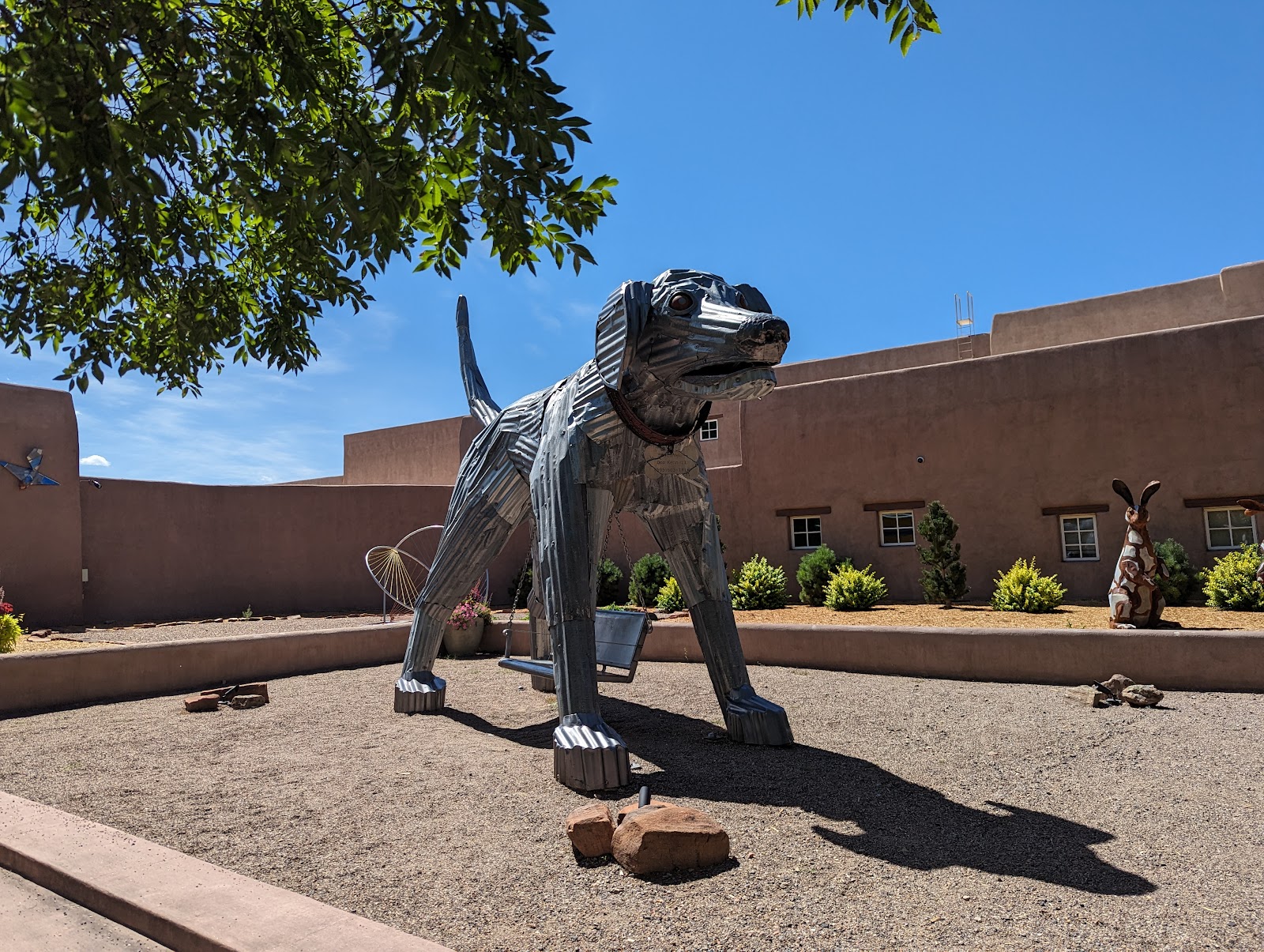
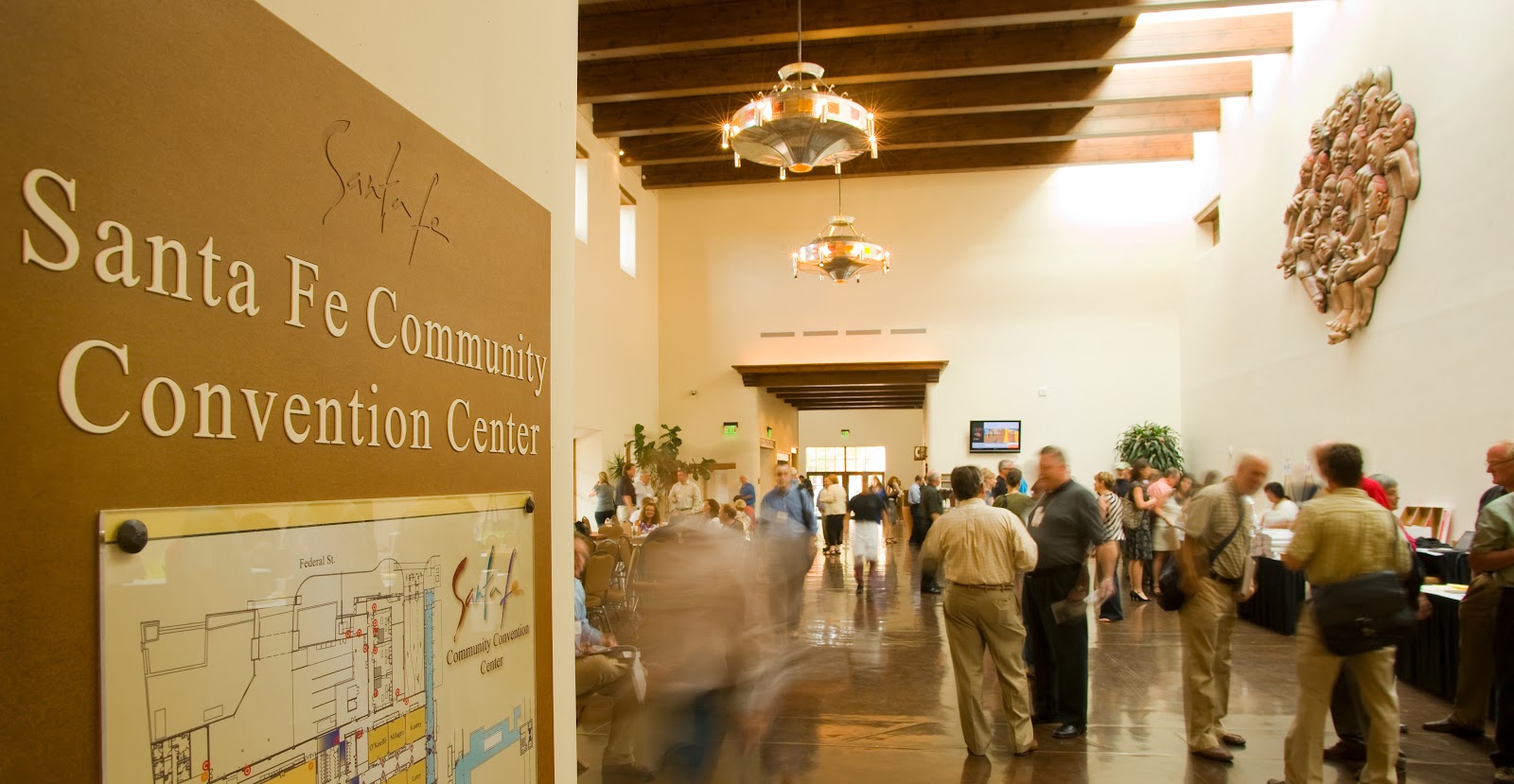
The shape of it is straightforward: large flexible function rooms, a ballroom, meeting spaces, pre-function areas and circulation, within walking distance of the plaza, built in the earth-toned Pueblo Revival idiom that the historic district requires.
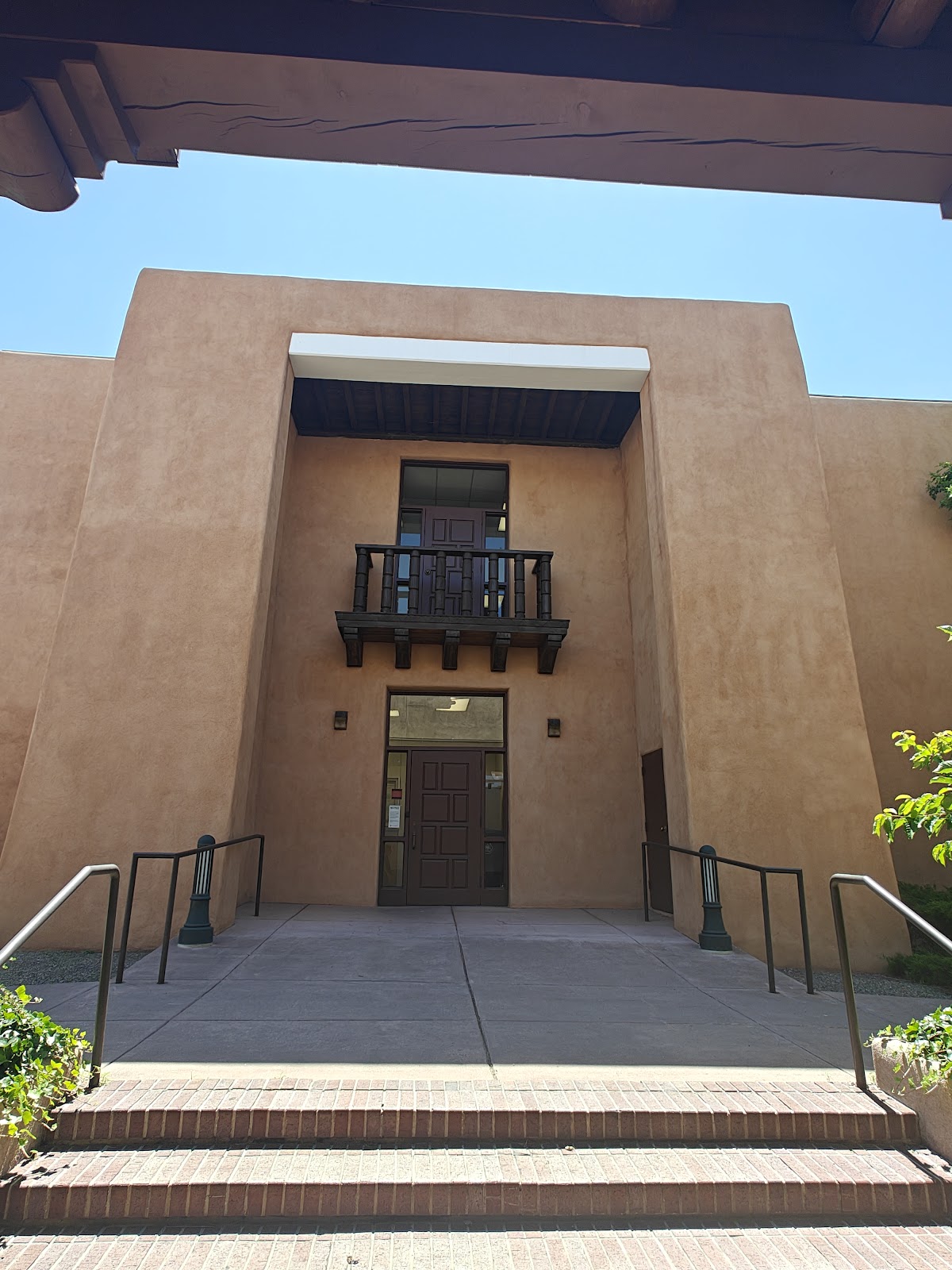
That last point is the one worth understanding, because it produces an unusual split. The exterior is genuinely of the city — earth-toned stucco, stepped massing, projecting vigas, the coherent warm palette that makes Santa Fe look like nowhere else — and the interior is a modern event space, which looks like a modern event space anywhere.
So the building has two halves and they belong to different worlds. The outside is a Santa Fe subject; the inside is a lighting exercise.
What the interior supplies is certainty. The room will be the right size, the power will be where it is needed, the floor will be level, the temperature will be controlled, and none of it depends on the weather — which in a city where March brings persistent wind and blowing dust, July and August bring near-daily afternoon thunderstorms, and midday at seven thousand feet is the hardest light in these guides, is a substantial practical asset.
What it does not supply is material. There is no period detail, no weathered surface, no distinctive natural light and no view. The Pueblo Revival treatment is on the outside and in the details rather than in the bones.
The consequence is the most important thing to know: almost everything in the interior photographs has to be brought, made or found. Nothing about the room will contribute — and nothing will get in the way either, which is a more useful position than it sounds.
Santa Fe sits at about thirty-five and two-thirds degrees north at roughly seven thousand feet. The June noon sun reaches around seventy-seven and a half degrees, the December noon sun about thirty-one, and civil twilight is around twenty-seven minutes.
We have not photographed a wedding at this venue. Which rooms and outdoor spaces are included, what lighting and rigging are permitted, and what the permitted hours are, are questions for their team.
Santa Fe Community Convention Center at a glance
| Where | A purpose-built event centre in the Santa Fe historic district |
| The split | A genuinely Santa Fe exterior and a generic modern interior |
| Suits | Capacity, controlled lighting, weather independence, a tight schedule |
| Does not suit | Material interest indoors, an unmodified frame, or a view |
| Ask first | Included rooms and outdoor spaces, lighting and rigging permissions, hours |
What it suits
It suits capacity, and in this city that is worth more than it would be elsewhere. A purpose-built function room holds a large number of people comfortably in controlled light, which means a big group photograph is possible indoors at any hour in any month.
In Santa Fe the alternatives are genuinely constrained: open ground is unusable for portraits between roughly ten and three for much of the year, the monsoon closes the afternoons from July into September, and spring brings wind that makes an outdoor group a matter of hair and fabric rather than of light. A room that removes all of that is not a compromise; it is a solution.
It suits control, which for a photographer who builds light rather than finding it is the venue’s real advantage. Flat walls, predictable dimensions, level floors, power where it is needed and nothing in the way mean a setup can be constructed and will look identical at four in the afternoon and eleven at night.
One source at forty-five degrees and slightly above eye level, with a second separating the subject from the background, is a complete portrait setup — and in a room with nothing to interfere it produces a result as good as any historic interior can offer. The difference is that it has to be made rather than found.
It suits weather independence, which at seven thousand feet in a semi-arid climate with a monsoon season is a genuine consideration rather than a formality. The wind in spring, the storms in summer and the cold in winter all matter for a party in formal clothes at this altitude, and a building that ignores all three is worth something.
It suits a tight schedule. Everything is under one roof, the distances are short, and there is no travel between locations — which in a city where the usable outdoor window is twenty-seven minutes of civil twilight and a hard midday means the indoor time can be efficient and the outdoor time can be spent entirely on the frames that matter.
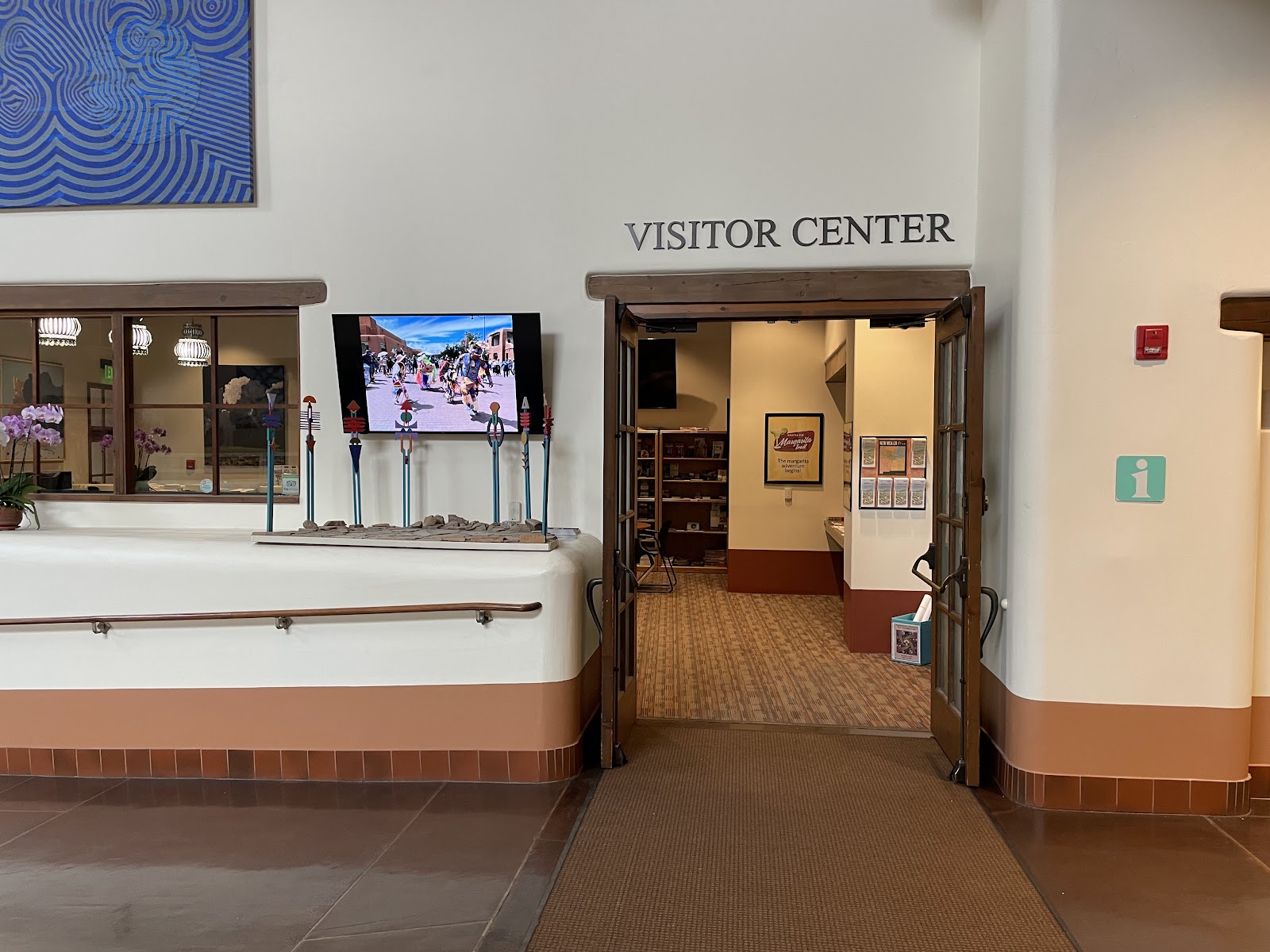
It suits the circulation spaces more than the main rooms, and that is the most useful practical observation about any building of this type. Foyers, corridors, stairwells and glazed links are where the only interesting light is, because they have glazing, level changes and surfaces at varying angles.
A corridor with a window at one end is a directional source with several stops of fall-off along its length. A stairwell gives a level change and a handrail line. And a wide glazed wall used at forty-five degrees is a room-sized softbox.
At this altitude that glazing is better than it would be at sea level, and for a specific reason: a very deep blue high-altitude sky and bright earth-toned surfaces outside mean the light coming through a window is both strong and strongly split — cool from the sky, warm from the ground. A subject at forty-five degrees to it gets a cool fill on one side and a warm one on the other, which is a two-colour light that no lowland window produces. It needs a white balance set on a face and a decision about which half to favour.
And it suits its own exterior, which is the half of the building worth photographing. Earth-toned stucco is the region’s most useful surface: a warm mid-toned reflector, which means a large sunlit elevation bounces warm light — and at this altitude, where open shade is lit by a very deep blue sky and reads markedly cool, that warm bounce partly corrects the split that defines high-desert light.
The stepped massing gives hard horizontal shadow bands under every setback, which at a high sun are the building’s best graphic frame — one of very few Santa Fe subjects that improves as the light hardens. And the projecting vigas give a rhythm at close range and catch snow in winter, which picks out the geometry precisely.
What it does not suit
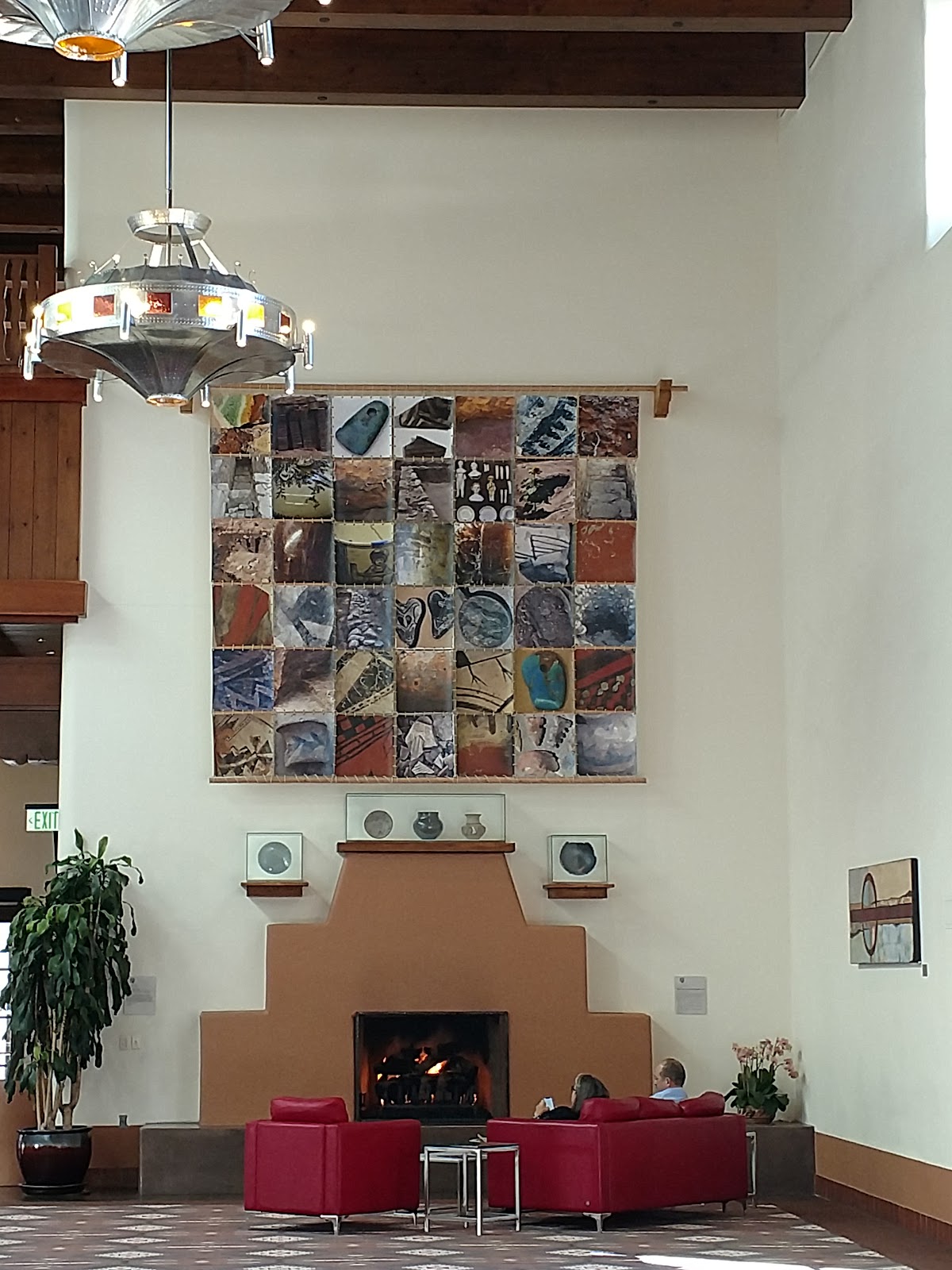
It does not suit anyone looking for material interest indoors. Every surface is new and functional: painted walls, patterned carpet, a ceiling grid, and applied Pueblo Revival detail rather than structural.
The honest consequence is that a photographer who works by responding to a place has little to respond to inside, and the work shifts entirely to the people and the light. That is a legitimate method and it produces good photographs; it is simply a different one from what the city’s historic hotels invite.
It does not suit an unmodified frame. A modern function room photographed as it is — flat overhead lighting, patterned carpet, painted walls, ceiling grid — produces a picture that looks like a conference. Every frame needs something done: a light introduced, a shallow depth of field, a tight crop, a level change, or a move to the circulation spaces or outside.
The specific hazards are the ceiling grid and the carpet pattern, both strong repeating fields that draw the eye and date a photograph. A lower camera angle, a tighter crop or a longer lens removes either.
It does not suit a bounced flash without thought. A pale ceiling at moderate height makes bouncing easy and produces exactly the flat top-heavy light the overhead fittings already give — a correctly exposed photograph with no modelling at all. An off-axis source close to the subject, with a second at low output on the background, is the better approach.
It does not suit an uncorrected colour approach. A modern event space mixes daylight from glazing with warm interior fittings, and at this altitude the daylight itself is split between a very cool sky and warm earth-toned bounce. A custom white balance taken on a face in the actual position is the only reliable method, and it has to be re-taken when the position changes.
Where coloured event lighting has been installed, the honest note is that it is very difficult to photograph people well in it: strongly coloured light on skin cannot be corrected without destroying the frame’s colour. The workable responses are a warm-gelled source a stop over it on the faces, working where the colour does not reach, or treating one or two frames as deliberately coloured and making the rest elsewhere.
It does not suit a view, and in Santa Fe that is a real loss rather than a formality. The city’s signature frame is the Sangre de Cristo range turning red at sunset above adobe rooflines, and it requires elevation — which a single-storey or low event building does not have.
The solution is nearby rather than on site. The venue is within walking distance of the plaza, which means the portals, the historic streets and the district’s earth-toned walls are all a short walk away — and those are genuinely good material. Whether a roof or an upper terrace exists anywhere accessible is worth asking, because the red-mountain frame is the one photograph a Santa Fe wedding should contain.
The portals are the best of the nearby options and they are the best free light in the city. A covered arcade of columns over a walkway, where depth back from the open edge is the whole lighting control: at the edge flat and frontal, two or three metres back dramatic with the sunlit street beyond four or five stops down. At this altitude that ratio is more extreme than the same depth at sea level, because thin dry air makes the direct sun harder and the shadows deeper.
And the district’s colour is worth using: the earth-tone requirement makes the whole historic core one warm tonal family, with turquoise as the accent on doors, window frames and trim. Turquoise against tan adobe is the region’s signature combination and the strongest colour available in an otherwise entirely warm streetscape.
Two practical notes. Civil twilight is twenty-seven minutes, which means any dusk sequence has to be decided in advance and the walk to the plaza cannot be part of it. And at seven thousand feet a party in formal clothes will feel stairs, slopes and the dry cold more than they expect.
- Suits capacity, control, weather independence and a tight schedule
- Does not suit material interest, an unmodified frame, or a view
- Foyers, corridors, stairwells and glazed links beat the ballroom
- High-altitude window light is split — cool from the sky, warm from the ground
- The portals a short walk away are the best free light in the city
The season, and why it matters less here
This is among the least seasonal venues in a city whose seasons are otherwise pronounced, and for a couple choosing a date outside the autumn that is the argument for it.
Nothing about the interior work changes between January and July: the rooms are the same, the setups are the same, the exposures are identical. A February wedding here produces the same interior photographs as a July one, which in a city with a windy dusty spring, near-daily summer afternoon storms and a cold thin-aired winter is worth something real.
What the season changes is the glazing, the building’s exterior and the city a short walk away.
Winter improves the glazing considerably. A low sun at about thirty-one degrees in December enters a window obliquely rather than from overhead, which means the room briefly has genuine directional side light — a lit side and a shaded side, and modelling without help. And snow outside is a very large bright neutral reflector, which raises the level substantially and, usefully, neutralises the cool-sky-and-warm-ground split that high-altitude window light otherwise has.
Outdoors, winter is the city’s best-looking season. The whole short day rakes rather than floods, which is exactly what earth-toned stucco’s texture and the projecting vigas want; snow lies along the vigas and on the flat setback roofs and picks out the stepped geometry precisely; and it melts fast at this altitude, which makes the condition a morning rather than a day.
Winter also brings the earliest dusk of the year — sunset a little before five — which means any exterior sequence lands in the late afternoon rather than after eight. And December brings the farolitos: paper lanterns along adobe walls and rooflines through the Christmas season, which on a stepped building outlines every setback and is the best night frame this kind of venue produces.
Spring is the weak window everywhere in northern New Mexico. March through May is the windy season — persistent strong winds, blowing dust that hazes the air and removes the long views, and a landscape brown before it is green.
For an interior-led venue that is precisely the argument for a spring date here: the function rooms, the circulation and the corridors are entirely unaffected, and only the exteriors and the walk to the plaza suffer. It is the month in which the least is lost by choosing a building that ignores the weather.
Summer is long-day and hard-light: over fourteen and a quarter hours at the solstice, a noon sun at seventy-seven and a half degrees, and thin air making it harder still. And sunset after half past eight means a dusk exterior sequence falls late in an evening, usually after the point at which a party can be taken out.
The monsoon is the season’s defining feature and for this venue it is entirely an advantage. From roughly July into September afternoon thunderstorms are near-daily, which makes an outdoor ceremony in those months a gamble at any other venue in the city — and makes a building that does not care about it the sensible choice.
The photographic compensation is outside: structured cloud over the Sangre de Cristos at the hour the light goes low is the best background the city has, and wet adobe is darker and more saturated than dry, which makes the district look better for an hour after a cell passes.
Autumn is the one season that argues for weighting a day outward. Late September brings aspen gold high on the Sangre de Cristos, and because an aspen grove is clonal — genetically one organism — a whole stand turns at once. Late October into early November brings the cottonwoods at town level, a clean bright gold.
Gold cottonwood against tan adobe under a deep blue high-altitude sky is the strongest colour combination Santa Fe offers, and it coincides with the clearest air and calmest weather of the year — which is exactly when the walk to the plaza and the portals is worth making. In every other month the building carries the day, which it is well equipped to do.
More frames from Santa Fe Community Convention Center
Santa Fe Community Convention Center wedding photography: common questions
What does this venue suit?
Capacity, controlled lighting, weather independence and a tight schedule — in a city where midday, spring wind and the summer monsoon all constrain the outdoor options.
What does it not suit?
Material interest indoors, an unmodified frame, or a view. The Pueblo Revival treatment is on the outside rather than in the bones.
Where is the best light in the building?
The circulation spaces — a corridor with a window at one end, a stairwell, a glazed link. They beat the ballroom.
What is unusual about the window light here?
At seven thousand feet it is split: cool from a very deep blue sky and warm from bright earth-toned ground. That needs a white balance on a face and a decision about which half to favour.
Where do I get the city's signature frame?
Not on site — it needs elevation. The portals and the historic streets a short walk away are the alternative, and worth asking whether any upper terrace is accessible.
Which season is the best argument for this venue?
Spring and high summer. March to May the wind and dust remove the exteriors anyway, and July to September the afternoon storms are near-daily.
More New Mexico venue guides
We are writing a photographer’s guide to every venue we would happily shoot in New Mexico. Here are three more, plus the full index:
- The Hyatt Regency Tamaya, Bernalillo: The Light Through the Day
- The Santa Ana Star Casino, Bernalillo: Suits and Does Not Suit
- Bishop’s Lodge: A Season-by-Season Photography Guide
Planning a wedding at Santa Fe Community Convention Center?
A building that ignores the weather in a city that has a lot of it. Tell us your date.