 The Bierstube: What Changes When the Reception Is in a Bar
Triple Creek Ranch, Darby: What It Suits and What It Does Not
Enclosed and private by design. That cuts both ways.
A small ranch on a wooded mountainside is a particular proposition and the honest way to describe it is by what an enclosed, private, forested property suits and does not suit.
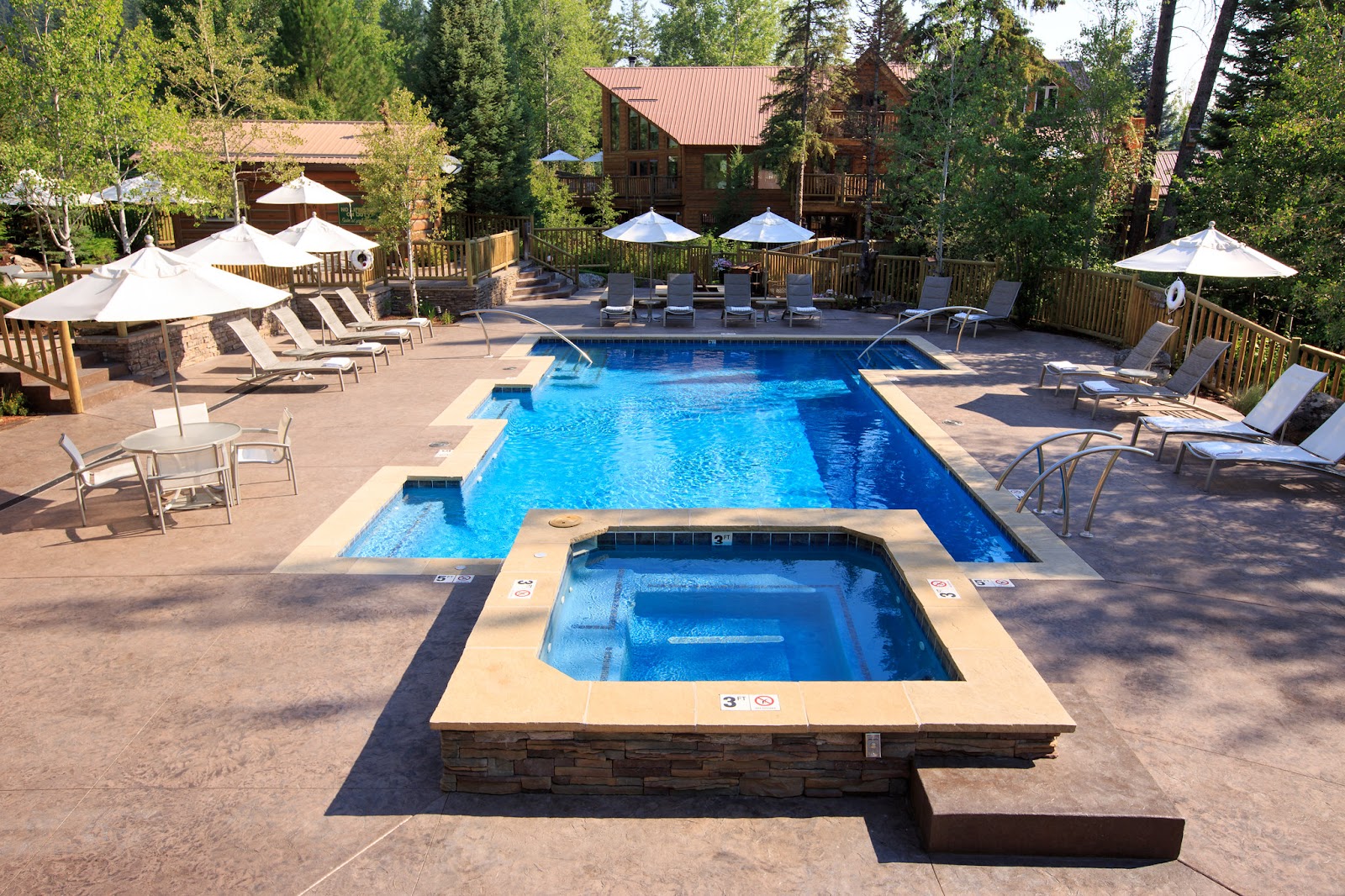
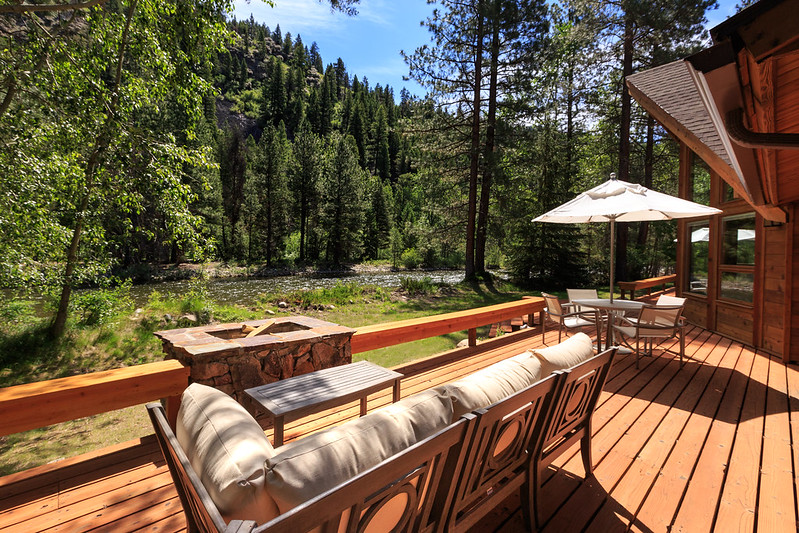
The shape of it is individual cabins distributed through conifer forest on a slope, with a central lodge, in the Bitterroot Valley of western Montana — between the Bitterroot Range to the west and the Sapphire Mountains to the east. The whole design intent is seclusion: buildings screened from each other by trees, and a property that faces inward rather than outward.
That is a deliberate choice and it produces a completely different photographic environment from an open mountain venue. It is intimate rather than grand, soft rather than dramatic, green rather than grey-blue, and largely unaffected by the wind that dominates an exposed site.
The trade has to be stated clearly. A forested mountainside property gives consistent light, seclusion, a great many small found locations, and weather independence. It does not give a horizon, a valley panorama, an open sky or a mountain backdrop from most of its ground — the trees are in the way, by design.
For some couples that is exactly right, and for others it is the reason to choose somewhere with a view. Establishing which before the day is worth more than any amount of technique.
The specific technical character comes from the species, and in western Montana the mix is decisive. Douglas fir and Engelmann spruce block almost all direct light. Ponderosa pine grows tall with a sparse high crown and dapples badly. Lodgepole pine is worse. And western larch — a deciduous conifer, which almost nowhere else in this guide has — is present in this part of Montana and does something no other tree does in autumn.
Darby sits at about forty-six degrees north at around four thousand feet. The June noon sun reaches around sixty-seven degrees, the December noon sun about twenty, days run from about eight hours twenty-five to sixteen hours, and civil twilight is around thirty-nine minutes.
We have not photographed a wedding at this ranch. Which spaces and grounds are included, what access there is to the wider land, and what the permitted hours are, are questions for their team.
Triple Creek Ranch at a glance
| Where | A small ranch on forested mountainside in the Bitterroot Valley, western Montana |
| The design | Seclusion: cabins screened by conifer, facing inward rather than outward |
| Suits | Consistent light, intimacy, many small locations, weather independence |
| Does not suit | A horizon, a panorama, an open sky, or a mountain backdrop from most ground |
| Ask first | Included grounds, wider land access, permitted hours |
What it suits
It suits the fir and spruce margins, and that comes first because they are the best light on the property. Douglas fir and Engelmann spruce hold dense canopies that block almost all direct light, which makes their edge the best free separation available anywhere: a subject a metre inside one, facing out toward brighter ground, has soft directional light in front and three or four stops of near-blackness behind.
That is a studio portrait with a black backdrop, supplied by the forest, at any hour of any day — including the middle of a bright July afternoon when an open venue is unusable. On a property made largely of those two species, that position is available almost everywhere, which is the single strongest argument for a forested site.
It suits thresholds, and a property of distributed cabins has a great many. A subject standing a metre inside an open door is lit by the whole sky in front and backed by the dark interior: a giant softbox and a four or five stop black backdrop, positioned by the architecture, available in any weather. A dozen small buildings means a dozen of those positions, one of which will be right at any hour.
Porches do the same thing at a larger scale. Depth back from a covered edge is the whole lighting control: at the edge the light is flat and frontal, two or three metres back the ratio is dramatic and the ground beyond has fallen four or five stops.
It suits consistency, which at a Montana venue is a substantial practical asset. A forested mountainside is far less affected by weather than an open valley: wind is broken up by the canopy, rain is partly intercepted, and a grey overcast day under mixed conifer is soft and pleasant rather than flat and grey.
It also means wildfire smoke costs less here than at a venue with a view. The northern Rockies’ fire season runs from roughly July into September and smoke can fill a valley for days, removing every distant range — but a property whose frames are all at close range under canopy loses very little. That is a genuine and underrated advantage for a late-summer date.
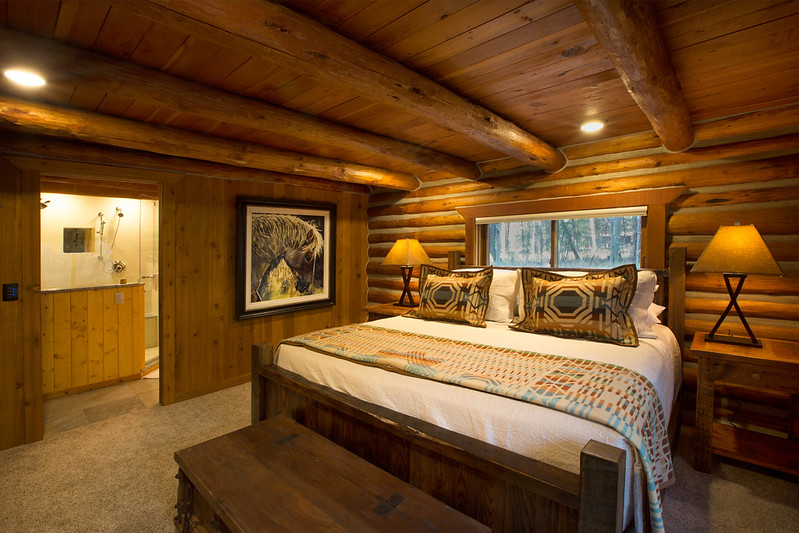
It suits the interiors, because a ranch of this kind is built of timber and stone. Both absorb rather than reflect, which means the ambient sits a stop or two below what the eye reports and the fall-off from a window is steep — four stops or more from a face at a window to a surface three metres behind it.
That is the building’s gift: meter on skin, use each window at forty-five degrees, and let the room go dark. The separation comes free.
And it suits the gradient. A mountainside property has relief everywhere, and even a small change of level is a disproportionate resource: from below the subjects they stand against open sky with no horizon behind them, which is the cleanest background available in any conditions and which drops every cabin, path and guest below their level out of frame.
That last point matters more here than at most venues, because on a wooded property the background at eye level is always something — a trunk, a building, a path — and the low camera is the only reliable way to make it nothing.
What it does not suit
It does not suit anyone who came to Montana for the view. From most of the property the trees are in the way, which is what they are for, and no amount of skill produces a panorama where there is not one.
The honest answer is to establish early whether the property has an opening — a meadow, a clearing, a high point, a road cut — and whether it is accessible. One good open position changes what a day here can be, and a property with none is an interior and close-range venue whatever else it offers.
It does not suit overhead light, which is the fundamental problem of any closed canopy. Light arriving through a canopy comes from the whole hemisphere above, filtered, which means it is soft and has no direction — and a face lit from everywhere at once has no modelling: the nose casts no shadow and the cheekbone does not read.
The answers are the canopy edge, two metres in and facing out; a clearing; or a source of your own, which in a wood needs little output because the ambient is two to four stops down. One light at forty-five degrees and slightly above eye level restores the direction the canopy removed.
It does not suit an uncorrected green cast. Light transmitted through and reflected off needles and leaves is green, and skin deep under canopy reads sallow. A global white balance correction turns the whole wood grey and is the wrong move; the fix is positional, or a warm-gelled source at a stop over ambient which overrides the green on skin while leaving the foliage as it is.
The mitigating factor in western Montana is that conifer transmits far less green than broadleaf does — a fir wood is dimmer but less green than an oak wood, which makes the problem smaller here than in the eastern half of this guide.
It does not suit dapple, and this is the condition to avoid outright. Ponderosa pine grows tall with its crown high and sparse, and lodgepole is sparser still — both throw a hard, shifting, high-contrast dapple with a four or five stop range across a face, which is unrecoverable.
In a mixed western Montana forest, knowing which conifer you are standing under is the practical difference between a good frame and a wasted one. Fir and spruce: block, use. Ponderosa and lodgepole: dapple, background only.
It does not suit large groups easily. Forest paths are narrow, the ground is uneven and rooty, the gradient is against you, and a camera cannot back up far among trees — which means the usable group positions are the clearings, the lodge terraces and whatever built flat ground exists, and there are fewer of them than the acreage suggests. Walking them in advance is essential rather than useful.
It does not suit a frame taken without checking the top of it. A mixed conifer canopy is visually dense overhead, and a wide frame includes a great deal of it, which puts a lot of activity above the subjects’ heads. A lower camera angle or a tighter crop handles it.
It does not suit the twilight, and this is worth saying because at forty-six degrees north the twilight is long — around thirty-nine minutes of civil twilight, which at an open venue is a generous working session. Under canopy almost none of it is usable, because the trees take the last light early and the level drops below what is workable well before the sky does.
The practical consequence is that the place to be at the end of the day is whatever opening the property has, and being in the wrong place at that moment loses the whole window. That is a location decision made in advance rather than a discovery.
Two practical notes. Mosquitoes are a real consideration in wet forest ground in early summer, and unlike an exposed valley there is no breeze here to keep them off. And bears are genuinely present in western Montana forest, which is a matter for the property’s guidance rather than for improvisation.
- Fir and spruce margins: three or four stops of free separation, anywhere
- A dozen cabins means a dozen doorway setups
- Fir and spruce block; ponderosa and lodgepole dapple unusably
- Camera below subjects is the only way to make a wooded background nothing
- Be at the property’s one opening for twilight, not under trees
The Bitterroot year
Four sharply separated seasons in western Montana, and one tree that makes autumn here unlike anywhere else in this guide.
That tree is western larch. It is a conifer that is deciduous — it holds needles through the growing season and drops them in autumn, turning a clear intense gold first — and it grows in exactly this part of Montana and almost nowhere else in these guides.
The effect is specific and it is worth planning a date around. In mid to late October a mixed western Montana forest has larch turning brilliant gold among fir and spruce that stay near-black, which gives a stand of warm colour standing in a dark evergreen wood — not colour against a background but colour inside one, at every scale from a single tree to a whole hillside.
That is the strongest photograph this landscape produces and it is a two-week window, later than the aspen and later than most autumn colour in the northern Rockies.
The aspen turn earlier, in late September, and because a grove is clonal — genetically one organism — a whole stand goes gold at once rather than tree by tree. Between the aspen in late September and the larch in mid to late October, western Montana has a longer autumn than most of the Rockies.
Winter is long and snowy at four thousand feet, and photographically it transforms the property. Snow among dark conifer gives the widest brightness range in this guide: expose for the snow and let the fir go near-black, opening up deliberately by about two stops relative to the meter, which snow fools reliably.
The December noon sun at around twenty degrees means the whole short eight-and-a-half-hour day rakes rather than floods — and in a wood that low angle means light comes in sideways through the trunks rather than down through the canopy, which is exactly the direction the wood lacks in summer. A snowy conifer forest in low winter light is better lit than the same forest in July.
Snow also simplifies the property: paths, buildings and clutter disappear under it, and what remains is dark trunks on white ground.
The costs are cold, a short day, batteries draining quickly, glass that fogs coming indoors, and access dependent on conditions.
Spring is late at this altitude and it is the weak window. Snow lies into May, the ground is saturated with meltwater, and the forest floor is brown. Larch is worth noting again here: it flushes new needles in a startlingly bright pale green in May, which against dark fir is nearly as striking as its autumn gold and almost nobody plans for it.
Summer is the season and the days are long: sixteen hours at the solstice with about thirty-nine minutes of civil twilight — though under canopy a good deal of both is unavailable. The forest is at its deepest green, the property is at its most private, and the middle of the day needs the fir margins.
The costs are mosquitoes in early summer, afternoon convection over the ranges, and the smoke described above — which costs a forested property less than an open one, and is a real argument for choosing a venue like this for a late-summer date.
By late October the larch has dropped and the forest is dark until the snow arrives.
More frames from Triple Creek Ranch
Triple Creek Ranch wedding photography: common questions
What does this venue suit?
Consistent soft light, seclusion, many small found locations, weather independence — and fir margins that give three or four stops of free separation anywhere.
What does it not suit?
A horizon, a panorama or a mountain backdrop. The trees are in the way by design, and no technique produces a view where there is not one.
Which conifers can I use?
Douglas fir and Engelmann spruce block almost everything and are the best backgrounds here. Ponderosa and lodgepole dapple unusably and are background only.
Where should I be at twilight?
At whatever opening the property has. The canopy takes the last light early, so thirty-nine minutes of twilight is unusable under trees.
Does wildfire smoke matter here?
Less than almost anywhere in Montana. A property whose frames are all at close range under canopy loses very little when the distant ranges disappear.
When is this forest at its best?
Mid to late October, when western larch — a deciduous conifer — turns brilliant gold among near-black fir. Also May, when it flushes a startling pale green.
More Montana venue guides
We are writing a photographer’s guide to every venue we would happily shoot in Montana. Here are three more, plus the full index:
- Yellowstone Valley Lodge, Gardiner: Field Notes, Problem and Solution
- The Lodge at Big Mountain, Whitefish: A Walk Through the Property
- The Farmhouse Inn: Four Ways Out of the Open-Ground Problem
Planning a wedding at Triple Creek Ranch?
A property that faces inward, and one deciduous conifer. Tell us your date.