 The Sheraton Portsmouth: What a Conventional Hotel Actually Buys You
The Wakefield Inn, Wakefield: A Walk Through the Site
A small building in a village that stopped changing. Both facts matter.
Two things define this site and they are worth separating: the building, and the village it stands in.
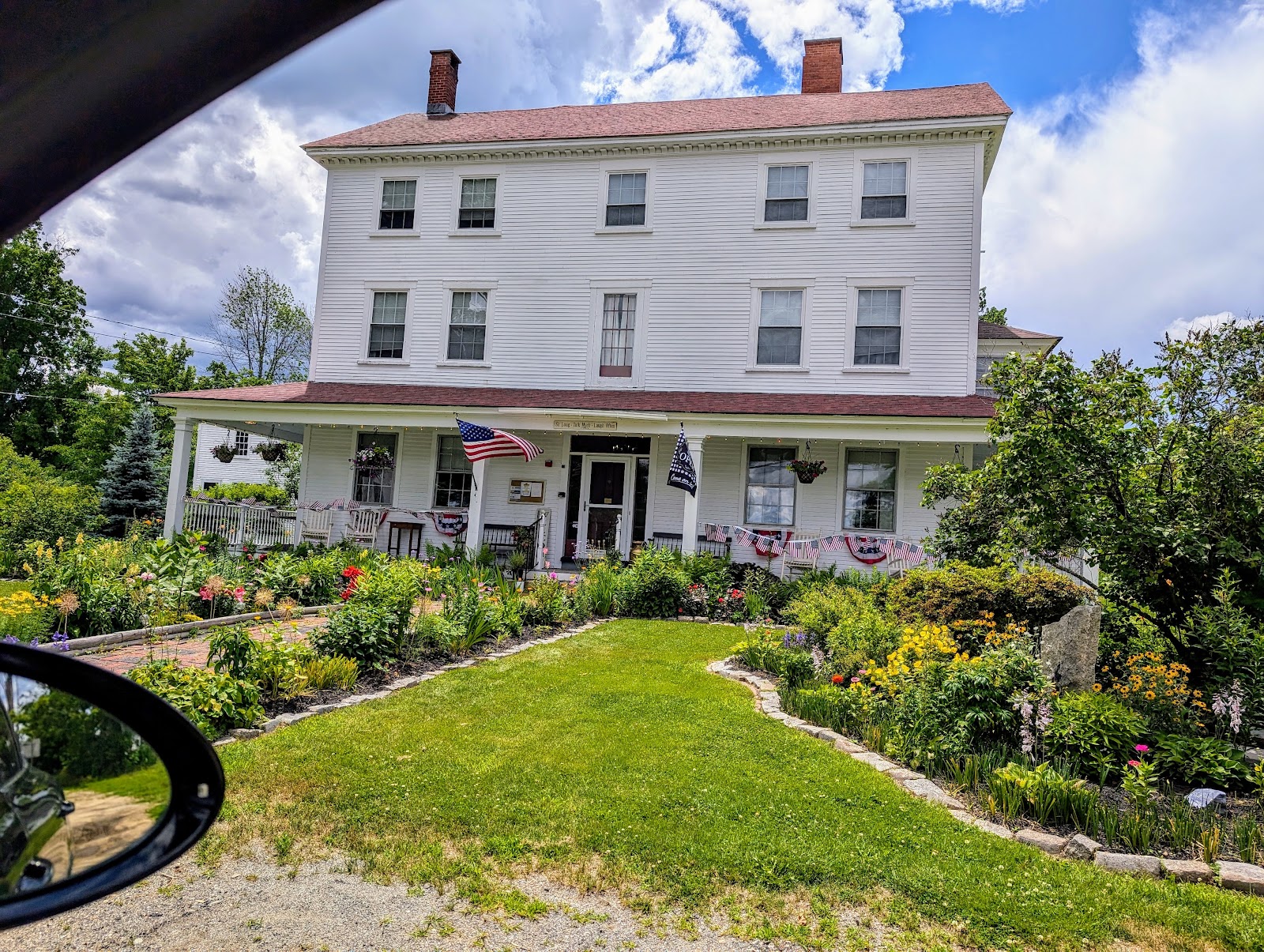
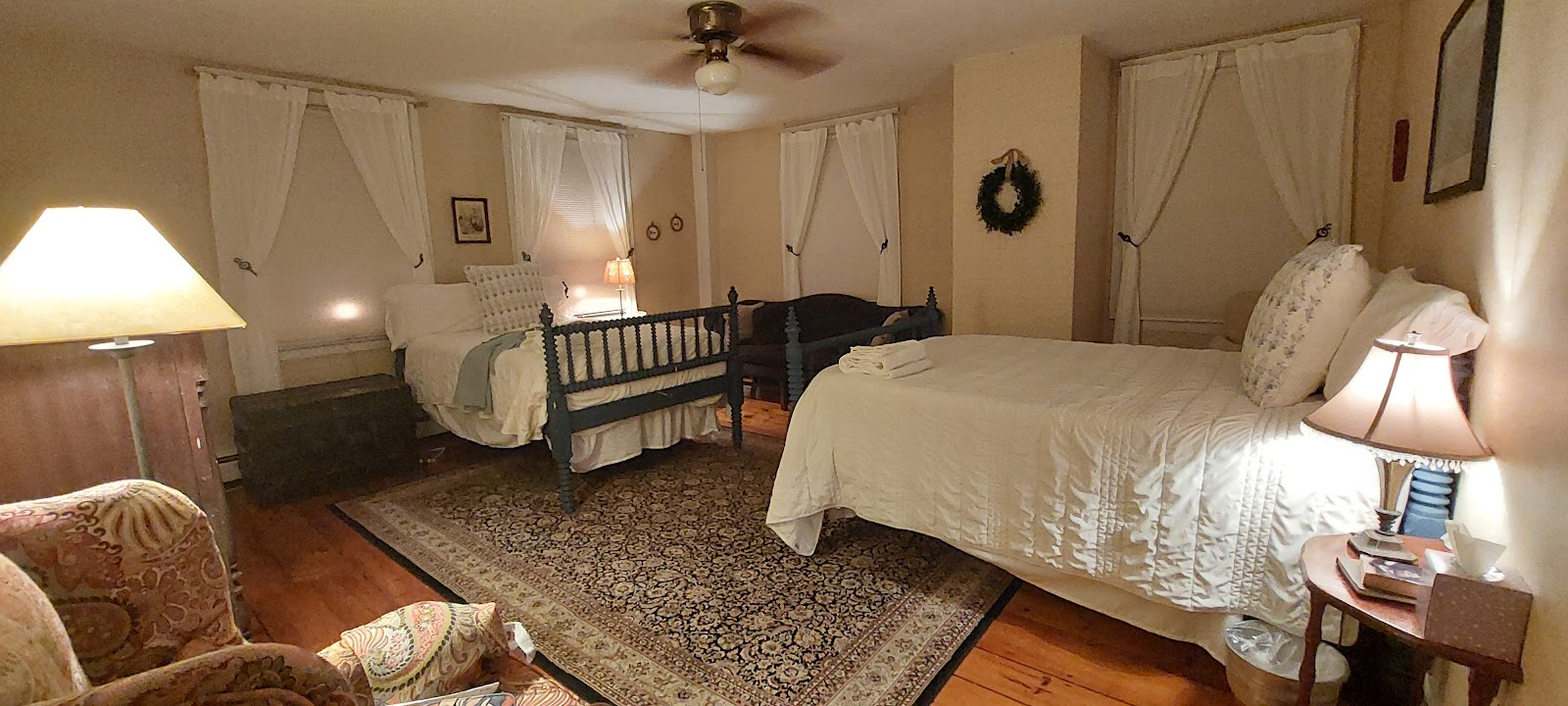
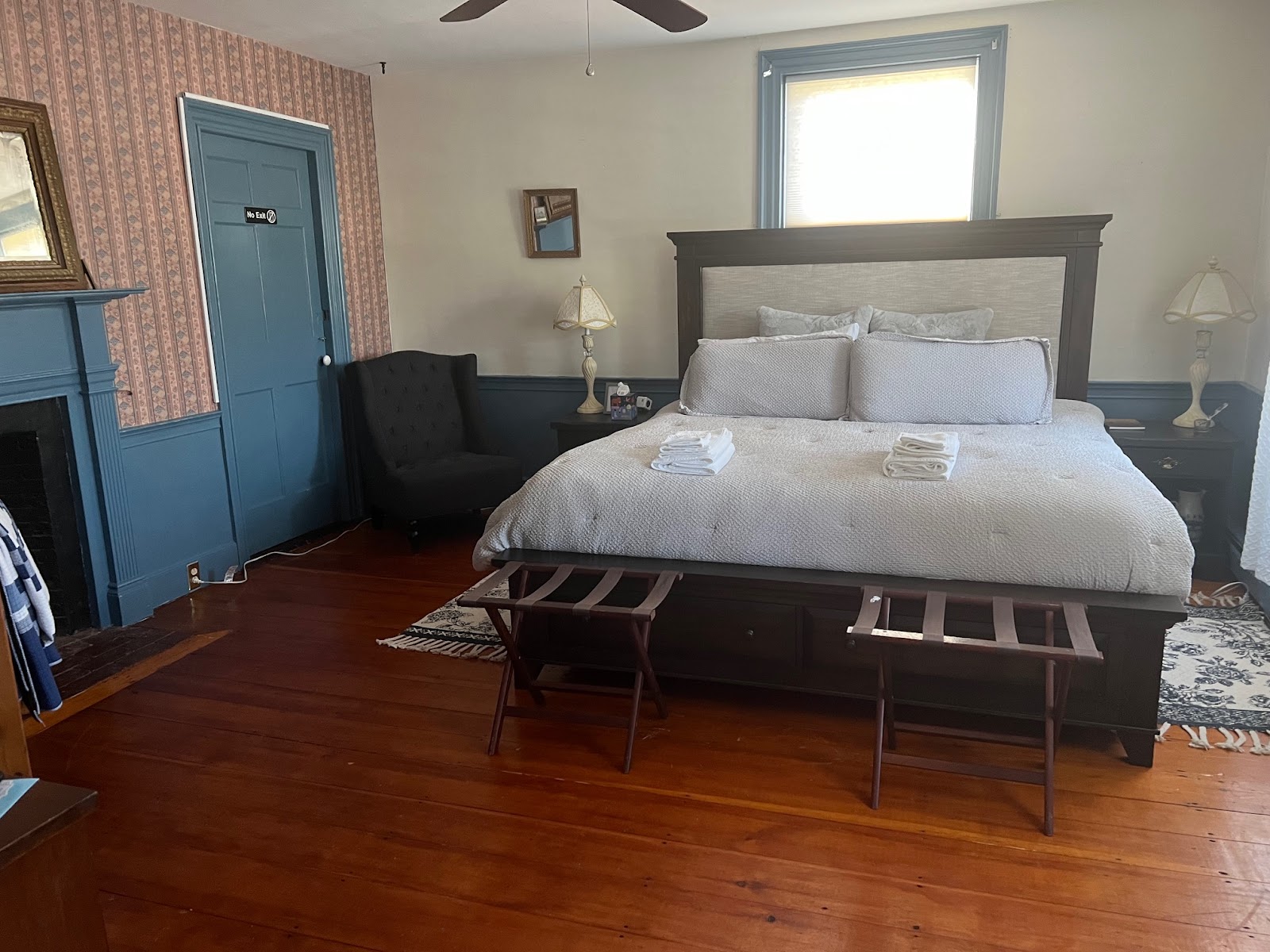
The building is an inn from the era of stagecoach travel — early nineteenth century, timber-framed, domestic in scale, with the room proportions and window sizes of its period. That means small multi-paned windows, moderate ceiling heights, thick walls, dark interior finishes and a plan built around a few rooms rather than a large public space.
The village is the other half. Wakefield sits in the eastern lakes country of New Hampshire in a settlement whose centre has been substantially preserved — a street of early buildings that reads as a continuous period place rather than as one old building among modern ones.
That combination produces something rare and it changes how a day here should be planned. At most historic venues the photographs are made inside the property boundary because everything outside it is of a different century. Here the street is part of the venue, and a walk out of the front door is a walk into more of the same material.
The photographic consequences follow directly. The interiors are intimate, dark and directional, which means the working method is precise and close rather than expansive. The exteriors are architectural and continuous, which means the frames outside can be composed as streetscape rather than as a single façade. And the scale of everything is small, which means groups are the constraint that has to be planned around.
Wakefield sits at about forty-three and a half degrees north. The June noon sun reaches around seventy degrees, the December noon sun about twenty-three, days run from about nine hours to over fifteen, and civil twilight is around thirty-four minutes.
We have not photographed a wedding at this inn. Which rooms and grounds are included, what group sizes are workable, whether the street and surrounding village can be used and what the permitted hours are, are questions for their team.
The Wakefield Inn at a glance
| Where | An early nineteenth-century stagecoach inn in a preserved village, eastern New Hampshire |
| The building | Domestic scale: small multi-paned windows, moderate ceilings, dark finishes |
| The village | A preserved period street — the exteriors continue past the property line |
| The constraint | Scale. Groups need planning; a wide lens is not the answer |
| Ask first | Included rooms and grounds, group size, street use, hours |
Inside: small windows, dark rooms
Work the interiors as a series of single-window setups, because that is literally what they are.
A room of this period has one or two small windows, thick walls with deep reveals, and finishes that absorb rather than bounce. The light coming in is therefore narrow, strongly directional, and falls off extremely fast — which is the best raw material for portraiture there is, and considerably better than the even ambient of a modern room.
The method: subject at forty-five degrees to the window, at a distance that sets the ratio, metered on skin, with the room allowed to fall away behind. The drop from a face near a small deep window to a wall two metres behind it is often four stops or more, which does all the separation without anything being added.
The deep reveal is the part that makes it stronger than a modern equivalent. A thick wall around a small opening acts as a snoot: it narrows the beam, restricts the angles from which light arrives, and steepens the fall-off. A subject can move six inches and change the lighting ratio noticeably, which means precision matters and rewards.
Multi-paned glazing does something useful too. The muntins break the incoming light into a grid, which on a wall or a floor near the window reads as a soft pattern — free background texture — and on a face reads as nothing at all, because the face is far enough from the window for the pattern to have diffused.
The colour of an old interior is warm. Aged timber, old paint and old plaster all bias warm, and the light bouncing around a room has picked that up, which means the white balance drifts warmer the further a subject is from the window. Set it on skin in the actual position rather than trusting a preset, and keep some of the warmth: it is what the room looks like.
The scale is the constraint and it should be planned around rather than fought. A small room cannot hold a large group, a photographer cannot back up far in it, and a very wide lens used to compensate distorts faces at the frame edges and makes the room look like a corridor.
The honest answers are: photograph small numbers inside and larger numbers outside; use the doorways between rooms as frames so that depth compensates for width; and accept that a wide-angle group photograph in an early nineteenth-century room is not a good photograph however skilfully it is taken.
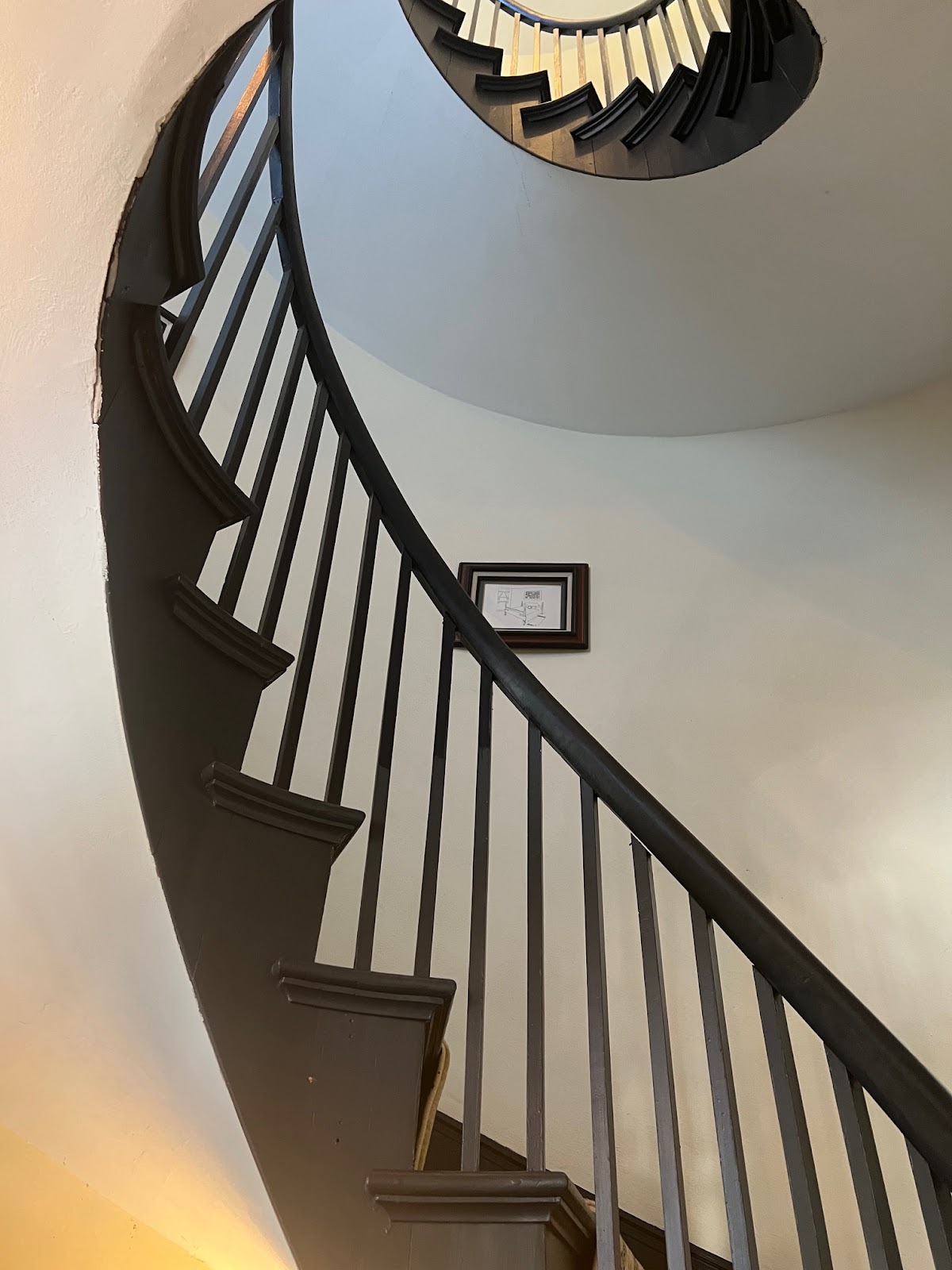
Stair halls and corridors are, as in every building of this period, better than they look. A narrow hallway with a window at one end is a directional source with several stops of fall-off along its length, and it is the one interior space where a subject can be placed at a distance from the camera.
Outside: the street, the grounds and the year
The exterior is where the village pays off. A preserved period street means the background material does not stop at the property boundary, and the frames available outside are streetscape rather than façade.
The most useful of these is a long-lens frame down the street. Compression stacks the buildings into a single plane of period material, which reads unmistakably as a continuous historic place — where a wide frame of the same street shows a lot of road surface and a lot of sky, and dilutes it. The long version is the picture; the wide version is the establishing shot.
The façade itself follows the rules for any painted timber building. A large area of pale paint is a substantial neutral reflector, which means the light near it is brighter, softer and more evenly distributed than near a stone or brick building of the same size, and faces standing beside a sunlit pale wall are filled from the side generously and neutrally.
It also means the meter is wrong: a frame with a lot of pale clapboard reads bright and the camera underexposes by up to a stop. Compensate deliberately and check on skin.
And it means the building has almost no silhouette against an overcast sky, because pale paint and grey cloud are close in value. In low warm light the silhouette is strong. That argues for the architectural frames at the ends of the day and the people frames in whatever shade is available in between.
The grounds of a village inn are modest, and in this part of New Hampshire the surroundings are wooded and lake-country rather than open. The species rule that governs every New England venue applies without exception: white pine, spruce and hemlock block almost all light, which makes their edge the best free separation available — a subject a metre inside a conifer margin has soft directional light in front and three or four stops of near-black behind.
Hardwood canopy gives soft even light with a green cast, corrected by standing at the edge rather than deep inside it. And white paper birch against dark conifer is the highest-contrast natural background in New England.
Granite appears here as walls, steps and outcrop: coarse-grained, pale grey, crystalline, spectacular under raking light and dull under flat light, and a low-saturation background that is kind to skin and to white fabric. A low stone field wall is a strong horizontal at seated height and one of the most useful things a New England landscape offers.
The year in this part of the state is a full four seasons and the extremes are the good parts.
Winter is the best exterior season here by some distance. Snow is the finest natural fill available — it lifts shadows to within a stop of the highlight and fools a meter by around two, so open up deliberately — and a village of pale clapboard and dark shutters under snow, in a December sun that never gets above twenty-three degrees, is the cleanest and most characteristic image the place produces. The whole short day rakes rather than floods, which means there is no bad hour.
Spring is the weak window. Mud season through late March and April leaves grey ground, brown grass and bare trees under flat light, and there is no good version of the exteriors in it. Late April and May bring leaf-out and the pale transmissive green that backlights so well for about three weeks, along with the region’s flowering understory. Black flies run from around mid-May into early June.
Summer is long — over fifteen hours of daylight, a generous thirty-four-minute twilight — and the middle of the day at seventy degrees of sun elevation is the hardest light of the year, which puts the midday work indoors and at the canopy edges. The village itself is busiest in summer, which affects how easily a clean streetscape frame can be made.
Autumn arrives in the second week of October in this part of the state — after the White Mountains, before the seacoast — and the eastern lakes country has a strong sugar maple component, which means real reds and oranges rather than the coast’s bronzes. Red maple against pale clapboard is the strongest autumn combination the village offers, and it is worth planning the exterior sequence around it.
- One small deep window is a complete portrait setup — subject at forty-five degrees
- Move six inches and the ratio changes; precision pays here
- Photograph small numbers inside and larger numbers outside
- A long lens down the street stacks the period material; a wide lens dilutes it
- Pale clapboard fools a meter by up to a stop
The eastern lakes country year in detail
Some further notes, because a venue whose interest is entirely in its material and its light varies more across the year than a venue with a view.
The interiors are the stable half. Their light comes from small deep windows whose character is set by the reveal rather than by the season, and since the metering is done on skin rather than on the scene, the changing brightness outside mostly does not matter.
What does change is colour. A winter window has bounced its light off snow, which arrives cool and surprisingly bright; a summer window has bounced it off grass and foliage, which arrives warm and green. That is a two-stop and two-thousand-kelvin difference between February and July at the same window, and a custom white balance taken on a face in position handles it where a preset does not.
Snow makes the interiors better, which is counter-intuitive and worth knowing. A snow-covered exterior is a very large bright neutral reflector, which raises the light level coming through a small window substantially and softens it. An early nineteenth-century room on a bright February day is better lit than the same room in July, because in July the exterior is green and absorbing and in February it is white and reflecting.
The exteriors carry all the variation, and the two best windows are the second week of October and any clear day with snow on the ground. In the first, sugar maple red against pale clapboard gives the strongest colour contrast available in New England architecture. In the second, a monochrome village of white paint, dark shutters, grey granite and black bare branches reads as graphic rather than as pretty, which suits an early building better than a summer version does.
The window to avoid is mid-March to mid-April. If a date falls there, the honest plan is to work the interiors, which are unaffected, and to treat the exteriors as incidental — perfectly workable at this particular venue, because the interiors are strong enough to carry a day on their own.
Two practical notes for every season. A preserved village is a public place with traffic, parked cars, signage and utility poles, and those appear in frames taken without checking their edges. A long lens at a wide aperture, a lower camera, or a step to one side handles all of them, but they have to be looked for rather than noticed afterwards.
And glass carried from a cold street into a heated inn fogs, which is the reverse of the problem in the southern half of this guide and has the same solution: acclimatise in a bag on the way in, and decide which environment is home base for the next stretch of work rather than moving back and forth.
One last observation about this kind of venue. A building at domestic scale gives photographs with a quality that large venues cannot: the subjects are close to the camera, close to the walls, close to each other, and the frames are consequently intimate whether or not anybody intended them to be. That is the real reason to choose a place like this, and it is worth leaning into rather than fighting with wider lenses and bigger arrangements.
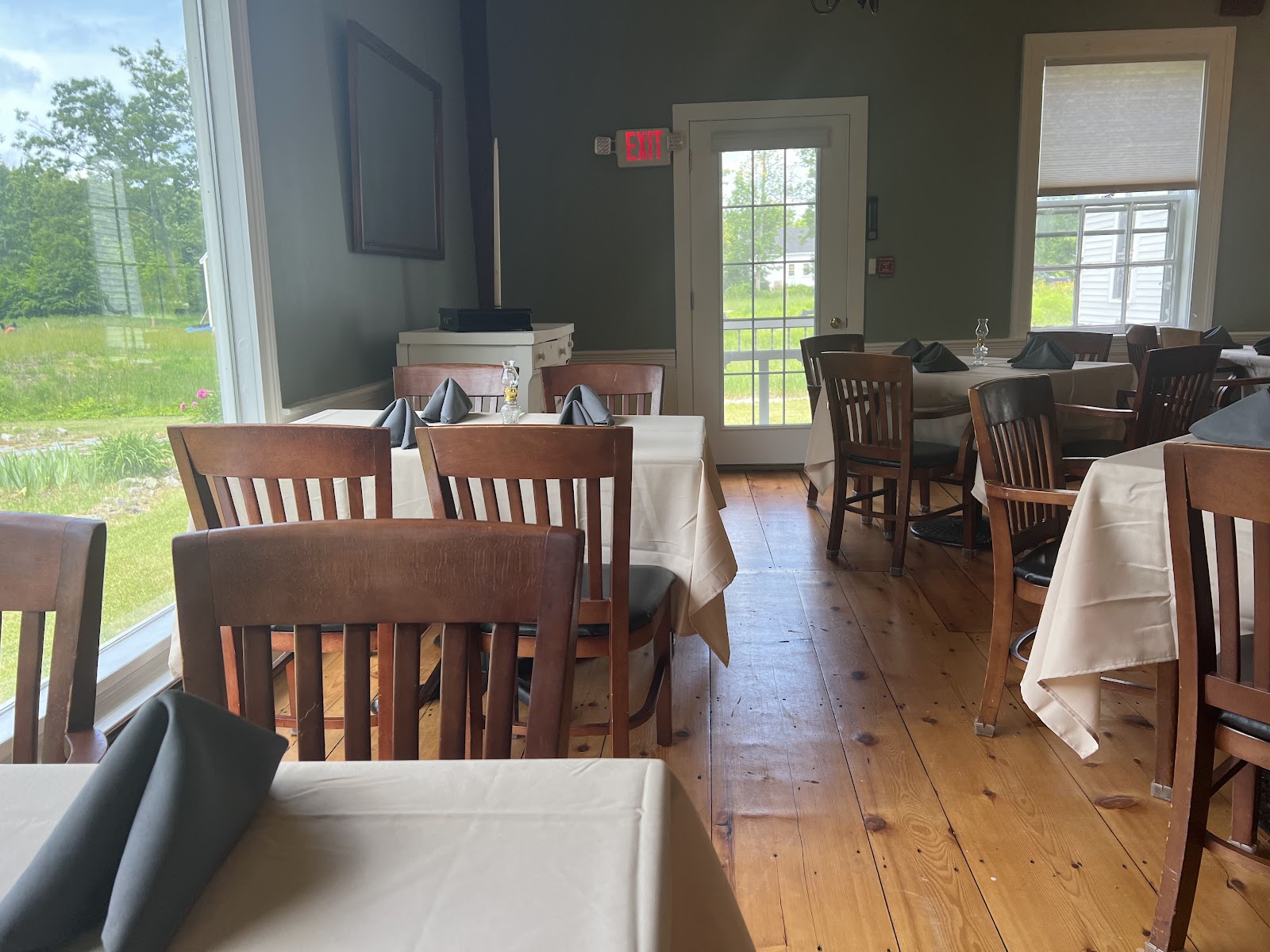
More frames from The Wakefield Inn
The Wakefield Inn wedding photography: common questions
What is the interior light like?
Narrow, strongly directional and very fast to fall off. Small windows in thick walls act as snoots, which is the best raw material for portraiture there is.
How do I photograph a group here?
Outside. A room of this period cannot hold a large group, and a very wide lens used to compensate distorts faces and makes the room look like a corridor.
What is the best exterior frame?
A long-lens view down the village street, which compresses the period buildings into one continuous plane of historic material.
Why is my exposure off outdoors?
Pale clapboard reflects a great deal, so a frame containing much of it underexposes by up to a stop. Compensate and check on skin.
Are the interiors better in winter or summer?
Winter. Snow outside is a large bright neutral reflector, so a small window admits more and softer light in February than in leafy July.
When is the best time of year?
The second week of October, for sugar maple red against pale clapboard; or any clear snow-covered day, when the whole village reads as graphic.
More New Hampshire venue guides
We are writing a photographer’s guide to every venue we would happily shoot in New Hampshire. Here are three more, plus the full index:
- Wentworth by the Sea, New Castle: The Venue’s Own Logic
- Wildcat Mountain, Pinkham Notch: One Frame and How It Is Made
- 3S Artspace: Four Ways Out of the White-Box Problem
Planning a wedding at The Wakefield Inn?
A small building and a whole street. Tell us your date and we will use both.