 Dry Tortugas National Park: A Walk Through an Island Fort
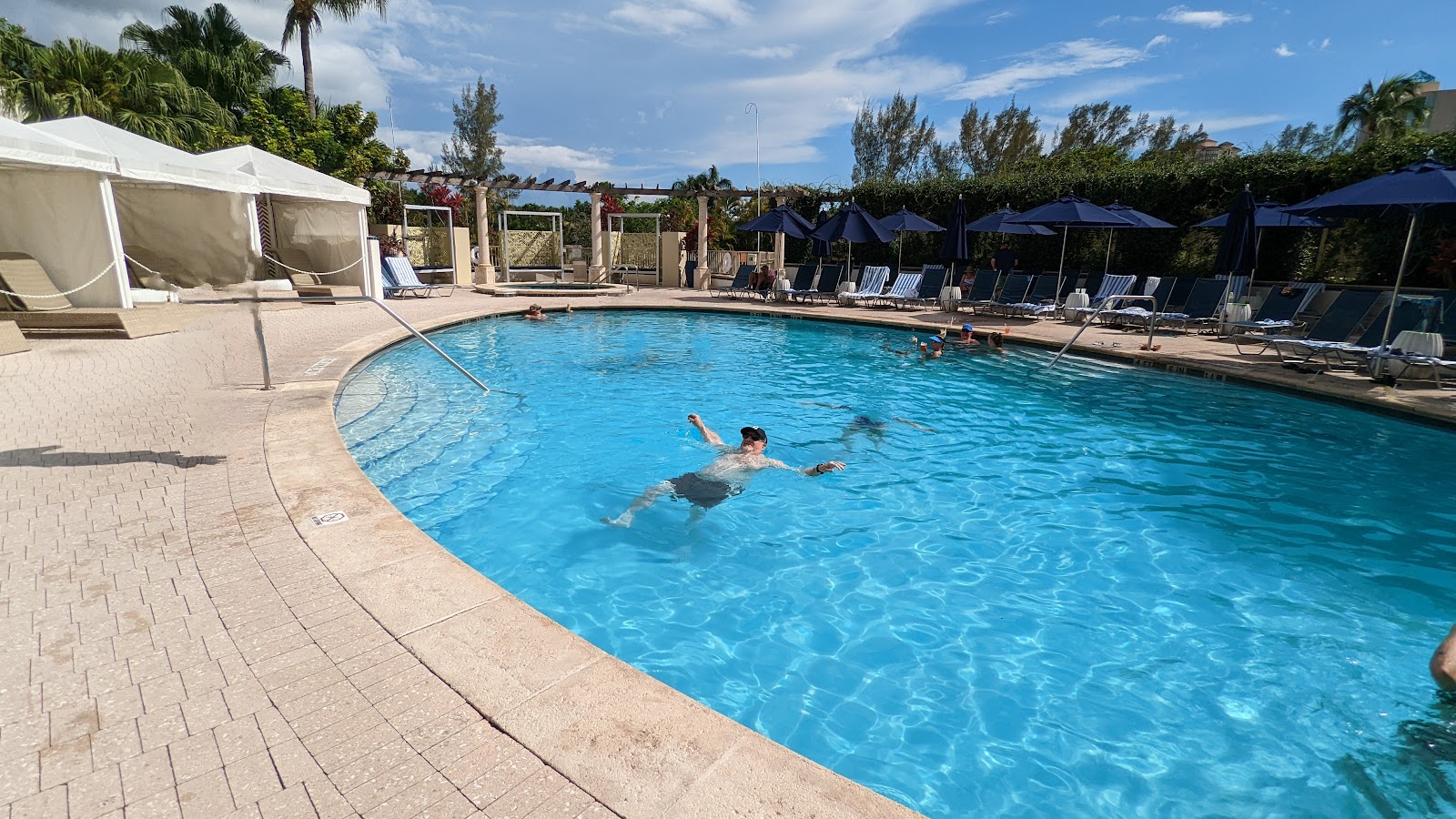
Naples Grande Beach Resort, Naples: The Problem and Four Ways Out of It
The thing everyone books this coast for is also the hardest frame to make.
The Gulf coast at Naples faces almost due west, which is the reason people choose it: the sun sets into the water, in front of the resort, every evening of the year.
It is also a lighting problem, and it is worth stating plainly rather than pretending the good light solves itself. A subject standing on a west-facing beach at sunset is standing in front of the brightest thing in the frame. The sun, the sky around it and the water beneath it may sit eight or ten stops above a shaded human face, and no sensor holds that range.
Expose for the faces and the sky goes white, the water goes colourless, and the reason for coming to Naples disappears from the photograph. Expose for the sky and the faces go to black. Split the difference and both are wrong at once.
This is the central technical problem of west-coast beach work and it has four distinct solutions, not one. Each produces a different picture. Choosing between them consciously — rather than defaulting to whichever the equipment makes easiest — is most of what separates a set of sunset photographs that work from a set that all look like the same compromise.
Naples sits at about twenty-six degrees north. The June noon sun reaches roughly eighty-seven degrees, effectively vertical, and the December noon sun about forty — so the middle of a summer day is unusable in the open and the middle of a winter day is fine. Sunset falls around half past five in December and after eight in June, and at this latitude the sun drops steeply: civil twilight runs a little over twenty minutes, which means the whole low-light sequence is shorter than it feels like it should be.
We have not photographed a wedding at this resort. Which spaces are included, what the beach setup allows, whether the boardwalk and dune areas are accessible and what the permitted hours are on the shoreline are questions for their team.
Naples Grande Beach Resort at a glance
| Where | A west-facing Gulf resort at Naples, Florida |
| The problem | A subject at sunset stands in front of an eight-to-ten-stop brighter background |
| Four ways out | Add light; silhouette; turn around; go before |
| The clock | Civil twilight is about twenty minutes here — the sequence has to be fast |
| Ask first | Beach setup rules, boardwalk and dune access, permitted hours |
The first two ways out
The first way out is to add light, and it is the one that gets the picture people came for. Expose for the sky and the water — the value that keeps the sun’s colour and the Gulf’s — and bring the faces up with a source close to the subjects.
Close is the operative word. A light two metres from a couple needs a fraction of the output of one at six metres, falls off fast enough to leave the sand behind them dark, and does not announce itself. A light far away lights the whole beach, flattens everything and looks exactly like what it is.
Gel it warm. A sun within a few degrees of the horizon is extremely warm, and a daylight-balanced flash against it puts two cool faces into a gold landscape — the single most recognisable error in beach photography. A full warming gel and a white balance set for the sunset brings the faces into the same light as everything else.
Hold it by hand. An onshore breeze on a Gulf beach is close to constant and a lightstand on sand is a liability, not a convenience.
And accept that the sky will be a stop or two darker than the eye saw it, because that is the price of keeping its colour. A slightly dark, saturated sky with correctly lit faces is the frame; a correct sky with lifted-in-post faces is noise.
The second way out is to stop fighting and make a silhouette. Expose for the sky alone, let the subjects go to black, and make the picture about shape.
This works far better than it sounds, and on this coast it works better than on most, because the Gulf horizon is unbroken and the sky above it is clean — which means a silhouette has a simple graphic field to sit in rather than a cluttered one. The requirements are all about shape: a gap between the two heads, hands visibly separated from bodies, a clean line between figures and horizon, and a pose that reads as two people rather than as one dark mass.
It costs faces, which is why it cannot be the whole set. It gains the strongest sky the evening produces, because no compromise has been made for the subjects at all. One or two of these in a sequence is the right number.
The second two, and the rest of the day
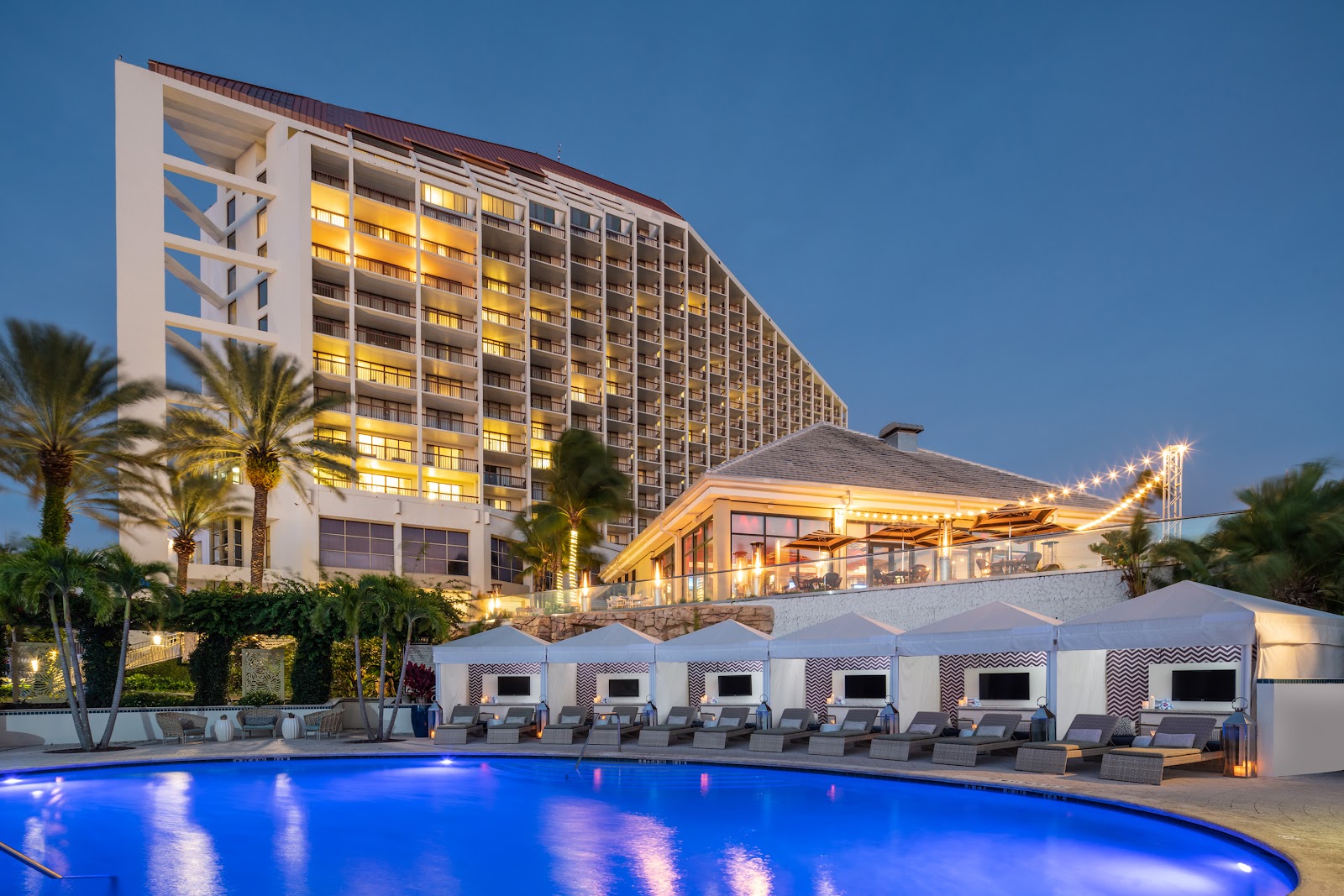
The third way out is to turn around. The light that is impossible to shoot into is excellent to shoot with, and the beach behind the camera is lit by it.
A subject facing the setting sun receives low, direct, strongly warm light straight into their face, with the resort or the dune line behind them. The problems are the two obvious ones — people squint, and the light is hard enough at ten degrees of elevation to be unkind — and both have answers. Squinting is solved by having the subjects look away from the sun and turning them back only for the moment of exposure, or by working in the last few minutes when the sun’s intensity has dropped sharply.
The hardness is solved by the sand, which on this coast is a very pale quartz and returns a great deal of light upward: the shadow under a brow or a chin is filled naturally to within a stop or so, which is why a low-sun portrait on a white Gulf beach is softer than the same portrait on grass.
This is the most reliable of the four and the one to take first when the window is short, because it needs no equipment and cannot fail.
The fourth way out is to go before. The forty minutes preceding the last hour — when the sun is at fifteen or twenty degrees rather than at two or three — produce a much smaller brightness range, which means a subject can be placed almost anywhere and both they and the sky will hold.
The light is less spectacular and much more usable, the water still reads green-blue rather than gold, and everything is easy. This is where group photographs belong, because a group cannot be lit by a single close source and cannot be silhouetted, and so is the one subject for which the impossible-range window is genuinely impossible.
Doing groups before the last hour and couples during it is the single most useful scheduling decision available on a west-facing coast.
The rest of the day arranges itself around those four. The middle of a summer day in the open is not workable for portraits — a near-vertical sun, no natural cover, and palms whose fronds throw a hard slatted shadow rather than shade — so the midday work is architectural: covered terraces, porte-cochères, boardwalk shelters, the deep side of a building, and indoors.
Indoors a large resort offers scale rather than intimacy. Wide glazing at forty-five degrees to a subject is a room-sized softbox, a long corridor with a window at the end is a directional source with several stops of fall-off, and the pale surfaces mean light is never the problem. Separation is: with everything bright, a subject needs something dark behind them, which usually means finding the one shaded recess rather than the brightest wall.
And the standing Florida hazard applies. In the wet season an air-conditioned interior sits far below the outdoor dew point, so a lens carried onto the beach fogs immediately and takes ten to twenty minutes to clear. With a twenty-minute twilight, that is the whole window. One body stays outside.
- Add light: close, warm-gelled, handheld; accept a darker sky
- Silhouette: expose for the sky and make it about shape
- Turn around: low sun into faces, filled from below by white sand
- Go before: the easy window, and where the groups belong
- Do groups before the last hour and couples during it
The southwest Florida year
Southwest Florida has two seasons and the good one is winter — which for this coast is emphatic rather than marginal.
The dry season runs roughly November to April. Humidity falls, the haze clears, the afternoon storms stop, and the Gulf horizon sharpens from a soft band into a line. On a coast where the sunset is the product, that clarity is the difference between a defined sun above a hard horizon and a warm smear.
The December noon sun sits around forty degrees, which models faces rather than flattening them, so the whole day is workable. Sunset comes early — around half past five — which is a practical advantage at a wedding, because the low-light sequence lands during cocktails rather than after the dancing has started.
The wet season runs roughly May to October and it is a different climate. Dew points in the mid-twenties Celsius produce haze rather than fog: the horizon softens, the sun loses its edge as it descends, and contrast at distance goes. It is not unattractive — a hazy Gulf sunset is a wash of graduated colour rather than a defined disc — but it is a different photograph and it cannot be sharpened afterwards.
The afternoon storms have a mechanism. Sea breezes push inland from the Gulf and from the Atlantic, and where the two fronts meet over the peninsula the air is forced upward — which is why the interior of Florida records more lightning than anywhere else in the United States. Naples sits at the Gulf edge of that system, which means cells often build inland during the afternoon and can push back toward the coast in the early evening. A beach ceremony has no cover of any kind, so a named indoor alternative between June and September is a requirement.
The compensation is genuine: a cell offshore at sunset produces the single best light this coast offers, because the cloud takes the sun’s intensity down to something a sensor can hold while keeping the colour, and the brightness range that causes the whole problem described above collapses to two or three stops. On those evenings all four solutions become unnecessary and the picture simply works.
Hurricane season runs June to the end of November and peaks mid-August to mid-October. This stretch of coast is exposed, and it belongs in the planning conversation for any late-summer date.
Two local details. Red tide — a bloom of the region’s algae — occurs irregularly on this coast, most often in late summer and autumn, and when it is inshore it irritates eyes and throats and can leave fish along the tideline. It varies year to year and is a question for the venue close to the date, not a months-out worry.
And no-see-ums and mosquitoes arrive at dusk near mangrove and standing water, which on this coast is most places set back from the beach. The open sand is usually the best-ventilated spot on the property at that hour, which happens to be where the work is.
The tidal range here is small — a mixed tide of well under a metre — so the beach width barely changes across a day and a composition scouted at noon still holds at eight. The vegetation is evergreen and gives no seasonal cue at all: sea oats, palms, mangrove and sea grape look the same in January as in July, which means the only thing in a photograph on this coast that says what time of year it is, is the clarity of the air.
More frames from Naples Grande Beach Resort
Naples Grande Beach Resort wedding photography: common questions
What is the problem?
A subject on a west-facing beach at sunset stands in front of a background eight to ten stops brighter. No sensor holds that range.
What are the four ways out?
Add a close warm-gelled light; expose for the sky and silhouette; turn around and shoot with the light; or work the easier window before the last hour.
Where do group photographs belong?
Before the last hour. A group cannot be lit by one close source and cannot be silhouetted, so it needs the smaller brightness range.
Why gel the flash warm?
A sun near the horizon is extremely warm. An ungelled flash puts cool faces into a gold landscape — the most recognisable error in beach work.
How long is the low-light window?
Short. At this latitude the sun drops steeply and civil twilight runs a little over twenty minutes.
Which season is best?
November to April. Clear dry air gives a defined sun above a hard horizon, and sunset falls early enough to land inside the reception.
More Florida venue guides
We are writing a photographer’s guide to every venue we would happily shoot in Florida. Here are three more, plus the full index:
- The Ringling, Sarasota: How the Light Moves Across the Estate
- The Ritz-Carlton Key Biscayne: What It Suits and What It Does Not
- The Dalí Museum, St. Petersburg: The One Decision That Governs Everything
Planning a wedding at Naples Grande Beach Resort?
Four ways out, and one of them is right for your evening. Tell us your date.