 Dry Tortugas National Park: A Walk Through an Island Fort
Fairchild Tropical Botanic Garden, Coral Gables: A Walk Through the Site
A garden arranged by botany, which means the light changes by section rather than by hour.
Most gardens are laid out for effect. A botanic garden is laid out for taxonomy, and that difference is the single most useful thing to understand before photographing one.
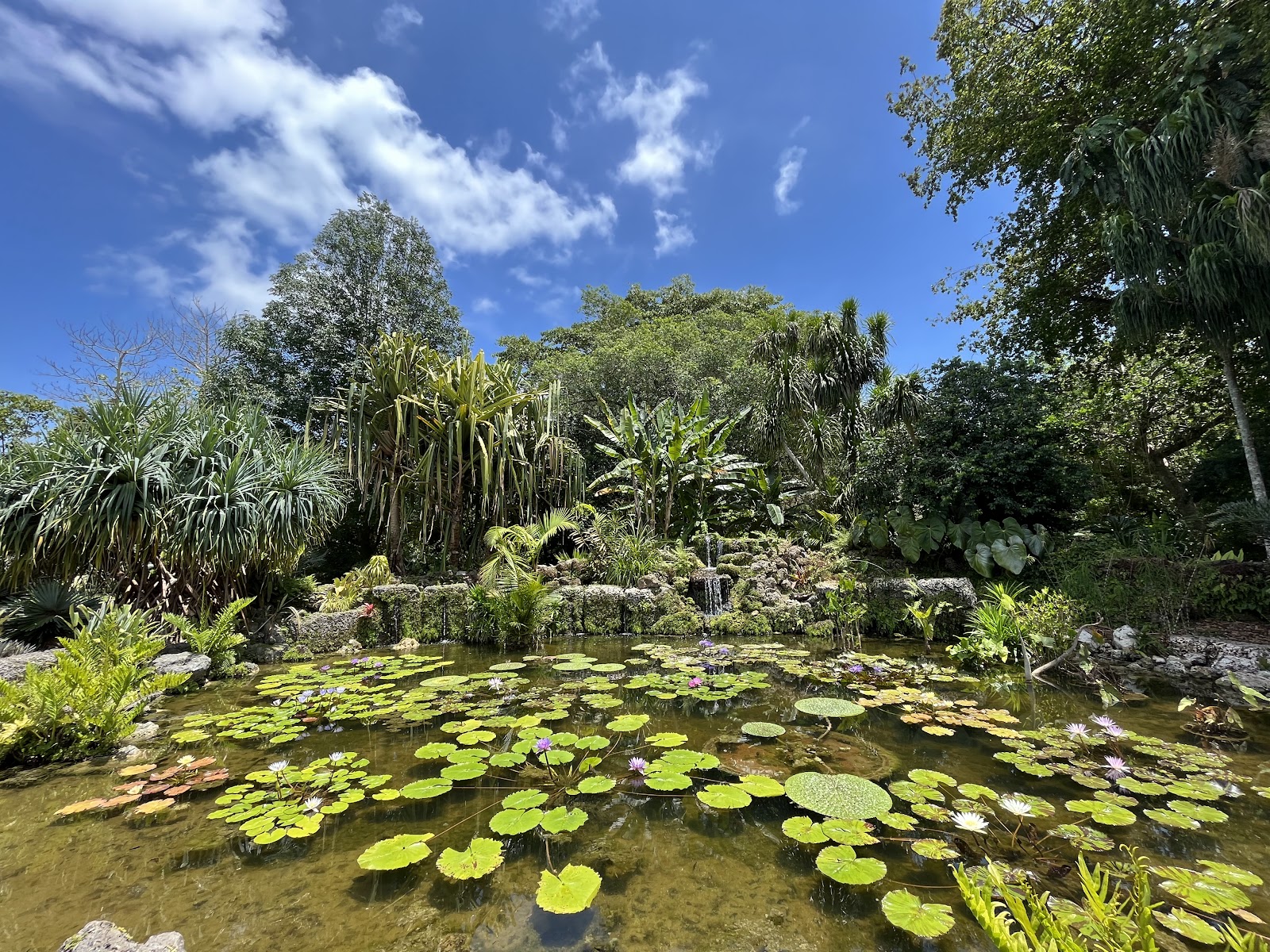
Fairchild is a tropical botanic garden south of Miami, and its sections are organised around what the plants are: palms in one area, cycads in another, flowering trees somewhere else, a rainforest planting, a walled or glazed conservatory, lakes and lawns between them. The consequence is that the quality of shade changes abruptly at the boundary between collections rather than gradually across the site.
That is unlike almost any other garden in this guide. In an English-style landscape or an American estate garden, the canopy is mixed and the light under it averages out. Here it does not average: a palm collection and a flowering-tree collection thirty metres apart produce two completely different kinds of light, and one of them is unusable for faces.
The reason is leaf architecture. A broadleaf tree presents many small overlapping surfaces, so the gaps in its canopy are small and numerous and the shadow beneath it is soft-edged and even. A palm presents a pinnate frond — a row of stiff parallel blades on a central rib — so the gaps are long and straight, and the shadow beneath it is a set of hard-edged stripes.
In a place where the noon sun sits within two degrees of vertical in summer, those stripes fall straight down across a face. A palm collection in full sun is, photographically, the worst ground on the property, and it is also the most visually spectacular. Reconciling those two facts is the job.
Coral Gables sits at about twenty-five and three-quarter degrees north — two degrees from the tropics. The June noon sun reaches around eighty-eight degrees; the December noon sun still reaches about forty. There is no season here in which the sun is genuinely low at midday.
We have not photographed a wedding at Fairchild. Which areas are included, what the restrictions are on the collections and the lawns, whether the conservatory is available and what the permitted hours are are questions for their team.
Fairchild Tropical Botanic Garden at a glance
| Where | A tropical botanic garden south of Miami, Coral Gables |
| The layout | By plant family, so the shade quality changes by section |
| Best shade | Flowering-tree and rainforest plantings; broadleaf canopies block |
| Worst light | The palm and cycad collections in direct sun — hard slatted shadow |
| Ask first | Included areas, collection restrictions, conservatory access, hours |
The open ground and the palms
Start with the lawns, because they are where the ceremony will probably be and because they are the simplest thing on site.
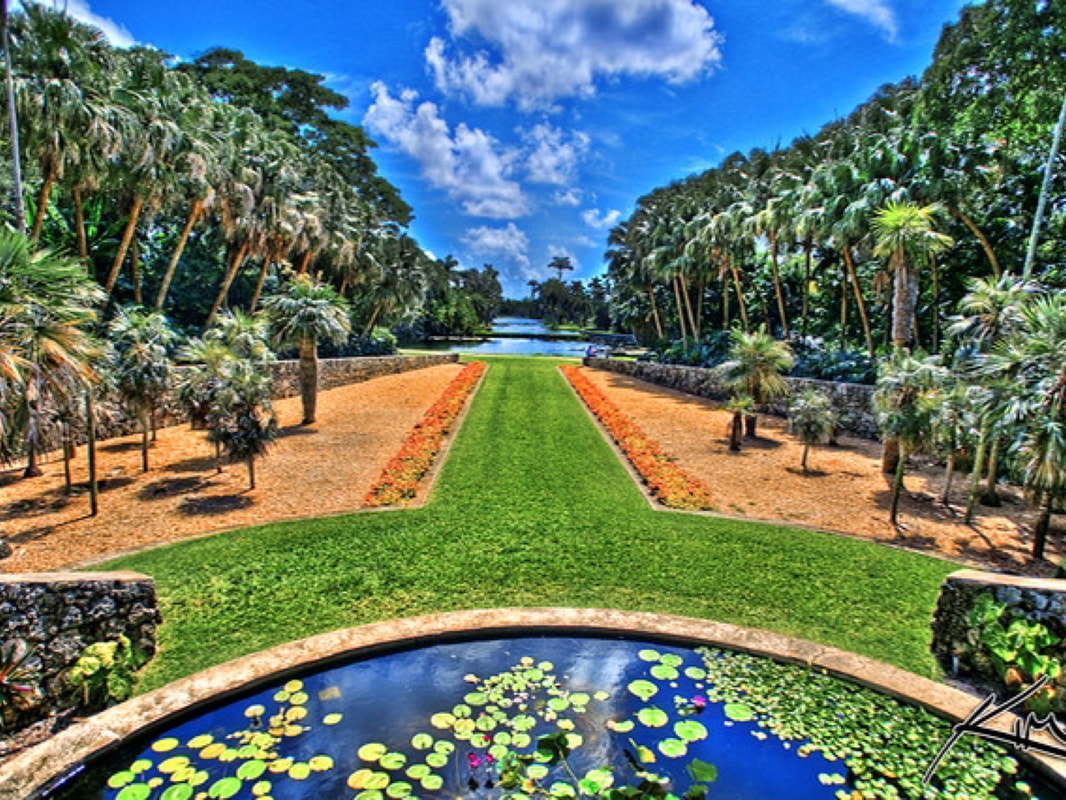
Open mown ground in a tropical garden is an even surface with generous sightlines and plantings as a background, and it behaves like open ground anywhere: excellent when the sun is low or the sky is overcast, unusable when the sun is high. There is no middle position. Between roughly ten and four in summer, a face on an open lawn here has shadowed eyes and a lit forehead and nothing can be done about it in place.
What a botanic garden gives the lawns that an ordinary garden does not is the backdrop. A boundary of flowering trees or a stand of large palms behind a ceremony is a background with real structure — which means a group photographed on the lawn against it does not need a building to keep the frame from feeling empty.
Then the palms, which deserve the longest paragraph on this page because they are the site’s signature and its trap.
A palm collection in direct sun produces slatted shadow. The practical consequences are specific: a face standing under a palm at midday is striped, a group under palms cannot be evened out by moving anyone, and no amount of exposure work fixes a subject who is half in and half out of a hard-edged stripe.
There are three working responses. The first is to use palms exclusively as background and never as cover — a stand of palms behind a subject who is standing in open shade or low sun is one of the strongest backgrounds in Florida, precisely because the trunks give strong verticals and the crowns give a distinctive silhouette. The second is to work the collection when the sun is not on it: overcast, early, late, or after a storm cell has moved in. Under a solid overcast the same collection becomes soft, even and entirely usable, and it looks more tropical, not less.
The third is to shoot upward. A palm crown photographed from beneath against the sky is a graphic subject in its own right, and a couple placed at the base of a large trunk, framed by the crowns, is a picture that works in full sun because the subject is small enough in the frame that the striping does not read as striping.
The cycad plantings behave similarly but at a lower height, which means they are less of a shade problem and more of a foreground one. Their leaf structure is stiff, glossy and strongly radial, which gives a texture that photographs unusually well in raking light and turns to visual clutter under flat light.
The lakes are the other open element. A body of still water in a tropical garden is a horizontal reflector — it fills faces from below, which is precisely where a near-vertical sun leaves them dark — and a mirror when calm. Calm here means early morning, before the day’s heating sets a breeze going. A lake edge at eight in the morning is one of the best positions on the property and it is empty at that hour.
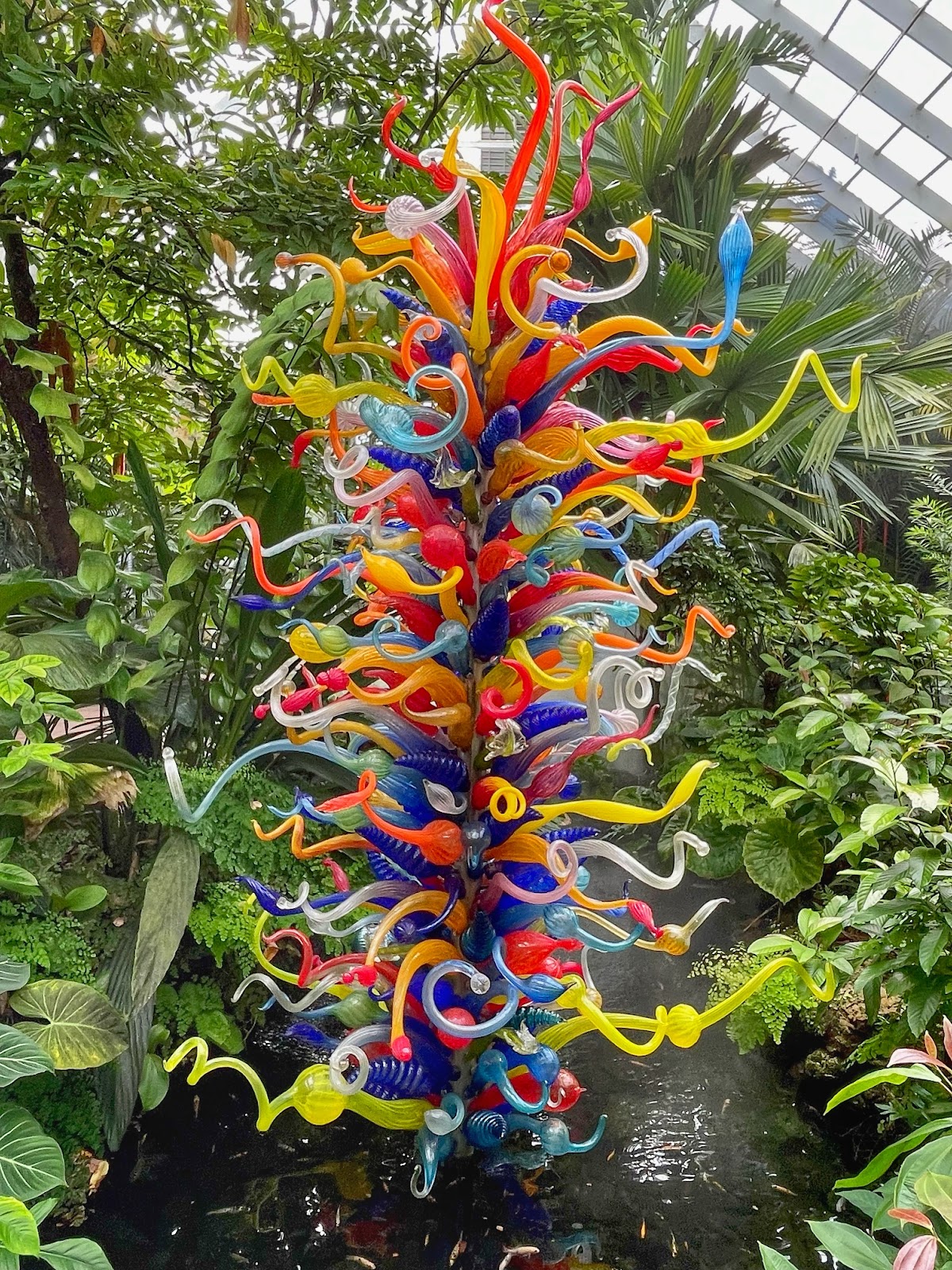
Into the closed canopy, and under glass
The rainforest and flowering-tree plantings are where the good shade lives, and they are the reason the site works at all in the middle of the day.
A dense broadleaf tropical planting blocks. The canopy is layered, the leaves are large and overlapping, and the light that reaches the ground has been diffused and reflected several times — which makes it soft, directionless and a stop or two down from the open. Under one of these a portrait needs no intervention at all: place the subject a metre or two inside the edge, facing out toward the brighter ground, and the canopy edge does the work of a softbox with a dark background behind.
The light there is also green, and that has to be handled rather than ignored. Leaves transmit and reflect strongly in the green part of the spectrum, so a subject standing well inside a dense planting has a genuine green cast on the skin that a global white balance correction cannot remove without turning the foliage grey.
The fix is positional. Standing at the edge rather than deep inside means most of the light on the face arrives from open sky rather than through leaves, which cuts the cast to something a small correction handles. Alternatively a warm-gelled source at about a stop above ambient overrides the transmitted green on the skin while leaving the foliage as it is. What does not work is a deep-canopy portrait corrected globally.
Strangler figs and banyans, where they grow to size, are the best single structures in a garden like this. A mature fig drops aerial roots in vertical curtains and fuses them into secondary trunks, which gives natural frames at every scale — a gap to shoot through, a column to place a subject against, a receding series of arches. The canopy above is dense enough to be reliable shade at any hour.
A conservatory or glasshouse, if one is included, is a different technical environment entirely. Glazing above means light from directly overhead, diffused by the glass and by whatever shading is fitted, which produces soft but top-heavy illumination — eye sockets go dark even though the light is soft. The answer is to find a vertical glazed wall rather than standing under the roof, and to use it at forty-five degrees as a conventional window.
Glasshouses are also humid by design, which means a lens brought in from an air-conditioned vehicle fogs on arrival, and a lens brought out of the glasshouse into a cooler space does not. The order of operations matters.
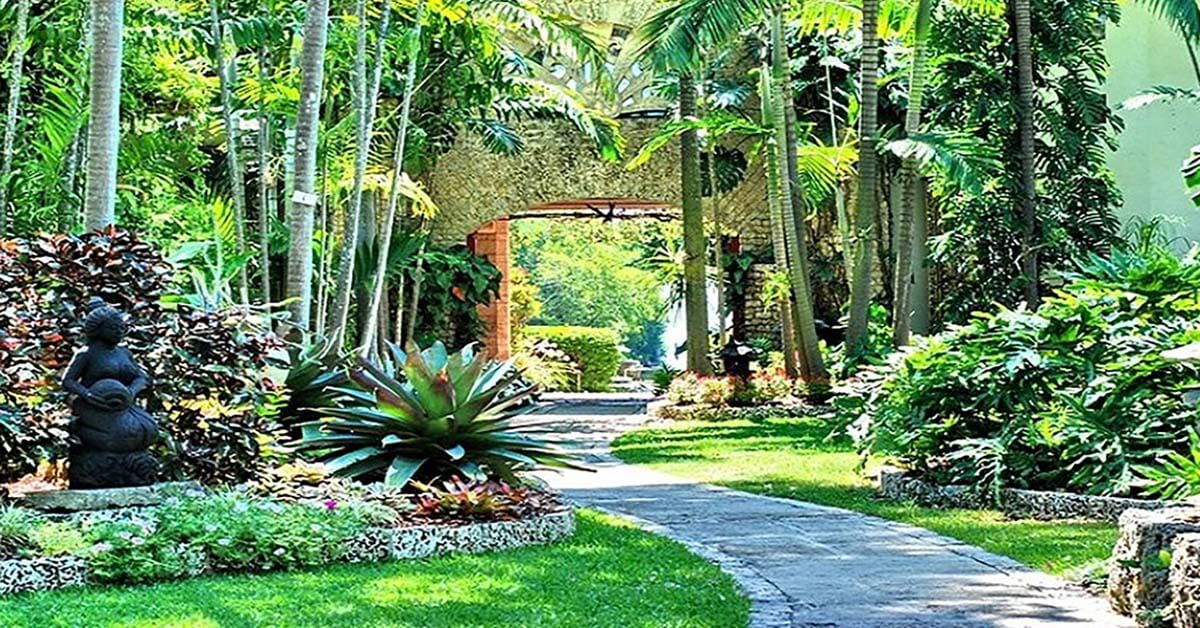
Paths in a tropical garden are narrower than in a formal one and the planting comes right up to them, which limits where a group can stand and where a camera can back up to. That is worth walking before the day rather than discovering with twenty people waiting. The usable group positions on a site like this are the lawns, the lake edges, the wider path junctions and the built structures — and there are fewer of them than the acreage suggests.
- Palms as background, never as cover
- Overcast makes the palm collection usable and more tropical, not less
- Canopy edge, facing out, is the free portrait position
- Deep-canopy green is fixed by position or a warm source, not by white balance
- Scout the group positions — narrow tropical paths limit them badly
The tropical year
Two seasons, and for a garden the distinction is not only about comfort — it changes what is in flower and therefore what is in the frame.
The dry season runs roughly November to April. Humidity drops, the air clears, the afternoon storms stop, and the light gains contrast. For a garden that means better definition in foliage at distance and cleaner separation between canopy layers, which is exactly what a green-on-green subject needs. The December noon sun at around forty degrees also models a face rather than flattening it, so the whole day is workable rather than just its ends.
The dry season is also when a subtropical garden looks most deliberate. Growth is slower, the planting reads as designed rather than exuberant, and bougainvillea is at its strongest.
The wet season runs roughly May to October. Everything grows, the garden is at its fullest and greenest, and the plants that define a tropical collection are doing what they were planted to do. The flowering trees are the reason to consider it: a royal poinciana in late spring and early summer is scarlet over its entire crown, which is the most saturated thing this garden produces all year, and it lasts weeks rather than months.
The costs are real. Dew points in the mid-twenties Celsius put haze into the air, which lowers contrast at distance and makes a deep garden read as flat layers of green rather than as depth. And the condensation problem is acute in a garden, because there is nowhere air-conditioned to escape to and back from without paying for it: glass carried from a cooled vehicle or building into this air fogs instantly and takes ten to twenty minutes to clear.
The afternoon storm is the wet season’s other feature and it has a mechanism. Sea breezes from the Atlantic and from the Gulf push inland and collide over the peninsula, forcing the air up — which is why interior Florida records more lightning than anywhere else in the United States, and why the cells arrive in the afternoon with some regularity. A garden ceremony has no cover, so a named alternative between June and September is a requirement.
What the storms give back is the best light of the wet season and, specifically for a garden, the best light of the year. A tropical planting immediately after rain is saturated in a way that dry foliage never is — wet leaves are darker and more reflective, the greens deepen, the highlights on the leaf surfaces read as structure, and the air is briefly clear. Half an hour after a cell passes, with broken cloud overhead, the whole collection is at its best and the palms are usable for the only time in a sunny month.
Hurricane season runs June to the end of November, peaking mid-August to mid-October, and for a garden it has an after-effect worth knowing: a significant storm strips and shreds foliage, and a tropical collection can take months to look complete again. That is a question for the venue after any major event rather than a prediction.
Mosquitoes are a genuine consideration here — a garden with standing water and dense planting at dusk in the wet season is their preferred environment, and a ceremony at that hour needs them addressed rather than tolerated.
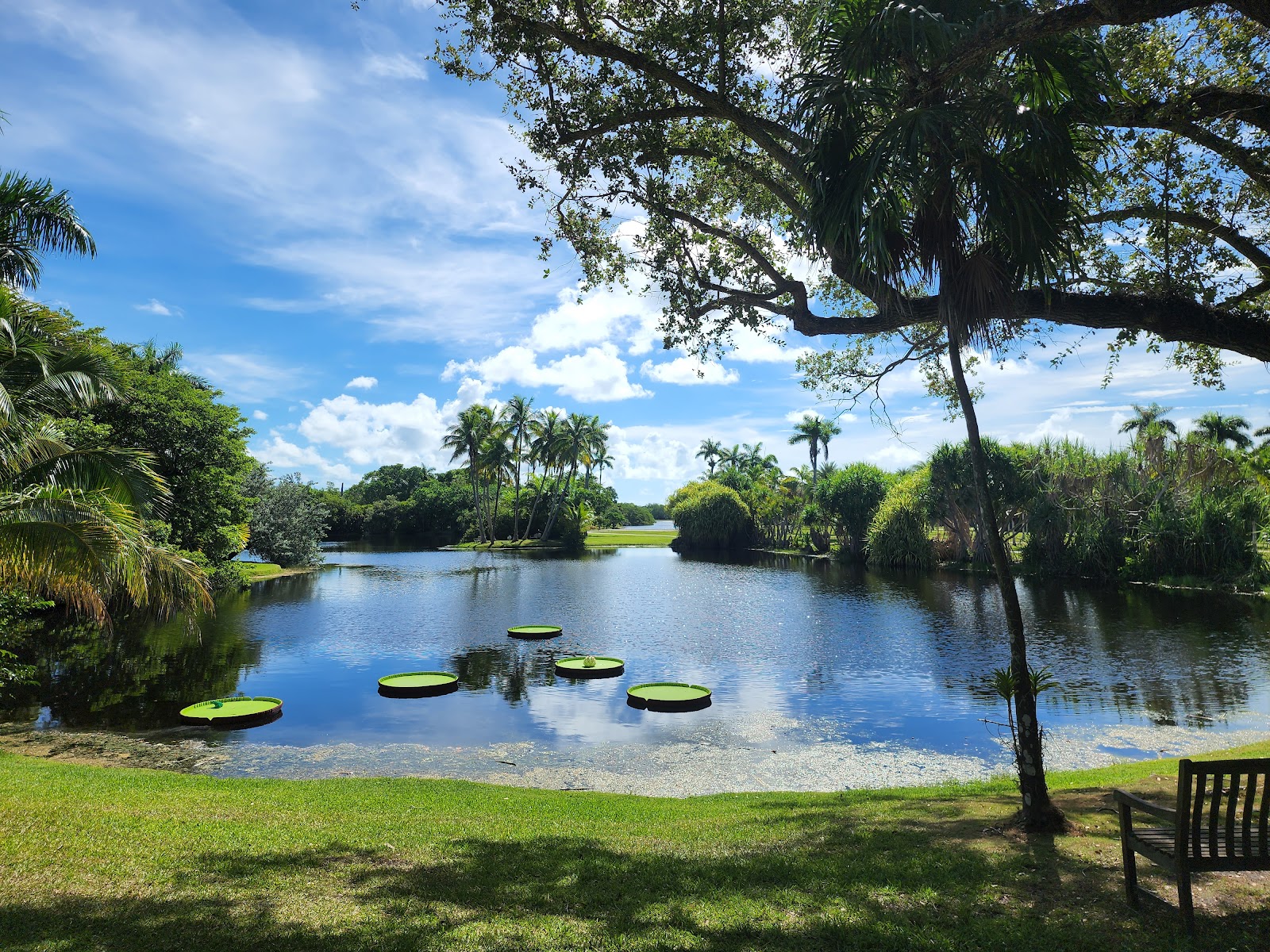
More frames from Fairchild Tropical Botanic Garden
Fairchild Tropical Botanic Garden wedding photography: common questions
Why does the light change so much across the site?
Because the garden is laid out by plant family rather than for effect, so leaf architecture — and therefore shade quality — changes abruptly at each collection boundary.
What is wrong with photographing under palms?
A pinnate frond is a row of stiff parallel blades, so its shadow is a set of hard-edged stripes. Under a near-vertical sun those stripes fall straight down a face.
When are the palms usable?
Under overcast, early, late, or in the half hour after a storm cell passes. Otherwise use them as background only.
Where is the best free portrait light?
A metre or two inside the edge of a dense broadleaf or rainforest planting, facing out toward the brighter ground.
How do I deal with the green cast under canopy?
Stand at the edge so most of the light comes from open sky, or add a warm-gelled source a stop over ambient. A global white balance fix turns the foliage grey.
What is the best light of the year here?
The half hour after a wet-season storm cell: wet foliage is far more saturated than dry, the air is briefly clear, and broken cloud makes every collection usable.
More Florida venue guides
We are writing a photographer’s guide to every venue we would happily shoot in Florida. Here are three more, plus the full index:
- Gaylord Palms Resort, Kissimmee: The Venue’s Own Logic
- The Homestead Resort, Homestead: Field Notes, Problem and Solution
- ZooTampa at Lowry Park, Tampa: The One Decision That Governs Everything
Planning a wedding at Fairchild Tropical Botanic Garden?
A garden where the section matters more than the hour. Tell us your date and we will plan the route.