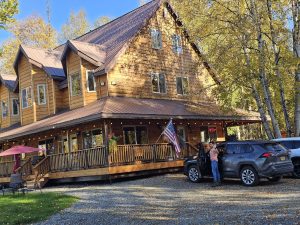
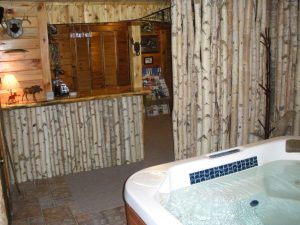
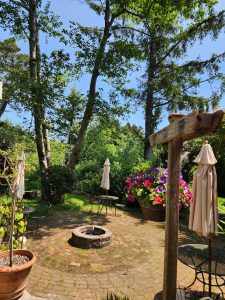
 Salmonberry Inn, Anchorage: One Frame, and How It Is Made
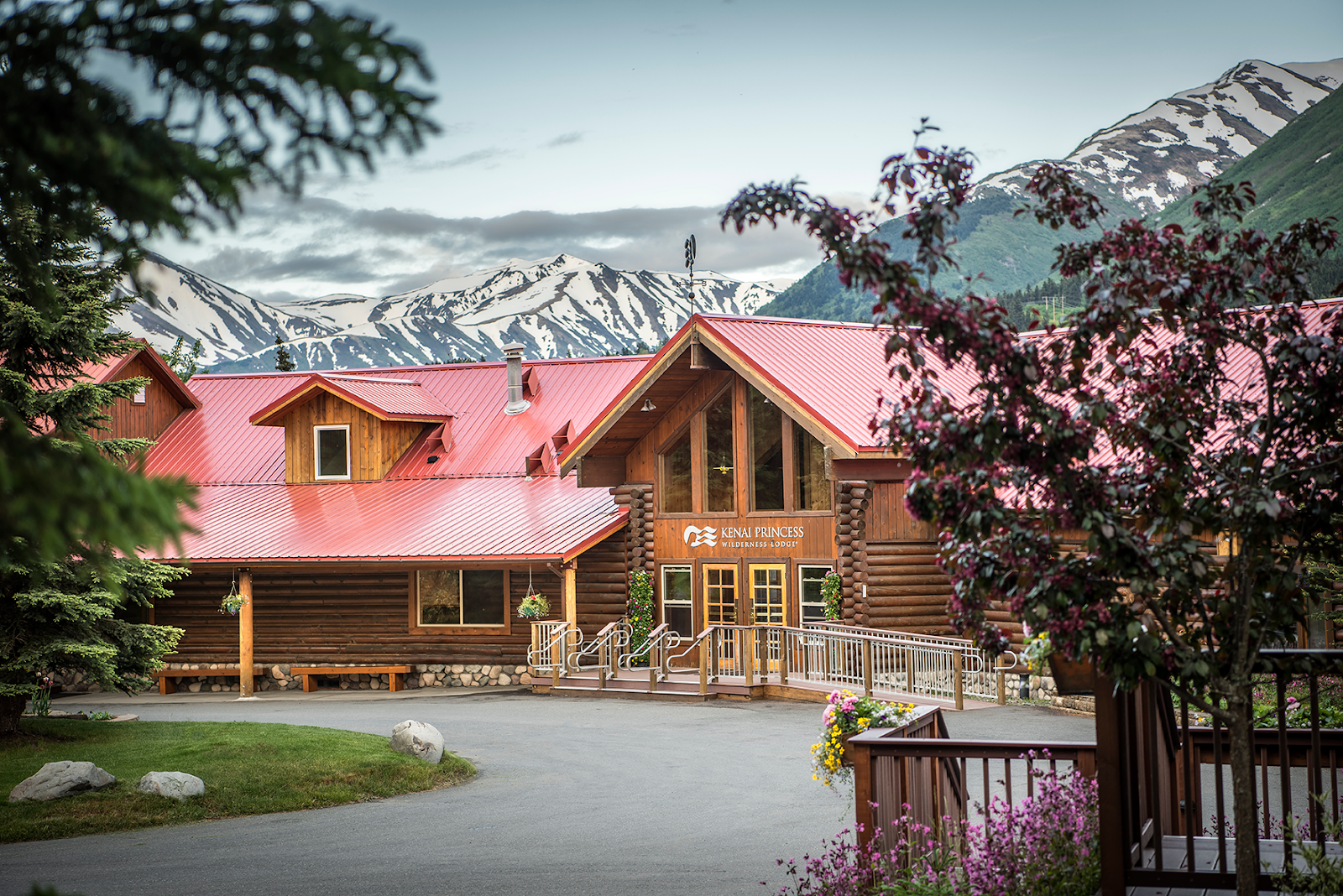
Kenai Princess Lodge, Cooper Landing: The Light Through the Day
The Kenai is turquoise, not grey. The reason is particle size, and it changes the exposure.
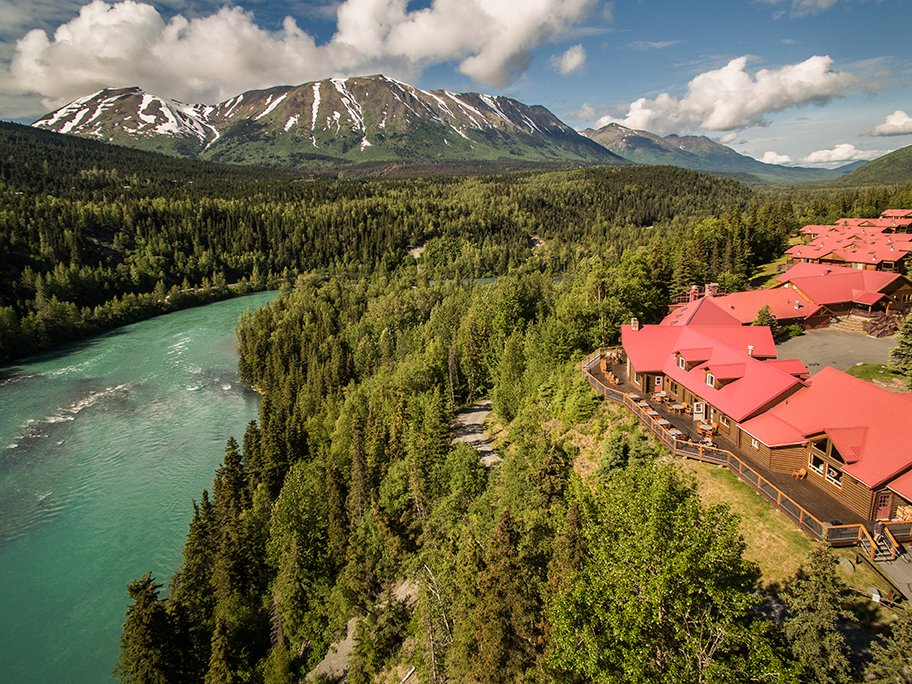
A lodge above the Kenai River has a day shaped by two things: the colour of the water, and the steepness of the valley it runs through.
The water first, because it is the site’s subject and because it is unusual. Most glacial rivers in this guide are grey-tan and opaque — they carry coarse rock flour that scatters all wavelengths more or less equally, which makes them the colour of wet cement. The Kenai is a striking turquoise green-blue, and the reason is that the particles suspended in it are exceptionally fine.
Very fine suspended sediment scatters short wavelengths preferentially, in the same way that fine particles in the atmosphere make the sky blue — which means the light coming back out of the water is shifted toward blue-green. Combine that with the water’s own absorption of red, and the result is the colour the river is known for.
The photographic consequences are direct. The colour only reads when there is light on the water, which means it is strongest in sun and under bright overcast and weakest in deep shade. It is also easy to lose in exposure: a stop over and the turquoise washes toward white, because the highlight clips before the colour can register.
And the white balance has to leave it alone. Set the balance to render the water neutral and the whole frame goes warm and wrong; set it for the faces and the river is the colour it actually is. Turquoise water is the subject rather than a cast, which is the same rule that applies to glacier ice and stained glass elsewhere in this guide.
The valley is the second fact. This is a steep-sided river valley in the Kenai Mountains, which means the sun clears the eastern ridge late and drops behind the western one early — so the valley floor has a shorter direct-sun day than the sky above it suggests, and the good light arrives and leaves faster than a table implies.
We have not photographed a wedding at the Kenai Princess Lodge; river lodges in this valley behave consistently. Which spaces are included, what access there is to the river bank, the covered alternative, and what the bear and wildlife guidance is are questions for their team — and the last of those matters more here than at most venues, because a salmon river is bear habitat.
Kenai Princess Lodge at a glance
| Where | A bluff above the Kenai River at Cooper Landing, Kenai Peninsula |
| The water | Turquoise, because the suspended sediment is exceptionally fine |
| The exposure | A stop over and the turquoise washes out. Set balance for the faces |
| The valley | Steep-sided, so the direct-sun day is shorter than the sky suggests |
| Ask first | Spaces included, river bank access, covered alternative, bear guidance |
Morning to midday: the valley's clock and the river's colour
The morning on a valley floor in the Kenai Mountains is soft for longer than the latitude alone would explain, because the ridge to the east holds the sun back — which means an hour or more of even shade after the sun has technically risen.
That is useful light and it is also the calmest part of the day, which matters because a river valley funnels wind. Mist on the water is frequent in the cooler months, and a river in mist with the valley walls fading into tone behind it is the most atmospheric frame the site produces. It rewards a longer lens, because mist reads as layers only when the distances are compressed.
When the sun does clear the ridge it comes in low and along the valley rather than down into it, which is the best condition for the water. Raking light on turquoise river is what makes the colour read, and it puts texture on the surface rather than glare — so the first hours after the sun arrives are the strongest water frames of the day.
The exposure for the river is the technical point and it is worth getting right. Meter so the brightest part of the water holds colour rather than clipping, which in practice means a frame that looks slightly dark on the back of the camera — and then lift the faces with a close warm-gelled source if they are in shade.
Close matters because nothing over water bounces enough to lift a face: a source at two metres needs roughly a quarter of the output of the same source at four. And the gel keeps the faces from reading cooler than the warm low light around them.
Midday is where this site differs from almost every other in this guide, and it differs in a good way. At around sixty degrees north the sun reaches only about fifty-two degrees above the horizon at midsummer noon and far less the rest of the year — which means it rakes rather than falls, faces are modelled rather than flattened at every hour, and there is no midday to avoid.
So the middle of the day is a perfectly good time to work here, and the position matters rather than the hour. What the middle of the day does give is the most light on the water, which is when the turquoise is at its strongest — the colour depends on light penetrating the water and scattering back out, so a bright overhead condition intensifies it.
Bright high overcast is arguably the best condition of all for the river: it keeps plenty of light on the water without the specular glare that direct sun produces on ripples, which means the colour reads cleanly across the whole surface rather than in patches between highlights.
The shade in the middle of the day is the forest. This is spruce and birch country — white and Sitka spruce with paper birch and cottonwood — and spruce blocks almost everything, which makes the canopy edge the most reliable position on the property: a metre or two inside at the margin of an opening gives soft directional light in front and near-darkness behind, three or four stops of free separation.
The metering trap is severe at a river site and it is worth stating plainly: a meter looking at dark spruce overexposes a face by a couple of stops, and a meter looking at bright turquoise water five paces later fools it hard the other way. Manual, metered on skin, reset at every transition.
And a custom white balance set on a face is needed in both places for different reasons — green from the forest, blue-green from the water — which means resetting it rather than setting it once.
Afternoon to the long evening
The afternoon brings the wind, because a river valley in the Kenai Mountains funnels air along its length as the day warms. That is the practical constraint of the site: a lightstand is a liability, a held modifier is a sail, and a veil is unpredictable, so handheld or bracketed sources are the working configuration and the lee of the lodge or a dense stand is worth walking to.
Wind also removes any still-water reflection, which is why the mirror frames belong to the morning and the evening rather than the middle of the day. On a river that matters less than on a lake, because moving water does not mirror anyway — but the side channels and sloughs do, and those are worth finding.
The evening arrives earlier than a table says because the western ridge takes the sun well before it reaches the horizon — frequently by half an hour or more in summer. That produces the valley’s signature condition and it is worth planning for: the river and the valley floor in soft even shade while the ridge above and the upper slopes are still lit, for twenty or thirty minutes.
That frame is made by exposing for the lit ridge and lifting the faces with a close warm-gelled source, not by underexposing the rock to match them. It is the best mountain frame of the day and it is over quickly.
What follows is the long Alaskan twilight, and it is the site’s greatest practical asset. Because the sun’s path is shallow at this latitude, the warm low light lasts two or three hours rather than forty minutes, and the twilight that follows lasts longer still — in June the usable light runs until near eleven at night.
So a portrait session at nine or ten in the evening is entirely reasonable here and will be better lit than one at two in the afternoon, and the day does not have to be compressed. That is worth building into the running order deliberately rather than treating the evening as an hour.
The river at that hour is a different colour again: with less light on it the turquoise deepens toward a darker green-blue, and under a warm sky it picks up warmth on the surface while staying cool below. That mixture is difficult to white balance and the answer is to set for the faces and let the water be what it is.
The mountains are the wide subject and they need a longer lens. The Kenai Mountains are steep and close, which means compression brings them forward as a mass behind the couple while a wide lens reduces them to a band above a lot of river bank. The air here is clean and cool, which means that compression holds detail well.
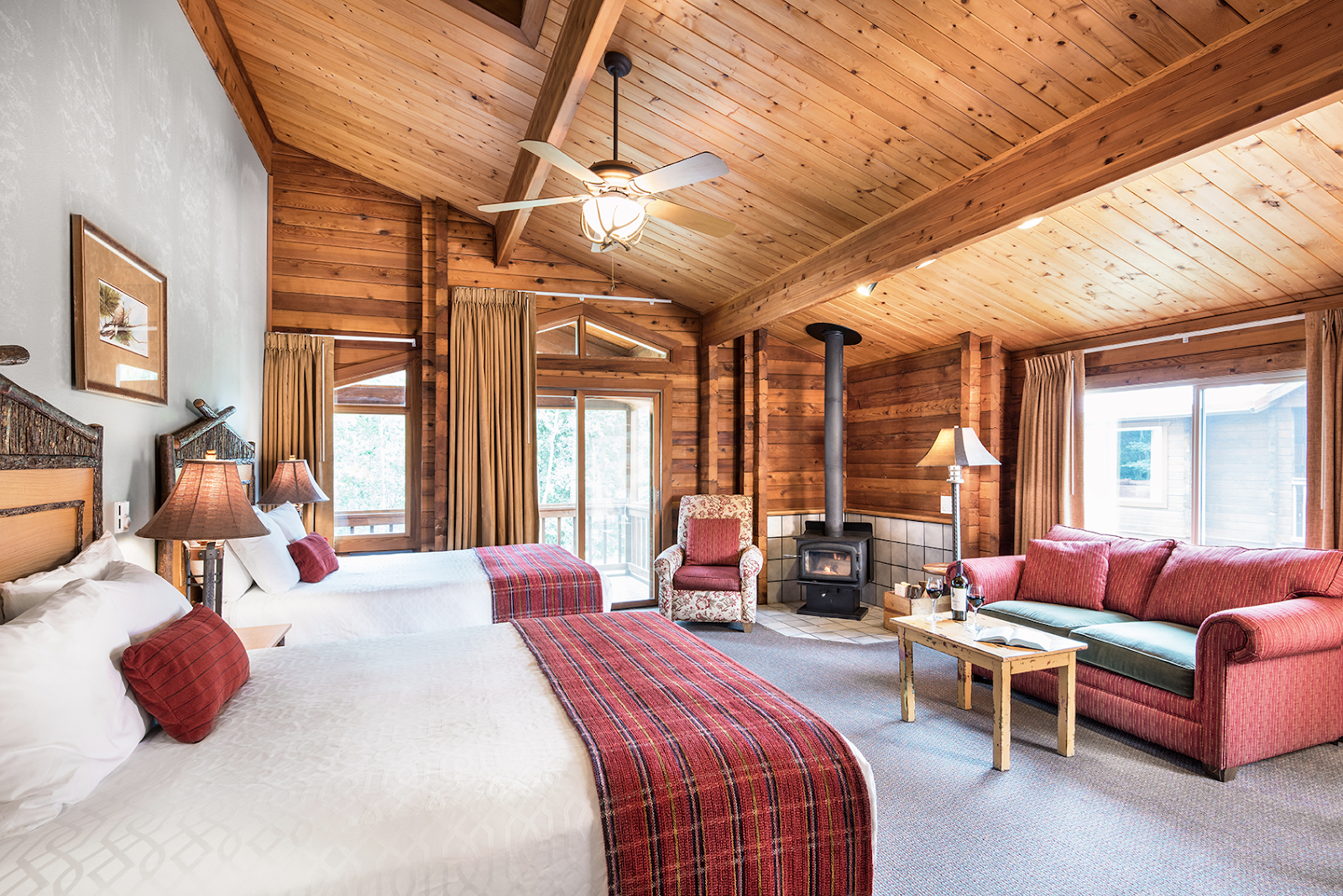
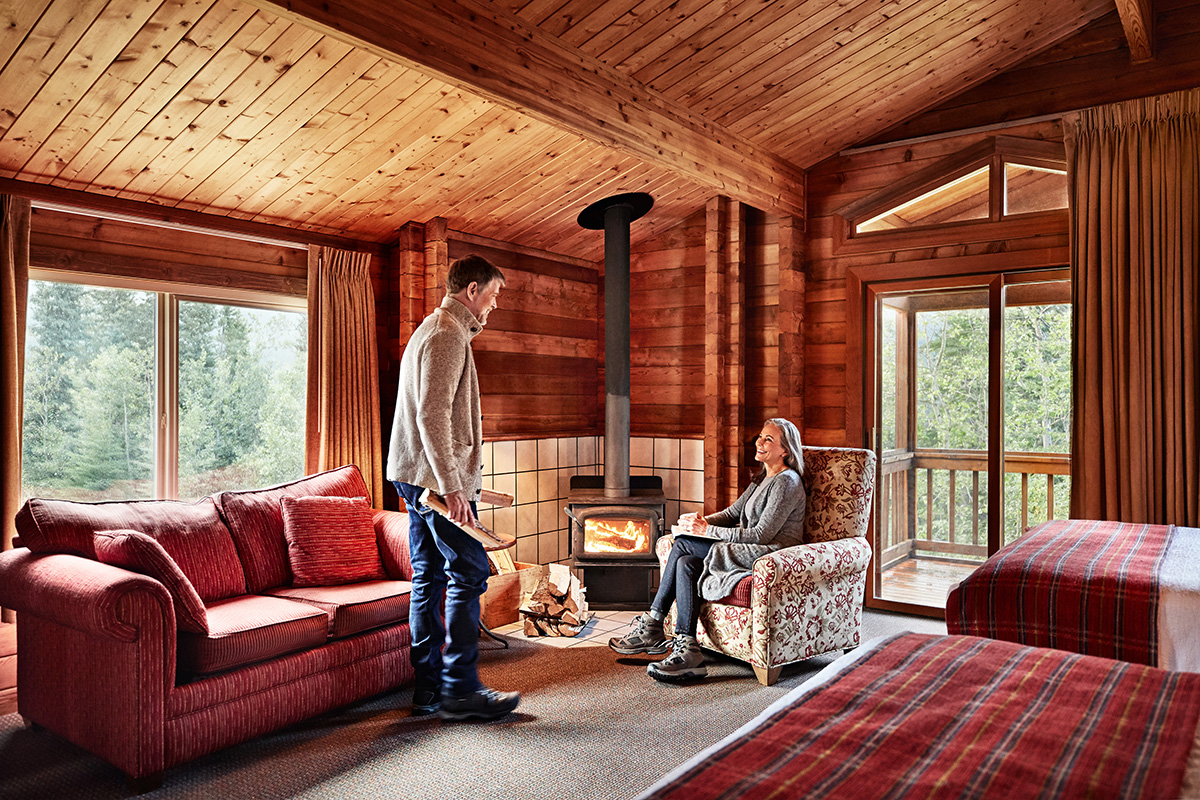
Indoors, a lodge in this climate is timber and it absorbs — so the ambient is a stop or two below what the eye estimates and the background behind a subject drops away for free. A subject a metre from a window turned about forty-five degrees to it gets horizontal light with steep fall-off, room lights off, custom white balance set on a face.
The latitude helps indoors: because the sun is low all year, it enters a window almost horizontally and travels much further into a room than it would further south. And a window facing the river delivers light with a green-blue cast, which is another reason to set the balance on a face rather than trust a preset.
The bear question belongs in a planning conversation rather than a footnote. The Kenai is a major salmon river and a salmon river in summer is bear habitat, which means the lodge’s guidance about where a party may go and when is followed rather than judged — and in late summer, when the fish are running, it matters most.
- Meter so the turquoise holds colour; a stop over washes it to white
- Set white balance for the faces — the water’s colour is the subject
- There is no midday to avoid; the sun never gets high enough
- Bright high overcast is the best condition for the river’s colour
- The western ridge ends the day early — plan the interval frame
The Kenai Peninsula year
This valley has a transitional climate — wetter than the interior, drier than the outer coast — with the enormous daylight swing that defines all of Alaska.
Midwinter gives about five and a half hours of daylight with the sun reaching only about six degrees above the horizon, which in a steep valley means it may not clear the ridge at all for weeks. The light that does arrive is soft, raking and blue-toned, and against snow and dark spruce it is genuinely beautiful.
Winter changes the river completely. Parts of it freeze and parts stay open, which gives a landscape of ice shelves, open channels and frost — and where the water is still moving, the turquoise against white ice and dark spruce is the strongest colour contrast the site produces all year.
Snow is the winter asset: the best natural fill available, lifting every shadow and throwing light upward into faces. Snow against near-black spruce is the widest brightness range in this guide — expose for the snow and let the conifer go black, overexposing deliberately relative to the meter, which snow fools by about two stops.
Winter is aurora season too, from roughly September to April on clear nights, and a frame with northern lights over a river valley is available nowhere else in this guide. Tripod, wide fast lens, a few seconds to half a minute, and a party willing to stand still in the cold.
Break-up in April and May is the least attractive time of year: patchy dirty snow, mud, bare trees and a river running high and cloudy with melt — which is when the turquoise is least apparent, because the sediment load is coarse and heavy. Early May here is not spring in any recognisable sense.
June is when it turns and it turns fast. The green arrives within a fortnight, the days are enormous, and the river settles and clears toward its characteristic colour. Mosquitoes arrive with the green and are a genuine consideration in June and early July.
July is the warmest month and the greenest, and fireweed gives the strongest colour of the Alaskan summer — tall magenta spires along the riverbanks and clearings in quantity, a genuine foreground rather than a detail.
Late July into August is salmon season on this river and it is the site’s defining feature rather than a detail: fish in the water, anglers on the banks, and the bears and eagles that follow them. It is worth keeping a long lens in reach, and it is when the bear guidance matters most.
Late August into September is the best season overall. Birch and cottonwood turn gold in late August at this latitude — weeks before foliage anywhere in the lower forty-eight — the alpine tundra on the valley walls turns red and orange, the first snow appears on the peaks, and the nights are dark enough for aurora while the days are still long.
Gold birch and red tundra above a turquoise river with fresh snow on the ridges is the strongest frame this site produces, and the window is roughly the last week of August through the middle of September. It is the only answer worth giving a couple with a movable date.
October brings the rain and the dark, and by November the valley is in winter. The whole calendar runs several weeks earlier than a photographer from further south will expect.
More frames from Kenai Princess Lodge
Kenai Princess Lodge wedding photography: common questions
Why is the Kenai turquoise rather than grey?
The suspended glacial sediment is exceptionally fine, and fine particles scatter short wavelengths preferentially — the same reason the sky is blue.
How do I expose it?
So the brightest part of the water holds colour rather than clipping. A stop over and the turquoise washes toward white.
Should I correct the colour?
No. Set the white balance for the faces and let the water be turquoise — the colour is the subject, not a cast.
Is midday a problem here?
No. At sixty degrees north the sun never gets high enough to flatten a face, and the middle of the day puts the most light on the water.
What is the best condition for the river?
Bright high overcast — plenty of light on the water without the specular glare that direct sun makes on ripples.
When is the site at its best?
Late August into mid-September: gold birch and red tundra above turquoise water with fresh snow on the ridges.
More Alaska venue guides
We are writing a photographer’s guide to every venue we would happily shoot in Alaska. Here are three more, plus the full index:
- Moose Meadow Lodge, Willow: What It Suits and What It Does Not
- Pioneer Ridge Estate, Wasilla: The Problem, and Four Ways Out
- Rustic Rose Ranch, Palmer: Field Notes
Planning a wedding at Kenai Princess Lodge?
A river with a colour worth understanding. Tell us your date.