 The Hotel St. Francis: A Walk-Through of Santa Fe’s Oldest Hotel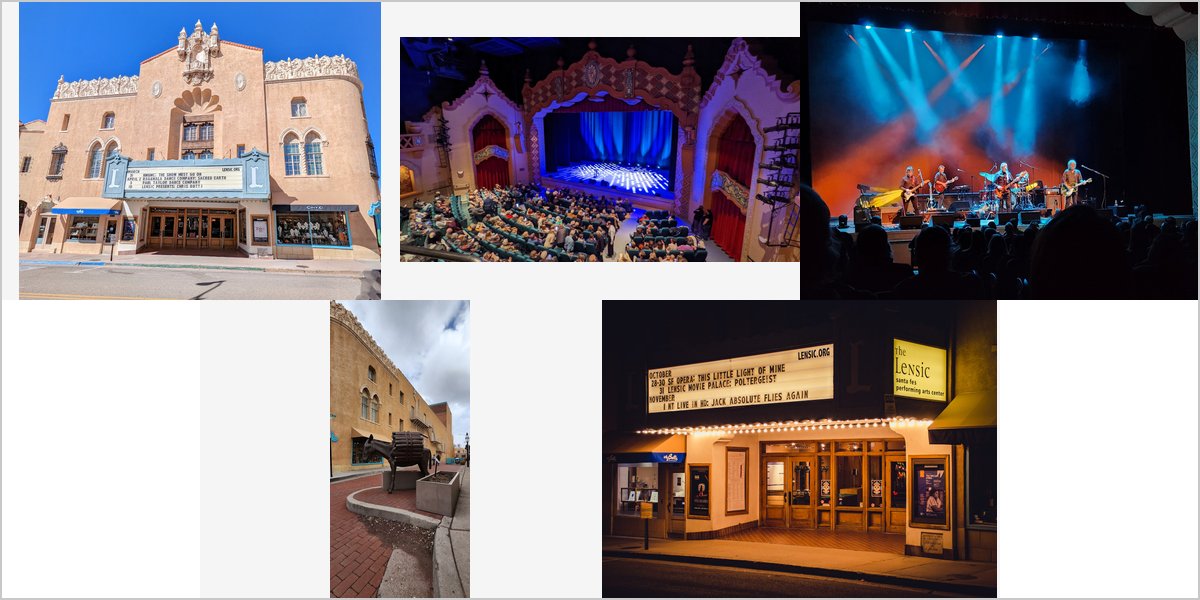
June 10, 2026
The Lensic: Lighting a 1931 Moorish-Spanish Theatre
A 1931 movie palace with Moorish plasterwork and a proscenium stage. Ornate relief, stage lighting and a dark auditorium — three problems with one answer each.
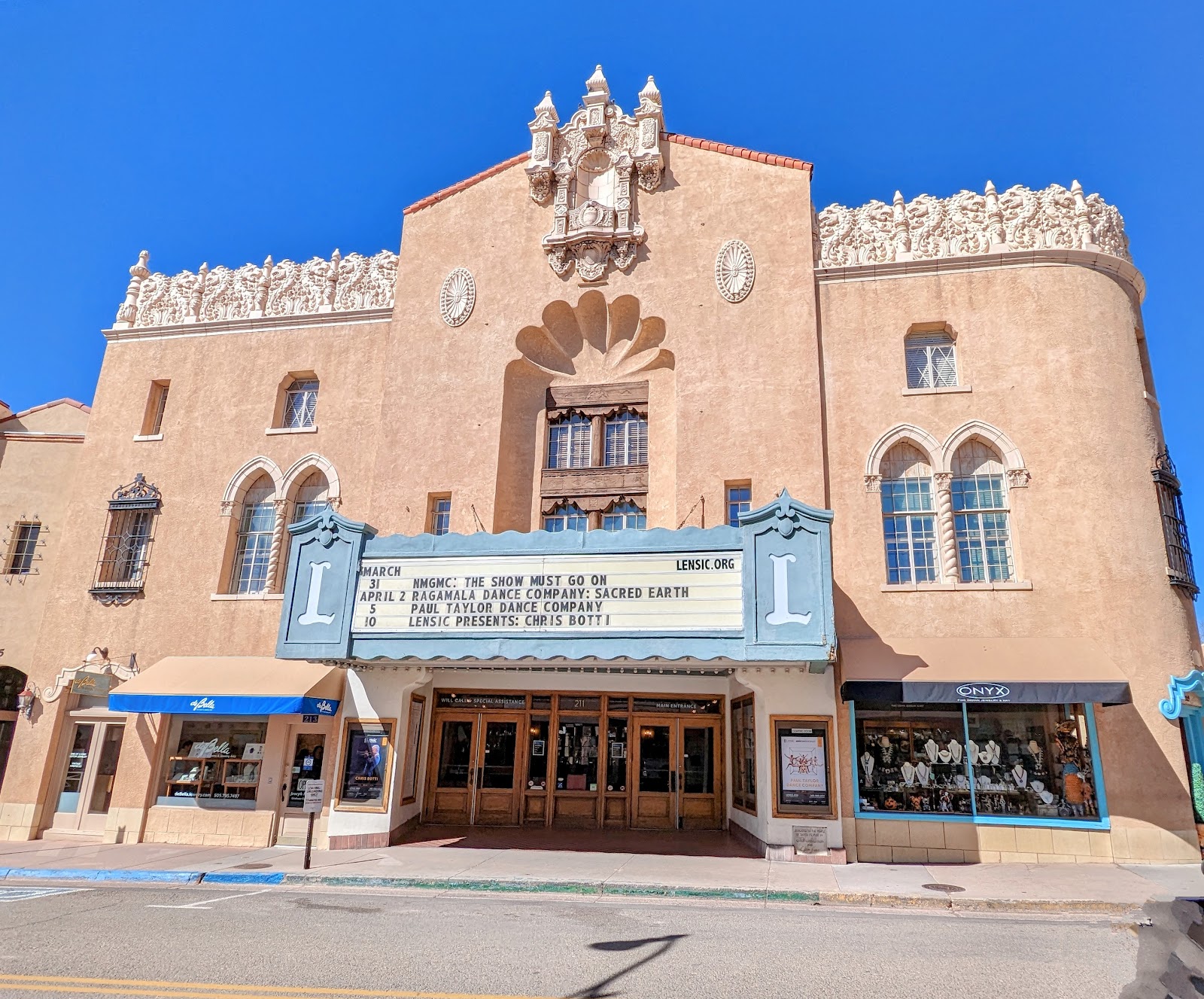
The Lensic opened in 1931 on San Francisco Street in Santa Fe, built as a movie palace in a Moorish and Spanish Renaissance manner — elaborate plasterwork, arches, decorative detail, a proscenium stage and a balcony. It was restored in 2001 and now serves as the city’s principal performing arts venue.
Photographically it combines two well-understood problem sets. It is an ornate historic interior, which means low-relief plasterwork that only reads under raking light and a warm palette with no neutral reference. And it is a working theatre, which means a dark auditorium, fixed raked seating, and a lighting rig that may or may not be available to you.
This is the technical guide. We have not photographed a wedding at the Lensic; ornate plaster and theatre lighting behave identically wherever they occur. Which spaces your booking includes, stage and balcony access, and whether the lighting board will be operated for you are for their events team — and that last question is the most valuable one to ask.
Lensic Performing Arts Center at a glance
| Where | San Francisco Street, downtown Santa Fe, New Mexico |
| Opened | 1931 as a movie palace, Moorish and Spanish Renaissance; restored 2001 |
| Character | Elaborate plasterwork, arches, proscenium stage, balcony |
| Light | Dark auditorium; warm ornate surfaces; theatrical rig on the stage |
| Ask first | Stage access, balcony access, and whether the lighting board will be run for you |
Ornate plasterwork: side light or it disappears
Moorish-influenced decorative plaster is intricate and largely low-relief — fine patterning, arches, applied detail worked at a small scale. The depth of each element is slight, so the shadows it casts are slight, and those shadows only exist when light strikes the surface at a shallow angle.
Light it from the camera position and the whole scheme flattens into a painted wall. The single most impressive feature of a 1931 movie palace vanishes from the photograph, and the room reads as a function space with some patterning on it. This is the commonest error in ornate interiors and it costs nothing to avoid.
So: light from well off the camera axis, feathered so the beam skims across the surface. The relief stands up, the arches gain depth, and the room looks like what it is. Same equipment, entirely different photograph — it is purely a decision about where the light stands.
Ask whether the rig will be run for you
This is the question that separates a good theatre wedding gallery from an ordinary one. A working theatre has a lighting rig and an operator, and if the venue will run it, you have access to far more capable lighting than you could ever bring — and, critically, it is continuous rather than flash, so natural moments are lit rather than only posed ones.
Ask for two specific things: a reasonably neutral front wash on the ceremony position, and the house lights kept low so the auditorium behind stays dark. That combination gives a lit couple against a dark ornate theatre, which is exactly the image the venue should produce.
Avoid coloured gels for the ceremony. Coloured light on a wedding dress is unrecoverable — a dress lit magenta stays magenta, and no editing returns it to white. Save the coloured states for the party, where they look deliberate.
Exposing a lit stage in a dark house
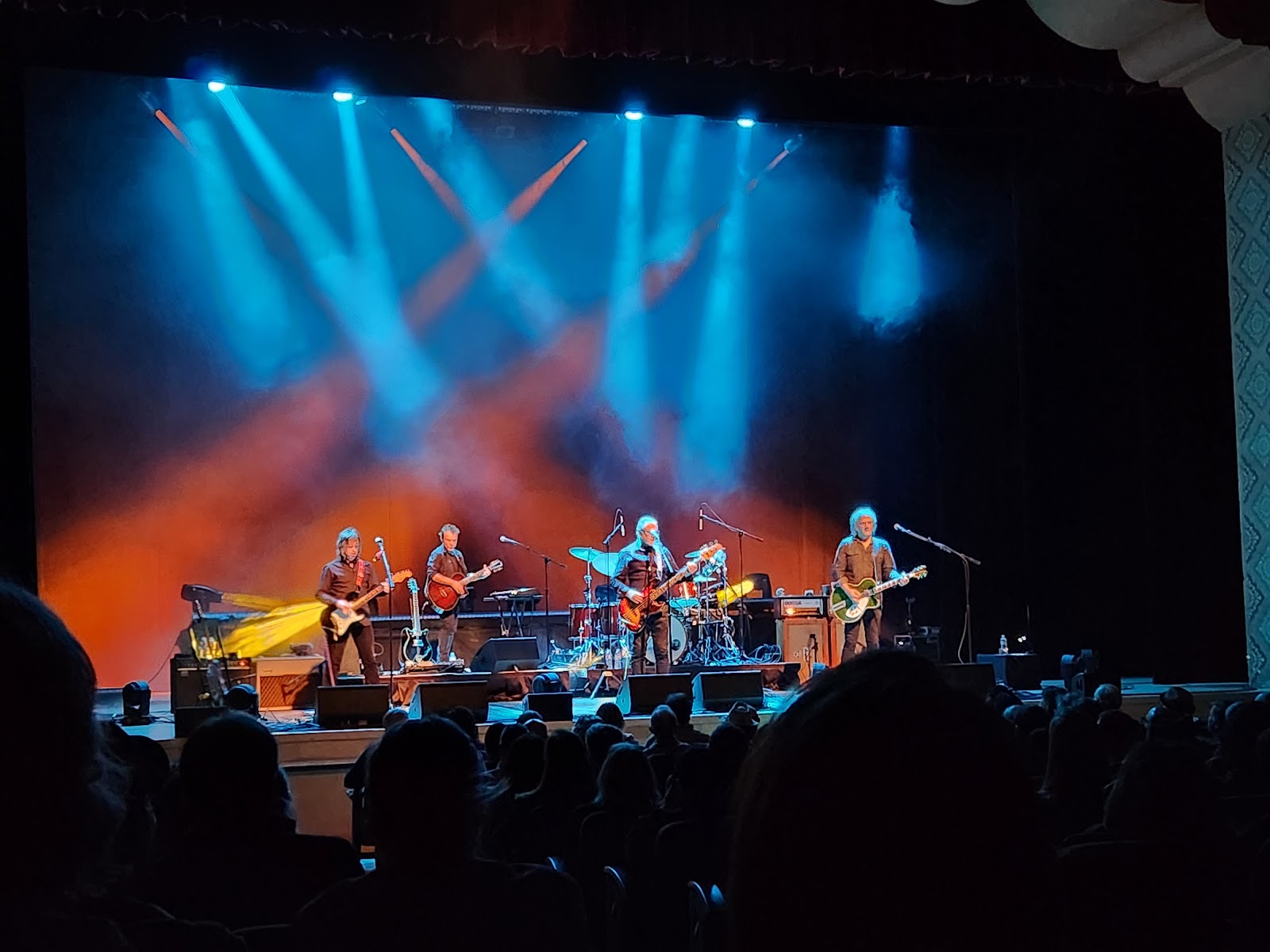
The range between a lit stage and an unlit auditorium is commonly six or seven stops. No single exposure holds both, and a compromise between them flatters nothing — you get a grey stage and a murky house.
Expose for the stage and let the house go black. That is how a theatre is supposed to look; the darkness is the subject rather than a failure. Meter off faces on stage and ignore what the overall meter says about the room.
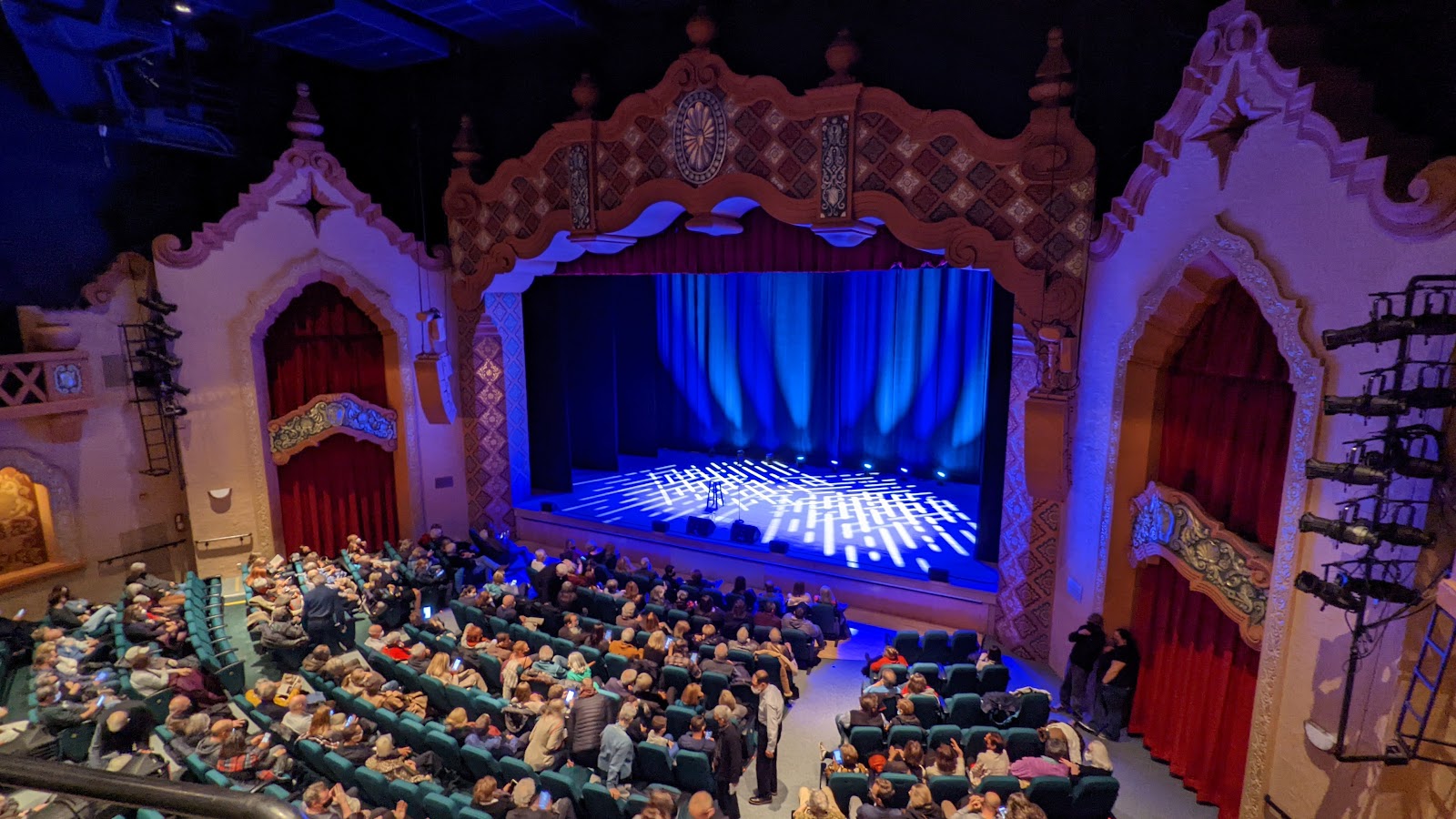
For a wide frame that shows the auditorium’s scale and its plasterwork, shoot it separately with the house lights up — before guests arrive or during a break. Those two conditions cannot coexist in one exposure, so take two frames instead of ruining one. And the balcony is where that wide frame belongs: an elevated view down the auditorium shows the room in a way no ground-level position can.
Positions, colour and Santa Fe outside
Fixed raked seating means your positions are the aisles, the front of the stage, the wings if permitted, and the balcony. Walk them in advance. Balcony access in particular is worth confirming, because it yields the frame most photographers never get.
On colour, the usual differential: keep the room warm because a 1931 palace genuinely is, and light faces slightly cooler so skin retains some coolness. Set white balance manually and re-set it whenever the lighting state changes, because auto will chase every alteration and produce a set of frames that do not match.
Outside, San Francisco Street puts you in the middle of downtown Santa Fe, which means adobe walls, portals, carved doors and the Plaza within a couple of minutes. In a venue with no daylight at all, that excursion is the only unartificially lit frame the day will produce, and it is the best light available — raking low sun on adobe in the last hour is what Santa Fe is famous for.
One altitude note that applies to the dusk window: at 7,000 feet the post-sunset sky is more intense and lasts longer than at sea level, so the good exterior window here is genuinely a little wider than the usual twenty minutes.
What works in your favour
- Elaborate 1931 Moorish plasterwork that is spectacular under raking light
- A working lighting rig, if operated for you, beats anything a photographer can bring
- Continuous stage light means natural moments are lit, not just posed ones
- The balcony gives an elevated frame that explains the room in one image
- Downtown Santa Fe two minutes away, with the best light in the region
What to plan around
- Frontal flash flattens the low-relief plasterwork completely
- Six or seven stops between a lit stage and a dark house — two frames, not one
- Coloured stage gels on a wedding dress cannot be corrected afterwards
- Fixed raked seating limits positions; balcony access must be confirmed
- No daylight anywhere; the dusk excursion is the only naturally lit frame
More frames from Lensic Performing Arts Center
Lensic Performing Arts Center wedding photography: common questions
What is the single most important lighting decision here?
Put the light well off the camera axis. Moorish decorative plaster is low-relief, so its shadows are slight and only exist under raking light — light it frontally and the whole scheme flattens into a painted wall, and the best feature of a 1931 movie palace disappears from the photograph.
Should we ask about the lighting rig?
It is the most valuable question you can ask. A working rig run by an operator is more capable than anything a photographer brings, and it is continuous rather than flash, so natural moments get lit too. Ask for a neutral front wash on the ceremony position and the house lights kept low.
Can we use coloured stage lighting?
Not for the ceremony. Coloured light on a wedding dress is unrecoverable — a dress lit magenta stays magenta and no editing returns it to white. Save the coloured states for the party, where they read as deliberate rather than as a mistake.
How do you photograph the whole auditorium?
As a separate frame with the house lights up, taken before guests arrive or during a break, and ideally from the balcony. A lit stage and a lit house cannot coexist in one exposure, and the elevated balcony view shows the room and its plasterwork in a way no ground-level position can.
Is there any daylight?
None in the theatre. That makes the ten minutes you spend outside the only naturally lit frame of the day — and in Santa Fe that is no hardship, because raking low sun on downtown adobe is the best light in the region. At 7,000 feet the post-sunset window is also a little longer than usual.
More Santa Fe venue guides
We are writing a photographer’s guide to every venue we would happily shoot in Santa Fe. Here are three more, plus the full index:
- The Museum of Indian Arts and Culture: Building the Shot List
- The Museum of International Folk Art: A Photographer Answers Your Questions
- The Rosewood Inn of the Anasazi: Who This Small Hotel Suits
Planning a wedding at Lensic Performing Arts Center?
Two questions decide this venue: will the rig be run for you, and can we get on the balcony. Tell us your date and we will help you ask both, and plan the plasterwork lighting around the answers.