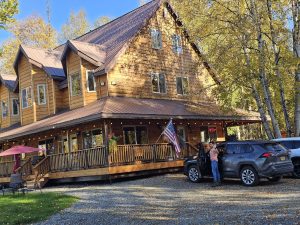
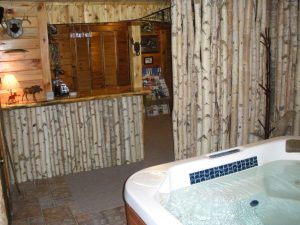
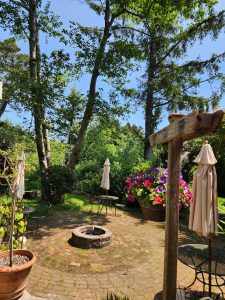
 Salmonberry Inn, Anchorage: One Frame, and How It Is Made
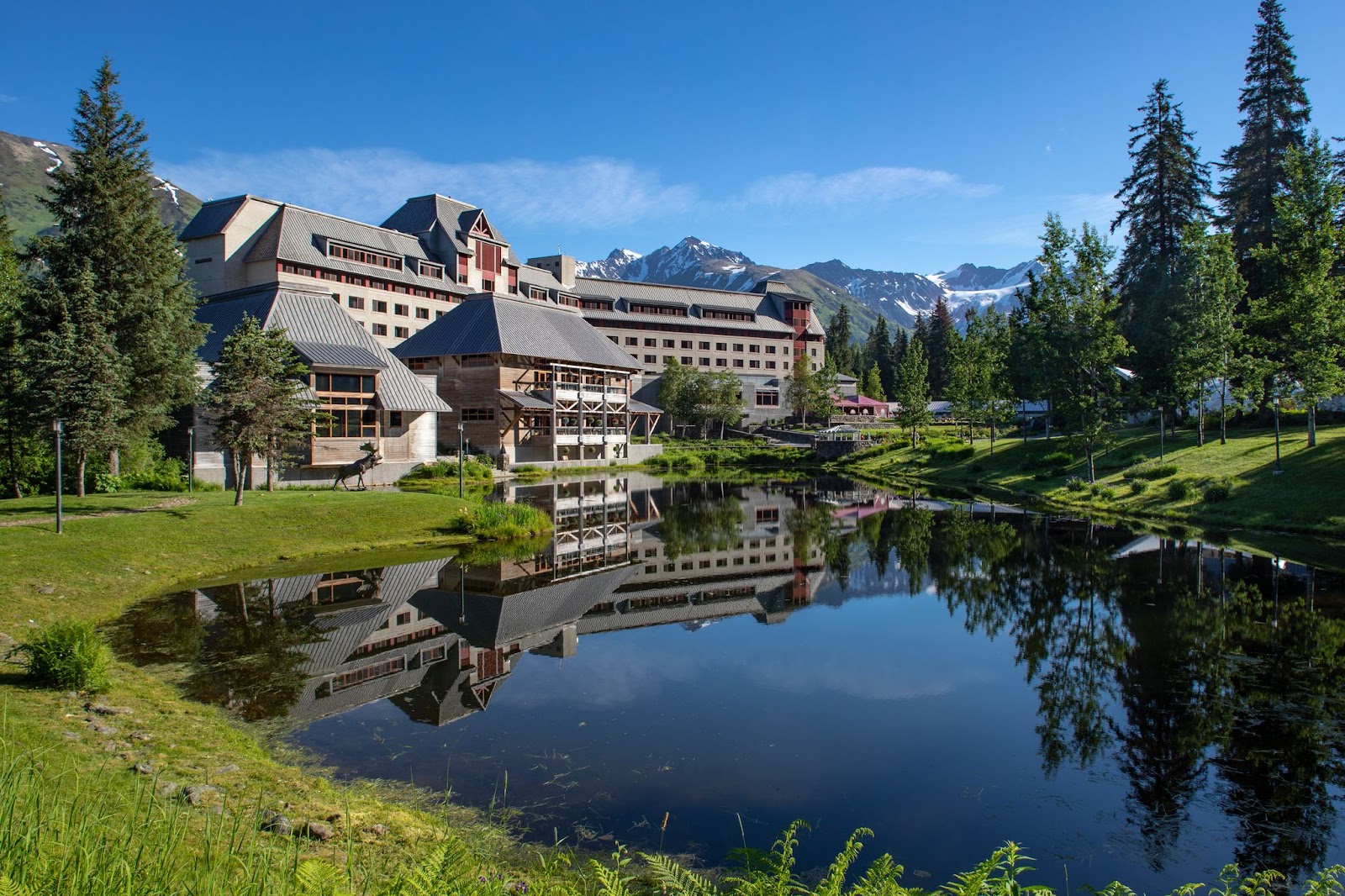
Alyeska Resort, Girdwood: The Light Through the Day
At this latitude the sun never gets high. Even noon light rakes, which changes everything.
A mountain resort in coastal southcentral Alaska has a day unlike anywhere else in this guide, and the reason is not the mountains. It is the latitude.
At around sixty-one degrees north, the sun at midsummer reaches only about fifty degrees above the horizon at noon — and in most of the year far less than that. In the lower forty-eight a summer noon sun is near vertical, which is why the middle of the day is the difficult hour everywhere else in this guide. Here it never gets there.
The consequence is the single most useful fact about photographing in Alaska: the light rakes rather than falls, all day, for most of the year. The hard overhead sun that flattens faces and blacks out eye sockets in Texas at noon simply does not occur at this latitude, which means the usable hours are far longer and the light is far kinder.
The second consequence is that the day is enormously long in summer and enormously short in winter. In June the sun sets near midnight and twilight never fully ends, which means a wedding can have good light at ten in the evening. In December there are about five and a half hours of daylight, and the sun barely clears the mountains at all.
The third fact is the weather, and it is the one that decides most dates. Girdwood sits in coastal temperate rainforest against the Chugach mountains, which means very high rainfall and snowfall and a cloud ceiling that frequently sits below the summits. Overcast is the normal condition rather than the exception.
We have not photographed a wedding at Alyeska Resort; coastal Alaskan mountain resorts behave consistently. Whether the tram is running and on what schedule, what the last downloading time is, which spaces are included, the covered alternative, and what the bear and wildlife guidance is are questions for their team — and the tram schedule in particular decides the shape of a day here.
Alyeska Resort at a glance
| Where | Coastal rainforest against the Chugach mountains at Girdwood, Alaska |
| The latitude | At 61°N the sun never gets high — even noon light rakes |
| Summer | Daylight until near midnight, and good light for most of it |
| The weather | Temperate rainforest: heavy rain, and cloud often below the peaks |
| Ask first | Tram schedule and last download, spaces included, covered alternative |
Morning to afternoon: the ceiling, and the rain
The morning question at Girdwood is not where the sun is but where the cloud is, because the cloud ceiling determines what exists to photograph.
When the ceiling is above the summits, the whole mountain is visible and the day is a mountain day. When it sits on the peaks — which is common — the summits are gone and the frame is the valley: rainforest, the resort, the river, and a wall of grey above. And when it sits below the mid-mountain, which also happens, the tram goes into cloud and the top is a white room.
That last condition is worth treating as a subject rather than a loss. A couple on a mountain in thick cloud, with the world removed and nothing but white beyond them, is a strong frame — it needs dark surfaces behind them for any separation, a custom white balance set on a face because cloud light is cool, and one subtle source just off the camera axis to restore the modelling it removes.
The rain is the other constant and it is genuinely heavy here. A rainforest venue receives several times the rainfall of most of this guide, and the honest planning consequence is that an outdoor ceremony needs a named covered alternative rather than a hope — and that the decision will frequently be made on the day.
Photographically, rain suits this landscape better than sun does. Temperate rainforest is only fully itself when wet: Sitka spruce and mountain hemlock darken, moss saturates, every surface has water on it, the creeks run, and the light is soft and even with no dappling anywhere. A wet day at Girdwood is the condition the place was made in.
The technical handling of a grey rainforest day is consistent. Build contrast the light will not supply, which here means dark conifer behind a subject — spruce and hemlock absorb almost everything, giving three or four stops of separation for nothing. Set a custom white balance on a face rather than a daylight preset, because overcast rainforest light is cool and green at once. And meter on skin in manual, because a meter looking at dark conifer overexposes a face by a couple of stops.
The rainforest also gives the best shade on the property, which matters less here than it would further south but still matters. Dense conifer blocks rather than filters, so the canopy edge — a metre or two inside at the margin of an opening — gives soft directional light in front and near-darkness behind. That is the same physics as a window in a dark room and it needs nothing brought.
Cottonwood and birch grow along the valley floor and they behave differently: broad thin leaves transmit as well as block, so the light beneath them is soft, even and green-tinged. That needs a custom white balance and it is the most flattering outdoor light in the valley.
Indoors, a lodge in this climate is built to keep weather out, which means substantial timber and windows that are generous but not enormous. A subject a metre from the glass turned about forty-five degrees to it gets horizontal light with steep fall-off behind, room lights off, custom white balance set on the face. And a timber-lined room absorbs, which means the ambient is a stop or two below what the eye estimates and the background drops away for free.
One thing about window light here is specific to the latitude: because the sun is low, it enters a window almost horizontally for most of the year and travels much further into a room than it would further south. A lodge interior in Alaska is better lit, relative to its window size, than the same room in Arizona.
Evening, the tram, and the very long day
The evening at this latitude is not an hour, and that is the thing a photographer from further south has to adjust to.
Because the sun’s path is shallow, it takes a very long time to get down — which means the low warm light that lasts forty minutes in New Jersey lasts two or three hours here in summer, and the twilight that follows lasts longer still. In June the usable light runs past eleven at night.
The practical consequence is that a summer wedding here does not have to compress its portraits into a narrow window. A ceremony at six and portraits at nine is entirely reasonable, and the light at nine will be better than the light at two. That is a genuine freedom and it is worth building into the running order deliberately rather than treating the day as though it were a southern one.
The second consequence is that it never gets properly dark in June, which removes one set of pictures and adds another. There is no night sky, no aurora and no dark-window reception frame — but there is a long blue twilight over snow and rock that exists nowhere else.
The tram is the site’s distinctive feature and it introduces a hard constraint that has nothing to do with light. If the last downloading time is at a fixed hour, then the last frame at the top is before that hour regardless of what the light is doing — and at a site whose best light in summer runs until eleven, that mismatch is the commonest planning failure. It is worth knowing the exact time before the ceremony time is set.
What the top gives, when the cloud allows, is a view over a valley of rainforest to Turnagain Arm and the Chugach beyond. The lens decision matters: a wide lens renders it as a thin band of mountain above a great deal of slope, while a longer lens compresses the ridges into stacked layers and brings them forward. In the clean cool air here that compression holds detail well — considerably better than in humid country.
The exposure goes on the distance rather than on skin, with the faces lifted by a close warm-gelled source, because metering on faces gives a white sky and a flat washed view. Close matters because nothing at that elevation bounces: a source at two metres needs roughly a quarter of the output it needs at four.
Above the treeline there is no shade at all, but at this latitude that matters far less than it would in Colorado — the sun is never high enough to produce the vertical shadows and blacked-out eye sockets that make an exposed alpine site unworkable at noon further south.
What does matter above the treeline is wind and cold. An exposed mountain position in coastal Alaska is cold even in July, and a party in formal clothes will feel it — which is a welfare judgement rather than a photographic one. A lightstand in that wind is a liability, so handheld or bracketed sources are the working configuration.
Turnagain Arm is worth a note because it is one of the more remarkable pieces of water in this guide. It has an exceptionally large tidal range, which means the shoreline visible from the valley changes dramatically through the day — broad grey mudflats at low water, a full arm of water at high. The silt in it is glacial flour, which makes the water grey-tan rather than blue and means it does not brighten a frame the way clear water does.
And the mudflats are genuinely dangerous ground rather than merely soft. That belongs in a planning conversation as a safety matter, not a compositional one.
- The sun never gets high here — even noon rakes, so there is no bad hour
- Cloud below the peaks is a frame, not a failure: dark conifer behind, one soft source
- Rain is the default and it suits rainforest better than sun does
- In summer the good light runs to eleven at night — use it rather than compressing
- Know the last tram down before the ceremony time is set
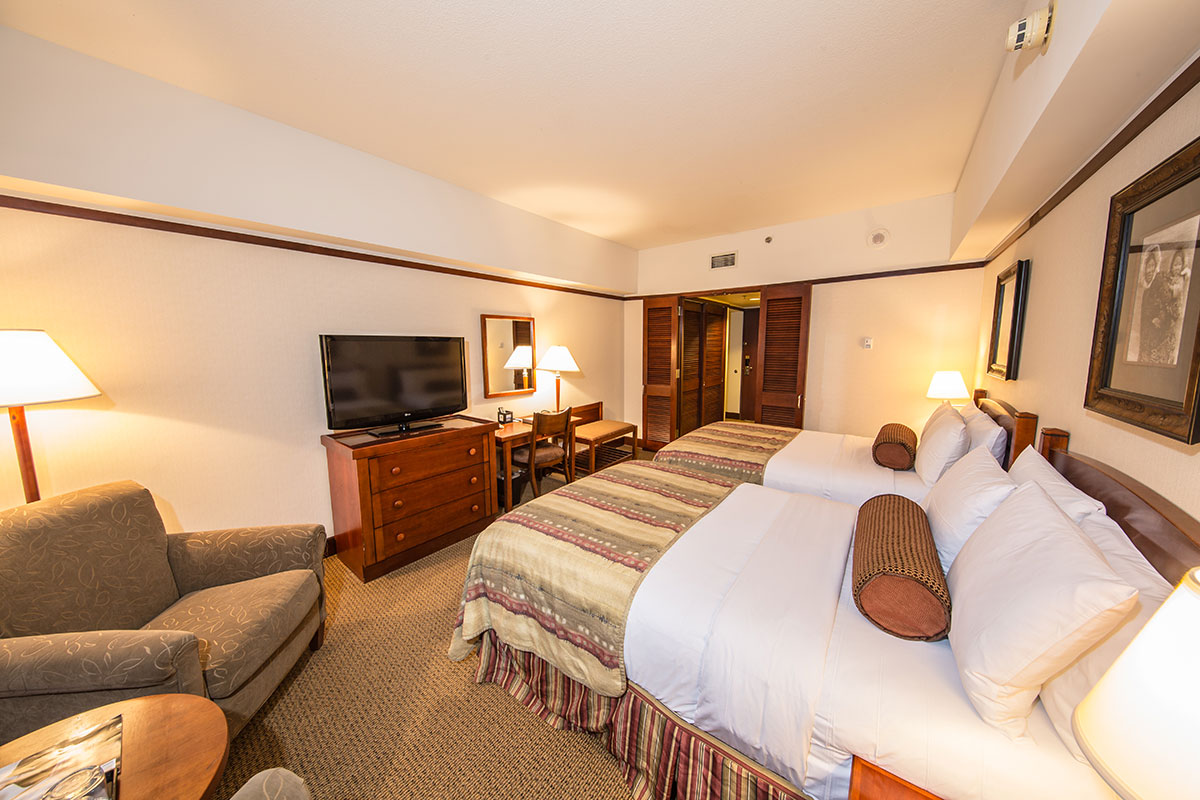
The southcentral Alaskan year
Alaska’s seasons are more extreme than anywhere else in this guide and the difference between two dates two months apart is larger here than anywhere.
Midwinter is about five and a half hours of daylight, with the sun barely clearing the mountains — which in a valley means it may not appear above the ridgeline at all for weeks. The light that does arrive is entirely soft, entirely raking and blue-toned, and it is genuinely beautiful rather than merely dim.
Snow is the compensating asset and there is a great deal of it here: Girdwood receives some of the heaviest snowfall in the country. Snow is the best natural fill available outdoors, lifting every shadow and throwing light upward into faces, and snow against dark spruce and hemlock is the widest brightness range in this guide — expose for the snow and let the conifer go near-black. Snow fools a meter by about two stops toward underexposure, so deliberate overexposure relative to the camera is the rule.
Winter is also aurora season. The northern lights are visible on clear nights from roughly September to April, and a frame with aurora over snow and mountains is available nowhere else in this guide. It needs a tripod, a wide fast lens, a few seconds to half a minute of exposure, a genuinely dark clear sky, and a party willing to stand still in the cold — and it cannot be promised, only planned for.
The costs of winter are real: cold that drains batteries fast, a camera that fogs badly when carried into a heated lodge, a very short day, and travel that depends on weather. Spares in an inside pocket and bodies bagged until they warm.
Break-up in April and May is the least attractive time of year in Alaska and it deserves saying plainly: the snow goes dirty and patchy, the ground is mud, the trees are bare, and nothing has greened. A couple choosing a date should know that early May here is not spring in any recognisable sense.
June is when it turns, and it turns fast. Green arrives within a fortnight, the days are already enormous, and the light runs from three in the morning to near midnight. The costs are mosquitoes, which are a genuine consideration in June and July, and cloud.
July is the warmest month and it brings fireweed — tall magenta spires that come up across cleared ground and roadsides in quantity, which is the strongest colour the Alaskan summer produces and a real foreground rather than a detail. There is a local saying that when fireweed blooms to the top of its spike, six weeks remain until snow, and it is roughly true.
Late August into September is the best season here and it is not close. The tundra above the treeline turns red and orange several weeks before foliage anywhere in the lower forty-eight, birch and cottonwood in the valley go gold, the first snow appears on the peaks — locally called termination dust — and the nights are dark enough for aurora while the days are still long enough to work in.
That combination is unique in this guide: autumn colour, fresh snow above it, and the northern lights on the same date. It is the reason a September wedding in Alaska is worth planning around, and the window is short — roughly the last week of August through the middle of September at these elevations.
October brings the rain and the dark, and by November the snow is establishing. The whole calendar runs several weeks earlier than a photographer from further south will expect, which is the most useful thing to tell a couple choosing a date.
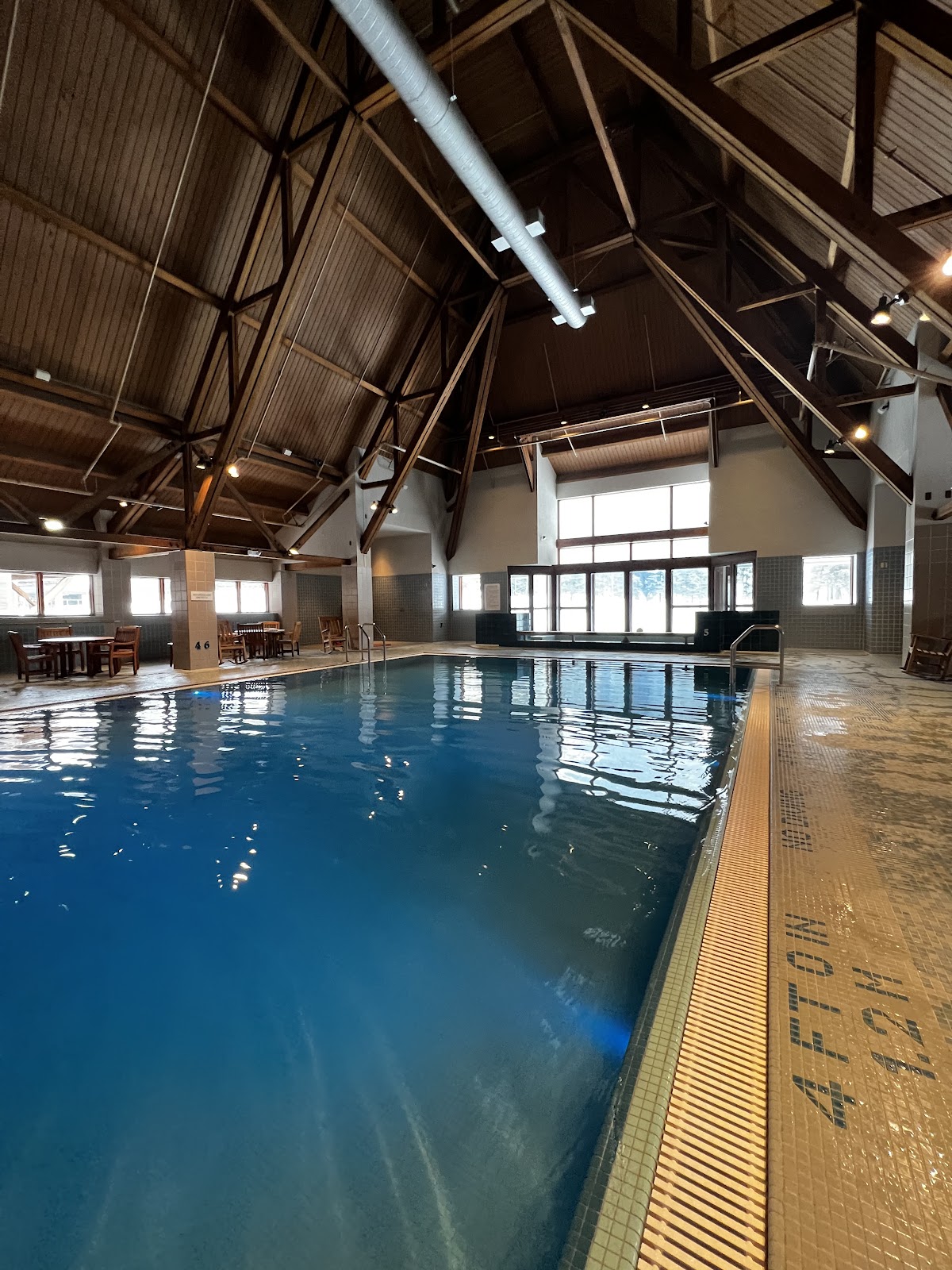
More frames from Alyeska Resort
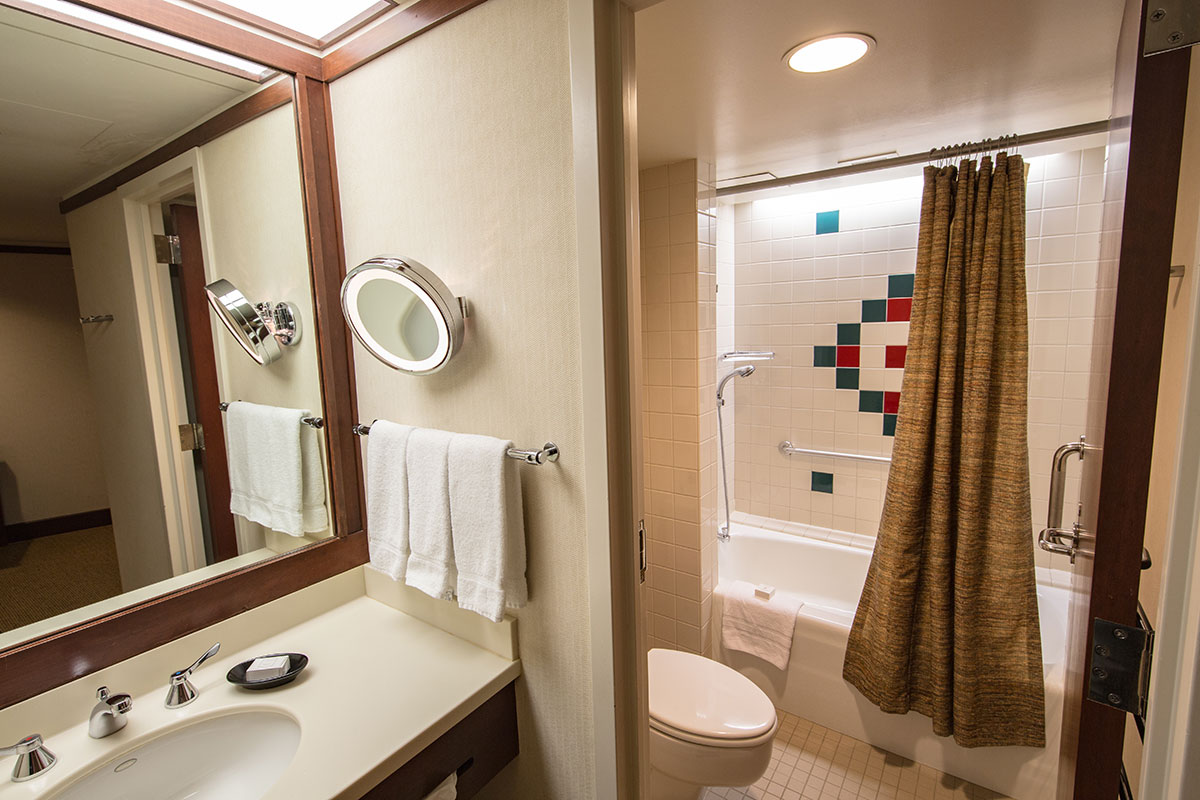
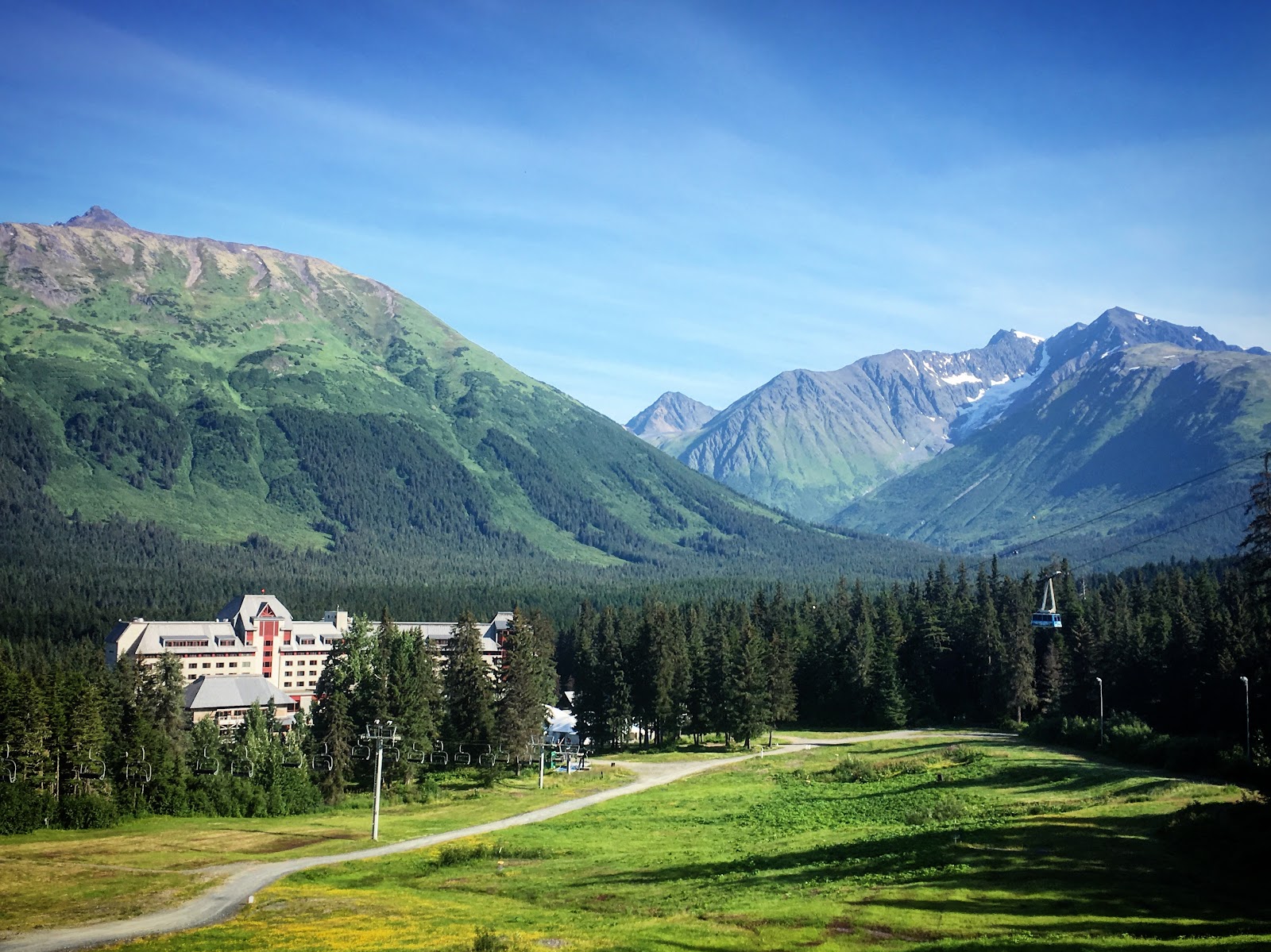
Alyeska Resort wedding photography: common questions
Why is the light different in Alaska?
At sixty-one degrees north the sun never gets high — about fifty degrees at midsummer noon and far less the rest of the year. It rakes rather than falls, all day.
Does that mean there is no bad hour?
Effectively yes. The vertical noon sun that flattens faces further south does not occur here, so the usable hours are far longer.
What happens when the cloud sits on the mountain?
Treat it as its own frame: a couple with the world removed. Dark conifer behind for separation, a custom white balance, and one subtle source.
How much rain is there?
A great deal — this is coastal temperate rainforest. A named covered alternative is a requirement, and rain suits the landscape better than sun does.
When is the best light in summer?
Nine or ten at night. The sun’s shallow path means the low warm light lasts two or three hours rather than forty minutes.
Which season is best overall?
Late August into mid-September: tundra colour, first snow on the peaks, and nights dark enough for aurora while the days are still long.
More Alaska venue guides
We are writing a photographer’s guide to every venue we would happily shoot in Alaska. Here are three more, plus the full index:
- Bear Creek Winery, Ketchikan: What It Suits and What It Does Not
- Black Diamond Resort, Healy: The One Decision That Governs Everything
- Blueberry Lodge, Homer: Field Notes
Planning a wedding at Alyeska Resort?
A latitude with its own rules. Tell us your date and we will read the light.