 The Venetian, Garfield: The Building’s Own Logic
Grounds for Sculpture, Hamilton: A Walk Through the Site
A sculpture park is a sequence of rooms without ceilings. Each one has a different light in it.
This is a walk through the site in the order a wedding day tends to use it, and the reason to walk it rather than list it is that a sculpture park is not one landscape but dozens of small ones.
The organising idea of such a place is enclosure. Sculpture needs to be looked at, which means it needs a setting that isolates it — so the landscape is designed as a sequence of hedged, planted and bermed enclosures, each containing one or a few objects, with the next one hidden until you reach it. It is closer to a building with rooms than to a park with things in it.
For a photographer that has three consequences.
The light changes from enclosure to enclosure. A hedged room with a dense yew wall on one side and open sky above behaves nothing like a bamboo grove, a bermed hollow or an open lawn — and those can be thirty seconds apart. So the exposure and the white balance both change constantly, and resetting at every transition rather than once is the discipline of the whole day.
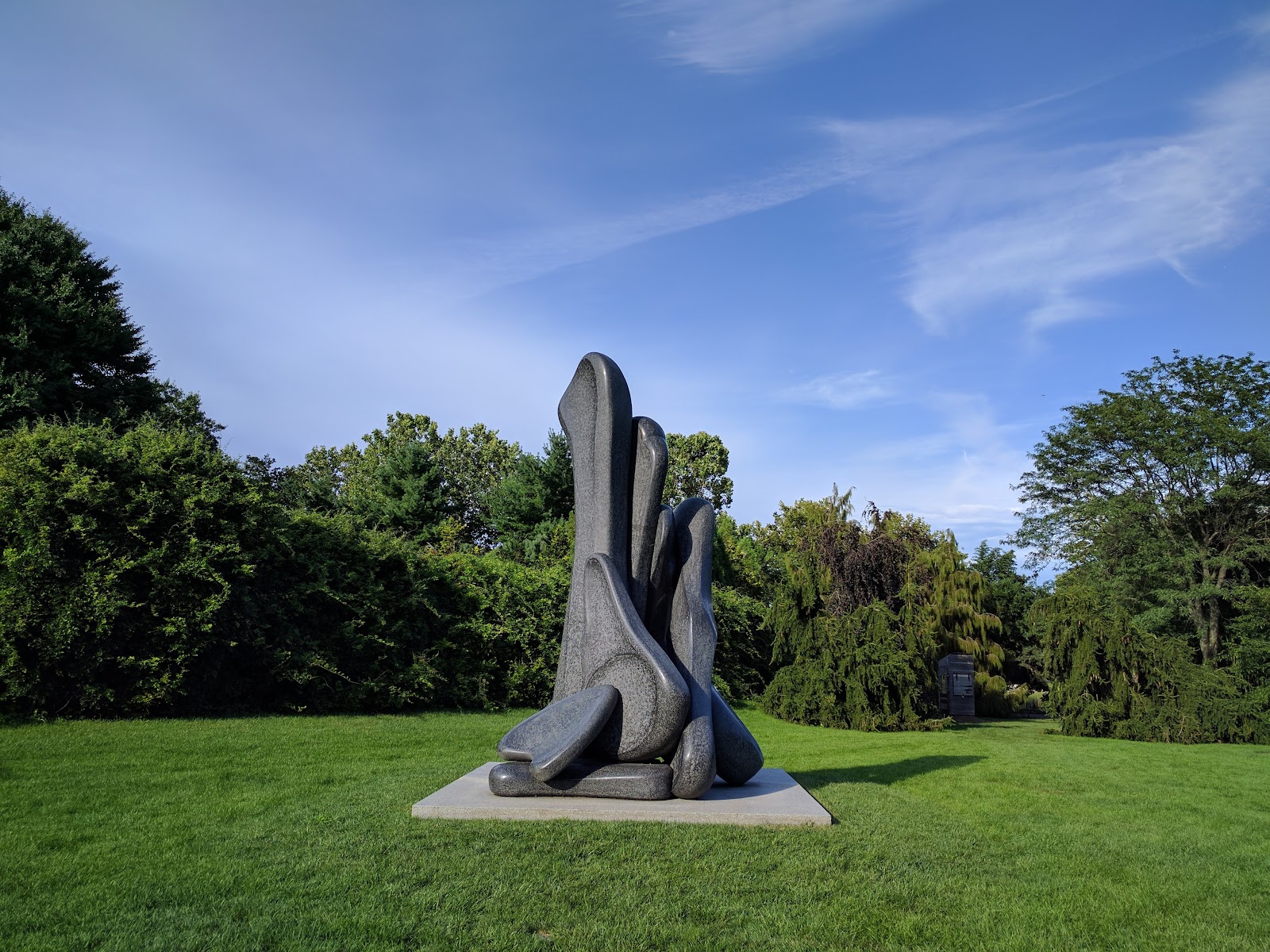
The sculptures themselves are light modifiers. A large object is a large object: it blocks the sun, throws shade, bounces light if it is pale or polished, and absorbs it if it is dark. Some of the most useful shade on the property is cast by the art rather than by the planting.
And the enclosures are small, which means the frames are close ones. This is not a site for wide landscape views; it is a site for a longer lens and deliberate framing within a designed space.
We have not photographed a wedding at Grounds for Sculpture; designed sculpture landscapes behave consistently. Which areas are available and under what conditions, guest limits, what the rules are about photographing individual works and how close anyone may go, the covered alternative, and whether the park is open to visitors during a wedding are questions for their team — and the last two in particular shape a day here more than anything below.
Grounds for Sculpture at a glance
| Where | A designed sculpture park at Hamilton, central New Jersey |
| The logic | A sequence of enclosures, each with its own light and its own object |
| The consequence | Exposure and white balance change every thirty seconds |
| The sculptures | Large objects that block, bounce and absorb — some are the shade |
| Ask first | Areas available, guest limits, photography rules, public access on the day |
The enclosures: hedges, objects, and the exposure
Start in the hedged enclosures, because they are the most useful positions on the site and the most consistent.
A dense clipped evergreen hedge is the best background available in any garden: a dark, even, textureless mass two or three stops below a subject, with nothing in it to distract. In a sculpture park those hedges are everywhere by design, because they are what isolate the objects — which means the separation that a photographer usually has to build is already there.
The exposure correction that goes with it is the one to get right, and it is the single most common error at a hedged site. A meter looking at a large dark hedge tries to lift it toward mid-grey, which overexposes the face by a couple of stops. So metering goes on skin, in manual, and the hedge is allowed to stay dark.
A metre later, in an open enclosure with pale gravel and a white sculpture, the same meter underexposes — which is why nothing automatic survives this site. Manual, metered on skin, reset at every transition.
The hedge’s other property is that it casts shade, and a tall one casts a lot. Standing in the shade of a hedge facing the lit side of the enclosure gives soft directional light in front and the dark hedge behind — which is the best free frame in the park and it exists in dozens of places.
The sculptures are the second element and their material decides what they do to the light.
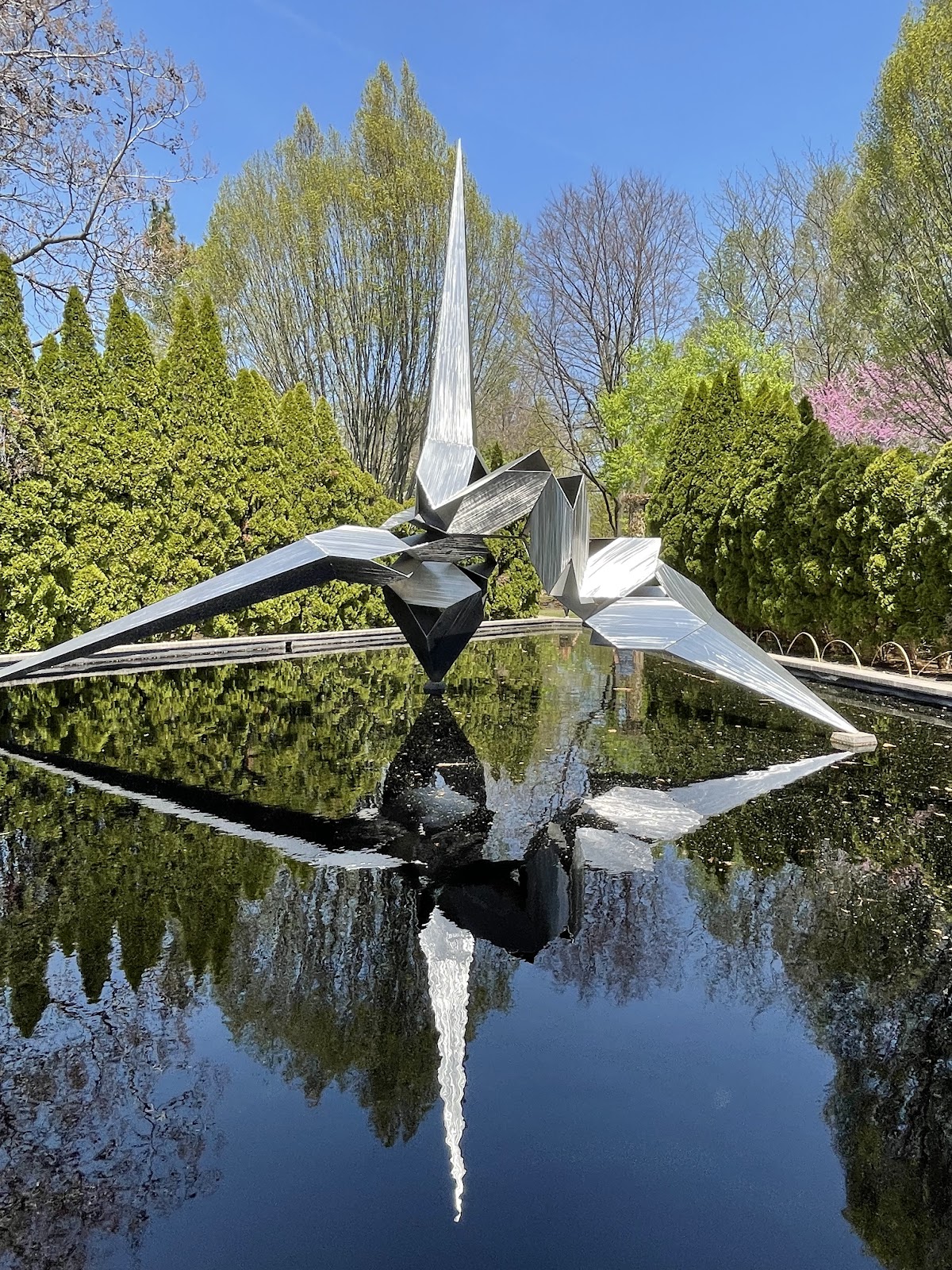
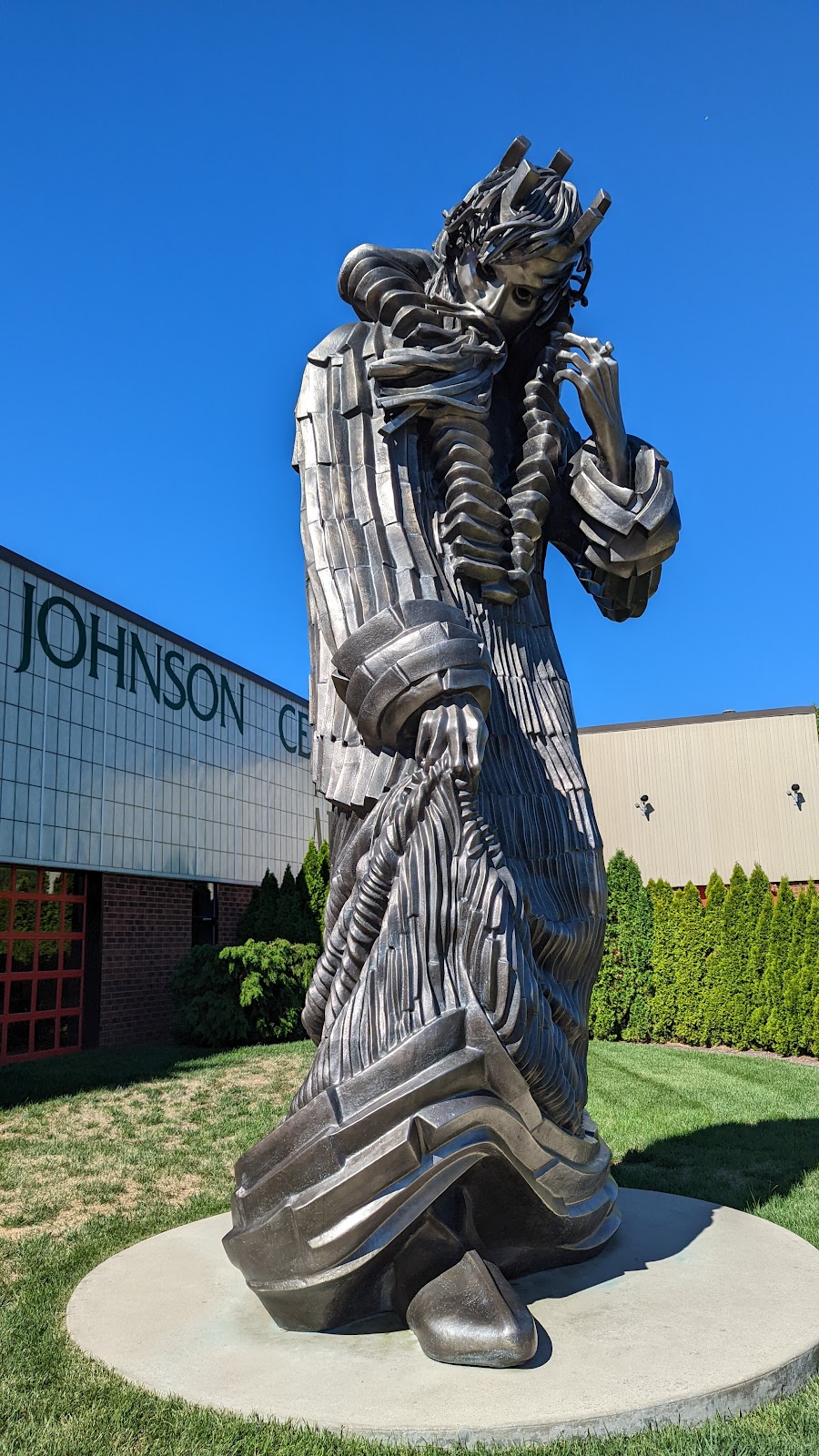
Polished metal is a mirror. It reflects the sky, the surroundings and anything standing near it, which means a subject beside a polished work is lit by a curved reflector of unpredictable shape — sometimes beautifully, sometimes with a bright band across one cheek. It also means the photographer appears in it, which is a compositional consideration rather than a problem: a reflection used deliberately is one of the strongest frames a sculpture park offers.
Painted steel is a coloured reflector. A large red or yellow work in sun throws coloured light onto anything nearby, which on a daylight preset renders skin visibly tinted. That is either a deliberate effect or an error, and the difference is whether a custom white balance was set on a face in that position.
Weathered steel and dark stone absorb, which makes them excellent backgrounds — a dark mass two or three stops down, with texture in it rather than the flat tone of a hedge.
And pale stone or concrete bounces neutrally, which makes a large pale work in shade a genuinely good soft source: a subject facing it gets modelled light for nothing.
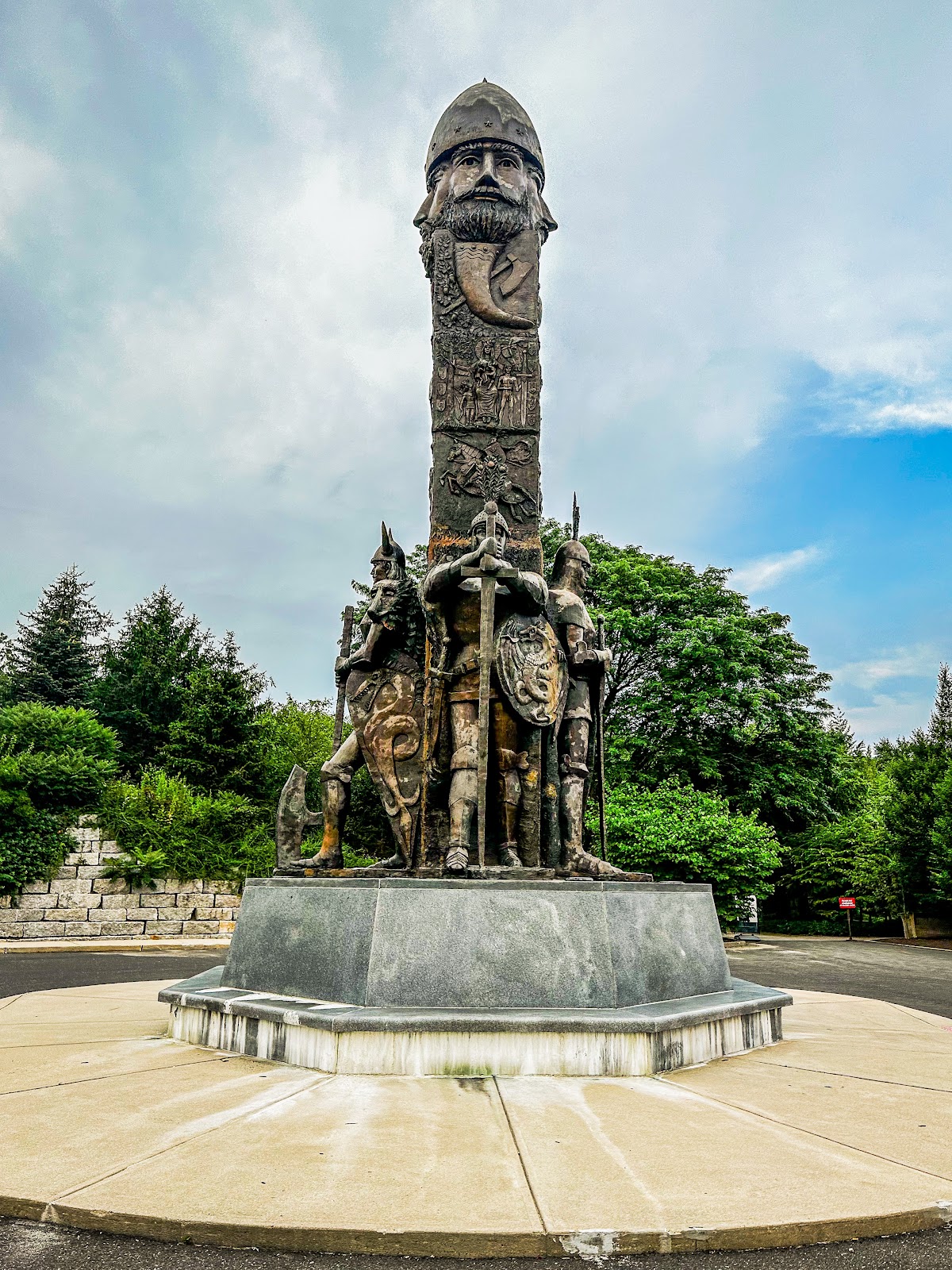
The practical caution with all of them is composition rather than light. A sculpture in a frame with a couple is a third subject competing for attention, and it frequently wins — because it is larger, stranger and more graphic than two people. The frames that work either use the object as a clean background element, at a distance and out of focus, or make it unambiguously part of the picture rather than an accident behind someone’s head.
The awkward middle — a recognisable sculpture half in frame behind a shoulder — is the commonest failure, and a step to one side is the whole fix.
Water, bamboo, the buildings, and the visitors
Water is the next environment and in a designed landscape it is used deliberately rather than incidentally, which makes it more useful than a natural pond.
A designed water feature is usually still, shallow and dark-bottomed, which makes it a proper mirror — and a mirror doubles whatever is composed above it. A sculpture reflected in still water with a couple beside it is the frame such a park is built to give.
It is also a horizontal reflector, throwing light upward into faces standing beside it, which fills the shadows a high sun carves at the cost of uplight under the chin. Something solid on one side corrects that, and the diagnosis is to look at the chin in the first frame.
A reflection runs about a stop darker than what it reflects, which is the thing to know when metering a frame containing both.
Bamboo is the other distinctive planting and it needs handling on its own terms. A bamboo grove is thousands of narrow vertical stems with small leaves high up, which means light comes through in fine broken patches rather than being blocked — so bamboo dapples, and it dapples at a small scale that is genuinely hard to see until it is on a face. The test is universal: look at the face rather than the ground.
What bamboo gives instead is one of the simplest and strongest backgrounds anywhere: a dense field of vertical green with no detail in it. It also moves constantly in the slightest air, which means a shutter fast enough to hold the stems if they are meant to read as stems rather than a green blur.
The buildings are the weather-independent part of the site and their value is the ordinary one. Where there is glazing, a subject a metre from it turned about forty-five degrees gets horizontal light with steep fall-off behind — room lights off, and a custom white balance set on a face, because a window looking onto dense planting delivers green light.
Any covered structure — a pavilion, a colonnade, a deep overhang — is the reliable midday position: a solid roof blocks the overhead component, restricts the light to a horizontal band that models a face properly, and cannot dapple. Two or three metres in from the open edge is the working position.
Interior galleries, where they are available, are a different problem: gallery lighting is designed for objects rather than faces, which usually means directional spots from above that put light on the top of a head and leave the eyes dark, and often mixed colour. The approach is to expose the room about a stop under what faces need and add one gelled source off the camera axis just above skin level — which keeps the gallery looking like a gallery.
Whether flash is permitted in the galleries is a question with a definite answer and it is worth asking, because it changes the approach entirely.
The visitors are the last consideration and at a public park they are the practical one. If the park is open during a wedding, there will be people in the enclosures, and the enclosures are small — which means a longer lens, closer framing and patience, and a route planned to use the less-frequented parts at the busiest hours. It is entirely workable and it is much easier known in advance.
The scale of the site is the other practical matter: a sculpture park is large and its paths wander by design, which means distances are longer in time than in metres and a party in formal shoes moves slowly. Three enclosures close together produces more than six spread across the grounds, and picking them on a walk beforehand is the highest-value preparation available here.
- Manual throughout: hedges overexpose a meter, pale works underexpose it
- Hedge shade facing the lit side is the best free frame, and it repeats
- Custom white balance beside coloured works — painted steel tints skin
- Decide whether a sculpture is in the frame or out of it; half-in fails
- Bamboo is a background, not a shade — check the face, not the ground
The central New Jersey year
Central New Jersey has four genuine seasons with hot humid summers and cold winters, and a designed landscape responds to all of them visibly — with the useful difference that a sculpture park has permanent objects in it, so it is never empty.
Winter is cold with snow in most years, and a sculpture park in snow is exceptional. The objects stand out against a white ground with the planting reduced to structure, which is exactly how sculpture is best seen — and snow is the best natural fill available outdoors, lifting every shadow and throwing light upward into faces.
Snow against dark weathered steel or dark stone gives the widest brightness range on the property: expose for the snow and let the work go black. Snow fools a meter by about two stops toward underexposure, so deliberate overexposure relative to the camera is the rule, and with pale sculpture in frame the highlight check matters doubly.
The December sun at this latitude reaches only about twenty-six degrees above the horizon, so the whole short day rakes rather than floods — which removes any dappling problem and models every surface of every object. Raking light across a three-dimensional work is how sculpture wants to be lit, and December supplies it all day rather than for an hour.
Evergreen hedges are unchanged in winter, which means the best free frames in the park work identically in January and July. That is an unusual and valuable thing to be able to say.
The costs are a short day, cold hands, batteries draining faster, and a cold camera fogging when carried into a heated building.
Early spring is the weakest part of the year: bare deciduous planting, brown ground and wet footing, with the objects standing in a landscape that has not yet filled in. Late April changes it — a designed garden of this kind will have flowering trees and bulbs planted deliberately and in quantity, and blossom against sculpture is a strong and short-lived pairing.
Late spring is when the enclosures close up: new foliage transmits light beautifully, the hedges are dense, and the park becomes the sequence of rooms it is designed to be. Late May is among the most flattering light of the year, with the note that transmitted green light needs a custom white balance.
Summer is hot and humid — upper eighties Fahrenheit and above with high humidity — with afternoon thunderstorms a real feature from June into August. For a site whose spaces are mostly outdoors, a named covered alternative with real capacity is a requirement rather than a courtesy.
The humidity has a specific effect here: it reduces contrast and clarity, which softens the hard edges of sculptural forms and makes the enclosures feel flatter. And the enclosed planting means the air does not move, so a July afternoon in a hedged room is warmer than the open ground around it.
Autumn is the best season and by a clear margin. Foliage in central New Jersey peaks from the middle of October into early November, and in a designed landscape the effect is different from wild woodland: specimen trees turn as whole objects, each a distinct mass of scarlet, gold or russet with room around it, which gives a composed landscape rather than a continuous canopy.
Against dark evergreen hedges and against the objects themselves, that colour is the strongest thing the park produces — and because the species turn at different rates the window runs two or three weeks. Autumn also brings the clearest air of the year, which restores the definition that summer humidity takes off every sculptural edge, along with the most settled weather and the most comfortable temperatures.
More frames from Grounds for Sculpture
Grounds for Sculpture wedding photography: common questions
What makes a sculpture park different to photograph?
It is a sequence of small designed enclosures rather than one landscape, so the light, exposure and colour change every thirty seconds.
What is the best free frame?
Standing in the shade of a dense clipped hedge, facing the lit side of the enclosure. Soft light in front, a dark background behind.
Why is manual exposure essential?
A dark hedge makes a meter overexpose a face by a couple of stops and a pale sculpture on gravel makes it underexpose — thirty seconds apart.
Do the sculptures affect the light?
Yes. Polished metal is a mirror, painted steel throws coloured light onto skin, dark stone is a background, and pale stone in shade is a soft source.
How should a sculpture be composed with a couple?
Either clearly in the frame as part of the picture, or out of it entirely. A recognisable work half-behind a shoulder is the commonest failure.
When is the park at its best?
Mid-October into early November, when specimens turn as whole objects against dark hedges — and after snow, which is how sculpture is best seen.
More New Jersey venue guides
We are writing a photographer’s guide to every venue we would happily shoot in New Jersey. Here are three more, plus the full index:
- Highlawn Pavilion, West Orange: The Light Through the Day
- Laurita Winery, New Egypt: Field Notes
- Madison Hotel, Morristown: The Building’s Own Logic
Planning a wedding at Grounds for Sculpture?
A park of small rooms. Tell us your date and we will walk it in order.