 Woodwinds, Branford: The Problem, and Four Ways Out
Lyman Orchards, Middlefield: Field Notes
An orchard is planted in rows at head height, which makes it the only crop you can stand inside.
These are field notes on a working orchard, and the first note is the one that distinguishes it from every other agricultural venue in this guide: an orchard is planted at head height, which means you can stand inside it.
A vineyard is trained at waist to chest height, so between the rows a person is entirely exposed with nothing overhead. A field crop is lower still. An orchard is different — apple and peach trees are pruned to somewhere between two and four metres with spreading lateral branches, which means a row of them forms a continuous canopy over a person walking between them.
That single fact gives an orchard something no other planted landscape has: shade, in rows, over level walkable ground, arranged in lines. It is the most useful agricultural structure a photographer can work in.
The second note is that the canopy filters rather than blocks. Apple leaves are small, and the pruning that keeps a tree productive deliberately opens the centre to let light into the fruit — which is exactly the opposite of what a photographer wants. So an orchard dapples, and it dapples at a small scale that is hard to see until it lands on a face.
The third note is the calendar, and at a working farm it governs more than the weather does. Blossom is a week or two in spring. Fruit is on the trees from late summer into autumn. Harvest brings activity, equipment and the public. And in winter the trees are bare pruned structures with nothing on them at all. What the orchard looks like on a given date is a question for the farm rather than an assumption.
We have not photographed a wedding at Lyman Orchards; working New England orchards behave consistently. Which areas are included, what the covered alternative is, whether the orchard rows are accessible on a given date, what the farm’s own operations will be doing, and whether there is usable power at the outdoor positions are questions for their team.
Lyman Orchards at a glance
| Where | A working orchard at Middlefield, central Connecticut |
| The structure | Rows of canopy at head height — shade you can stand inside |
| The problem | The canopy is pruned open for the fruit, so it dapples |
| The calendar | Blossom for a fortnight, fruit in autumn, bare structure in winter |
| Ask first | Areas included, row access, farm operations on the date, power outdoors |
The rows: the problem, and the solutions
The problem inside an orchard row is dappling, and it is more difficult here than under a forest canopy for a specific reason: the patches are small and numerous rather than large and few.
A forest canopy makes a handful of bright patches on the ground and moving a metre usually clears them. An orchard canopy, pruned deliberately open, makes hundreds of small ones — so a face in a row on a clear day has a dozen bright spots on it at once, and moving a metre exchanges one set for another.
The test is unchanged and it is the only one that matters: look at the face rather than the ground, and any bright patch on skin means the position is wrong. The difference in an orchard is that the answer is rarely to move a metre.
The first solution is to use the rows rather than the canopy. An orchard row gives two quite different frames depending on where the camera stands, and both work with the light rather than under it.
Standing in a row and looking down it gives convergence, depth and a corridor of canopy — a strong perspective frame, and one that puts the dappling behind the subject on the ground rather than on their face if the subject stands in a clear patch. Standing across the rows gives banded repetition, with trunks as verticals and canopy as horizontals.
The diagonal accident between those two is the only real error, and two steps either way is the whole difference.
The second solution is the shaded side of a row. An orchard row is a long screen of foliage, which means one side of it is lit and the other is in its shade for most of the day — and standing on the shaded side, facing the lit row opposite, gives soft directional light from a large green source with dark foliage behind. That is the best frame in an orchard and it is a position rather than a technique.
The colour note there matters. Light coming through and off apple foliage is green, which on a daylight preset renders skin badly. A custom white balance set on a face in position fixes it in thirty seconds, and it has to be reset when the subject steps out into the open.
The third solution is overcast, and in an orchard it is transformative rather than merely helpful. Under cloud the entire dappling problem disappears: the canopy becomes an even diffuser, the greens saturate rather than glaring, and every row on the property becomes usable at any hour. A grey day at an orchard is straightforwardly better than a bright one, and it is worth saying so plainly.
The fourth solution is the hour. Low sun rakes along a row rather than falling into it, which means at the ends of the day the light comes down the length of the corridor instead of through the canopy — so the dappling stops and the row becomes backlit, with leaves and fruit translucent. Apple leaves are thin enough to transmit, which is why a backlit orchard row glows.
That frame is exposed for the background with the faces lifted by a close warm-gelled source, because metering on skin gives a white sky and a flat row. Close matters because nothing in an orchard bounces much — a source at two metres needs roughly a quarter of the output it needs at four.
And the ground is worth a note. Orchard floors are mown grass or worked earth, frequently uneven, with irrigation, netting, props and fallen fruit in season — which is a shoe question worth raising in advance, and a composition question when the ground is in frame.
The rest of the farm, and the traprock behind it
Outside the rows, a working farm gives three other environments and each has a use.
Open ground — parking, yards, mown field, the approach — has no shade at all and is the least interesting light on the property in the middle of the day. Its value is entirely in low sun: raking light across a mown field puts texture in ground that is flat at noon, and the open sightlines are where the wider landscape frames come from.
Farm buildings are the second and they are the most dependable positions. A barn, a shed, a packing building or any structure with a large opening does what a barn does everywhere: a dark interior with one big door gives horizontal light and steep fall-off, so a subject two or three metres inside is lit from one side with nothing behind them.
Unpainted weathered timber absorbs almost everything, which means the interior is a stop or two darker than it looks and the background is free. The metering goes on skin, in manual, and the timber is allowed to go black — while the bright exterior through the door fools the same meter hard the other way a moment later.
A porch, overhang or covered loading area is the other version: a solid roof restricting light to a horizontal band, bouncing off the ground to fill, and incapable of dappling. Available at any hour in any weather, which in an orchard is worth a great deal.
The third environment is the landscape beyond, and in central Connecticut it has a distinctive feature. This part of the state has traprock ridges — long, steep, basalt ridgelines left by ancient lava flows, which stand abruptly above otherwise gentle farmland and are the most prominent terrain in the region.
A ridge behind an orchard is a real background rather than a distant suggestion: it is close, steep and wooded, which means a longer lens brings it forward as a mass behind the trees. A wide lens reduces it to a low band above a lot of orchard, which throws away the one piece of topography the site has.
Those ridges also matter for the timing. A steep ridge on the western side takes the sun earlier than a sunset table says, which brings the evening forward and shortens it — and it produces the interval frame, where the orchard is in even shade while the ridge above is still lit. That puts a couple in flattering light with a brilliantly lit wooded slope behind them for twenty or thirty minutes, and it is made by lifting the faces with a close warm-gelled source rather than by underexposing the ridge.
Stone walls are the other local element and they are genuine rather than decorative: built from rocks cleared out of these fields two centuries ago, they run through New England farmland everywhere and hold real texture in low sun. A low dry-laid wall is a line that leads through a frame.
The practical realities of a working farm are worth naming because they decide the day. Farm operations continue: spraying, mowing, picking, deliveries and, in season, the public. What will actually be happening on a given date is a question for the farm rather than a surprise on the day, and knowing it in advance is the difference between a background with honest activity in it and one with a tractor parked in the wrong place.
Photographed honestly, that activity is an asset. A wedding among a real harvest — fruit on the trees, bins in the rows, ladders against trunks — looks unlike one photographed on tidy empty ground, and it is the strongest argument for a working farm over a manicured one.
Power is the last question and at a field position it is a real one: whether anything usable exists, or whether the plan is battery sources only. Worth knowing before six in the evening rather than at it.
- Look at the face, not the ground — an orchard makes dozens of small patches
- Stand on the shaded side of a row, facing the lit row opposite
- Custom white balance in the rows; apple foliage light is strongly green
- Overcast removes the problem entirely — a grey day is better than a bright one
- Longer lens for the traprock ridge; a wide one reduces it to a band
The orchard year
At a working orchard the calendar is the crop’s rather than the weather’s, and the difference between two dates a month apart is larger here than at any other kind of venue.
Winter is bare structure and it is more interesting than it sounds. A pruned orchard in January is a geometric landscape: hundreds of small trees, each pruned to an open vase or a central leader, in ruler-straight rows across snow. That repetition is graphic in a way the leafy version is not, and a low sun raking across it makes every trunk cast a long shadow down the row.
Snow is the best natural fill available outdoors, lifting every shadow and throwing light upward into faces, and snow against dark bare orchard structure gives the widest brightness range on the property — expose for the snow and let the trees go black. Snow fools a meter by about two stops toward underexposure, so deliberate overexposure relative to the camera is the rule.
The December sun at this latitude reaches only about twenty-five degrees above the horizon, so the whole short day rakes rather than floods. In a bare orchard that means the light comes along the rows horizontally all day rather than for an hour, which removes the dappling problem entirely — because there is no canopy to dapple. Winter is the technically easiest season in an orchard by a wide margin.
The practical costs are cold, a short day, batteries draining faster, and access on farm tracks in snow and mud.
Blossom is the orchard’s own event and it is the shortest window of the year. Apple blossom in central Connecticut runs for roughly a week to ten days in early to mid May in most years, peach a little earlier — and it cannot be moved, predicted precisely more than a fortnight out, or recovered if the weather takes it.
It is also the most beautiful thing the site produces. White and pink blossom on bare or barely-leafed branches, in rows, with a wooded ridge behind, is a frame that exists nowhere else — and because there are no leaves yet, the canopy is lighter and the dappling is less severe than it will be in July. A couple who can choose their date and want blossom should be told plainly that it means the first half of May and that it is a gamble.
Late spring and early summer are green, full and comfortable, with the canopy at its densest and the dappling at its worst. This is the season for the shaded side of a row, overcast mornings and the last hour — and for the farm buildings in between.
Summer is warm and humid in inland Connecticut, commonly mid to upper eighties Fahrenheit, with afternoon thunderstorms a genuine feature from June into August. Those build fast over ridges and an orchard offers no shelter at all, which makes a named covered alternative with real capacity a requirement rather than a courtesy.
Late summer into autumn is harvest and it is the best time to be here. Peaches from midsummer, apples from late August into October, and the whole farm working — fruit on the trees, bins in the rows, ladders, tractors and pickers. That is the orchard doing its job, and photographed honestly it is a far better background than an empty one.
Autumn is the season overall. Apples on the trees coincide with New England foliage, which peaks in central Connecticut in the second half of October — and an orchard has two colours at once, its own yellowing leaves and red fruit, against a traprock ridge in full scarlet and gold. The air is at its clearest, the weather at its most settled, and the temperatures the most comfortable of the year.
The honest autumn note is that a working orchard in October is also a public place: pick-your-own season brings visitors, and how that interacts with a wedding is a question for the farm rather than an assumption.
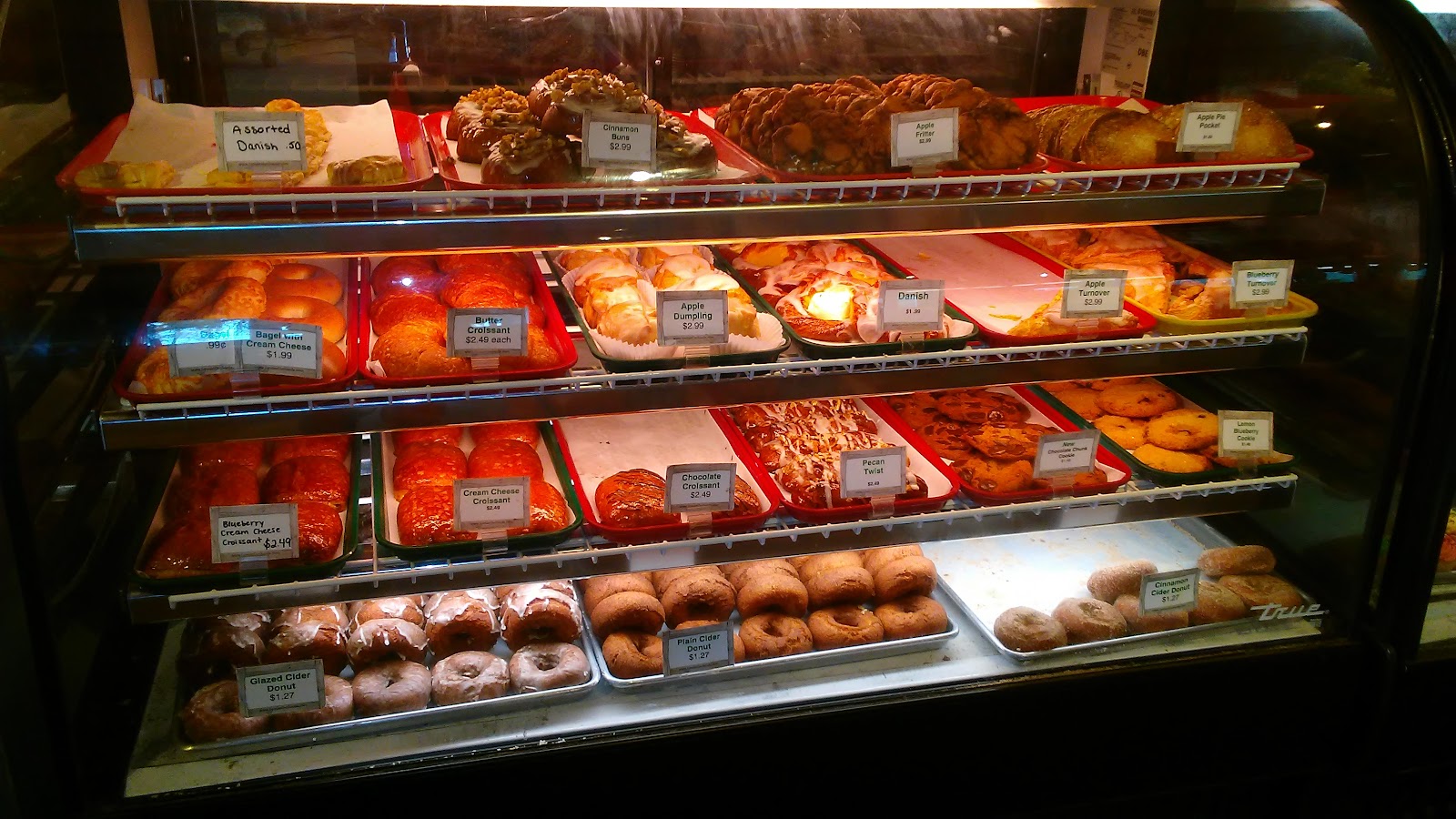
More frames from Lyman Orchards
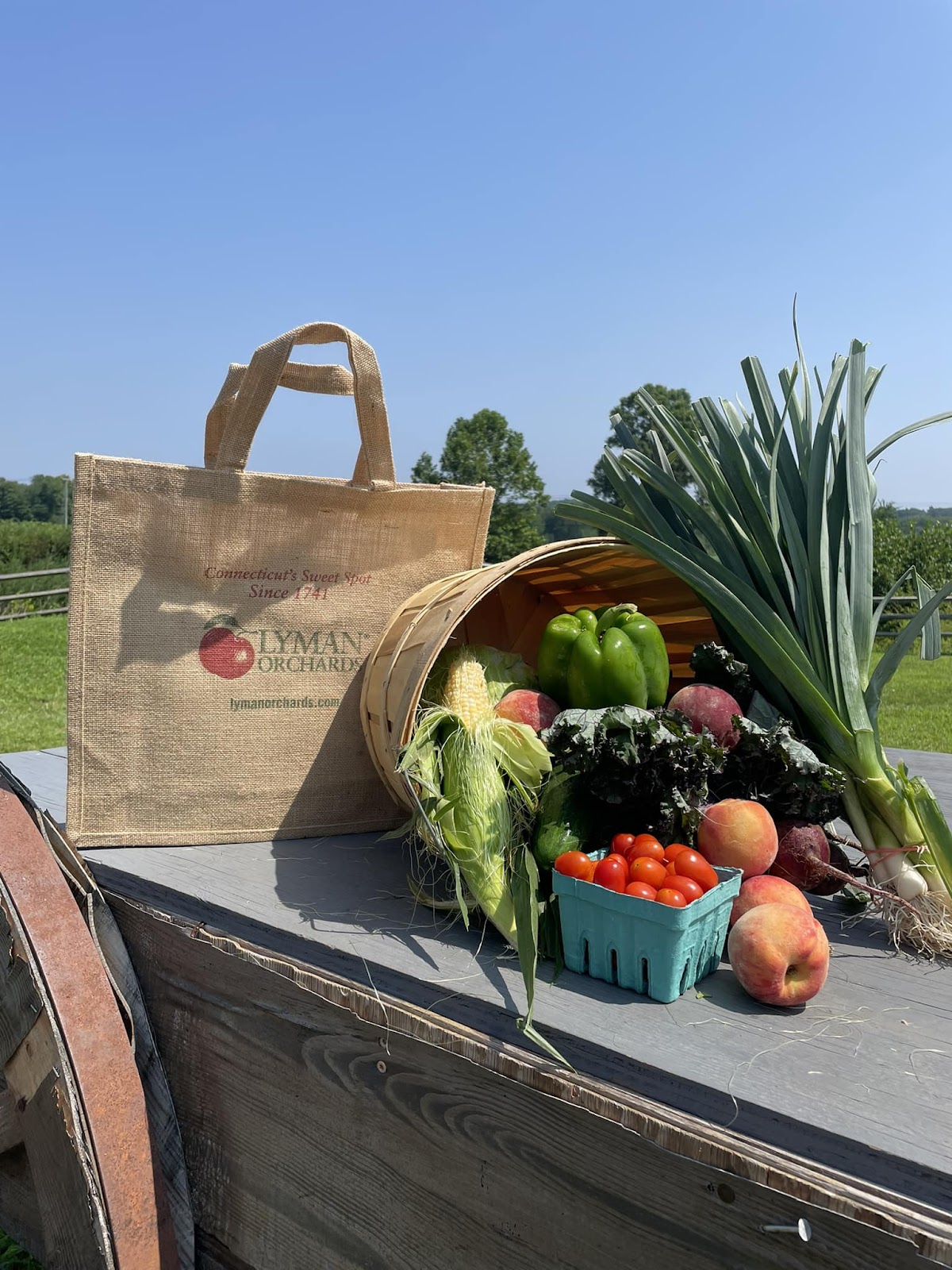
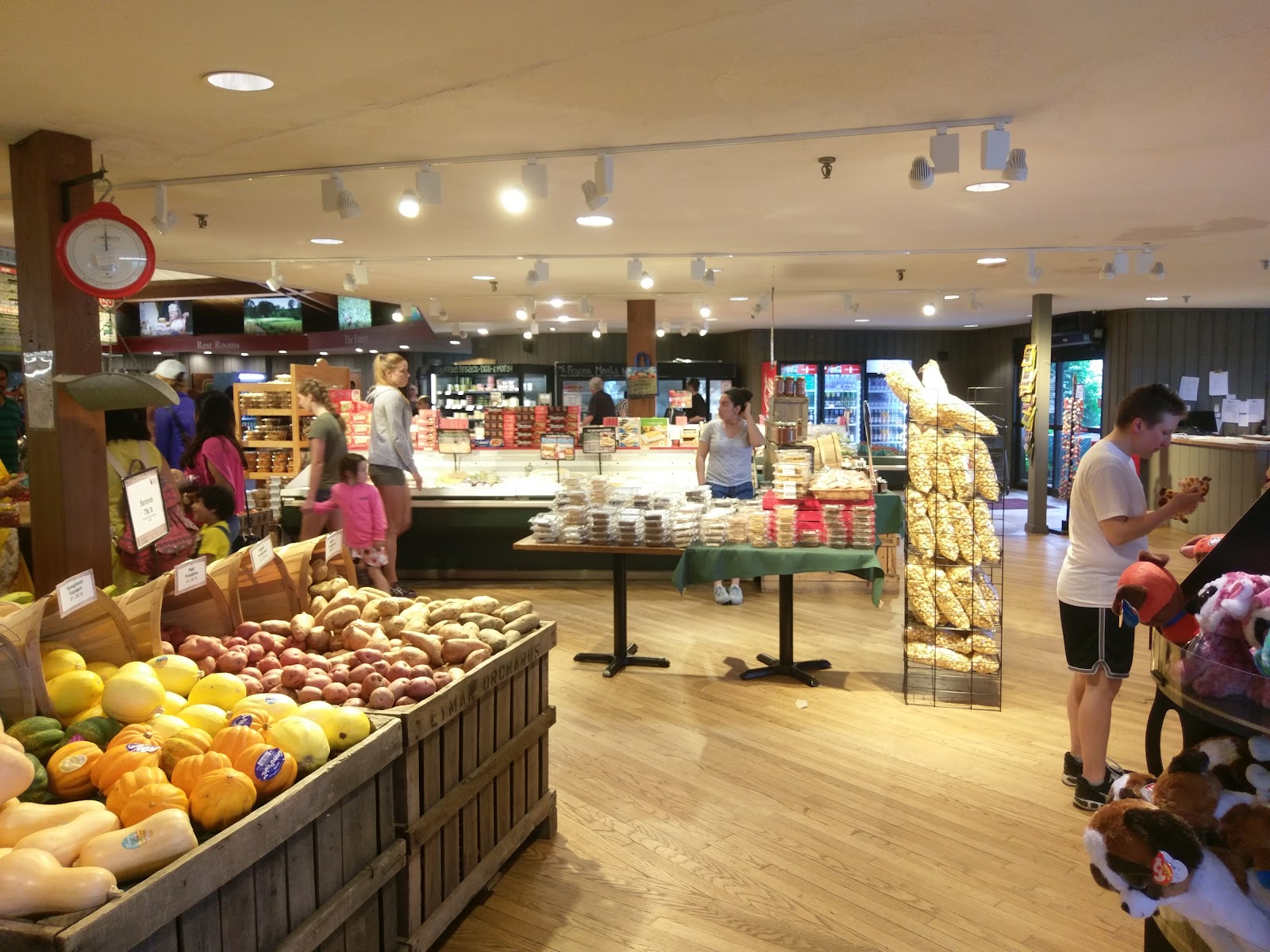
Lyman Orchards wedding photography: common questions
What makes an orchard different from a vineyard?
Height. An orchard canopy is at head height, so it gives shade over level walkable ground in rows — a vineyard is trained at chest height and shades nothing.
Why does an orchard dapple so badly?
Because the trees are pruned open to let light into the fruit. That produces dozens of small bright patches rather than a few large ones.
What is the best position in an orchard?
The shaded side of a row, facing the lit row opposite. Soft directional light from a large green source, with dark foliage behind.
Is a grey day bad here?
The opposite. Overcast removes the dappling entirely and makes every row usable at any hour. It is better than a bright day.
When is blossom?
Roughly a week to ten days in early to mid May for apple, a little earlier for peach. It cannot be moved or predicted far in advance.
Which season is best?
October, for fruit on the trees against a traprock ridge in full colour — and winter, which is technically the easiest because there is no canopy to dapple.
More Connecticut venue guides
We are writing a photographer’s guide to every venue we would happily shoot in Connecticut. Here are three more, plus the full index:
- Madison Beach Hotel, Madison: The Building’s Own Logic
- Mohegan Sun, Uncasville: The One Decision That Governs Everything
- Pond House Cafe, West Hartford: One Frame, and How It Is Made
Planning a wedding at Lyman Orchards?
A working orchard runs on its own calendar. Tell us your date and we will read it.