 Woodwinds, Branford: The Problem, and Four Ways Out
Foxwoods Resort, Mashantucket: The Problem, and Four Ways Out
The problem is not the light. It is that the building has no outside, and the outside has no building.
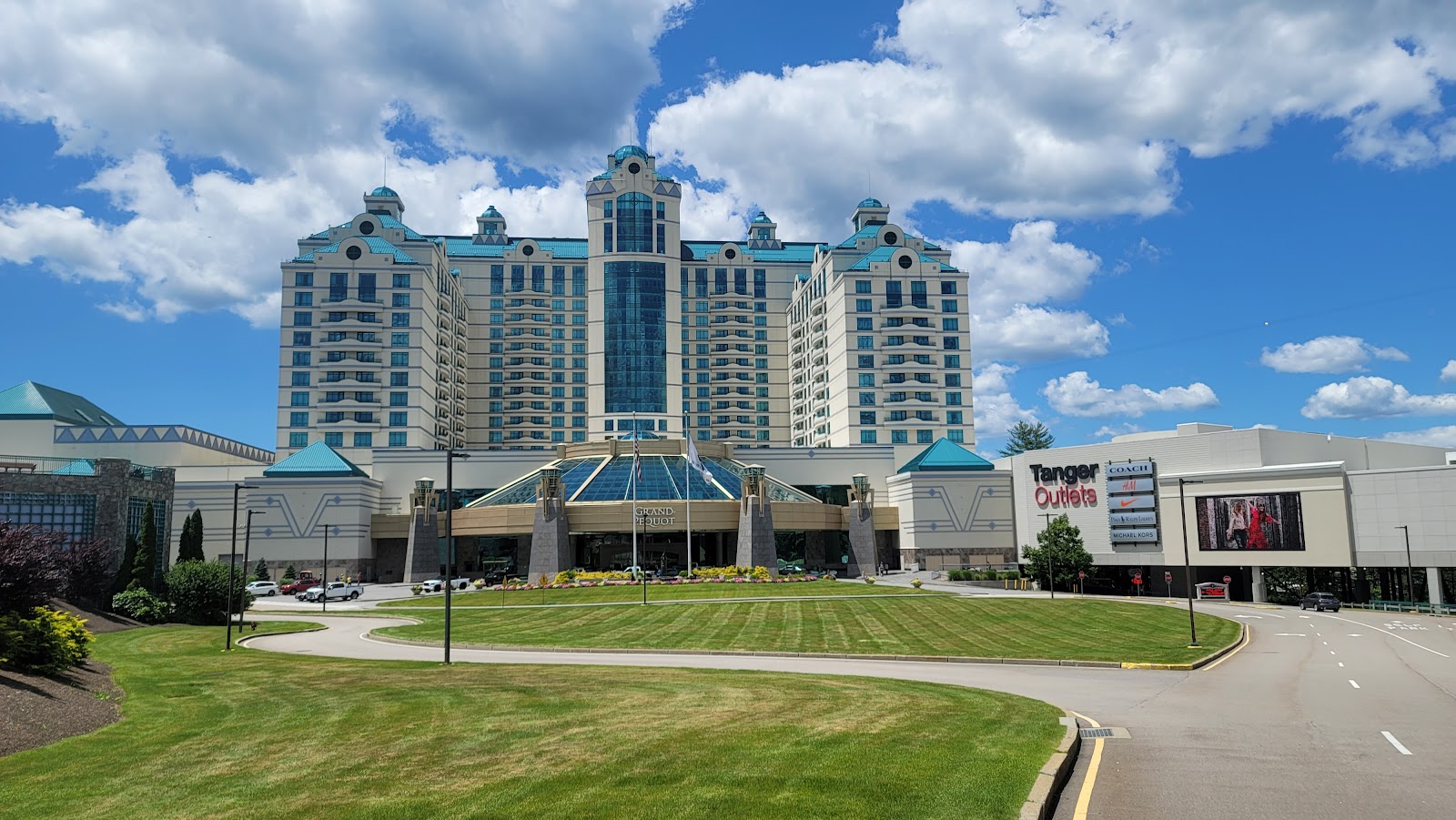
The problem at a very large resort complex is a problem of scale rather than of light, and it is worth stating precisely because the solutions follow directly from it.
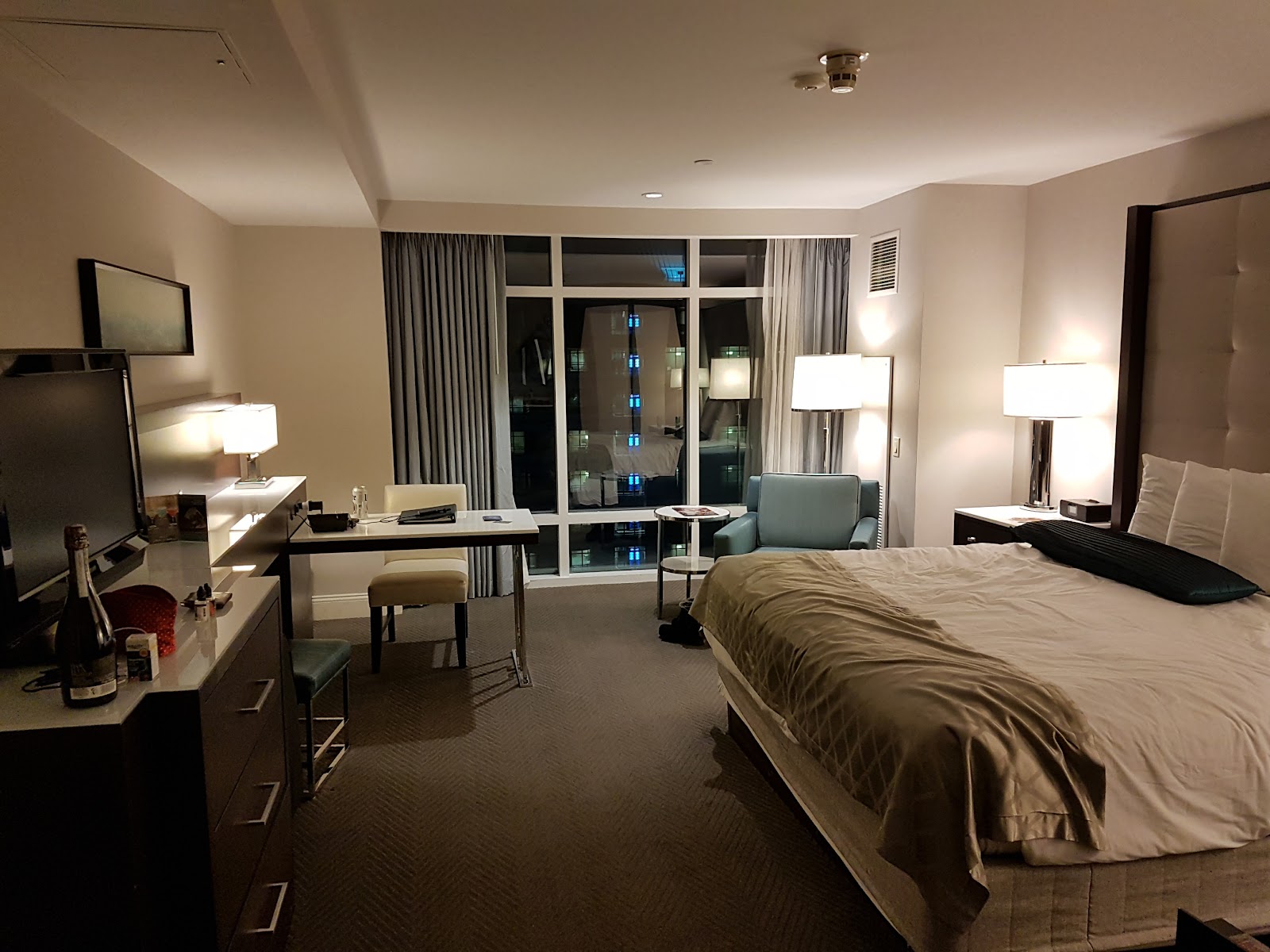
A complex of this size is effectively an interior world. Its function rooms are large, tall, carpeted and deliberately windowless or nearly so, because they were designed for events that run at any hour and are not meant to be affected by whether it is day or night outside. Its circulation spaces are long and lit artificially. Distances between spaces are measured in minutes rather than metres.
That produces four related difficulties. There is very little daylight anywhere inside, which removes the one tool that makes historic hotels photograph so well. The artificial lighting is mixed in colour and designed for atmosphere or for visibility rather than for faces. The spaces are large enough that the architecture dwarfs a wedding rather than framing it. And getting anywhere takes real time, which compresses the day.
The counterpart, and it is the thing almost nobody uses, is that a complex like this sits in eastern Connecticut woodland — mixed deciduous forest with stone walls, oak and maple, and genuine New England landscape immediately outside. The building has no outside and the outside has no building, and the whole photographic plan is about connecting the two.
There are four ways out. We have not photographed a wedding at Foxwoods; very large resort complexes behave consistently. Which rooms are included, whether the lighting in them can be dimmed or adjusted, what outdoor areas are available and how far they are, what the covered alternative is, and how long the walking transfers take are questions for their team — and those answers change the plan more than anything below.
Foxwoods Resort at a glance
| Where | A very large resort complex in eastern Connecticut woodland |
| The problem | Windowless interiors, mixed artificial light, huge scale, long distances |
| Way one | Find the daylight, wherever it is, and build the day around it |
| Way two | Light for faces, not rooms. Way three: work small against the scale |
| Way four | Go outside — it is New England woodland and almost nobody uses it |
Ways one and two: the daylight, and the lighting
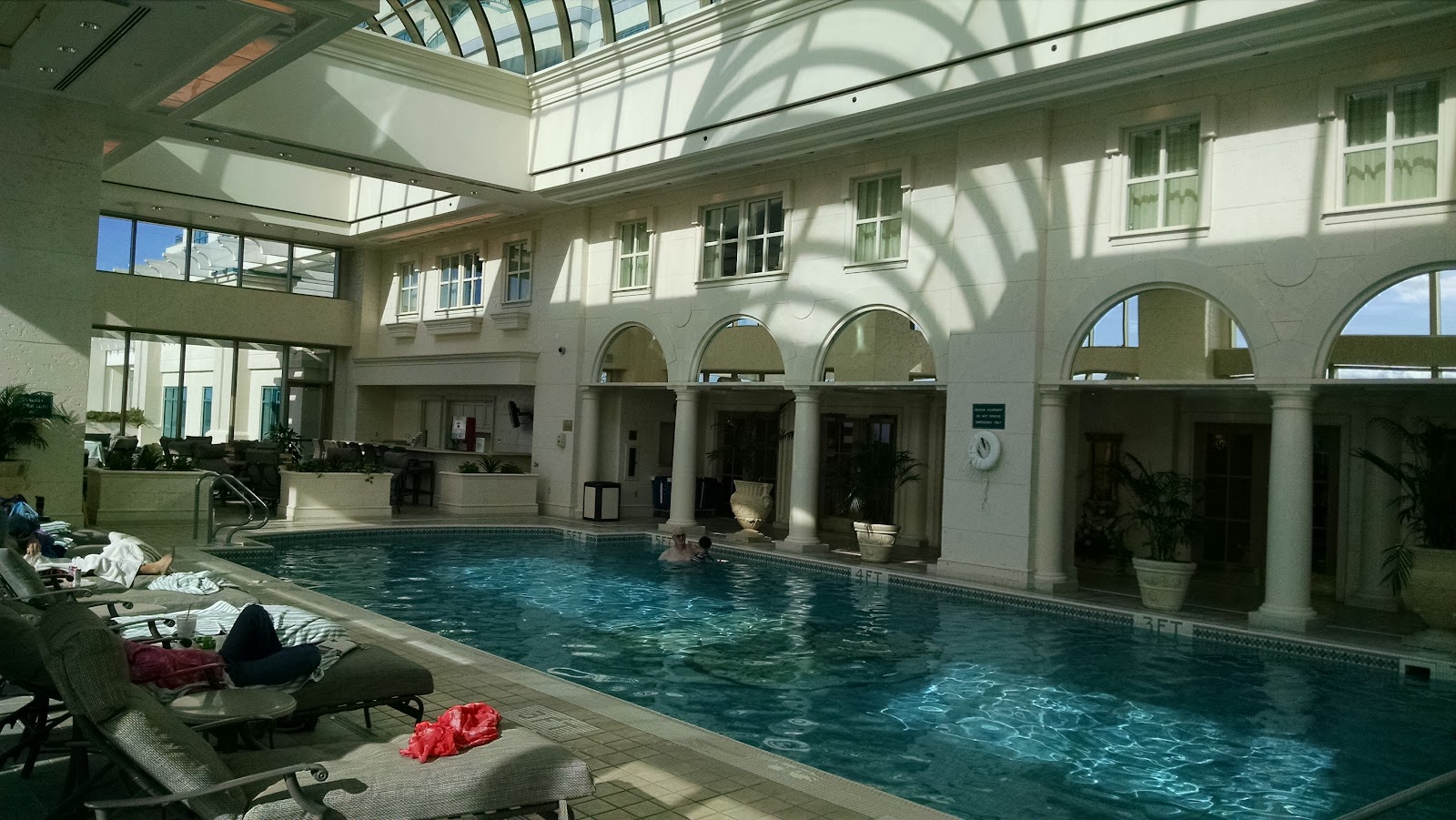
The first way out is to find the daylight, and in a building like this it exists in a small number of specific places rather than everywhere. Those places are worth locating deliberately, because they are the only positions in the entire complex where a subject can be lit the way a photographer would choose.
They are typically an entrance or porte-cochère, a glazed atrium or connecting link, a high-floor guest room window, and any restaurant or lounge with an external wall. Each of those behaves like a window in a dark room, which is the best portrait condition there is: a subject a metre from the glass, turned about forty-five degrees to it, gets horizontal light at head height with steep fall-off behind.
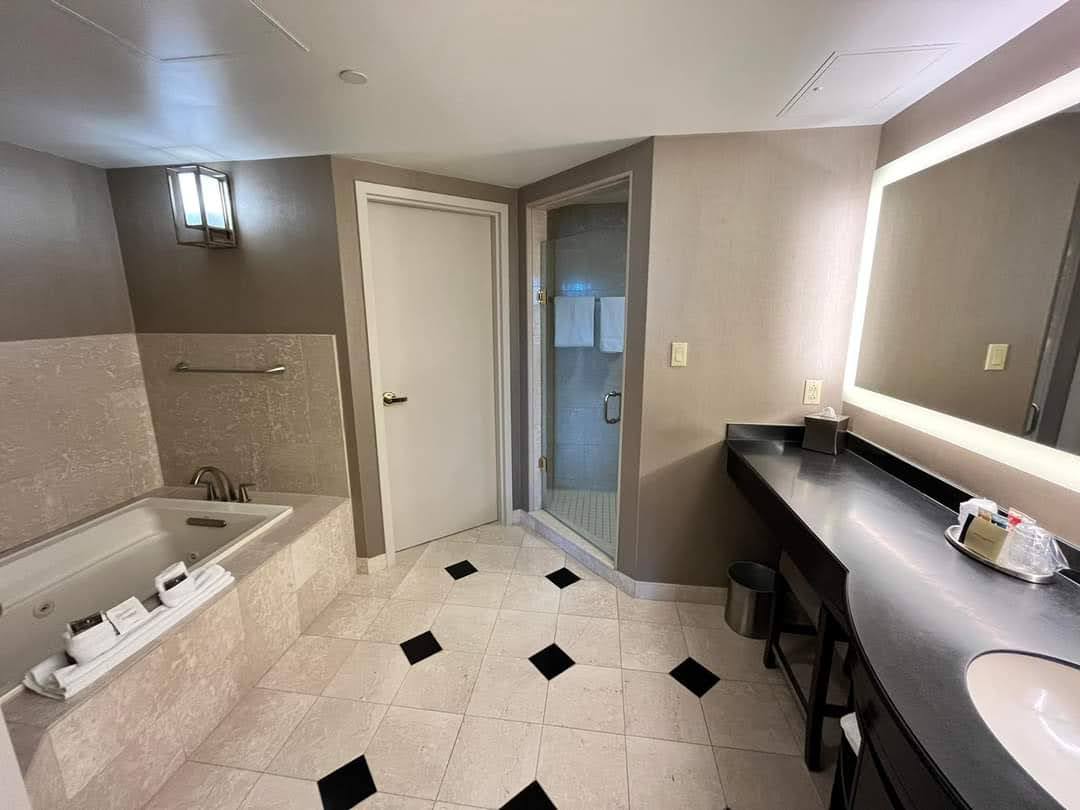
In a guest room the rule is the standard one and it is free: turn the room lights off. Warm bulbs mixing with cool daylight put two colours on one face and no white balance renders both. And a high floor is worth asking for, because a room above the treeline looks out over woodland rather than at a car park, which changes what is behind the subject as well as what lights them.
The scheduling consequence is the important one. If the daylight positions are few and fixed, the portraits belong wherever those positions are and at whatever hour they work — and that has to shape the running order rather than being fitted into a gap. A plan that leaves the couple’s portraits until after dark in a windowless building has thrown away the one free resource in the place.
The second way out is to light for faces rather than for rooms, and this is the technical core of working a large windowless venue.
The rooms are lit by mixed sources: warm downlights, cooler ambient panels, coloured effect lighting and often video screens, all in the same space and all different colours. No single white balance is correct for that mixture, and correcting for one leaves the others visibly wrong.
The resolution is to make your own light dominant on the face and let the room’s mixture be the background. One source off the camera axis, gelled to whatever the room’s dominant colour is, set about a stop above what the ambient gives the skin, with the white balance set to the gel — that renders the face correctly and leaves the rest of the room reading as atmosphere, which is what it is.
The temptation is to raise sensitivity until the room is bright, and it produces the characteristic bad picture of these venues: a flat, muddy, mixed-colour frame in which nothing is lit and nothing is dark. Exposing the ambient about a stop under what faces need, then adding light for faces, is the whole method.
A tall room means the ceiling is not a usable bounce surface: a flash aimed five or six metres up returns almost nothing and what returns is coloured. A pale nearby wall is the best available bounce, and where there is none, direct through a modifier is the answer.
Carpet is the other characteristic of these spaces and it is a genuine help. Heavy patterned carpet absorbs, which means the fall-off from an added source is steeper than it would be on a hard floor — so a background a few metres behind a subject drops away more than expected, and the separation comes for free.
And whether the lighting can be adjusted is the single most valuable question to ask in advance. A room whose house lights can be dimmed for the first dance and raised for the speeches is a substantially easier room than one that cannot, and knowing which it is saves improvising.
Ways three and four: working small, and going outside
The third way out is to work small, deliberately, against the scale of the building.
A room built for a thousand people dwarfs a wedding of a hundred and fifty, and a wide frame that includes the volume shows an empty space with some people in it. That is the honest visual result and no lens fixes it.
What works instead is the opposite: longer lenses, closer framing, and pictures made of people rather than of rooms. A frame that includes a decorative detail, a lit table, a doorway, a hand, a glance — those read as a wedding, and they are available in any space regardless of its size.
Where the scale is used, it should be used as the subject rather than as a setting. A very wide frame with a couple small and central in an enormous architectural space is a strong picture precisely because it is about scale — but it is one picture, not the approach to a whole day.
And there are positions in a large complex that give height: an upper level, a balcony, an escalator or a stair looking down over a space. A high viewpoint makes a large room legible as a shape rather than as an expanse, which is the one thing wide framing at floor level cannot do.
Geometry matters more in these buildings than in old ones, because modern interiors are full of long straight lines and repeated elements. A frame a degree off level against a long horizontal reads as an error, and repetition — columns, lights, chairs, panels — is the strongest compositional resource available. Using it deliberately is what makes a large anonymous space look intentional.
The fourth way out is to go outside, and it is the one most often skipped because of the distances.
Eastern Connecticut woodland is genuine New England landscape: mixed deciduous forest of oak, maple, birch and hickory, with hemlock and white pine in the damp hollows, stone walls built from cleared fields two centuries ago, and real four-season change. Twenty minutes in that, on any date, produces frames that the building cannot.
The woodland rules are the standard ones. Deciduous canopy filters as much as it blocks, so it dapples — the test is to look at the face rather than the ground, and a bright patch on skin means move a metre. Hemlock and pine give the real full shade, and a dark conifer background three or four stops down is free separation, with the standard trap that a meter looking at it overexposes the face.
Transmitted light under maple is the best outdoor condition in this region: broad thin leaves pass light through, so the light beneath the canopy is soft, even and coloured by the leaves. A custom white balance set on a face in position handles the green cast in summer, and in October it handles something considerably better.
The edge of the woodland is the most reliable position outdoors: standing a metre or two inside the canopy at the margin of an opening gives soft directional light in front and darkness behind, which is the same physics as a window in a dark room and it requires nothing.
The practical constraint is time, and it is a real one. If the woodland is a ten-minute walk or a shuttle ride from the function space, then a twenty-minute portrait session is a forty-minute absence — which has to be in the running order explicitly rather than hoped for. Knowing the actual distances in advance is what makes it happen.
Wind, weather and cover are the other outdoor questions. A complex like this rarely has a purpose-built covered outdoor alternative, which means an outdoor ceremony needs a named indoor fallback with real capacity — and given how much indoor capacity exists at a venue of this size, that is usually the easiest part of the whole plan.
- Locate the few daylight positions and build the running order around them
- Light for faces: expose the room a stop under, then one gelled source above skin
- Work long and close; use the scale as a subject once, not as a setting
- Get height — an upper level makes a huge room legible as a shape
- Go outside: New England woodland is twenty minutes and it is genuinely good
The eastern Connecticut year
Eastern Connecticut has four genuine seasons, moderated slightly by its distance from the Sound but not much — and because the building is largely weather-independent, the calendar decides what the outdoor half of the day gives rather than whether the wedding works.
Winter is cold with snow in most years, and for an indoor venue that is close to irrelevant, which is one of the strongest arguments for a complex like this on a February date. Guests arrive under cover, everything happens inside, and nothing depends on the weather.
Outdoors, winter is genuinely good and almost never used. Snow is the best natural fill available, turning the ground into a reflector that lifts every shadow, and snow against dark bare trunks and dark hemlock is the widest brightness range available — expose for the snow and let the trees go black. Snow fools a meter by about two stops toward underexposure, so deliberate overexposure relative to the camera is the rule.
The December sun at this latitude reaches only about twenty-five degrees above the horizon, so the whole short day rakes rather than floods, and in leafless woodland it comes in almost horizontally through the trunks. That is the most beautiful light a New England wood receives and it lasts most of the short day rather than an hour.
The costs are cold hands, batteries draining faster, and a cold camera fogging when brought back into a heated building — which at a venue with a large temperature difference between inside and out is a real consideration. Spares in an inside pocket and bodies bagged until they warm.
Early spring is mud season and it is the weakest outdoor part of the year: bare trees, brown ground, wet footing and no colour. Late April into May is when it turns, and the turn takes about two weeks.
Late spring is undervalued. New foliage is a pale fresh green that transmits light beautifully, the woods are at their most luminous, and the temperatures are comfortable — and because almost nobody goes outside at a venue like this, the woodland is empty.
Summer is warm and humid, commonly mid to upper eighties Fahrenheit with high humidity, with afternoon thunderstorms a real feature from June into August. Indoors none of that matters; outdoors it means the middle of the day belongs to conifer shade and canopy edges rather than to open ground.
Autumn is the best season for the outdoor half of the day and it is not close. Colour in eastern Connecticut peaks in the second half of October in most years, and because the region’s species turn at different rates — sugar maple scarlet, red maple crimson, birch and hickory yellow, oak russet — the window runs two or three weeks rather than one.
For a venue whose interiors are windowless and neutral, that outdoor colour is worth a great deal: twenty minutes in October woodland gives the whole set of pictures a location and a season that the building itself withholds. It is the single strongest argument for taking the walk.
Autumn also brings the clearest air, the most settled weather and the most comfortable temperatures of the year, which makes it the easiest date on every count.
Late autumn after leaf fall is spare and graphic rather than empty: bare structure, long sightlines through the trees, russet oak still holding, stone walls visible again, and the first snow on dark trunks. It is the most underrated fortnight of the year in this landscape and it costs nothing to use.
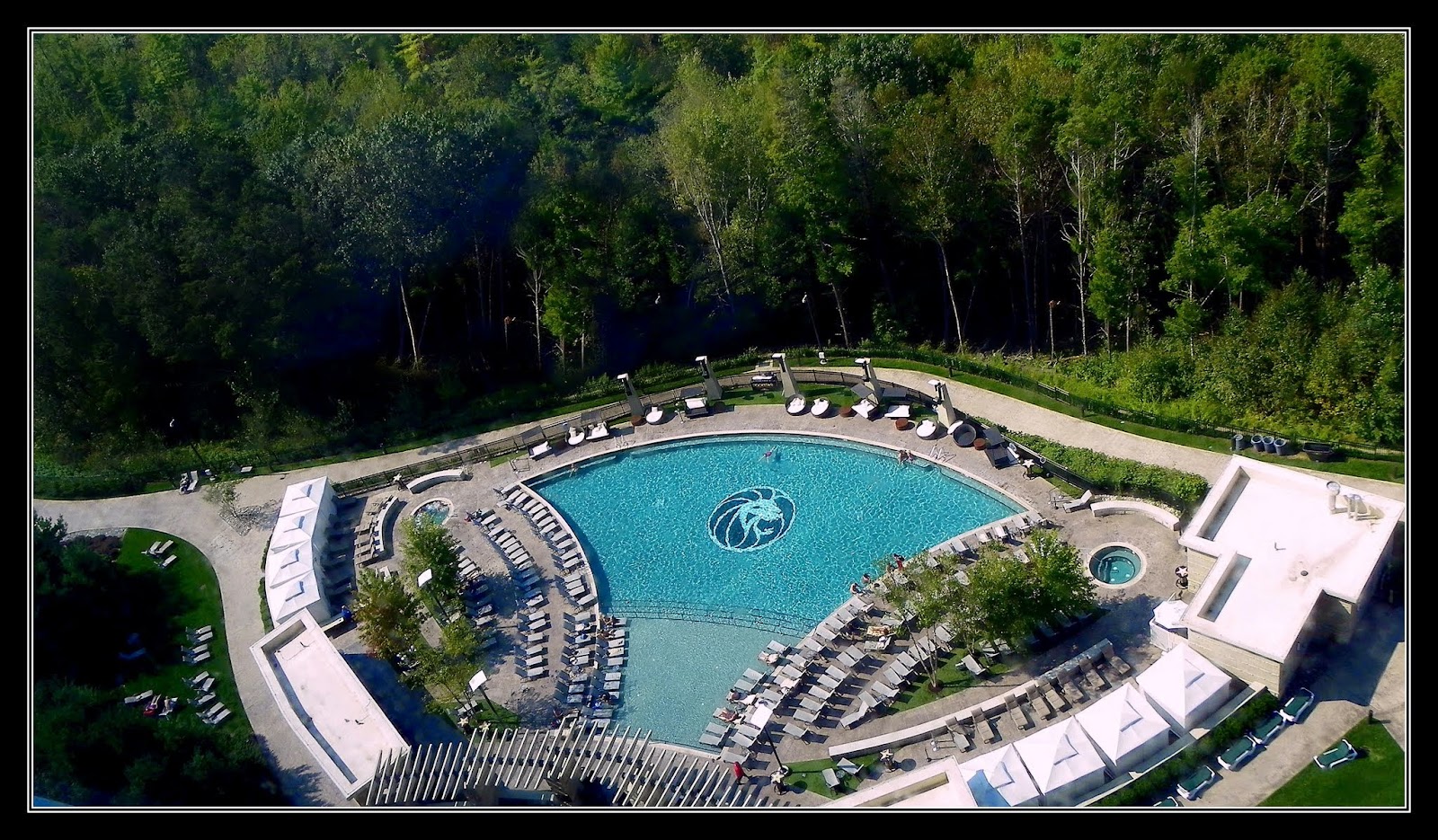
More frames from Foxwoods Resort
Foxwoods Resort wedding photography: common questions
What is the central problem at a very large resort?
Windowless interiors, mixed artificial lighting, a scale that dwarfs a wedding, and distances that eat the schedule.
Where is the daylight?
In a small number of fixed places — an entrance, a glazed link, a high-floor guest room, a restaurant with an external wall. Build the running order around them.
How should the function rooms be lit?
Expose the ambient about a stop under what faces need, then add one gelled source above skin level. Never raise sensitivity until the room is bright.
Why is carpet helpful?
It absorbs, so the fall-off from an added source is steeper than on a hard floor and the background drops away for free.
How do you deal with the scale?
Work long and close for most of the day, and use the volume as a subject once rather than as a setting. Get height where you can.
Is it worth going outside?
Yes, and almost nobody does. It is genuine New England woodland, and twenty minutes in October gives the pictures a season the building withholds.
More Connecticut venue guides
We are writing a photographer’s guide to every venue we would happily shoot in Connecticut. Here are three more, plus the full index:
- Inn at Mystic: Field Notes
- Italian Center, Stamford: The One Decision That Governs Everything
- Lake of Isles, North Stonington: The Light Through the Day
Planning a wedding at Foxwoods Resort?
A building with no outside, and woodland with no building. Tell us your date.