 Park Hyatt Aviara, Carlsbad: The One Decision That Governs Everything
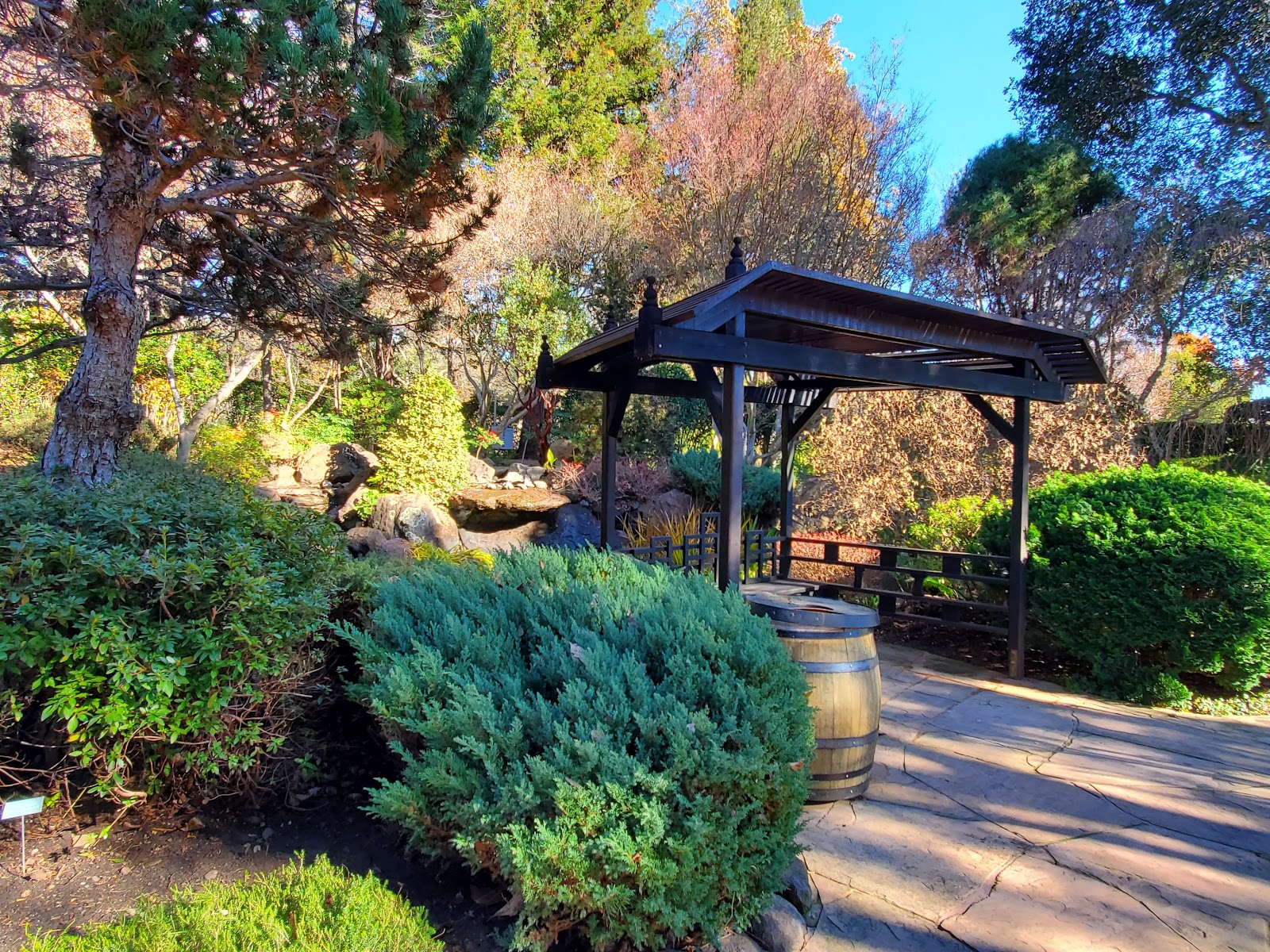
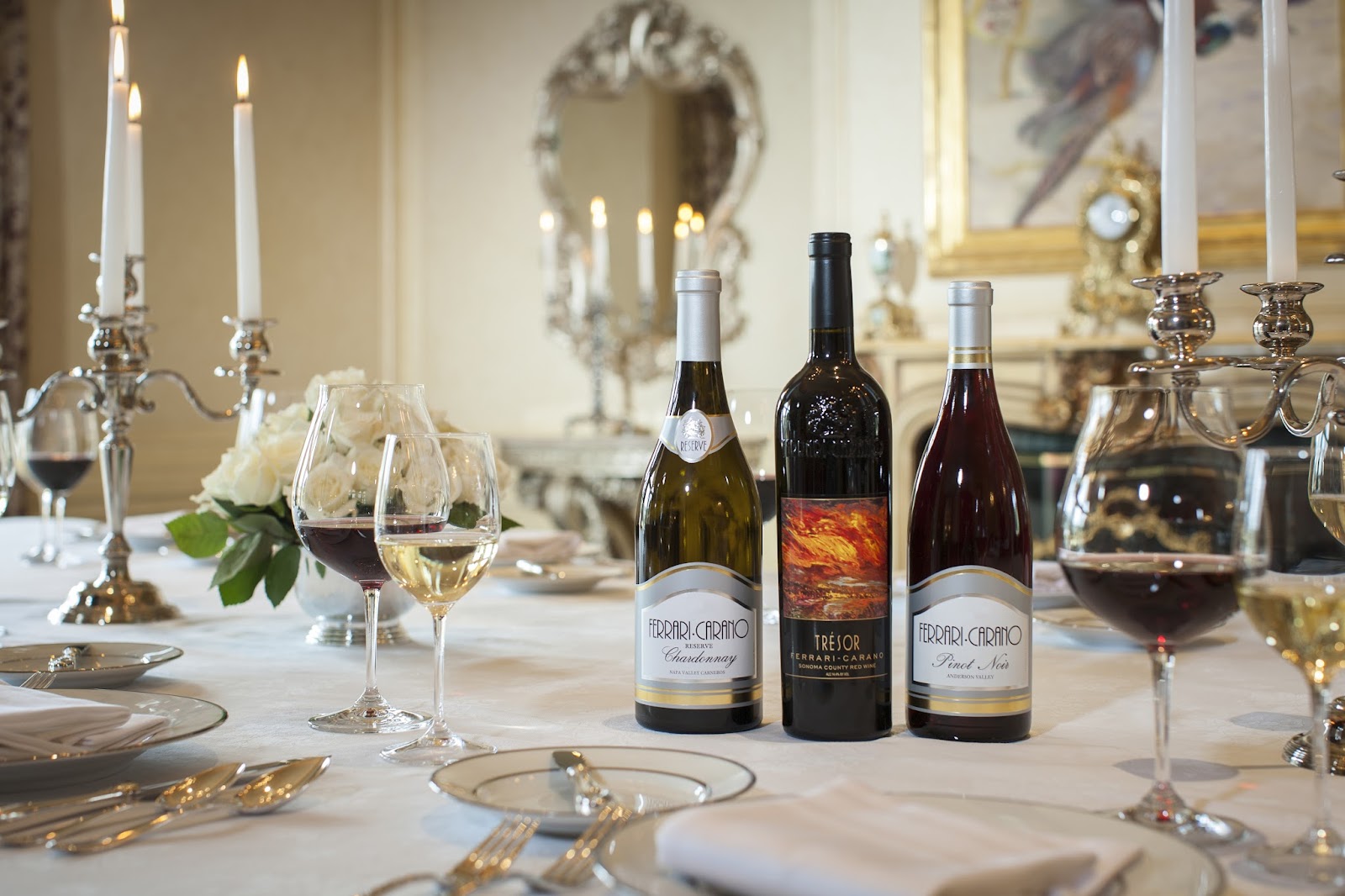
Ferrari-Carano Vineyards, Healdsburg: The Site’s Own Logic
A formal garden is built on axes. Stand on one or ignore it entirely — the halfway position is the only mistake.
This property has two design languages on it and the internal logic of the place is the relationship between them.
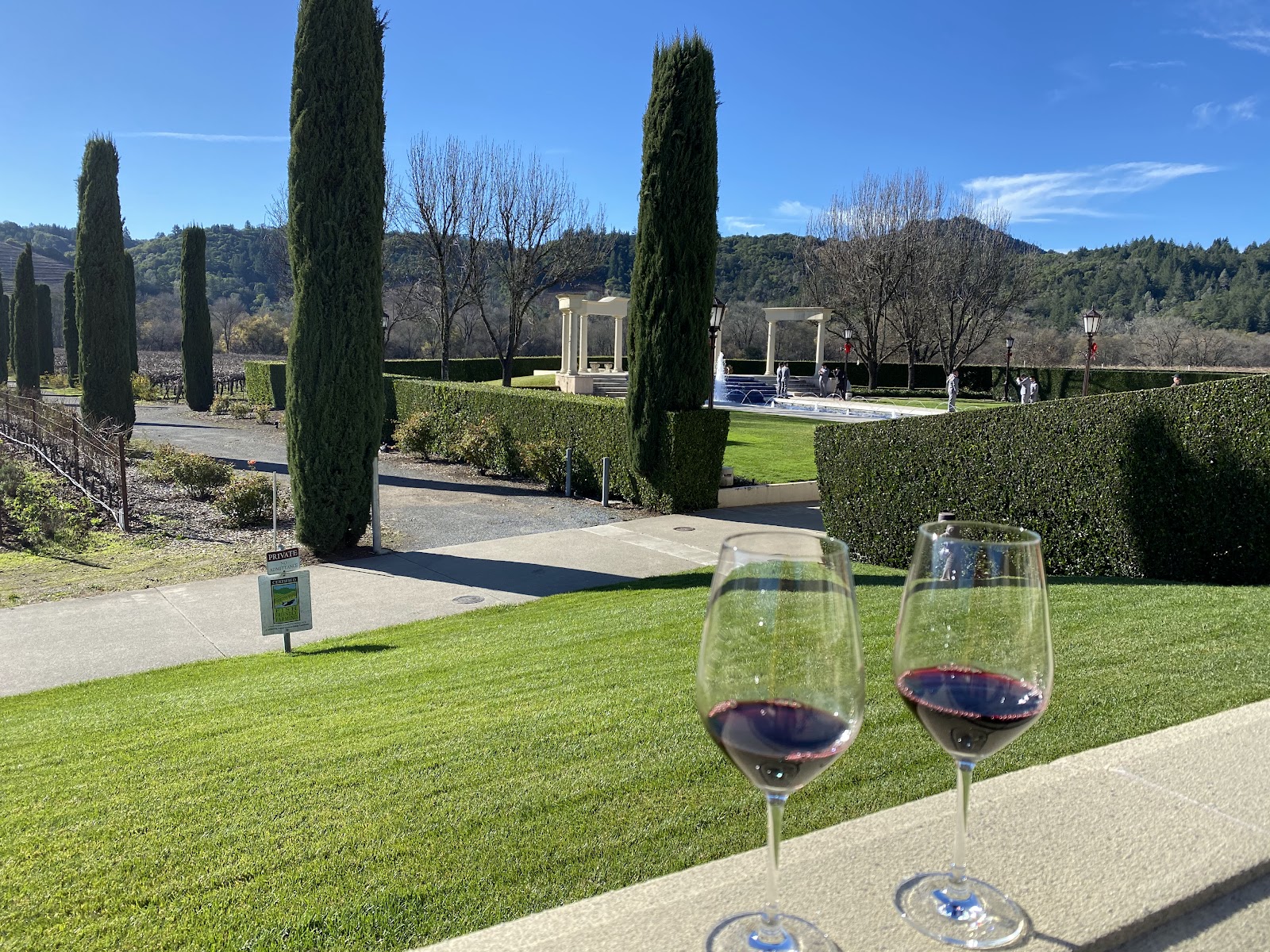
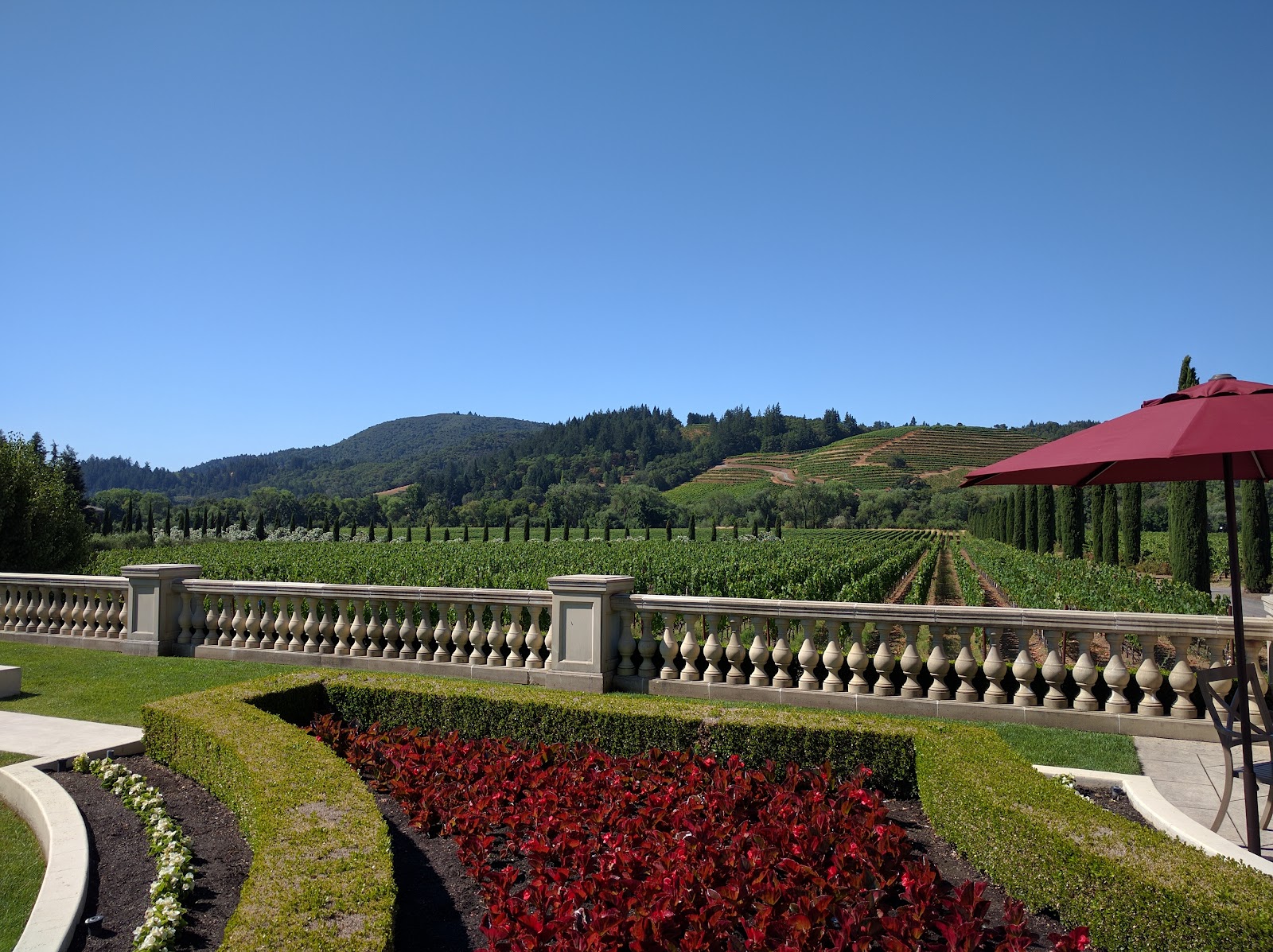
The first is formal: an ornamental garden with laid-out beds, axes, symmetry, clipped structure and planned sightlines. The second is agricultural: vineyard planted in long rows to a compass direction chosen decades ago for the vines rather than for anybody’s photographs.
Both are geometric, which is what makes them work together and what makes them demanding. A formal garden is built around axes, which means it has correct positions and incorrect ones, and a camera a metre off the axis in a symmetrical space looks like a mistake rather than a choice. A vineyard row does the same thing on a larger scale.
So the governing rule here is simple and unusual: commit to the geometry or ignore it completely. Stand on the axis, square and level, and let the symmetry do the work — or work close and tight so the geometry is out of frame entirely. The halfway position, nearly on the axis and nearly square, is the only real error, and it is the commonest one.
The third element is the Dry Creek Valley itself: a narrow Sonoma valley with hills close on both sides, a Mediterranean climate with a dry season running roughly May to October, and oak on the slopes above the planted ground.
We have not photographed a wedding at Ferrari-Carano; formal gardens in vineyard country behave consistently. Which garden areas and buildings are included, the covered alternative, what the vineyard work schedule is on the date, and whether the garden’s irrigation runs during an event are questions for their team.
Ferrari-Carano Vineyards at a glance
| Where | The Dry Creek Valley at Healdsburg, Sonoma County |
| The logic | Formal garden geometry set inside agricultural geometry |
| The rule | Commit to the axis or ignore it — the halfway position fails |
| The shade | Oak on the slopes, and whatever the buildings throw |
| The season | Dry roughly May to October; vines turn in large panels in November |
The formal garden, and what symmetry demands
A formal garden is the most rule-bound environment in this guide and the rules are worth stating, because they are not a matter of taste.
The first is the axis. Every formal layout has one or several, and standing on one gives a frame where everything resolves: beds balanced left and right, a path leading straight in, and a terminating feature at the far end. A metre off it and nothing balances, the path skews, and the eye reads the picture as slightly wrong without being able to say why.
The second is the level and the vertical. A formal garden is full of straight lines, clipped edges and repeated verticals, and against those an out-of-level horizon or a converging vertical is glaring. A frame here needs the camera square in both planes, which in practice means checking rather than trusting.
The third is height. Formal beds are laid out to be read from above, which is how they were designed to be seen — so a low camera renders an elaborate parterre as a confusing mass of foliage, and a higher position reveals it as a pattern. Any terrace, step, balcony or upper window is worth using for exactly this reason, and it is the difference between a picture of a garden and a picture of some plants.
The fourth is scale, and it is the one most often missed. A formal garden is designed to dwarf a person, which means a couple placed small within a symmetrical frame reads as intended and a couple filling the frame reads as though the garden were incidental. Both are legitimate pictures; only one of them is a picture of this place.
The alternative approach is to abandon the geometry entirely: work close, use a long lens, let the planting go to soft blocks of colour behind a face, and take nothing from the layout but its plants. That works, and it is the right answer at midday when the light forbids anything wide.
Light in a formal garden is the difficulty, because such a garden is open by design. Clipped hedges are chest to head height and shade nothing; beds are open ground; paths are unshaded so the vistas stay clear. So the garden is a morning and evening proposition, and in the middle of a Sonoma summer day it is an exposed one.
What it does have is hedges as backgrounds, and dense clipped evergreen is the single most useful surface here: a dark, even, textureless mass two or three stops under a subject, giving free separation and nothing to distract. A subject in open shade against a hedge is the most reliable portrait position in any formal garden, and the exposure goes on the skin — a meter looking at dark hedge overexposes the face by a couple of stops.
Water is the other formal element worth using deliberately. A still pool or canal on an axis doubles the symmetry and reflects the sky, which in a garden with no overhead cover is the brightest thing at ground level and throws light upward into faces. That fills the shadows a high sun carves, at the cost of uplight under the chin, which something solid on one side corrects.
And one practical question that matters more than it sounds: whether the garden’s irrigation runs on a timer during an event. Overhead sprinklers on a formal garden at six in the evening is a real risk rather than a joke, and it is a question with a definite answer.
The vineyard, the oaks, and the hour
Outside the garden the logic changes from ornamental to agricultural, and the vineyard has its own set of demands.
Rows are the whole thing. A vineyard row is a strong perspective line, and where the camera stands decides whether it converges into the frame or repeats across it. Down a row gives depth and a corridor; across the rows gives banded texture. Both work. The diagonal accident in between does not, and two steps either way is the entire difference.
Rows also run to a fixed compass direction, which means the light along a row and the light across it differ at every hour of the day. Nothing on a map tells you this — walking the vineyard once at the hour the portraits will happen does, and it takes ten minutes.
The exposure problem in a vineyard is that there is no shade in it at all. Vines are trained at waist to chest height, so between the rows a subject is in full sun with nothing overhead. Sonoma dry-season sun at midday over open vineyard is hard and high: vertical shadows, dark eye sockets, deep shade under the chin, and squinting. There is no technique that fixes it.
Under fog or high cloud the vineyard changes completely: the range collapses, the green saturates rather than glares, and it becomes usable at any hour. A grey morning in the Dry Creek Valley is an easy morning, which is worth saying to a couple hoping for sun.
The last hour is what the vineyard is for. Low sun rakes along and across the rows rather than falling onto them, which puts texture in every leaf and turns the canopy translucent — because vine leaves are thin enough to transmit light, which is why a backlit vineyard glows in a way a backlit hedge never does.
That frame is exposed for the background with the faces lifted by a close source gelled warm to match. Metering on skin gives a white sky and a flat vineyard, which is the standard failure in open planted country. Close matters because nothing out there bounces — a source at two metres needs roughly a quarter of the output it needs at four.
In a narrow valley the sun goes behind the western hills well before a sunset table says it will, which brings that hour forward and shortens it. It also produces the interval frame: the valley floor in shade with the eastern slope and its oaks still lit, which puts a couple in soft even light with a brilliantly lit hillside behind them for twenty or thirty minutes.
The oaks on the slopes above the planted ground are the site’s real shade and the reason the middle of the day is workable at all. Coast live oak has a dense, broad, low-spreading evergreen crown that blocks rather than filters, so the shade under a mature specimen is genuinely full and it is the same in February as in August. A few metres inside the canopy on the side facing open sky gives soft directional light with a near-black background, which is the best free frame on the property.
The dappling test applies and it is the only check that matters under any tree: look at the face rather than the ground, and a bright patch on skin means move a metre.
Colour needs a custom white balance in three places here: under oak, where filtered light carries green; in the garden, where dense planting bounces green and pale gravel bounces warm; and anywhere near water, where a blue sky reflects cool. Set on a face in position, it is thirty seconds that changes every frame after it.
- Stand on the axis or ignore it; the halfway position is the only error
- Get height — a parterre is designed to be read from above
- Clipped hedge is the best free background in the garden. Meter on skin
- Stand in a vineyard row or across it, deliberately, not diagonally
- Oaks above the planted ground are the only real shade at midday
The Dry Creek year
A formal garden and a vineyard keep different calendars, and on this property they run alongside each other all year.
The garden peaks in late spring and early summer, which is when ornamental planting is at its fullest and most colourful — and in a Mediterranean climate that peak arrives earlier than it does in most of the country, with the beds substantial by May. That is the garden’s own best season and the one its design is aimed at.
Spring is also when the valley is green. The hills here are green only in the wet half of the year and turn gold and dry by June, so a couple expecting the green Sonoma of a spring photograph should know that a July wedding has a straw-coloured background. It is not worse; it is different, and it is worth showing in advance.
Summer is the reliable season and the hard one. Rain is genuinely unlikely from roughly May to October, and the Dry Creek Valley is warm — commonly above ninety degrees Fahrenheit in July and August, and a narrow inland valley holds heat. The compensation is the diurnal swing: marine air reaches up from the coast overnight, so mornings start cool and often foggy while afternoons are hot and clear.
That swing is the practical key to a summer wedding here. A morning is comfortable, soft and workable everywhere; an afternoon is a shade-and-welfare problem with a small number of answers; and the last hour is excellent. Weight the day accordingly and the site is easy.
Fire season is the honest note for inland Sonoma. Late summer and autumn carry real wildfire risk, and smoke rather than flame is the likelier photographic reality — a smoke layer turns the sun orange, flattens contrast and shifts everything warm in a way no white balance fully resolves. It cannot be planned for, only acknowledged, and a venue’s own contingency is a fair question.
Harvest is the most interesting time to be here. Crush runs from roughly late August into October, which turns the vineyard from scenery into a working place — fruit on the vines, bins and tractors in the rows, activity in the winery. Photographed honestly it gives frames no other season offers, and what will be happening on a given date is a question for the estate.
Then the vines turn, through late October and into November. Because a vineyard is planted in blocks of a single variety, the colour comes in large uniform panels rather than tree by tree — yellow, orange or red depending on the grape — and against clipped evergreen garden structure and dark oak on the slopes, that is the strongest colour the property produces all year. Autumn also brings the clearest air of the year, which makes compressed long-lens frames across the valley best, and a shorter day that puts the gold hour at a civilised time.
The wet season runs roughly November to April and a covered alternative is not optional then. What it gives back is a formal garden in the light that suits it best: soft, even, saturated, with wet gravel and wet clipped hedge reading dark and rich, and no dappling anywhere to spoil a symmetrical frame. A formal garden photographs better in soft light than in hard, which makes a grey day here a genuine gain.
Winter after leaf-fall is spare and graphic, and it is the season when the two geometries read most clearly: bare trained vine trunks in rows, clipped hedge structure holding its shape, wet dark earth and green hills, with the oaks still full. The December sun at this latitude reaches only about thirty degrees above the horizon, so the whole short day rakes rather than floods — which removes the hard-light problem entirely and makes the open garden and the vineyard usable from morning to evening.
More frames from Ferrari-Carano Vineyards
Ferrari-Carano Vineyards wedding photography: common questions
What does a formal garden demand?
Standing on the axis, squaring the camera in both planes, and getting height — a parterre is designed to be read from above, not from eye level.
What is the commonest mistake here?
The halfway position: nearly on the axis and nearly square. Commit to the geometry or work close enough that it is out of frame.
Where is the shade?
Coast live oak on the slopes above the planted ground, and whatever the buildings throw. There is no shade in a vineyard or a formal bed.
What is the best free background?
Dense clipped evergreen hedge — a dark even mass two or three stops under the subject. Meter on skin, not on the hedge.
When do the vineyards have colour?
Late October into November, in large uniform panels, because each block is planted to a single variety.
Is a grey day bad here?
No. A formal garden photographs better in soft light than hard, and fog or cloud makes the vineyard usable at any hour.
More California venue guides
We are writing a photographer’s guide to every venue we would happily shoot in California. Here are three more, plus the full index:
- Four Seasons Westlake Village: The Problem, and Four Ways Out
- Gardens of Golden Gate Park, San Francisco: Field Notes
- Greystone Mansion, Beverly Hills: A Walk Through the Site
Planning a wedding at Ferrari-Carano Vineyards?
Two kinds of geometry, one plan. Tell us your date and we will walk the axes.