 Park Hyatt Aviara, Carlsbad: The One Decision That Governs Everything
Fairmont San Francisco: The Building’s Own Logic
A grand hotel is a sequence, not a set of rooms. Read the sequence and the day plans itself.
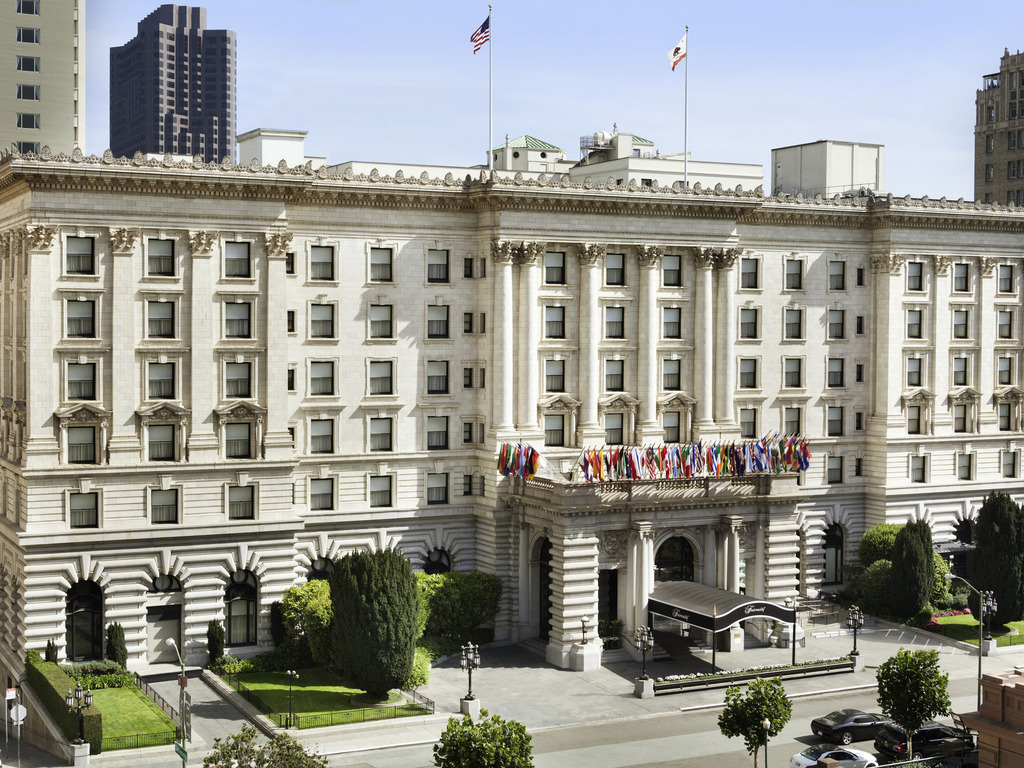
A grand hotel of this period has an internal logic that was designed rather than accumulated, and once it is read the photographic plan follows from it almost automatically.
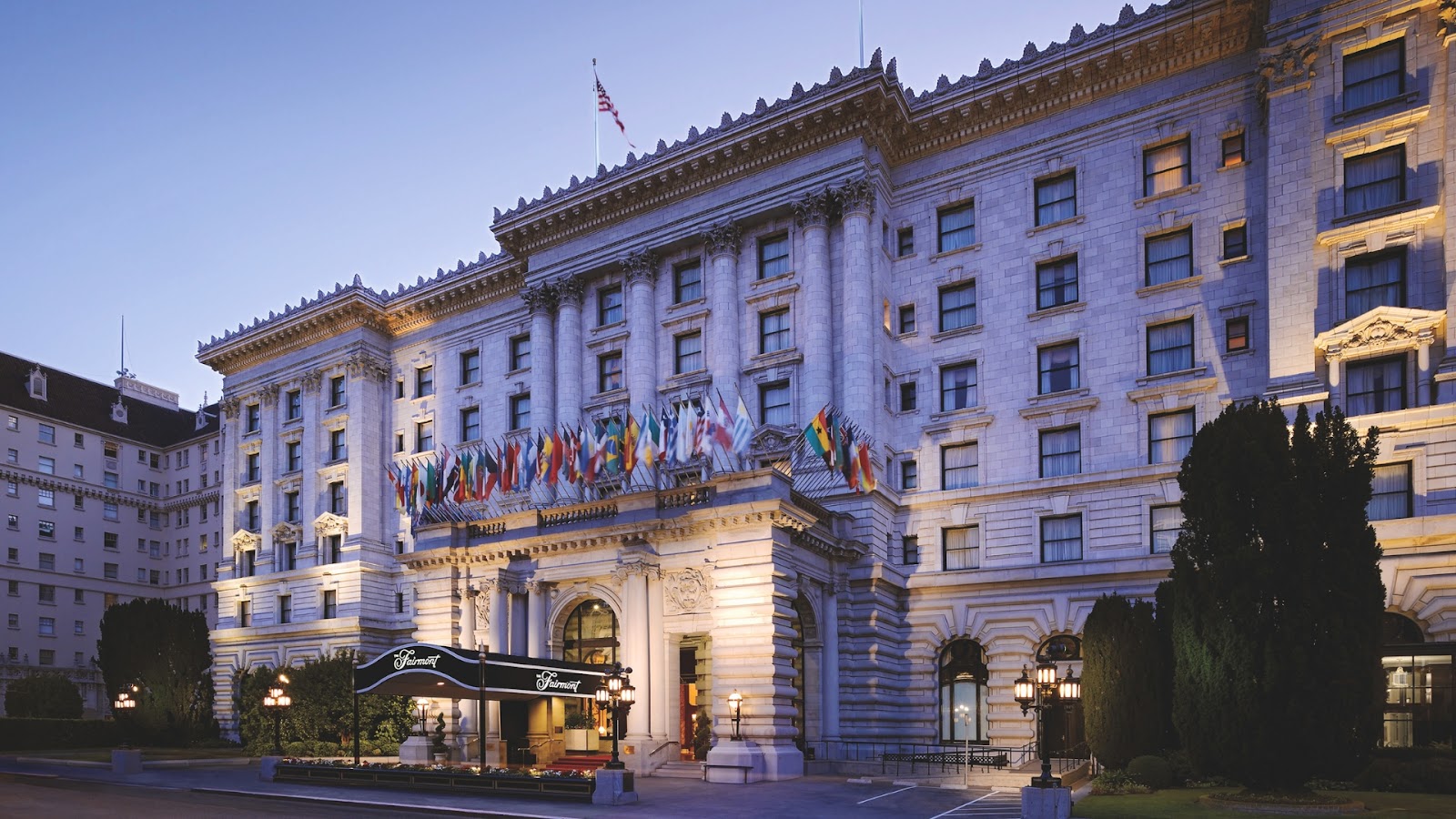
The logic is processional. Such a building is arranged as a sequence — an entrance, a lobby, a stair, a corridor, a room — with each space larger or more elaborate than the one before it, and the whole thing built to be walked through in a particular order. That is not decoration; it is the organising idea, and it is why the best pictures in a grand hotel are of movement between spaces rather than arrangements within them.
The second part of the logic is the window. Rooms in a building of this era are deep, with high ceilings and tall windows, because there was no useful artificial light when the plan was drawn. That means the light indoors is horizontal and directional and falls off steeply as it goes back into a room — which is an excellent portrait light close to the glass and nothing at all four metres in.
The third part is the hill, and in this city it is a weather fact rather than a view fact. A hotel at the top of one of San Francisco’s higher hills frequently stands above the summer fog layer while the neighbourhoods below it are grey — which means a foggy city and a clear hotel on the same afternoon, and a view down onto the layer rather than through it.
We have not photographed a wedding at the Fairmont San Francisco; grand hotels of this type behave consistently. Which rooms are included, whether the ballroom lighting can be dimmed or adjusted, what access there is to the exterior and any terrace, and how long a room turnaround takes are questions for their team.
Fairmont San Francisco at a glance
| Where | The top of Nob Hill, San Francisco |
| The logic | A processional sequence of spaces, not a set of separate rooms |
| The light | Deep rooms with tall windows: horizontal, directional, steeply falling |
| The hill | Often above the summer fog layer while the city below is grey |
| Ask first | Rooms included, ballroom dimming, exterior access, turnaround time |
The sequence, and the windows
Working the sequence is the first instruction and it changes what the day looks like. Instead of a series of static portraits in successive rooms, the pictures become a progression: arriving, crossing, climbing, entering. That is what the building was designed to produce, and it is also more interesting than the alternative.
The stair is the centre of it, and a ceremonial stair in a building like this is the single most productive position available. It gives height without equipment, it gives a natural sightline from above and below, it gives an architectural frame on both sides, and it puts a subject at a different level from everyone else in the picture, which separates them for free.
Two technical notes on a grand stair. The light is almost always from above, either from a skylight or from high windows, which means it lands on the top of the head and leaves eye sockets dark — so a subject looking up the stair rather than down it catches that light in the eyes, and the same subject looking down is in their own shadow. That single decision makes or breaks the frame.
And the geometry punishes a crooked camera. A stair is full of strong parallel lines, so a frame a degree off level or with a vertical converging where it should be parallel reads as an error rather than a style. Square and level, checked rather than assumed.
The corridor is the second element of the sequence and it is undervalued. A long corridor with a window at one end is a light source with a natural perspective line built in: the subject stands in the window light, the corridor recedes behind them into darkness, and the fall-off does all the separation. Nothing needs adding.
The lobby is the third and it is the hardest space in the building, for a specific reason. A grand lobby is lit for atmosphere rather than for faces: warm downlights from a high ceiling, chandeliers that read as sources rather than illuminating anything, and dark polished surfaces that absorb. So the top of a head is lit, the eyes are not, and the colour is strongly warm while any daylight from the entrance is cool.
The answers are position and one source. Position means finding where daylight from the entrance reaches, because a lobby’s usable light is almost always within a few metres of the door. One source means a single light off the camera axis, gelled warm to match the room, set about a stop above the ambient — enough to put light in the eyes without erasing the atmosphere that makes the room worth photographing.
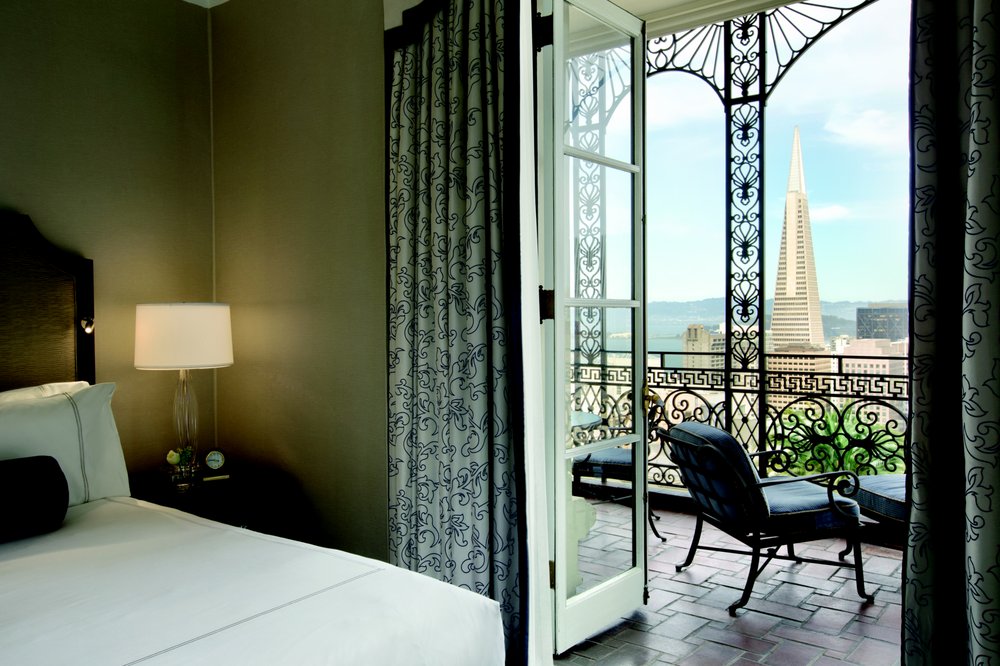
The windows in the guest rooms are the best light in the building and the easiest to use. A tall window in a deep room gives horizontal directional light that models a face properly, and the fall-off is steep enough that a background two metres behind the subject drops away on its own. A metre from the glass, turned so the light crosses the face rather than hitting it flat, is the whole technique.
The one caution is colour mixing. Turn the room lights off. Tungsten or warm LED mixing with cool daylight from a window puts two colours on one face, and no white balance renders both — switching off is free and it solves it completely.
And where a room looks out over the city, the window is a subject as well as a source. Exposing for the view puts the subject in silhouette; exposing for the subject puts the view in white. Both are legitimate, and the resolution when both are wanted is a source close to the subject at the window’s brightness — with the deliberate choice made rather than averaged.
The ballroom, and the city outside
The ballroom is where the technical work of the day concentrates, and the governing fact is that a historic ballroom is a warm, dark, tall room with almost nothing usable coming from above.
Chandeliers and wall sconces in such a room are decorative sources: they are bright in the frame and they contribute very little to a face, which means an ambient exposure that renders the room at its intended atmosphere leaves faces underlit. The instinct to raise the sensitivity until faces appear produces a flat bright room with no atmosphere at all, which throws away the only reason to be in it.
The working approach is to expose the ambient for the room rather than for the faces — deliberately about a stop or a stop and a half under what the faces need — and then add one source for the faces. Gelled warm to match the room, set just above what the ambient gives the skin, and bounced or diffused so it does not read as flash.
That preserves the room’s colour and the chandeliers’ presence while making the faces readable, which is what a ballroom picture needs to do. The white balance goes to the gel rather than to daylight, and the result is a room that looks like itself.
High ceilings mean the ceiling is not available as a bounce surface: a flash aimed at a ceiling five or six metres up returns almost nothing, and what it does return is coloured by whatever the ceiling is painted or gilded. Bounce off a nearby pale wall works where one exists; direct through a modifier works everywhere.
Whether the room’s lighting can be adjusted is the question worth asking early, because it changes the whole approach. Dimming the house lights for the first dance and raising them for the speeches is a standard request in a hotel of this class, and knowing in advance which is possible saves improvising.
Dark polished surfaces are the ballroom’s other characteristic. A polished floor is a reflector that doubles every source and every figure standing on it, which is an asset used deliberately — a reflected chandelier or a reflected couple in a dance floor is a strong frame — and a liability ignored, because it also reflects the photographer, the equipment and the service doors.
Outside, the city is the other half of the day and the hill decides what is available. On a clear day the elevation gives long sightlines across the city and the bay, and the frames are about distance: a longer lens compresses the streets and the buildings into stacked layers, which is how this city reads best from height. A wide lens from a hilltop gives a lot of pale sky and small buildings.
On a foggy day — which through June, July and August is the likelier condition over much of the city — the hilltop may be clear while the neighbourhoods below are buried, and looking down onto a fog layer with towers emerging from it is the single most distinctive frame this location offers. It happens most often in the late afternoon and evening as the layer pushes back in, and it is worth being ready for rather than scheduled.
Street-level exteriors have their own logic. San Francisco hills are steep, which means a street beside the hotel is a strong diagonal, and the pavement can be several stops brighter or darker than the shaded side of a building across it. Working in manual and metering on skin is the rule here as it is inside.
And wind matters more on a hilltop than at street level. Marine wind across a high exposure makes a lightstand a liability and a veil unpredictable, so a source in a hand or on a bracket is the working configuration outdoors, and the lee of the building is worth walking to.
- Work the sequence: arriving, crossing, climbing, entering
- On the stair, look up the light rather than down into your own shadow
- Turn the room lights off when using a window; two colours ruin one face
- Ballroom: expose the room a stop under, then add one warm-gelled source
- Longer lens from the hill; on a foggy day, shoot down onto the layer
The San Francisco year
This city’s calendar does not match the state’s, and telling a couple so early is the single most useful piece of planning advice available.
Winter and early spring are the wet season, roughly November through March, and rain is real in those months. For an indoor hotel wedding that matters far less than it would at an outdoor venue — which is one of the main arguments for this kind of building — but it decides whether an exterior portrait is available, and a covered alternative for arrivals is worth knowing about.
Wet streets are a genuine gain rather than a loss. Rain on a steep San Francisco street at night, with lit windows and reflections in the pavement, is one of the strongest exterior frames available in this city, and it requires nothing but a willingness to go outside.
Spring is mild and increasingly clear, with lengthening light, and it is the most straightforward season for combining indoor and outdoor work.
Summer is the fog season and the counterintuitive one. June, July and August over much of the city are cool, grey and windy more often than not, with temperatures that can sit in the fifties Fahrenheit while an inland valley an hour away is above ninety. A party in summer clothes at an evening arrival will be cold, and that is worth saying in advance.
For a hilltop hotel, though, summer fog is more often an asset than a problem. Standing above the layer is the distinctive condition, and on the days the hotel is in the fog rather than above it, the light outside becomes soft and even with no dappling and no bad hour — which makes street-level exteriors work at any time of day.
September and October are the best months by a clear margin, and they are the city’s real summer: the fog retreats, the air warms, the light is long and clean, and the views from height are at their sharpest. If a date is movable and the couple want a clear city behind them, this is the answer.
Autumn colour is not a feature here, because the city’s planting is largely evergreen. What changes is the clarity of the air and the angle of the light rather than the colour of anything, which is a different sort of autumn and worth setting expectations about.
Winter light is the technical bonus and it is substantial in a city of tall buildings. The December sun at this latitude reaches only about thirty degrees above the horizon, so the whole short day rakes rather than floods — which means streets are lit along their length rather than from above, building facades are modelled rather than flattened, and the light reaching deep into the hotel’s tall windows travels much further into the rooms than it does in June.
That last point is worth emphasising, because it is the opposite of the intuition. A deep room with tall windows is better lit in winter than in summer, because a low sun enters horizontally and reaches the back of the room, while a high summer sun barely gets past the sill. For an indoor wedding in a building of this era, December light is the best of the year.
More frames from Fairmont San Francisco
Fairmont San Francisco wedding photography: common questions
What is the logic of a grand hotel?
It is processional — a designed sequence of entrance, lobby, stair, corridor and room. The best pictures are of movement between spaces rather than arrangements in them.
Why is the stair the best position?
It gives height, a frame on both sides, and a subject on a different level from everyone else. Look up the light rather than down into your own shadow.
How is a historic ballroom handled?
Expose the ambient for the room about a stop under what faces need, then add one warm-gelled source just above skin level. The chandeliers keep their presence.
What should I do about window light in a guest room?
Turn the room lights off. Mixing tungsten with daylight puts two colours on one face and no white balance renders both.
Does the hotel escape the fog?
Often. A hilltop in this city frequently stands above the summer layer while the neighbourhoods below are grey, which gives a view down onto the fog.
Which month is best?
September or October for clear views. But for indoor light, December is the best of the year — a low sun reaches the back of a deep room.
More California venue guides
We are writing a photographer’s guide to every venue we would happily shoot in California. Here are three more, plus the full index:
- Ferrari-Carano Vineyards, Healdsburg: The Site’s Own Logic
- Four Seasons Westlake Village: The Problem, and Four Ways Out
- Gardens of Golden Gate Park, San Francisco: Field Notes
Planning a wedding at Fairmont San Francisco?
A building with a sequence. Tell us your date and we will walk it in order.