 Park Hyatt Aviara, Carlsbad: The One Decision That Governs Everything
Calistoga Ranch, Calistoga: The Problem, and Four Ways Out
A canyon has its own clock. The sun arrives late, leaves early, and the oaks take most of what is left.
The problem at a wooded canyon property is that it has far less light than its latitude suggests, and there are four ways out of it.
The cause is geometry. A canyon has walls, and walls block the sun for hours at each end of the day — so the direct-sun day on a canyon floor is materially shorter than the day in the sky above it, sometimes by two or three hours in total. At the top of the Napa Valley, where the hills close in on both sides, that effect is pronounced.
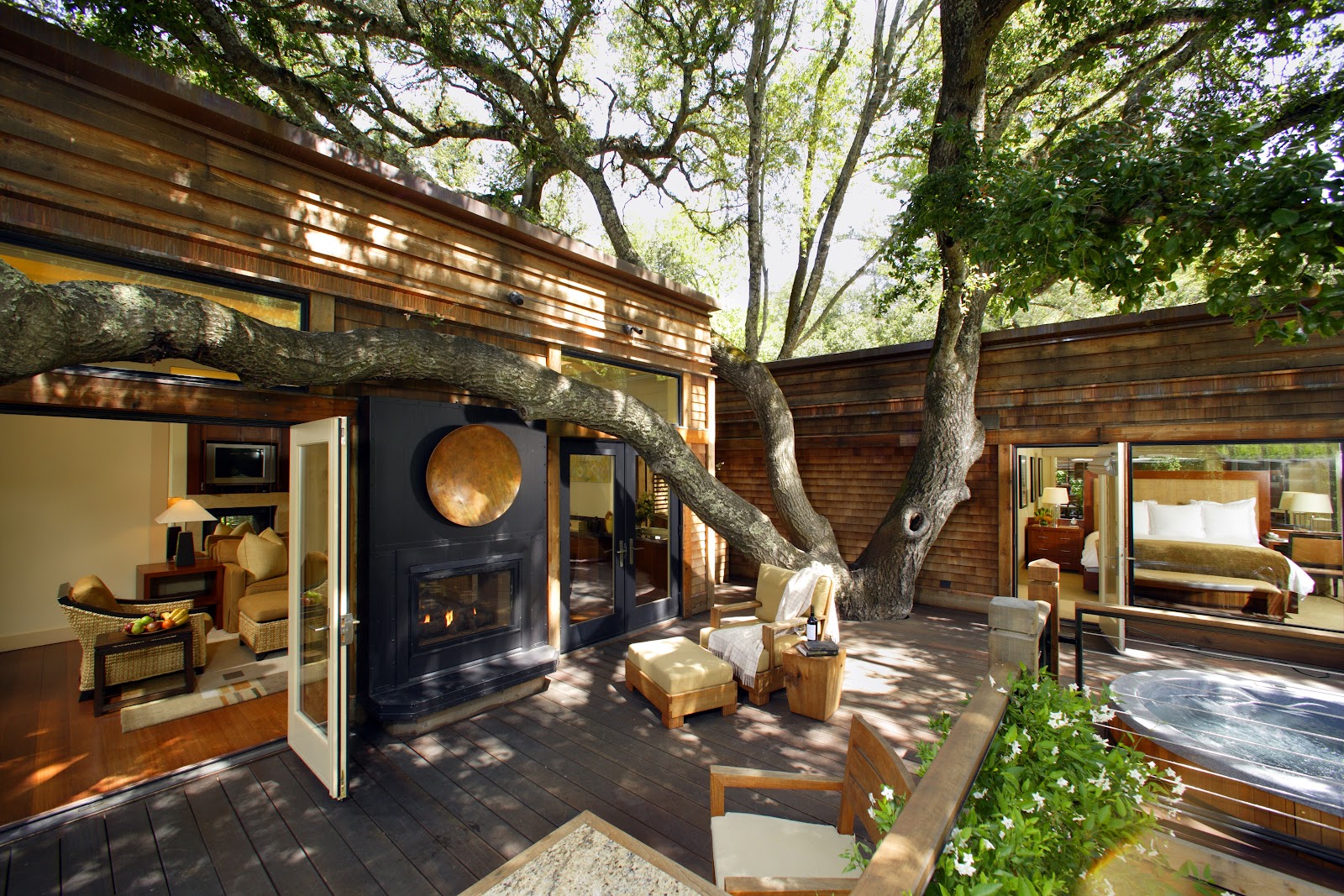
On top of the geometry sits the planting. This is coast live oak country, and coast live oak is an unusually effective blocker: a dense, broad, low-spreading evergreen crown of small stiff leaves that stops most of what reaches it, and keeps doing so in February as well as August. Under mature oak on a canyon floor, the light is low and it stays low.
And the third layer is that this is the hottest part of the Napa Valley. The north end regularly runs several degrees warmer than the southern end, because it is furthest from the cooling marine influence coming up from the bay — so the shade that creates the exposure problem is also the reason the site is comfortable, which is a trade worth understanding rather than fighting.
We have not photographed a wedding at Calistoga Ranch; wooded canyon properties in this region behave consistently. Which lodges and outdoor areas are included, the covered alternative, the interior lighting and whether it can be adjusted, and how far the walking distances are between spaces are questions for their team.
Calistoga Ranch at a glance
| Where | A wooded canyon at Calistoga, the north end of the Napa Valley |
| The problem | Canyon walls plus dense oak — a short, dark direct-sun day |
| Way one | Work the terrain’s clock, not the sun’s, and find the gaps |
| Way two | Stop resisting the dark. Way three: the water and the pale surfaces |
| Way four | Bring light, and bring it close |
Ways one and two: the canyon's clock, and the dark
The first way out is to stop reading a sunset table and read the terrain instead, because on a canyon floor they disagree by a wide margin.
What actually happens is this. The sun clears the eastern ridge well after it has risen, which means the canyon floor stays in shade through the early morning even on a cloudless day. Then it crosses the narrow strip of open sky overhead — which is when the floor gets its direct light, in a window centred on the middle of the day. Then it drops behind the western ridge long before sunset, and the floor is in shade again while the ridgetops are still lit.
So the canyon inverts the usual rule. At most venues the middle of the day is the problem and the ends are the gift. Here the ends of the day are soft, even and workable everywhere, and the middle is the only time the floor sees direct sun at all — which is also when the dappling under oak is at its worst.
The practical instruction that follows is to walk the site and note where the gaps in the canopy are and what time the sun reaches them, because those patches move fast and a position that is beautiful at noon is flat shade at one. Twenty minutes of walking the day before is worth more here than any equipment.
The second consequence is the interval, and it is the frame worth planning for. When the floor has gone into shade and the ridgetops are still lit, a couple stands in soft even light with brilliantly lit oak and rock above and behind them. It runs for twenty or thirty minutes and it arrives earlier than anyone expects.
That frame works by lifting the faces with a close warm-gelled source rather than by underexposing the ridge to match them, and it fails when the exposure is averaged: a grey ridge and slightly dark faces is what automatic metering produces and it fails at both ends.
The second way out is to stop resisting the dark and start using it. A dense oak canopy behind a subject is three or four stops down on the subject’s own light, which is free separation that no amount of equipment buys — and a low dark canyon is full of those backgrounds.
The requirement is manual exposure and metering on skin. A meter looking at a large area of dark oak tries to lift it toward mid-grey, which overexposes the face by a couple of stops, and the same meter fooled the other way by a bright gap five minutes later is why automatic modes cannot hold a canyon.
The corollary is that the frames here are low-key by nature: a lit face, a dark surround, and very little in between. That is a legitimate and strong look rather than a compromise, and it is what the site actually offers — a bright airy garden aesthetic is not available on a canyon floor under oak, and attempting it produces grey, muddy pictures.
The dappling test never changes: look at the face rather than the ground, and a bright patch on skin means move a metre. Under oak in the middle of the day that check is the whole job.
Ways three and four: the pale surfaces, and the added light
The third way out is to find the surfaces that give light back, because in a dark canyon they are the difference between a workable position and an impossible one.
Water is the first of them. Any pond, creek or pool on a canyon floor is a horizontal reflector, and in a dark wooded space it is frequently the brightest thing at ground level — throwing light upward into faces from below and filling the shadows oaks make above. A subject standing beside water in oak shade is lit better than the same subject two metres away, and the difference is visible in the first frame.
The caution is that upward light is unflattering on its own, lighting under the chin and the underside of the brow. Something solid on one side, or a position angled so the water lights one side of the face rather than the front of it, corrects it.
Pale paving and pale walls do the same job vertically. A light-coloured wall in shade opposite a gap in the canopy becomes a large soft source, and a subject facing it gets directional soft light for nothing. Finding those is the same twenty-minute walk as finding the gaps.
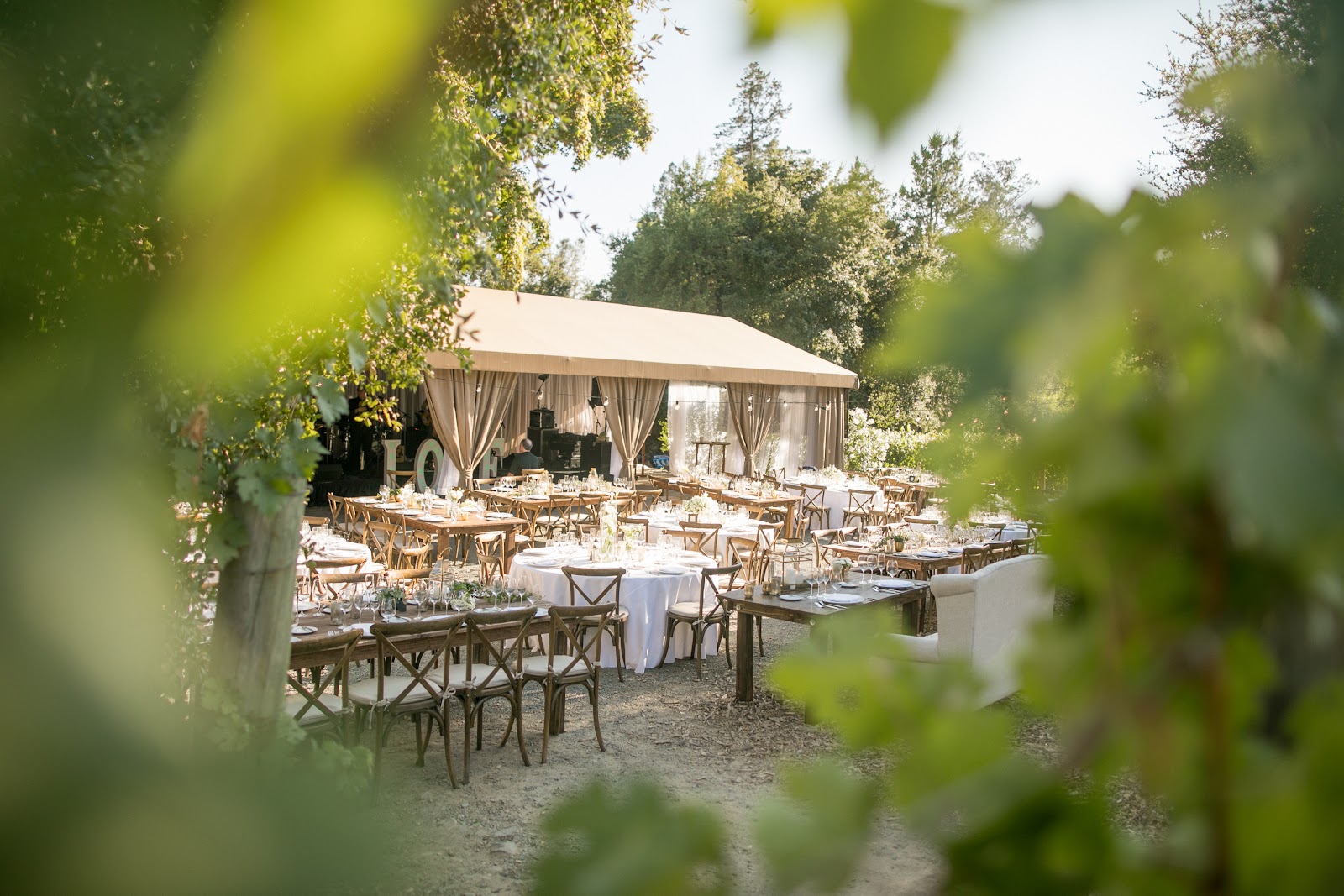
Decking and any structure with a solid roof handles the middle of the day. A roof blocks the overhead component, restricts the light to a horizontal band and bounces off the deck to fill — which cannot dapple, works at any hour, and in a canyon has the additional virtue of framing the dark woodland behind as a background rather than having to stand in it.
Two or three metres in from the open edge is the working position. The catchlight confirms it: low and horizontal is right, high in the eye means the sky still reaches the face and the position should move back.
Colour is the technical thread through all of this. Light filtered through dense evergreen oak carries green, light bounced off pale stone carries warmth, light from the open strip of sky overhead is cool blue, and a canyon floor frequently has all three reaching one face. No preset handles that. A custom white balance set on a face where it stands does, and it is thirty seconds of work that changes every frame that follows.
The fourth way out is to bring light, and the canyon makes two specific demands of it. It must be close, because nothing in a dark wooded space bounces — the light reaching a face is only the light aimed at it, so a source at two metres needs roughly a quarter of the output of the same source at four, and close is also softer relative to the subject.
And it must be gelled to whatever is dominant. Warm at the ends of the day, cool under an open strip of blue sky, green-shifted under heavy canopy — and the white balance then set to the gel rather than to daylight. An ungelled flash in a green-filtered canyon produces a face that looks cut out and pasted in, and the eye catches that immediately even when it cannot name why.
Indoors, the same logic runs. Canyon lodges here tend to be timber-lined and dark, which puts a room a stop or two below a pale interior — measure rather than estimate. The compensation is very steep fall-off, so a background two metres behind a subject drops away for nothing, and one warm-gelled source at about a stop above the ambient does more than three. The windows are the good light, and they are better than they look because the canopy outside softens everything arriving through them.
- Read the terrain, not the sunset table — the floor’s sun day is short and central
- Use the dark: an oak canopy behind a subject is free separation
- Manual exposure, metered on skin. Nothing automatic survives a canyon
- Water and pale walls are the free light; find them on a walk beforehand
- Added light must be close and gelled — nothing here bounces
The upper valley year
The top of the Napa Valley has the region’s Mediterranean calendar with the heat turned up, and a wooded canyon experiences it differently from the open valley floor.
The dry season runs roughly May to October and rain in those months is genuinely unlikely, which is why most weddings happen then. Heat is the trade: the north end of the valley regularly exceeds ninety-five degrees Fahrenheit in July and August and can go well beyond it, because it is furthest from the marine air that cools the southern end.
In a canyon under oak, that heat is far more tolerable than it is out on the valley floor — genuinely ten or more degrees cooler in deep shade — and it is the single best practical argument for this kind of site in high summer. A party in formal clothes is comfortable here in conditions that would be difficult two miles away.
The diurnal swing is the other half of the summer story and it is large. Marine air pulls up the valley overnight, so a July morning can start in the fifties and the same afternoon exceed ninety. In a canyon, where the shade is deep and the air pools, the mornings are cold — which matters for a party dressing outdoors and for anyone standing around at eight.
Morning fog reaches the upper valley less reliably than the lower, and in a canyon it behaves oddly: it can sit in the canyon after the open valley has cleared, because cold air pools in low ground. That produces a genuinely beautiful condition — fog among dark oaks with the ridgetops clear above — and it is worth being ready for early rather than waiting for it.
Fire season is the honest note for this part of California and it belongs in a planning conversation rather than a footnote. Late summer and autumn carry real wildfire risk in the north valley, and smoke rather than flame is the likelier photographic reality: a smoke layer turns the sun orange, flattens contrast, and shifts everything warm in a way that no white balance fully resolves. It cannot be planned for, only acknowledged, and it is a reason to ask a venue what their own contingency is.
Harvest is the best working season. Crush runs from roughly late August into October, and a canyon property at the top of the valley sits in the middle of it — which means activity, fruit, and a landscape doing its job rather than posing.
Then the colour arrives, and in a canyon it is different from the open valley. The oaks are evergreen and do not change, but any deciduous planting along the creek — bigleaf maple, sycamore, cottonwood where there is water — turns yellow through late October and November, which gives bright warm accents against a dark evergreen ground. A single lit yellow canopy in a dark canyon is one of the strongest frames available here, and it depends entirely on where the light falls.
The wet season runs roughly November to April and a covered alternative is not optional in those months. What rain gives a canyon is the best version of itself: wet dark trunks, saturated moss, a running creek, and soft even light from an overcast strip of sky. A wet winter day here is photographically excellent, and the ground is green rather than the straw it is all summer.
Late winter is worth a mention for one reason. The December sun at this latitude reaches only about thirty degrees above the horizon, which in a narrow canyon means the floor may get no direct sun at all for weeks. That sounds like a loss and is actually the easiest light of the year: entirely soft, entirely even, no dappling, and workable from morning to evening.
More frames from Calistoga Ranch
Calistoga Ranch wedding photography: common questions
Why is a canyon darker than its latitude suggests?
The walls block the sun for hours at each end of the day, so the floor’s direct-sun day is much shorter than the day overhead — and dense oak takes most of the rest.
When does the canyon floor get sun?
In a window centred on the middle of the day, which is also when dappling under oak is worst. The ends of the day are soft shade everywhere.
What is the interval frame?
The floor in shade with the ridgetops still lit. Lift the faces with a close warm-gelled source rather than underexposing the ridge to match.
Why does added light have to be close?
Nothing in a dark wooded canyon bounces, so the light reaching a face is only the light aimed at it. Two metres needs a quarter of the output of four.
Is summer heat a problem here?
Less than anywhere else in the upper valley. Deep oak shade in a canyon runs ten or more degrees cooler than the open valley floor.
Which is the easiest season for light?
Winter, when a low sun may never reach the canyon floor at all — entirely soft, even light, usable all day.
More California venue guides
We are writing a photographer’s guide to every venue we would happily shoot in California. Here are three more, plus the full index:
- Cavallo Point, Sausalito: The Light Through the Day
- Disneyland Grand Californian, Anaheim: The Building’s Own Logic
- Fairmont San Francisco: The Building’s Own Logic
Planning a wedding at Calistoga Ranch?
A canyon runs on its own clock. Tell us your date and we will read it.