 Park Hyatt Aviara, Carlsbad: The One Decision That Governs Everything
Auberge du Soleil, Rutherford: The Light Through the Day
Morning fog, an olive grove, and a valley that turns gold at seven. The day is the plan.
A hillside resort on the eastern side of the Napa Valley has a day with a very definite shape, and knowing that shape matters more here than knowing any individual position on the property.
The shape comes from three things. The site faces west across the valley, which means it is in shade in the morning and lit for the entire second half of the day. It sits above the valley floor, which means it clears the morning fog earlier than the floor does and keeps the sun later in the evening. And it is planted with olive, which is unlike any other tree in this guide in what it does to light.
The Napa climate does the rest. This is a Mediterranean climate with a dry season that runs from roughly May to October — a stretch where rain is genuinely unlikely rather than merely unlikely — and a large daily temperature swing driven by marine air pulling in from San Pablo Bay overnight. So a July morning can be fifty-five degrees Fahrenheit and grey, and the same afternoon ninety and cloudless.
That swing is the single most useful fact about photographing here, because it means the morning and the afternoon are two different sites.
We have not photographed a wedding at Auberge du Soleil; hillside Napa properties and olive groves behave consistently. Which terraces and rooms are included, the covered alternative, and what the restaurant service pattern does to access at particular hours are questions for their team.
Auberge du Soleil at a glance
| Where | The eastern hillside above Rutherford, Napa Valley |
| Morning | Fog or marine layer, the hill in shade, and the softest light of the day |
| Midday | Hot and high — the olive grove and any covered terrace |
| Evening | West-facing, so the valley goes gold for a long slow hour |
| Dry season | Roughly May to October, when rain is genuinely unlikely |
Morning: the marine layer, and a hill in shade
The Napa morning in the dry season is frequently not sunny, and couples are often surprised by that. Marine air pushes up the valley from the bay overnight and sits as fog or low cloud into mid-morning, and on the valley floor it can persist until ten or later.
On a hillside it clears earlier — sometimes substantially earlier, because the site sits at or above the top of the layer — which produces a specific and beautiful condition worth planning for: standing in clear sun on the hill, looking down at a valley still full of fog with only the far ridge showing above it. That lasts twenty minutes to an hour and it is the best wide frame the morning offers.
While the layer holds, the light is the softest of the day and it is the right time for anything that needs gentleness: preparations, portraits that want no shadow, and any group that would squint later. The whole hillside is effectively a softbox, and nothing needs adding.
Two technical notes. Fog light is cool and low in contrast, so a custom white balance set on a face rather than a daylight preset avoids a blue-grey rendering of skin, and a small amount of added contrast in the frame — a dark doorway behind, a solid wall on one side — does more for a face than any amount of added light.
And an east-facing valley wall is in its own shadow in the morning regardless of fog, because the ridge behind it blocks the sun until it climbs. So even on a clear morning the site is in shade for the first part of the day, which is a genuine asset in a climate where the afternoon is hard.
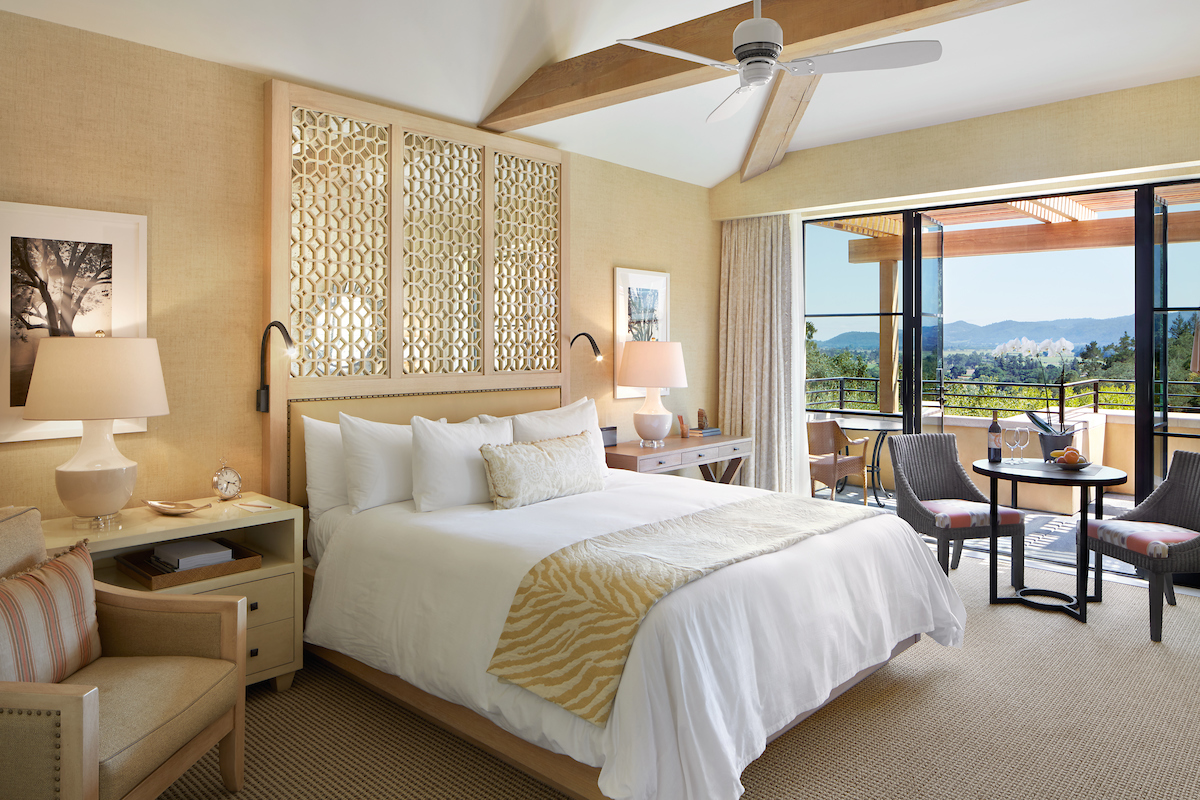
Indoors in the morning, the light is all from windows and it is west-facing, which means it is soft and indirect until the afternoon. A subject a metre from a large window with the face turned so the light crosses it needs nothing added, and the fall-off across a room is steep enough to give free separation.
Where a room is finished in dark wood or stone — common in valley properties — measure rather than estimate, because such a room sits a stop or two below a pale one, and steep fall-off means a background two metres behind a subject drops away on its own.
Midday to evening: olive, heat, and a long gold hour
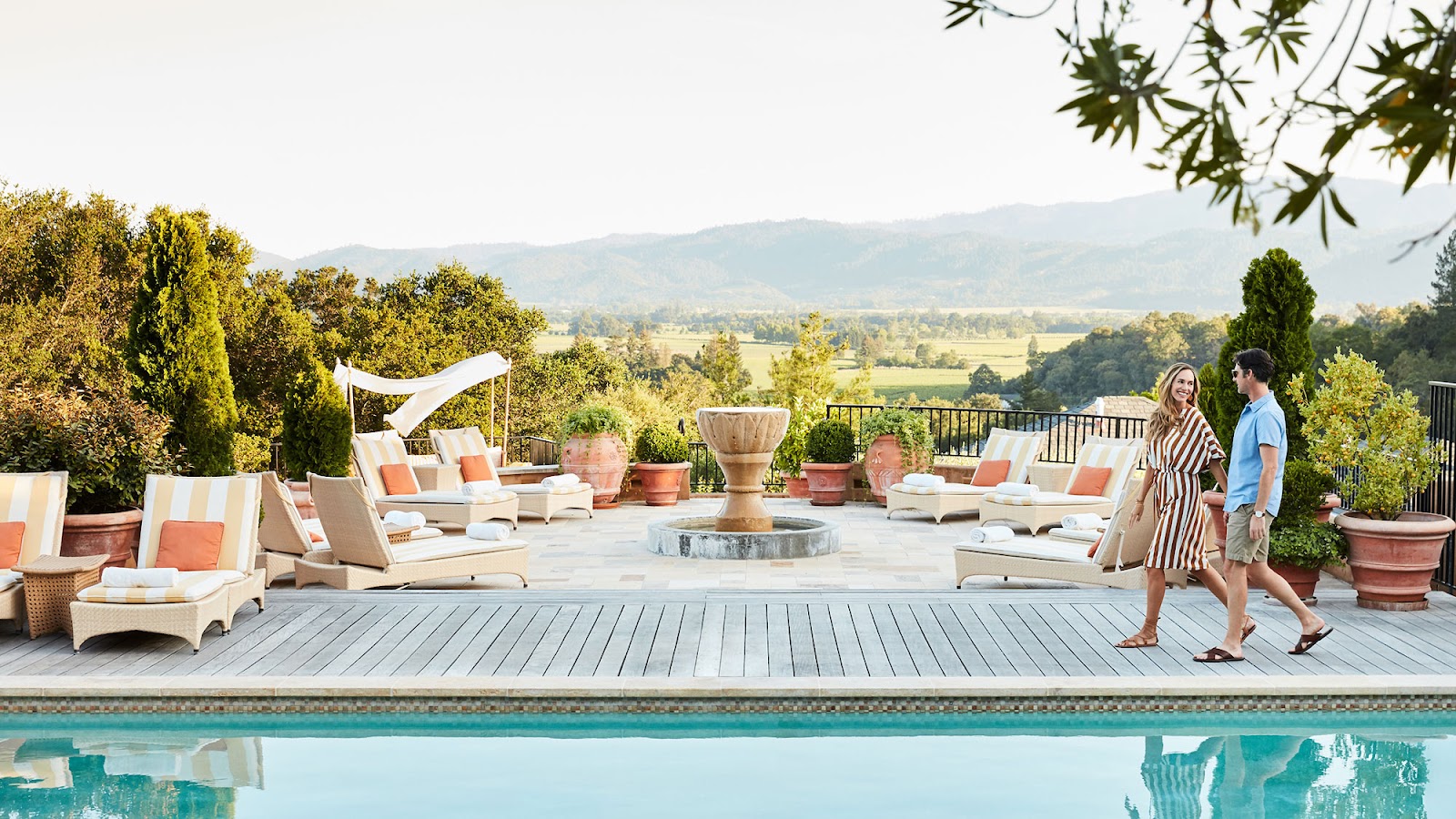
By late morning the layer has gone and the day turns hard quickly. Napa summer afternoons routinely exceed ninety degrees Fahrenheit and the air is very dry and clear, so direct sun is contrasty, shadows are deep, and a face half in sun is unrecoverable rather than difficult.
The olive grove is the answer and it is the most distinctive light on the property. Olive is not like oak or maple: the leaves are small, narrow, leathery and pale silver-grey on the underside, and the canopy is open rather than dense. So an olive tree does not block light, it scatters it — which produces a bright, soft, silvery shade quite unlike the dark shade of a broad-leaved tree.
What that means practically is that a subject under olive gets soft light from above as well as from the sides, and the background stays bright rather than going dark. It is flattering and it is very Napa, and the cost is that it gives no separation for free: a pale subject against a pale silver background needs the separation built by position and lens rather than by exposure.
The dappling caution applies but less severely than under most trees, because an open silvery canopy breaks the sun into many small patches rather than a few hard ones. Still, the test is the face rather than the ground — any bright patch on skin means move a metre.
The grove’s other gift is the trunks. Old olives have gnarled, twisting, multi-stemmed trunks that read as sculpture, and a longer lens that compresses a row of them into a repeating pattern behind a couple is one of the strongest frames available here.
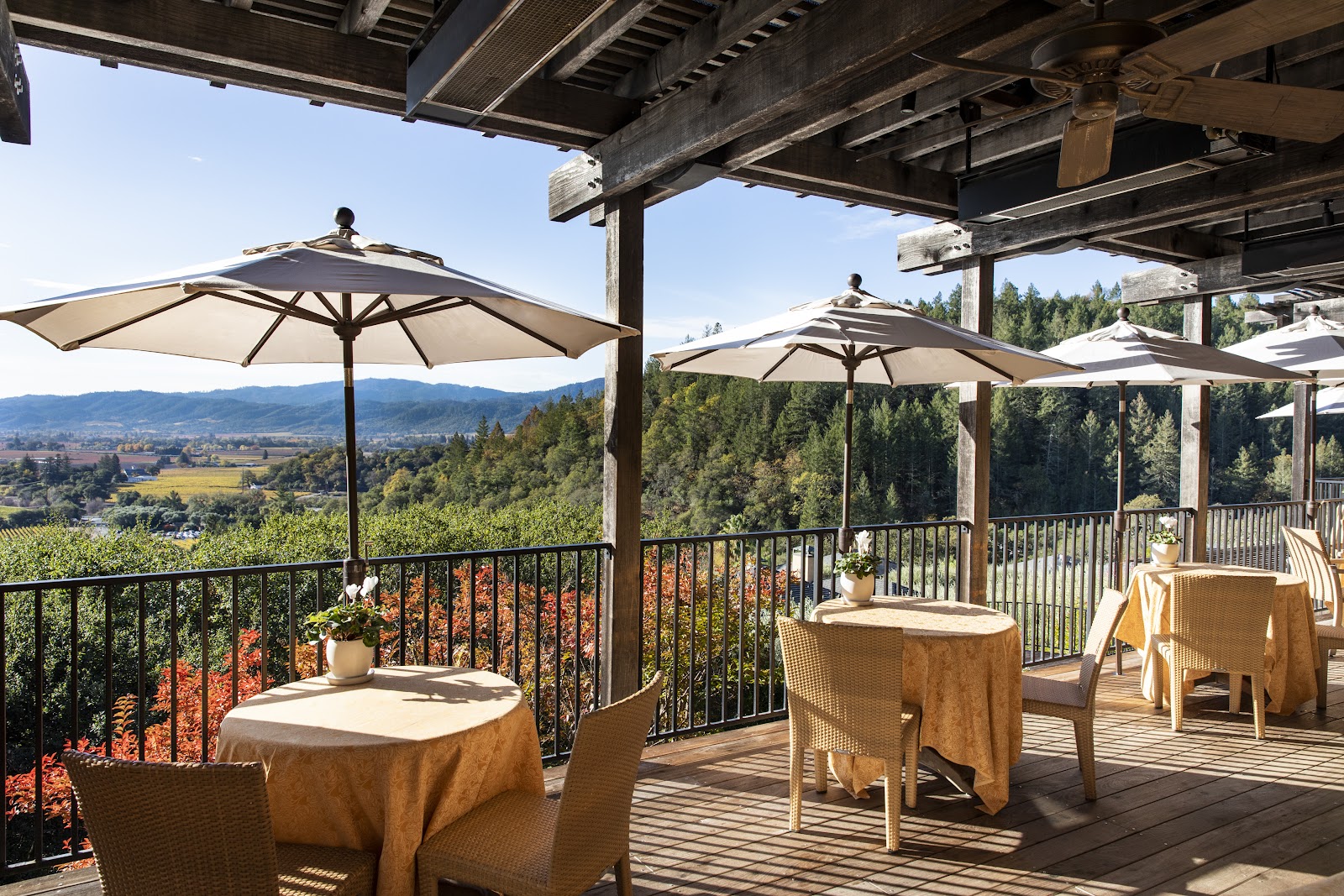
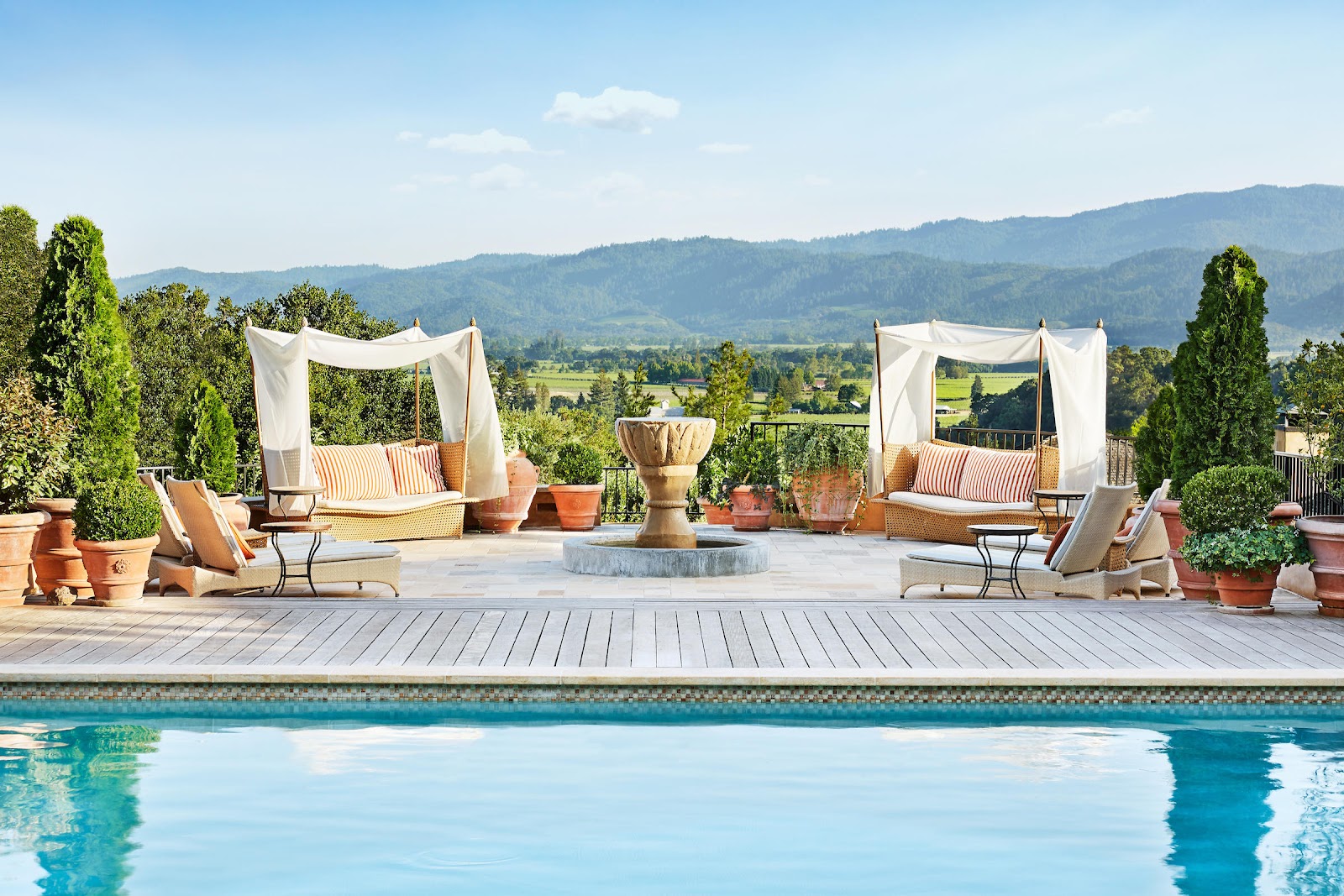
Terraces and covered structures handle whatever the grove does not. Anything with a solid roof blocks the overhead component, restricts the light to a horizontal band and bounces off pale paving to fill — available at any hour and incapable of dappling. Two or three metres in from the open edge is the working position. On a hillside property those terraces also carry the view, which makes them the most efficient positions on the site.
Heat is a real planning factor rather than a footnote. A party in formal clothes on an exposed terrace at three in the afternoon in July is uncomfortable, and it shows. Shade, water and short deliberate trips beats a long wander.
The evening is what the site is for. A west-facing hillside keeps the sun after the valley floor has lost it, which means the last hour here is longer than a table suggests and it arrives with the whole valley below in the frame. Vineyard rows on the floor rake into texture, the far ridge lights up, and everything is warm.
The exposure decision at that hour is the important one: the valley is brighter than a shaded face, so the ambient goes on the distance and the faces are lifted by a close source gelled warm to match. Metering on skin produces a white sky and a flat washed valley, which is the standard failure of open view sites. Close matters because nothing at that distance bounces — a source at two metres needs roughly a quarter of the output it needs at four.
After the sun goes, the afterglow over the western ridge is long and clean in dry air, and because the site looks straight at it there is a usable window well past sunset. It is a scheduled ten minutes rather than a leisurely wander.
- Morning: fog above the floor, the softest light, and a hill in shade
- Midday: the olive grove and covered terraces — nothing in open sun
- Olive scatters rather than blocks: soft and silvery, with no free separation
- Evening: expose for the valley, lift the faces close and gelled
- The site holds the sun later than the floor, so the last hour runs long
The Napa year
The valley’s year is governed by a wet winter and a bone-dry summer, and the photographic character changes completely between them.
Late winter is the least expected good season. From roughly February into March, mustard flowers between the dormant vines — a solid yellow ground layer under bare brown trunks, with green hills behind, which is the most colourful thing the valley does and a condition almost nobody plans a wedding for. The hills are green then too, which they are not in summer.
The cost is rain. The wet season runs roughly November to April, and while a given day may be fine, the covered alternative in those months is not optional. Light on a wet winter day here is excellent — soft, even, saturated — and the hills at their greenest, so a rainy date is a different wedding rather than a ruined one.
Spring is green, mild and comfortable, with the vines leafing out through April and May. The morning fog pattern is at its strongest in late spring and early summer, which for a hillside site is an asset rather than a problem.
Summer is reliable and hard. Rain is genuinely unlikely, which is why most weddings happen then, and the trade is a hot afternoon with contrasty light and a day split between a soft morning and a gold evening with a difficult middle. The middle is a shade problem with a straightforward answer, so this is a scheduling season rather than a technical one.
The hills turn gold and dry by June and stay that way until the rains, which means summer backgrounds are straw and olive rather than green. That is the valley’s real colour for half the year and it is worth showing a couple in advance rather than letting them expect the green of a spring photograph.
Late summer into autumn is harvest, and it is the best time to be here. Crush runs from roughly late August into October, which means fruit on the vines, activity in the vineyards, and a working landscape rather than a decorative one. Photographed honestly it looks unlike anything in the rest of the year.
Then the vines turn. Through late October and into November, vineyard leaves go yellow, orange and red depending on the variety — and because a vineyard is planted in blocks of a single variety, the colour arrives in large uniform panels rather than tree by tree. From a hillside, looking down on those panels in low sun is the single best wide frame the site produces all year.
Autumn also has the clearest air of the year and the least fog, which makes the long-lens compressed views across the valley strongest, and a shorter day that puts the gold hour at a more civilised time.
Winter after the vines drop is spare and graphic: bare trained trunks in rows, wet ground, low light and often dramatic cloud. The December sun at this latitude reaches only about thirty degrees above the horizon, so the whole short day rakes rather than floods — which removes the hard-light problem entirely and makes the site usable from morning to evening. On the light alone, winter is the easiest season here; on the weather, the least certain.
More frames from Auberge du Soleil
Auberge du Soleil wedding photography: common questions
Is a Napa summer morning sunny?
Often not. Marine fog pushes up the valley overnight and can hold until mid-morning, and a hillside site clears earlier than the valley floor.
What does olive shade do?
It scatters rather than blocks — small leathery leaves with silver undersides give bright, soft, silvery light, and a background that stays pale.
Why is the evening better here than on the valley floor?
A west-facing hillside keeps the sun after the floor has lost it, so the last hour runs longer and arrives with the whole valley in the frame.
How is a valley view exposed?
For the distance, with the faces lifted by a close warm-gelled source. Metering on skin gives a white sky and a washed-out valley.
When do the vineyards have colour?
Late October into November, when the leaves turn in large uniform panels because each block is a single variety. Also February, for mustard between bare vines.
Which season is easiest?
Summer for certainty, autumn for the best light and colour, and winter for the easiest light of all if the weather cooperates.
More California venue guides
We are writing a photographer’s guide to every venue we would happily shoot in California. Here are three more, plus the full index:
- Bartholomew Estate, Sonoma: A Walk Through the Site
- Berkeley Hotel: One Frame, and How It Is Made
- Beverly Wilshire, Beverly Hills: The Light Through the Day
Planning a wedding at Auberge du Soleil?
A day with a shape. Tell us your date and we will build the running order around it.