 Roots Run Deep, Fruita: The Site’s Own Logic
Snow Mountain Ranch, Granby: Field Notes on a High Meadow
A wide meadow at eight thousand feet. Nothing in it shades anything, and the pine around it barely does.
A ranch property set in a high mountain meadow has a lot of ground and very little cover, and both of those are consequences of the elevation.
The meadow is open because at eight thousand feet in this part of Colorado the tree line is high but the valley floors are grassland — so there is a great deal of mown or grazed ground with nothing standing in it, which is an excellent surface at the ends of the day and a flat pale one in the middle.
The trees around it are lodgepole pine, and lodgepole is the least useful shade tree in the Rockies. It grows tall, straight and narrow with a small crown high on the trunk, which means a stand gives vertical structure and very little overhead cover — so it filters into hard patches rather than blocking, and a lodgepole stand dapples.
At this altitude that matters more than it would lower down, because there is roughly a third less atmosphere overhead to scatter sunlight: direct sun is harder, shadows go deeper, and a face half in sun is unrecoverable rather than difficult.
These are field notes on both, and on where the shade actually is. We have not photographed a wedding at Snow Mountain Ranch; high meadow properties and lodgepole forest behave consistently. Which buildings and areas are included, what the covered alternative is, and whether the lighting is adjustable are questions for their team.
Snow Mountain Ranch at a glance
| Where | A high meadow at Granby, Colorado, around 8,000 feet |
| The ground | Open meadow: excellent at the ends of the day, flat in the middle |
| The trees | Lodgepole pine, which gives vertical structure and almost no shade |
| The shade | Buildings, spruce where it occurs, and anything with a solid roof |
| Ask first | Buildings and areas included, covered alternative, lighting control |
What you meet, and what each one needs
The open meadow is the first condition and its behaviour is entirely a function of the sun’s angle. At midday it is a flat pale field with no modelling in it anywhere; in the last hour it has texture in every blade, because low sun rakes across grass rather than falling onto it.
That is a larger difference here than at sea level, because dry clear air at altitude means low sun is harder and cleaner — so the raking is more pronounced and the texture reads more strongly. A meadow at seven in the evening at eight thousand feet is a genuinely different surface from the same meadow at noon.
Mown or grazed patterns are part of it: any lines in the ground become graphic elements that either lead into a frame or cut across it, depending entirely on where the camera stands, and two steps either way is worth checking.
The meadow also throws light upward. Pale dry grass reflects more than green does, which fills the shadows a high sun carves under eyes and chins — helpful, at the cost of uplight under the chin, which something solid on one side corrects. The diagnosis is to look at the chin in the first frame.
Lodgepole is the second condition and the disappointment. A lodgepole stand is a forest of tall narrow trunks with the crowns high above, which means it looks like woodland and behaves like a colonnade: light comes through between the trunks almost unimpeded, and the small high crowns filter rather than block.
So a lodgepole stand dapples, and the test is universal — look at a face rather than the ground, and any bright spot means move a metre. What lodgepole does give is graphic structure: a stand of parallel pale-grey trunks receding into depth is a strong repeating background, and one that reads as this landscape rather than any other.
Where spruce or fir occurs among the lodgepole, that is the shade. Dense conifer absorbs almost everything, giving genuine full shade and three or four stops of free separation — though the crowns are narrow at this elevation, so full shade means standing inside a stand rather than under one tree.
That background carries the standard exposure trap: a meter looking at dark conifer overexposes everything else by two stops, so metering on the faces and working in manual is the rule — particularly because a bright meadow or snow frame a minute later fools it the other way.
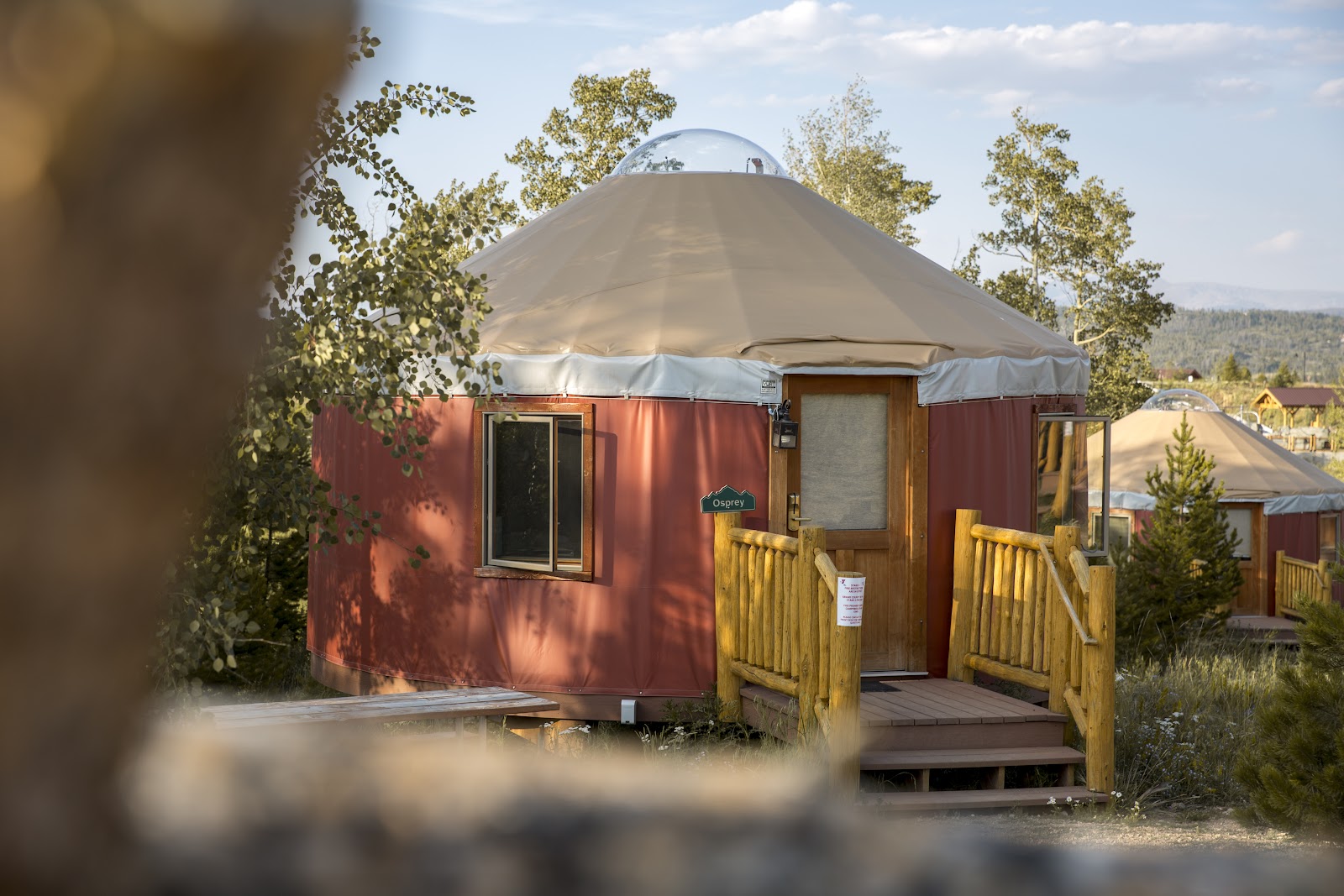
The buildings are the third condition and the reliable shade. A porch or covered structure with a solid roof blocks the overhead component, restricts the light to a horizontal band and bounces off the floor to fill — available at any hour and unable to dapple. Two or three metres in from the open edge is the working position.
The altitude, the view, and the practicalities
The altitude is the condition running under everything and its effects are worth stating as measurements.
A third less atmosphere means a third less scattering, so three things follow. Direct sun is harder and shadows deeper, which makes full shade mandatory rather than advisable. The sky is a very deep blue, which means open shade lit by it is markedly cool — so a custom white balance set on a face in position renders skin correctly where a daylight preset does not.
And ultraviolet increases substantially, which is a welfare point rather than a photographic one: at eight thousand feet a party outdoors for an hour burns faster than expected, including under cloud and over snow.
The view is the meadow’s reward. A high valley meadow is open, which means the surrounding ranges are visible in full rather than glimpsed past terrain — and a long lens compresses them into layers of decreasing contrast, which in dry clear air holds detail rather than hazing. A wide lens gives a thin band of mountain above a great deal of grass, which is the opposite of the point.
The exposure for such a frame goes on the distance rather than the faces, with the faces lifted by a close source — because metering on skin produces a white sky and a flat view, which is the commonest failure in open high country.
And the interval is the frame worth waiting for. Because ranges surround a high meadow, the sun leaves the valley floor while the peaks stay lit — sometimes for twenty or thirty minutes — which puts a couple in soft shade with brilliantly lit rock or snow behind them. The faces need lifting by a close warm-gelled source rather than the peak being underexposed to match them.
The crossing follows and it arrives earlier than a table implies because terrain takes the sun first. In dry air at altitude it is short, so it is a scheduled ten minutes rather than a leisurely wander.
The practicalities of a high meadow are worth naming. Distances on a large ranch property are real, and a wedding party walking across a meadow at eight thousand feet tires faster than it would at home — so a short route to chosen positions beats an ambitious one, and anyone arriving from sea level will feel the elevation.
Wind is a constant in open high country, which means a lightstand is a liability rather than a tool, a veil behaves unpredictably, and a held panel is a sail. A source in a hand or on a bracket is the working configuration, and the lee side of a building or a dense stand is worth walking to.
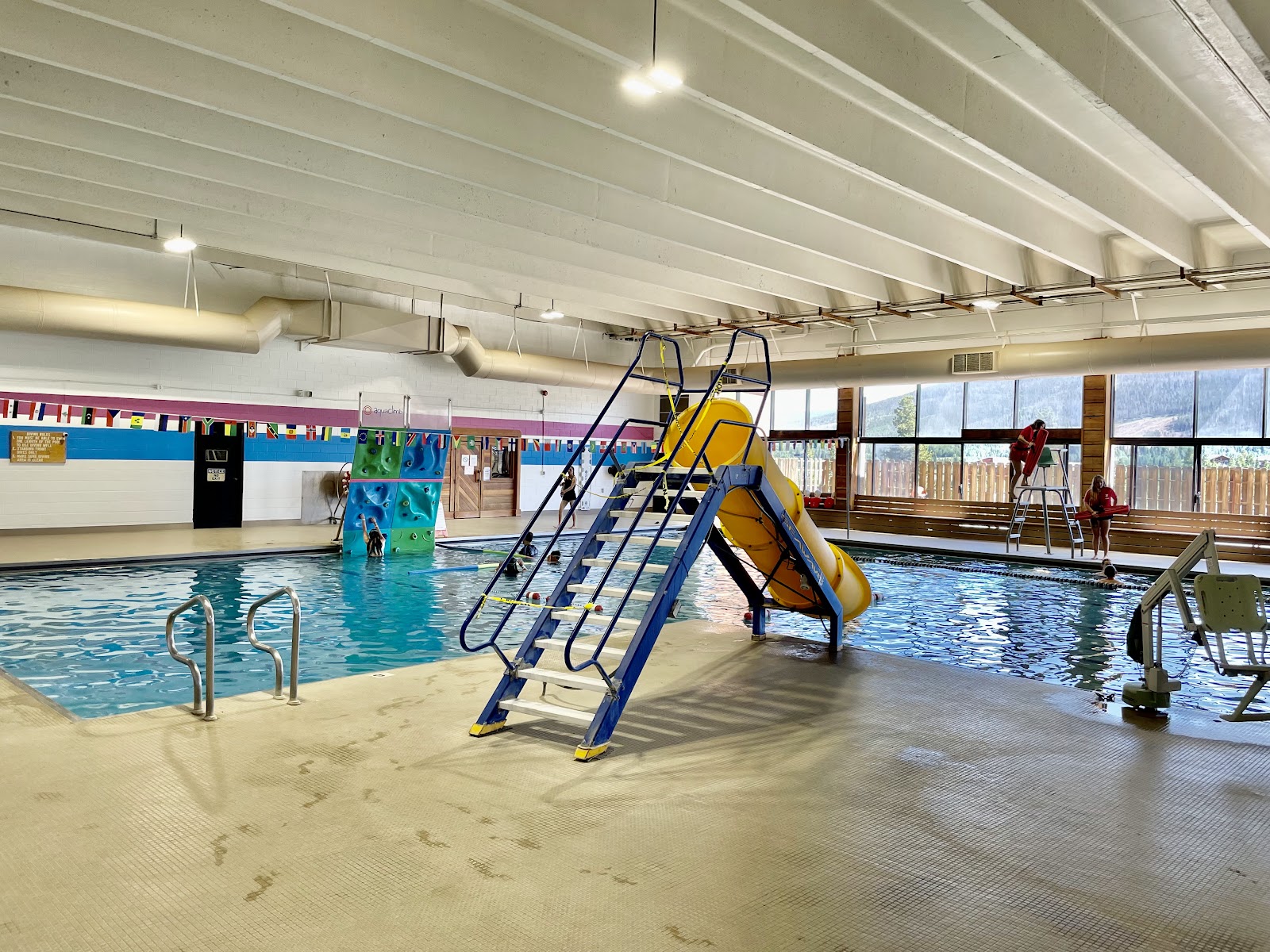
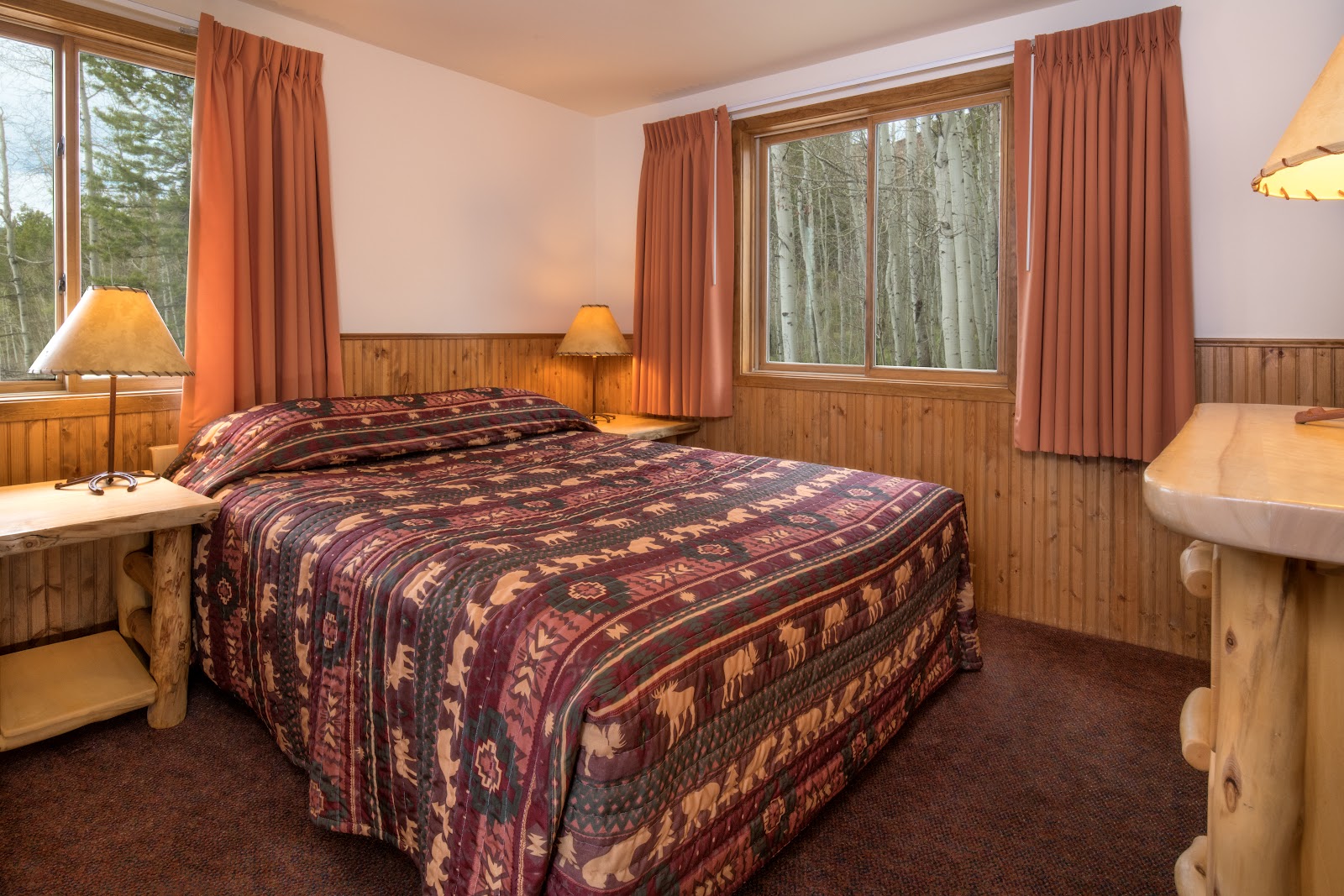
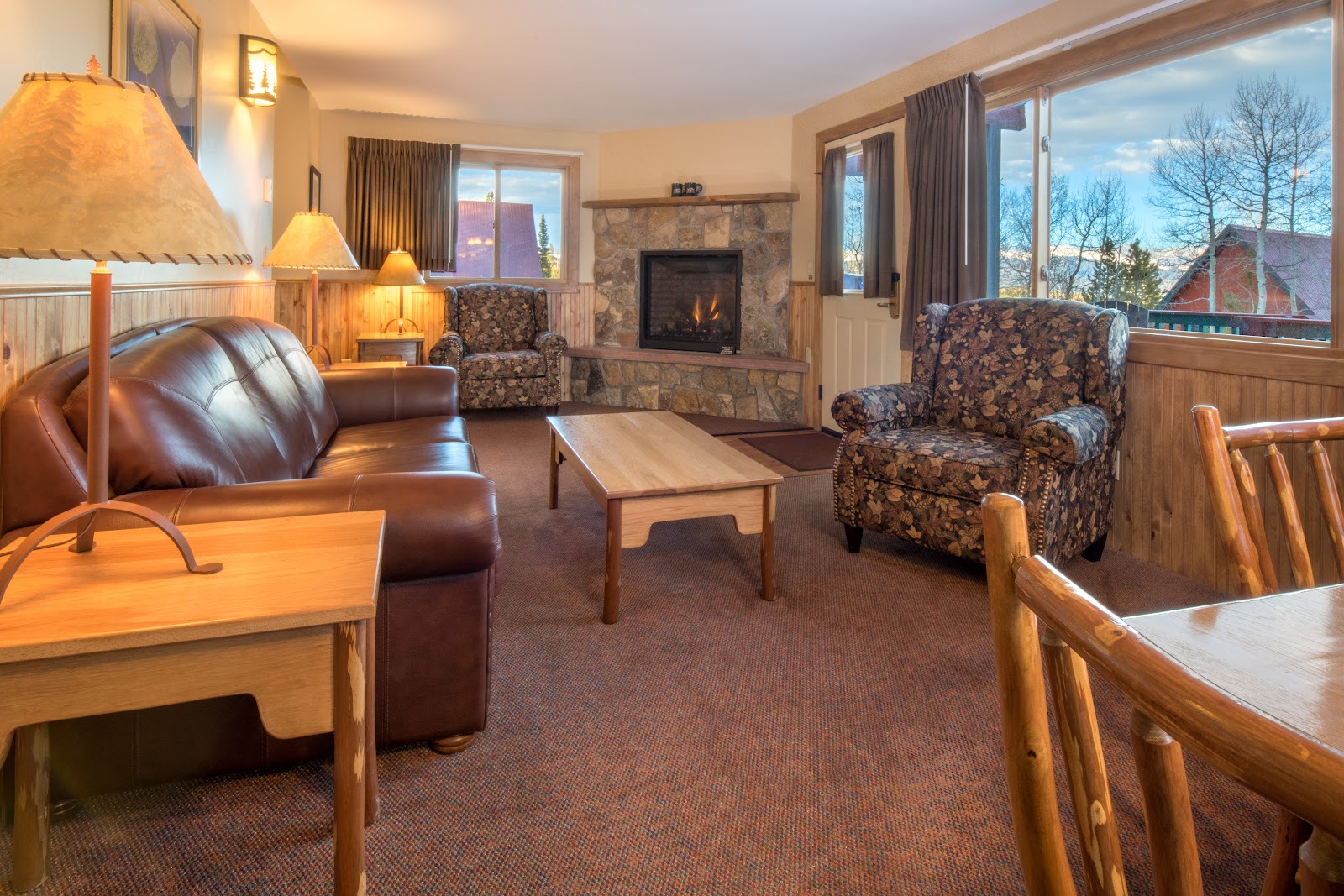
Inside, ranch buildings are timber-lined and absorb, putting rooms a stop or two below a pale interior — measure rather than estimate, test bounce per space, and use one warm-gelled source at about a stop above the ambient with white balance set to the gel. Steep fall-off is the compensation, and the windows are the good light, dramatically better when there is snow outside because the meadow becomes an enormous reflector.
- The meadow is flat at midday and a textured surface at seven
- Lodgepole dapples — it is structure, not shade. Spruce is the shade
- Work in manual; conifer and meadow fool the meter in opposite directions
- Longer lens for the ranges; a wide one gives a thin band above grass
- No stands in open high country; use the lee of a building or a stand
The Colorado high country year
At eight thousand feet the year is short at the green end and long at the white one, and both suit the site differently.
Summer in a high meadow is brief, green and cool, with wildflowers through July and August — which in an open meadow is a genuine foreground rather than a detail, and worth composing low to include.
Afternoon convection builds almost daily from July into September and those storms produce lightning, which in an open meadow with no cover is genuinely dangerous rather than inconvenient. Colorado has one of the highest rates of lightning casualties in the country, and open high ground under afternoon convection is precisely the reason.
So a named covered alternative with a known capacity is a requirement, the decision to use it belongs to whoever is responsible for the party, and a morning ceremony beats an afternoon one in high summer. Mornings are also the calmest part of the day in open country, which is a second reason.
The compensation is that mountain cloud is the best diffusion available at altitude: under it the brightness range collapses, the dappling problem disappears entirely, the meadow greens saturate rather than glaring, and the whole site becomes usable through the middle of the day. A cloudy morning at eight thousand feet is an easier day than a clear one.
And a storm building over a high meadow is visible for a long time, with the cloudbase and the ranges in one frame — the most dramatic sky the site produces.
Autumn is the short sharp best of the year. Aspen among the lodgepole turn gold typically in the second half of September at this elevation, and because a grove is clonal — genetically one organism connected below ground — the whole stand turns at once rather than tree by tree. That gives a uniform gold mass against dark conifer and pale lodgepole trunks, with a window of about a week either side of peak.
The meadow also turns from green to straw through the season, which is a warm background quite different from summer — and the air is at its clearest, which makes the compressed range frames strongest.
Winter is long at this elevation and it transforms the site. Snow lies for months across the meadow, which turns the whole property into an enormous reflector: it fills the shadows a low sun carves, brightens every window in the buildings, and throws light upward into every covered porch.
Snow is the best natural fill available outdoors, fooling a meter by about two stops toward underexposure — so a snow frame needs deliberate overexposure relative to what the camera suggests. And snow against dark spruce is the widest natural brightness range there is: expose for the snow and let the conifer go near-black.
The December midday sun at this latitude reaches only about twenty-seven degrees above the horizon, so the whole short day is raking light — which removes the altitude’s hard-light problem entirely and makes a snow-covered meadow usable from morning to evening. For once the site’s lack of shade costs nothing at all.
The costs are cold, wind chill on open ground, batteries draining faster at altitude, and a cold body fogging when brought into a heated timber building — so spares in an inside pocket and bodies bagged until warmed.
More frames from Snow Mountain Ranch
Snow Mountain Ranch wedding photography: common questions
Why doesn't lodgepole pine give shade?
It grows tall, straight and narrow with a small crown high on the trunk, so a stand behaves like a colonnade — light comes through between the trunks almost unimpeded.
Where is the shade then?
Buildings with solid roofs, and spruce or fir where it occurs among the lodgepole. Full shade means inside a stand rather than under one tree.
How does the meadow change through the day?
Flat and pale at midday, textured in every blade by seven — and more so than at sea level, because dry air at altitude makes low sun harder and cleaner.
Why work in manual?
Because dark conifer makes a meter overexpose by two stops and a bright meadow or snow fools it the other way, and both can appear a minute apart.
What is the main hazard?
Afternoon lightning from July into September. An open meadow with no cover at eight thousand feet is among the more dangerous places to be under a storm.
Is winter usable?
Better than usable. Snow turns the whole meadow into a reflector and a low sun rakes all day, so for once the lack of shade costs nothing.
More Colorado venue guides
We are writing a photographer’s guide to every venue we would happily shoot in Colorado. Here are three more, plus the full index:
- The Sonnenalp Hotel, Vail: A Walk Through an Alpine Hotel
- Spruce Mountain Ranch, Colorado: The Light Through a Ranch Day
- The St. Regis Aspen: The Light Through a Day
Planning a wedding at Snow Mountain Ranch?
Open ground and almost no cover. Tell us your date and we will find the shade.