 Hotel Saint Louis: A Walk-Through of an 1893 Union Trust Building
The Ritz-Carlton St. Louis: The One Decision That Governs Everything
A warm formal interior can be shown or removed. The choice is made before the first frame.
At a formal traditional hotel the governing decision is what the ambient exposure is set for — the room, or the faces — because everything else follows from it and it cannot be revisited afterwards.
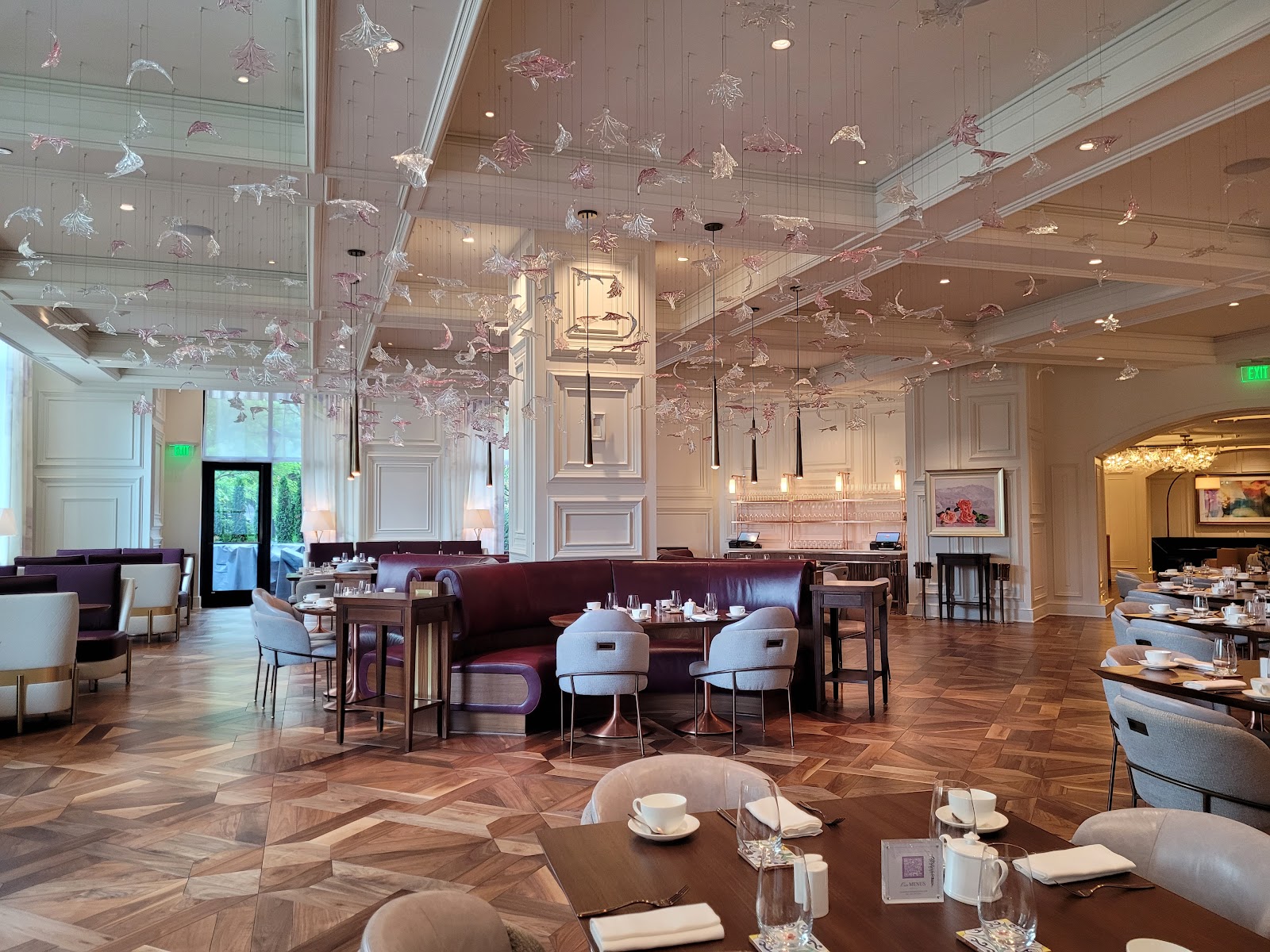
Setting exposure for the room means the warm, panelled, chandelier-lit interior reads as what it is, with the faces lifted by a modest source. The pictures look like where the day happened, which at a hotel chosen for its formality is usually the whole point.
Setting exposure for the faces means the room falls into darkness, with two people lit cleanly against black. That is consistent, deliverable and reliable — and it could have been made anywhere.
Both are legitimate and a good gallery contains some of each. What produces an incoherent one is not choosing, because automatic exposure in a warm dim interior responds to whatever happens to be in the frame and will decide differently from one picture to the next.
We have not photographed a wedding at the Ritz-Carlton St. Louis; formal traditional hotels behave consistently. Which spaces are included, whether the lighting is adjustable and what may be attached are questions for their team.
The Ritz-Carlton St. Louis at a glance
| Where | St. Louis, Missouri |
| The decision | Ambient exposure for the room, or for the faces |
| Room-first | Warm, formal, unmistakably this building — and needs a slow shutter |
| Face-first | Clean and consistent, and from anywhere |
| Ask first | Spaces included, lighting control, fixings, room orientation |
The two choices, and how each is executed
Setting exposure for the room is the harder of the two and usually the better one. It means metering the ambient so the interior sits where the eye reads it — warm, dim, with chandeliers and sconces visible as light sources rather than as blown shapes — and then adding just enough to make the faces legible.
Half a stop to a stop above the ambient is the figure, no more. One source, off the camera axis, at face height, in a modifier large enough to be soft at working distance, gelled warm to match the room’s own fittings with white balance set to the gel.
The gel is the part most often skipped and it is what makes the difference. An ungelled flash is much bluer than the warm fittings a formal hotel uses, which produces a face that looks pasted into the room — the commonest tell in a hotel wedding photograph. Gelled and white-balanced to match, the added light reads as belonging to the building.
The trade-off is shutter speed, because for the ambient to register the shutter has to be slow enough to record it. That means motion will show in anyone moving through the frame — which makes this approach better suited to deliberate frames than to fast reportage, and a reason to have both available rather than one.
Setting exposure for the faces is simpler and produces a uniform gallery. Put the ambient two or three stops down so the room goes dark, light the faces properly, and accept that the venue disappears. Steep fall-off helps: a subject three metres in front of anything else in a warm dim room sits against natural darkness with no equipment at all.
Its cost is that it discards the reason for choosing a formal hotel, which is an unforced loss at a building whose selling point is exactly that.
The practical answer is to use both deliberately and to switch on purpose — room-first for the deliberate frames and the establishing shots, face-first for the portraits and the fast reportage. Working in manual is the mechanism, because automatic exposure in a warm dim interior is the thing that produces the inconsistency.
And one measurement underpins both. The ambient is lower than it looks: timber panelling, deep paint, heavy drapery and dense carpet all absorb, which puts a formal interior a stop or two below a pale one with identical fittings. Eyes adapt and meters do not, so the first frame on arrival should be a measurement rather than an impression.
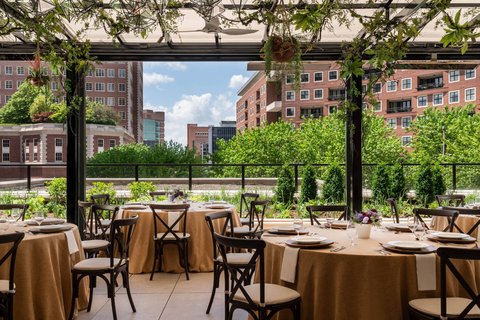
What follows from it
Once the approach is chosen, the building’s other conditions become straightforward and mostly rewarding.
Warm bounce is the standing colour problem. Timber, brass, deep paint and warm textiles reflect strongly warm, and the cast arrives on the shadow side of a face from several directions at once — localised and bounced, which means global white balance cannot separate it from the subject. That is why the gelled-source approach matters rather than being a refinement: a global correction turns skin grey and the panelling the colour of ash.
Mixed sources are certain: warm chandeliers and sconces, cooler recessed downlights installed for practicality, candles, and any coloured uplighting brought in for the event. Pick the temperature that should be correct, set white balance to it, and switch off or overpower whatever else lands on skin. Switching a bank of downlights off is frequently the cheapest improvement available in a room like this.
Bounce should be tested per space rather than assumed. Grand ground-floor rooms with tall ceilings return very little and colour what they do return; guest rooms, corridors and smaller salons are lower and frequently work well. One test frame each is thirty seconds and it changes what has to be carried for the whole evening.
Chandeliers are the best background material in a formal hotel. At a wide aperture, with real distance behind a subject, they become warm points of light in the depth — which is exactly what a building like this does well and nothing else produces. The condition is distance: a bright fitting immediately beside a head pulls the eye off the face every time, and moving the couple a step fixes it.
Mirrors and polished surfaces are the hazard that comes with formality. A formal hotel has mirrors, gilded frames, polished stone and glass, and every one of them will show a badly placed light at full brightness in a way nothing removes afterwards. The fifteen-second habit is not optional: stand where the camera will stand, look at every reflective surface in the frame, and place the source where none of them sees it.
Texture needs raking light and a formal interior is full of it — plaster moulding, panelling, patterned carpet and metalwork all read only when light runs along them. A source pointed at panelling makes a flat brown field; the same source placed to skim it lifts every profile. The positions where the existing light already grazes a surface are the ones worth finding on arrival.
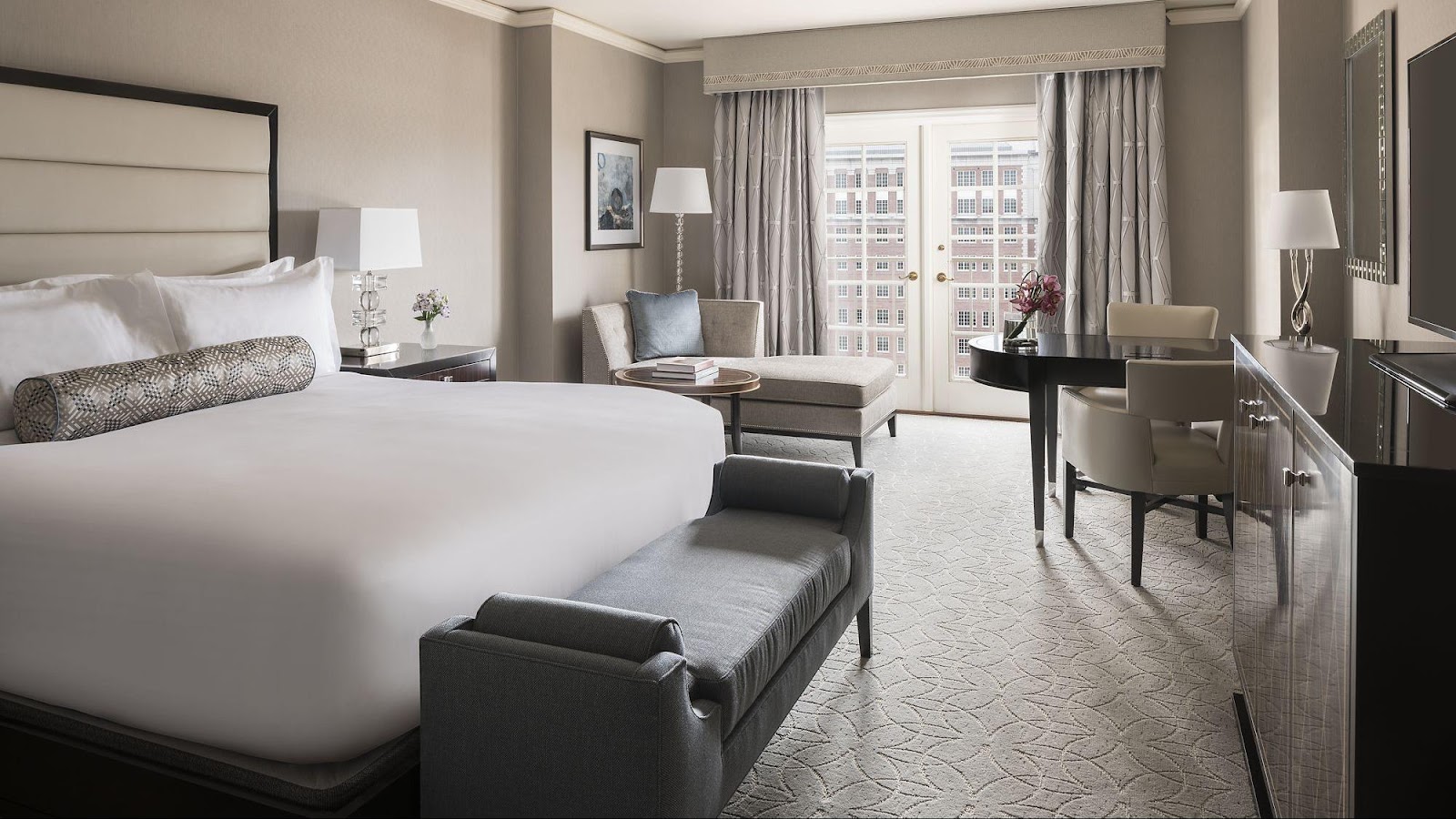
The guest rooms are the only significant daylight and the requests are the familiar ones: largest window on the shaded side, every overhead fitting off so the room has one colour of light, lamps out of frame, two to three metres back from the glass. At St. Louis’s latitude, about thirty-eight and a half degrees north, a north-facing room is shaded all year and is the most reliable, so orientation is the question worth asking rather than floor height.
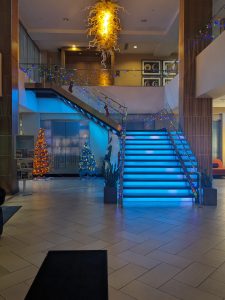
And the stair, where the building has a formal one, is the single best architectural feature of the type: elevation, a line for a descent, and a vertical composition. It wants light from one side, because overhead light on a stair shadows every eye socket at once.
- Choose room-first or face-first per frame type, and work in manual
- Room-first: ambient for the interior, faces a stop above, source gelled warm
- Measure the ambient; a formal interior is a stop or two below a pale room
- Check every mirror from the camera position before the light goes on
- Test bounce per space; grand rooms return little, guest rooms usually work
Outside, and the Missouri year
Outside, St. Louis gives three things worth building frames around and one of them is unique.
Red brick is the city’s material and it is everywhere. Brick is a warm mid-toned reflector rather than a dark absorber, which means a sunlit brick elevation is a genuine soft source — a couple three or four metres out from one, facing it, is well lit for nothing, with a custom white balance set on a face because brick bounce is markedly warmer than daylight. And brick reads as brick only under raking light, so the elevations the sun is skimming are the ones worth using.
The rivers are the second. The city sits near the confluence of the Mississippi and the Missouri, and a riverside position gives water that reflects and doubles anything lit — with camera height deciding between a mirror and the water’s own sediment colour, and low nearly always the answer. A polariser is worth carrying for daytime frames and worth removing for the mirror ones.
The stainless monument is the third and it is worth understanding rather than simply photographing. A polished stainless surface of that scale is a gigantic specular mirror with a curve in it, so it reflects the sky, the ground, the weather and anyone near it — and what it reflects changes completely with the camera’s position.
In overcast it is a soft grey; in low sun it is brilliant on one face and dark on the other; at the crossing it holds both the last of the sky and the first of the city’s lights. It is also a light: the sunlit face of a large polished curve throws a great deal, which means a subject standing in the right relation to it is lit by it. What it requires is walking round it rather than photographing it from one place.
The timed frame is the crossing: twenty-five to forty minutes after sunset, when the sky still holds colour at about the brightness of the building’s own lighting, so one exposure holds couple, building and sky — and for a formal hotel with warm lit windows against a deep sky that is the strongest exterior frame available. Since the interiors do not change through the day, taking ten minutes for it costs nothing.
The seasons here are four emphatic ones. Summer is hot and genuinely humid, and the humidity rather than the heat is the photographic fact: moist air scatters light, which softens shadows and slightly flattens distance. Severe thunderstorms are a real possibility from spring through summer, which at an entirely indoor venue costs a decision rather than a picture.
The fogging problem is the equipment issue and a large hotel makes it worse, because the public rooms are cooled hard for occupancy: a body carried straight out into July air fogs on every surface at once and does not clear quickly. A bag opened twenty minutes early is the whole fix — and at a venue whose one unmovable frame is a timed crossing, a fogged lens means missing it.
Autumn is the best light of the year: humidity drops, the air clears, the cover along the rivers turns, and low sun arrives at a civilised hour, usually mid-to-late October.
Winter is cold and frequently overcast, which for a warm formal interior is quietly good — overcast is the best soft source there is, and a grey January day through tall windows gives even light that flatters faces. The December midday sun at about twenty-eight degrees above the horizon comes into tall windows at a low angle rather than from overhead, which makes the interiors directional and usable through the whole short day. And snow turns the ground into an enormous reflector, so those windows are softer and brighter in February than in June.
More frames from The Ritz-Carlton St. Louis
The Ritz-Carlton St. Louis wedding photography: common questions
What is the one governing decision?
Whether the ambient exposure is set for the room or for the faces. It determines what every picture looks like and cannot be revisited afterwards.
What does room-first require?
Metering the ambient so the interior reads warm and dim, then lifting the faces half a stop to a stop with one warm-gelled source, and a slow enough shutter.
Why gel the source?
Because an ungelled flash is much bluer than a formal hotel’s warm fittings, which makes faces look pasted into the room.
What is the cost of face-first?
The venue disappears — consistent, deliverable pictures that could have been made anywhere, which at a hotel chosen for its formality is an unforced loss.
What is the hazard of formality?
Mirrors, gilded frames and polished stone, all of which show a badly placed light at full brightness. The fifteen-second check is not optional.
When are the interiors at their best?
Winter. A December sun at about twenty-eight degrees comes into tall windows at an angle all day, and snow outside sends more light in.
More Missouri venue guides
We are writing a photographer’s guide to every venue we would happily shoot in Missouri. Here are three more, plus the full index:
- The St. Louis Aquarium: One Frame, and How It Is Made
- The Angad Arts Hotel: Who This Colour-Themed Venue Suits
- The Cathedral Basilica of Saint Louis: Photographing 41 Million Tesserae
Planning a wedding at The Ritz-Carlton St. Louis?
One decision, held all day. Tell us your date and we will make it.