 The Rio Grande Zoo: Cottonwood Shade and the Enclosure Problem
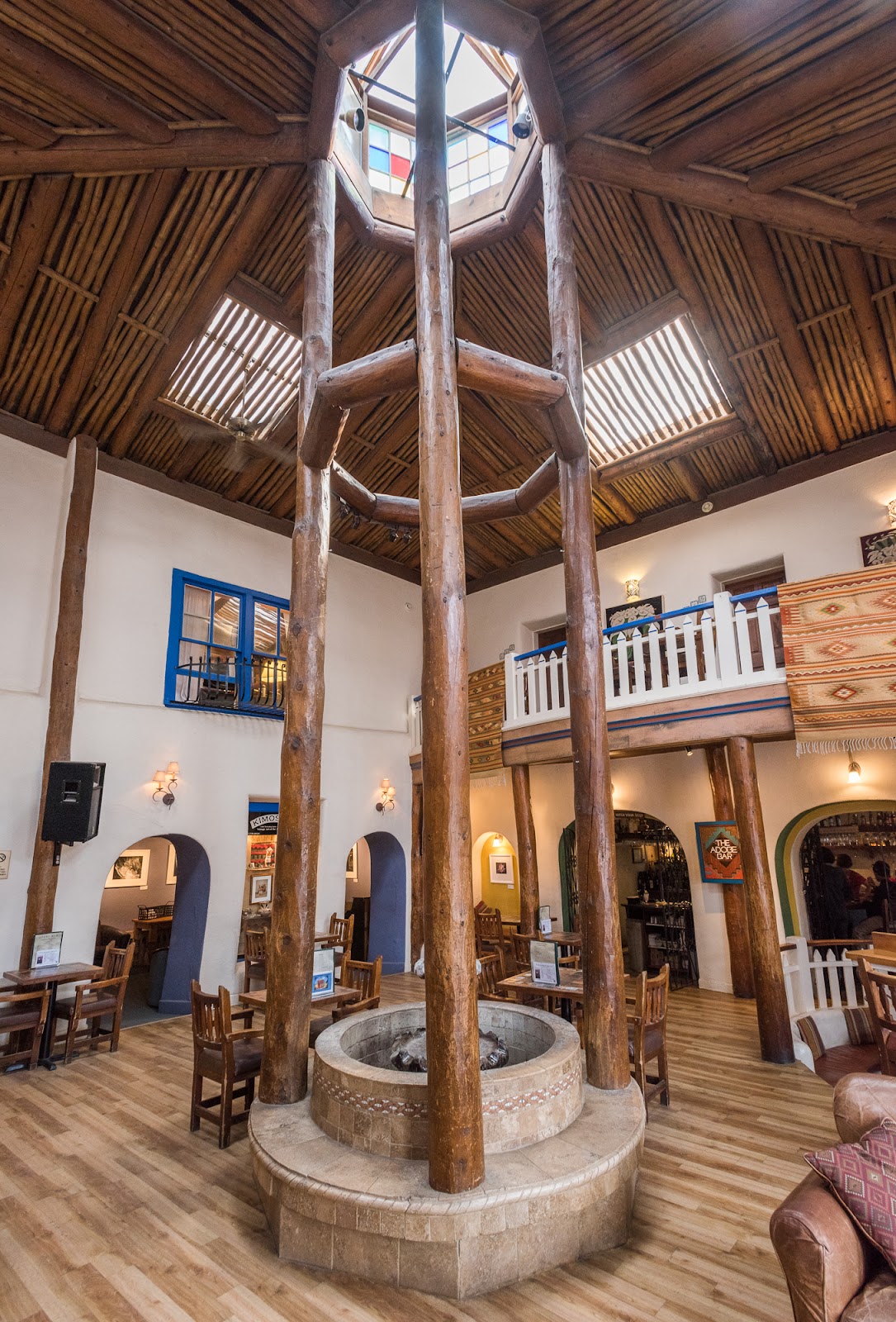
The Taos Inn, New Mexico: Field Notes on Adobe and Altitude
Adobe is the most flattering building material there is. The air at seven thousand feet is the least forgiving. Both are true here.
Two facts govern photography in Taos and neither is about the building. The first is that the walls are adobe. The second is that the town sits at close to seven thousand feet.
Adobe is, as it happens, an almost ideal photographic surface. Earthen walls are rendered and hand-finished, which means the edges are rounded rather than sharp and the surface is slightly irregular — so light wraps around a corner instead of stopping at it, and a wall lit from the side has a gradient across it rather than a flat tone. The colour is warm and mid-toned, which bounces a gentle warm fill onto anything nearby. And interior walls are thick with deep window reveals, which turn every window into a naturally shaded, naturally directional source.
Altitude is the opposite. At seven thousand feet there is roughly a quarter less atmosphere overhead to scatter sunlight, which means the sun is harder, the shadows are deeper, the sky is a markedly deeper blue, and the contrast between lit and unlit exceeds what any sensor holds by a wider margin than at sea level.
These are field notes on both. We have not photographed a wedding at the Taos Inn; adobe buildings and high-desert light behave consistently. Which spaces are included, whether there is a courtyard and whether the lighting is adjustable are questions for their team.
The Taos Inn at a glance
| Where | Taos, New Mexico, at about 7,000 feet |
| The gift | Adobe: rounded edges, warm mid-toned bounce, deep window reveals |
| The difficulty | Thin air, so the hardest direct sun and deepest shadows of any venue here |
| The answer | Shade, courtyards and reveals — all of which adobe buildings have |
| Ask first | Spaces included, courtyard access, lighting control, fixings |
What adobe does, and how to use it
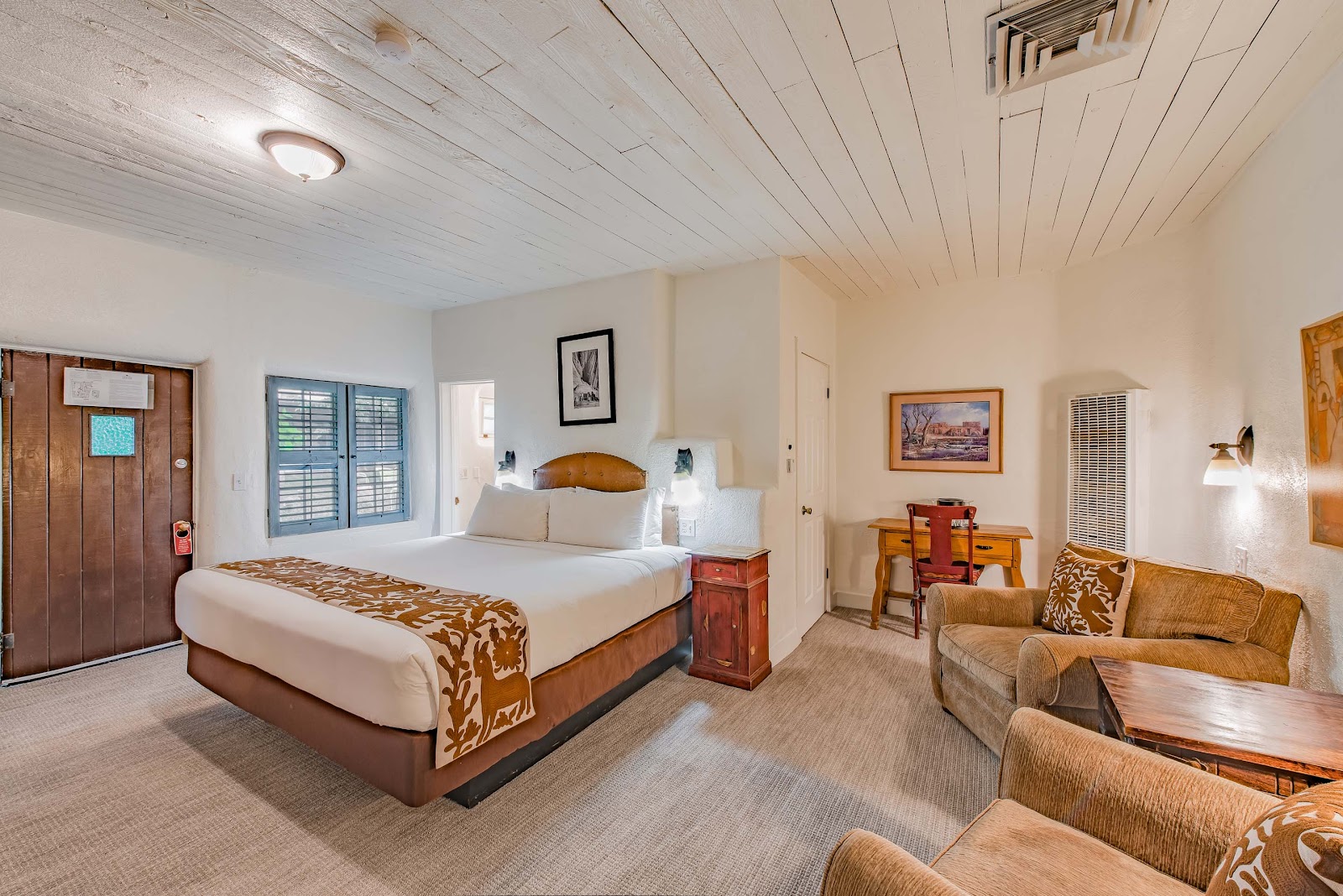
Rounded edges are the first property and the most useful. A sharp plaster corner stops light dead and produces a hard line; a hand-finished adobe corner curves through perhaps a hand’s width, which means light wraps around it as a gradient. Practically that means a subject standing near an adobe corner or in an adobe doorway gets light that falls off gently rather than cutting — the material is doing what a photographer would otherwise need a scrim to do.
The deep reveal is the second and it is the best interior light in any adobe building. Walls two or three feet thick mean a window sits at the bottom of a shaft, which does two things: it shades the glass from direct sun for most of the day, and it restricts the light to a narrow directional band. That is a soft, directional, sun-proof source built into the architecture, and a subject a metre or so from a deep reveal is lit as well as they would be by any equipment.
The reveal’s own surfaces bounce too, warm and from the sides, which fills the shadow side of a face without any reflector. The one thing to check is how far in to stand: at the reveal itself the light is strong and very directional, and a metre back it is softer and broader. One test frame at each settles it.
Warm mid-toned bounce is the third property and it needs handling rather than merely enjoying. Adobe is an earth colour, and light reflecting off a large warm wall arrives on skin as a warm cast from whichever side that wall sits — localised, and therefore not separable by global white balance.
The method is the familiar one: one source gelled warm to sit near the room’s own register, with white balance set to the gel, so the faces are lit by something known while the walls stay the colour they are. Correcting globally for the warm bounce turns skin grey and the adobe the colour of cement, which loses the one quality the material has.
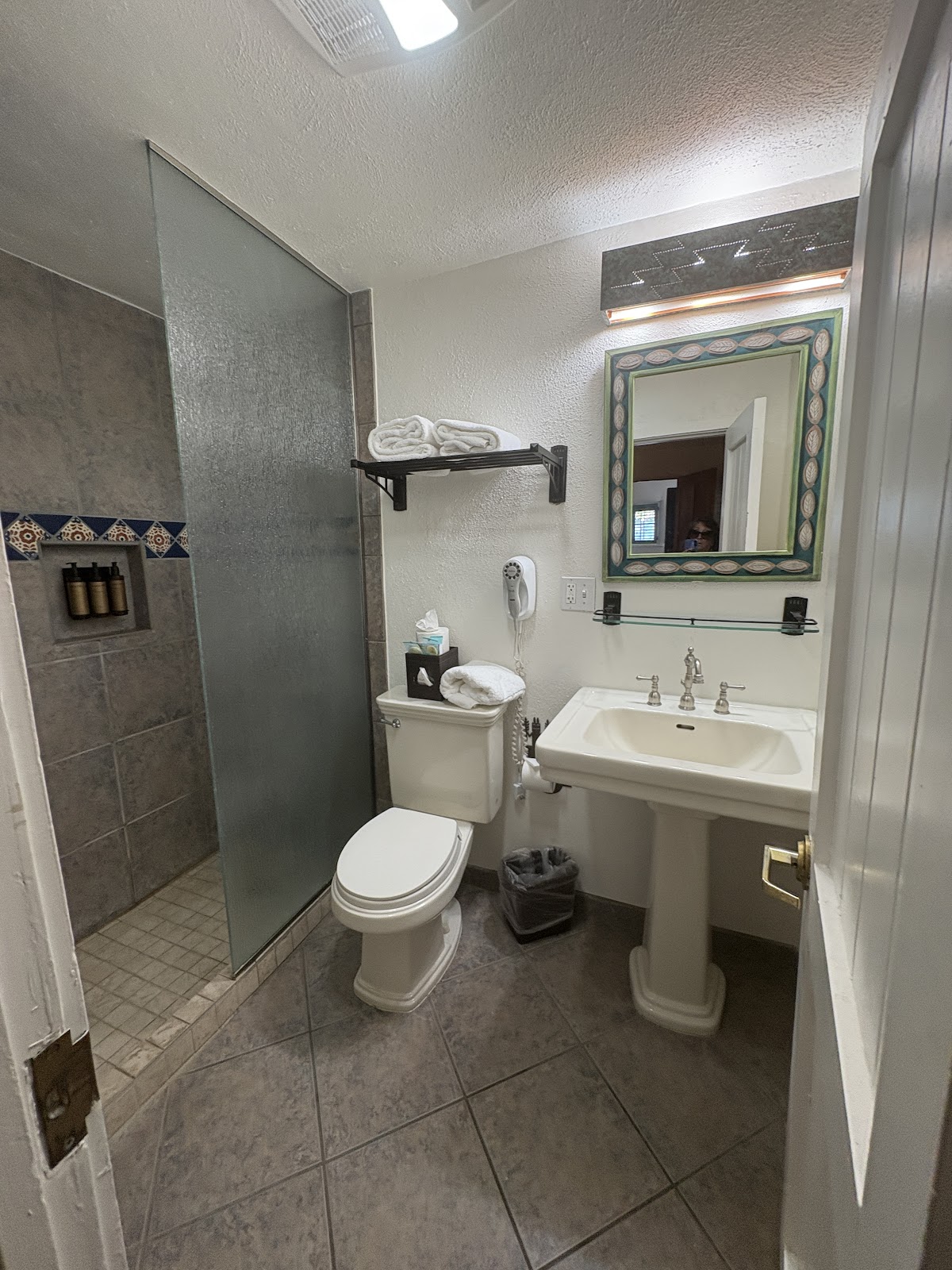
Low interior ambient is the fourth condition. Adobe interiors are dim, because the windows are small relative to the wall area — that is how a thick-walled building stays cool — and because the surfaces are mid-toned rather than pale. Measure it with one frame on arrival; the number will be below the impression, because eyes adapt and meters do not.
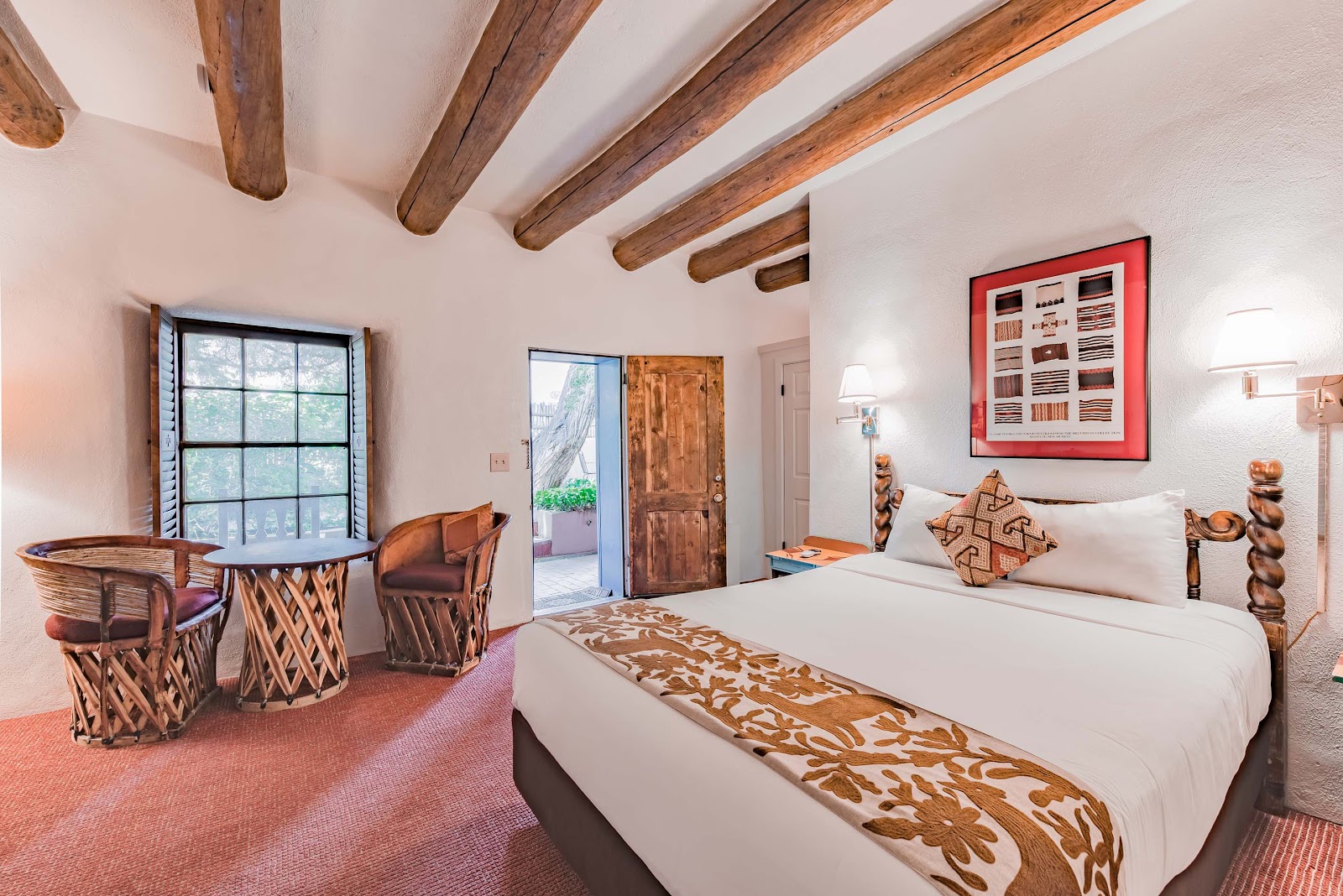
The compensation is that ceilings in adobe buildings are usually low, and frequently carried on exposed timber beams. Low means bounce flash returns a great deal, and a bounced source is a very large soft one. One test frame confirms it, and the caveat is that dark timber beams absorb — so a bounce into the plaster between them works better than one into the beams themselves.
And the beams are a subject in their own right, which needs raking light: a source pointed at a beamed ceiling flattens it, while light running along the beams separates each one.
What altitude does, and the courtyard
The thin air is the harder half and its effects are worth stating numerically, because they are larger than people expect. At seven thousand feet there is roughly twenty-five per cent less atmosphere above than at sea level, which scatters correspondingly less light. The consequences are consistent.
Direct sun is harder. Shadows have sharper edges and go deeper, and the ratio between a lit and an unlit surface is greater than the same sun angle would give at sea level. A face half in sun is beyond rescue here in a way it is merely difficult elsewhere.
The sky is a deeper blue, sometimes strikingly so, which is the visible sign of the same effect — less scattering means less white haze and more saturated blue. That is a genuine asset in any frame with sky in it, and it means a polariser does more here than at sea level rather than less.
Ultraviolet is higher, which matters practically rather than photographically: a party standing outdoors for an hour at this altitude will burn faster than they expect, and that is worth mentioning rather than assuming.
The diurnal swing is the fourth altitude effect and it is the one that catches people out. Thin dry air holds very little heat, so the temperature can drop twenty degrees Celsius between afternoon and evening — which means a comfortable four o’clock becomes a cold eight o’clock, and a party dressed for the former is uncomfortable at the latter. It also means condensation on equipment as the air cools, and it means the evening frames happen faster than anyone expects.
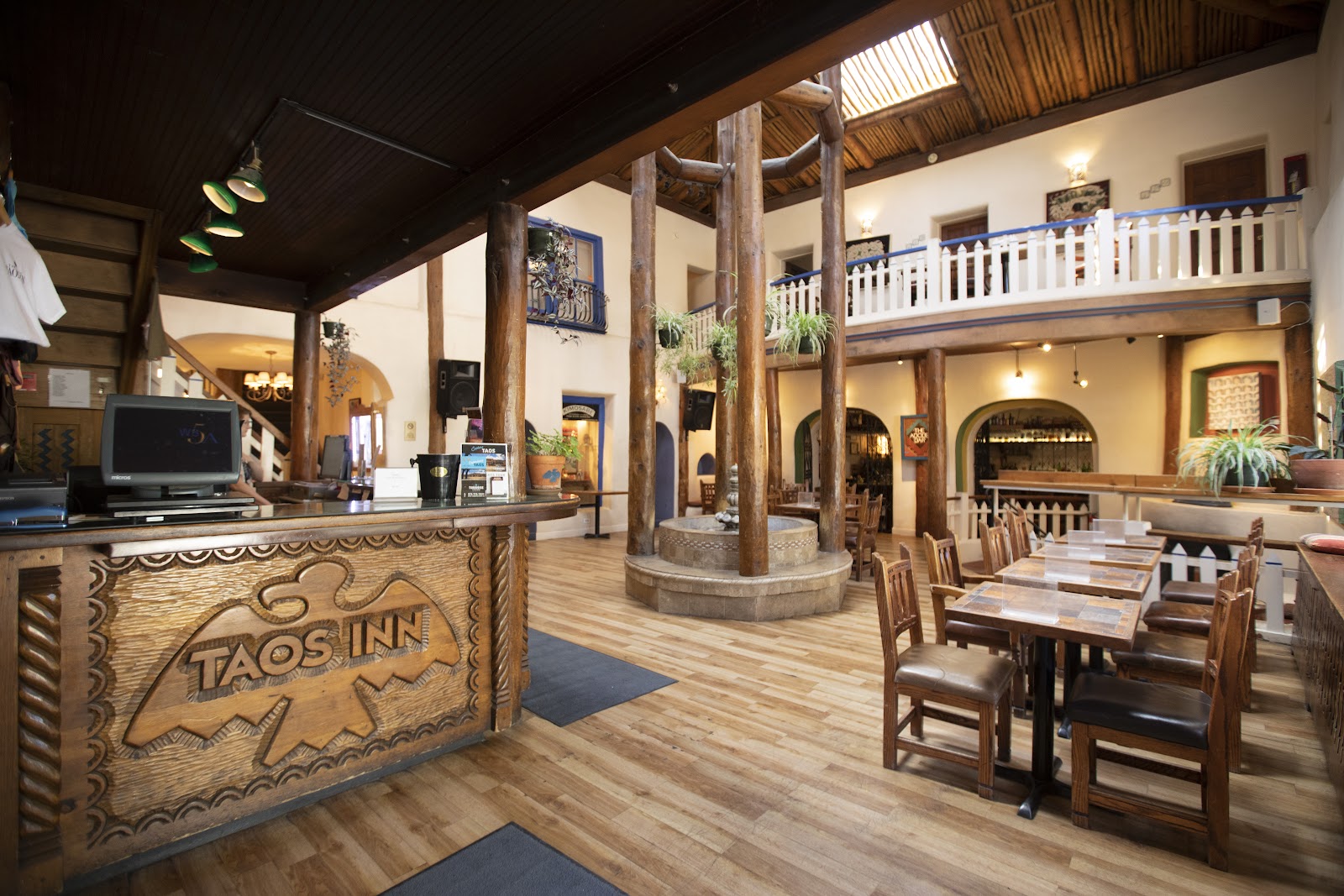
The answer to the sun is the same answer adobe architecture has always given: the courtyard. An enclosed outdoor space with walls on several sides is a softbox at architectural scale — sky above as the source, walls bouncing into the shadows, and the building itself blocking direct sun for most of the day. In a climate this harsh and this sunny, a courtyard is not an amenity but the primary outdoor venue.
Two conditions govern it. When the sun climbs high enough to come over the parapet directly, the courtyard stops being a softbox and becomes a hard-edged trap with a brilliant patch of ground and deep shade a metre away — which at Taos’s latitude of about thirty-six degrees north means an hour or two either side of solar noon in summer, and never in winter, when the sun does not get high enough to get in at all.
And the walls transfer their colour, which is the adobe warm cast again, now from several directions. A custom white balance set on a face in the position being used, or one gelled source owning the faces, is the fix.
After dark a courtyard follows outdoor rules entirely: nothing bounces and the ambient is near zero, so the frame is decorative lighting plus one source. And the crossing — when the sky still holds colour at about the brightness of the lit walls — is shorter here than at sea level, because dry thin air gives less afterglow.
- Stand a metre back from a deep reveal, or right in it — test both
- One warm-gelled source; correcting globally turns adobe to cement
- Bounce into the plaster between the beams, not into the beams
- The courtyard is the primary outdoor venue, not an amenity
- Warn the party about the twenty-degree evening drop and the UV
The mountains, and the high-desert year
The Sangre de Cristo mountains stand immediately to the east of Taos, and their orientation produces the one frame the town is known for. Because they are east of the town, they catch the last of the day’s light on their west faces after the sun has left the valley floor — and at this altitude, in this air, that light is strong and deeply red. The name of the range refers to exactly that effect.
Photographically it means the best ten minutes of the evening happen after the sun has set from the point of view of anyone standing in the town. That is a reversal of the usual order and it needs planning: while a photographer at sea level is packing up, the mountains here are just arriving at their moment. Any position with a clear eastward view is worth walking to, and it lasts a very short time.
The second mountain effect is that the sun disappears early behind the western horizon and the valley falls into shadow sooner than the published sunset time suggests. So the golden hour on the ground is earlier and shorter than expected, and the schedule should be built on observation rather than on a table.
The monsoon is the high desert’s defining seasonal event and it is the photographer’s friend rather than enemy. From roughly July into September, afternoon moisture builds enormous cumulus towers over the mountains — and those clouds are the only reliable diffusion this climate offers. A monsoon afternoon gives soft directional light, saturated colour and the most dramatic skies in the region, and a monsoon sunset is the best light Taos produces in the whole year.
It comes with a genuine hazard: these storms produce lightning, and a party on open ground under a building storm is at real risk. That is a reason to have an indoor or courtyard alternative and to respect it rather than push a frame.
Outside the monsoon the sky is usually cloudless, which means waiting for diffusion is not a plan — the shade, the reveals and the courtyard are the plan.
Winter is the other distinctive season and it is genuinely good here. The sun at this latitude reaches only about thirty degrees above the horizon at midday in December, which means the whole short day is raking light rather than overhead light — adobe walls read beautifully at that angle, and the courtyard is usable all day because the sun never clears the parapet. Snow at altitude is common and it is the best natural fill available outdoors, lifting exactly the shadows a low sun carves while fooling a meter by about two stops. Snow against warm adobe is the strongest colour contrast the town offers.
The practicalities at altitude are worth stating plainly. Cold drains batteries, so spares go in an inside pocket. Anyone arriving from sea level will feel the altitude, and a wedding party climbing stairs in formal clothes at seven thousand feet is more tired than they expect. And the air is very dry, so a cold body brought into a warm room fogs less than in a humid climate — but the evening temperature drop means condensation is still a real possibility, and a bag opened early is the fix.
More frames from The Taos Inn
The Taos Inn wedding photography: common questions
Why is adobe good to photograph?
Rounded hand-finished edges let light wrap rather than cut, the warm mid-toned surface bounces a gentle fill, and thick walls give deep window reveals that are naturally shaded and directional.
What does the altitude change?
There is about a quarter less atmosphere overhead, so direct sun is harder, shadows go deeper, the sky is a deeper blue, and the lit-to-unlit ratio exceeds what a sensor holds.
How should the warm bounce be handled?
One source gelled warm with white balance set to the gel. Correcting globally turns skin grey and the adobe the colour of cement.
Why is the courtyard so important?
Because in a cloudless sunny climate it is the only reliable shade — sky above as the source, walls bouncing into the shadows, and the building blocking direct sun.
What is the frame Taos is known for?
Alpenglow on the Sangre de Cristo range, which stands east of town and catches strong red light after the sun has left the valley floor. It lasts a very short time.
Is the monsoon a problem?
Photographically it is the best thing that happens here — those clouds are the only reliable diffusion in the region. The lightning is a genuine hazard and needs an alternative.
More New Mexico venue guides
We are writing a photographer’s guide to every venue we would happily shoot in New Mexico. Here are three more, plus the full index:
- Taos Ski Valley, New Mexico: One Frame, and How It Is Made
- Drury Plaza Hotel Santa Fe: The Venue’s Own Logic
- Santa Fe Community Convention Center: What It Suits and What It Does Not
Planning a wedding at The Taos Inn?
Adobe helps; the altitude does not. Tell us your date and we will plan for both.