 The Hilton Garden Inn Fargo: Field Notes on a Standardised Hotel
The Lewis and Clark Riverboat, Bismarck: The Light Through a Day
On a boat the venue turns. The light on a face changes without anybody moving, and that is the whole job.
A boat is the only wedding venue that rotates. Everywhere else, the sun moves and the building stays put; on a river the vessel turns through its whole compass over the course of an evening, which means the light on a face changes direction continuously without anybody taking a step.
That is the fact that governs everything aboard. A position that is beautifully backlit on the outbound leg is flatly frontlit on the return, and the sun that was behind the superstructure twenty minutes ago is now straight into the lens.
Handled well it is an advantage rather than a nuisance, because it means every quality of light becomes available from a single standing position if you wait — which is the opposite of a fixed venue, where a photographer has to walk to find light.
This is the day in order. We have not photographed a wedding aboard the Lewis and Clark Riverboat; excursion vessels behave consistently and river light is predictable. Boarding times, the route, whether there are covered and open decks and what the weather policy is are questions for their team.
The Lewis and Clark Riverboat at a glance
| Where | The Missouri River at Bismarck, North Dakota |
| The governing fact | The venue rotates, so the light direction changes continuously |
| Best deck | Covered and open-sided: sky above, shade overhead, water bouncing below |
| The timed frame | Sunset and the long northern twilight after it |
| Ask first | Route and duration, covered deck access, weather policy, boarding times |
Boarding, and the decks
Before boarding there is one thing worth doing that takes two minutes and pays for the whole trip: establish which way the boat will travel and when it turns. A river excursion generally runs out and back, which means the sun is on one side going out and the other side coming back — and knowing which is the difference between planning and reacting.
On board there are typically two kinds of space and they behave completely differently.
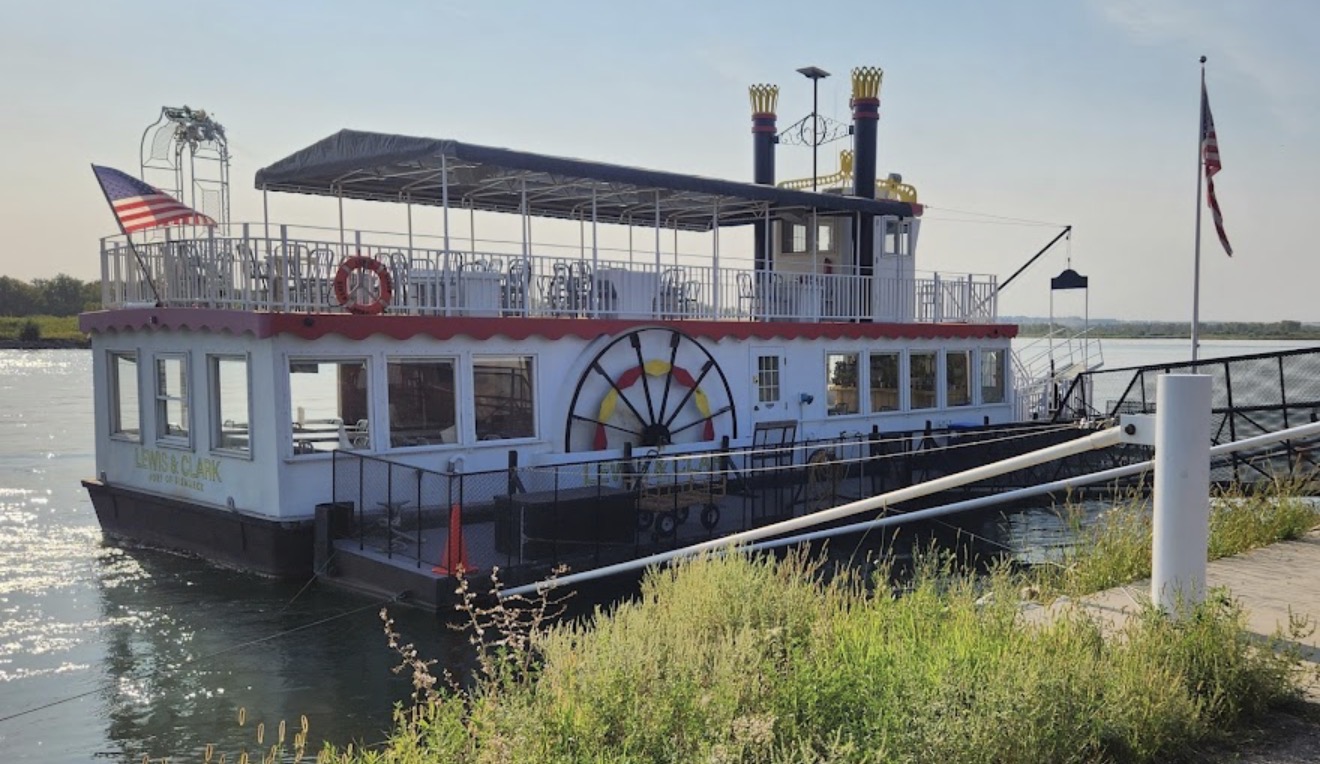
The covered open-sided deck is the best light on the vessel and one of the better light sources anywhere. A roof above blocks the overhead component that puts eye sockets in shadow; open sides let sky in from the horizon, which is directional; and the water below is a large pale reflector throwing light upward to fill under the chin. That is a three-source setup, correctly balanced, with no equipment at all.
It is worth being explicit about how good that is. The combination of overhead shade, horizontal sky and upward water bounce is essentially a studio setup occurring naturally, and it is available for the entire trip regardless of the sun’s position. If there is one place to put the portraits, it is there.
The open top deck is the opposite: sky in every direction including straight overhead, no shade, and full exposure to wind. It gives the wide frames — the river, the horizon, the couple against open sky — and it is the only place the boat itself can be seen in context. It also gives the sunset and the after-sunset frames, which are the timed ones.
The enclosed interior is the third space where there is one. Saloon and dining interiors on vessels are usually low-ceilinged, warm-lit and modest in scale, which means bounce flash works well and a small source at two metres is a large one. The windows are the good light, and they are numerous — but they are also all round the vessel, which means as the boat turns, one side becomes a hard backlit source and the other becomes soft. Again: wait, rather than fight.
Two things about working on a moving vessel are worth naming. Motion is continuous, so a slower shutter than usual will show it — not in the subject but in the horizon, which tilts and rises. And there is nowhere to put a light stand safely on a deck, so the source goes in a hand or on a bracket, which is the correct choice anyway on a windy river.
Through the trip: rotation, water and wind
The practical method for a rotating venue is to stop thinking in terms of positions and start thinking in terms of moments. Because the light direction changes on its own, a photographer who knows what they want can simply wait for it: the backlit frame, the sidelit frame and the frontlit frame all arrive at the same rail within twenty minutes of each other.
The three worth waiting for are specific. Sidelight, which is the most flattering and which happens when the sun is roughly ninety degrees off the boat’s heading. Backlight, which gives rim light on hair and a bright river behind, and which needs the exposure set for the faces with the water allowed to go bright. And the shaded side, which on a sunny day is a large soft source of sky and water bounce and is the safest of the three.
The water is the second continuous variable and it does three things. It reflects, which doubles anything lit and means the wake and the far bank appear twice. It bounces upward, filling the shadows a high sun carves — the effect that makes the covered deck so good. And it produces specular glare, which in direct sun is several stops above everything else in the frame, clips completely, and fools any metering system into underexposing faces.
A circular polariser is the single most useful accessory on a boat. It cuts the specular component substantially, deepens the sky, and makes the water read as water rather than as a field of white. Its cost of one and a half to two stops is rarely a problem in open river light.
Wind is the third and on the northern plains it is not a minor factor: this is among the windiest inhabited country in North America, and a moving vessel adds its own apparent wind on top of whatever is blowing. The practical consequences are specific. A veil will not behave — that needs saying to a couple in advance rather than discovering it. Hair needs managing, and a position on the lee side of the superstructure is worth finding. Anything not held will go overboard, including a lens cap, a hat and a bouquet. And a diffusion panel is unusable.
The compensations are that wind means movement, and movement in a dress or a veil is a genuinely good picture when it is anticipated rather than fought — and that the lee side of any structure is a calm pocket with good light, because the sky and water are still doing their work.
One safety-adjacent practicality deserves plain statement: decks are wet, railings are the only edge, and a camera dropped over one is gone. Compose so nobody needs to lean, and keep a strap on.
- Establish the route and the turn before boarding
- Put the portraits on the covered open-sided deck — it is a natural studio
- Wait for the light rather than walking to it; the boat rotates for you
- Carry a polariser; specular glare clips and fools the meter
- Tell the couple about the veil in advance, and keep a strap on everything
Sunset, the long twilight, and the year
Sunset on open water is the frame the venue exists for, and at Bismarck’s latitude it behaves differently from further south in a way worth planning around.
At about forty-seven degrees north the sun sets at a shallow angle, which means two things. The final approach to the horizon takes longer, so the last warm light lingers rather than dropping away. And twilight afterwards is long — the sky holds usable light for well over an hour in June, which turns the crossing frame, when sky and the vessel’s own lighting sit at the same brightness, into a relaxed twenty or thirty minutes rather than a scramble.
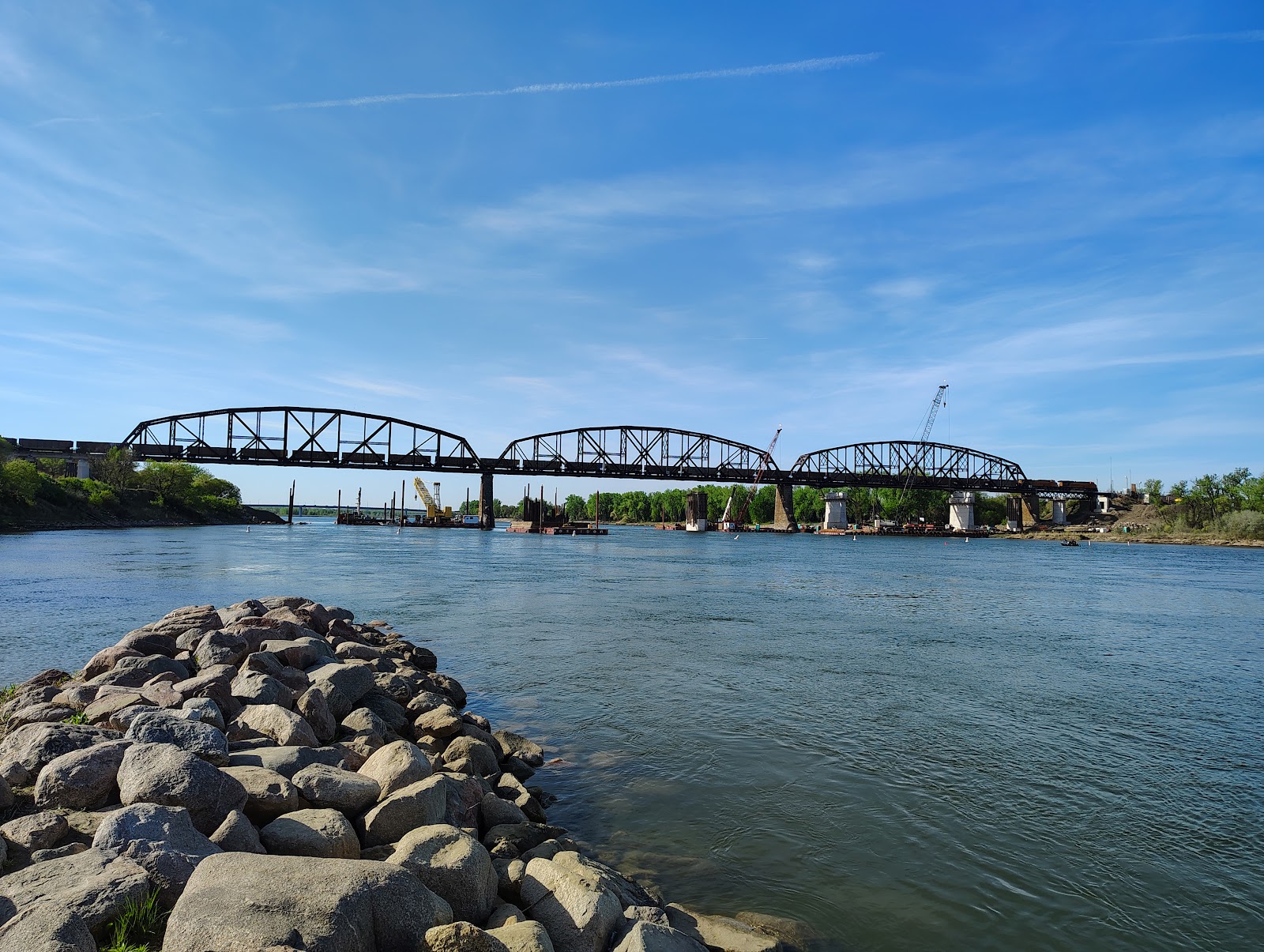
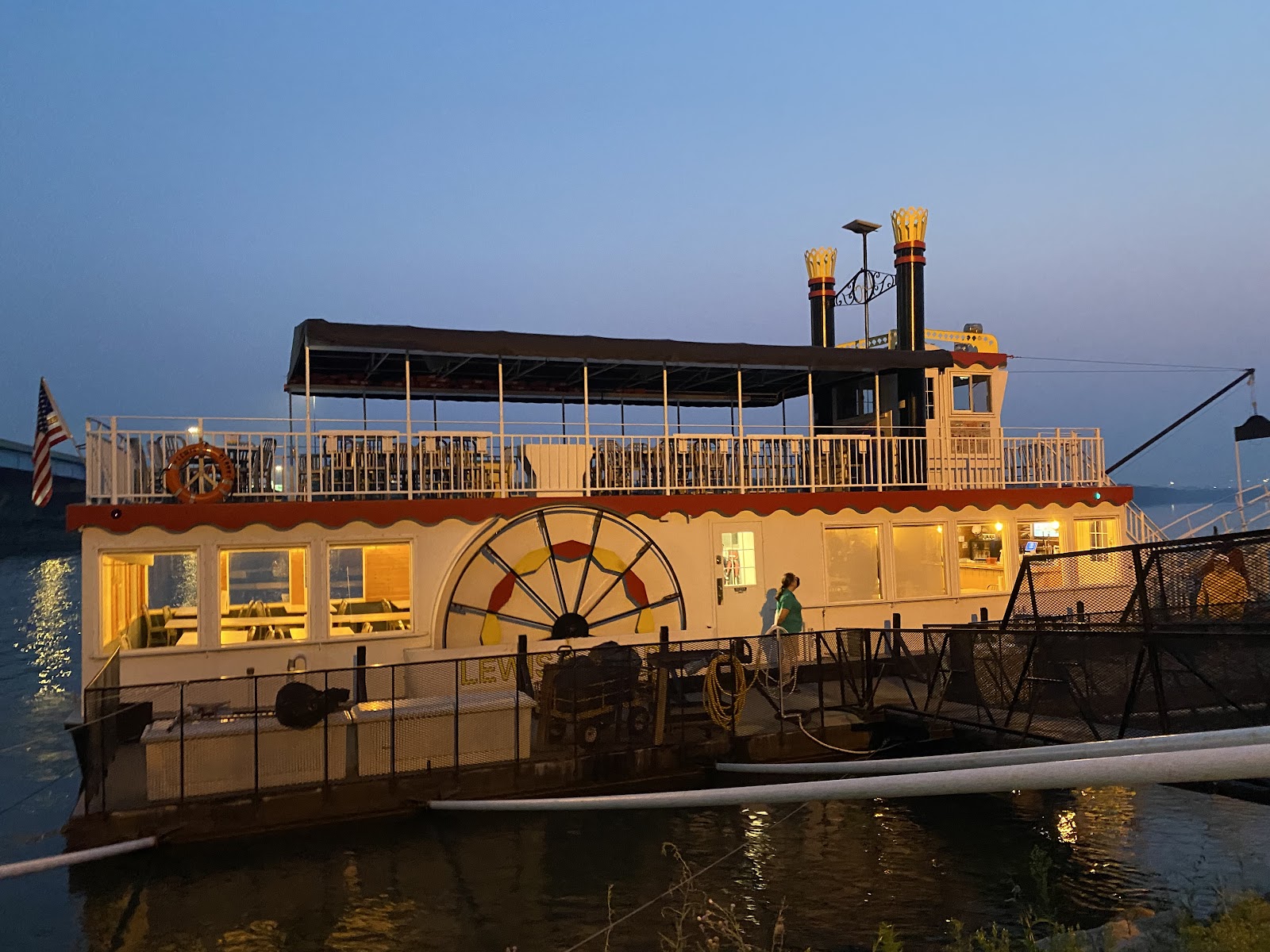
On water that crossing is the best version there is, because the river reflects both the sky and the boat’s lights, so one exposure holds couple, sky, vessel and two reflections. It is worth building the trip’s timing around, and a river excursion’s schedule is fixed in advance — which makes it a question to ask when booking rather than a matter of improvisation.
In December the same latitude gives the opposite: sunset in the middle of the afternoon and a short sharp twilight in very clear cold air. A boat is unlikely to be running then, but the principle matters for shoulder seasons — in late September the sunset is at a civilised hour and the twilight is still generous.
The other latitude effect is that the sun never gets high. Midday in June reaches only about sixty-six degrees above the horizon, twenty degrees lower than the southern United States, which means the harsh overhead light that ruins midday elsewhere is milder here. A midday river trip is genuinely workable, especially from the covered deck.
The climate is semi-arid, which matters on a river: the air is clear, so the far bank and the horizon hold detail rather than dissolving into haze, and shadows are harder than humid air gives at the same sun angle. Clear air over water at low sun is as good as light gets.
The seasons decide availability more than quality. An excursion vessel on the northern Missouri operates in the warm months, which makes late May through September the practical range — and within that, late August and September are the best of it: the air is at its clearest, the light is warm, sunset falls at a reasonable hour, and the worst of summer’s thunderstorm activity has passed.
Thunderstorms are the real weather risk and they need a policy rather than optimism. A vessel will not sail in severe weather, which means the plan needs an answer to what happens if it does not — and that answer belongs at booking. The compensation is that an approaching storm over an open plains horizon, seen from water, is the most dramatic frame the region produces.
Two closing practicalities. Spray and river air get on a front element continuously, so a cloth in a pocket is worth more than any filter. And a cold body carried out of a heated saloon into cool river air fogs, so let it come towards the outside temperature before the sunset frames rather than at the moment they arrive.
More frames from The Lewis and Clark Riverboat
The Lewis and Clark Riverboat wedding photography: common questions
What makes a boat different from any other venue?
It rotates. The light direction on a face changes continuously without anybody moving, so every quality of light arrives at the same rail if you wait.
Where should the portraits happen?
The covered open-sided deck. Shade overhead, sky from the horizon and water bouncing upward is a balanced three-source setup with no equipment.
What should be established before boarding?
The route and when the boat turns. That decides which side is lit on the outbound leg and which on the return.
Is a polariser worth carrying?
On water, yes — it is the most useful accessory aboard. Specular glare is several stops above everything else, clips completely, and fools the meter.
How bad is the wind?
Significant. This is among the windiest inhabited country in North America, and a moving vessel adds its own. Tell the couple about the veil in advance.
Why is the twilight so useful here?
At forty-seven degrees north the sun sets at a shallow angle, so the sky holds usable light for well over an hour in June — a relaxed crossing rather than a scramble.
More Bismarck, ND venue guides
We are writing a photographer’s guide to every venue we would happily shoot in Bismarck, ND. Here are three more, plus the full index:
- The North Dakota Heritage Center, Bismarck: The Problem, and Four Ways Out
- The Bismarck Art Gallery: The One Decision That Governs Everything
- The Bismarck Civic Center: A Walk Through a Civic Venue
Planning a wedding at The Lewis and Clark Riverboat?
A venue that turns for you. Tell us your sailing time and we will plan the rotation.