 The Hilton Garden Inn Fargo: Field Notes on a Standardised Hotel
The Alerus Center, Grand Forks: Field Notes on a Very Large Venue
A very large building is not a large room. The difference decides where every light goes.
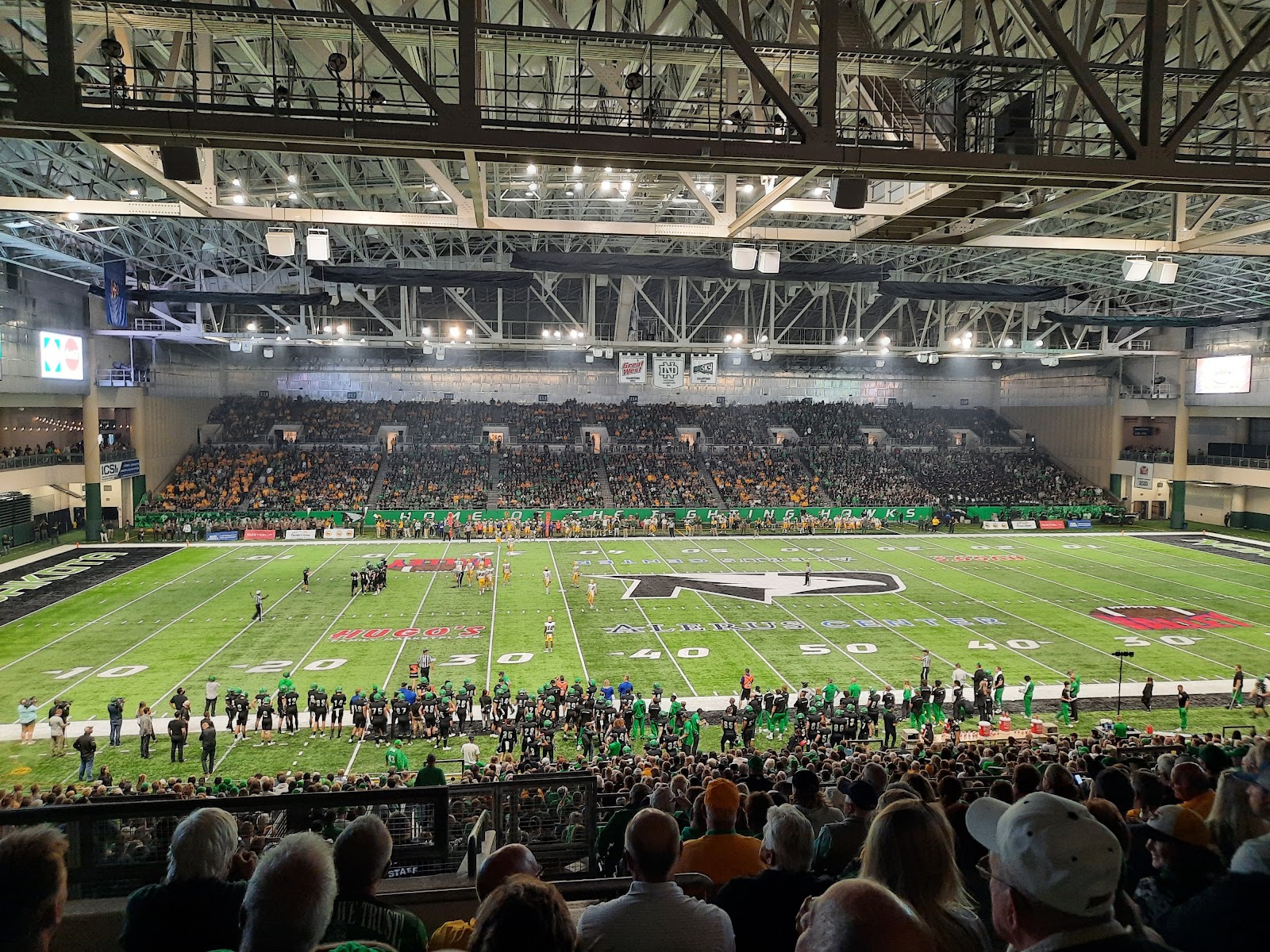
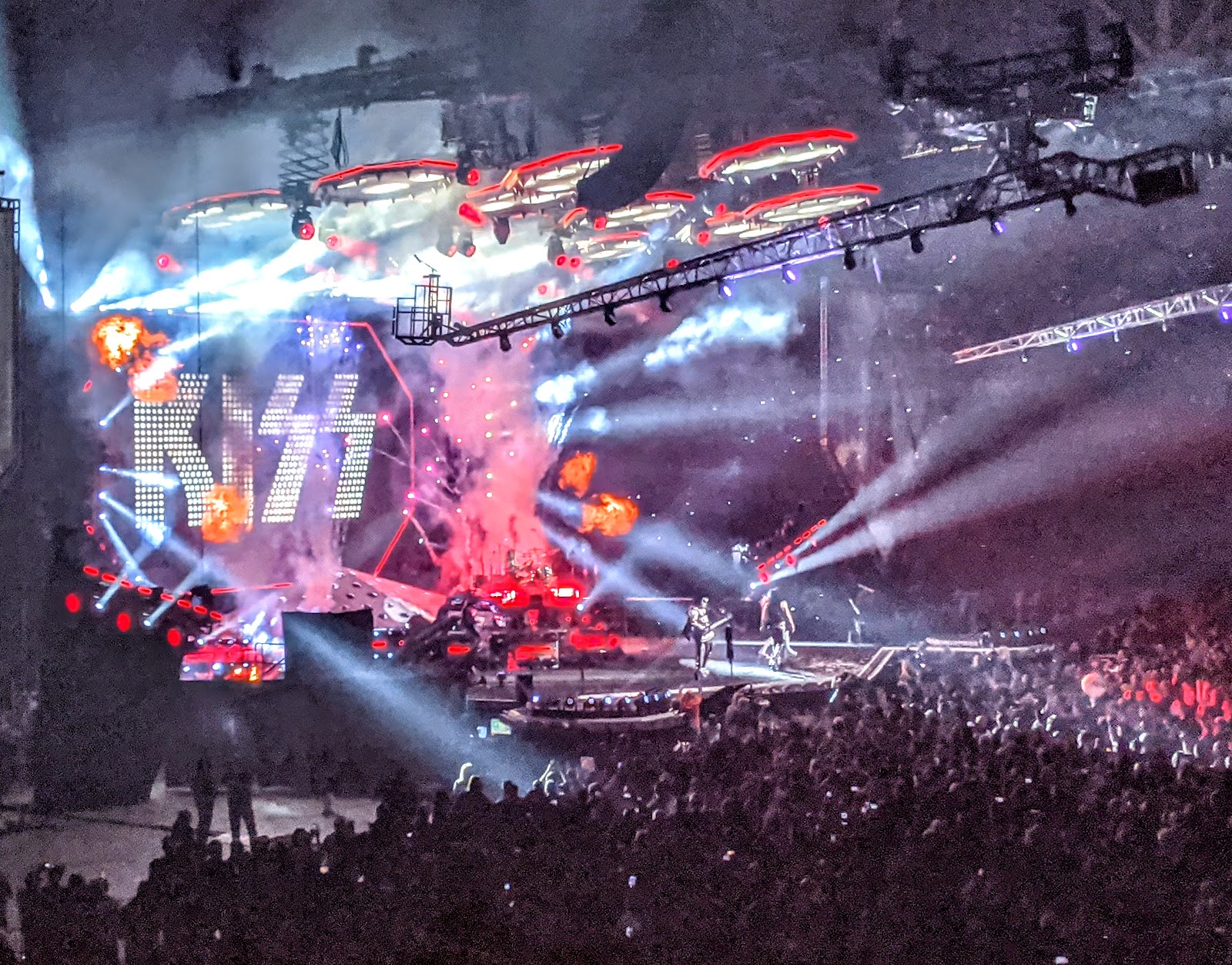
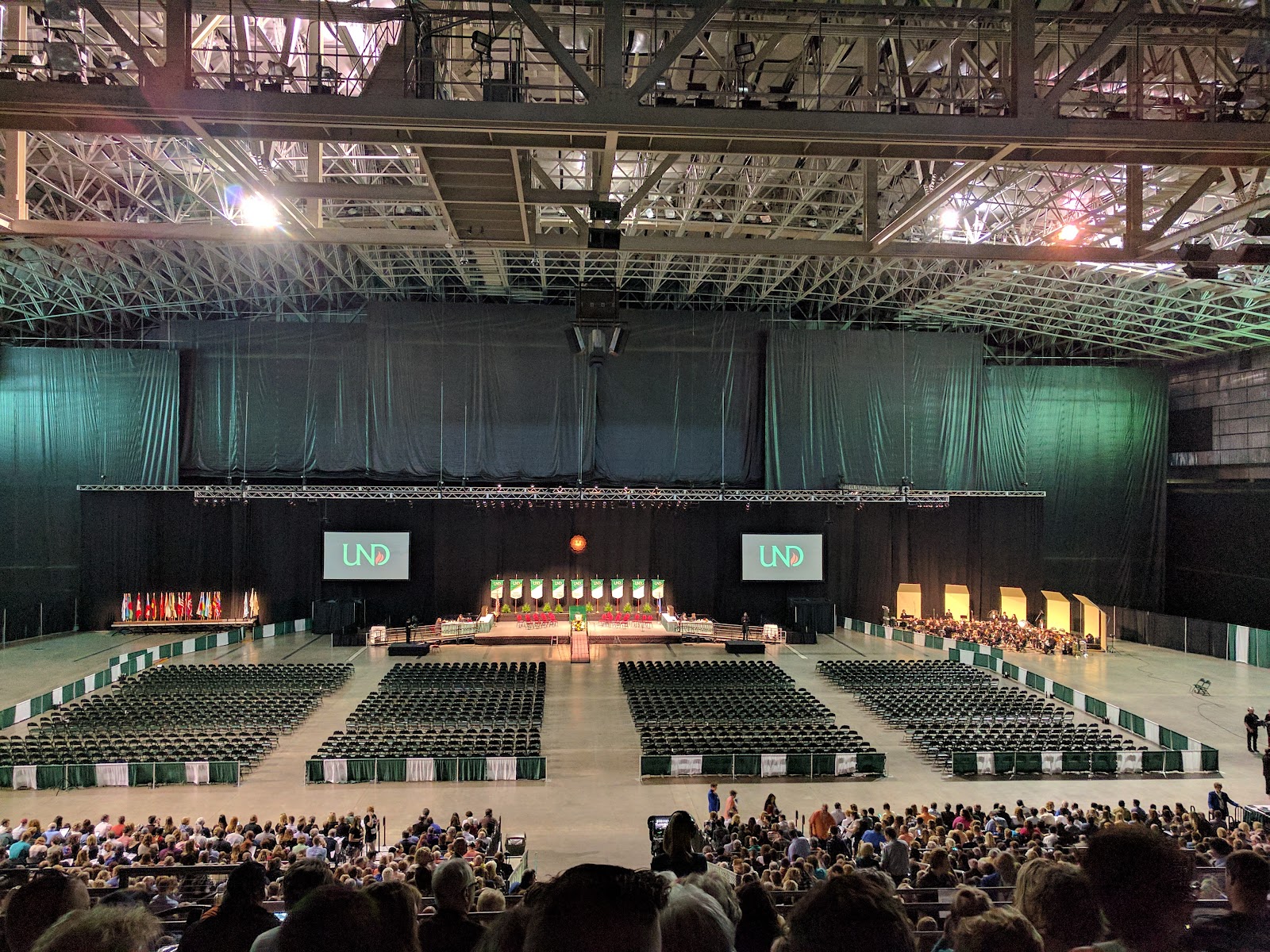
A combined arena and events centre is the largest kind of building a wedding is likely to happen in, and the scale changes the physics rather than just the logistics.
In a room of ordinary proportions a photographer can put a light somewhere and let the walls and ceiling do half the work. In a clear-span arena there are no walls close enough and no ceiling low enough to do anything at all, which means every photon has to travel from the source to the subject directly. That single fact reorganises the whole approach.
It also produces one frame nowhere else can give: two people with genuine volume around and above them, at a scale a photograph can actually convey.
These are field notes on both halves. We have not photographed a wedding at the Alerus Center; arenas and large events centres behave consistently. Which spaces are included, whether the lighting switches in banks and what the rules are about floor protection are questions for their team.
The Alerus Center at a glance
| Where | Grand Forks, North Dakota |
| The physics | No near walls, no low ceiling — nothing bounces, everything is direct |
| The method | Get the source close: two or three metres, not eight |
| The reward | Volume around and above, which no other venue type gives |
| Ask first | Spaces included, bank switching, floor protection rules |
What you meet, and what each one needs
No bounce is the first condition and it is absolute. A clear-span roof is frequently eight metres or more above the floor, which means a flash aimed upward travels sixteen metres round trip and returns a fraction of a percent of what left — so bounce is not merely weak here, it is unavailable. For a photographer whose habit is a bounced source, that is the first thing to unlearn, and one test frame on arrival confirms it in five seconds.
The inverse-square law is the second and it is the one to actually use. Light falls off with the square of distance, so doubling the distance from a subject costs two stops. In a big space the instinct is to place a light further back so it covers more ground, and that is exactly wrong: a source at three metres is four times the light of the same source at six, it is proportionally softer because it is larger relative to the subject, and everything beyond the subject stays dark.
That darkness is not a side effect, it is the point. It is what makes the volume read, and it is what separates the couple from a background that is otherwise an unlit expanse. So the working configuration is close, modest, off the camera axis, at face height — one source in a modifier at two or three metres, which is less equipment than a hotel ballroom needs.
Free separation is the third condition and it is the compensation for everything else. In a clear-span building there is no wall to worry about, which means a couple can stand twenty metres from anything, and at that distance the background is genuinely dark and genuinely deep. Nowhere else offers that, and it costs nothing but remembering not to stand a metre from the nearest wall out of habit.
High-bay lighting is the fourth and it needs identifying rather than assuming. Arena lighting has historically meant metal halide or high-pressure sodium and increasingly means LED, and the difference matters. Older discharge fittings render colour poorly, because their energy sits in a few narrow parts of the spectrum rather than across it, which means skin lit by them looks wrong in a way that cannot be fully corrected. Some of them also flicker at a rate that interacts with a fast shutter, producing frames in a burst that differ in brightness and colour from one another.
The answer to both is the same: let one gelled source own the faces, set white balance to that source, and treat the building’s lighting as background illumination rather than as the key. Where frames in a burst come back inconsistent, a slower shutter averages the flicker out.
Modern LED high-bay is much better on colour and usually flicker-free, but it is cool in register and strongly directional from above — which returns to the overhead problem, where light from straight above fills eye sockets with shadow and cuts a line under every chin. One source from the side fixes it.
Bank switching is the fifth and it is the most valuable control in the building. Arena and hall lighting is almost always switchable in sections, and turning half the space off creates exactly the darkness the frame wants behind the couple at no cost and no effort. It is worth asking about by name.
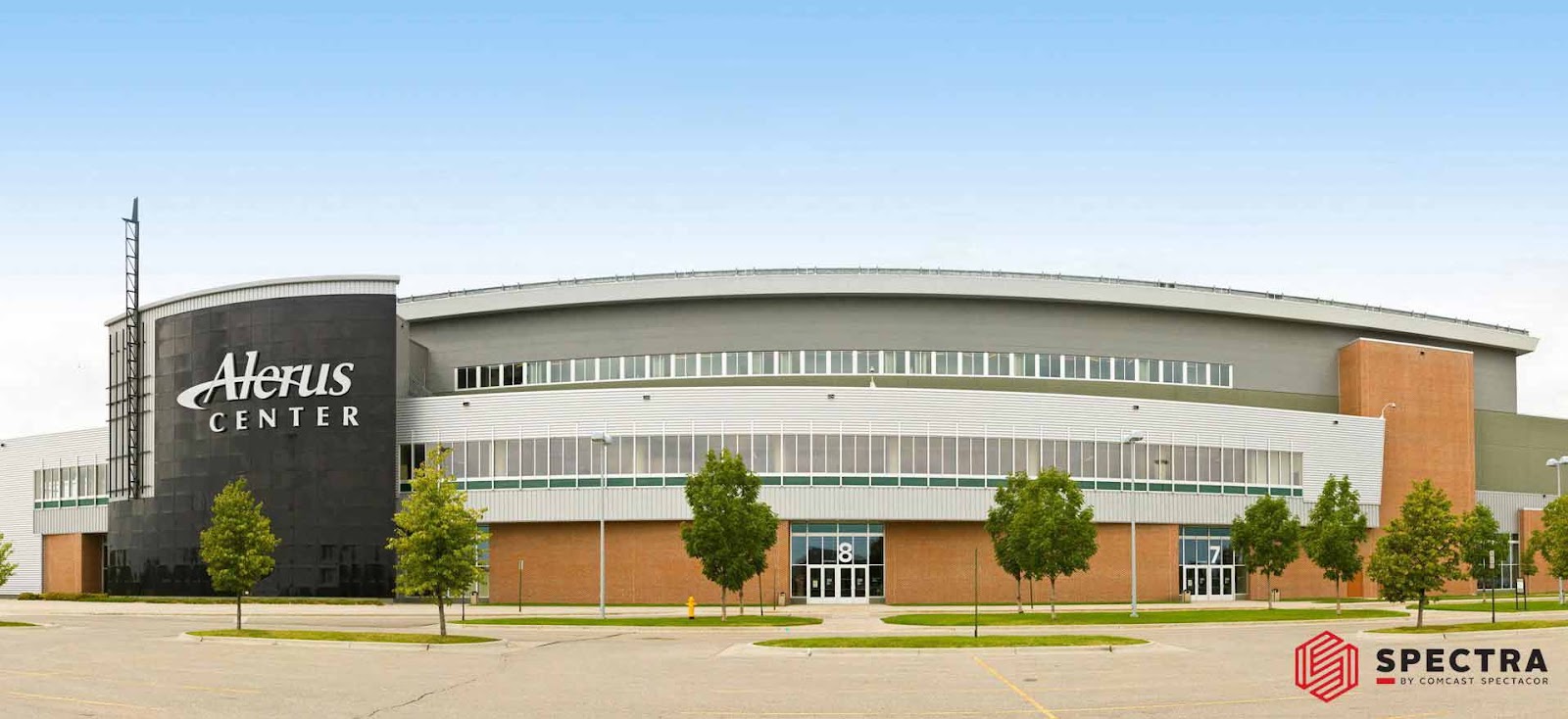
The other spaces, and the concourse
A building of this kind is not only its arena floor, and the other spaces carry most of the day.
The concourse is the first and usually the best. A wide glazed circulation ring around a large venue is the only significant daylight in the building, and it behaves like a very long window: soft, directional, and large enough to light a group. The conditions are the ordinary ones — shaded side or overcast rather than direct sun, and about three metres back from the glass, so a row of people is evenly lit rather than dropping off the far end.
The concourse’s other property is depth. A curved or straight circulation ring gives a long receding sightline, which is a background that darkens by itself — the cheapest separation in any building — and it is available at any hour.
Function and meeting rooms are the second group and they are the most useful in a practical sense. Normal ceilings, often under three metres, mean bounce flash works properly and a bounced source is a very large soft one that needs no stand and follows a walking pace. Many have windows. A room with a window and a low ceiling is the best portrait environment in a building like this by a wide margin, and it is worth identifying on arrival.
Exhibition and ballroom spaces are the third and they have the neutral-room problem: pale, evenly lit and featureless, with a wall as bright as the face in front of it. The fixes are geometric — five metres off the wall rather than one, the darker end of the room, which every room has, a background that is depth rather than a near surface, and a source brighter on the face than the room is on the wall.
Back-of-house is the fourth and at a venue of this scale it is genuinely impressive: loading bays big enough to drive into, service corridors, rigging and plant. Those spaces have texture, scale and honesty that the function rooms do not, and whether they are available is a question worth asking — the answer is often yes for ten minutes with someone escorting.
The floor deserves its own note. A sports or arena floor is a large, even, characterful surface and a low camera position uses it — as a reflector for the lights above, as a texture, and as a graphic plane receding into depth. The markings are part of it: they are strong graphic elements and either they belong in the frame deliberately or the camera height excludes them. And the restriction is real, because these surfaces are protected: footwear, stands and anything with a point are commonly limited, which is another reason the source belongs in a hand or on a bracket.
Colour is the standing condition throughout. A building relit in stages has discharge fittings in the hall, fluorescents or LED panels in the back areas, warmer decorative fittings in the public spaces, and any coloured uplighting installed for the event. Pick the temperature that should be correct, set white balance to it, and switch off or overpower whatever else lands on skin.
- Don’t bounce; a clear-span roof returns almost nothing
- Close and modest beats far and powerful — three metres, not eight
- Use twenty metres of distance behind as free separation
- Ask about bank switching; it is the best control in the building
- Formals on the glazed concourse, three metres back from the glass
Outside, and the Red River Valley year
Outdoors, Grand Forks sits in the Red River Valley at about forty-eight degrees north, and two things about that are unlike anywhere else covered here.
The first is the flatness. This is the bed of a vast glacial lake, and it is among the flattest terrain in North America — not gently rolling but genuinely level for tens of miles. The photographic consequence is that the horizon is a true horizontal line and the sky occupies most of any wide frame, which makes the sky the subject rather than the backdrop. Sunrise and sunset happen at the actual horizon rather than behind something, which is rarer than it sounds and gives the full colour sequence from first light onward.
The second is the latitude. At forty-eight degrees north the midday sun in June reaches only about sixty-five degrees above the horizon — twenty-odd degrees lower than the southern United States — so the harsh overhead light that ruins midday elsewhere is milder here and good raking light lasts longer. In December the sun barely clears nineteen degrees all day, which makes a winter afternoon one continuous golden hour.
Twilight is the corollary and it is generous. The June sun sets at a very shallow angle at this latitude, so the sky holds usable light for well over an hour afterwards — which turns the crossing frame, when sky and the building’s own lighting sit at the same brightness, into a relaxed half hour rather than a scramble. In the clear cold air of January it is shorter and much sharper.
Wind is the constant and on a flat open plain there is nothing at all to break it. This is among the windiest inhabited country in North America, and the practical consequences are specific: a lightstand outdoors is a liability rather than a tool, a veil behaves unpredictably, a held diffusion panel becomes a sail, and hair needs managing. A source in a hand or on a bracket, and positions on the lee side of a large building, are the answers — and a venue of this size is itself the best windbreak available.
Winter is long and severe, with temperatures well below freezing for months and snow cover through much of it. Snow does two useful things: outdoors it is the best natural fill available, lifting exactly the shadows a low sun carves while fooling a meter by about two stops; indoors it turns the ground into an enormous reflector, so a glazed concourse gives softer, brighter and more even light in February than in June. In a building whose only real daylight is that glazing, winter is when it performs best.
The practical winter constraints are real rather than rhetorical. Cold drains batteries quickly, so spares belong in an inside pocket. An outdoor block in formal clothes at these temperatures is five minutes with coats rather than twenty without, and that is a welfare judgement rather than a photographic one. And fogging runs one way: a cold body brought back into a heated concourse fogs on every surface at once and does not clear quickly, so bodies stay bagged until they have warmed — which means planning the return as well as the departure.
Summer is warm, bright and comparatively dry, with severe thunderstorms possible. The very long June evenings mean the crossing frame falls late, which needs agreeing in advance as a short deliberate excursion rather than discovered at ten at night. And an approaching storm over a genuinely flat horizon is the most dramatic frame this landscape produces, because you can see the whole of it at once.
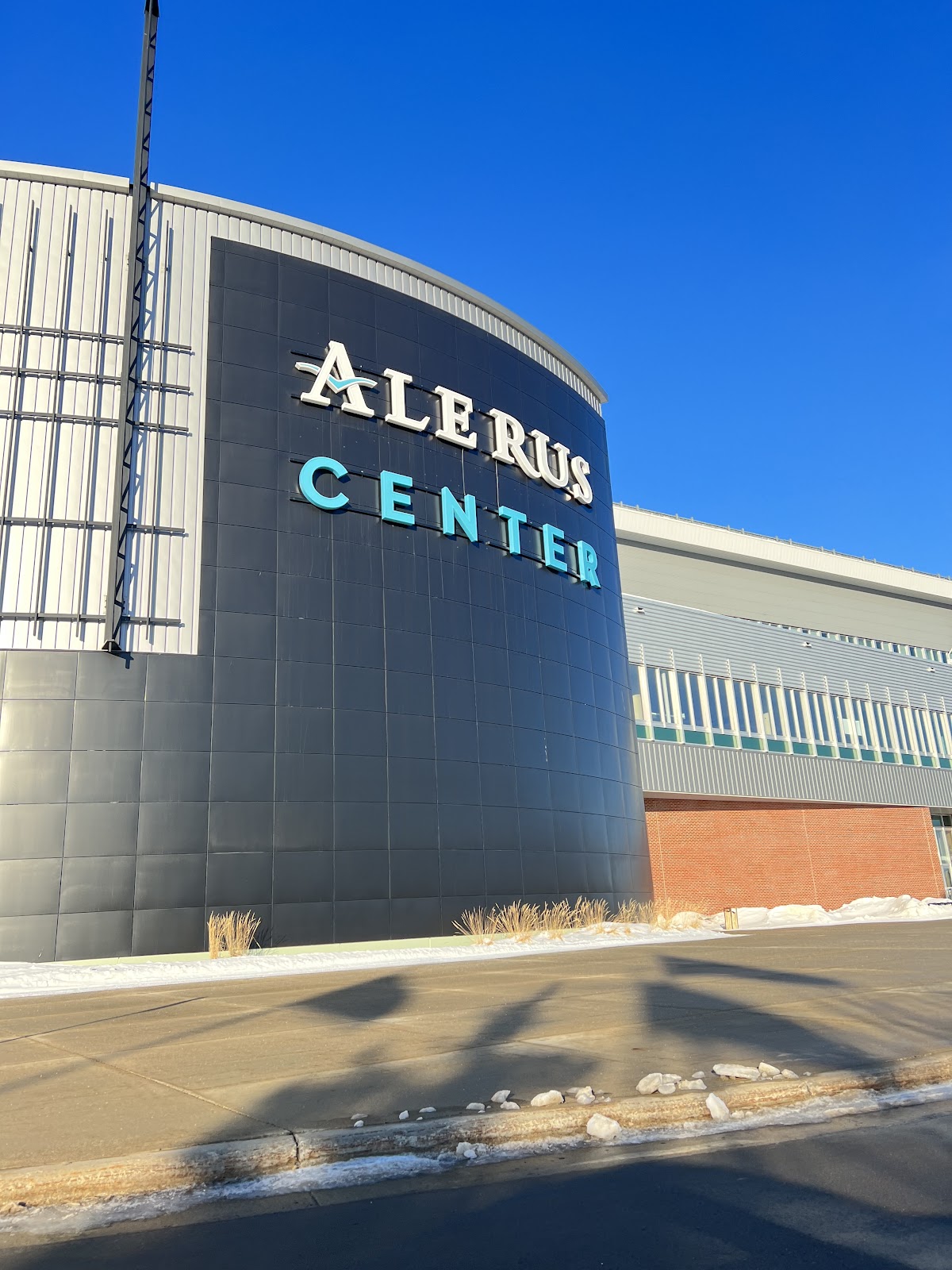
More frames from The Alerus Center
The Alerus Center wedding photography: common questions
Why can't you bounce flash in an arena?
Because the roof is often eight metres or more up, so a bounced flash travels sixteen metres round trip and returns a fraction of a percent of what left.
Should the light be further back to cover more?
No — the opposite. Light falls off with the square of distance, so a source at three metres is four times as bright as the same source at six, and softer relative to the subject.
What is the compensation for the scale?
Free separation. A couple can stand twenty metres from anything, which gives a genuinely dark, genuinely deep background with no equipment.
What is the problem with high-bay lighting?
Older discharge fittings render skin poorly because their energy sits in narrow spectral bands, and some flicker enough to make frames in a burst differ from each other.
What is the most valuable thing to ask for?
Bank switching. Turning half the hall off creates exactly the darkness the frame wants behind the couple, at no cost.
What is unusual about the outdoor light here?
The Red River Valley is among the flattest terrain in North America, so sunrise and sunset happen at the true horizon and the sky occupies most of any wide frame.
More Grand Forks, ND venue guides
We are writing a photographer’s guide to every venue we would happily shoot in Grand Forks, ND. Here are three more, plus the full index:
- The Elks Lodge, Grand Forks: The One Decision That Governs Everything
- The Grand Forks Country Club: One Frame, and How It Is Made
- The Grand Theatre, Grand Forks: What It Suits, and What It Does Not
Planning a wedding at The Alerus Center?
Less light, more space, and a flat horizon. Tell us your date.