 The Rio, Las Vegas: A Walk Through an Off-Strip Resort
The Venetian, Las Vegas: A Resort Whose Logic Is Painted Sky
A ceiling painted to look like sky is lit like a ceiling. Understanding the difference is most of the job here.
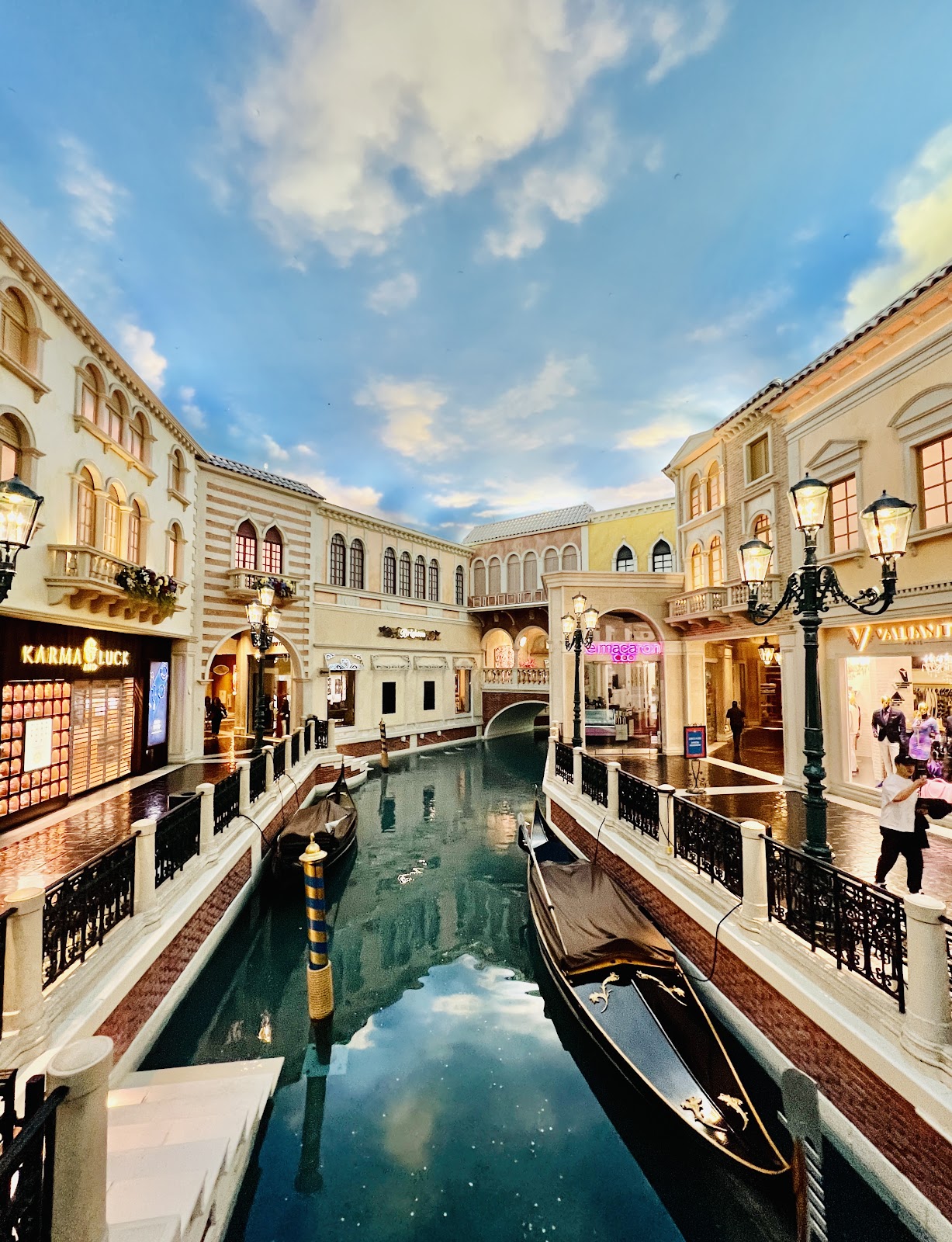
The design logic of this kind of Strip resort is not merely to remove the outside, as a windowless casino floor does, but to replace it — to build interior spaces that behave like streets and squares, under a ceiling painted and lit to read as sky.
That substitution is the single fact that determines how the building photographs, and it has a consequence people find counter-intuitive: a painted sky is a ceiling, and it is lit like one. Real sky is a source; a painted sky is a surface being illuminated, which means the light in these spaces still arrives from concealed fittings, and it still arrives from above.
So the space looks like open air and lights like an interior. The frames that go wrong here are the ones made on the assumption that it will behave like the thing it resembles.
We have not photographed a wedding at the Venetian; resort interiors built on this logic behave consistently and their light is predictable. Which spaces are included, whether the lighting is adjustable and what may be attached are questions for their team.
The Venetian at a glance
| Where | Las Vegas Strip, Nevada |
| The design logic | Interior spaces that imitate the outdoors under a lit painted ceiling |
| The catch | A painted sky is a surface, not a source — the light still comes from fittings |
| The advantage | Large, tall, evenly lit spaces that never change through the day |
| Ask first | Spaces included, lighting control, fixings, guest-room orientation |
Why a painted sky is not a sky
Real sky on an overcast day is the best soft source there is, because it is enormous and it is the light itself. A painted ceiling is a large surface with light thrown onto it, which means three things follow that do not follow from actual sky.
It is dimmer than it looks. A painted sky is lit to read as bright to the eye, which is a very different requirement from being bright enough to expose a face — and eyes adapt where meters do not. The ambient in these spaces is typically well below what it feels like, and the first frame on arrival should be a meter reading rather than an assumption.
It is not the source. Because the ceiling is being lit rather than emitting, the actual sources are concealed fittings, and they are above and to the sides. So the light on a face in a painted-sky space is overhead light, with exactly the overhead problems: shadowed eye sockets, a hard line under the chin, and the tired look that no amount of exposure correction fixes.
And it carries colour. A ceiling painted blue with warm cloud reflects blue and warm light unevenly onto everything beneath it, which lands on skin as a cast that varies with where a person is standing. That is the difficult one, because it is localised and global white balance cannot reach it.
The working method for all three is the same and it is unglamorous. One source, off the camera axis, at face height, gelled to match the dominant fitting temperature in the space, with white balance set to the gel and the exposure set to keep the painted ceiling looking the way the eye reads it. The source does the direction; the ambient does the fill; the ceiling remains a background.
The mistake worth naming is lighting hard enough to overpower the space, which makes the painted sky go dark and turns the whole conceit into a brown ceiling. If the building’s central effect is the imitation of open air, killing it is the one unforced error available.
And a positive consequence: these spaces are tall, which gives depth, and they are evenly lit across large areas, which means a group of any size can be photographed without a lighting plan. That is genuinely rare, and it makes large formals easy here in a way they are not in a conventional ballroom.
Surfaces, ground and where the real daylight is
The architectural vocabulary of these spaces is stone, plaster, painted decoration, water and metalwork, and each behaves predictably.
Stone and plaster detail read only under raking light. A source pointed at a carved surface flattens it into a field of one tone; the same source placed to skim it lifts every profile. The positions worth finding on arrival are those where the available light already grazes rather than faces — and in a space lit from concealed fittings above, that usually means close to a wall rather than in the middle of the floor.
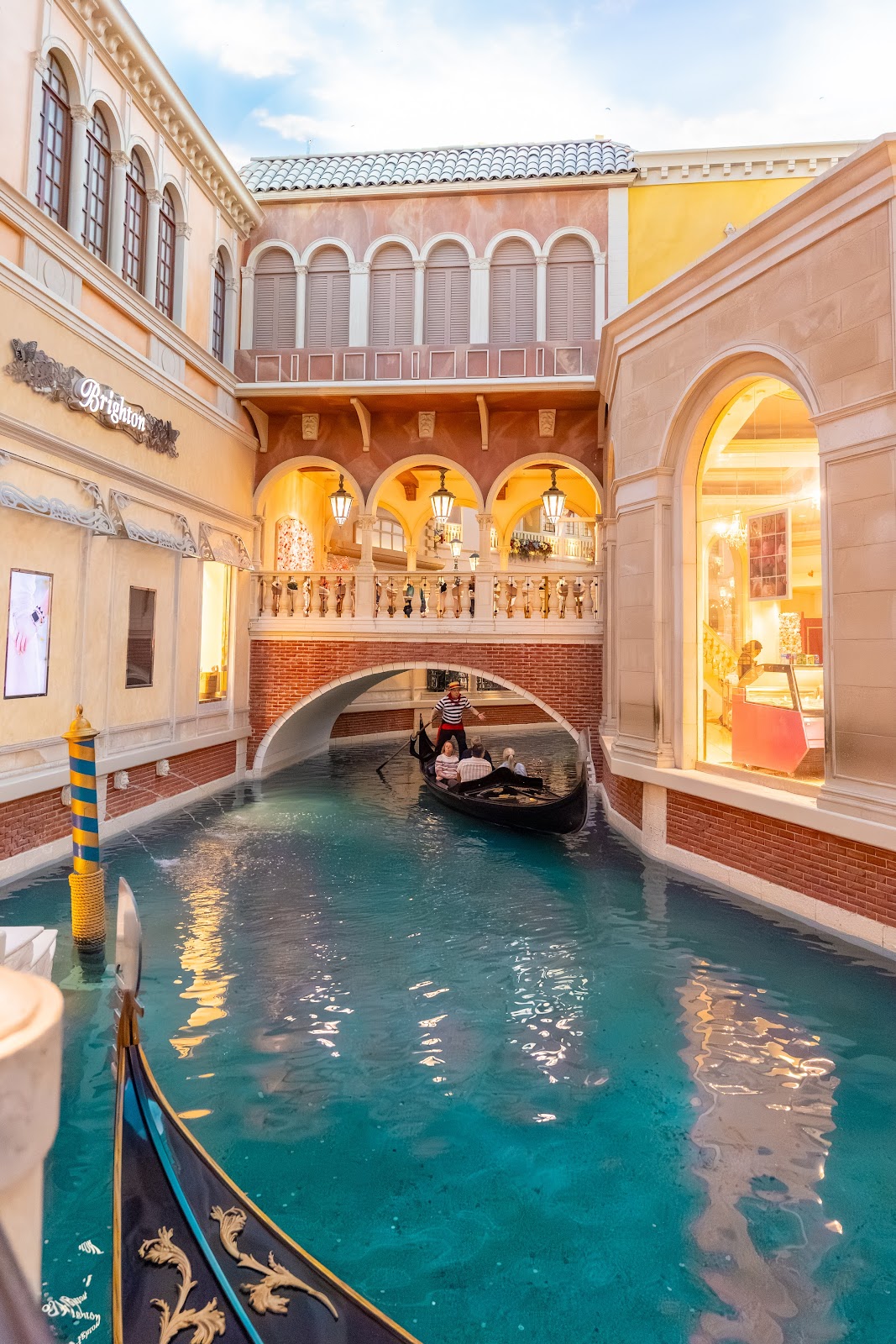
Water is the strongest asset and it does two things nothing else does. It reflects, which gives a second version of any lit structure and doubles the visual information in a frame for free. And it moves, which means a long exposure turns it to a smooth field while a short one holds the ripple — a choice rather than an accident, and worth making deliberately.
Reflective metal and polished stone will show a badly placed light at full brightness, which is the standing discipline in any resort: stand where the camera will stand, look at every reflective surface in the frame, and place the source where none of them sees it.
The floor is usually patterned here rather than carpeted, which is easier — a stone pattern is lower-contrast than a figured carpet and it competes less. Where it does compete, camera height and lens choice solve it faster than anything else.
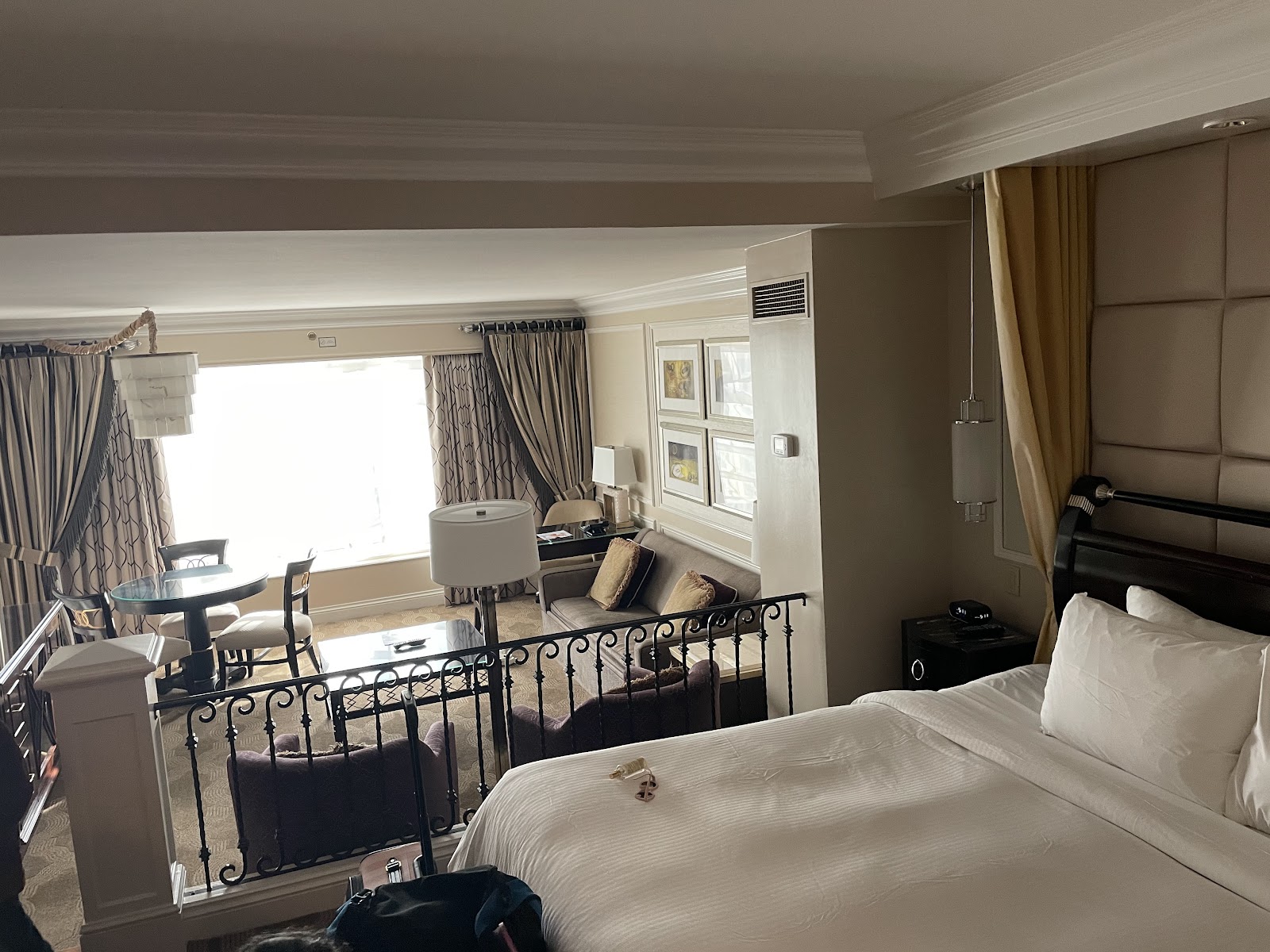
The guest rooms are where the real daylight is and in a building of this logic they are the only place it exists. They are correspondingly more valuable rather than less. Largest window on the shaded side, every overhead fitting off so the room has one colour of light, lamps out of frame, two to three metres back from the glass.
Two Las Vegas specifics apply. The sun here is very strong and the air is very dry, so direct sun through a window is harder than in almost any other city — the shaded side is not a refinement but the difference between a soft source and an unusable one. And floor height matters less here than in a dense city, because the buildings are far apart and the sky is not blocked; orientation is the question to ask.
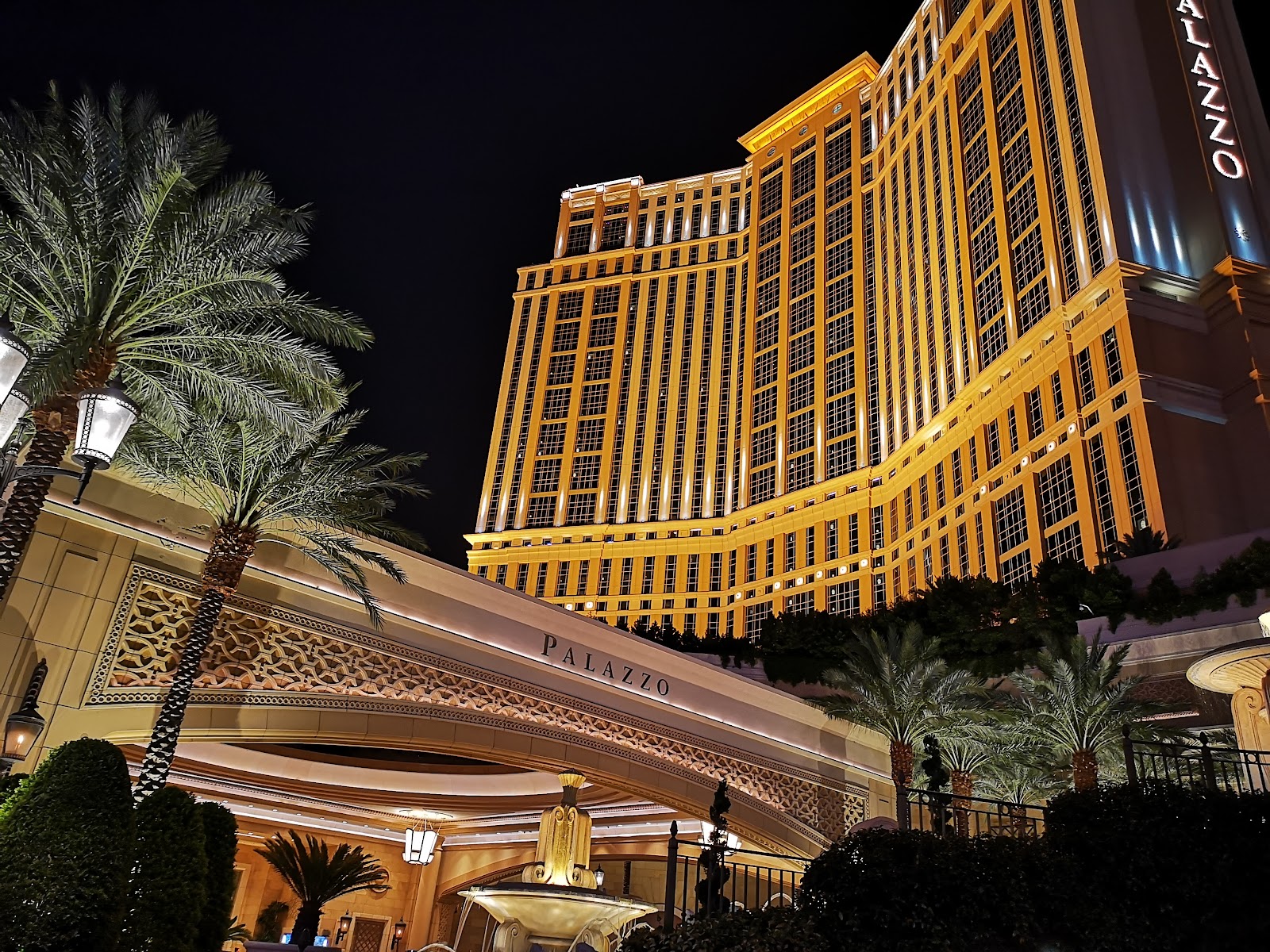
The building has no dusk frame of its own, because it has no windows in its public spaces. That crossing — the twenty-odd minutes when interior and exterior match in brightness — exists only in the guest rooms and outdoors, which makes the outdoor plan a real part of the schedule rather than an optional extra.
- Meter the painted-sky spaces; they are dimmer than they look
- One gelled source off-axis, exposed to keep the ceiling reading as sky
- Never overpower the space; a dark painted sky is just a brown ceiling
- Use water twice: as a reflector, and as a shutter-speed decision
- In the guest rooms, ask about orientation rather than floor
The desert outside, and the year
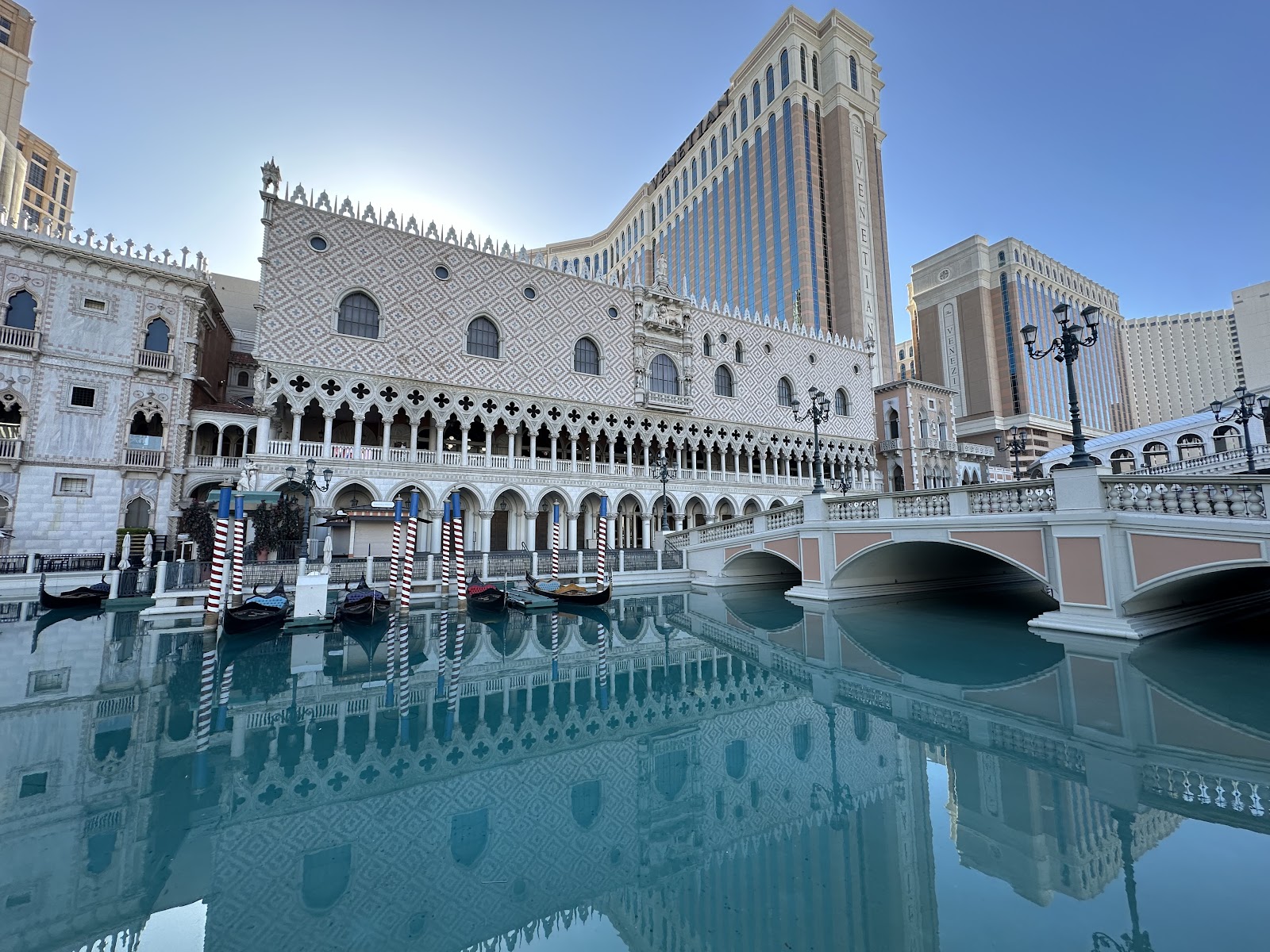
Outside is the Mojave Desert, and it produces the most extreme natural light of any major American city for two compounding reasons.
The sun gets very high. At about thirty-six degrees north the midday sun in June sits roughly seventy-seven degrees above the horizon, which is close enough to straight down that eye sockets go black and every chin gets a hard shadow under it. No technique makes that flattering.
And the air is very dry, so there is almost nothing to scatter the light. Shadows here are harder than they would be at the same sun angle in a humid climate, and the difference between lit and unlit is larger. With something close to three hundred sunny days a year, waiting for cloud is a hope rather than a plan.
So outdoors has two windows and nothing in between: the first hour after sunrise and the last hour before sunset, when light comes across faces rather than down onto them, and roughly twenty-five minutes after sunset when the sky still holds light and the Strip’s own illumination comes up. That second window is short here, because dry clear air gives less afterglow than a humid sky — which is exactly why it has to be scheduled rather than drifted into.
Open shade works better in the desert than elsewhere, because the pale ground is a reflector and bounces light up into the shadows that a high sun carves. The cost is uplight under the chin, so shade with a wall on one side beats shade in the open.
The seasons are effectively two and a half. Summer, June into September, has daytime highs regularly above forty degrees Celsius, which makes an outdoor block in formal clothes unwise rather than uncomfortable — short, shaded, and at the edges of the day. The monsoon period from July into September brings occasional afternoon thunderstorms and blowing dust, and is the one time cloud is likely enough to plan for.
Winter is the good season: mild, clear, and with sunset in the middle of the afternoon in December, which puts the golden window at a reasonable hour instead of after nine at night. Spring is windy, and wind here means blowing dust, which flattens anything distant and gets into everything — a sealed bag and a blower are worth carrying in March and April.
One last thing, and it is the compensation for everything above: the Strip after dark is one of the brightest exterior environments in the world, which means night portraits outdoors are possible here with no equipment at all. Very few cities allow that.
More frames from The Venetian
The Venetian wedding photography: common questions
Why doesn't a painted sky behave like real sky?
Because it is a surface being lit, not a source. The actual light still comes from concealed fittings above, so the space lights like an interior while looking like open air.
What is the first thing to do on arrival?
Meter the space. A painted sky is lit to read as bright to the eye, which is a much lower bar than being bright enough to expose a face properly.
How should it be lit?
One gelled source off-axis at face height, exposed so the painted ceiling still reads the way the eye sees it. Overpowering the space turns it into a brown ceiling.
What is the advantage of these spaces?
They are tall, deep, evenly lit over large areas, and unchanging through the day — which makes large formal groups easier here than in a conventional ballroom.
Where is the real daylight?
The guest rooms. Ask for the shaded side, because in this climate direct sun through a window is a harder source than in almost any other city.
Is the outdoor plan optional?
No. The building has no dusk frame of its own, so the twenty-five minutes after sunset only exist outside or in a guest room.
More Las Vegas, NV venue guides
We are writing a photographer’s guide to every venue we would happily shoot in Las Vegas, NV. Here are three more, plus the full index:
- The Wynn Las Vegas: A Resort That Turns Inward
- The Aria, Las Vegas: The Light Through a Day
- The Bellagio, Las Vegas: A Resort Built to Have No Outside
Planning a wedding at The Venetian?
The sky is painted; the light is not. Tell us your date and we will work with both.