 The Rio, Las Vegas: A Walk Through an Off-Strip Resort
The Fremont Hotel, Las Vegas: The One Decision That Governs Everything
In a warm, dim, older interior the exposure you set for the room decides everything else you do.
At an older downtown hotel the governing decision is not where to stand or what lens to use. It is what the ambient exposure is set for — the room, or the faces — because everything else follows from that choice and it cannot be revisited in editing.
The distinction is concrete. Setting exposure for the room means the warm dim interior reads as warm and dim, with the faces then lifted by a modest source; the pictures look like the place. Setting exposure for the faces means the room falls away into darkness, with two people lit against black; the pictures look like a studio in a hotel.
Both are legitimate and they produce entirely different galleries. What does not work is alternating between them frame to frame, which gives a set of pictures with no consistency in it and makes the day look like it happened in two venues.
We have not photographed a wedding at the Fremont Hotel; older warm downtown interiors behave consistently. Which spaces are included, whether the lighting is adjustable and what may be attached are questions for their team.
The Fremont Hotel at a glance
| Where | Downtown Las Vegas, Nevada |
| The decision | Ambient exposure for the room, or for the faces |
| Room-first | Warm, dim, atmospheric — the pictures look like the place |
| Face-first | Dark and graphic — the pictures look constructed |
| Ask first | Spaces included, lighting control, fixings, room orientation |
The two choices, and how each is executed
Setting exposure for the room is the harder of the two and usually the better one. It means metering the ambient so the interior sits where the eye reads it — warm, dim, with the decorative fittings visible as light sources rather than as blown shapes — and then adding just enough to make the faces legible.
The figure that works is half a stop to a stop above the ambient on the faces, no more. One source, off the camera axis, at face height, in a modifier large enough to be soft at working distance, gelled warm to match the room’s own light with white balance set to the gel.
The gel is the part people skip and it is what makes the difference. An ungelled flash is much bluer than warm tungsten-register fittings, which produces a face that looks pasted into the room — the commonest tell in a hotel wedding photograph. Gelled and white-balanced to match, the added light reads as though it belongs to the building.
The trade-off of this approach is that it needs a slow shutter, because the ambient must actually register. That means motion blur is a real possibility and a subject who moves will show it, which is a reason to use it for deliberate frames rather than for reportage.
Setting exposure for the faces is the other choice and it is simpler to execute. Underexpose the ambient by two or three stops so the room goes dark, light the faces properly, and accept that the venue disappears. The pictures that result are strong, graphic and consistent — and in an older interior they make good use of the steep fall-off that dark warm rooms give, where a subject three metres in front of anything else sits against natural blackness with no equipment at all.
Its cost is that it discards the reason for choosing an atmospheric venue. A gallery made entirely this way could have been made anywhere, and at a building with genuine character that is an unforced loss.
The practical answer at most weddings is to choose room-first as the default and use face-first deliberately for a handful of frames where drama is wanted — but to choose, and to hold to it, rather than letting automatic metering decide frame by frame. Auto exposure in a warm dim interior produces exactly the inconsistency described above, because it responds to whatever is in the frame.
What follows from it
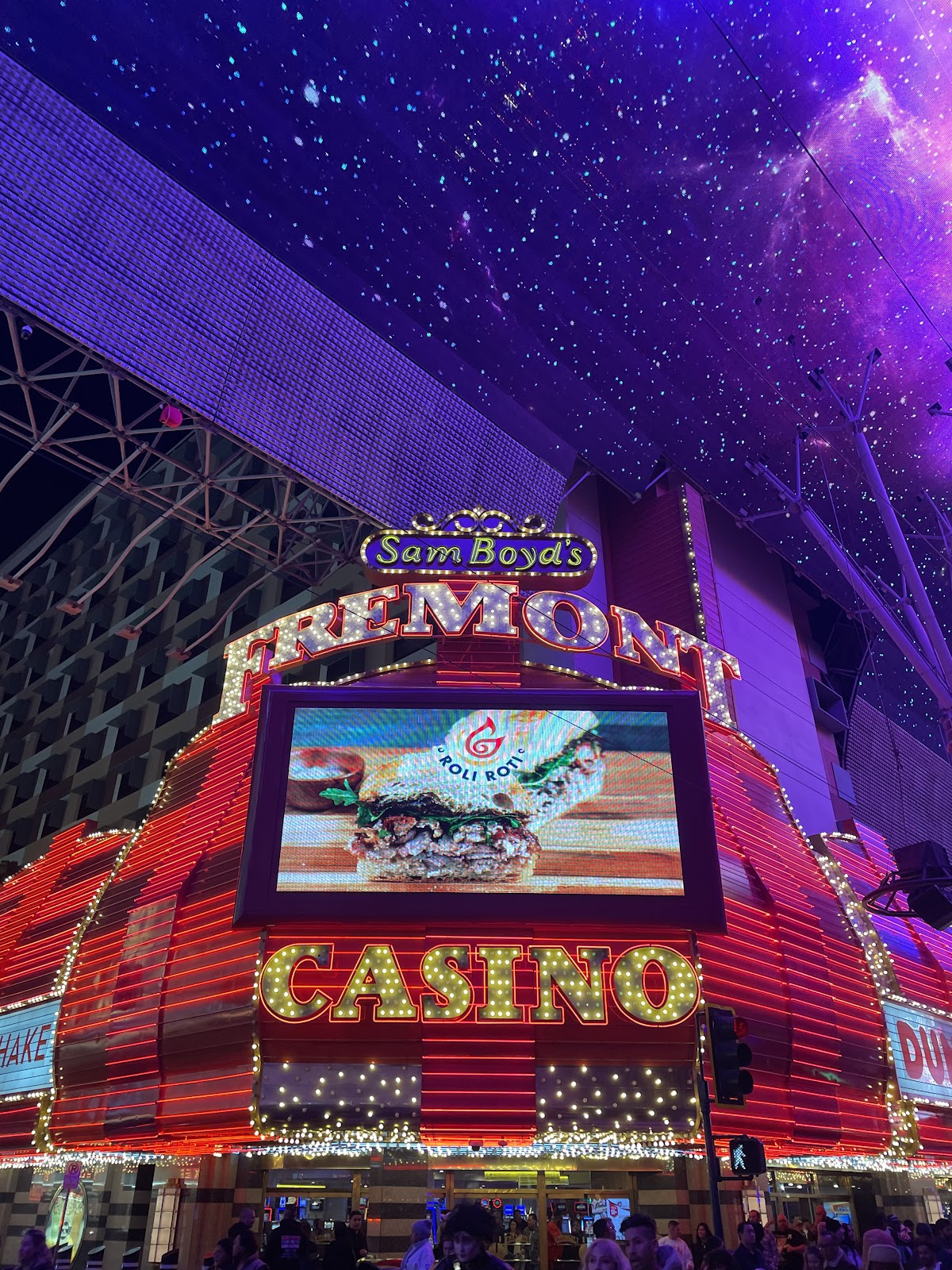
Once the decision is made, the rest of the building’s conditions become straightforward.
The ambient is lower than it looks, and this is the reason to measure rather than estimate. Older interiors have warm absorbent surfaces — timber, deep paint, patterned carpet, heavy textile — which put a room two or three stops below a pale one with identical fittings, and bounce flash returns a fraction of what it would elsewhere. Eyes adapt; meters do not. One test frame on arrival settles the number.
Bounce needs testing rather than assuming, and in a downtown hotel the answer is often better than at a Strip resort, because the ceilings are lower. A ceiling under three metres is a genuinely large soft source; a dark or strongly coloured one absorbs most of what hits it and tints the rest. One frame decides it.
Warm bounce is the standing colour problem. Timber, brass, deep paint and warm textiles all reflect strongly warm, and the cast arrives on the shadow side of a face from several directions at once. Because it is bounced and localised, global white balance cannot separate it from the subject — which is the reason the gelled-source approach matters rather than being a refinement.
Mixed sources are certain in a building that has been refitted over decades: original warm fittings, cooler recessed downlights added later, coloured accents, illuminated signage and any uplighting installed for the event. Pick the temperature that should be correct, set white balance to it, and switch off or overpower whatever else lands on skin. Turning a few fittings off is frequently the cheapest improvement available.
Texture is the fifth condition and all of it needs raking light. Timber, plaster, patterned textile and carpet read only when light runs along them; a source pointed at panelling turns it into a flat brown field, while the same source placed to skim it lifts every moulding line. The positions worth finding are those where the key grazes rather than faces.
And the decorative fittings are the best thing in the register: at a wide aperture they become warm points of light behind a subject, which is exactly what an older interior does well — provided a bright fitting is not sitting immediately beside a head, where it pulls the eye off the face every time. Move the couple a step rather than the fitting.
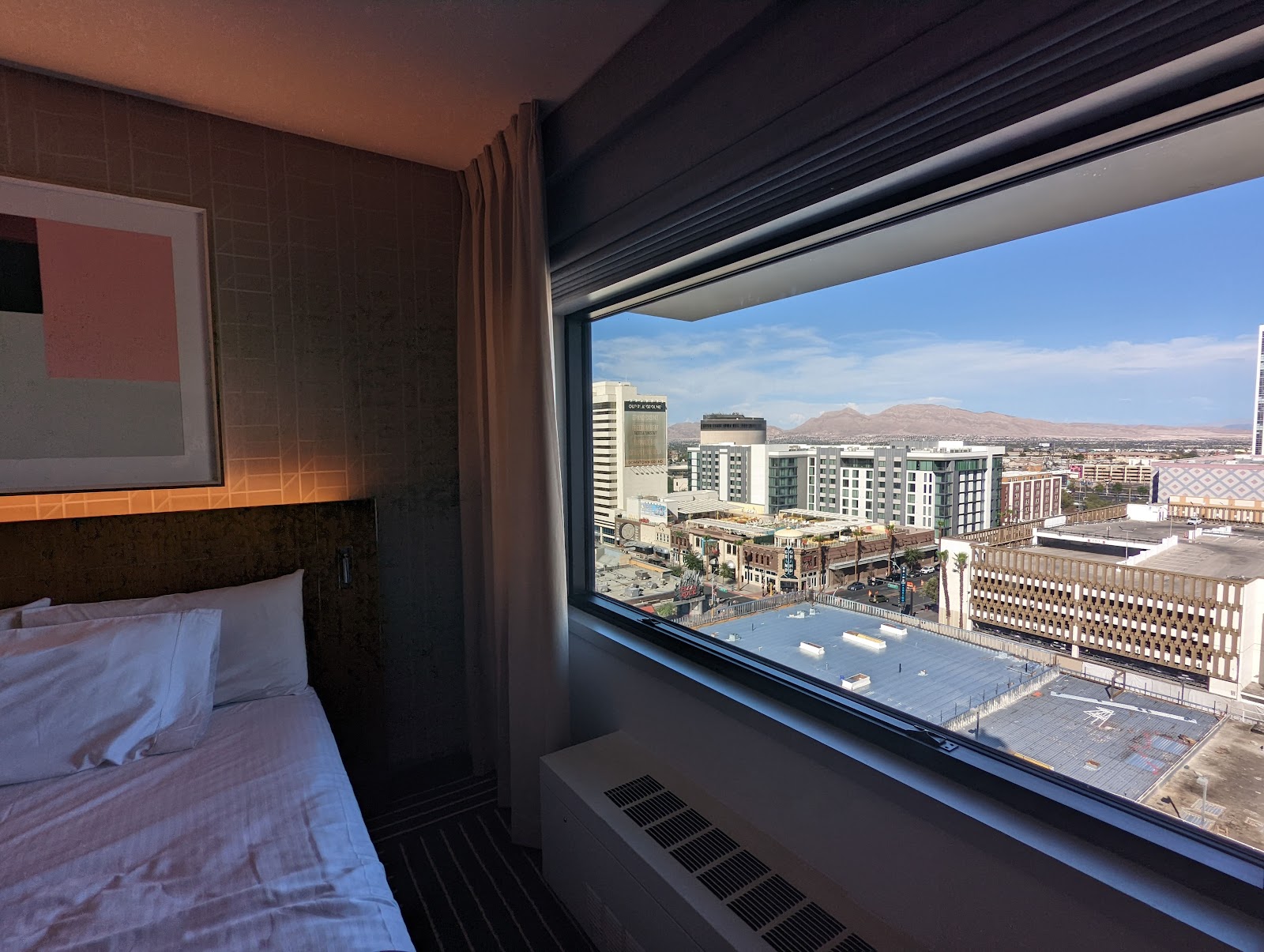
The guest rooms are the only interior daylight and they follow the usual requests: largest window on the shaded side, every overhead fitting off so the room has one colour of light, lamps out of frame, two to three metres back from the glass. In this climate direct sun through glass is unusually hard, because the sun is high and the air very dry, so the shaded side is the whole difference. Floor height matters less than in a dense city — and downtown, where the buildings are lower still, less again — so orientation is the question to ask.
- Choose room-first or face-first, and hold to it — never let metering decide
- Room-first: ambient for the interior, faces a stop above, source gelled warm
- Face-first: ambient down two or three stops and exploit the natural fall-off
- Measure the ambient on arrival; older interiors are two or three stops down
- Test bounce — downtown ceilings are lower and often make it work
Outside, and the desert year
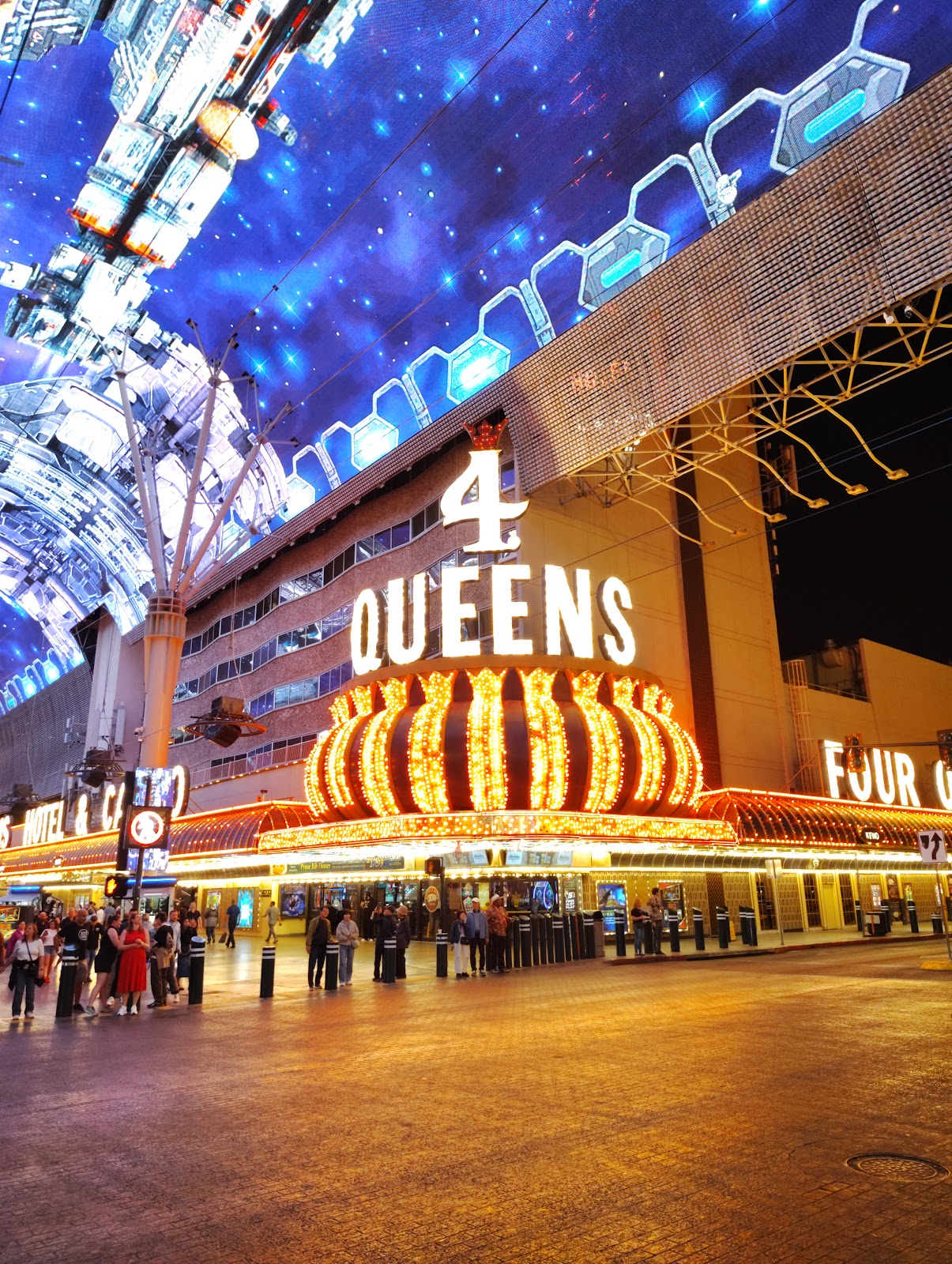
Downtown Las Vegas has one property the Strip does not: it is at pedestrian scale. Lower buildings, narrower streets, more sky reaching the pavement, and signage close overhead rather than across a boulevard. That makes street-level light brighter and less directional than in a canyon of towers, and it means low sun can actually get over the rooflines — so the last hour of daylight reaches street level here in a way it does not on the Strip.
It also means the signage actually lights people, which is a mixed blessing. Saturated coloured signage is narrow-spectrum: a face lit by it has almost no information in two of its three colour channels, and no editing recovers what was never recorded. Signage goes behind or above; one gelled source of your own lights the faces.
A workable downtown plan is three positions within a five-minute walk: one under close signage, one with architectural texture on a lower building, and one enclosed — a doorway, an arcade, an awning — which works regardless of weather. All three are best in the last hour of daylight and the roughly twenty-five minutes after sunset, when the sky still holds deep colour and the signs have come up.
That crossing is short here, because the very dry air gives less afterglow than a humid sky. It is a scheduled ten minutes with a destination already chosen rather than a wander after dinner — and the interior, having no daylight, can wait, which is exactly what makes protecting it affordable.
The desert conditions govern the rest. At about thirty-six degrees north the June midday sun sits roughly seventy-seven degrees above the horizon, and the very dry air scatters almost nothing, so light comes down hard and straight and the range between lit and unlit exceeds what a sensor holds. With close to three hundred sunny days a year, cloud is a bonus rather than a plan. Open shade is better than it sounds because pale ground bounces light upward into the shadows a high sun carves; the cost is uplight under chins, so shade with a wall to one side beats shade in the open.
The year is two and a half seasons. Summer, June into September, has daytime highs regularly above forty degrees Celsius, which makes outdoor blocks a matter of minutes at the edges of the day — and downtown’s walkability is a real advantage over the Strip in that heat, because the positions are a few doors away rather than a drive.
The monsoon from July into September brings occasional afternoon thunderstorms and blowing dust, which is where the enclosed position earns its place. Wet pavement reflecting close overhead signage is one of the better downtown frames and better than the dry version.
Winter is the good season: mild, the clearest air of the year, and sunset in mid-afternoon, which puts the crossing at a civilised hour. Spring is windy, and wind here means dust — haze that flattens distance, grit everywhere. And fogging runs one way only in this climate: a cold body from air conditioning taken into hot dry air fogs immediately, so twenty minutes of warming before stepping out is the entire fix.
More frames from The Fremont Hotel
The Fremont Hotel wedding photography: common questions
What is the one governing decision?
Whether the ambient exposure is set for the room or for the faces. It determines what every picture looks like and cannot be revisited afterwards.
What does room-first mean in practice?
Meter the ambient so the interior reads warm and dim, then light the faces half a stop to a stop above it with one warm-gelled source.
Why gel the source?
Because an ungelled flash is much bluer than warm interior fittings, which makes faces look pasted into the room. Gelled and white-balanced to match, the light belongs to the building.
What is the cost of face-first?
The venue disappears. The pictures are strong and graphic but could have been made anywhere, which at a building with character is an unforced loss.
Why measure the ambient?
Because eyes adapt and meters do not. Older warm interiors sit two or three stops below a pale room with identical fittings.
How does downtown differ from the Strip outside?
Lower buildings and narrower streets mean more sky at pavement level and low sun reaching the street — and signage close enough overhead to actually light people.
More Las Vegas, NV venue guides
We are writing a photographer’s guide to every venue we would happily shoot in Las Vegas, NV. Here are three more, plus the full index:
- The Golden Nugget, Las Vegas: The One Decision That Governs Everything
- Graceland Wedding Chapel, Las Vegas: A Walk Through a Small Chapel
- The Little Church of the West, Las Vegas: A Walk Through a Timber Chapel
Planning a wedding at The Fremont Hotel?
One decision, held to all day. Tell us your date and we will make it.