 Overhills Mansion: Who This Venue Suits, and Who It Doesn’t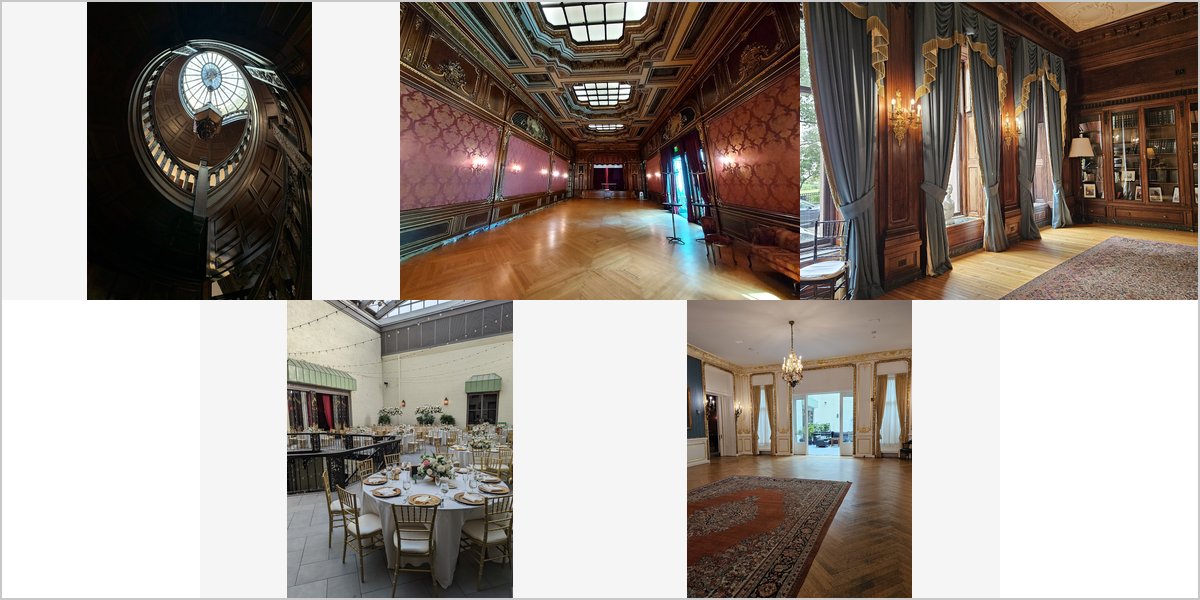
May 7, 2026
The Garrett-Jacobs Mansion: A Walk-Through of a Gilded Age House
Stanford White interiors are dense, dark and extraordinarily detailed. The photographic method is simple: find the windows, use the staircase, and let the rooms stay dark.
The Garrett-Jacobs Mansion on Mount Vernon Place began as separate townhouses and was progressively combined and remodelled through the late nineteenth century for Mary Frick Garrett, with Stanford White of McKim, Mead & White responsible for much of the interior work. The result is the largest and most elaborate Gilded Age residential interior in Baltimore — carved woodwork, decorative glass including Tiffany work, mosaic, panelling and a substantial staircase.
For a photographer this is a specific and well-understood type: the high-Victorian grand house. Such interiors are dark, because dense timber panelling and heavy decoration absorb light rather than reflect it. They are warm, because everything in them is timber, brass and amber glass. And they are visually busy, which means backgrounds compete for attention with the people in front of them.
This is a walk-through in shooting order. We have not photographed a wedding here. The optical behaviour of dark panelled interiors is consistent everywhere, which is what makes it predictable; room availability, access and house rules are for the mansion’s team, and a building of this decorative significance will have real limits on what may be moved or touched.
Garrett-Jacobs Mansion at a glance
| Where | Mount Vernon Place, Baltimore, Maryland |
| History | Joined townhouses remodelled for Mary Frick Garrett, interiors substantially by Stanford White |
| Character | Carved woodwork, decorative and Tiffany glass, mosaic, heavy panelling |
| Light | Dark and warm — panelling absorbs light; windows are the only real source |
| Plan around | Busy backgrounds and very warm colour; separate your subject from the decoration |
Arriving: identify the window rooms immediately
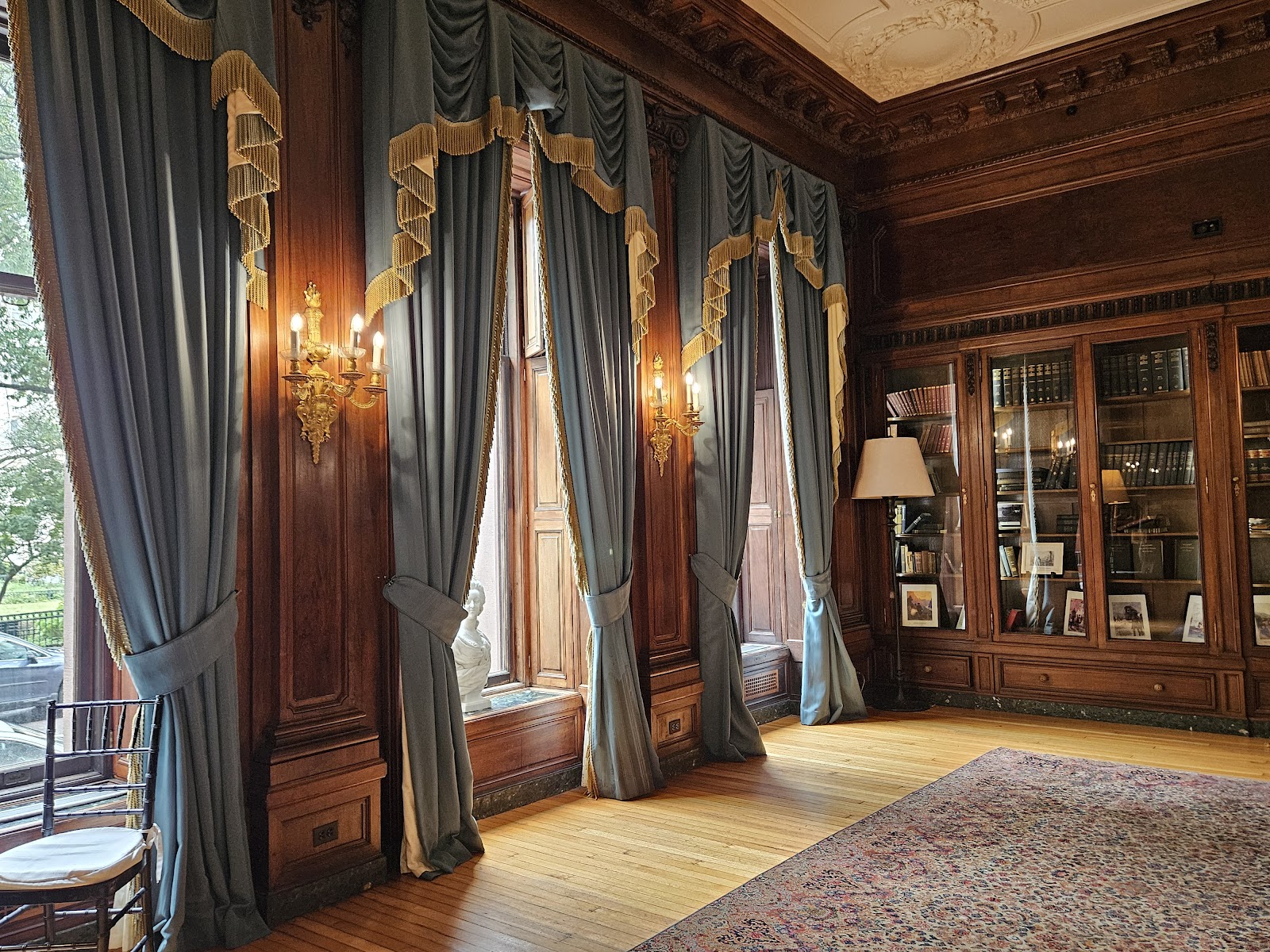
The first task in any dark historic house is to find out which rooms have usable daylight and how deep it reaches. In a townhouse the answer is usually the front rooms facing the street, and the answer is usually about two to three metres from the glass.
Mount Vernon Place is a formal square with open sky and mature trees rather than a narrow street with buildings opposite, which means the light entering those front rooms is cleaner and more abundant than in a typical city townhouse. That is a real advantage and it is worth exploiting: put the couple’s portraits in a window room early in the day and you need no equipment at all.
The rest of the house will be darker than it looks to the eye. Human vision adapts to a dim panelled room in seconds and a camera does not, so trust the meter rather than the impression. Rooms that feel comfortably lit will meter three or four stops below the window.
The staircase: the most valuable ten minutes in the building
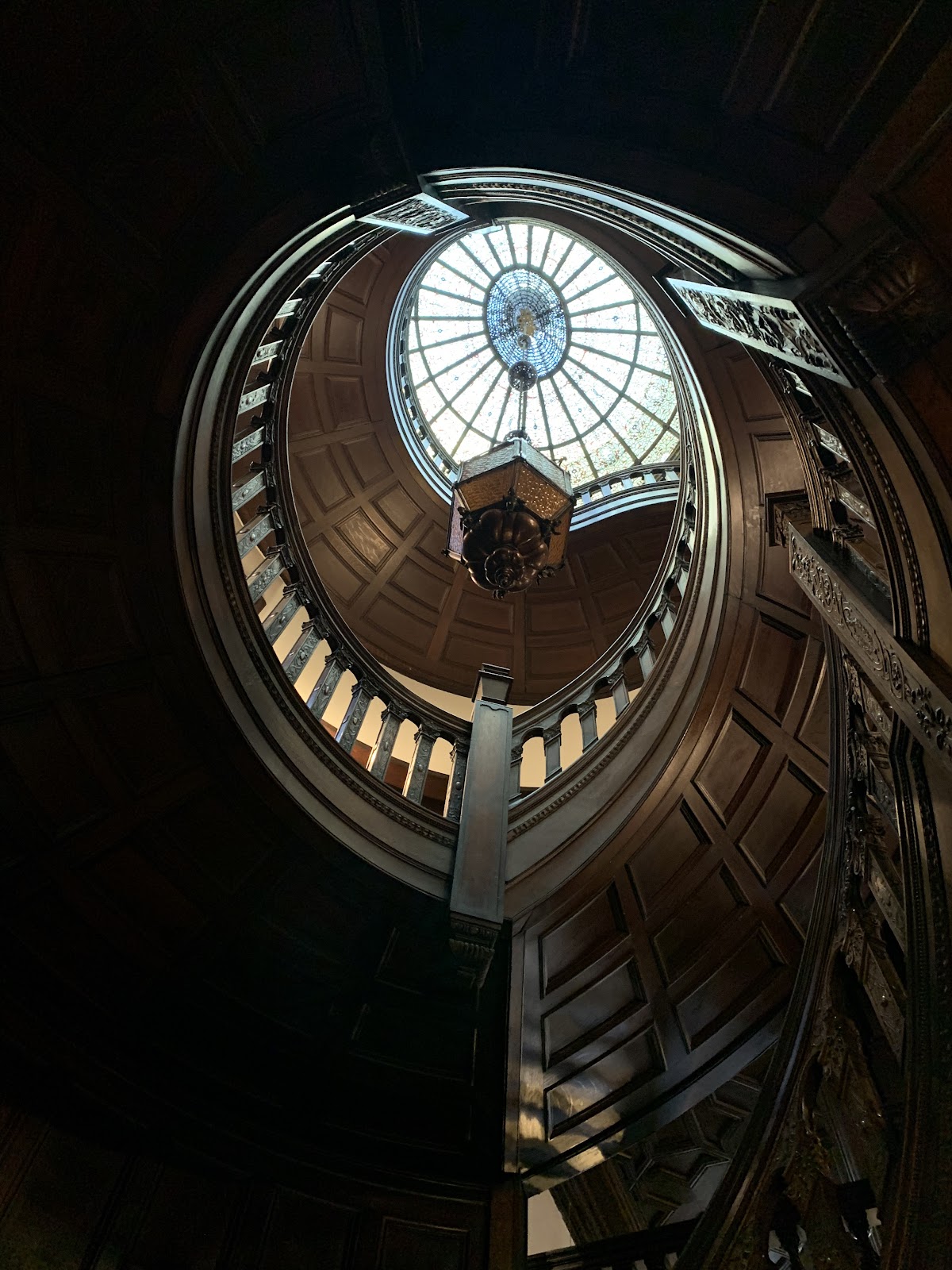
In every grand townhouse the stair is the strongest single frame, and in a Stanford White interior it is likely to be the most elaborate object in the house. It gives you verticality in a building otherwise composed of horizontal rooms, leading lines from the balustrade, elevation to shoot from, and — almost always — a window on the landing acting as a clean directional key.
That landing window is the key detail. It provides light from the side at head height, which is exactly what a portrait wants and exactly what a dark panelled room does not otherwise supply. Placing a couple a few steps below a landing window, turned into it, produces the single best-lit frame available indoors.
Shoot it three ways: from below looking up so the architecture towers, from the landing looking down so the dress falls away on the steps, and tight on the balustrade detail with the couple soft behind. Ten minutes covers all three.
Busy backgrounds, and how to stop losing your subjects
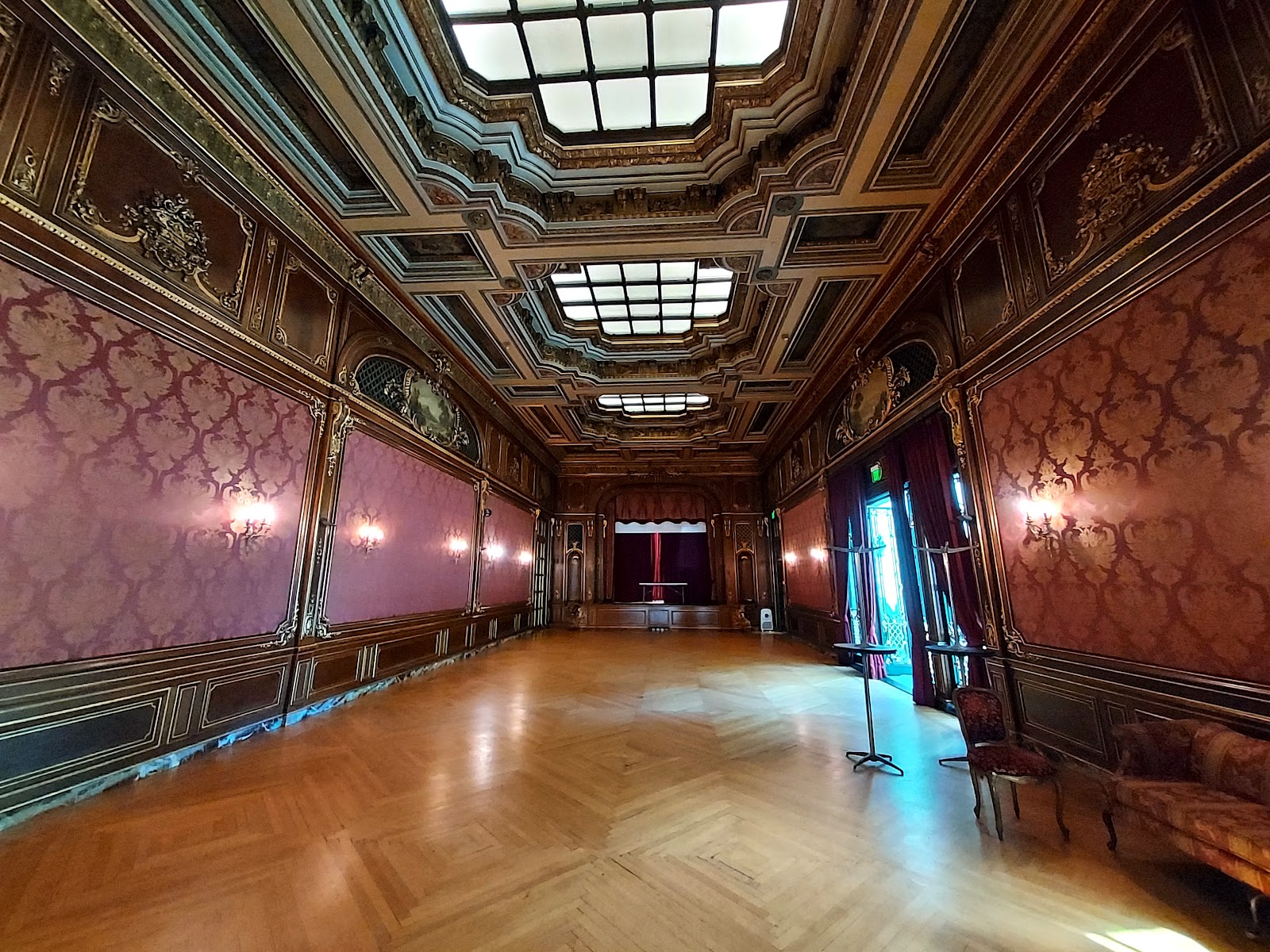
This is the problem specific to highly decorated interiors and it is the one most often neglected. Carved panelling, patterned mosaic, decorative glass and heavy textiles all have strong visual texture, and a couple standing in front of them competes for attention rather than dominating the frame. The photograph becomes a picture of a room with some people in it.
Three fixes, all straightforward. Use a longer lens and a wider aperture so the decoration goes soft and becomes tone rather than detail. Create separation by moving the couple further from the wall — a metre or two makes a dramatic difference at f/2. And make sure your subject is the brightest thing in the frame, which usually means adding a little light to faces even in the daytime.
That last point is the one that transforms these interiors. A small amount of light on the couple, keeping the room a stop or two darker, instantly resolves the competition. It is not about illuminating the space; it is about establishing a hierarchy.
The evening, and Mount Vernon outside
After dark the house is entirely artificial: warm fixtures, amber glass, dark timber. Bounce flash performs poorly because the panelling and ceilings absorb and warm whatever you send at them, so light comes from stands and is modified. Gel it warm enough to sit inside the room’s colour, but keep faces marginally cooler than the ambient so skin retains some neutrality — the same differential trick that works in gilded ballrooms.
Expose so the room’s own fixtures read as glowing points and the corners fall away. A Gilded Age interior photographed evenly bright loses the pooling and depth that are the whole reason it looks the way it does.
Outside, Mount Vernon Place is one of the best urban settings in Baltimore: the Washington Monument, formal squares with planting and fountains, and nineteenth-century architecture on all sides. It supplies the lateral daylight, the neutral colour and the open space for groups that the interior cannot. Late afternoon is the time; twenty minutes is the budget; groups belong out there rather than in a panelled drawing room.
What works in your favour
- The most elaborate Gilded Age interior in Baltimore, with Stanford White decorative work
- A substantial staircase with a landing window — the best-lit and strongest frame indoors
- Front rooms face a formal square with open sky, so window light is cleaner than a typical townhouse
- Mount Vernon Place immediately outside for groups and golden hour
- Decorative detail gives abundant close-range frames that need no permissions
What to plan around
- Dark panelled interiors absorb light; most rooms meter several stops below the windows
- Very warm colour throughout, with nothing neutral to balance skin tones
- Visually busy backgrounds compete with the couple unless separation and light hierarchy are managed
- Bounce flash is ineffective against dark timber and returns warm
- A decoratively significant house — expect limits on what can be moved or touched
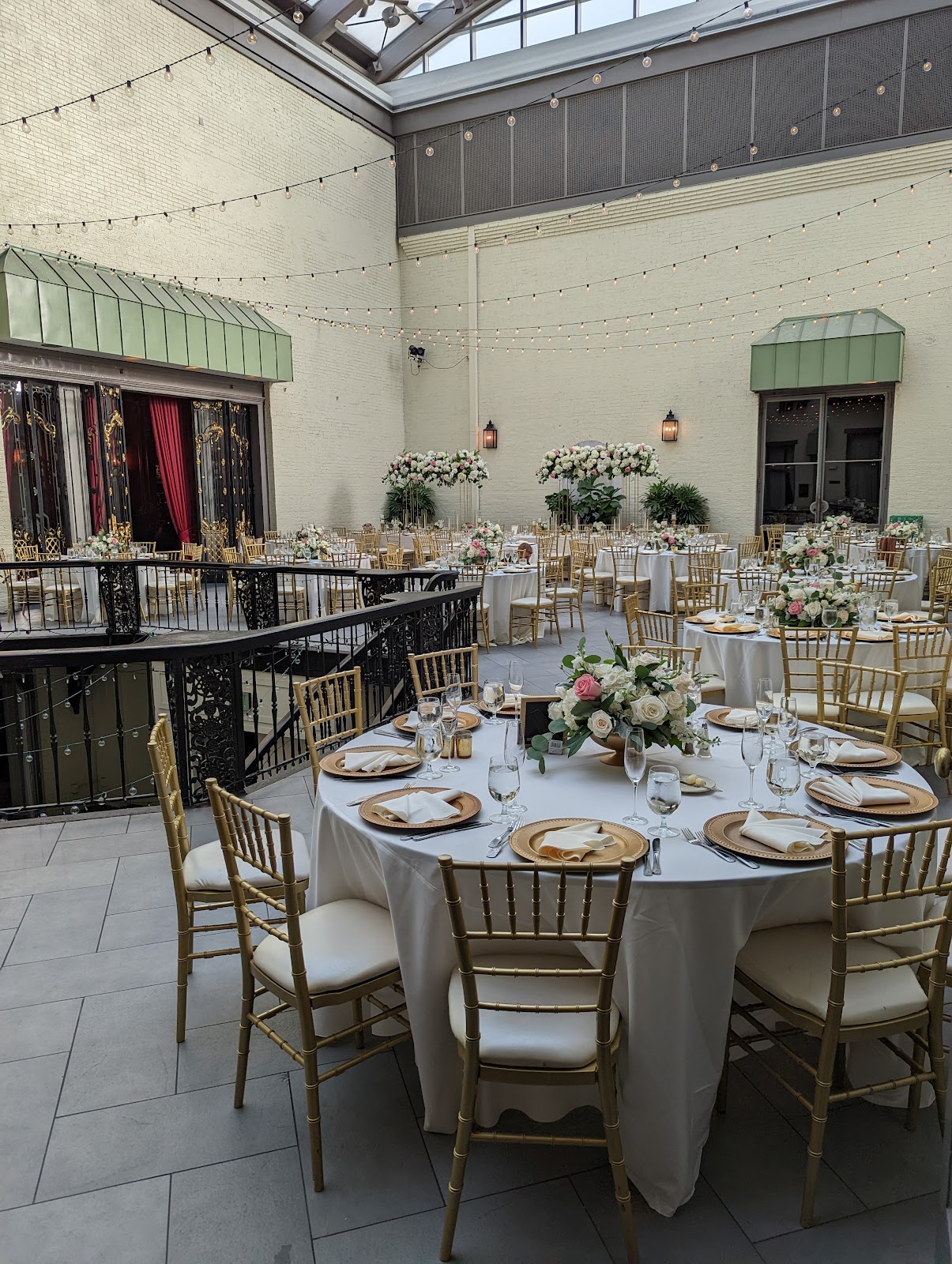
More frames from Garrett-Jacobs Mansion
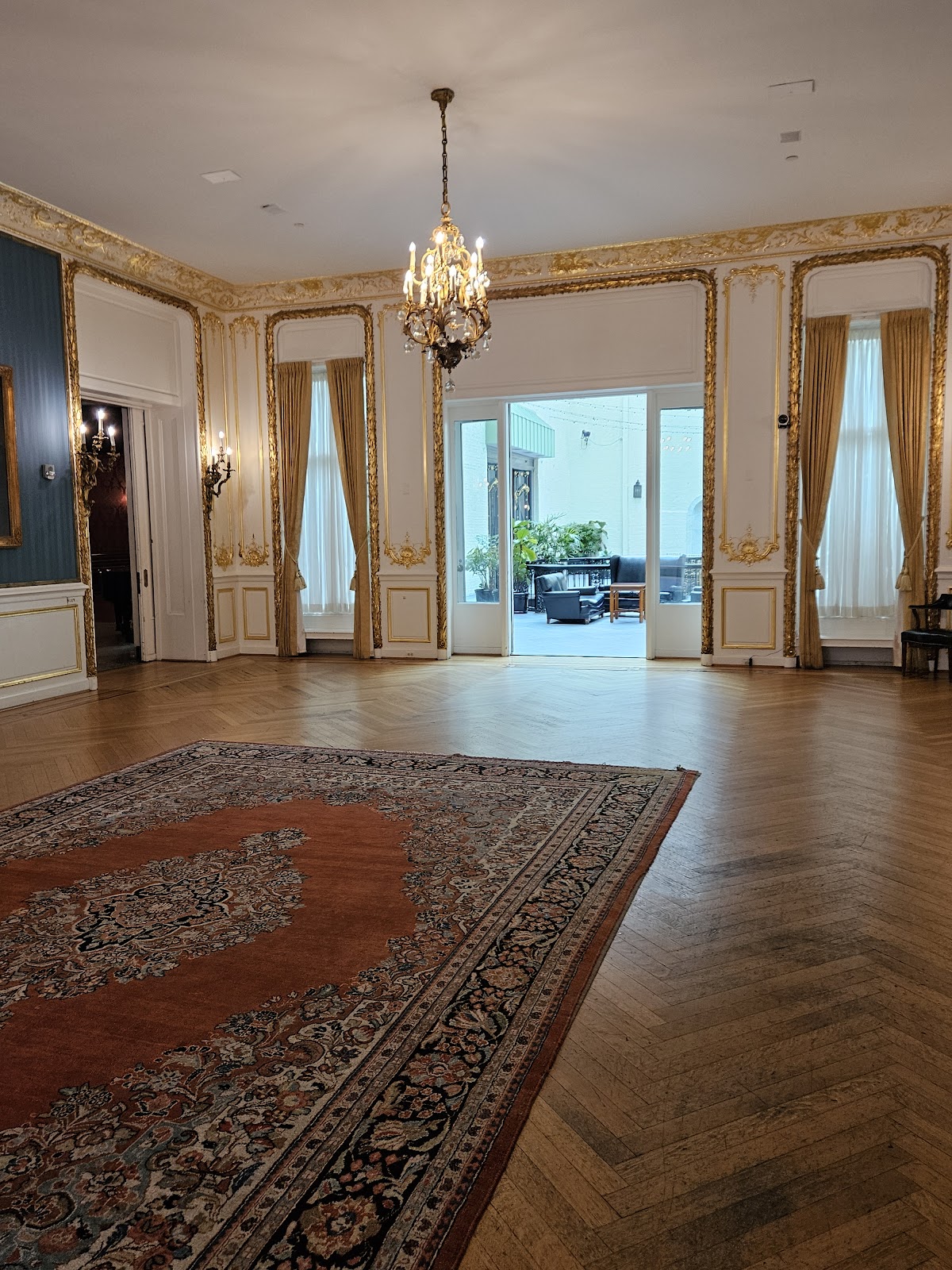
Garrett-Jacobs Mansion wedding photography: common questions
Where is the best light inside the Garrett-Jacobs Mansion?
The front rooms facing Mount Vernon Place, within about two to three metres of the windows. Because the house faces a formal square with open sky rather than a narrow street, that light is cleaner and more abundant than in a typical city townhouse — good enough for portraits with no equipment at all.
What is the single best location in the building?
The staircase, and specifically the landing window. It supplies side light at head height, which is what a portrait needs and what a dark panelled room otherwise cannot give. Place the couple a few steps below it, turned into the light, and you have the best-lit frame indoors.
Why do people get lost against these interiors?
Because carved panelling, mosaic and decorative glass have strong visual texture and compete for attention. Use a longer lens at a wide aperture so the decoration softens into tone, move the couple a metre or two off the wall for separation, and add a little light to faces so your subject is the brightest thing in the frame.
How do you keep skin from going orange?
Keep the room warm in your white balance, then light faces with something marginally cooler than the ambient so skin retains some neutrality. Correcting the whole frame to neutral makes an amber Gilded Age interior look grey and wrong, so the correction has to be differential rather than global.
Where should group photographs happen?
Outside in Mount Vernon Place, which has the Washington Monument, formal squares with planting and open space. A panelled drawing room is too dark and too busy for a large group, and the square gives you lateral daylight and room to arrange people properly.
More Baltimore venue guides
We are writing a photographer’s guide to every venue we would happily shoot in Baltimore. Here are three more, plus the full index:
- The George Peabody Library: Reading the Light in a Cathedral of Books
- Gramercy Mansion: Field Notes on a Country Estate
- The Ivy Hotel: Reading the Light in a Small Mansion Hotel
All Baltimore Wedding Venues →
Planning a wedding at Garrett-Jacobs Mansion?
Dense Gilded Age interiors need a hierarchy — light on the people, decoration kept softer. Tell us your date and we will plan which rooms to use when, and protect the ten minutes on that staircase.