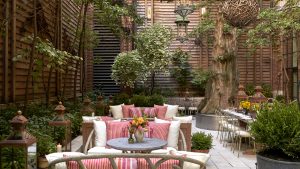
 The Whitby, New York: A Walk Through a Midtown Hotel
The Mark, New York: A Walk Through an Upper East Side Hotel
Taken in the order a day uses them, the spaces of a hotel make a sequence rather than a list.
A venue read as a list of rooms tells you very little. Read in the order a wedding day actually moves through it, the same building explains itself — because each space is a response to the one before, and the light in each is a different problem.
So this is a walk rather than an inventory: in at the door, up to the rooms, down to the reception, and out onto the street, with what each stage asks for named as it arrives.
The pattern is a grand Upper East Side hotel — scale in the public rooms, daylight confined to the guest floors, and a district outside that gives ten usable minutes rather than an hour.
We have not photographed a wedding at the Mark; hotels of this kind behave consistently. Which spaces are included, whether there is a terrace, and whether the lighting is adjustable are questions for their team.
The Mark at a glance
| Where | East 77th Street at Madison Avenue, New York |
| The sequence | Entrance, stair and lobby, guest floors, reception rooms, street |
| Where the light is | The guest floors, and any public window |
| The ten-minute walk | Madison Avenue frontage and the park, four blocks west |
| Ask first | Spaces included, terrace access, lighting control, fixings |
In at the door, and up
The entrance is the first frame of the day and it is nearly always the least considered. In Manhattan it is also a fragment by necessity: there is no room to stand back on a cross street, so the facade cannot be photographed whole and the arrival picture is the canopy, the doorway, the step and whatever is immediately above it.
That fragment is worth making properly. A canopy is a roof with an open face, which makes it a directional soft source at the right size for two people — the same physics as a porch, and the best light within a metre of the door. Someone stepping out from under it into the street crosses from that soft directional light into whatever the street is doing, and a frame made under the canopy edge rather than on the pavement is consistently the better one.
It also works in rain, which matters more than it sounds: a New York wedding with any outdoor element needs one position that is weatherproof, and the entrance canopy is it.
Inside, the lobby of a hotel of this scale is the transition space and it has the lobby problem: it is busy, it is lit by mixed sources, and it is where people are standing around rather than doing anything. The frames that work here are movement frames — someone coming through a door, a group crossing the floor, a greeting — taken from a position with depth behind it so the background falls away rather than sitting flat.
The stair, if there is one, is the best-value architectural feature in any hotel and it does three things nothing else does. It gives elevation, so a photographer above a group sees faces rather than the backs of heads. It gives a natural line for a descent, which is one of the few genuinely dramatic movements a hotel day contains. And it gives a vertical composition with rows of people, which no flat room does.
The technical requirement on a stair is light from one side rather than from above, because overhead light on a stair puts eye sockets in shadow on every face at once. Where there is a window on a landing, that is the position; where there is not, one source placed to one side at the level of the faces being photographed, and the exposure set so the stair itself still reads.
Corridors are the third transition asset. A corridor gives depth and repetition — a long line of doors or lights receding — and a subject at the far end of one sits against a background that darkens by itself. It is the cheapest separation in the building.
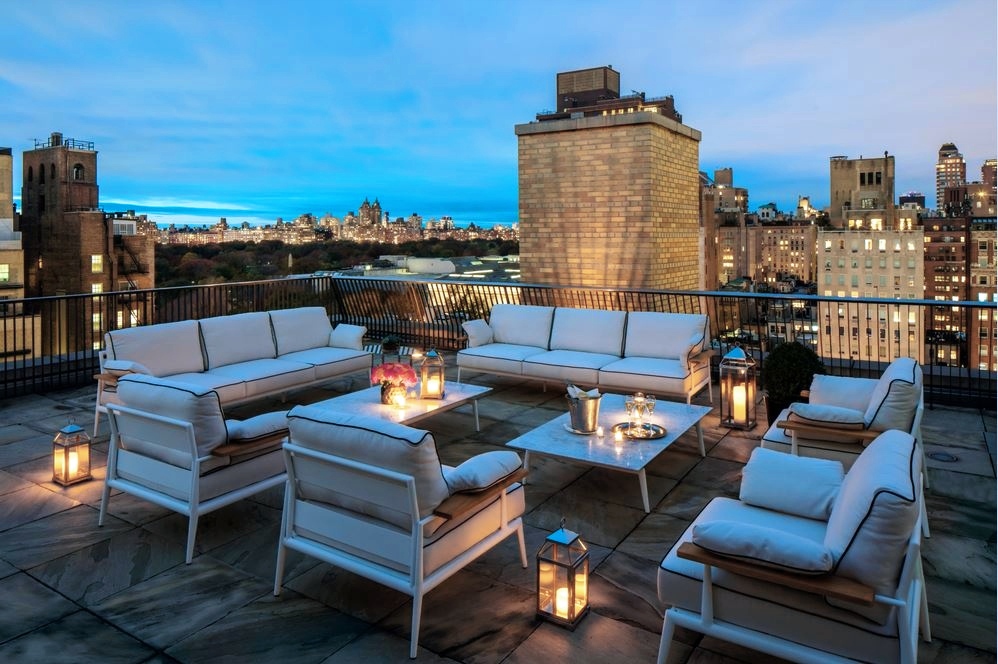
The guest floors, and the reception rooms
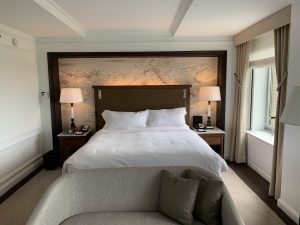
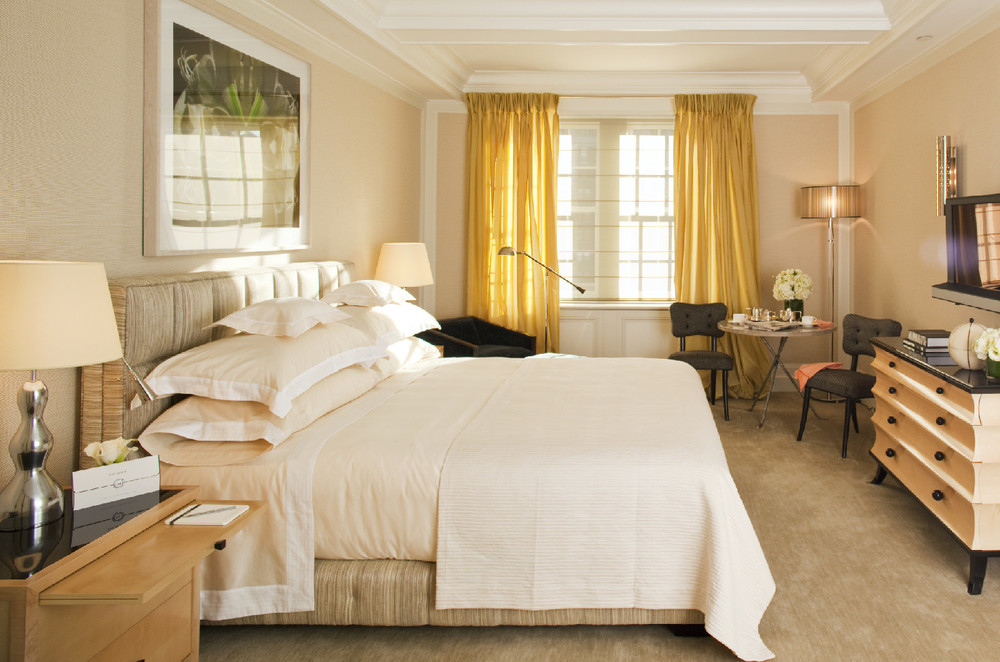
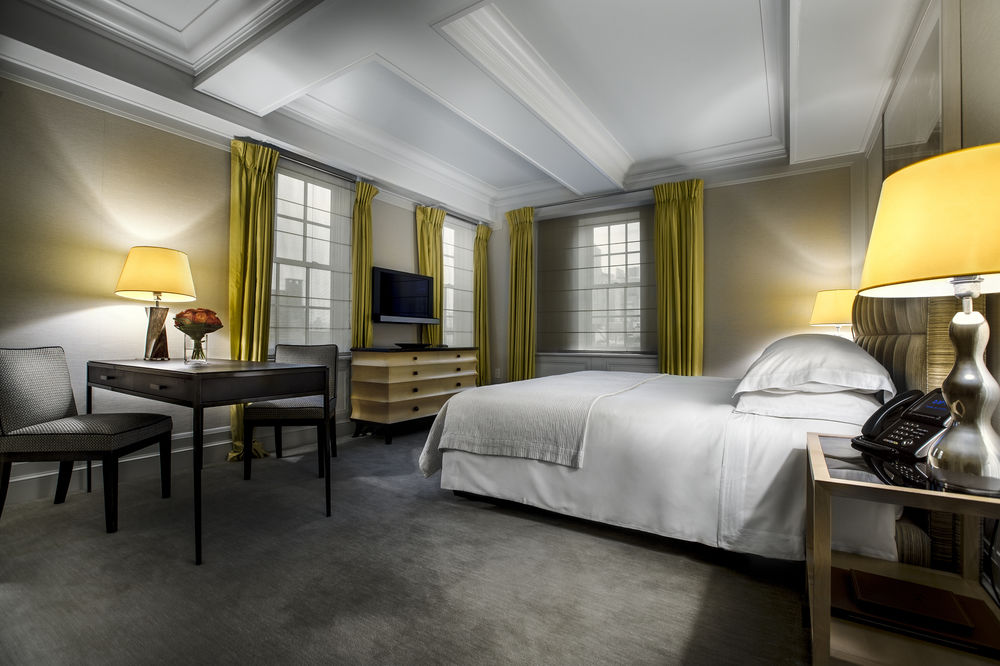
The guest floors are where the daylight is, and in a hotel of this kind they contain the best natural light in the building by a wide margin. The conditions are ideal in a way the public rooms are not: a domestic-sized window is a soft source about the right size for two people, the walls are near enough to return light into the shadow side, and the ceiling is low enough that a flash aimed upward returns something usable.
The requests worth making are three. The largest window on the shaded side, because direct sun turns a soft source into a hard one. Every overhead fitting switched off, so the room has one colour of light instead of two landing on the same face. And a high floor — in Manhattan the buildings opposite are tall and close, so the sky reaching a high window is worth more than a stop of light over a low one, and more sky means softer and more even as well as brighter.
Two to three metres back from the window is the working distance. At half a metre the fall-off across two faces is severe enough that the far one goes dark; at two or three it is still directional but even across both.
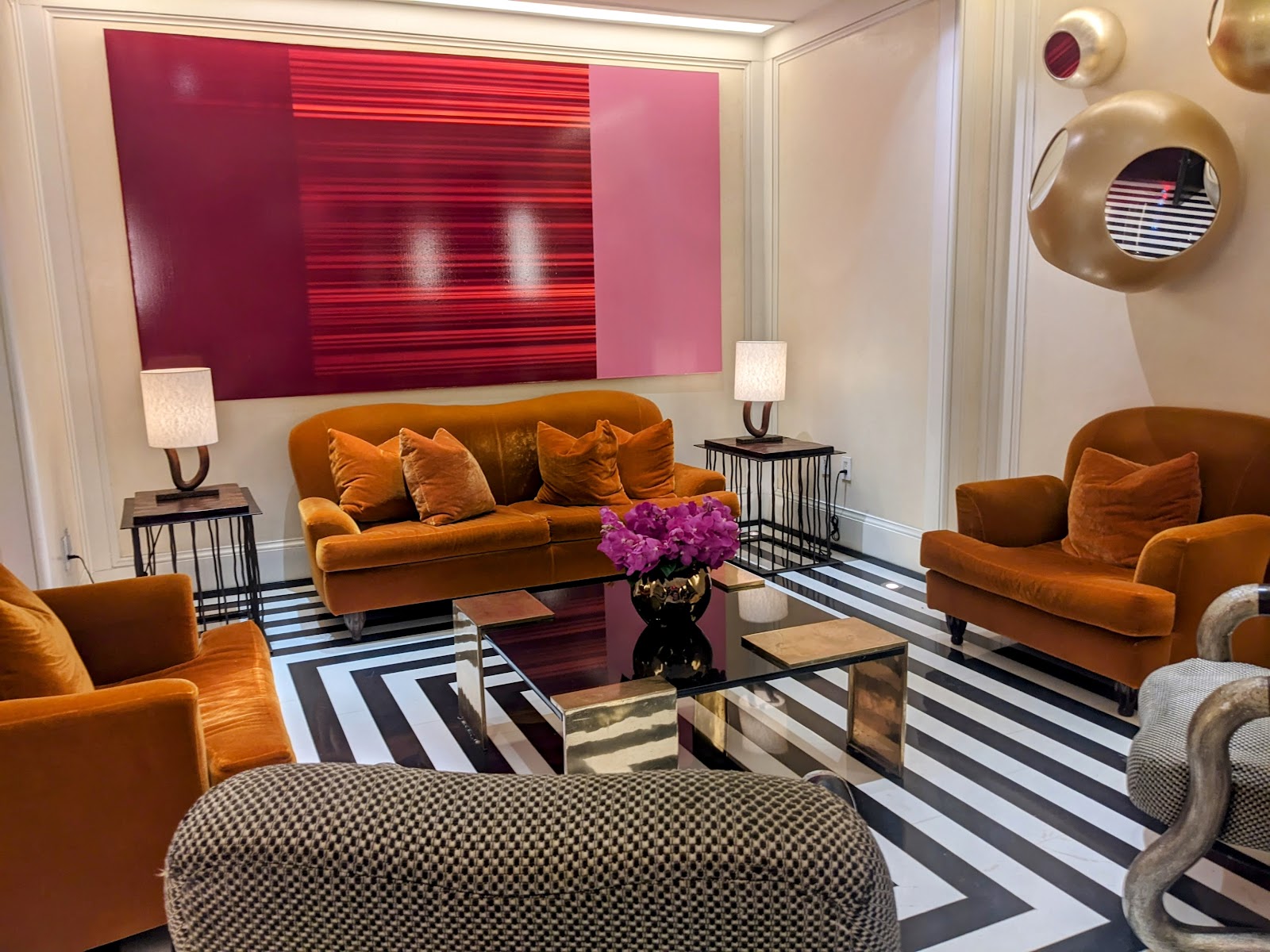
Down in the reception rooms the conditions invert. Expect tall ceilings, warm absorbent surfaces, decorative lighting and little or no daylight — which means four things at once. Ambient lower than it appears, because timber, deep colour and heavy textile absorb rather than bounce; steep fall-off, which is free separation for anyone standing a few metres clear of anything else; texture that reads only under raking light; and warm bounce arriving on faces from several directions where global white balance cannot reach it.
The method that handles all four is one warm-gelled source, off the camera axis, at face height, in a modifier large enough to be soft at working distance, with white balance set to the gel and the exposure set so the room still reads as the warm dim space it is. A face lit correctly in a room that has gone black is a portrait that could have been made anywhere.
Bounce should be tested rather than assumed, with one frame on arrival. A ceiling four metres up returns almost nothing and colours what it does return; the guest rooms bounce and the grand rooms do not, and knowing which is which takes thirty seconds.
Mixed sources are certain in a building that has been refitted: period decorative fittings, cooler recessed lights added later, candles, coloured uplighting installed for the event. Pick the temperature that should be correct and switch off or overpower whatever else lands on skin — the uplighting is usually both the worst and the easiest to remove for ten minutes.
- Make the arrival frame under the canopy edge, not on the pavement
- Light a stair from one side; overhead puts every eye socket in shadow
- Guest floors: shaded side, high floor, fittings off, two metres back
- Test bounce once per space; guest rooms return, grand rooms do not
- One warm-gelled source, exposed so the room still reads warm
Out onto the street, and the year
Out of the door, the Upper East Side gives two things within a short walk and a hard limit on everything else.
The limit is that no facade here can be photographed whole, so the exterior frames are fragments, details and looking up. Most street-level light in Manhattan is bounced down from lit facades above rather than direct, which makes it soft, directional and available for much of the day — genuinely good portrait light and not golden-hour light, and worth saying so before anyone is disappointed. The grid is rotated about twenty-nine degrees from true north, so low sun runs down the cross streets while the avenues stay in shadow, the alignment closest around the ends of May and the middle of July.
The first asset is the frontage: Madison Avenue and the surrounding side streets are limestone, brownstone and ironwork, all of which read only when light rakes along them rather than facing them. A two-minute walk to find the lit side is worth more than any piece of equipment.
The second is Central Park, four blocks west, and it is the only place in this part of the city with room to stand back and trees rather than towers overhead. It changes the register completely and it is worth the walk if the schedule has twenty minutes in it — at the last hour of daylight, which is when the park is at its best, rather than at midday when the canopy dapples faces beyond rescue.
New York’s seasons are four real ones. Summer is hot and humid with afternoon thunderstorms a real possibility, which for an indoor venue costs nothing except the outdoor block — hence the canopy, which is the block’s wet-weather version rather than its cancellation. Wet pavement also returns reflections of lit windows and signage, which on Madison Avenue is a better frame than the dry one.
Autumn gives the clearest air and the best raking light of the year on limestone and brownstone, and peak colour in the park usually falls in the second half of October into early November.
Winter is cold with short days, sunset in the middle of the afternoon in December, which compresses the street and park block into a couple of hours and means the route must be decided in advance rather than explored.
Snow is the compensation twice. Outdoors it is the best natural fill there is, lifting exactly the shadows a low sun carves while fooling a meter by about two stops. Indoors it turns the street into a very large reflector, so the guest-floor windows — the best light in the building — are at their best in February rather than in June.
And the fogging risk applies in both directions in this climate, so let a body come towards the temperature of where it is going before it gets there, and plan one excursion rather than three.
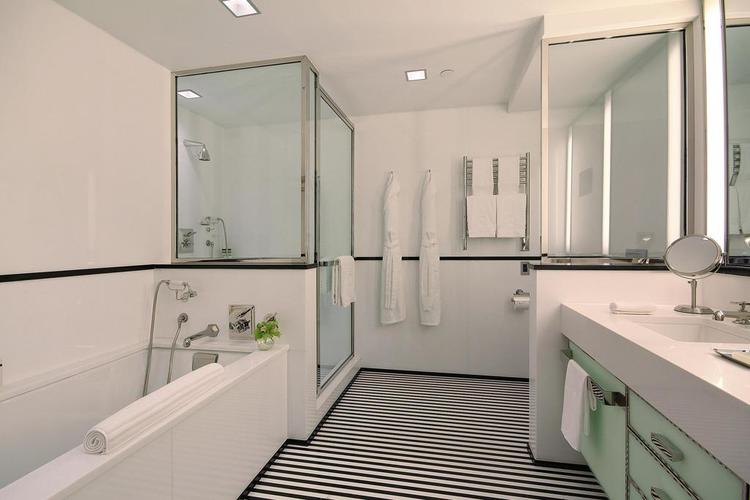
More frames from The Mark
The Mark wedding photography: common questions
Where does the day's photography actually happen?
Entrance and canopy, the stair and lobby, the guest floors, the reception rooms, and one short street or park excursion. The guest floors hold the best light.
Can you photograph the hotel from outside?
Not whole. There is no room to stand back on an Upper East Side cross street, so the exterior frames are the canopy, the doorway, details and looking up.
Why is the canopy useful?
It is a roof with an open face, which makes a directional soft source at the right size for two people — and it is the one weatherproof position at the venue.
How should a stair be lit?
From one side at the level of the faces. Overhead light on a stair puts every eye socket in shadow at once.
What do the reception rooms need?
One warm-gelled source off-axis at face height, exposed so the room still reads as warm and dim, with the exposure set for the room before the face.
Is Central Park worth the walk?
Yes, in the last hour of daylight — it is the only nearby place with room to stand back and trees overhead. Not at midday, when the canopy dapples faces.
More New York venue guides
We are writing a photographer’s guide to every venue we would happily shoot in New York. Here are three more, plus the full index:
- The McKittrick Hotel, New York: Field Notes on a Deliberately Dark Venue
- The Metropolitan Museum of Art: Photographing a Very Large Museum
- The New York Botanical Garden: Four Ways Out of the Scale Problem
Planning a wedding at The Mark?
A sequence, not a list. Tell us your date and we will walk it in order.