 The Whitby, New York: A Walk Through a Midtown Hotel
The Greenwich Hotel, New York: How the Light Moves
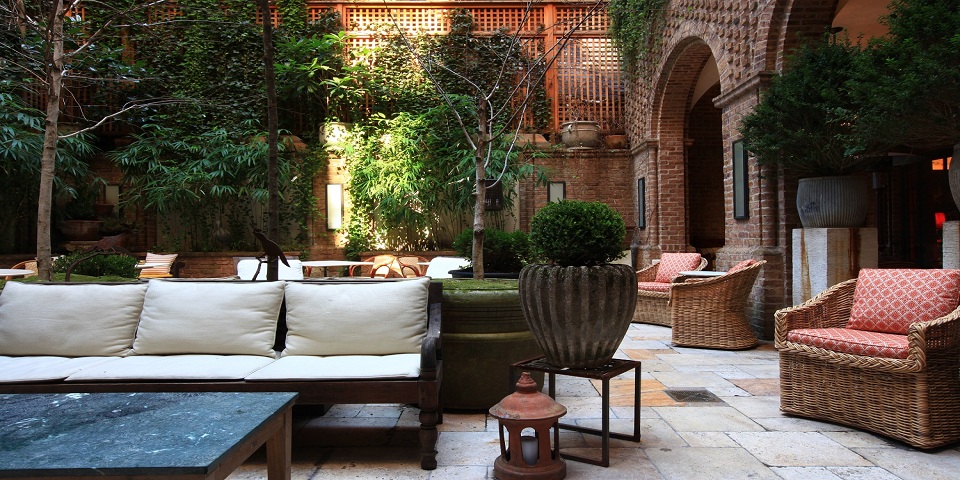
Red brick and a courtyard are the two facts. Both of them are light sources before they are backgrounds.
The red brick facade and subtle elegance speak of a venue that blends sophistication with warmth, as its own description has it — a photographer’s delight.
Red brick is worth taking literally rather than as a description of character, because brick is a light source before it is a background. It is the most forgiving surface any venue offers: a mid-tone that meters predictably, with real texture that holds detail at almost any sensible exposure and never leaves a frame feeling empty. And it bounces strongly warm, which means anyone standing within a metre or two of it is being lit by it as much as by whatever is overhead.
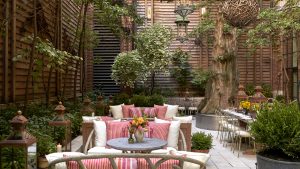
A courtyard, where a hotel of this kind has one, is the other fact and it is even more of an instrument: walls on all sides bouncing light inward, an opening of sky above acting as the source, and no view out — which means no distant clutter, no passers-by and no background to manage. In a city where quiet enclosed outdoor space is genuinely rare, that is the most valuable thing the building has.
This is written as a day, because the courtyard and any windows are the only things that change while the warm interiors stay constant. We have not photographed a wedding at the Greenwich Hotel; brick-and-courtyard hotels behave consistently. Whether the courtyard is exclusive and at what hours, which rooms are included, and whether the lighting is adjustable are the questions for their team.
The Greenwich Hotel at a glance
| Where | TriBeCa, New York |
| Character | A red brick hotel with warm textured interiors and a courtyard |
| Two facts | Brick is a warm light source; a courtyard is an instrument |
| The constant | The interiors, from mid-morning to midnight |
| Ask first | Courtyard exclusivity and hours, rooms included, lighting control |
The courtyard: position, colour, and the sun line
The position that works in a courtyard is against a wall rather than in the middle, and it is the thing most often got wrong. A courtyard’s light comes from the rectangle of sky overhead, so standing in the centre puts a subject directly beneath it — flat, top-down illumination that darkens eye sockets and marks the line under the nose. Against a wall, light arrives from one side after bouncing off the facing elevation and from above at an angle, which is a proper portrait condition.
Walking the four sides and looking at a hand held out in each takes a minute and settles the whole day: one side will be noticeably better than the other three, and which one changes as the sun crosses the opening.
Even in the best position there is more light from above than from the front, so a fix should be ready: a reflector held low, a lifted chin, or a small source at face height. Having none of them is the commonest reason courtyard portraits look slightly hollow around the eyes.
Colour is the second condition and in a brick courtyard it is unavoidable. The walls are the bounce source, which means the light filling a face is brick-coloured — warm and slightly red — and because the cast is localised and bounced rather than a property of the source, global white balance cannot separate it from the subject.
There are two honest approaches. Use it: set a custom white balance on a face in the position being used, accept the warmth as the character of the place, and keep it consistent through the block. Or neutralise it: hold a white or silver reflector so the fill comes from a neutral surface instead of the wall, which restores skin tone while leaving the brick as warm as it is. The failure is neither — auto white balance drifting between frames, which is why a courtyard sequence so often fails to match itself.
The sun line is the third condition. In the middle of the day the sun reaches part of the courtyard floor while the rest stays in shade, which is a five- or six-stop difference within a few metres. Work the shaded part, use the sunlit part as a bright background element, and never straddle the line.
Late afternoon is when a courtyard is at its best, because the sun drops low enough to strike the upper part of one wall while the floor stays shaded. That lit brick wall becomes a large warm reflector aimed downward into the space, which raises the level, warms the light and produces a quality no other hour gives. Knowing which wall it will be means one visit at approximately the right hour.
And any planting in a courtyard bounces green onto nearby skin, which pulls against the brick’s warmth — one more reason to set white balance on a face rather than on the scene.
The brick interiors, and the rest of the building
Indoors, brick and warm timber ask for one thing: raking light. Light running along a brick wall lifts every mortar line into relief; light pointed at it flattens the wall into a plain brown field. The position worth finding is always the one where the key grazes the surface rather than facing it — and where there is a window, standing so that the daylight runs along the brick rather than at it lights the subject and the wall correctly in the same move.
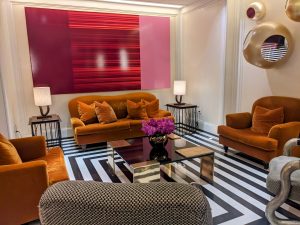
Warm bounce indoors is the same problem as in the courtyard and has the same answer: let one gelled source be the authority on faces, with white balance set to it, and allow the brick and timber to be as warm as they are.
Ceiling height determines whether bounce works, and in a hotel of this kind it varies room by room — a low-ceilinged lounge may bounce properly while a taller space returns nothing. Test it with one frame in each rather than assuming, because the answer changes the approach.
Steep fall-off in a warm dim room is free separation: a subject three metres in front of anything else sits against natural darkness with no equipment at all. That is the opposite of the pale-modern-hotel problem and it should be exploited rather than filled in.
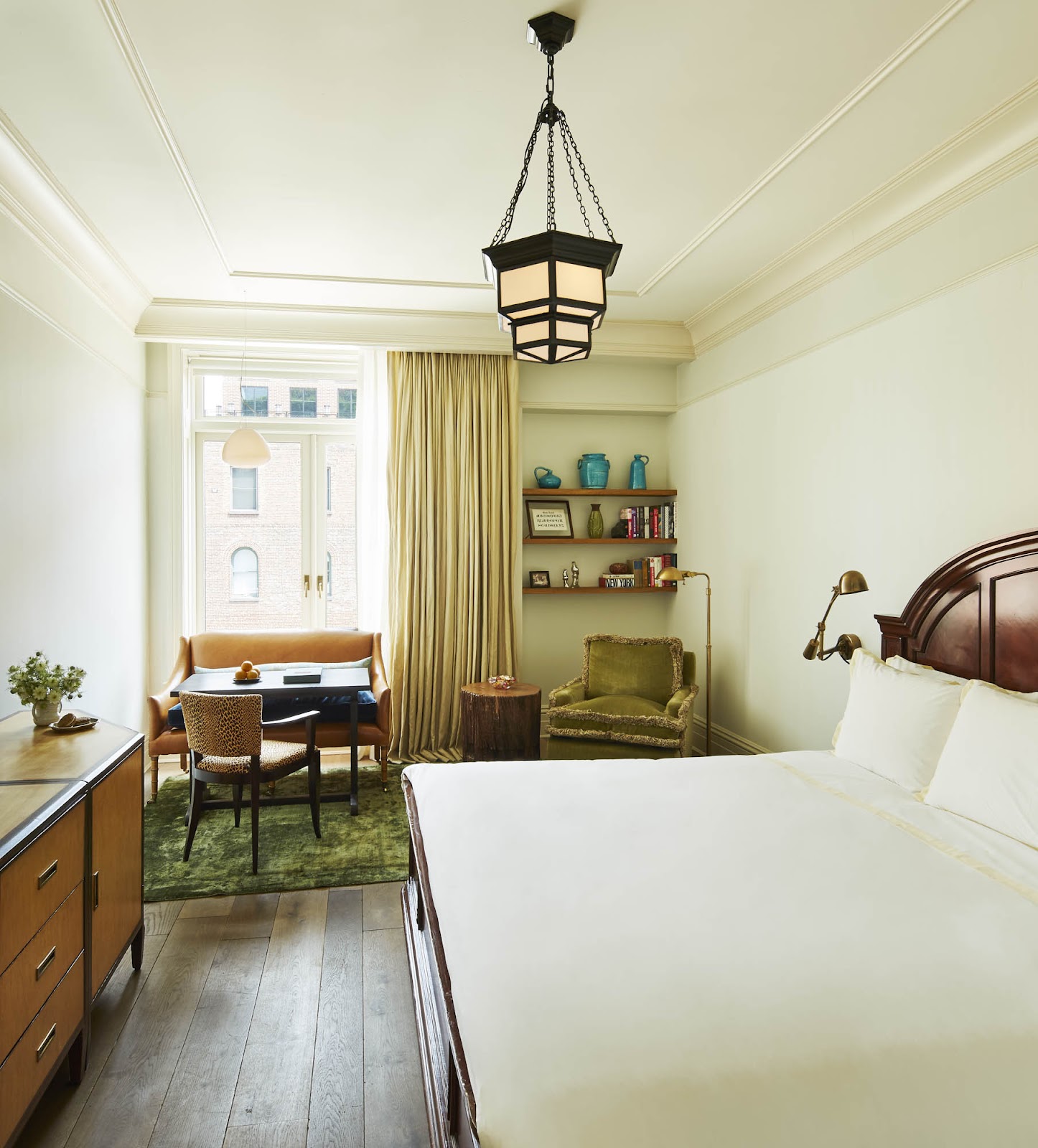
Guest rooms are the best portrait light in the building, as in any hotel: domestic-sized windows with close walls that bounce and ceilings low enough that a flash aimed upward returns something usable. Largest window on the shaded side, every overhead fitting off so the room has one colour of light rather than three, lamps moved out of frame.
In Manhattan it is worth asking for a high floor as well, because a high room has more sky reaching its window than a low one — and here, where the buildings opposite are very tall, that difference is larger than in most cities.
Mixed sources are certain in a warm designed interior: daylight, warm decorative fittings, and cooler recessed lighting. Three colour temperatures in one frame cannot be resolved afterwards, so pick the one that should be correct, set a manual white balance to it, and switch off or overpower whatever else lands on skin.
And the dusk crossing is the one timed frame: for roughly twenty minutes after sunset the courtyard or the street falls to about the brightness of the interior lighting, and one exposure holds the lit brick room, the couple and the outside together. In a courtyard that version is unusual and good, because the rectangle of sky above still holds colour while the walls are lit from within the building.
- Work against a wall in the courtyard, never in the middle
- Decide about brick colour: use it with a fixed white balance, or fill from neutral
- Never straddle the sun line; it is five or six stops in a few metres
- Rake the brick indoors; facing it flattens it to a brown field
- Test ceiling bounce room by room; in this kind of hotel it varies
TriBeCa outside, and New York's year
The district is the outdoor extension and at a brick hotel it is a coherent one: cast-iron and masonry commercial buildings, loading openings, cobbles in places, and streets narrower than the buildings are tall. All of it shows texture only when light runs along it, so a short walk to find which side is being raked is worth more than any accessory.
New York imposes the constraint that defines it: there is no room to stand back, so a whole facade cannot be photographed and the exterior frames are fragments, details and looking up rather than establishing views. In a cast-iron district that is not a loss, because the detail is the point — a column, a cornice, a fire escape, a doorway — and those read better close than whole.
Manhattan’s street grid is rotated about twenty-nine degrees from true north, which means the cross streets run roughly east-north-east to west-south-west, so low sun runs down their length while the avenues stay in shadow. That alignment is closest around the ends of May and the middle of July. In the older downtown districts the grid is less regular, which means the rule holds loosely rather than exactly — and a short walk with the sun’s position in mind is worth more there than a map.
Most street-level light in Manhattan is bounced down from lit facades above rather than direct, which is soft, directional and available for much of the day. It is genuinely good portrait light and it is not golden-hour light, and saying so in advance saves a conversation afterwards.
Cobbles, where they survive, give strong texture in raking light and a genuine trip hazard in heels, which is worth mentioning before leading anyone across them.
New York’s seasons are four real ones. Summer is hot and humid with afternoon thunderstorms a real possibility — and a courtyard has no cover, so the wet-weather arrangement needs a capacity and a decision time. Rain on brick is an asset though: wet brick goes dark and every mortar line reads, which is better than the dry version.
Autumn gives the clearest air and the best raking light of the year on masonry, which is the season the district is at its best in. Winter is cold with short days, sunset in the middle of the afternoon in December, compressing the outdoor window into a couple of hours.
Snow is the compensation and it does two things: outdoors it is the best natural fill there is, lifting exactly the shadows a low sun carves while fooling a meter by about two stops; and in a courtyard it turns the floor into a very large reflector, which fills from below exactly where a courtyard otherwise withholds light. A brick courtyard under snow is genuinely easier to photograph in than the same courtyard in July.
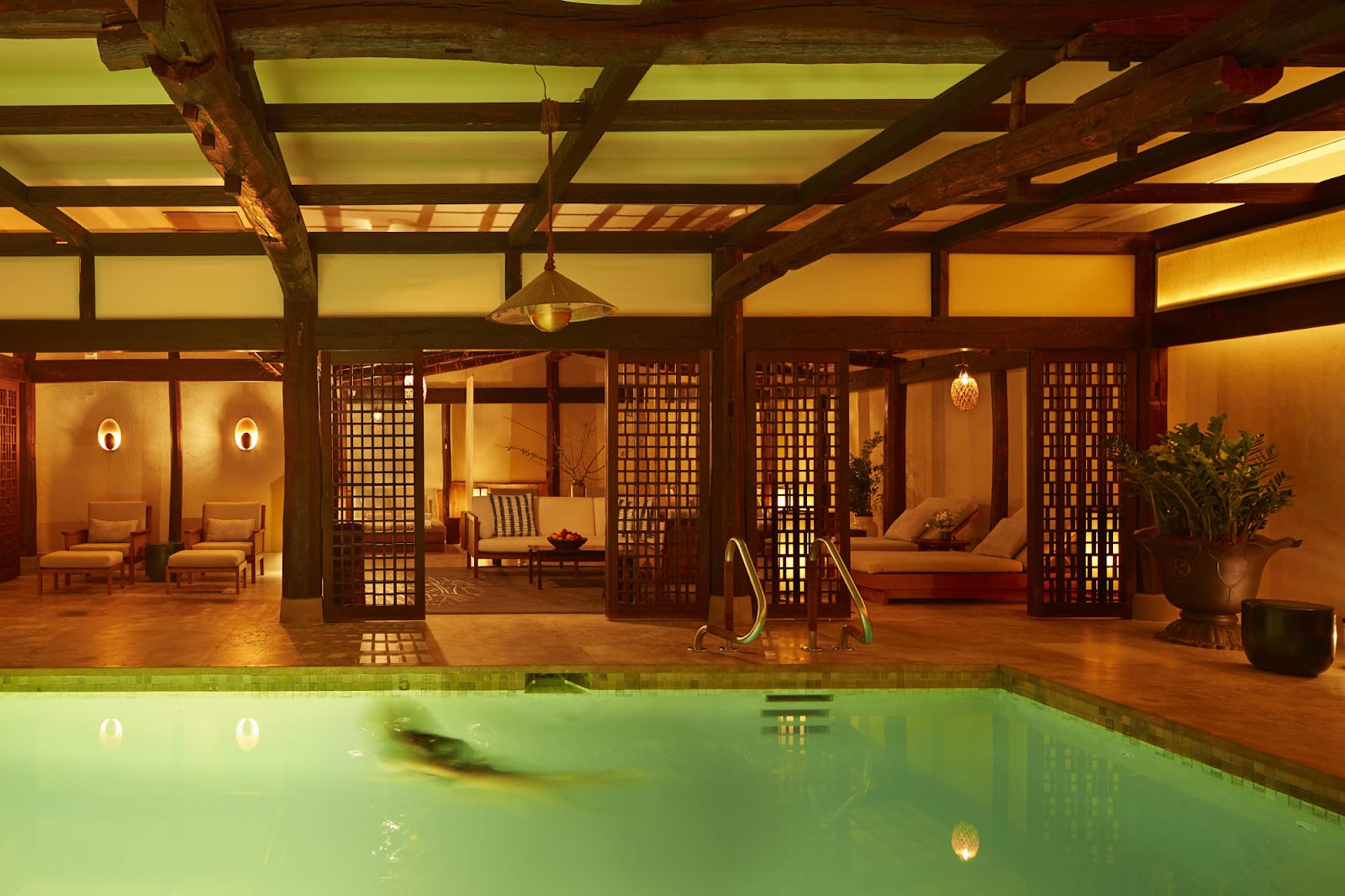
More frames from The Greenwich Hotel
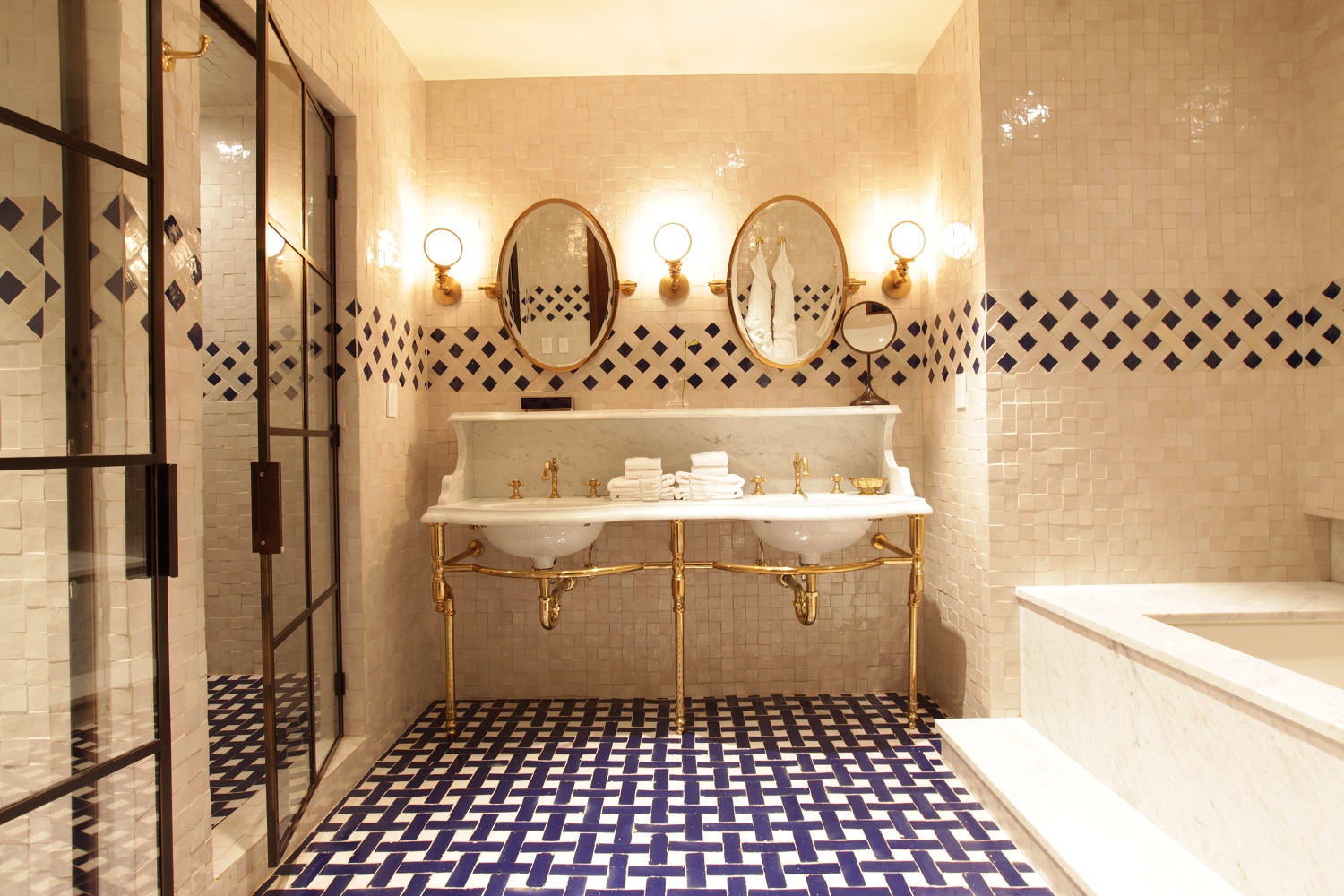
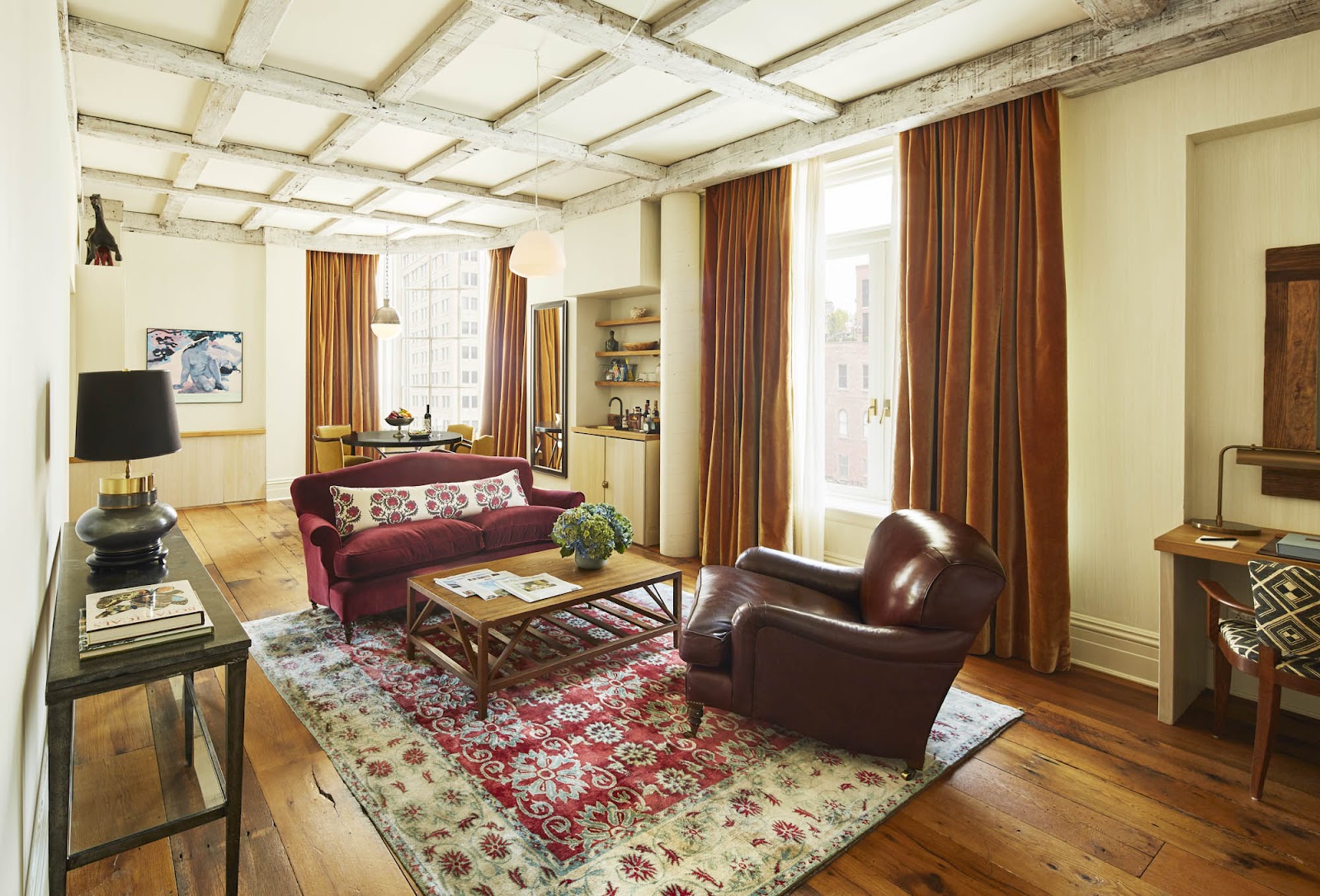
The Greenwich Hotel wedding photography: common questions
Why is brick a light source?
Because it bounces strongly warm, so anyone within a metre or two of it is being lit by it as much as by whatever is overhead — and the cast is localised, so white balance cannot separate it.
Where should you stand in a courtyard?
Against a wall, not in the middle. The centre sits directly beneath the sky opening and gives flat top-down light; against a wall it arrives from one side after bouncing off the facing elevation.
How do you handle the brick colour?
Either use it, with a custom white balance set on a face and held through the block, or neutralise it by filling from a white reflector. Auto white balance drifting between frames is the failure.
When is a courtyard at its best?
Late afternoon, when the sun strikes the upper part of one wall while the floor stays shaded. That lit wall becomes a large warm reflector aimed down into the space.
Does bounce flash work indoors?
It varies room by room in a hotel of this kind — a low-ceilinged lounge may bounce properly while a taller space returns nothing. Test with one frame in each.
Why is a brick courtyard easier under snow?
Because snow on the floor turns it into a very large reflector, filling from below exactly where a courtyard otherwise withholds light.
More New York venue guides
We are writing a photographer’s guide to every venue we would happily shoot in New York. Here are three more, plus the full index:
- The Lowell, New York: One Frame, and How It Is Made
- The Ludlow, New York: Field Notes on a Lower East Side Hotel
- The Mark, New York: A Walk Through an Upper East Side Hotel
Planning a wedding at The Greenwich Hotel?
A courtyard takes one minute to read and rewards it all day. Tell us your date.