 The Westin Book Cadillac, Detroit: A Walk Up Through a Restored 1924 Hotel
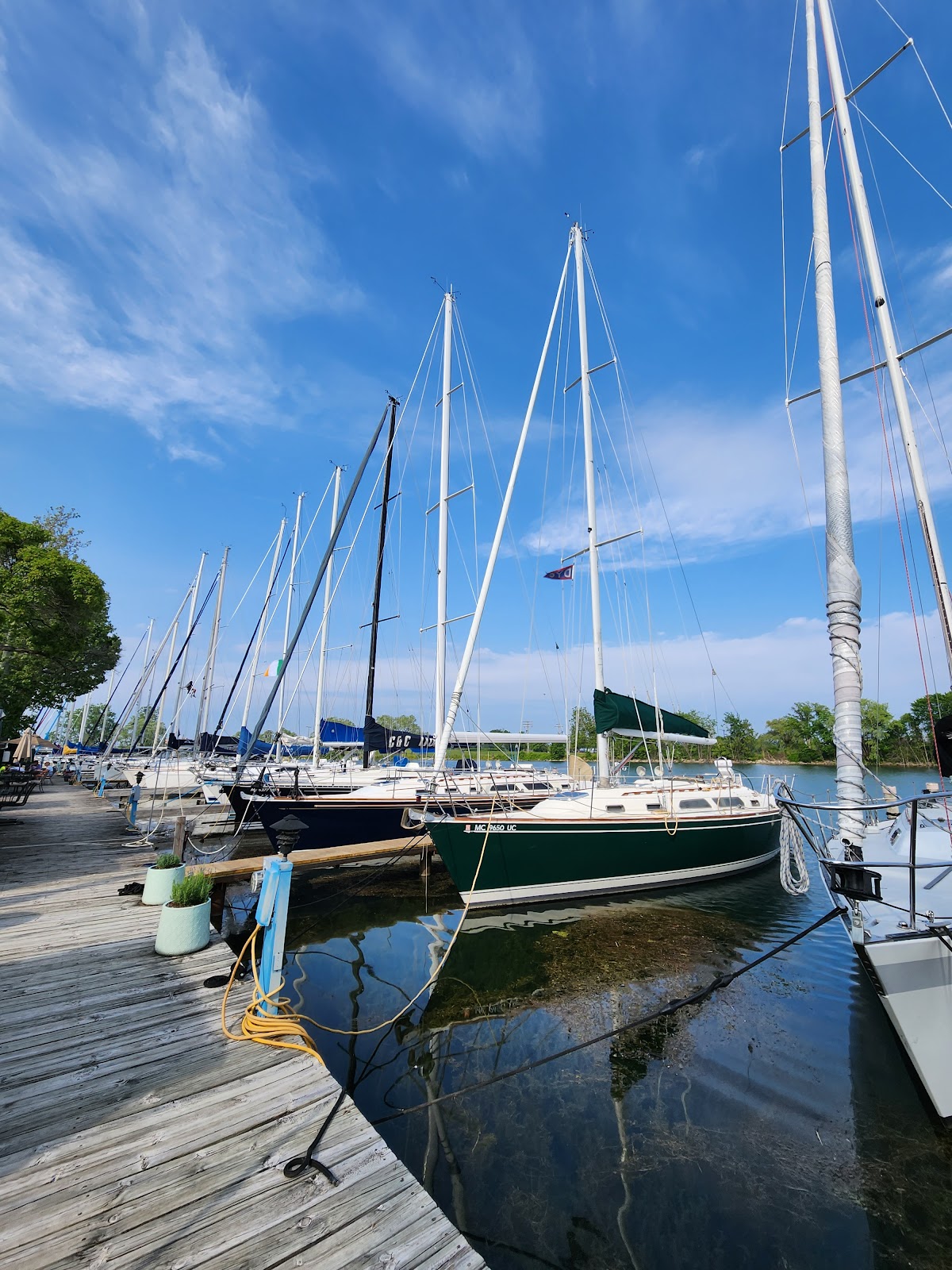
The Detroit Yacht Club: How the Light Moves
A clubhouse never changes. A river changes every hour, and it decides the schedule.
Couples wanting an outdoor ceremony at the Detroit Yacht Club find themselves surrounded by the river and by meticulously maintained grounds, as its own description has it.
That is the venue’s real proposition and it divides the day cleanly. A historic clubhouse interior is a constant: panelled, warm, lit by its own scheme, and identical at two in the afternoon and ten at night. The river and the grounds are the variable, swinging four or five stops and changing character completely between noon and dusk — hard and specular in the middle of the day, raking and warm at six, luminous twenty minutes after sunset, black with broken reflections at nine.
So the running order is the main instrument, and at a waterfront club it has one additional feature worth knowing: the Detroit River is one of the few places in the country where an American venue looks across water at Canada, which means the far bank is a foreign shore and reads as a distinct, layered background rather than as more of the same city.
This is written as a day. We have not photographed a wedding at the Detroit Yacht Club; waterfront clubs behave consistently. Which rooms and which parts of the grounds a booking includes, whether dock or shoreline access is permitted, and what the wet-weather arrangement is are the questions for their team.
The Detroit Yacht Club at a glance
| Where | The Detroit River, Detroit, Michigan |
| Character | A historic yacht clubhouse with maintained grounds and river frontage |
| The two halves | A constant panelled interior and a river that changes hourly |
| Best outdoor hours | The last ninety minutes, and twenty after sunset |
| Ask first | Rooms and grounds included, dock access, wet-weather plan |
Morning and midday: the clubhouse, and why the water waits
Morning belongs indoors, and a historic clubhouse is a light-hungry interior for the usual reason: panelling, timber, deep carpet and heavy textiles absorb rather than return light, and usable room light is mostly bounced — so a panelled room is two stops or more below a pale one with identical windows, and bounce flash returns a fraction of what it would elsewhere.
Test bounce with one frame on arrival. Where it fails, a pale wall at a sensible distance is the better surface, and direct modified light better than either — with the steep fall-off in a warm dim room used as free separation rather than filled in.
Tall windows are the clubhouse’s best natural light and a waterfront one has an advantage: a window facing the river receives light twice, directly from the sky and again bounced up off the water surface. That raises the level and fills shadows from below, which in a dark panelled room is worth more than it would be in a bright one — so the river-facing rooms are the ones to ask for.
Two or three steps back from the window is the position rather than beside it, and the light there has softened while remaining clearly directional.
Panelling and joinery need raking light to be themselves: along a surface they show grain and mouldings, at it they flatten to a brown field. And they bounce strongly warm, so let one gelled source own the faces and let the room be as warm as it is.
Midday on the water is the part of the day to spend indoors, for optical rather than aesthetic reasons. A high sun on flat water produces intense specular glare, and it raises light from below onto the underside of the chin — an unfamiliar and unflattering direction. There is little shade on a dock or a lawn edge, and the water at that hour is a hard bright plane rather than a background.
Maintained grounds behave like any mown surface at midday: a predictable mid-tone that meters well, showing mowing pattern only in raking light, and offering no shade at all. The clubhouse’s own shadow and any mature trees at the property edge are the whole midday resource, and where the shade line falls at the ceremony hour rather than at the site-visit hour is the most useful piece of preparation.
Late afternoon into dusk: the river
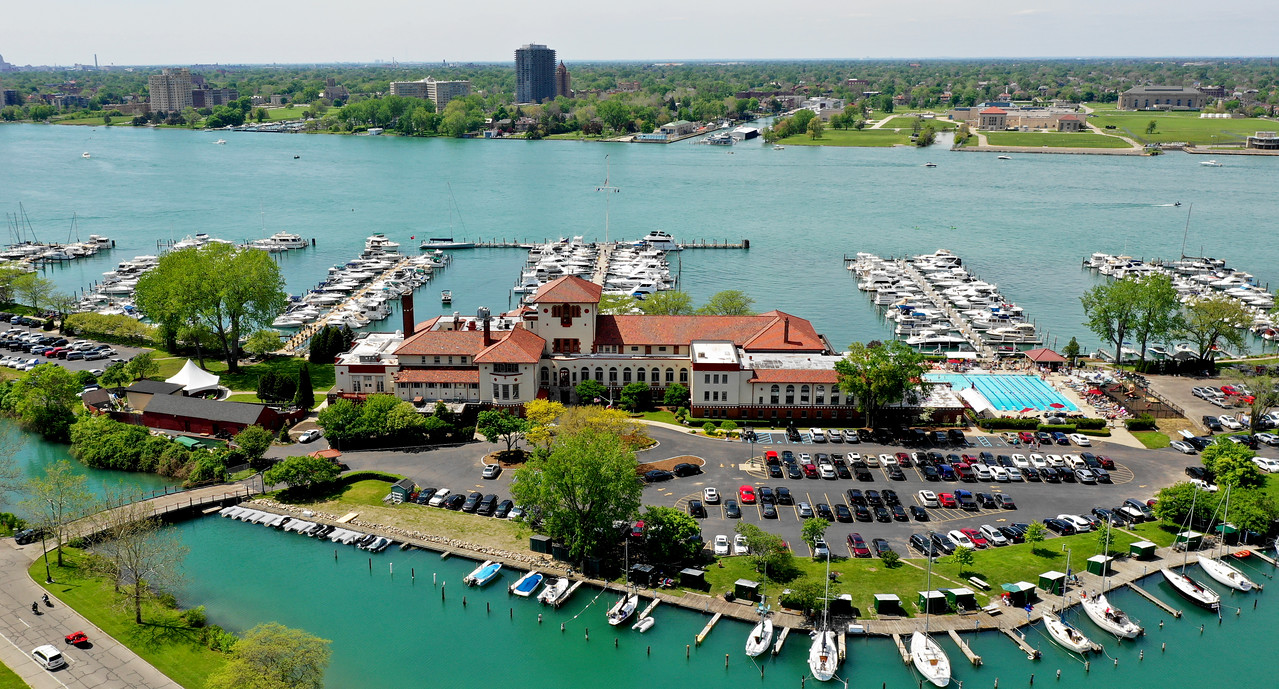
From about two hours before sunset the water stops being a problem and becomes the reason to be here. The sun drops low enough that glare resolves into texture and colour, light begins raking along the grounds and the clubhouse elevation rather than falling straight down, and the mown pattern on the lawn starts to read.
Long lenses earn their place because there is depth to compress. A couple on the shoreline with the river, passing shipping and the far bank behind them, shot at 135mm or 200mm wide open, stacks those elements into a layered background — and on this river the far bank is another country, which gives the layers a real distinction rather than a notional one. The same frame at 24mm reduces the water to a strip and everything beyond it to specks.
A low camera is the other waterside technique: dropping close to the paving or the lawn edge stretches the water’s boundary towards the horizon, pushes the horizon down, and lets the sky and the far shore occupy the upper frame. Standing at eye level on a dock wastes the one thing a dock gives you.
The geometry to avoid is the sun’s specular path — the hard bright lane of reflected sun running towards the camera, which at the exposure a face needs is unrecoverable white. Position the couple lit across the frame, with the water to one side or behind them but the sun not in line with it.
Boats are the asset a yacht club has that no other waterfront venue does, and they need the standard decision. A moored yacht is a strong element — white hull, dark water, vertical mast — and it will take the eye. Commit deliberately, placing the couple so both read; or exclude it with a long lens. Half-in fails. Masts and rigging also make a graphic background at a long focal length, compressing into a field of vertical lines.
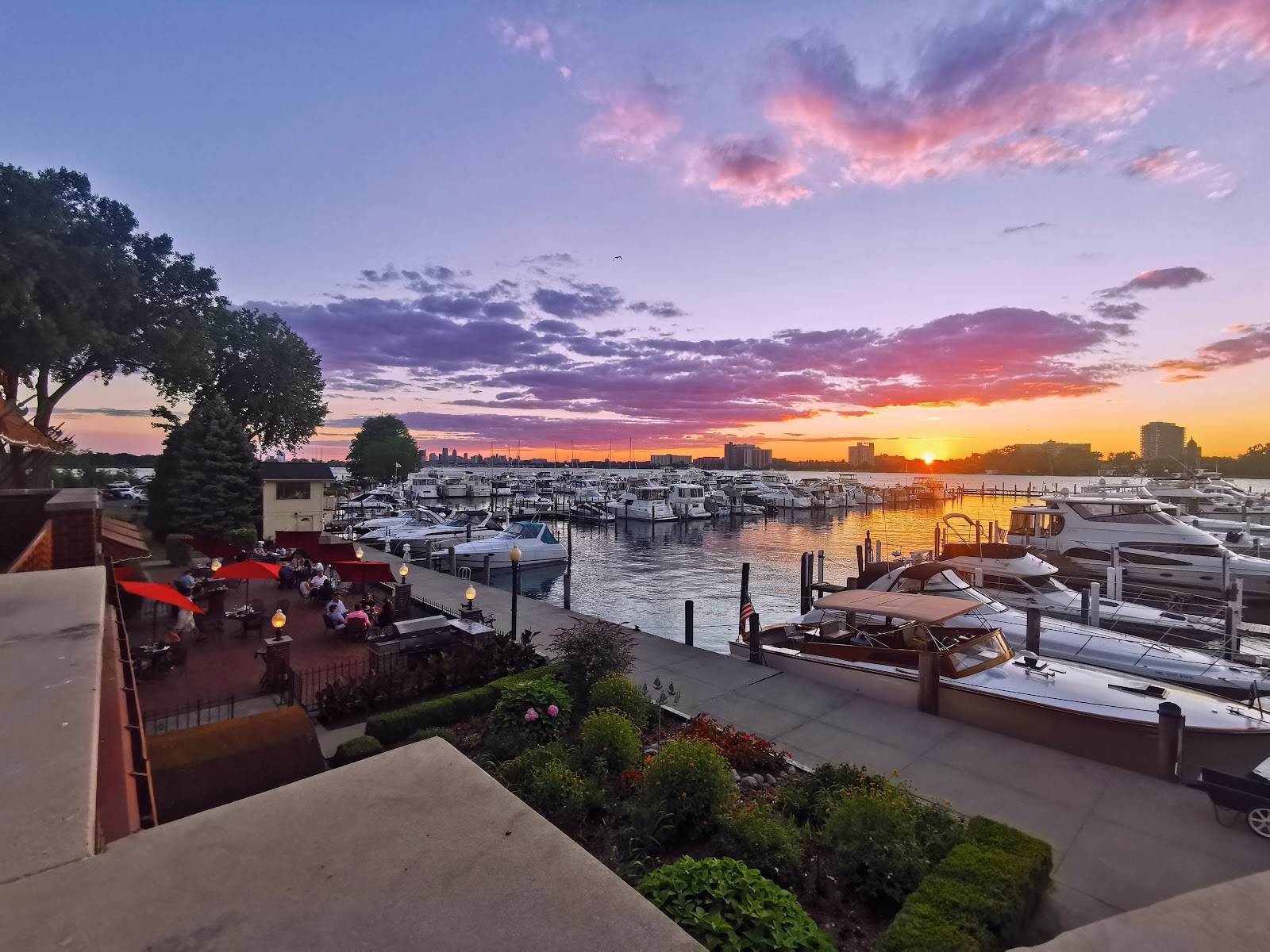
The last twenty minutes are the best version of the site. With the sun below the horizon the water stops reflecting and starts glowing, holding the whole sky’s colour, and a couple against it will silhouette unless lit — one warm-gelled source at face height about a stop under the sky holds both. That same window is the clubhouse’s one timed frame at any river-facing window: one exposure holding the lit panelled room, the couple and the water together. The two cannot both be had, so choose in advance which matters more.
River wind is stronger and gustier at the water’s edge than a few metres inland, which matters for a veil, for hair and for any light stand. Still water mirrors early in the day and breaks into texture as the breeze builds, so a reflection frame is a morning proposition.
- Ask for a river-facing room; the water fills faces from below
- Midday is an interior hour — glare, no shade, light from underneath
- Go long on the water; the far bank is another country and reads as depth
- Get low so the shoreline leads in and the horizon drops
- Choose between the outdoor crossing and the window crossing; not both
After dark, and Detroit's year
Once the sky is gone the grounds have almost no ambient of their own, so anything outdoors is entirely a lighting exercise — one source on the couple with the lit clubhouse or the far bank behind them. Broken reflections of shore lights on moving water read as vertical coloured lines, which is a background specific to a waterfront: a long exposure smears them, a lit frame freezes them as texture, and both are worth having.
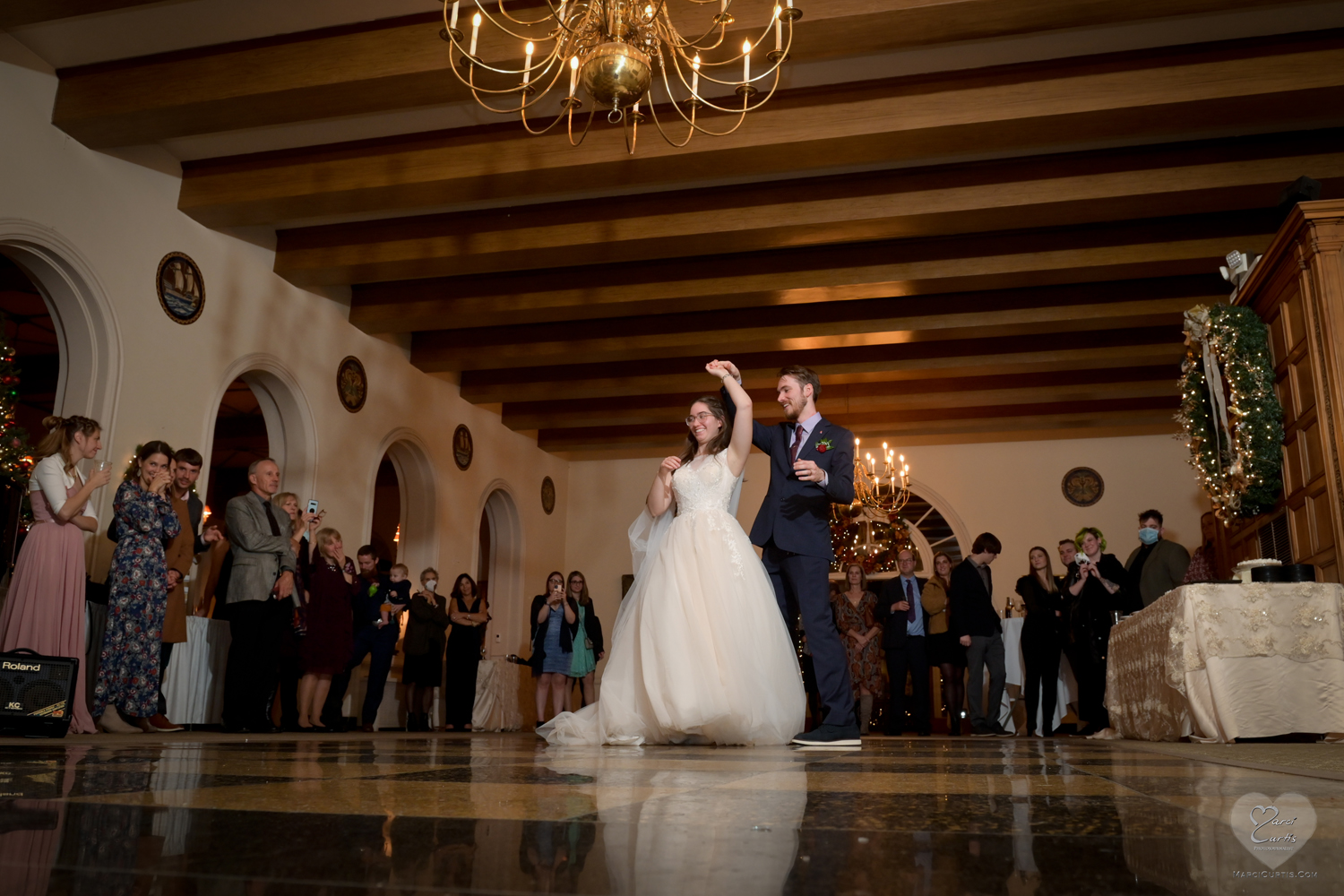
Indoors the clubhouse is a warm low-light interior and should be allowed to look like one. Fast lenses wide open at a raised ISO give frames that match the rooms; one warm-gelled source at face height fixes the overhead problem where legibility matters; and white balance wants setting for the faces and holding through the block, because everything in a panelled room bounces warm and auto white balance drifting between frames is the usual reason a sequence fails to match itself.
Michigan’s seasons are four real ones and a waterfront club feels all of them. Summer is warm and humid with afternoon thunderstorms a real possibility, which at a venue whose ceremony may be outdoors makes the wet-weather plan a real question: what it is, how many it holds, and by what time the call is made. A clubhouse is a good answer, which is the practical argument for a club over a park.
Autumn is the best season here: clear stable air gives the sharpest views across the water of the year, the far bank picks up genuine colour in October, and low sun rakes for longer than in summer. It is a short window and worth building a date around.
Winter is the hard season and it is worth being honest about. Days are short, with sunset in the middle of the afternoon in December, and a river frontage in a cold wind reduces an outdoor block to a few minutes — a welfare decision in formal clothes as much as a photographic one. Ice on the river changes the water from a reflector into a pale surface, which removes the luminous crossing and gives something else instead: a flat bright plane that reads as light rather than depth.
Snow is the compensation and it is the best natural fill there is, lifting exactly the shadows a low sun carves while fooling a meter by about two stops — and snow on maintained grounds with a warm-lit clubhouse behind is a frame the venue gives well.
Indoors, snow does something better: it turns the ground and the frozen river into a very large reflector, so daylight through a river-facing window arrives softer, brighter and more even than at any other time of year. A dark panelled clubhouse is genuinely easier to photograph in February than in July.
And the fogging risk is severe in both directions, so let a body come towards the temperature of where it is going before it gets there, and plan one outdoor excursion rather than several.
More frames from The Detroit Yacht Club
The Detroit Yacht Club wedding photography: common questions
Why does the running order matter here?
Because the panelled clubhouse is constant from mid-morning to midnight while the river swings four or five stops and changes character completely. Placing each part of the day is the main decision.
Which room should you ask for?
A river-facing one. A window facing water receives light twice — from the sky and bounced up off the surface — which raises the level and fills shadows from below in a dark panelled room.
What is wrong with the water at midday?
Intense specular glare, no shade, and light raised from below onto the underside of the chin. It is an interior hour.
Wide or long lens on the river?
Long. Compression stacks water, shipping and the far bank into layers — and on this river the far bank is another country, which gives those layers a real distinction.
How should moored boats be handled?
Commit or exclude. A white hull, dark water and a vertical mast will take the eye, so place the couple so both read, or leave it out with a long lens. Half-in fails.
Is winter worth it here?
For the interior, yes — snow and ice turn the outside into a very large reflector, so a dark panelled clubhouse is easier in February than in July. Outdoors it is a few minutes at a time.
More Detroit, MI venue guides
We are writing a photographer’s guide to every venue we would happily shoot in Detroit, MI. Here are three more, plus the full index:
- Eastern Market, Detroit: Field Notes on a Historic Market Shed
- The Fillmore Detroit: The One Decision That Governs Everything
- The Foundation Hotel, Detroit: Field Notes on a Civic Conversion
All Detroit, MI Wedding Venues →
Planning a wedding at The Detroit Yacht Club?
The river sets the clock and the clubhouse waits. Tell us your date.