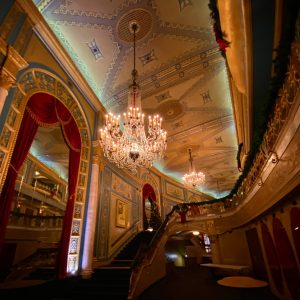
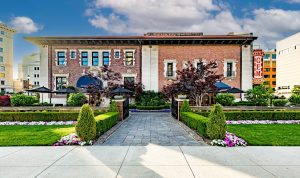
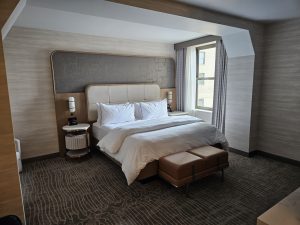
 The Westin Book Cadillac, Detroit: A Walk Up Through a Restored 1924 Hotel
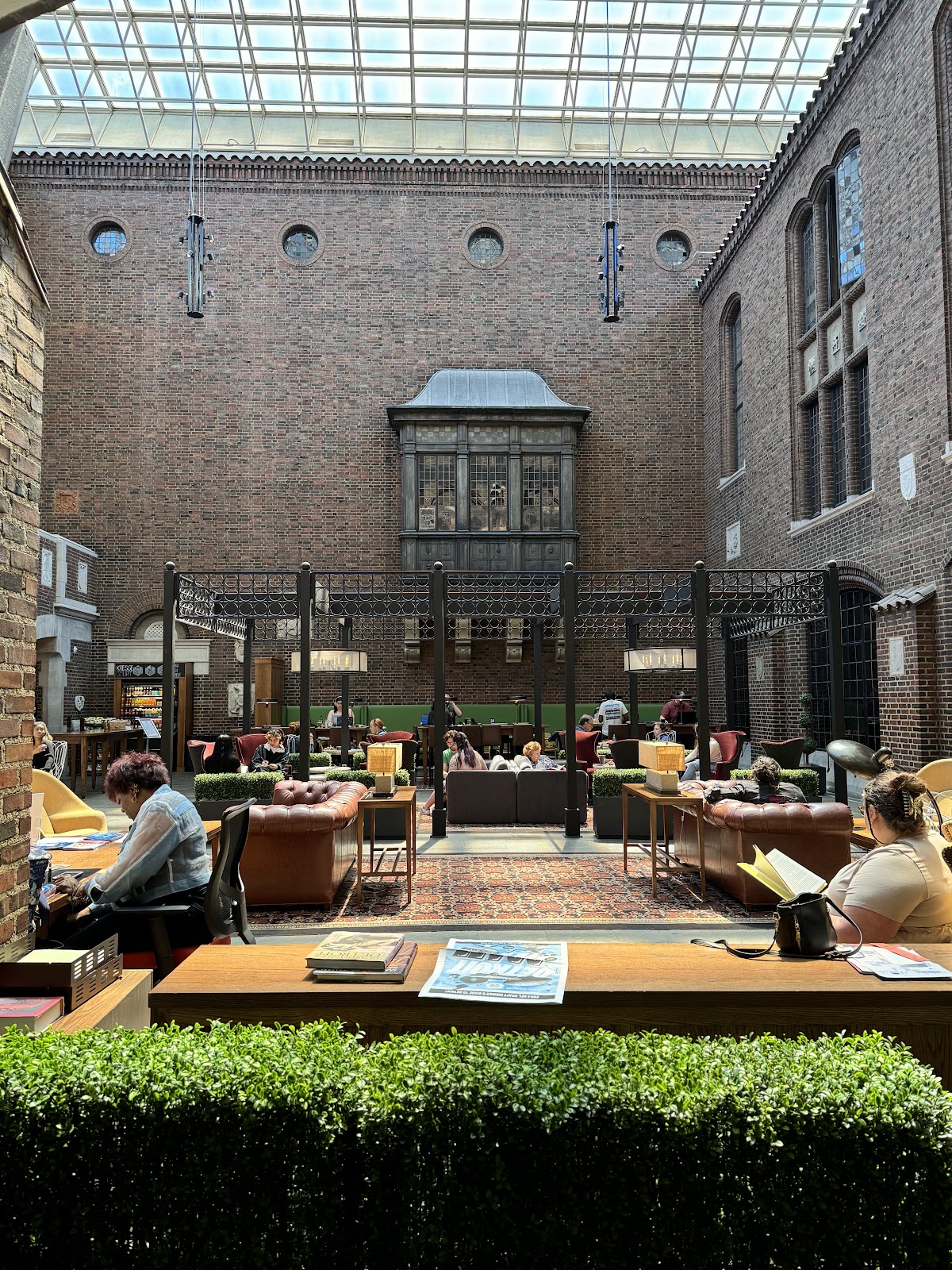
The Detroit Institute of Arts: Four Ways Out of the Gallery Problem
Every museum has the same problem and the same escape. The court is the escape here, and it is a good one.
The very walls of the DIA are steeped in stories, as its own description has it, which makes it an enriching experience for guests as well as for a couple.
For a photographer the building divides the way every major museum does, and it is worth being explicit about rather than discovering. The collection galleries are lit for conservation and display — low levels, fittings aimed down at objects, and often narrow-spectrum sources — which is close to the worst portrait condition there is. The public architecture holds nothing light-sensitive, which means it is generously lit, and in a museum of this era and ambition it is monumental: a central court, pale stone, symmetry, and scale intended to impress.
So the best-lit spaces are the ones nobody comes to see, and the visually richest are the hardest to work in. That is the problem, and there are four workable answers.
We have not photographed a wedding at the DIA; conservation lighting behaves the same in every museum. Whether photography is permitted in galleries, whether stands are permitted, and whether flash is permitted are three separate questions institutions frequently answer differently, and all three belong in writing rather than in a conversation on the day.
The Detroit Institute of Arts at a glance
| Where | Detroit, Michigan |
| Character | A major art museum with a monumental central court and extensive galleries |
| The asset | The court — pale stone, symmetry, generous light, no conservation limit |
| The obstacle | Gallery lighting: low level, hard pools, from directly above |
| Ask first | Gallery photography, stands, flash — three separate questions |
Why gallery light fails a face
The instinct is to treat gallery light as simply dim and to solve it with ISO, and level is only one of three problems — the least serious of them.
Direction is the second. Display lighting comes from track or recessed fittings in the ceiling, aimed down at objects on walls and in cases. Light from directly above puts the eye sockets in shadow, draws a hard line down from the nose and leaves the underside of the chin dark — the lighting direction used deliberately in horror films, for exactly that reason.
Spectrum is the third and it survives editing least well. Museum fittings are frequently narrow-band LED chosen for low ultraviolet output and long life rather than for colour rendering, and under a low-CRI source skin can go sallow or plum-toned even at technically correct white balance, because the source is not emitting the wavelengths skin needs to reflect. No slider recovers a wavelength that was never there.
Gallery walls in a museum of this scale are often mid-tone or deliberately coloured, which removes bounce entirely and adds a cast of its own — so every source has to be direct and modified.
Large saturated works add a further colour problem: a big canvas throws its own hue across a nearby face, and because that cast is localised, global white balance cannot separate it from the subject.
And there is a permissions layer more extensive than most people expect, because works may be on loan with conditions attached and particular rooms may prohibit photography entirely. A museum that says no to galleries has not ruined a day — it has said to spend it in the court, which is where the better frames were anyway.
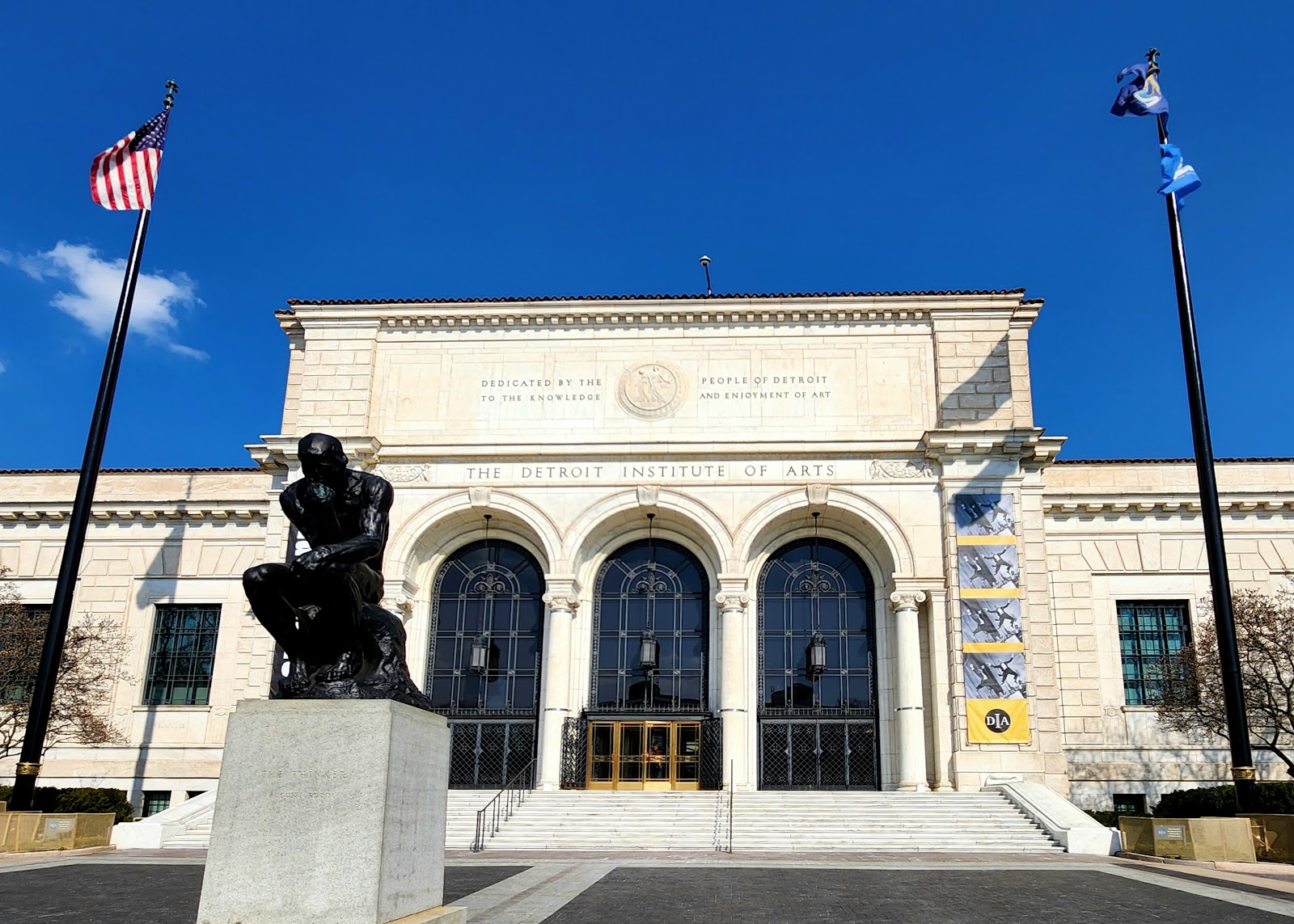
Four ways out
The first way out is the court, and at a museum of this type it is the strongest answer rather than a consolation. A monumental central court holds nothing light-sensitive, so it is generously lit; it is tall and symmetrical, so the composition is half made before the camera is raised; and pale stone reflects, which raises ambient across the whole volume. The result is soft even light at a usable level, the same everywhere, which makes groups easy and position almost unimportant.
Two adjustments come with it. The light arrives largely from above, so eye sockets darken — fixed with a reflector held low, a lifted chin, or a small face-height source. And pale stone pushes a meter towards underexposure, so add a stop or more exactly as for snow, checking the stone still holds texture rather than clipping to blank cream. Pale stone also bounces neutral-to-cool light, which renders skin slightly grey in flat conditions, so a warm reflector or a warm gel is worth carrying specifically.
Where a court carries murals or decorative work — and museums of this generation frequently commissioned them — they are a background with real content rather than a wall, which means the standard decision applies: commit deliberately so both the work and the couple read, or subordinate with a long lens at a wide aperture. Half-in fails. And a large mural bounces its own colour onto nearby skin, which is another reason to let one source own the faces.
The second way out is the stairs. A monumental staircase gives elevation, a diagonal or curve, a handrail as a leading line, and rows for a group automatically, which a flat gallery floor never provides — so almost every group photograph in a building like this belongs there. It also gives three different frames, and the one from the top looking down, with the couple small inside the sweep, is the one most often missed because it means climbing.
The third way out is to use display light deliberately rather than fighting it. A hard narrow beam from above with the room dark around it is a dramatic light, and a subject placed exactly where a pool falls, with the camera stopped down for the ambient, becomes a figure emerging from darkness. That is a real frame rather than a compromise — but only if it is chosen.
The fourth way out is to bring one small source and treat the gallery as background: one light, off-camera, at face height, gridded so nothing spills onto works, cases or walls, gelled to sit near the gallery colour, at about a stop under a correct reading for the room. That gives a face that reads with a gallery that still looks like a gallery — and the error to avoid is overpowering, which produces a studio portrait with a museum in the caption.
- Shoot the court: generous even light, ready-made symmetry, nothing to carry
- Add a stop or more on pale stone, and carry a warm gel for it
- Put the group on the stairs, and take the frame from the top too
- Use a display pool on purpose, stopped down, room going dark
- One gridded source, a stop under the room, spilling onto nothing
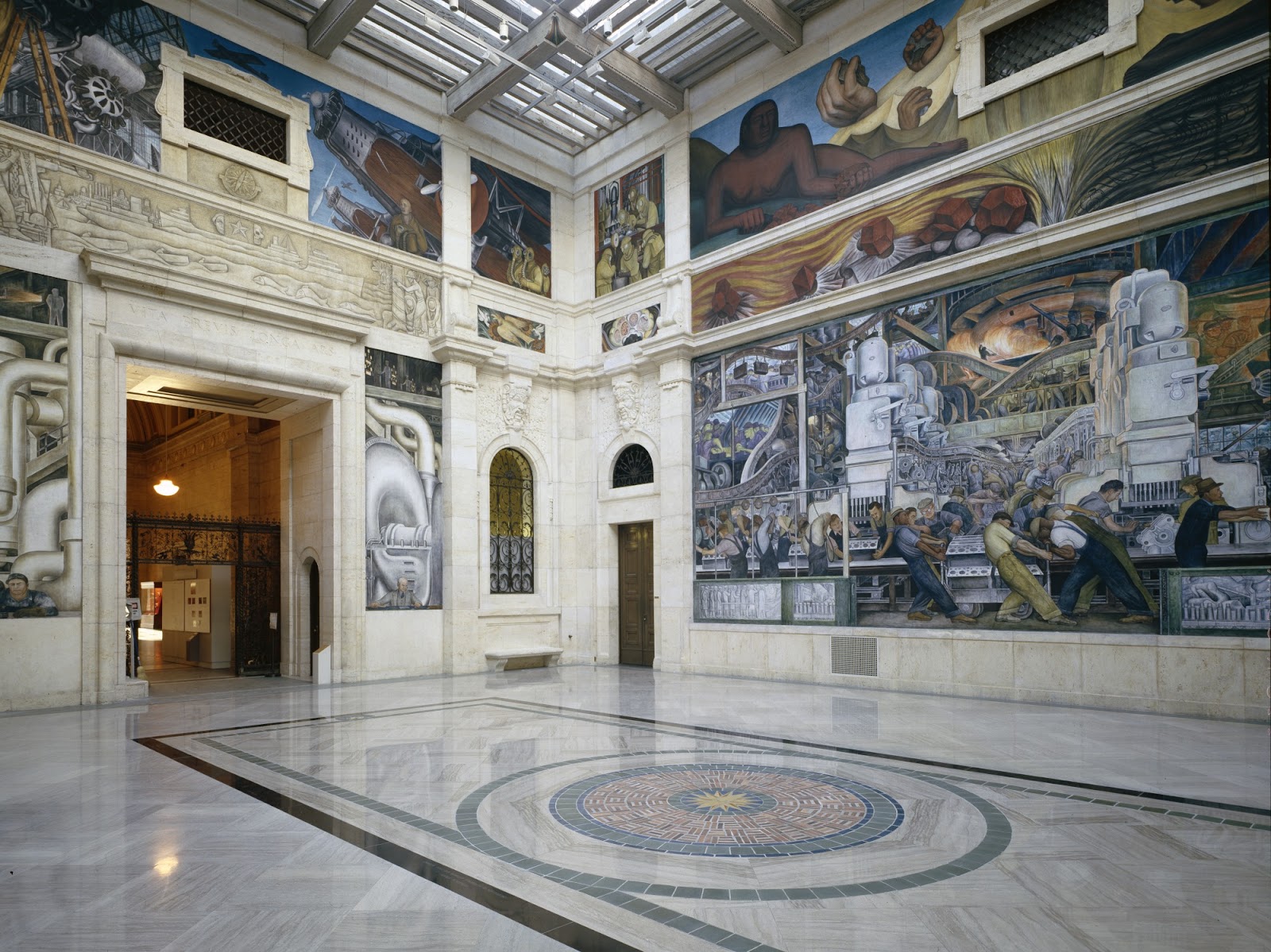
Working the day, outside, and Detroit's year
The running order at a museum is simple because nothing indoors changes through the day, which means the outdoor block belongs wherever the light is best and everything else arranges itself around protecting it. In a Michigan winter that freedom matters, because the outdoor window may be very short.
Detail work is worth building in deliberately rather than treating as filler: carved stone, joinery, brass, worn steps and architectural ornament are subjects in their own right, photograph well on a fast lens at a raised ISO, and establish the character of the building more convincingly than a wide frame does — and they need no permissions and no setup.
Symmetry demands precision because the architecture is built on it: a frame down an axis or centred on a symmetrical elevation collapses if the camera is slightly off centre or a degree out of level, and the near-miss is the only failure available.
Outside, Detroit gives an advantage almost no other American city does — there is room to stand back. Substantial open ground and surface parking mean a whole building can be photographed from across the street, entire rather than in fragments, which for a monumental museum facade with a columned front is genuinely useful.
That openness also means low sun reaches street level across a wider area than in a canyon city, so the last ninety minutes give raking light on masonry from more positions. Pale stone shows its texture only when light runs along it, so the facade is a last-ninety-minutes proposition and close to inert before that — and which elevation receives it depends on orientation, so one walk around the building is worth more than any accessory.
Steps are the exterior’s other asset and they do the same job as inside: rows for a group, elevation, and a stone background.
Michigan’s seasons are four real ones. Summer is warm and humid with afternoon thunderstorms a real possibility, which for a large museum is entirely an advantage — the day continues indoors without a decision. Autumn gives the clearest air and the best raking light of the year on stone.
Winter is cold and snowy with short days, sunset falling in the middle of the afternoon in December, which compresses the outdoor window into a couple of hours and makes an early protected block essential. Snow is the compensation and it is the best natural fill there is, lifting exactly the shadows a low sun carves while fooling a meter by about two stops — though against pale limestone the two together will clip if the exposure is not watched, which at a museum like this is a real caution.
And a heated museum with cold outside air fogs a lens in both directions, so let a body come towards the temperature of where it is going before it gets there, and plan one excursion rather than several.
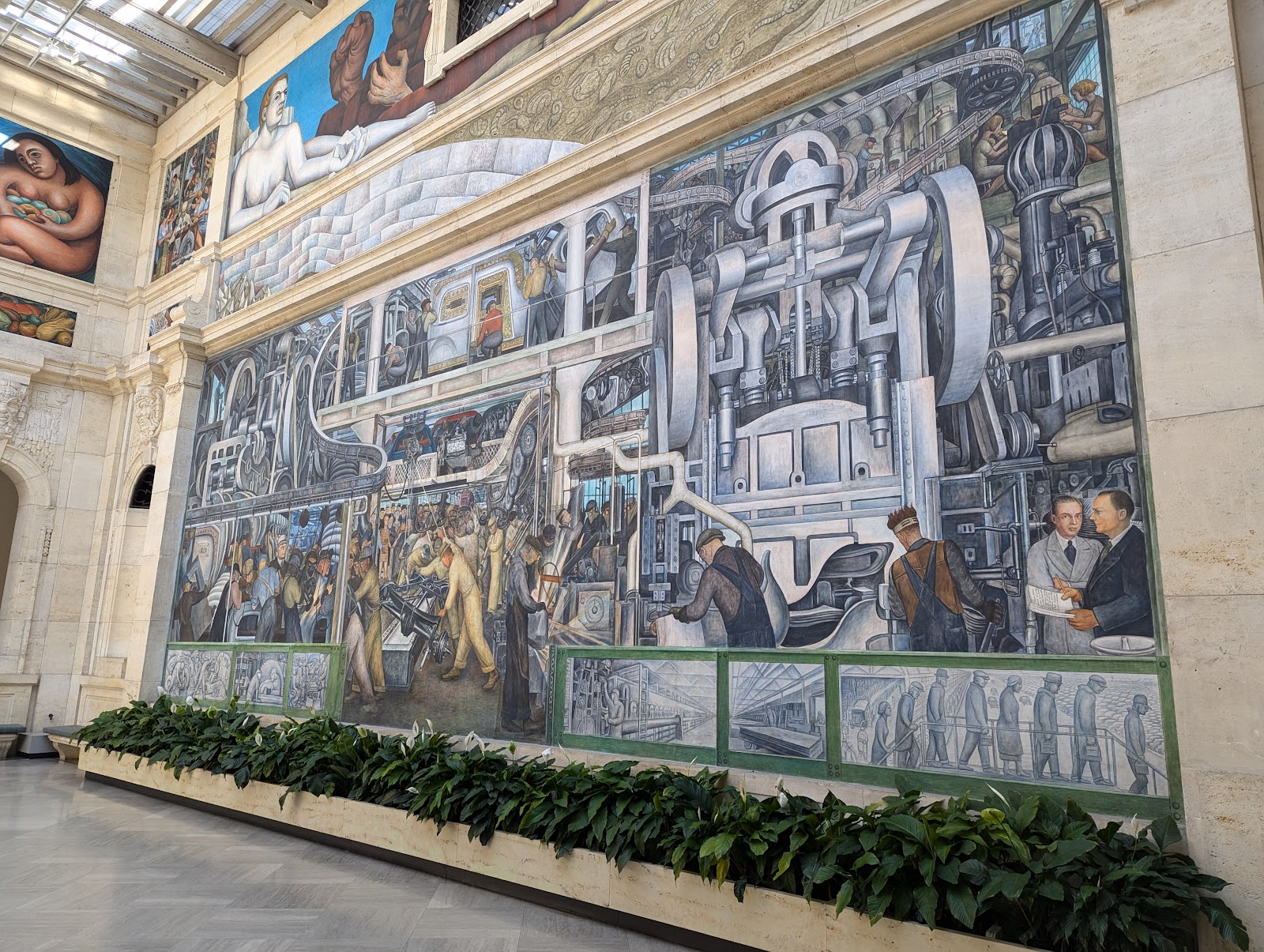
More frames from The Detroit Institute of Arts
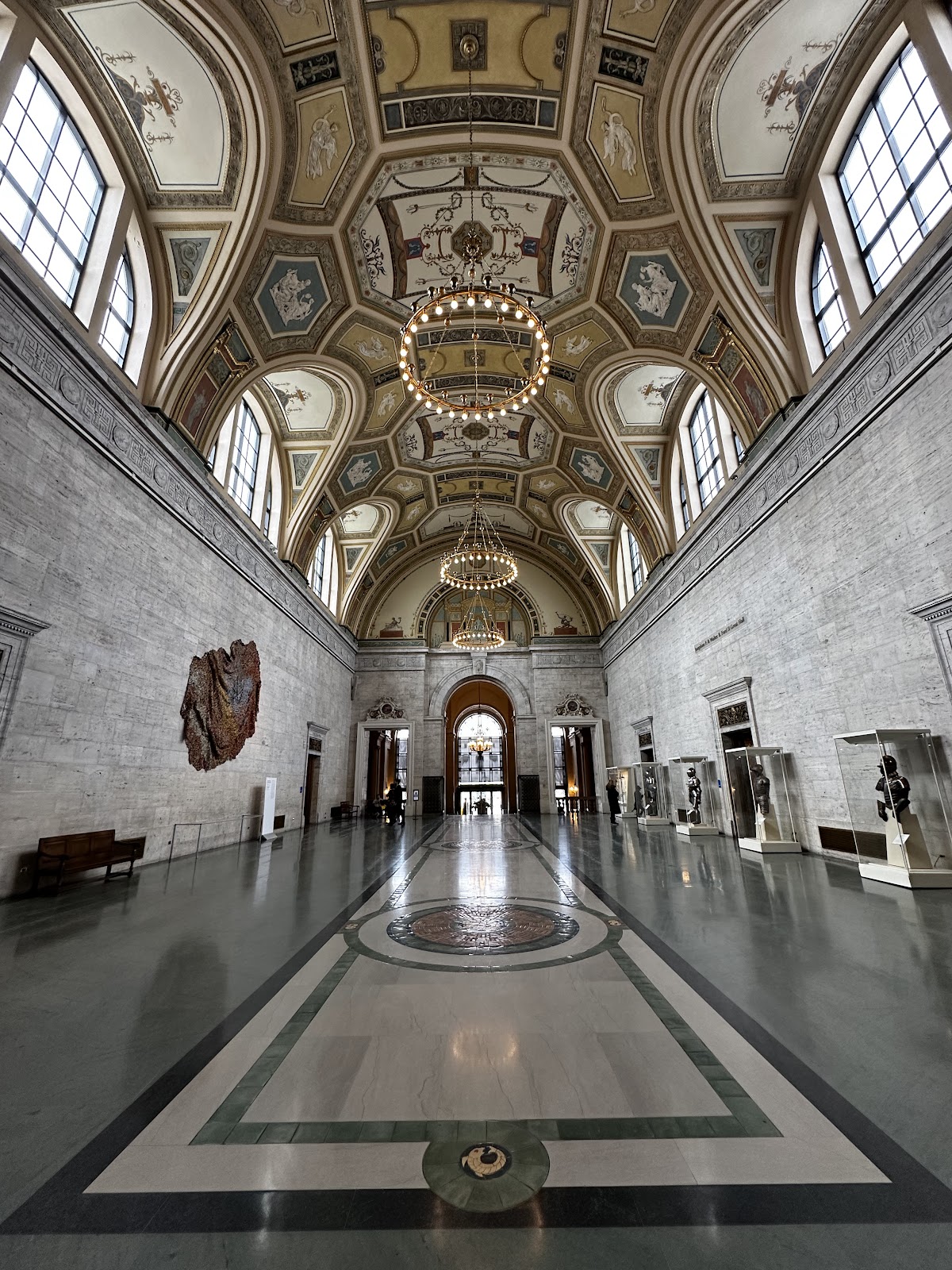
The Detroit Institute of Arts wedding photography: common questions
Why is gallery light so difficult?
Three reasons, and level is the least. It comes from directly above, which darkens eyes and draws shadows down the face; and museum fittings are often narrow-spectrum, which renders skin badly even at correct white balance.
Can white balance fix the colour?
No. A low-CRI source is not emitting the wavelengths skin needs to reflect, and no slider recovers a wavelength that was never there. Your own gelled source on the faces is the fix.
Where is the best light in the building?
The monumental court. It holds nothing light-sensitive so it is generously lit, and it is tall, symmetrical and pale-surfaced — soft even light where position barely matters.
What about murals in the court?
Treat them as content, not as a wall. Commit deliberately so both the work and the couple read, or subordinate with a long lens. And let one source own the faces, because a large mural bounces its colour.
Where should group photographs happen?
On the monumental stairs. Steps make rows automatically, and the frame from the top — the couple small inside the sweep — is the one most often missed.
What does Detroit add outside?
Room to stand back. Open ground and surface parking mean a whole monumental facade can be photographed entire from across the street rather than in fragments.
More Detroit, MI venue guides
We are writing a photographer’s guide to every venue we would happily shoot in Detroit, MI. Here are three more, plus the full index:
- The Detroit Marriott at the Renaissance Center: What It Suits and What It Does Not
- The Detroit Opera House: A Walk Through a Restored Opera House
- The Detroit Yacht Club: How the Light Moves
All Detroit, MI Wedding Venues →
Planning a wedding at The Detroit Institute of Arts?
Three permissions in writing, then the court and the stairs. Tell us your date.