 The Music Box Supper Club, Cleveland: How the Light Moves
The House of Blues, Cleveland: What It Suits and What It Does Not
A music room suits a couple who want atmosphere. It gives no daylight at all, and that is not negotiable.
The House of Blues is known, as its own description has it, for an intimate yet expansive feel that lets guests mingle freely.
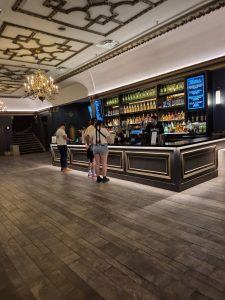
That combination is characteristic of a purpose-built music venue and it is worth assessing on its own terms rather than against a ballroom. What a music room reliably gives is atmosphere: low warm light, dark surfaces, decorative clutter with genuine character, a stage, and a rig capable of things no hotel possesses. What it does not give, at all, is daylight — and that is a structural fact rather than a limitation to work around, because the room is painted dark specifically so that lit things read against it.
Where a couple wants that atmosphere, there is very little competition. Where they want light and air, no amount of technique supplies it. This is written as suits and does not suit, because the match is where most disappointment in this category comes from. We have not photographed a wedding at the House of Blues; purpose-built music venues behave consistently. What the house lighting can be set to and who operates it, whether the stage rig is available, and whether there is any daylight anywhere in the building are the questions for their team.
The House of Blues at a glance
| Where | Downtown Cleveland, Ohio |
| Character | A purpose-built music venue with intimate and expansive spaces |
| Suits | Atmosphere, evening weddings, weatherproofing, a distinctive gallery |
| Does not suit | Daylight, pale airy references, natural-light preparation coverage |
| Ask first | Lighting control and operator, stage rig, any daylight at all |
The three conditions of a music room
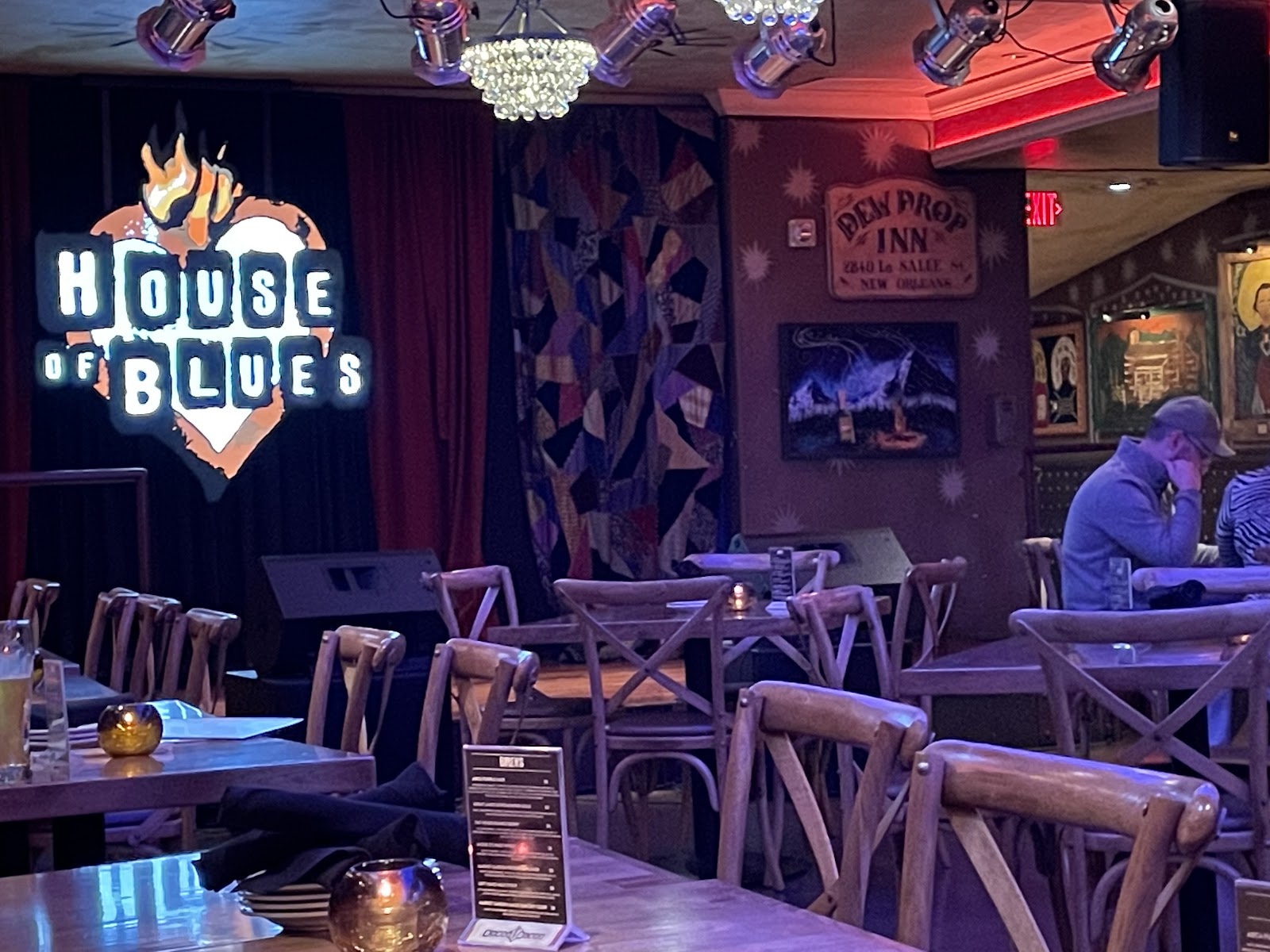
Dark surfaces are the first condition and they are deliberate. A music venue paints walls and ceilings dark so that a lit stage reads against them, which means the surfaces absorb rather than return light — so the usable ambient is far below what the fitting count suggests, bounce flash returns essentially nothing, and every source has to be direct and modified.
The compensation is steep fall-off and it is genuinely useful: a couple three metres in front of anything else sits against natural darkness with no equipment at all. That is free separation, and it is the opposite of the problem a pale hotel presents.
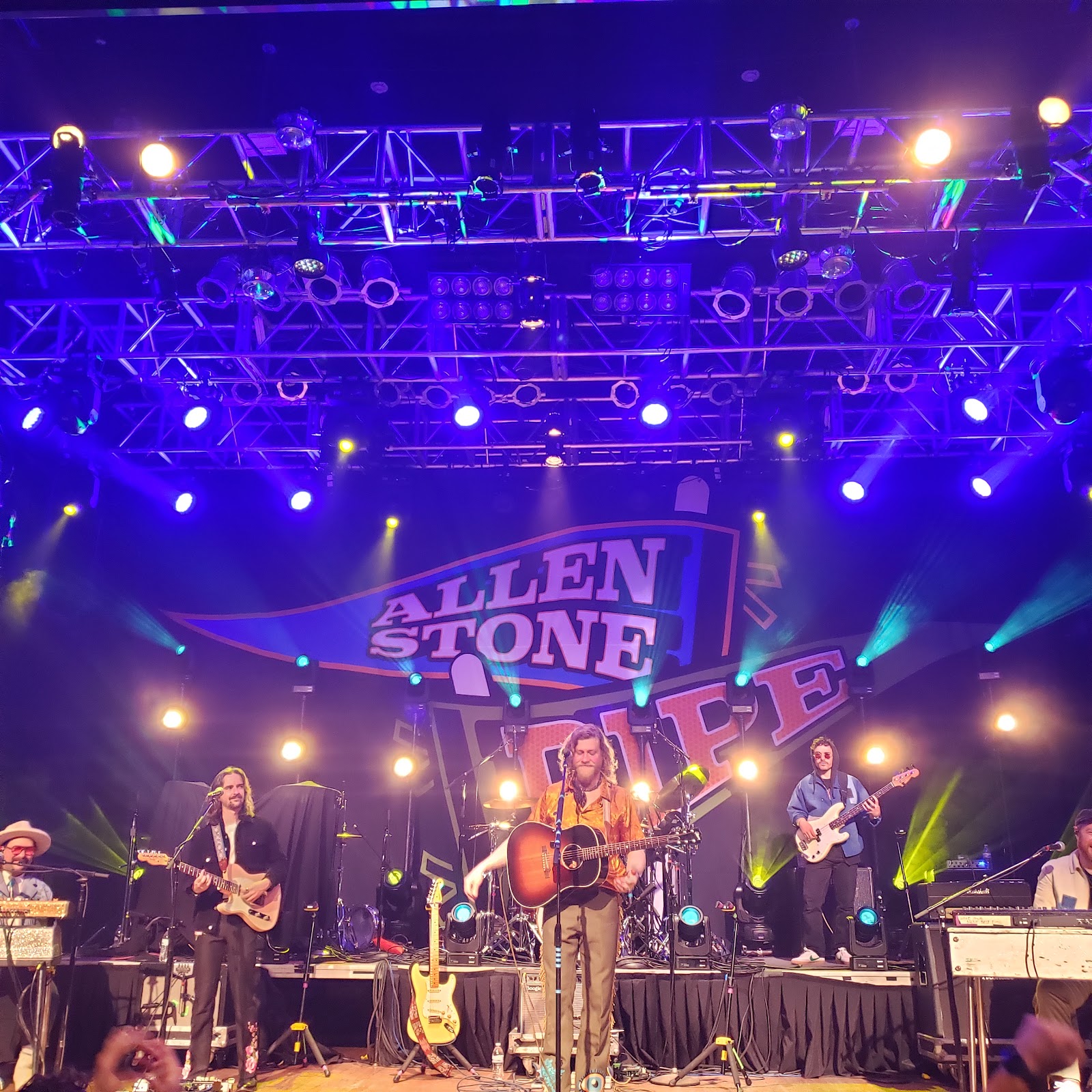
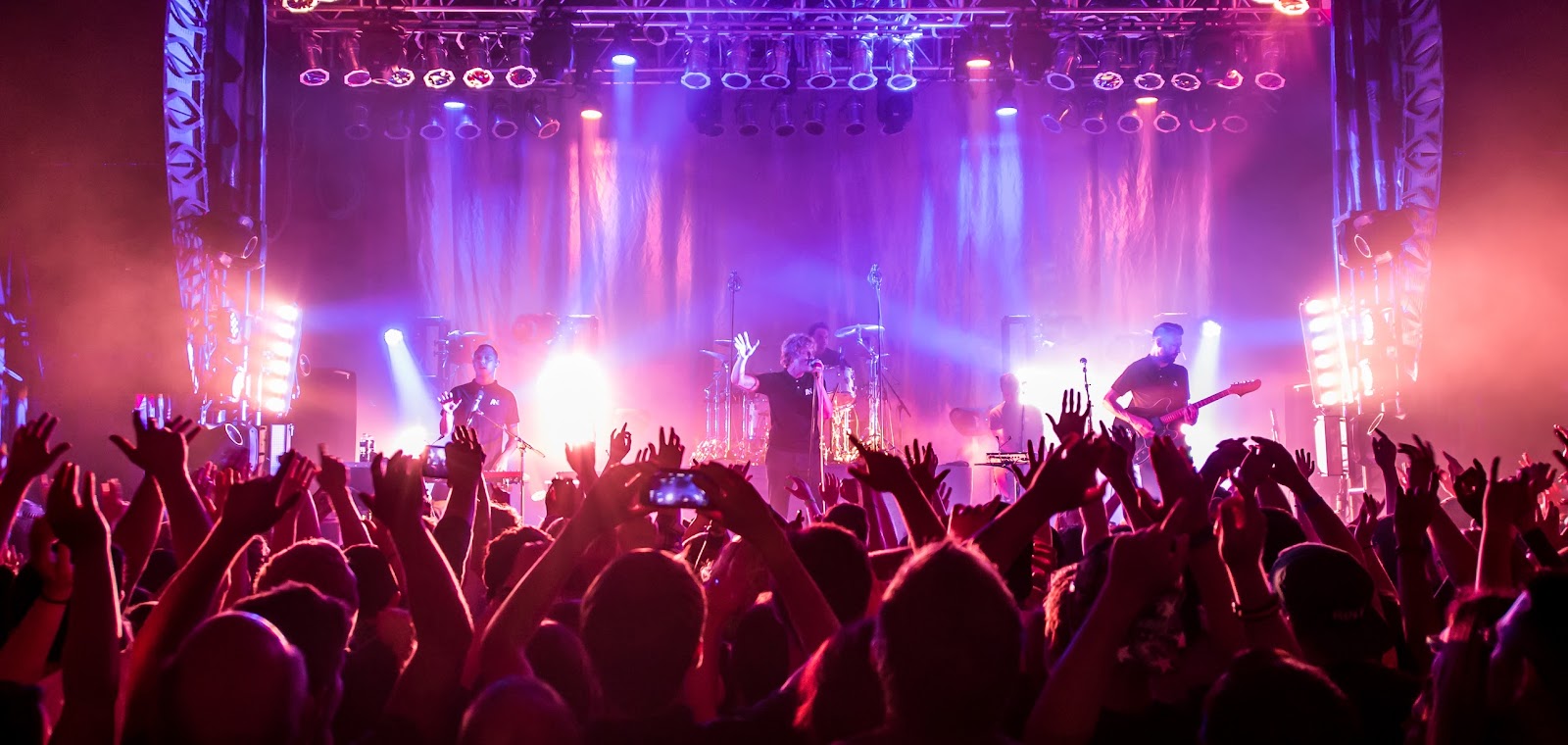
Coloured rig lighting is the second condition. A saturated coloured source emits only a narrow band of wavelengths, so skin under it records in that colour with almost nothing in the other channels to recover from — and a face lit by two coloured sources from two directions has two casts at once, with no single global correction available because white balance is one adjustment.
So one gelled source has to own the faces: off the camera axis at face height, modified so it does not announce itself, gelled to a chosen temperature with white balance set to it, and set bright enough on skin to dominate whatever the rig is doing. The room then stays as coloured as it actually is — which is what makes the frame — while the faces stay consistent from one frame to the next. The aim is to dominate the skin, not the room: overpowering everything gives a brightly lit couple against a black void.
Motion is the accompanying problem: moving heads and cycling programs alter both intensity and hue between frames, so a burst of three can contain three different colour balances. Where a program cycles, wait for the phase you want rather than shooting through it.
Decorative clutter is the third condition and it is an asset more often than a problem. A music venue of this kind is densely decorated, and dense decoration at a wide aperture becomes texture and colour rather than legible objects — which is a background that no purpose-built ballroom can produce. The failure is a single bright fitting or sign immediately beside a head, which pulls the eye off the face every time.
If the stage rig is available outside a performance it becomes the venue’s strongest asset. A single pool of light on an otherwise dark stage with a couple standing in it, in front of an empty room, is one of the strongest frames any venue type can produce — and it needs a board operator rather than equipment, which is why it belongs in the contract.
Who it suits
Atmosphere is the product and it cannot be manufactured in a room that does not have it. Where a couple wants that specifically, there is very little comparable.
These briefs are well served here:
- Couples who want a dark, warm, atmospheric gallery rather than a light one
- Evening weddings, which is exactly what the room is designed for
- Anyone who wants Cleveland’s weather to be entirely irrelevant
- Couples who would use a stage, if the rig can be operated for them
- Photographers comfortable bringing light, because the room requires it
Who should look elsewhere
The reverse list is not a criticism. A music room is succeeding when it is dark, warm and dense; the only question is whether that is what the day is meant to look like.
Several reasonable briefs fight the room from the first frame:
- Couples whose references are pale, bright and daylit, which the room cannot give
- Anyone needing natural-light preparation coverage on site
- Briefs relying on architecture, since dark paint erases most of it
- Photographers working with one small flash, which dark surfaces defeat
- Anyone wanting an outdoor ceremony space of the venue’s own
Where the daylight comes from, and Cleveland's year
The honest plan is that daylight comes from outside the building, and the first question on arrival is whether there is any at all — a lobby window, a street-facing entrance, a loading door. If there is, it is the best light in the building by a wide margin and worth using for anything that must be flattering.
Otherwise the portrait coverage belongs outdoors, and because the music room does not change through the day, the outdoor block can be placed exactly where the light is best rather than where the schedule allows. At a venue with no daylight of its own that is a real freedom rather than a compromise: the last ninety minutes outside, the twenty minutes after sunset for anything needing a coloured sky, and the room will look identical whenever you come back.
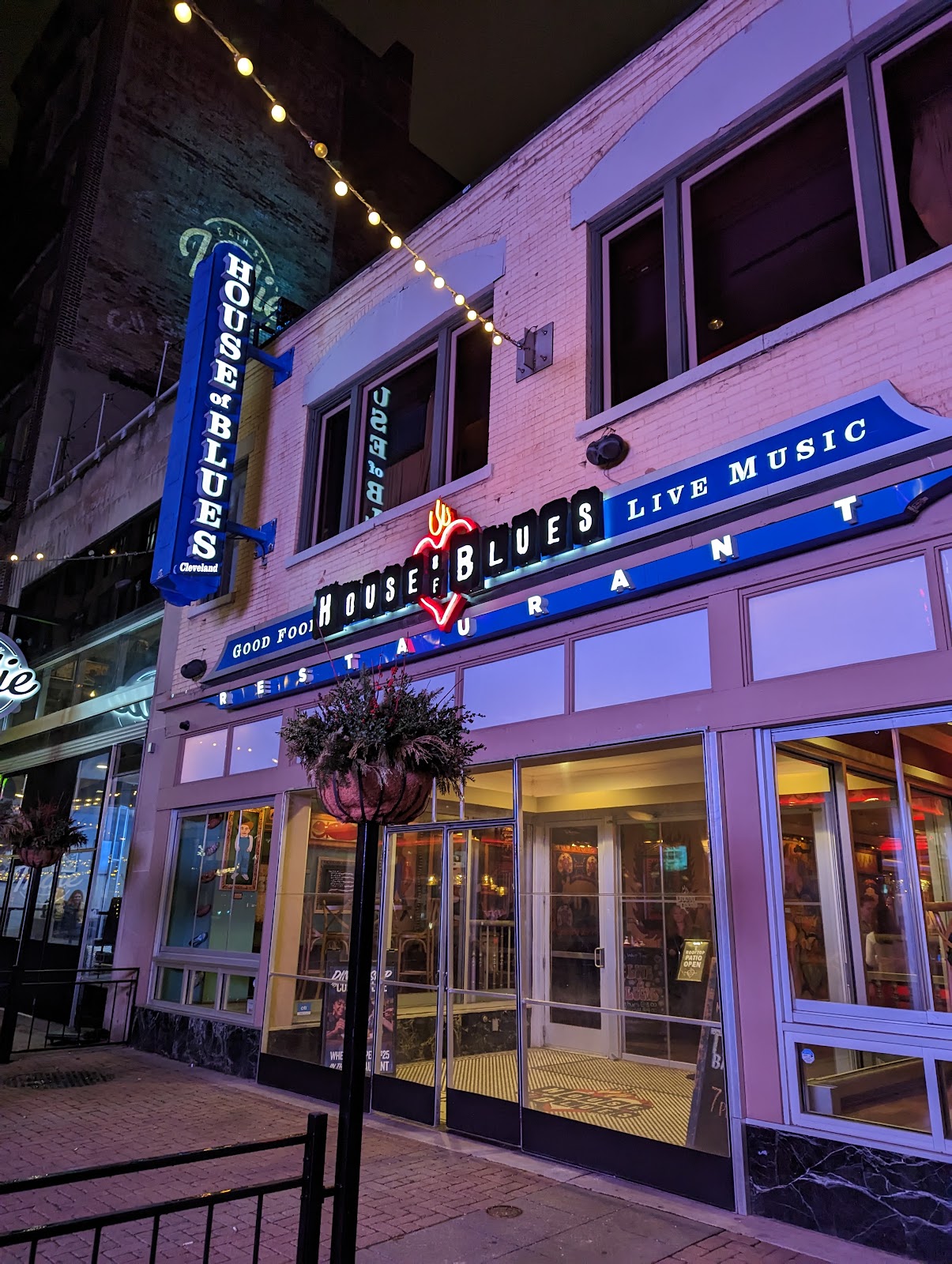
Downtown Cleveland supplies what the interior cannot. Early twentieth-century commercial architecture in brick and stone at a largely low-rise scale means low sun reaches street level and runs the length of a block, and both materials show their texture only when light runs along them — so a short walk to find which side is being raked is worth more than any accessory. Alleys are the most dependable positions, giving directional light from walls on both sides and a contained background.
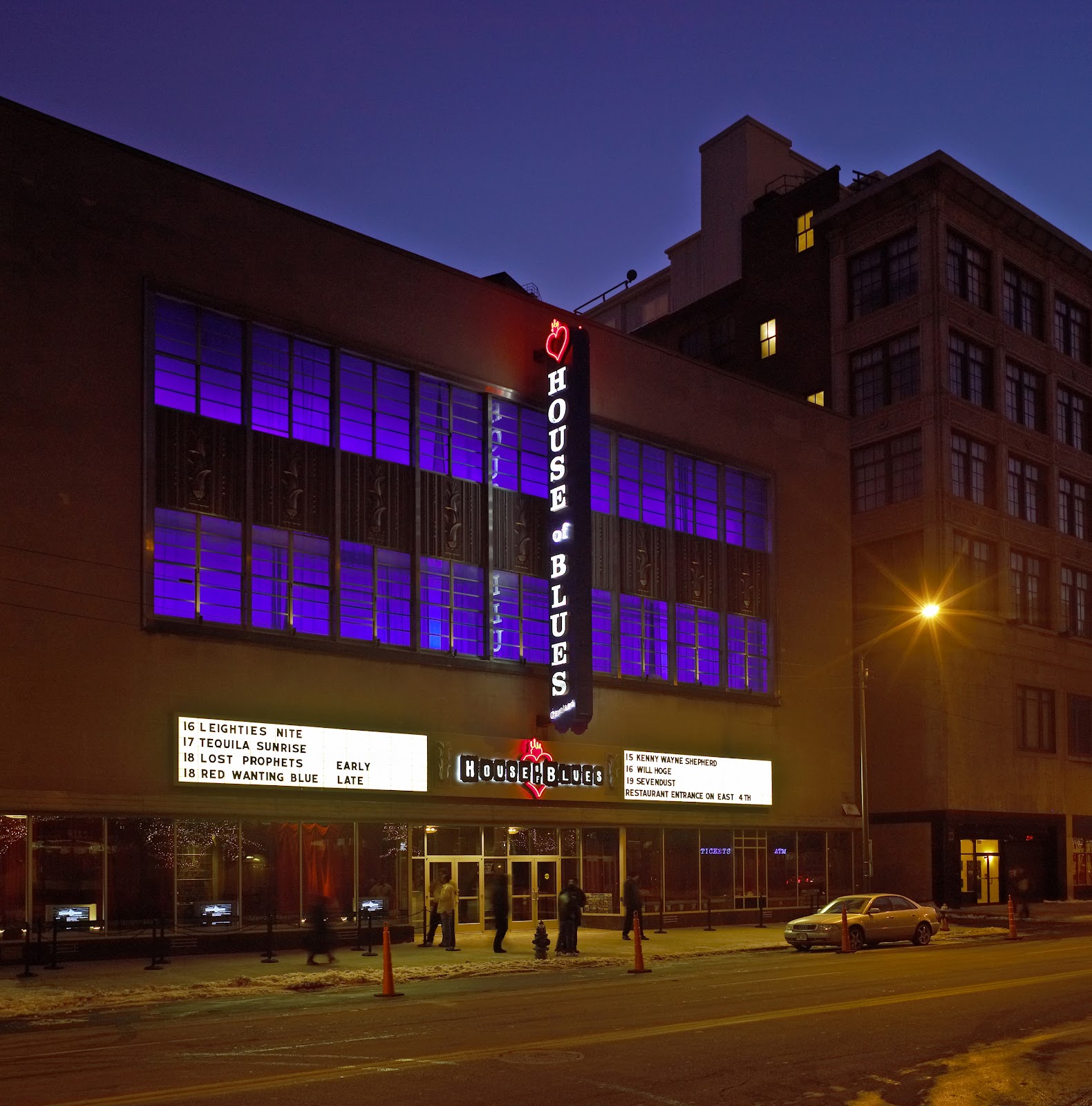
If the venue has signage or a lit facade, that is a timed frame: a lit sign against a sky that still holds colour exists only in the twenty to thirty minutes after sunset, because before that it is invisible against a bright sky and after it the sky is black. Take the sunset time, add fifteen minutes, and confirm in advance that the sign will be lit — outside performance hours that is a request rather than a given.
Cleveland’s weather is almost entirely an advantage for a sealed venue. Persistent overcast through much of the late autumn, winter and spring — this is one of the cloudiest major cities in the country — makes the outdoor block soft and even on the majority of days, which suits portraits well even though it removes raking light from brick. And afternoon thunderstorms in summer or lake-effect snow in winter change nothing indoors at all: the day continues without a decision while every outdoor venue in the city is making one.
Lake-effect snow is localised, sudden and heavy, and it is a logistics question for guests before it is a photographic one. It is also the best natural fill there is, lifting exactly the shadows a low sun carves while fooling a meter by about two stops — and snow falling through the light of a lit venue sign is one of the best frames a night venue can give.
Winter days are short, with sunset in the middle of the afternoon in December, which moves the outdoor block early — easy to accommodate at a venue that does not care what time it is indoors. And a heated interior with cold street air fogs a lens in both directions, so let a body reach ambient before the outdoor block rather than carrying it out cold.
More frames from The House of Blues
The House of Blues wedding photography: common questions
What does a music room reliably give?
Atmosphere: low warm light, dark surfaces, dense decoration with real character, a stage, and a rig capable of things no hotel possesses.
What does it not give?
Daylight, at all. The room is painted dark specifically so that lit things read against it, and that is structural rather than a limitation to work around.
How do you handle the coloured rig?
One gelled source at face height dominating the skin specifically, with white balance set to it. The room stays coloured and the faces stay consistent from frame to frame.
Does bounce flash work?
No. Dark surfaces absorb rather than return light, so every source has to be direct and modified — and a small flash will be defeated by the surfaces and the distances.
What is the compensation?
Steep fall-off. A couple three metres in front of anything else sits against natural darkness, which is free separation and the opposite of the pale-hotel problem.
What freedom does having no daylight give?
The outdoor block can go exactly where the light is best rather than where the schedule allows, because the room will look identical whenever you come back.
More Cleveland, OH venue guides
We are writing a photographer’s guide to every venue we would happily shoot in Cleveland, OH. Here are three more, plus the full index:
- The Huntington Convention Center, Cleveland: Photographing a Convention Venue
- The KeyBank State Theatre, Cleveland: The One Decision That Governs Everything
- The Lago Events Center, Cleveland: A Walk Through a Glazed Event Venue
All Cleveland, OH Wedding Venues →
Planning a wedding at The House of Blues?
The outdoor block is entirely free here. Tell us your date and we will place it well.