 The House of Blues, Cleveland: What It Suits and What It Does Not
The Great Lakes Science Center, Cleveland: The One Decision That Governs Everything
Expansive glass on a lakefront is the best light in the building and the brightest thing in every frame.
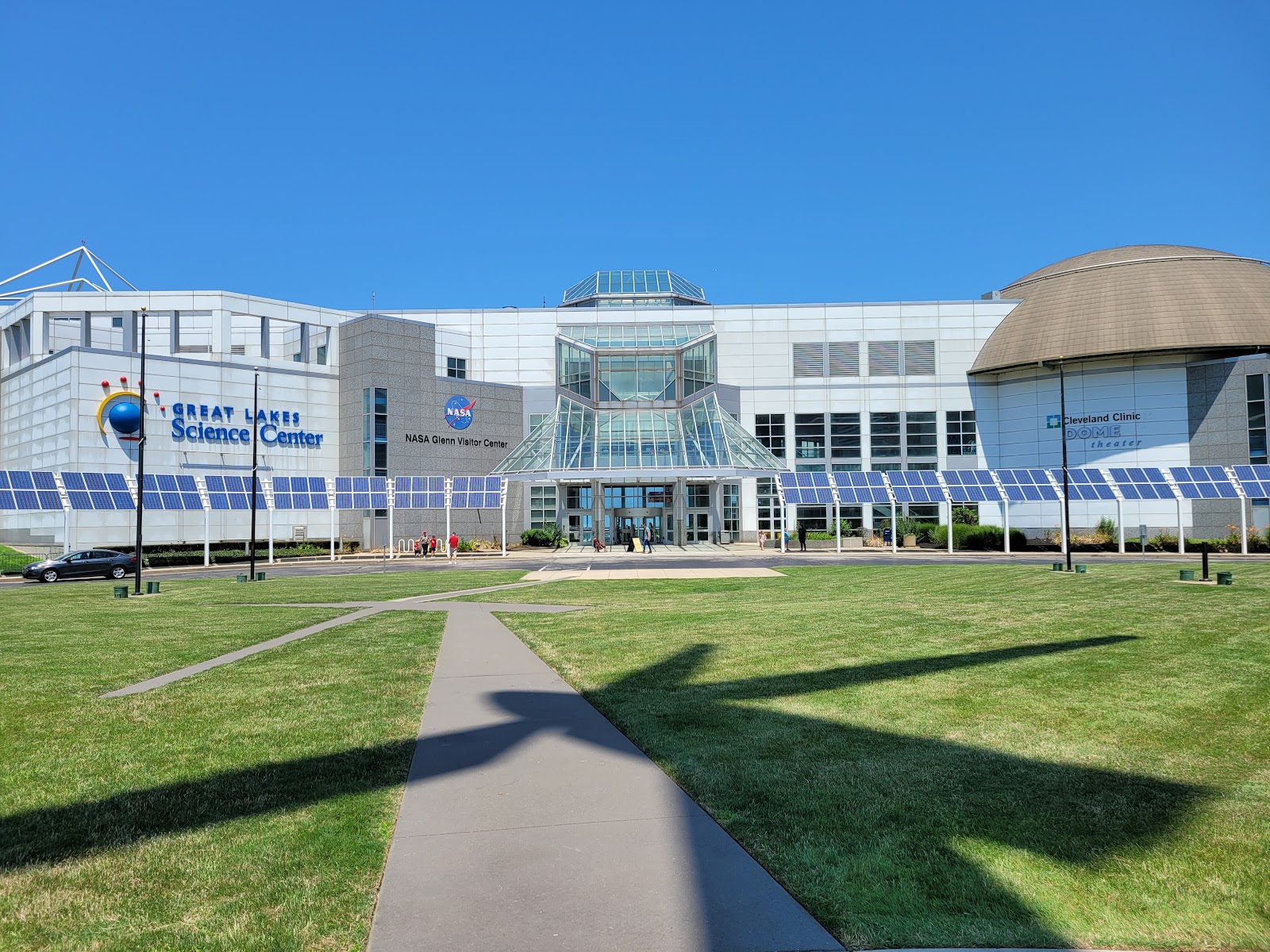
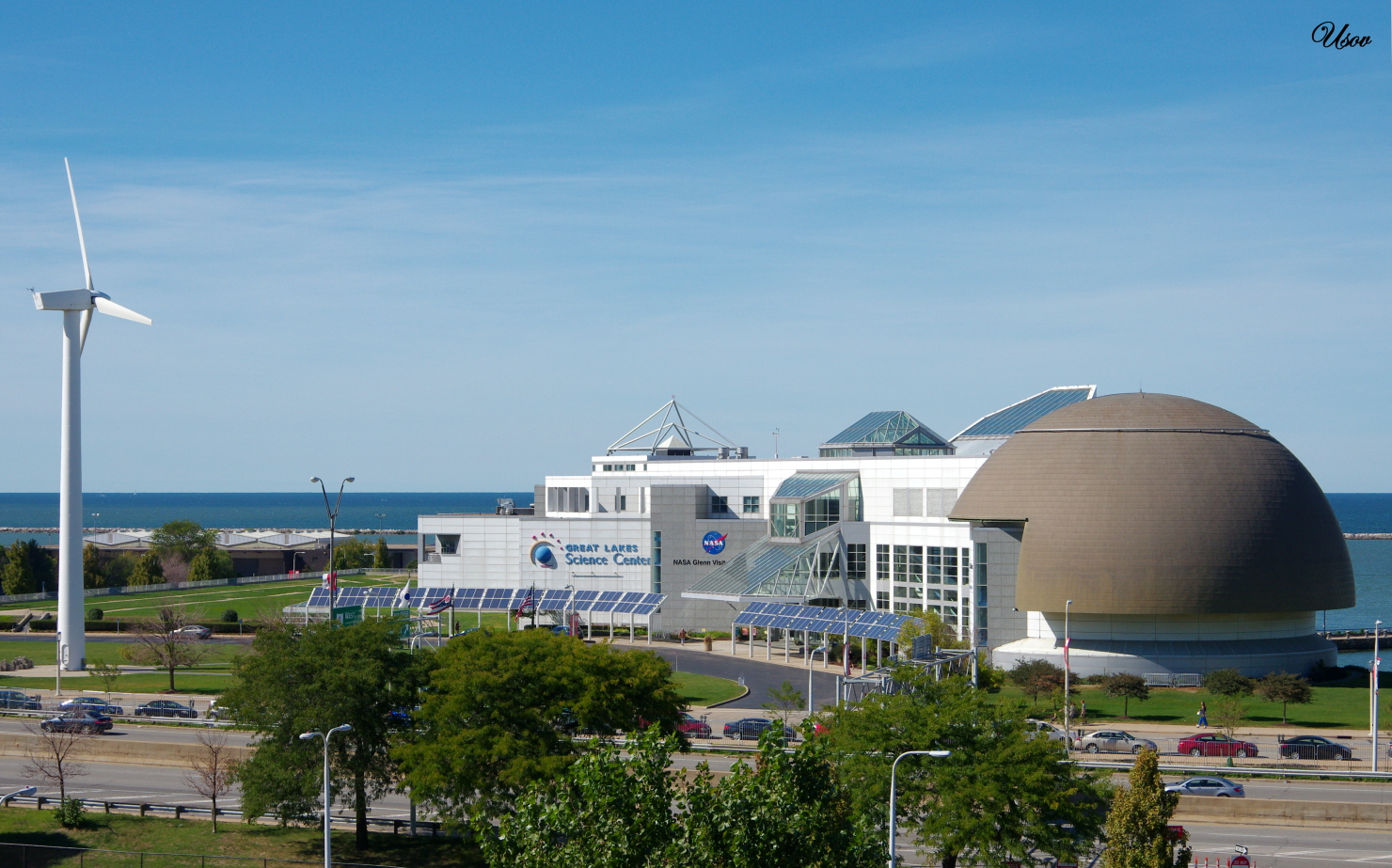
The Great Lakes Science Center’s architecture is a marvel, as its own description has it, with sweeping lines and expansive glass facades that flood the interior with light and create a bright airy atmosphere.
That is accurate and it contains the one decision that governs every frame in the building. Expansive glazing on a lakefront is a genuinely large soft source and the best light a modern interior can have — and in daylight it is four to six stops brighter than the room it lights, which means no single exposure holds both a legible lake and a correctly exposed face.
There are three honest answers and the failure is never choosing one: letting the window blow to white by accident and then trying to recover a lake that was never recorded. Made once, deliberately, the decision settles the day — and the exhibit halls behind the glass are a separate and much simpler problem.
We have not photographed a wedding at the Science Center; heavily glazed lakefront buildings behave consistently. Which elevation the main glazing faces, whether exhibit lighting can be dimmed, and whether the lakefront terrace is usable are the questions for their team.
The Great Lakes Science Center at a glance
| Where | The lakefront, Cleveland, Ohio |
| Character | A science centre with sweeping glazed architecture and exhibit halls |
| The decision | What you do about glass four to six stops brighter than the room |
| Three answers | Blow it, match it with light, or wait for the crossing |
| Ask first | Glazing orientation, exhibit dimming, lakefront terrace access |
The three answers, and the position that makes them work
The first answer is to expose for the room and let the glazing go white. That is not a failure when it is chosen: a wall of glass as a large graphic white shape behind a subject is a legitimate frame, and in a spare modern interior it often reads as deliberate. It also gives the cleanest possible background, with nothing in it at all.
The second is to expose for the view and light the couple to match it. One source at roughly the glazing’s brightness holds both a legible lake and a correctly exposed face, and on a lakefront that is the frame people actually want. It needs real power rather than a small flash, because you are competing with daylight, and it needs the source well off the camera axis so it does not reflect back off the glass.
The third is to wait for the crossing, which happens once a day. For roughly fifteen to thirty minutes after sunset the lake and sky outside fall to about the brightness of the interior lighting, and a single exposure holds the lit room, the couple and the water with a sky that still has colour in it. That is the most valuable twenty minutes in the building.
Which answer is right depends on what is outside. A lake with an unobstructed horizon is emphatically worth matching or waiting for — and one lake-specific fact matters: the water holds the same colour as the sky at the crossing, which doubles the colour in the frame and puts it below the horizon as well as above it. A lakefront crossing beats a city one for exactly that reason.
Position is what makes any of the three work. Pressed against glass a subject is lit from a very oblique angle with the far side of the face falling away; two metres back the same glazing covers them evenly — soft, still clearly directional, and with enough level that the room behind still reads. Two metres back is almost always right, and turning the subject then gives three setups without moving anything.
Which elevation the glazing faces decides which hours are usable. A shaded elevation gives soft directional light all day with no hotspots. A sunlit one gives a hard patch several stops above the room and, through structural members, a grid of hard shadow across anything in it — attractive on a floor and unusable on a face. Sweeping architecture frequently glazes more than one elevation, which means both conditions exist at once and knowing which is which is the most useful five minutes of the day.
Cleveland reduces the problem. This is one of the cloudiest major cities in the country, and under overcast cloud diffuses the light before the glass does — so every elevation behaves like a shaded one, the shadow lattice disappears, and the inside-outside brightness difference narrows. A glazed building here is workable on more days than one in a sunnier city.
The exhibit halls, and the lake outside
Exhibit halls are the simpler problem and they are the opposite condition: dark by design, with internally lit, saturated and often moving displays. The consequence on skin is that a face lit by two coloured displays has two colour casts simultaneously, and white balance is a single global adjustment — it can correct one or the other, never both.
One gelled source at face height, off the camera axis, bright enough to dominate what falls on skin, with white balance set to the gel, is the whole method. The exhibits then stay as coloured as they are, which is what makes the frame interesting, while the faces stay consistent.
Dark halls with dark ceilings remove bounce and the distances are real, so power and modifiers have to assume working distance — and the compensation is steep fall-off, which gives free separation with no equipment at all.
The most valuable request at any science venue is whether exhibit lighting can be dimmed or switched in the spaces a wedding uses. A hall with most displays off and two left glowing converts thirty competing sources into two deliberate ones, which beats anything equipment can achieve.
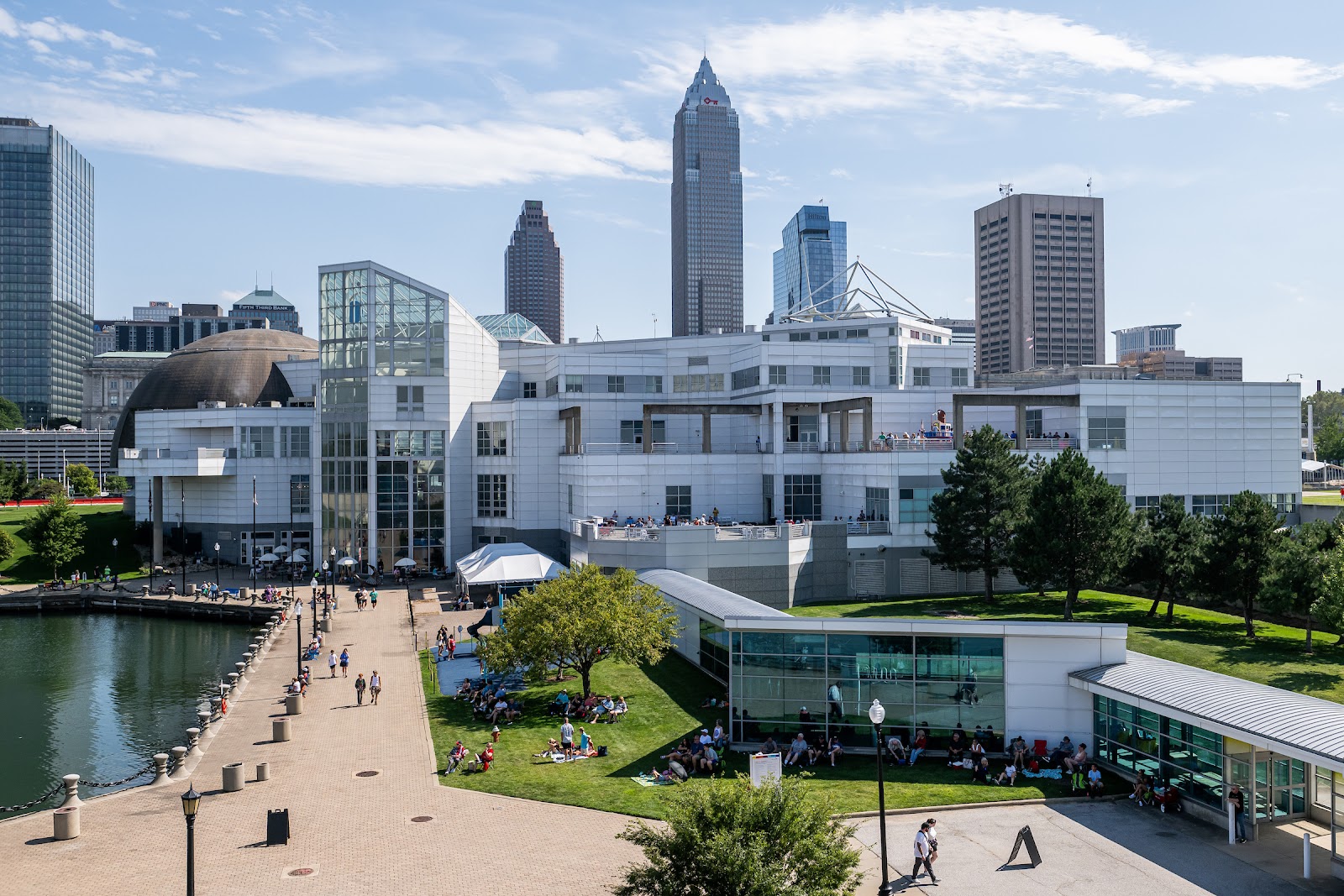
Outside, the lake does three things worth planning for. It is a broad flat reflector, so any glazed space facing it receives light twice — from the sky and bounced up off the surface — which raises ambient and fills faces from below. It gives depth to compress, so a long lens stacks shoreline, water and horizon into bands where a wide lens reduces them to a strip. And it gives an unobstructed horizon, which means the sky fills the upper frame and the golden hour is long rather than clipped short by buildings.
Two lake facts matter specifically. Cleveland’s shore faces north, so the sun sets well north of west in summer and south of west in winter — a sunset over this water is a summer proposition, and in winter the same view has no sunset in it at all. Anyone planning a crossing frame should know which season they are in.
And lakefront wind is stronger and gustier than a street back from the water, which matters for a veil, for hair and for any light stand. Still water mirrors early in the day and breaks into texture as the breeze builds, so a reflection frame is a morning proposition.
After the crossing the glass inverts completely and in a heavily glazed building the effect is total: whole walls reflect the room and the lake disappears. Lights go off-axis, frames go oblique, and glazed corners reflect from both sides at once — check the corners before guests arrive.
- Look out of the glass in the first five minutes, not at the rooms
- Two metres back from the glazing, not pressed against it
- Sunset plus fifteen; on a lake the water doubles the colour
- One gelled source owns the faces in the halls; let displays stay coloured
- Check the season — a sunset over this lake is a summer frame only
Cleveland's year
Seasonal light changes a glazed lakefront building more than it changes anything masonry, and Cleveland’s seasons are sharp.
Summer brings a lake breeze that keeps the shore cooler than inland, which makes a lakefront block more comfortable than a city one on a humid afternoon. Afternoon thunderstorms are common rather than rare — and for a glazed building a storm over water is an asset rather than a problem: a cell crossing the lake, seen from inside a lit room with rain running down the glass, is a frame very few weddings have.
Autumn gives the clearest air of the year, which matters for any frame looking out: a long-lens view across water is sharper in October than in August. It also gives the most stable weather of the year, which for a venue whose best frame is timed to the minute is worth something.
Winter is the hard season and it cuts both ways. Days are short, with sunset in the middle of the afternoon in December, which means the building’s daylit character may be gone before guests sit down and the crossing may fall before or during the ceremony rather than after. Lake-effect snow is localised, sudden and heavy, and it is a logistics question for guests as much as a photographic one.
But cold clear air gives the deepest and longest-lasting sky colour of the year, so the crossing itself is better in winter. And a frozen or snow-covered lake seen through expansive glazing from a warm lit interior is a frame very few venues in the country can offer — genuinely worth planning a winter date around, provided the travel question is faced honestly.
Snow is also the best natural fill there is, lifting exactly the shadows a low sun carves while fooling a meter by about two stops.
Spring brings the persistent overcast this building likes best: soft, even, shadowless light through the whole envelope, position barely mattering and no lattice at all. Add half a stop to a stop for the bright grey sky, and bring shape back subtractively by placing people near something dark, because a uniformly bright sky has no direction and adding a flash generally makes things worse.
One equipment note: a heated interior and cold lake air fog a lens comprehensively in both directions, and the crossing will not wait. Get a body out to ambient temperature well before the window rather than carrying it out cold.
More frames from The Great Lakes Science Center

The Great Lakes Science Center wedding photography: common questions
What is the one decision?
What to do about glazing four to six stops brighter than the room. Blow it to white deliberately, light the couple to match the view, or wait for the crossing — but choose.
Why is a lakefront crossing better than a city one?
Because the water holds the same colour as the sky, which doubles the colour in the frame and puts it below the horizon as well as above it.
How far back from the glass?
About two metres. Pressed against it the light is very oblique and the far side of the face falls away; two metres back it is soft, still directional, and the room behind still reads.
Is a sunset over the lake always available?
No. Cleveland’s shore faces north, so the sun sets north of west in summer and south of west in winter — a sunset over this water is a summer frame only.
How do you work in the exhibit halls?
One gelled source at face height, bright enough to dominate what falls on skin, with white balance set to it. Two coloured displays on one face have no single global correction.
Is winter worth it here?
For the crossing, yes — cold clear air gives the deepest sky colour of the year, and a snow-covered lake through glass from a warm lit room is a frame very few venues can offer.
More Cleveland, OH venue guides
We are writing a photographer’s guide to every venue we would happily shoot in Cleveland, OH. Here are three more, plus the full index:
- The Greater Cleveland Aquarium: Four Ways Out of the Blue Light Problem
- The House of Blues, Cleveland: What It Suits and What It Does Not
- The Huntington Convention Center, Cleveland: Photographing a Convention Venue
All Cleveland, OH Wedding Venues →
Planning a wedding at The Great Lakes Science Center?
One decision, made in five minutes, and one clock time. Tell us your date.