 The Redd on Salmon Street: Building the Shot List
Tryon Creek State Park, Portland: A Walk Through a Forest Venue
Pacific Northwest forest is darker than any deciduous wood and green in every direction. Both need planning for.
Tryon Creek State Park is a 658-acre park minutes from downtown Portland, known for dense forest and a network of trails following the creek.
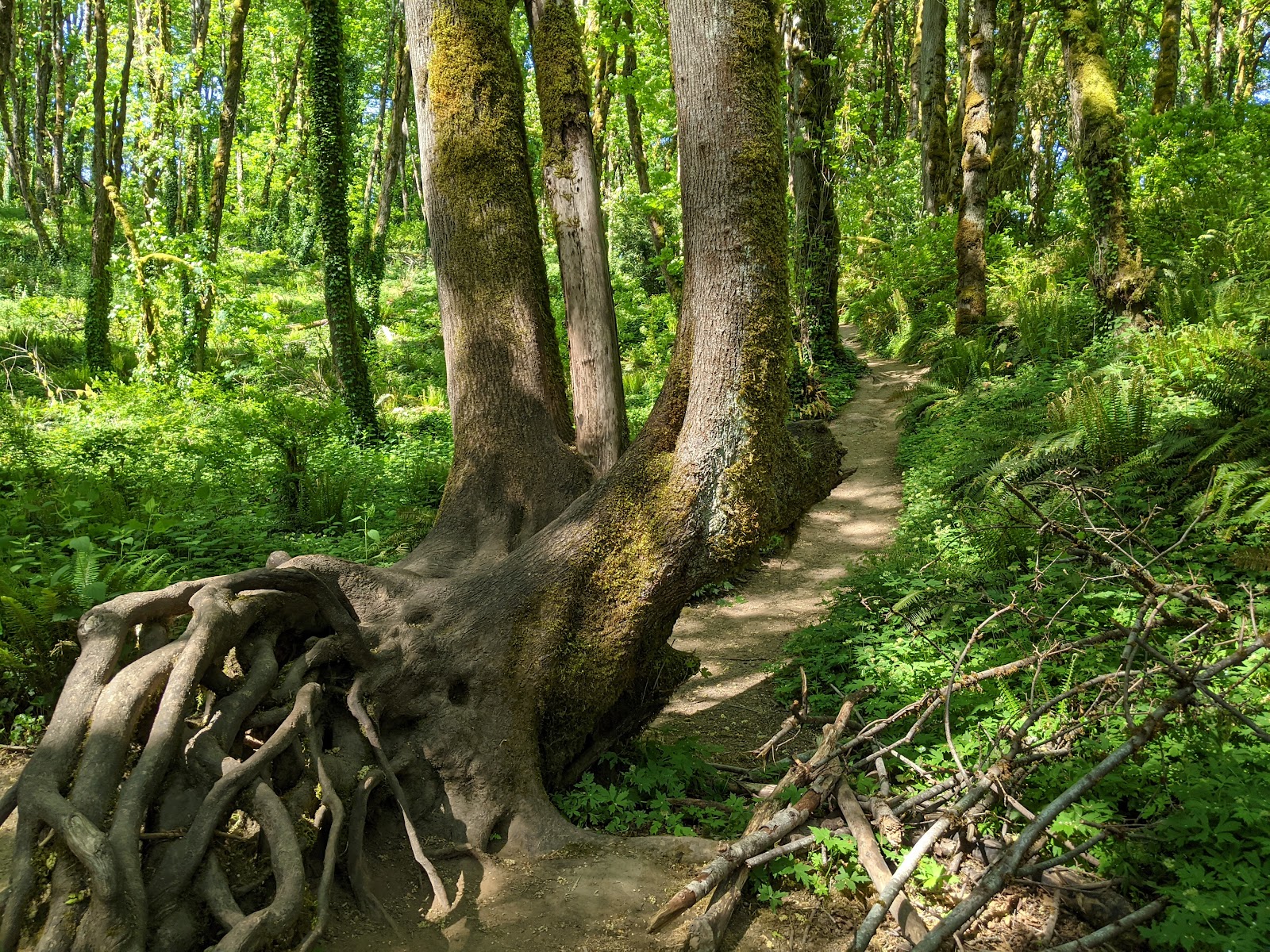
Dense Pacific Northwest forest is a specific photographic environment and it differs from an eastern deciduous wood in two measurable ways. It is much darker, because conifers do not thin: an evergreen canopy blocks light all year, so the exposure difference between open ground and deep forest is commonly four stops rather than two. And it is far greener, because the light that does arrive has bounced off needles, ferns and moss — and in this climate moss covers trunks, branches and ground alike, so the green cast is not occasional but constant.
This is a walk through the site, because a forest venue is a sequence of positions rather than a room. We have not photographed a wedding at Tryon Creek; Pacific Northwest forest behaves the same throughout the region. What permits a ceremony requires, which areas can be reserved, what vehicle and equipment access exists along the trails, and what shelter is available are the questions for the park’s staff — and the last two matter more here than at most venues.
Tryon Creek State Park at a glance
| Where | Minutes from downtown Portland, Oregon |
| Character | 658 acres of dense conifer forest with trails along a creek |
| The light | Four stops below open ground, and green in every direction |
| The asset | Soft, directional, enormous-scale forest light where it opens |
| Ask first | Permits, reservable areas, trail access for equipment, shelter |
Into the forest: the level, the green and the openings
The first thing to establish on arrival is exposure, because the drop from a car park to a trail under mature conifers is larger than most photographers expect. Four stops is a working assumption, and it means a fast lens at a raised ISO is the baseline rather than a fallback — and it means a small flash intended to fill a face outdoors will be doing more work than it would in open shade.
The second is the green, and it has to be handled deliberately because auto white balance will not do it. Light bounced off needles, fern and moss is genuinely green, and the cast is localised to whatever is near the foliage, so a global correction will push the rest of the frame magenta. Set a custom white balance on a face in the position actually being used, and reset it when the position changes materially.
The counter to green is a neutral bounce surface, and in a forest that means bringing one. A white or silver reflector held low does two jobs at once — it puts neutral light back into the shadows and it fills the overhead direction that forest light arrives from — and it is the single most useful thing to carry into woodland.
The third thing to find is the openings, because they are where the photography happens. Dense forest is uniformly dark and uniformly green; the frames come from where the canopy breaks — a clearing, a trail junction, a creek crossing, a fallen tree’s gap. In those places light comes down as a shaft or a pool and the difference between it and the surrounding forest is dramatic.
A clearing in dense forest is one of the best light sources available anywhere, and the reason is geometric. The canopy around it blocks light from the sides, so the illumination arrives from a defined aperture above — which is a very large soft source with natural falloff into darkness on all sides. A couple standing just inside the edge of a clearing is lit softly from above and one side, against a background that goes to near-black. That is a studio setup made by trees.
The caution is dapple, the same canopy in its bad mood. Where sun does come through leaves and needles it puts hot spots several stops above the surrounding shadow across a face, shifting with any breeze, impossible to correct or predict. In a conifer forest dapple is finer and harder-edged than under broadleaves, which makes it worse rather than better. Full shade, an opening, or wait — but never a face in dapple.
The creek, the trails and the practicalities
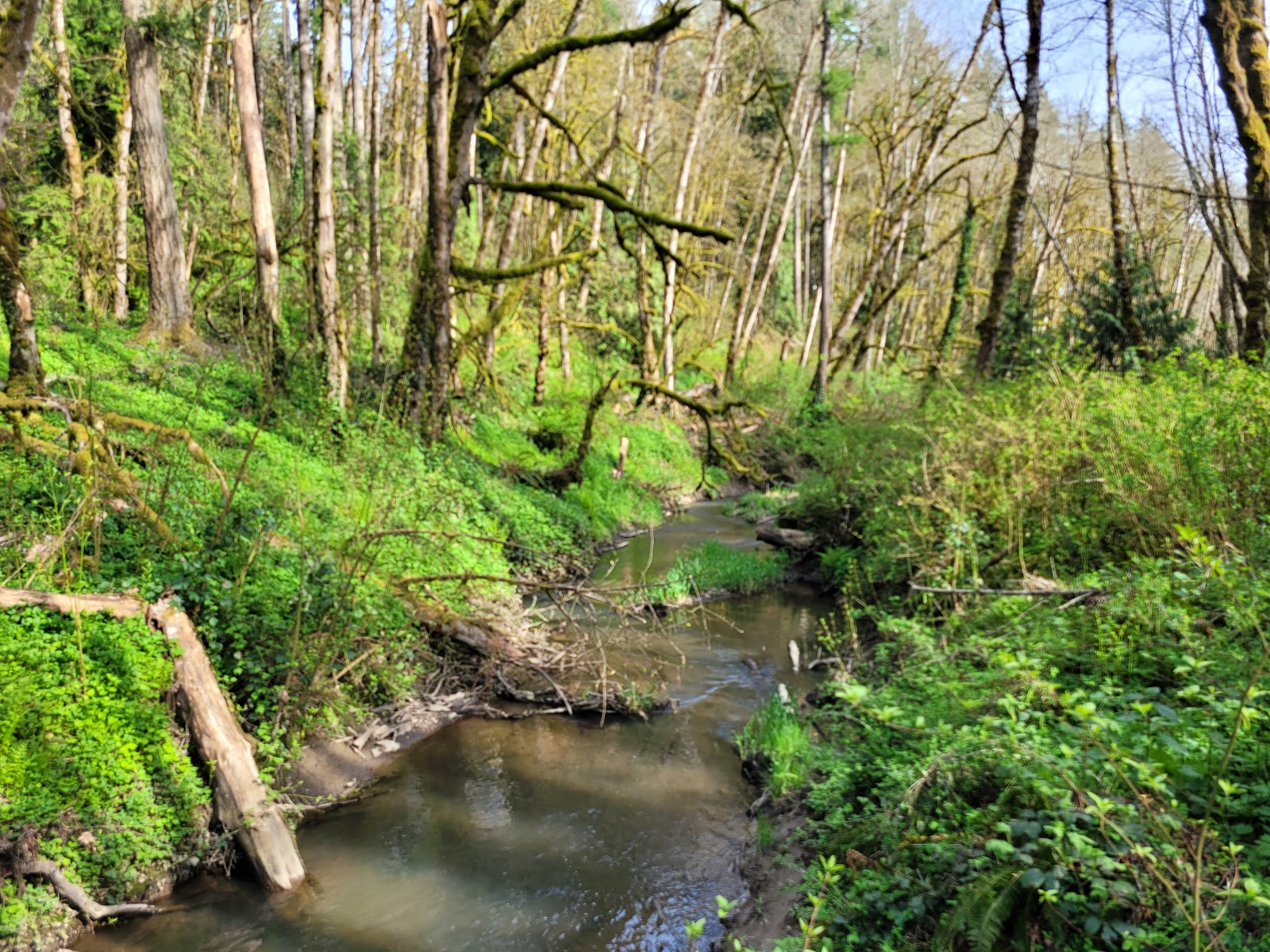
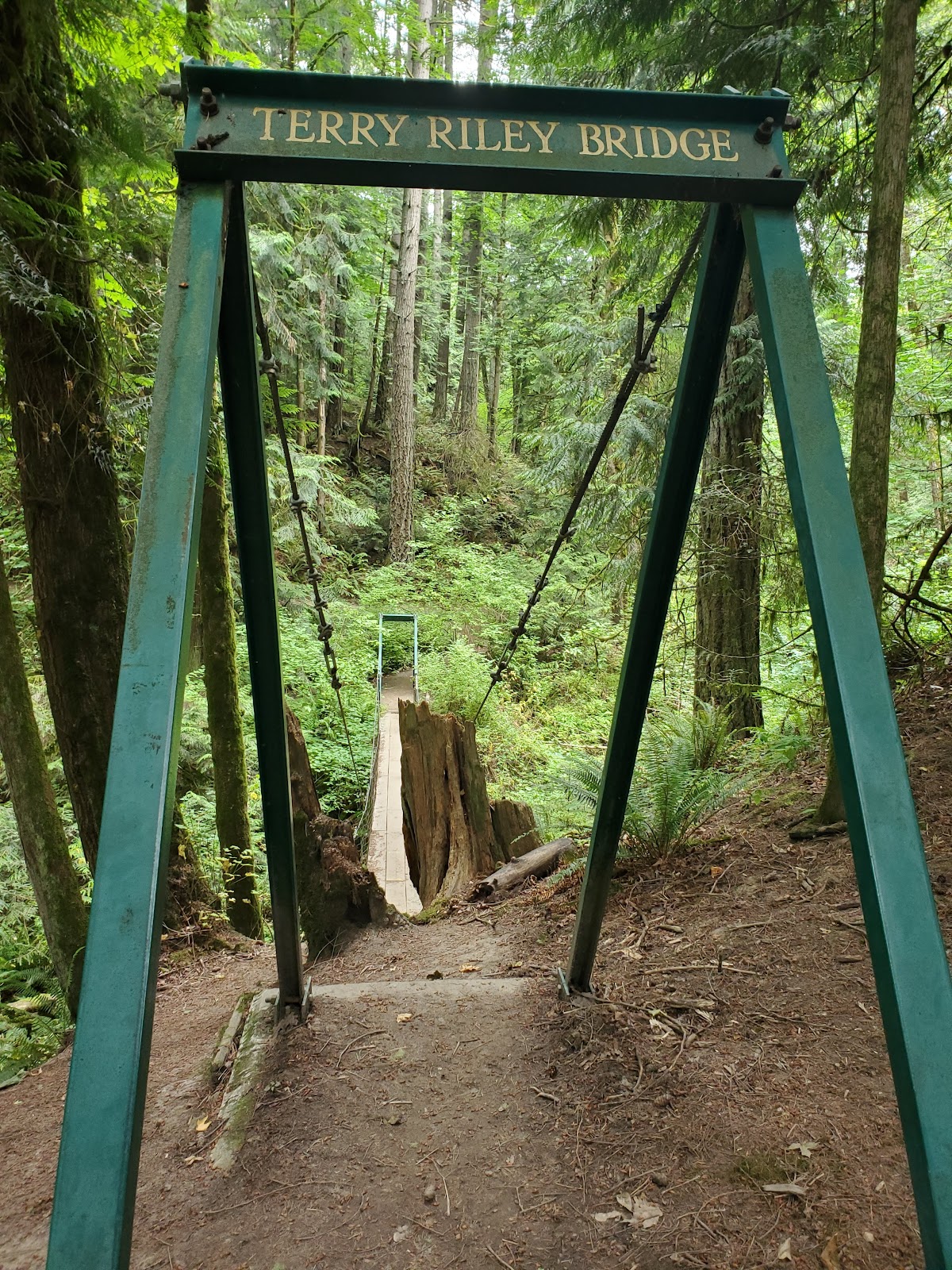
A creek is the other natural opening, because water needs a gap in the canopy above it. That makes a creek line the brightest continuous feature in a forest and therefore the most useful corridor to work along — light comes down the watercourse, the banks fall away, and there is usually a rock, a bridge or a crossing to place people on.
Moving water needs a shutter speed decision rather than a default. Fast enough to freeze gives texture and detail; slow enough to blur gives a smooth band that contrasts with sharp forest. Both are good and they are different photographs, so take one of each rather than choosing on the day.
Wet rock and wet moss are dark and saturated, which is an asset: they read as deep green and near-black rather than as muddle, and they make a bright dress or a lit face separate from the background with no equipment at all.
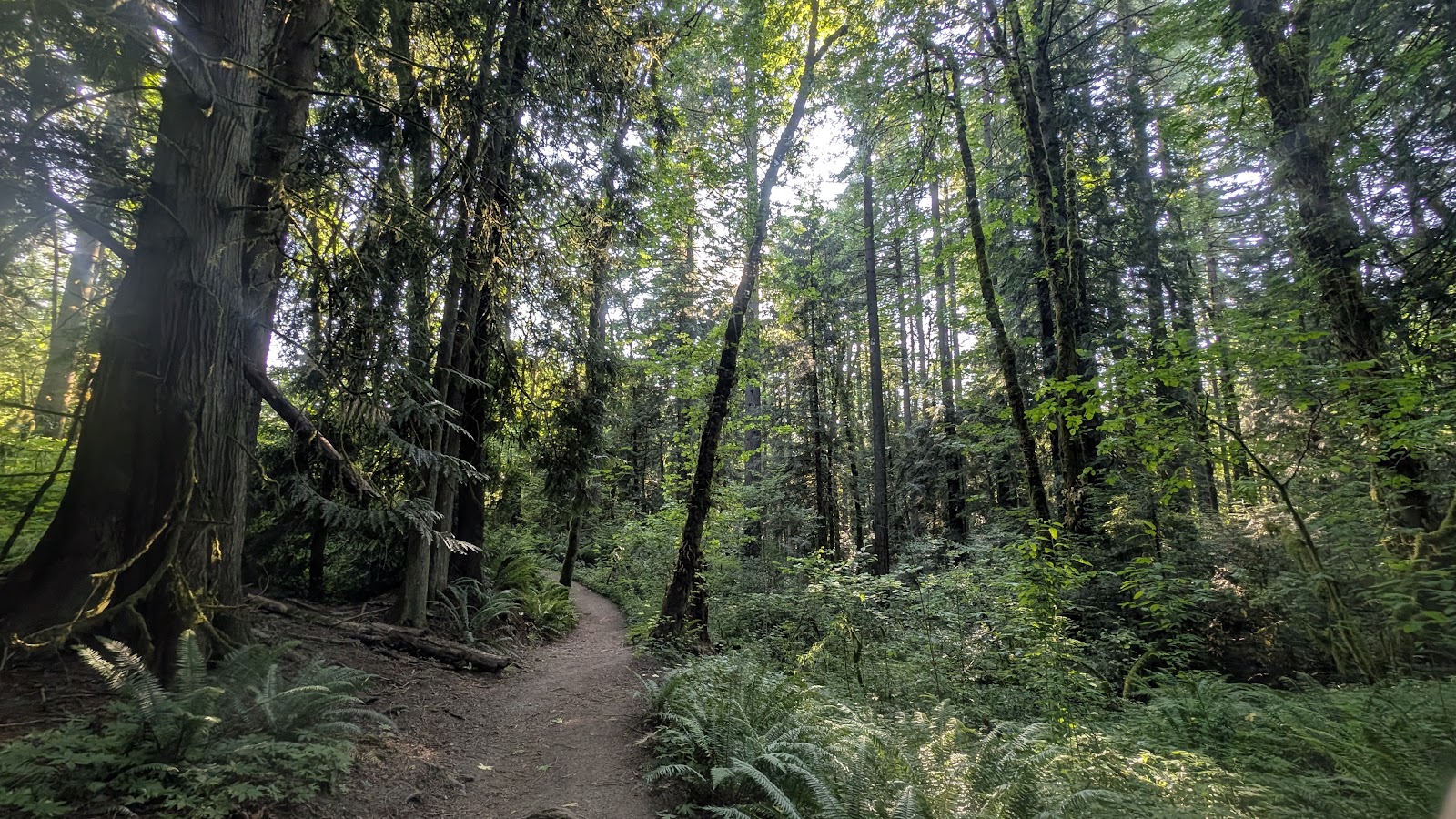
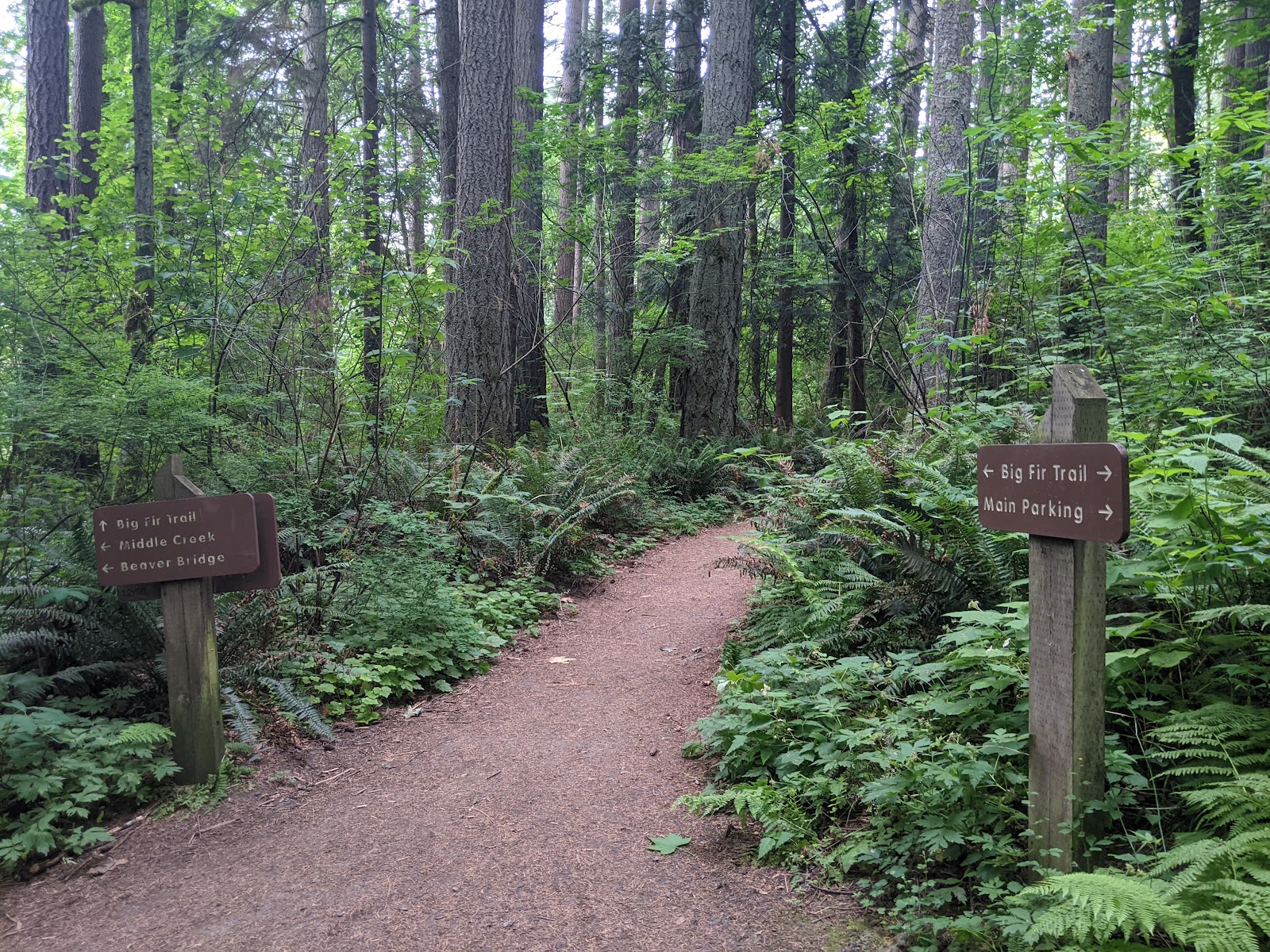
Trails are the practical constraint and they matter more here than at most venues. A network of paths through 658 acres means the distance from a car park to a good position may be substantial, and that governs what can be carried. A forest portrait block with two light stands and a large modifier is a different proposition from one with a reflector and a single speedlight, and the honest answer is usually the second. Establish the walking distances in advance.
Related to that: there is no power, so everything runs on batteries, and in low forest light the flash will be working harder than usual. Carry more than seems necessary.
Guest access is the other question. A forest ceremony position that is five minutes along an unpaved trail is not accessible to everybody, and that is a conversation for the couple rather than a discovery on the day. It also affects where a group photograph can happen, which needs a decided position — usually the widest clearing or a trailhead rather than anywhere deep in.
Ferns are worth mentioning as a compositional element because they are abundant here and they work: a foreground of fern shot at a wide aperture gives a soft green frame at the bottom of a picture, and sword fern in particular holds its shape all year.
- Assume four stops down from open ground; fast lens, raised ISO
- Set a custom white balance on a face; forest green is localised
- Carry a reflector — it fixes the green and the overhead direction at once
- Work the openings: a clearing edge is a studio setup made by trees
- Establish walking distances before deciding what to carry
Portland light through the year, and rain
Portland’s light governs a forest venue more than anywhere else, and it does so in two opposite ways depending on the season.
Overcast is the default for much of the year and in a forest it is a mixed blessing. It removes dapple entirely, which is a real gain, and it gives soft even light wherever the canopy opens. But it also lowers the level further, so deep forest under heavy cloud can be very dark indeed — and a bright grey sky visible through the canopy is a hard bright element in an otherwise dark frame, which needs either excluding or accepting as a blown highlight.
Clear weather brings the opposite trade: much more light, and dapple everywhere the sun reaches. On a clear day the workable positions are the openings and full shade, and the middle of the day is the worst of it.
Summer here has very long days, with sunset late enough in June that the golden hour arrives after a reception has started. In a forest that matters less than elsewhere, because deep forest does not have a golden hour — the light reaching the ground is bounced rather than direct, so it changes in level far more than in colour through the day. What does change is the last half hour, when low sun comes in horizontally beneath the canopy rather than down through it, and lights the trunks from the side. That is the best moment in the forest and it is brief.
Winter is short-day territory: the whole usable outdoor window may be a few hours, and in dense forest under December cloud the level is at its lowest. A December forest wedding needs an early, protected, tightly planned outdoor block.
Rain is the thing that makes this venue better rather than worse, and Portland rain suits it. It tends to be persistent and light rather than violent, which means it can be worked in over hours rather than waited out. A wet conifer forest is genuinely transformed: bark goes black and textured, moss saturates to a deep green, ferns hold water that catches light, and the canopy itself provides real cover — walking twenty metres in under mature trees reduces rain noticeably.
What a forest has no answer to is a guest sitting in the open for an hour in it, so shelter for people remains the honest question: what it is, how many it holds, and when the decision gets made.
More frames from Tryon Creek State Park
Tryon Creek State Park wedding photography: common questions
How much darker is conifer forest than open ground?
Commonly four stops, because evergreen canopy blocks light all year and does not thin. A fast lens at a raised ISO is the baseline, and any flash will be working harder than it would in open shade.
Why is the green cast so strong here?
Because the light arriving has bounced off needles, ferns and moss, and in this climate moss covers trunks, branches and ground alike. The cast is localised, so a global correction pushes the rest of the frame magenta.
What is the single most useful thing to carry?
A white or silver reflector. Held low it puts neutral light back into the shadows and fills the overhead direction forest light arrives from — two problems solved with one object.
Where do the frames come from?
The openings. A clearing edge is a studio setup made by trees: the canopy blocks light from the sides so illumination arrives from above, falling off to near-black all around.
Why is dapple worse in conifer forest?
Because needles make a finer, harder-edged pattern than broadleaves, so the hot spots are smaller and more contrasty across a face. Full shade or an opening, but never a face in dapple.
Does rain ruin a forest wedding?
It improves the photographs — black bark, saturated moss, water on ferns — and mature canopy provides real cover. What it does not solve is guests sitting in the open, so shelter for people is the honest question.
More Oregon venue guides
We are writing a photographer’s guide to every venue we would happily shoot in Oregon. Here are three more, plus the full index:
- The University Club, Portland: Photographing a Historic Private Club
- The Wishing Tree Estate, Portland: One Frame and How It Is Made
- The Woodlark Hotel, Portland: How the Light Moves
Planning a wedding at Tryon Creek State Park?
A forest venue is an exposure plan, a reflector and a shelter question. Tell us your date.