 The Henry Clay: Lighting a 1920s Lodge Building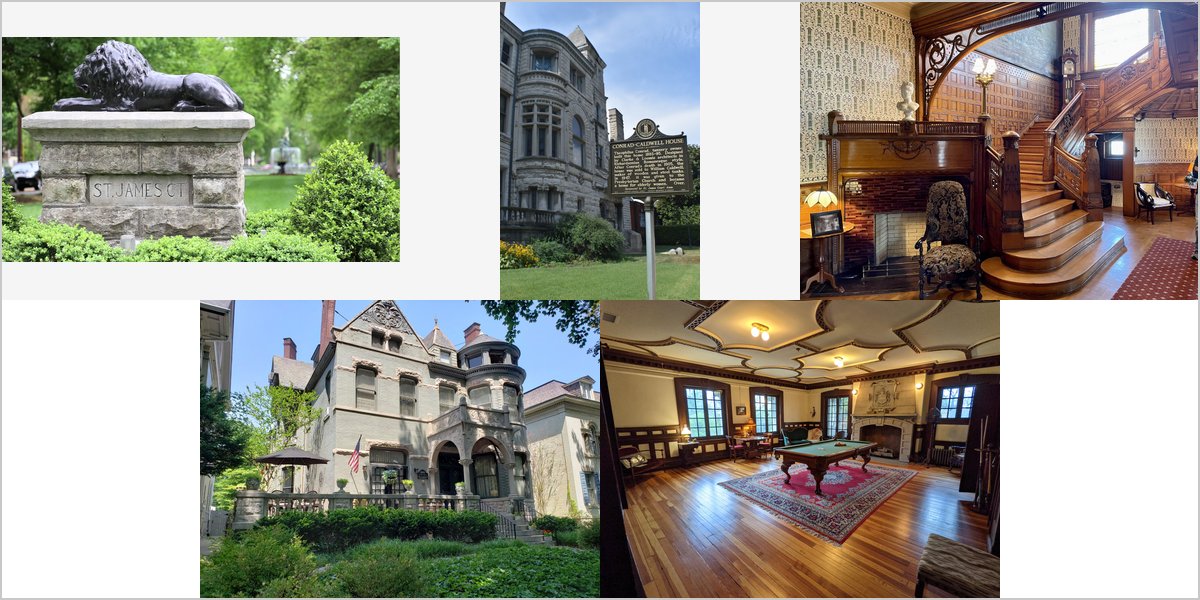
April 17, 2026
The Conrad-Caldwell House: A Walk-Through of a Richardsonian Mansion
Heavy stone outside, dark carved timber inside. The exterior is the frame that sells this venue; the interiors need a photographer who brings light.
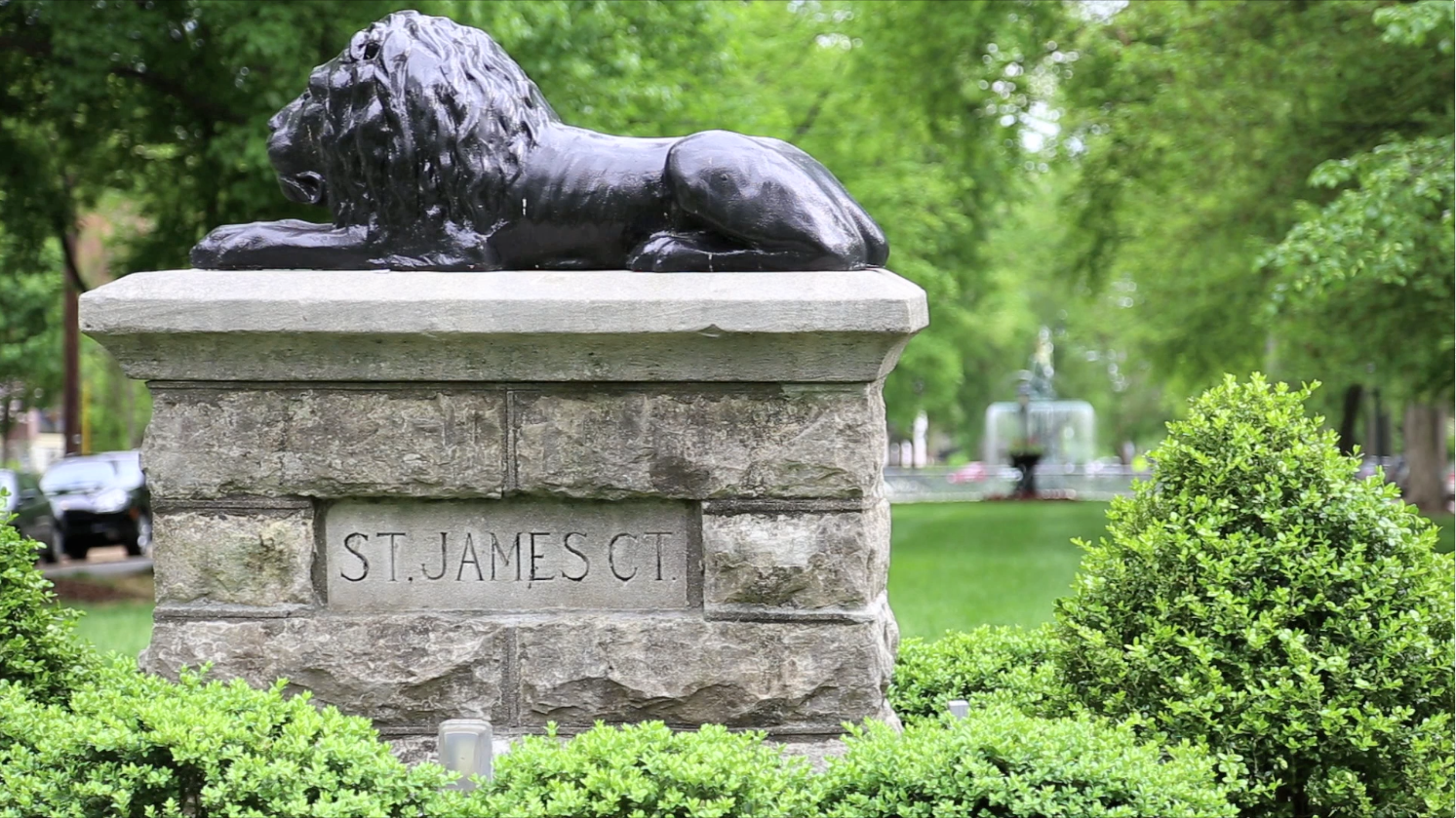
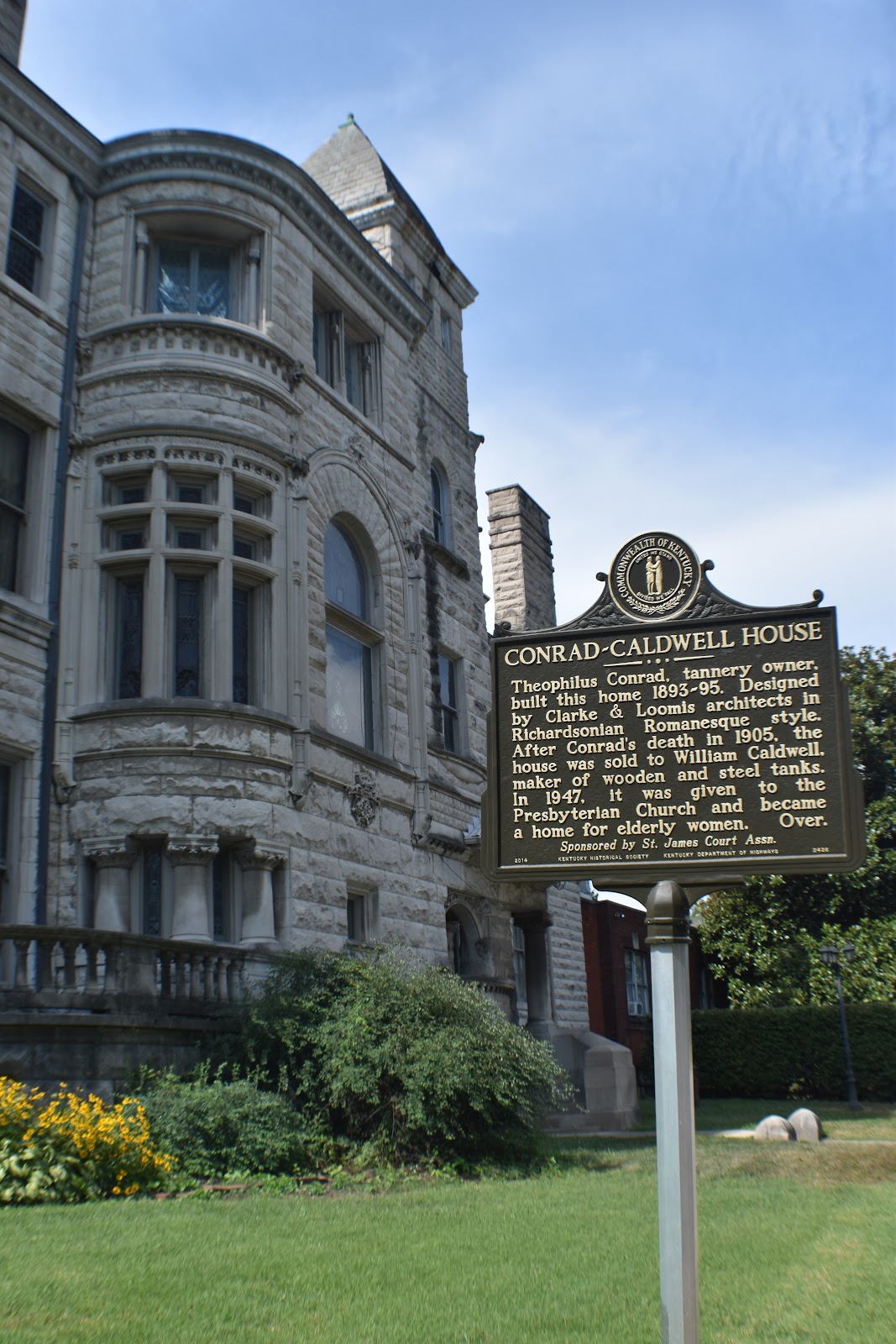
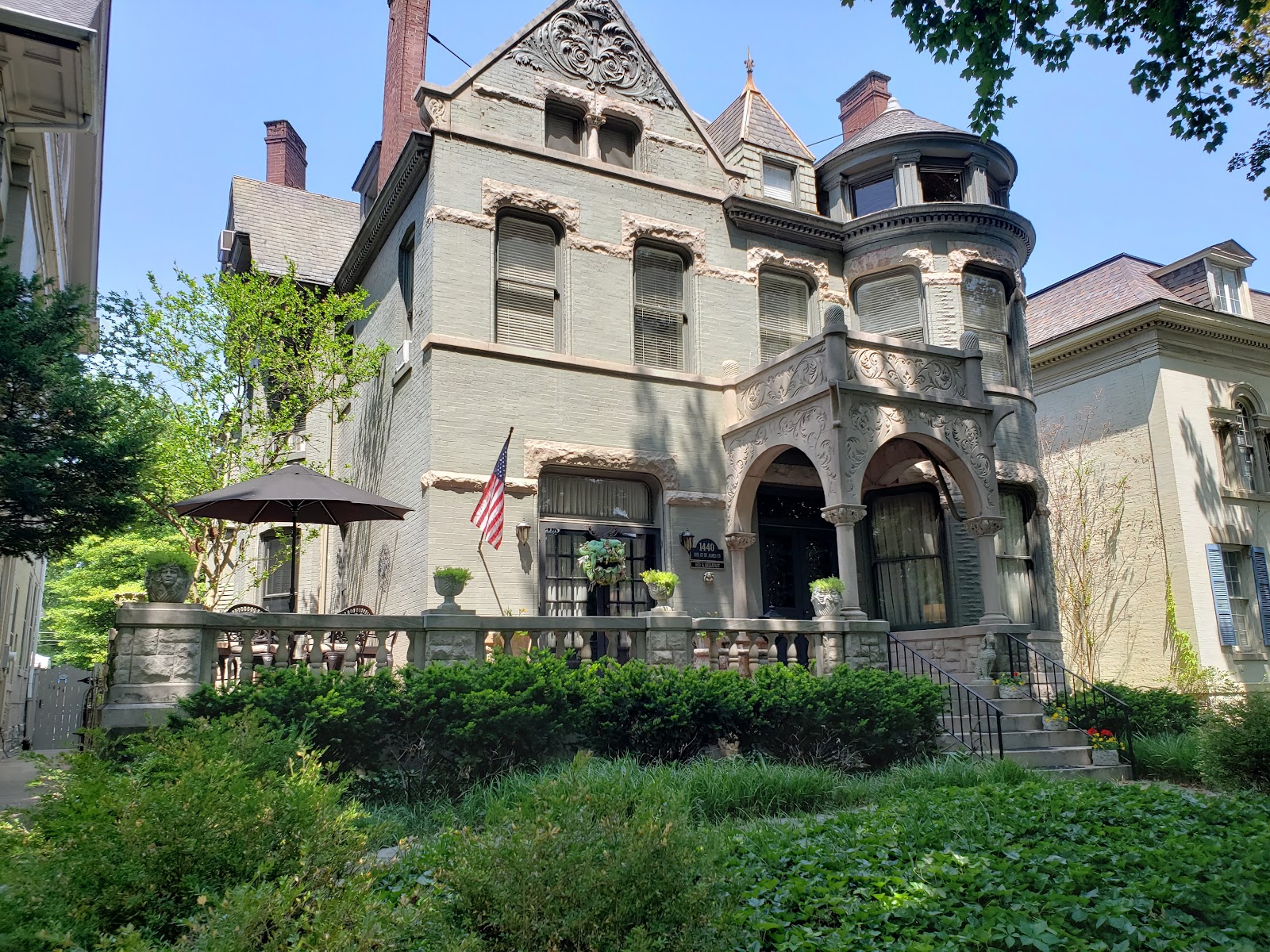
The Conrad-Caldwell House was completed in 1895 on St James Court in Old Louisville, built in the Richardsonian Romanesque style — rough-faced limestone, deep-set arched openings, heavy massing and a turret. It now operates as a house museum with event use, and its interiors retain carved woodwork, decorative detail and the general density of a late-Victorian mansion.
Old Louisville around it is one of the largest surviving Victorian residential districts in the United States, and St James Court in particular is a formal court with a fountain and mature trees. That setting is a substantial part of the venue’s photographic value, because the house’s own interiors are dark and its best frames are outside.
This is a walk-through in shooting order. We have not photographed a wedding here. The optics of heavy stone exteriors and dark carved interiors are consistent; which rooms are available, what a house museum permits and any conservation limits are for their team, and a building of this decorative significance will have real ones.
Conrad-Caldwell House at a glance
| Where | St James Court, Old Louisville, Kentucky |
| Built | 1895, Richardsonian Romanesque in rough-faced limestone |
| Character | Heavy stone massing with a turret; dense carved-timber interiors |
| Light | Dark inside; excellent open shade and formal setting outside on St James Court |
| Assume | House museum conservation limits on flash, stands and access |
Start outside: rough stone is the best thing here
Richardsonian Romanesque is built from rough-faced stone, and rough stone has a photographic property smooth materials lack: it holds raking light. When the sun is low and strikes the facade at a shallow angle, every projection casts a tiny shadow and the whole wall comes alive with texture. The same wall photographed under flat overcast looks grey and inert.
So the establishing frame here is a late-afternoon or early-evening one, with the sun low and to one side. Deep-set arched openings become genuinely dark voids against the lit stone, the turret casts a long shadow, and the massing reads clearly. Shot at midday under high sun, the same building looks flat and considerably less impressive.
St James Court supplies the rest. A formal court with a fountain, mature trees and matching Victorian frontages gives you high open shade for portraits, a water feature, long sightlines down the court, and room to arrange a large group — all things the house itself cannot provide.
Inside: the entrance hall and the staircase
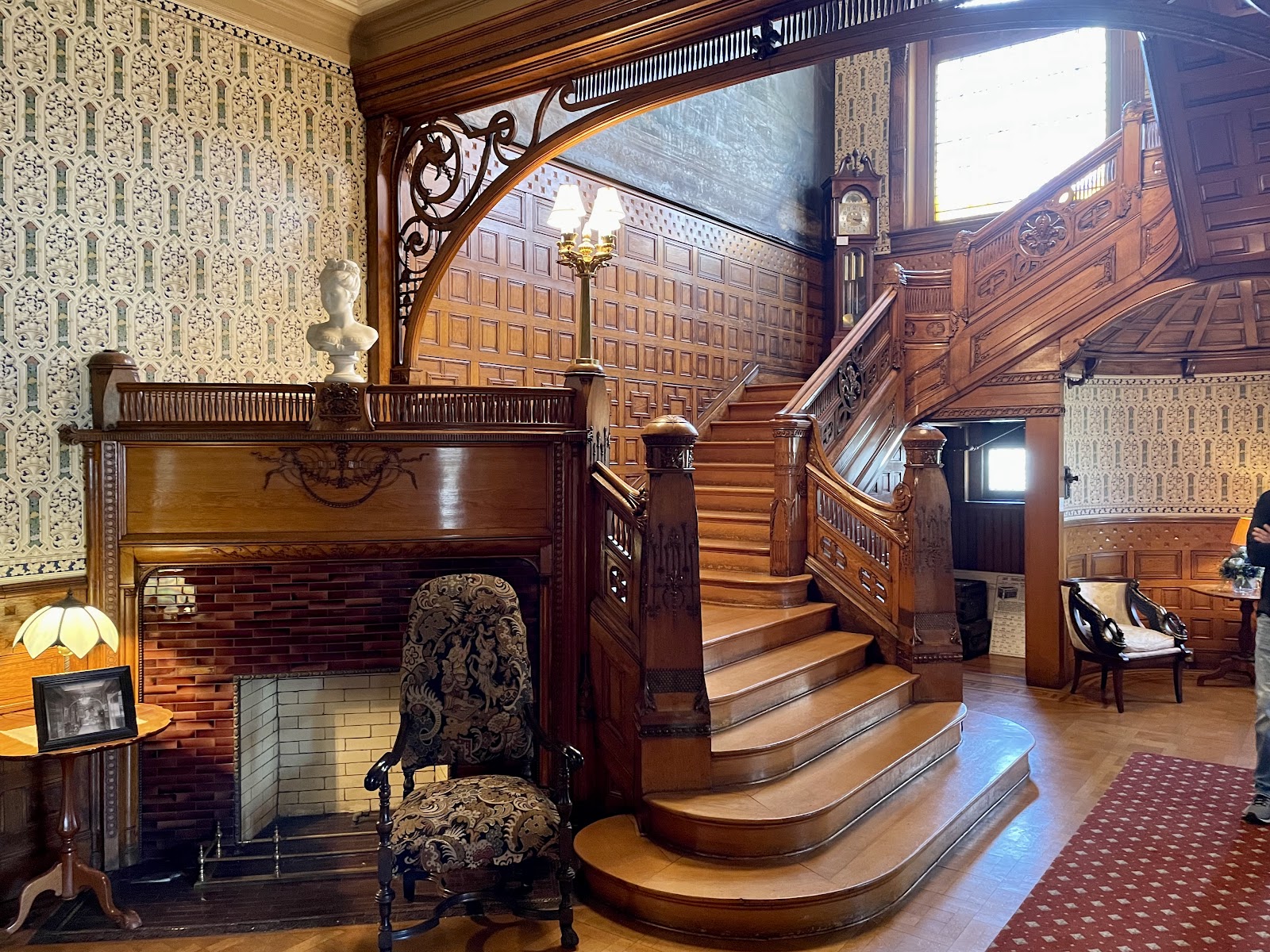
In a mansion of this period the entrance hall and stair are usually the most elaborate spaces, and here they are the most useful photographically too. A grand stair gives verticality, leading lines and elevation, and there is almost always a window on the landing acting as a directional key — side light at head height, which is precisely what a dark panelled house cannot otherwise supply.
Place the couple a few steps below the landing window, turned into it, and you have the best-lit frame indoors. Then shoot the stair from below for height and from above so the dress falls away on the steps. Ten minutes covers all three and they are the strongest interior images of the day.
Carved woodwork and decorative detail are worth their own close frames. Dense Victorian ornament competes badly with faces but photographs beautifully alone, and those detail images give a gallery somewhere to breathe.
The reception rooms, and the hierarchy problem
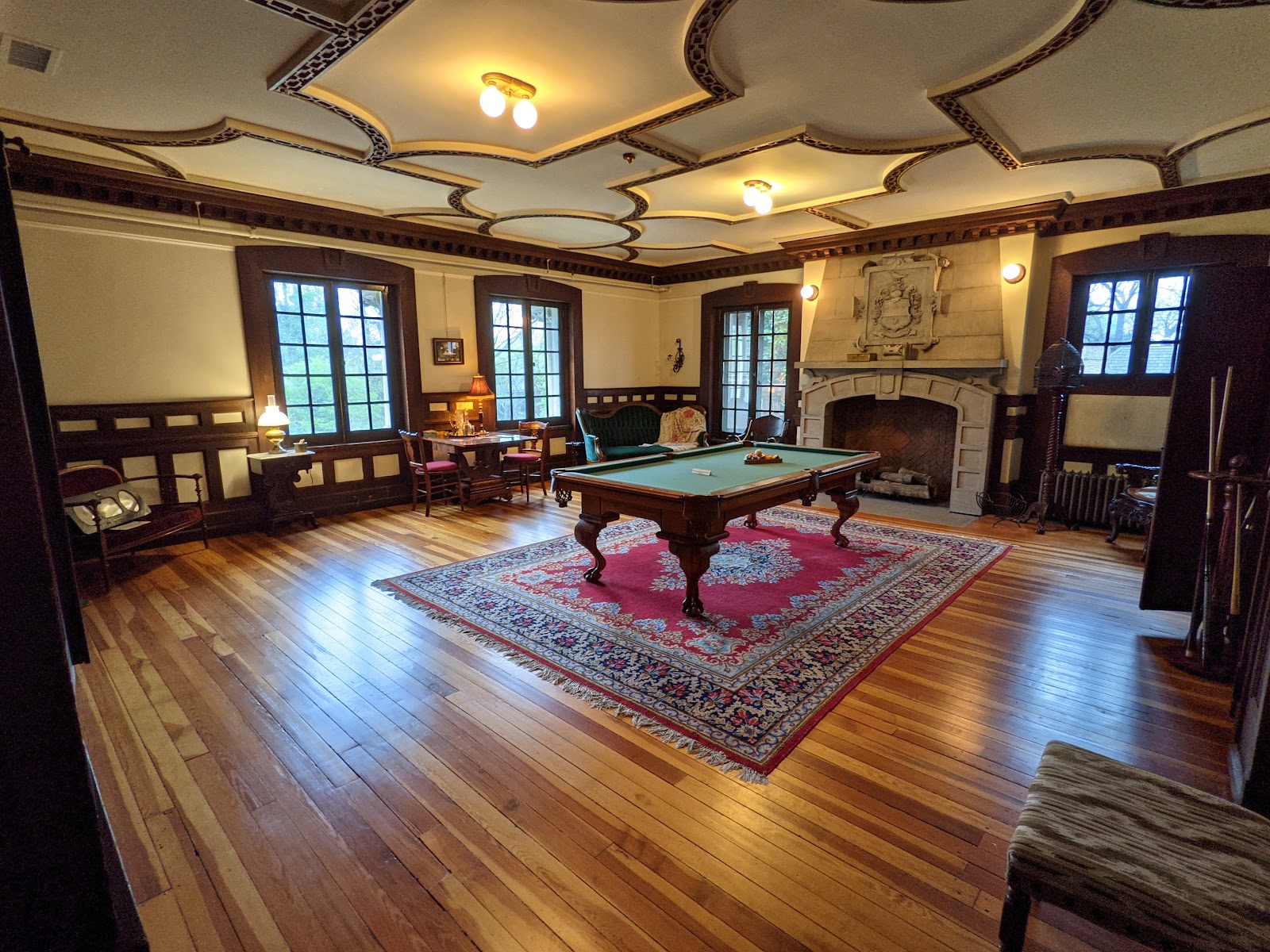
The main rooms will be darker than they look. Human vision adapts to a dim panelled room within seconds; a camera does not. Rooms that feel comfortably lit typically meter three or four stops below the windows, and the light that is there is warm because every surface returning it is timber.
The other issue is visual competition. Carved panelling, patterned textiles and heavy decoration all have strong texture, so a couple standing against them becomes one element among many rather than the subject. The photograph turns into a picture of a room that happens to contain people.
Three fixes, in order: move people a metre or two off the wall so the decoration softens at a wide aperture; use a longer lens so it becomes tone rather than detail; and add a little light to faces so your subjects are the brightest thing in frame. That last one is the decisive move. It is not about illuminating the room — it is about establishing which thing the viewer looks at first.
Timeline and the Old Louisville advantage
The sequence that works: interior portraits on the staircase and in the best-lit room while daylight is strongest; detail frames whenever rooms are empty; groups outside on St James Court; and the stone exterior in the last hour of daylight when raking light does its work.
That final item is the one most likely to be cut and the one most worth protecting. A ten-minute block at the end of the day, outside, transforms the gallery — it is the only time the building looks as impressive in a photograph as it does in person.
Old Louisville also gives you an unusual amount of backup. If the house’s rooms are restricted or the weather turns, the surrounding streets offer blocks of matching Victorian frontages, mature street trees and formal courts within a short walk. Very few historic-house venues have that much fallback within two minutes of the door.
What works in your favour
- Rough-faced limestone holds raking light superbly — a genuinely dramatic exterior at golden hour
- St James Court supplies open shade, a fountain, long sightlines and room for large groups
- A grand staircase with a landing window, the best-lit and strongest interior frame
- Old Louisville’s surrounding Victorian streets give an unusual amount of fallback within a short walk
- Dense carved ornament photographs beautifully as its own subject
What to plan around
- Interiors are dark and warm; most rooms meter several stops below the windows
- Busy carved backgrounds compete with the couple unless separation and light hierarchy are managed
- Under flat midday light the stone exterior looks inert — the good frame is time-dependent
- A house museum, so expect conservation limits on flash, stands and room access
- Domestic room proportions make large indoor group photographs impractical
More frames from Conrad-Caldwell House
Conrad-Caldwell House wedding photography: common questions
When is the best time to photograph the exterior?
The last hour of daylight, with the sun low and to one side. Rough-faced limestone holds raking light — every projection casts a small shadow and the wall comes alive with texture. Under flat midday light the same facade looks grey and inert, which is why this frame is worth protecting in the timeline.
What is the best location inside?
The staircase, specifically a few steps below the landing window with the couple turned into it. That window gives side light at head height, which is exactly what a dark panelled house otherwise cannot provide. Shoot it from below for height and from above so the dress falls on the steps.
Why do people get lost against Victorian interiors?
Because carved panelling and patterned textiles have strong visual texture and compete for attention. Move the couple a metre or two off the wall, use a longer lens so the decoration softens into tone, and add a little light to faces. The point is not to light the room but to decide what the viewer looks at first.
Where should group photographs happen?
Outside on St James Court. It is a formal court with a fountain, mature trees and matching Victorian frontages, which gives high open shade and genuine room to arrange people. The house’s rooms are domestic in proportion and a large group indoors will be compressed.
What happens if the weather turns or rooms are restricted?
Old Louisville is one of the largest Victorian residential districts in the country, so within a short walk you have blocks of matching frontages, mature street trees and formal courts. Very few historic-house venues have that much usable fallback within two minutes of the door.
More Louisville venue guides
We are writing a photographer’s guide to every venue we would happily shoot in Louisville. Here are three more, plus the full index:
- The Frazier History Museum: A Walk-Through for Wedding Photographs
- The Galt House: Working with a River-Facing Tower Hotel
- The Kentucky Derby Museum: Building the Shot List
All Louisville Wedding Venues →
Planning a wedding at Conrad-Caldwell House?
The frame that sells this venue happens in the last hour of daylight, outside. Tell us your date and we will build the timeline so that ten minutes is protected rather than cut.