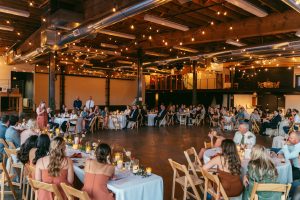
 The Redd on Salmon Street: Building the Shot List
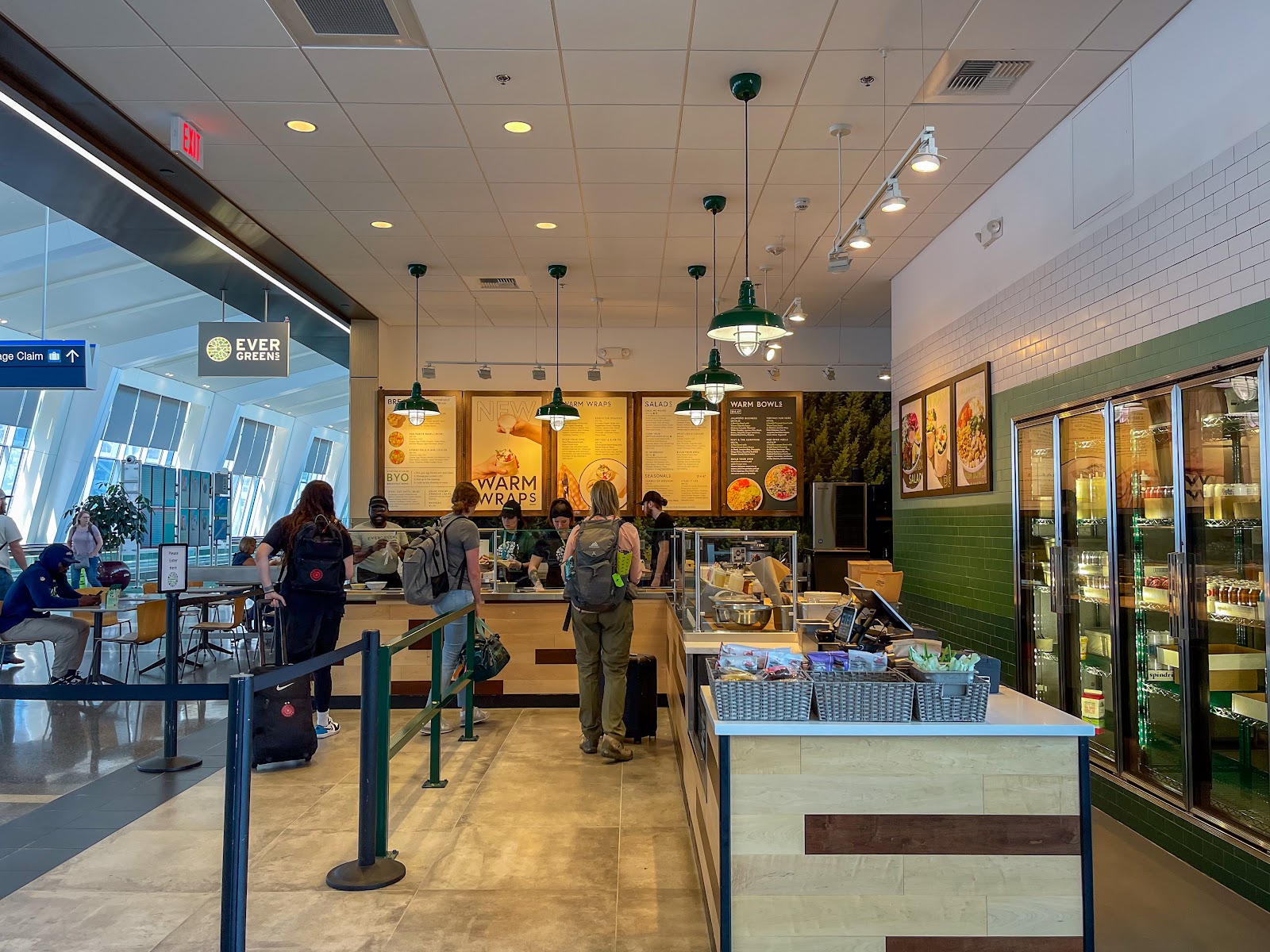
The Evergreen Airport, Portland: A Walk Through a Restored Early-Century Building
Early aviation buildings were built wide, tall and open. That combination is unusual and it decides the frames.
The Evergreen Airport venue is housed in a restored early twentieth-century building which, by its own description, promises an atmosphere both intimate and grand.
Buildings from the early aviation era have a distinctive geometry and it is worth reading before planning, because it is unlike both a warehouse and a hall. They were built wide rather than long, because aircraft needed lateral room; tall, because they needed height; and with very large openings on one elevation, because something large had to come in and out. Structure is exposed and repetitive, and the whole is a single volume with nothing in the middle.
That produces a specific set of conditions: an enormous soft source on one side, a tall volume that returns no bounce, strong repeating structure overhead, and a completely unobstructed floor. This is a walk through the building. We have not photographed a wedding here; restored early-century aviation buildings behave consistently. What may be attached to structure, which openings exist and on which elevation, and whether the house lighting is adjustable are the questions for their team.
The Evergreen Airport at a glance
| Where | Near Portland, Oregon |
| Character | A restored early twentieth-century aviation-era building |
| The geometry | Wide rather than long, tall, with very large openings on one side |
| The gift | A vast soft source on one elevation and an unobstructed floor |
| Ask first | Fixings to structure, which openings and where, lighting control |
The big opening: the best light in the building
Start at the large opening, because it is the reason this kind of building photographs well. A very large opening on one elevation behaves as an enormous soft source placed close to the subject, with natural fall-off into the depth of the volume behind — which is better light than anything that can be carried, and at a scale that no modifier approaches.
The position is two or three metres inside the opening rather than in it. Standing in the opening puts a subject in open light from a very wide angle, which is bright but flat; two metres in, the opening subtends a smaller angle, the light becomes clearly directional, and the volume behind darkens into a natural background.
Turning the subject gives three setups without moving anything: facing the opening, which is broad and even; side-on, which is the classic portrait position with a shadow side; and back to it, which gives a strong rim and needs fill from the front. One opening, three frames, no equipment.
Which elevation the opening is on decides the day. A shaded orientation gives soft directional light for the whole day with no hotspots anywhere in it; a sunlit one gives a hard patch and, through any structural framing, a grid of hard shadow across anything in it — attractive on a floor or a wall and unusable on a face.
Portland’s default overcast simplifies this considerably. Under heavy cloud the opening behaves like a shaded one regardless of orientation, and the fall-off pattern is the same — which means for a large part of the year the orientation question does not arise at all.
The floor deserves a note, because an unobstructed floor is rare. Nothing in the middle means the camera can be placed anywhere, and it means a low camera works: dropping close to the floor lets the structure overhead fill the upper frame and puts whatever the floor is made of — concrete, timber, painted markings — running towards the viewer as a leading line. Standing at eye level in a large empty volume wastes the volume.
The structure, the volume and the evening
Exposed structure is the compositional asset and in a building of this type it is usually emphatic — trusses, ties, posts and bracing repeating across the width. Repetition reads immediately and it rewards precision, because in a spare volume a crooked horizontal is conspicuous with nothing else to distract from it. Level deliberately; it costs nothing and it shows.
Looking up is the frame most people miss. Directly beneath a repeating truss, pointing the camera vertically, the structure makes an abstract composition of converging members, and a couple placed at the bottom of that frame reads as very small beneath something very large. It takes one minute.
Tall volume removes bounce, which is the reflex indoor move. A flash aimed at the roof returns almost nothing usable, so the substitutes are a pale wall at a sensible distance, a reflector, or direct modified light — and it is worth settling which with one test frame on arrival rather than discovering later.
Distance is the accompanying problem. In a large volume, sources that would be adequate in a hotel room are lost, so power and modifier choices need to assume real distance. Working here with one small flash is the equipment mismatch this kind of building punishes.
The compensation is steep fall-off, which is free separation: a couple three metres in front of anything else sits against natural darkness with no work at all.
In the evening the opening inverts, as all glazing and openings do: the lit interior becomes brighter than outside, so a large opening shows the room reflected rather than the outside. The crossing is worth catching — roughly twenty minutes after sunset when the outside falls to interior brightness and one exposure holds the lit volume, the couple and the sky beyond a very large aperture. At a building with an opening this size that frame is exceptional, and it happens once.
Portland’s summer puts that crossing late enough to land during the reception, which is worth agreeing in advance as a short deliberate excursion. In winter it falls in the late afternoon, possibly before or during the ceremony, which means the daylight character of the building may be gone before guests sit down.
- Two or three metres inside the opening, not standing in it
- Facing, side-on and back to the opening: three frames, one position
- Get low so structure fills the upper frame and the floor leads in
- Assume no bounce and real distance; bring power, not one small flash
- Point the camera straight up under the trusses once — it takes a minute

Outside, and Portland through the year
The exterior of an aviation-era building is coherent material and worth using deliberately. Large plain elevations, big openings, painted signage and whatever apron or hard standing survives all photograph well in raking light, and a wide low building gives something rare: an uninterrupted horizon against sky.
That horizon is the outdoor equivalent of the interior’s unobstructed floor. A couple placed against a long low building with nothing above it but sky reads graphically and cleanly, and a low camera exaggerates the effect by pushing the horizon down and filling the upper frame with sky.
Open ground has no shade, which in a Portland summer is manageable rather than serious — the heat here is mild compared with the southern cities in this series — but it does mean a high sun is unflattering and unavoidable in the middle of a clear day. The building’s own shadow along one elevation is the reliable option.
Portland’s light is largely good news. Overcast is the default for much of the year, and an overcast sky is an enormous diffuser: soft even light with open shadows and no hard edge anywhere, which is the best portrait light there is. Position stops mattering, groups are easy, nothing needs carrying. Add half a stop for the bright grey sky, fix the slightly overhead direction with a low reflector or a lifted chin, and bring shape back subtractively by placing the couple near something dark — which at a building like this means the opening itself, or its shadow.
Summer is long-day country, with sunset late enough in June that the golden hour arrives after the reception has started. Winter is short-day territory: days are short, the sun stays low and rakes all day whenever it appears, and the outdoor window may be a few hours — which at a venue whose best light is a daylight opening means the interior character changes substantially between June and December.
Rain is workable rather than disabling. Portland rain is persistent and light rather than violent, and at a building with a very large opening it produces one of the better frames available: the room warm and lit, the opening framing grey weather, and rain falling beyond it while a couple stands dry two metres inside. That is an atmosphere no enclosed venue can produce, and it is worth recording rather than waiting out.

More frames from The Evergreen Airport


The Evergreen Airport wedding photography: common questions
Why does this building type light so well?
Because a very large opening on one elevation behaves as an enormous soft source close to the subject, with natural fall-off into the volume behind — better light than anything that can be carried.
Where exactly should a subject stand?
Two or three metres inside the opening. Standing in it gives bright flat light from a very wide angle; two metres in the light becomes clearly directional and the volume behind darkens.
Does bounce flash work?
No — the roof is too far away to return anything useful. Use a pale wall at a sensible distance or go direct and modified, and assume real distance when choosing power.
What does the unobstructed floor allow?
A low camera. Dropping close to the floor lets the structure overhead fill the upper frame and makes the floor a leading line. Eye level in a big empty volume wastes the volume.
What is the missed frame?
Straight up under the trusses. The repeating structure makes an abstract composition of converging members with the couple very small at the bottom of it, and it takes a minute.
Does rain help or hurt?
It helps. A very large opening framing grey weather, with rain falling beyond it and a couple standing dry two metres inside, is an atmosphere no enclosed venue can produce.
More Oregon venue guides
We are writing a photographer’s guide to every venue we would happily shoot in Oregon. Here are three more, plus the full index:
- The Jupiter Hotel, Portland: Four Ways Out of the Courtyard Problem
- The Oregon Museum of Science and Industry, Portland: What It Suits and What It Does Not
- The Oregon Zoo, Portland: Four Ways Out of the Fencing Problem
Planning a wedding at The Evergreen Airport?
One opening, three frames and a timed crossing. Tell us your date and we will plan them.