 The Redd on Salmon Street: Building the Shot List
Cathedral Park, Portland: One Frame and How It Is Made
The arches are the venue. One frame uses them, and the rest of the park exists to support it.
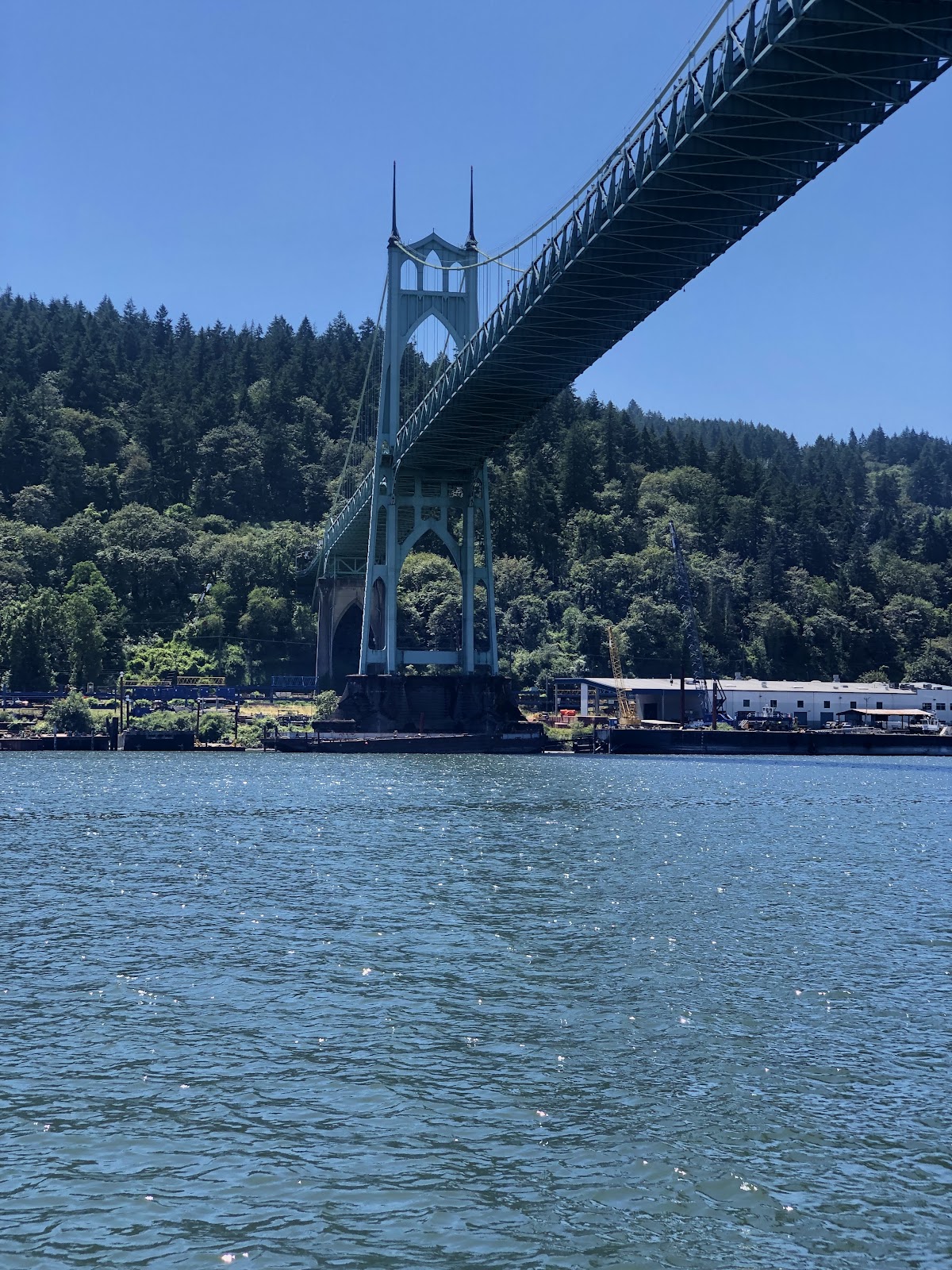
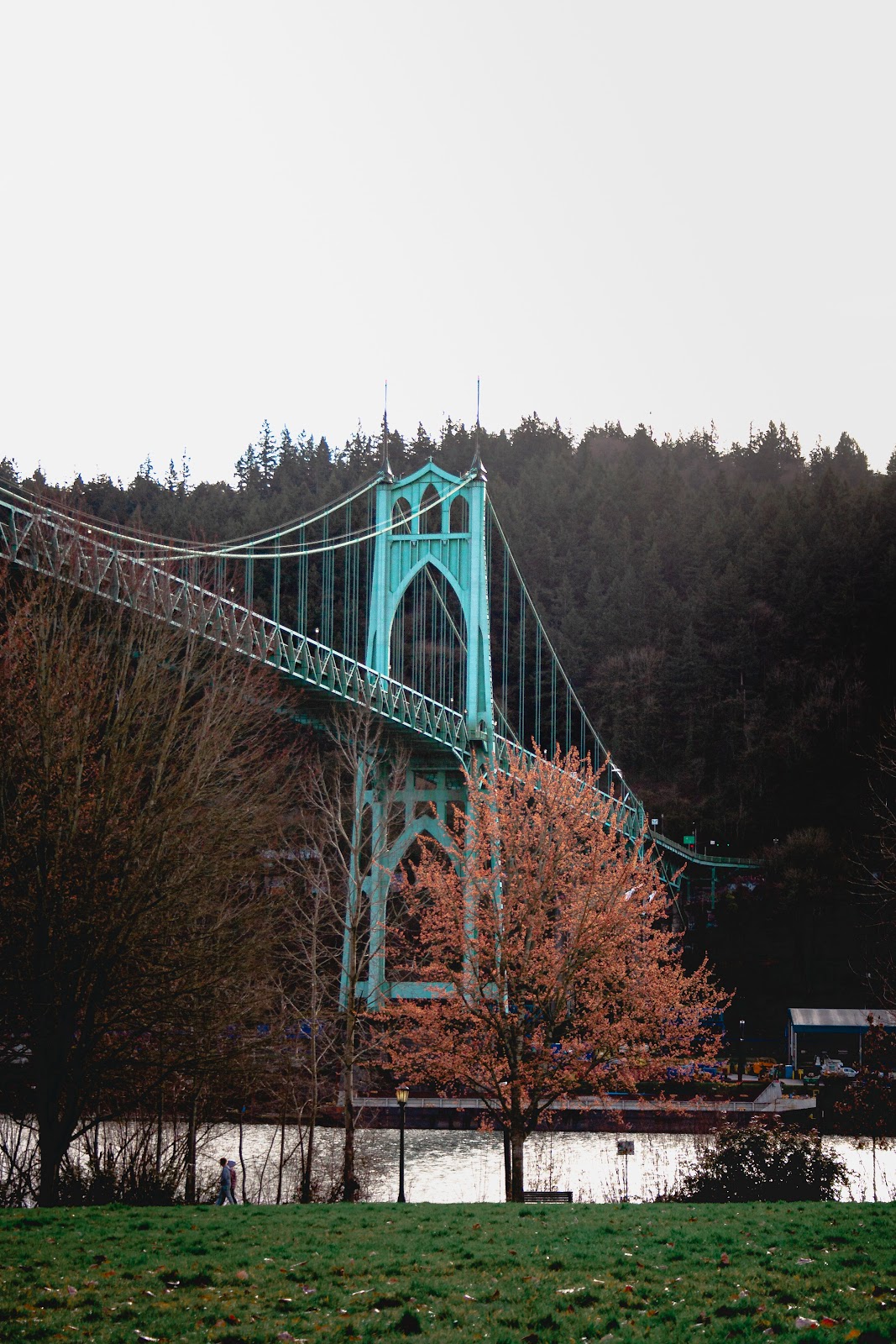
Cathedral Park sits on the Willamette in Portland with the St. Johns Bridge soaring above it, creating what its own description calls a cathedral-like canopy.
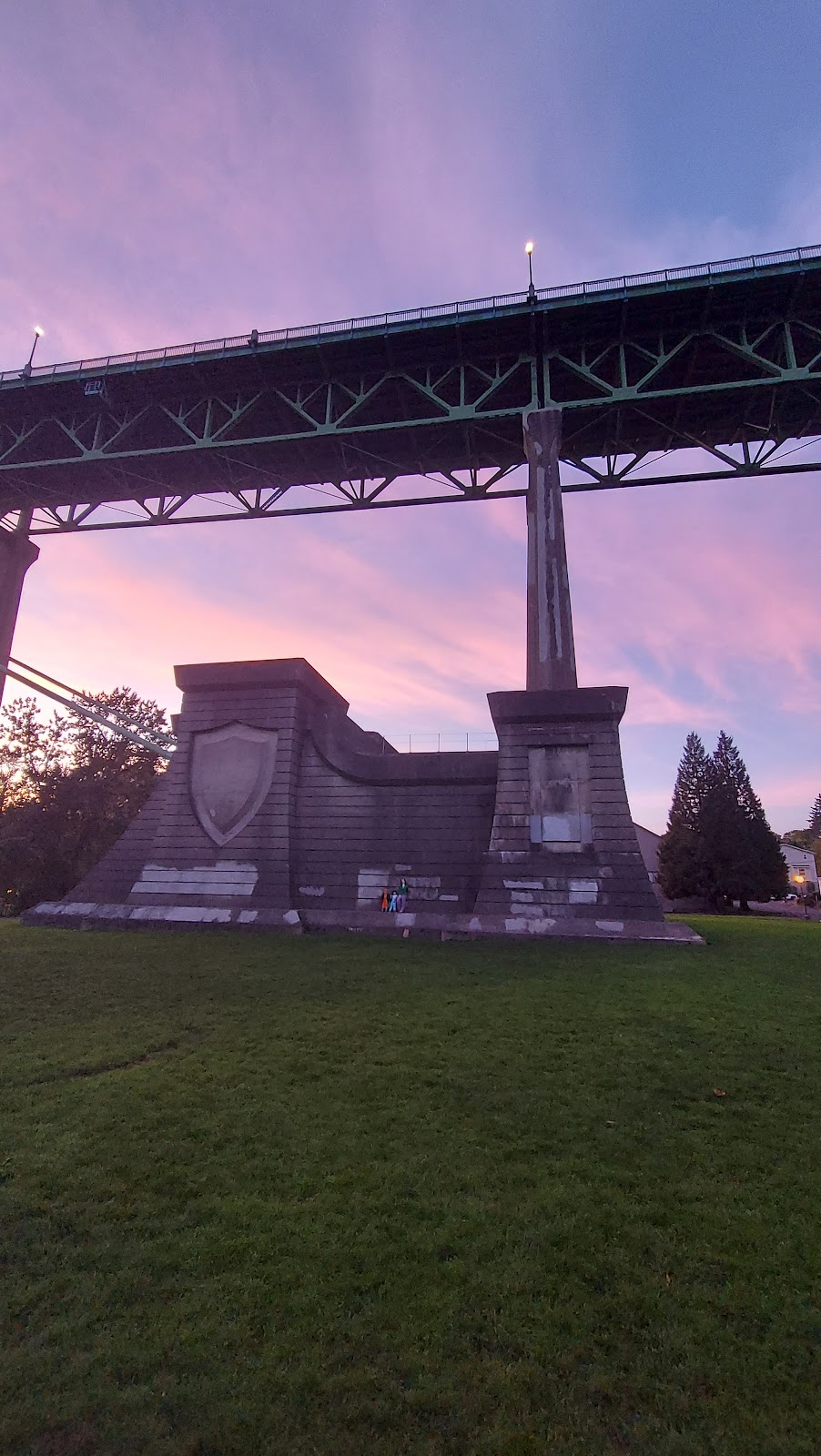
That comparison is not decoration — it is the accurate description of a structure and it explains the one frame worth building a day around. The bridge’s approach piers are tall pointed arches in concrete, arranged in a row, and standing beneath them produces exactly what standing in a nave produces: vertical lines rising and converging overhead, repeating bays receding in both directions, and a ceiling far enough above to feel like a roof rather than a lid.
So the frame is the couple beneath the arches, shot along the row so the bays repeat, with the arch above closing the top of the picture. It exists nowhere else, it requires no equipment, and it depends on three things. We have not photographed a wedding at Cathedral Park; concrete arch structures behave the same wherever they stand. What permits a ceremony needs, which area can be reserved and what shelter exists are questions for the city’s parks office — and the last one matters, because the park has none of its own.
Cathedral Park at a glance
| Where | On the Willamette beneath the St. Johns Bridge, Portland, Oregon |
| Character | A riverside park under the tall pointed arches of a bridge approach |
| The frame | Beneath the arches, shot along the row so the bays repeat |
| It needs | Symmetry, a low camera, and light from the side |
| Ask first | Permits, reservable areas, and the fact that there is no shelter |
The frame, and the three things it needs
The first requirement is symmetry, held precisely. A row of identical arches shot along its length is a one-point perspective composition, and one-point perspective is unforgiving: if the camera is off the centre line by half a metre or tilted by a degree, the arches stop aligning, the verticals splay, and the whole effect reads as an accident rather than as intent. This is a frame worth a level and two minutes of care, and the two minutes are the entire difference.
The second is a low camera. Arches are tall, and how tall they appear in a photograph depends on viewing height: dropping close to the ground exaggerates their rise, pushes the horizon down, and makes the structure read at its real scale. Standing at eye level under a very tall arch photographs it as a doorway. The couple also gains from it, because a low angle places them against the arch and the sky rather than against the ground.
The third is light from the side rather than from overhead. Under a bridge the sky above is blocked, which means the light arriving on a face comes horizontally from whichever end of the structure is open — and that is exactly the condition that makes this frame work. It is directional, soft because it has travelled, and it behaves like a very large source placed at head height. The best hours are those when the sun is low enough to come in under the structure rather than down past it.
There is a caution about concrete that is worth knowing. Bare concrete is a fairly neutral mid-tone but it is also a broad reflector, so the fill arriving on a face under a concrete structure comes off the concrete — which means it is neutral to slightly cool, and in overcast Portland light that can push skin towards grey. Set a custom white balance on a face in the position being used rather than trusting auto, and if there is anything warm nearby, use it.
The couple belongs in the depth of the frame rather than at the front. Placed two or three bays along, they become the focal point of the repetition, which is what the frame is for; placed close to the camera they block the perspective and it becomes a portrait with a wall behind it.
One note about crowds: this is a well-known location and other people will be photographing it. The tools are the usual ones — long lenses, tight framing, and early or late hours rather than the middle of a weekend afternoon.
The rest of the park, and the river
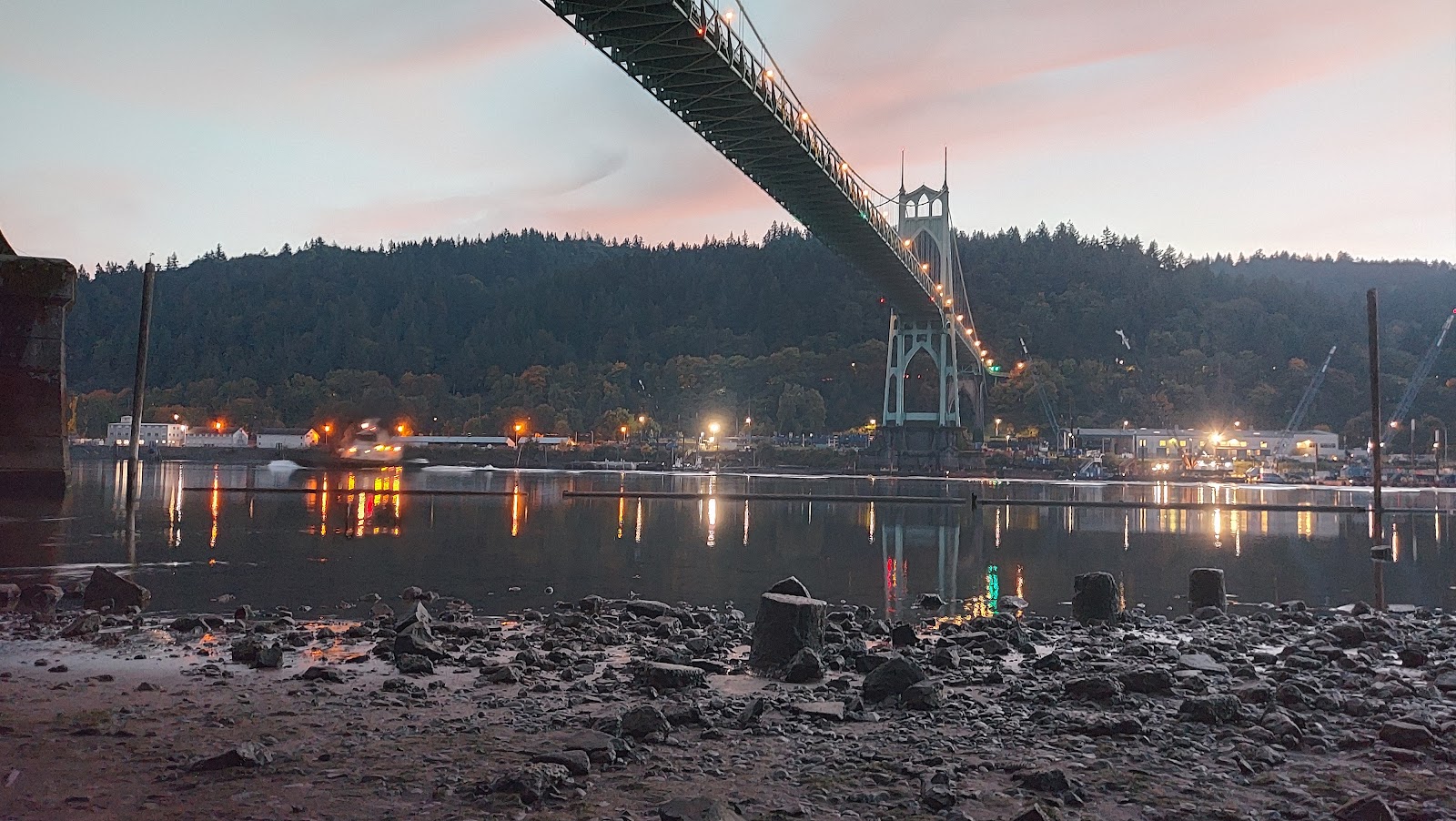
Away from the arches the park is lawn, trees and river bank, and each behaves predictably. Lawn is a dependable mid-tone that meters well and gives an unobstructed foreground that rewards a low camera; dropping close to the grass pushes the horizon down and lets the bridge occupy the upper frame, which is a stronger composition than standing at eye level on flat ground.
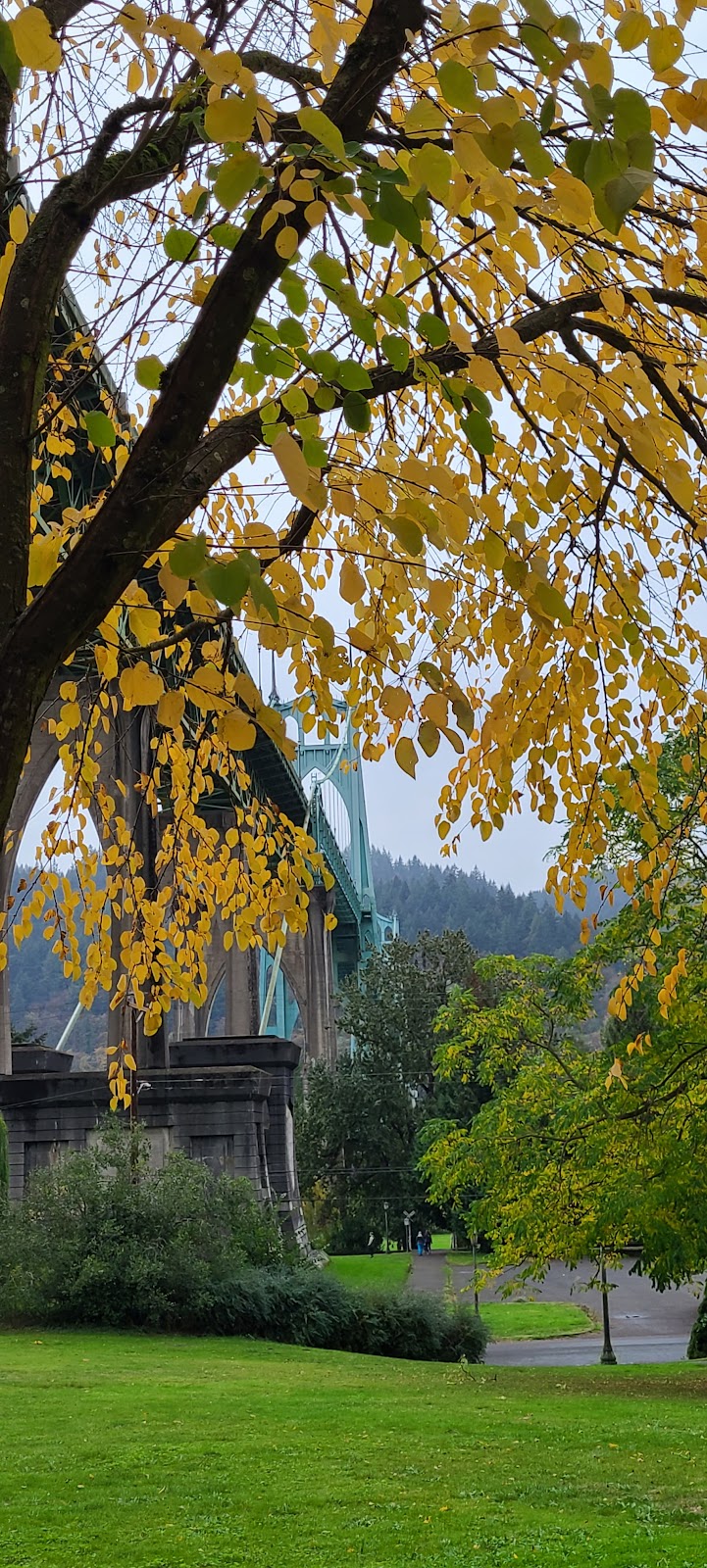
Trees in a Portland park are frequently conifers, and conifers behave differently from deciduous trees in one important way: they do not thin. An evergreen canopy blocks light year-round and gives much deeper shade than a broadleaf canopy of the same size, which means the exposure difference between open lawn and under-tree can be four stops or more rather than two. That is useful when a dark background is wanted and difficult when a group has to be arranged partly in and partly out.
Conifer shade is also strongly green, because the light arriving has bounced off needles and moss, and Portland has a great deal of moss. The cast is localised, so white balance cannot separate it globally — set a custom white balance on a face in position, and use any pale path or concrete surface as a neutral bounce.
The river is the third element and it gives depth for a long lens: compression stacks water, far bank and bridge structure into layers, where a wide lens reduces the water to a strip. Still water mirrors early in the day and breaks into texture as the breeze builds, so a reflection frame is a morning proposition.
Riverside wind is stronger than a few streets inland, which matters for a veil, for hair and for any light stand — and a park has no shelter to retreat into.
The bridge’s own structure gives one further frame that is easy to miss: looking up. Directly beneath an arch, pointing the camera vertically, the ribs and the arch profile make an abstract composition of converging lines against sky, and a couple placed at the bottom of that frame reads as very small beneath something very large. Almost nobody does it, and it takes one minute.
- Level and centre the arch frame; half a metre off ruins it
- Get low so the arches read at their real height
- Put the couple two or three bays in, not at the front
- Set white balance on a face; concrete fills cool and conifers fill green
- Point the camera straight up under an arch once — it takes a minute
Portland light, and the shelter problem
Portland’s light needs treating differently from the light in most of this series, because overcast is the default condition for a large part of the year rather than an occasional inconvenience. That is genuinely good news: an overcast sky is an enormous diffuser, giving soft even light with open shadows and no hard edge anywhere, which is the best portrait light there is. Under it, position matters far less, groups are easy, and nothing needs carrying.
Two adjustments come with it. Overcast light arrives largely from above, so eye sockets darken slightly — a low reflector, a lifted chin, or a small face-height source fixes it. And a bright grey sky in the frame pushes a meter towards underexposure, so add half a stop to a stop and check that skin holds its tone.
The subtractive approach is the one that brings shape back. Placing a couple near the dark mass of a conifer, under the edge of an arch, or beside anything dark removes light from one side and restores a gradient across the face. In overcast light that costs nothing and works better than adding a flash.
Summer here brings the opposite planning problem from most cities: days are very long, and sunset in June falls late enough that the golden hour lands after a reception has started. That is worth building into a schedule deliberately — a short portrait excursion late in the evening, agreed in advance with the couple, rather than an assumption that the light will arrive during the afternoon.
Winter is the reverse: days are short and the sun stays low, which means light rakes all day when it appears at all, and the whole outdoor window may be only a few hours long. At a park venue in December that is the governing constraint on the entire schedule.
The shelter problem is the park’s real weakness and it needs settling honestly. There is no building, which means no power, so anything lit runs on batteries; and no cover, so weather is a relocation rather than an inconvenience. Portland rain is different from thunderstorm rain in a useful way, though — it tends to be persistent light rain over hours rather than a violent cell, which means it can be worked in rather than waited out. Wet concrete, saturated moss and a dark sky under the arches is arguably a better frame than the dry version, and the bridge structure itself provides a considerable amount of cover.
More frames from Cathedral Park
Cathedral Park wedding photography: common questions
What is the defining frame here?
The couple beneath the bridge’s pointed arches, shot along the row so the bays repeat, with the arch closing the top of the frame. It is a nave without a building, and it exists nowhere else.
Why does it need such precision?
Because a row of identical arches shot along its length is one-point perspective, which collapses if the camera is off the centre line or a degree out of level. Two minutes of care is the whole difference.
Why get the camera low?
Because how tall the arches appear depends entirely on viewing height. At eye level a very tall arch photographs as a doorway; low, it reads at its real scale and the couple sits against sky.
What is the colour trap?
Concrete fills neutral to cool and conifers and moss fill strongly green. Both casts are localised, so set a custom white balance on a face in the position being used rather than trusting auto.
How does Portland overcast change things?
It is the best portrait light there is — soft, even, open-shadowed. Add half a stop for the bright sky, fix the slightly overhead direction with a low reflector, and bring shape back by placing the couple near something dark.
What is the summer scheduling problem?
Days are long enough that the golden hour arrives after the reception has started. That needs agreeing in advance as a short late excursion rather than assumed to happen during the afternoon.
More Oregon venue guides
We are writing a photographer’s guide to every venue we would happily shoot in Oregon. Here are three more, plus the full index:
- The Duniway Hotel, Portland: What It Suits and What It Does Not
- The Eliot Center, Portland: Photographing a Daylit Modern Venue
- The Evergreen Airport, Portland: A Walk Through a Restored Early-Century Building
Planning a wedding at Cathedral Park?
One frame, two minutes of care, and no shelter to rely on. Tell us your date.