 Choctaw Hall: What a Gazebo Ceremony Does to the Photographs
The Iron Horse Grill, Jackson: Field Notes on a 1906 Warehouse
A 1906 industrial shell with a modern fit-out inside it is two lighting problems stacked on each other.
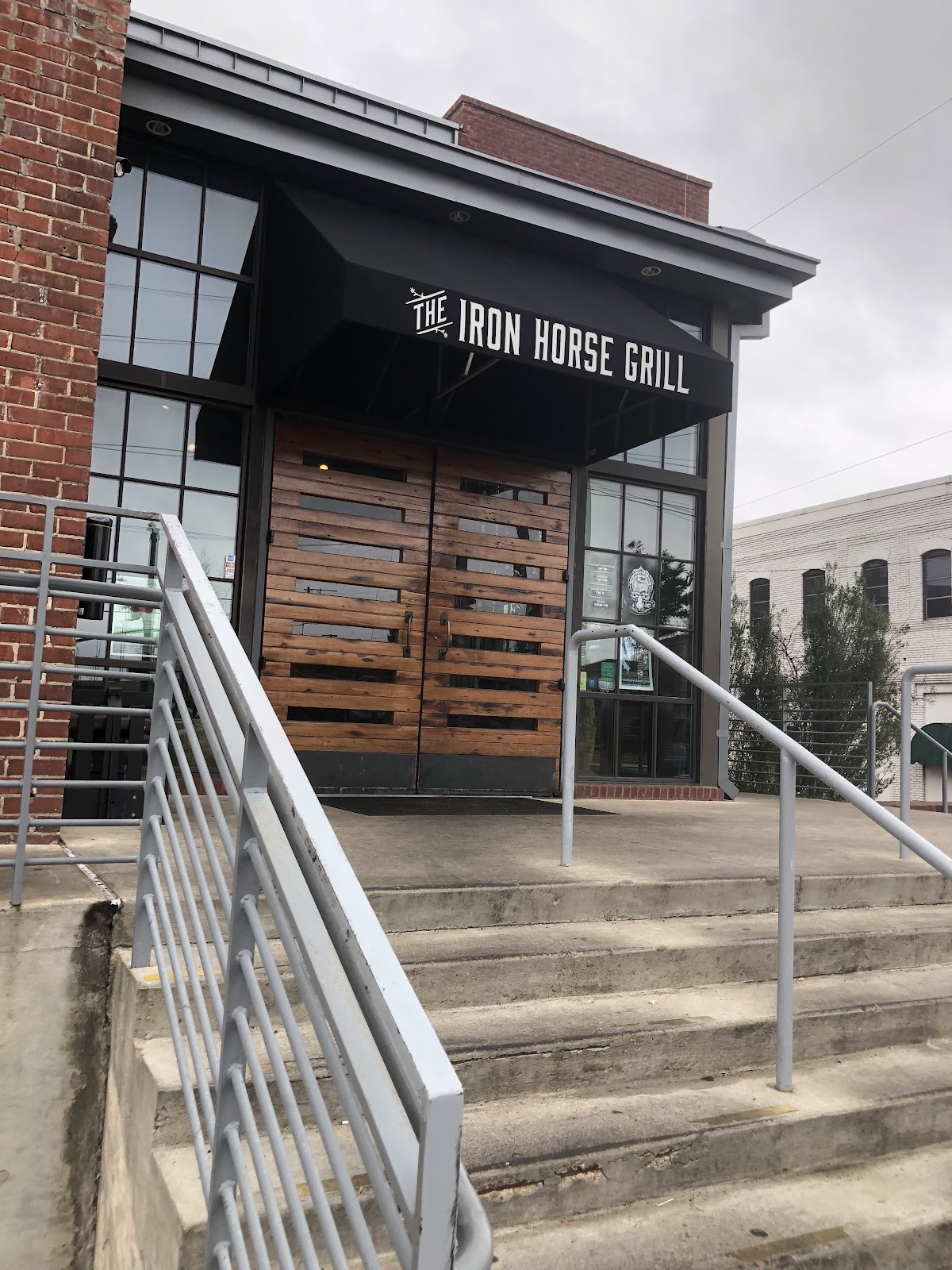
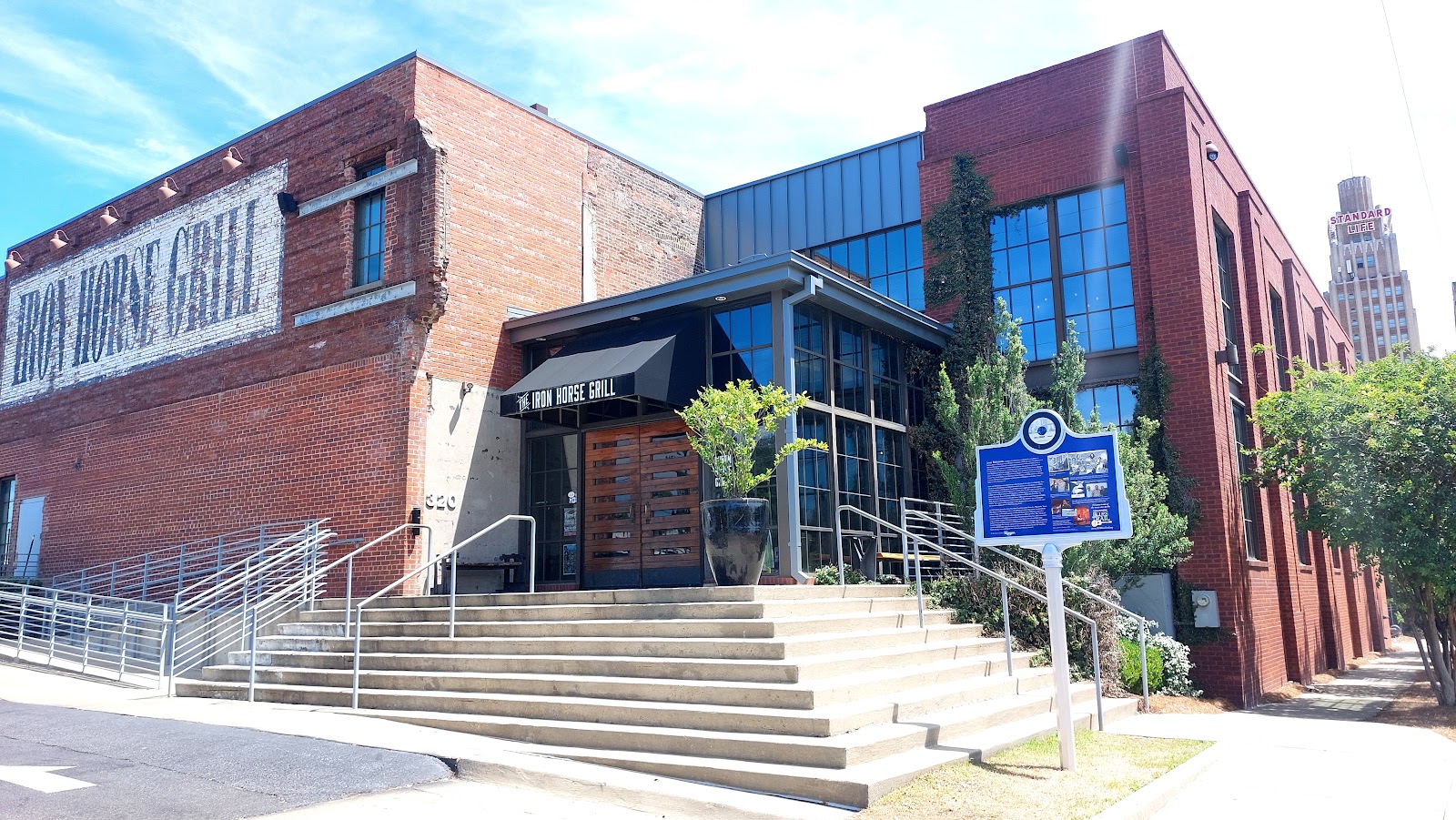
The Iron Horse Grill occupies a building originally constructed in 1906, since converted into a restaurant and event space while keeping the structure and materials of its industrial origins.
Conversions of this age are consistently good venues and consistently awkward ones, for the same reason. The shell is generous — brick, heavy structure, large openings, tall volume — while the fit-out is modern hospitality: track lighting, decorative fittings, service zones and finishes chosen to sit against old brick. Neither half is a problem alone. Together they give you a room with four or five different light sources at three different colour temperatures, in a volume too tall to bounce in, with surfaces that only look good in raking light.
These are field notes: what you will meet, and what to do about each. We have not photographed a wedding here; converted 1906 industrial buildings behave the same wherever they stand. What may be attached to original brick and timber, and which spaces a wedding includes, are the questions for their team — restored fabric usually takes no fixings at all.
The Iron Horse Grill at a glance
| Where | Jackson, Mississippi |
| Character | A 1906 industrial building converted to a restaurant and event venue |
| The shell | Brick, heavy structure, large openings, tall volume |
| The problem | Mixed modern sources in a volume too tall to bounce in |
| Ask first | Fixings to original fabric, and which spaces you have |
What you meet, and what each one needs
Brick is the dominant surface and it is the most forgiving material any venue offers. It is a mid-tone, so it meters predictably; it has real texture, so it never leaves a frame feeling empty; and it holds detail across a wide exposure range rather than clipping. The one thing it demands is raking light. Light running along a brick wall lifts every mortar line into relief, while light pointed at the same wall flattens it into a plain brown field — so the position worth finding is always the one where the key grazes the surface rather than facing it.
Brick also bounces strongly warm, which is the first half of the colour problem. Anyone standing within a metre or two of a brick wall picks up an orange cast on the shadow side of the face, and it is not correctable by white balance because it is localised rather than global. The handling is to make your own light the authority on the faces — one source, gelled to a chosen temperature, with white balance set to it — and to let the brick be as warm as it is behind.
Heavy structure, whether timber or steel, is the compositional asset. Beams, posts and trusses give strong repeating lines, and in a room with spare surfaces a level horizontal is conspicuous — so these frames reward a moment of care with the electronic level. Crooked structure in a spare room reads as a mistake in a way it does not in a cluttered one.
Tall volume is the technical problem. A converted industrial ceiling is far enough away that bounce flash returns almost nothing usable, which removes the move most photographers make first indoors. Test it on arrival: a single frame with the flash aimed up will tell you immediately whether the ceiling is a resource or not. In most conversions it is not, and a pale side wall is the better surface, with direct modified light better than either.
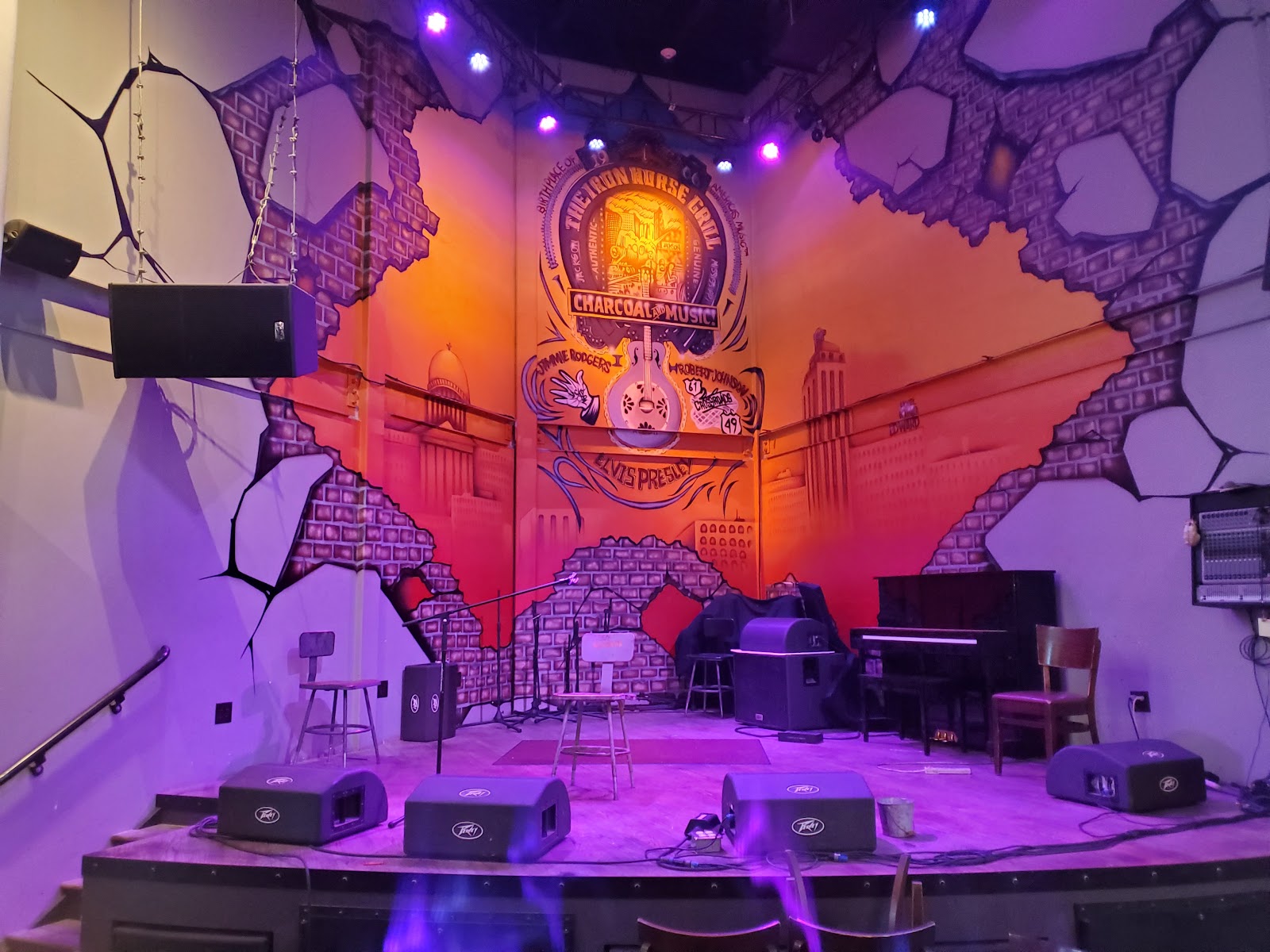
Modern restaurant fit-out is the mixed-source problem. Track lighting, filament pendants, wall fittings and a bar back-light will not agree with each other, and they frequently will not agree with the daylight coming through a large opening. Three colours of light in one frame cannot be resolved in editing, so the approach is to pick the source you want to be correct, set a manual white balance to it, and either kill or overpower the rest where it lands on skin.
Daylight through large openings, and the day's shape
The large openings a 1906 industrial building has are its best asset, because they behave as very large soft sources close to the subject. A person standing two metres inside a big opening gets a broad wraparound key with natural fall-off into the room behind, which is better light than anything that can be carried.
The variable is what side of the building the opening is on. A shaded opening gives that soft directional light for the whole day with no hotspots anywhere in it, while a sunlit one gives a hard patch and, if the opening has steel framing or glazing bars, a grid of hard shadow across anything in it. That grid is attractive on brick and unusable on a face, which is the whole of the decision.
Because the interior lighting does not change through the day and the openings do, the running order should be built around the openings. Preparation and portrait work while the shaded opening is giving good light; the reception and everything else afterwards, when it does not matter.
After dark the openings invert, as all glazing does. The lit interior becomes brighter than outside, so large windows reflect the room rather than showing the street, and wide frames that worked at four o’clock become cluttered at nine. The crossing is worth catching: for roughly twenty minutes around sunset, the outside falls to interior brightness and one exposure holds the lit room, the couple and the street beyond.
Once past it, go oblique to the glass, keep every source well off the camera axis, and treat the reflection as material rather than as damage — a couple doubled in a dark industrial window is a good frame if there is no light stand in it.
- Rake the brick; facing it flattens it to brown
- Let your own gelled source own the faces, and let the brick stay warm
- Test bounce with one frame on arrival — usually the ceiling is too high
- Pick one source to be correct, set manual white balance, overpower the rest
- Build the running order around the shaded opening, not around the rooms
Outside, and a Mississippi summer
The exterior of an industrial-era building is coherent material and worth using. Brick frontage, loading openings, metalwork and whatever remains of the building’s working past all photograph well in raking light, and because Jackson’s older commercial districts are low-rise on a regular grid, low evening sun reaches street level and runs the length of a block. That is a strong frame available for the last ninety minutes at no equipment cost.
Alleys and service sides are the most dependable outdoor positions at a building like this. Walls on both sides give directional light, a contained background with nothing distracting, and — in a climate where afternoon storms are routine — a degree of shelter. They also tend to have the most texture, because service elevations were never tidied up.
A Mississippi summer sets the outdoor limits firmly. Heat and humidity together make long blocks a welfare problem in formal clothes, so trips should be short and purposeful rather than exploratory, and the building’s own shadow is the reliable midday shade.
Fogging is the specific technical risk of this climate and it is the opposite of the cold-weather problem. A camera and lens chilled by a strongly air-conditioned restaurant interior will fog comprehensively the moment it reaches warm damp air, and it can take many minutes to clear — easily long enough to lose an arrival. The handling is to warm the kit towards outside temperature before it goes out, which means planning it twenty minutes ahead rather than at the door.
Afternoon thunderstorms are a normal feature of the season rather than an exception, which makes a large enclosed building a real advantage: the day continues indoors without a decision. And rain against big industrial windows, with the room warm and lit behind, is one of the better frames a conversion offers — worth taking rather than waiting out, and worth going back outside for once a cell has passed, because wet brick and wet streets returning reflections under low sun are better than anything a dry afternoon gives.
More frames from The Iron Horse Grill
The Iron Horse Grill wedding photography: common questions
What does brick need?
Raking light. Light running along a brick wall lifts every mortar line; light pointed at it flattens the wall into a plain brown field. The position to find is always the one where the key grazes the surface.
How do you deal with warm bounce off brick?
Make your own source the authority on the faces — one light, gelled to a chosen temperature, white balance set to it — and let the brick be as warm as it is behind. The cast is localised, so global white balance cannot fix it.
Does bounce flash work in a conversion?
Usually not. The ceiling is too far away to return anything useful. Test it with one frame on arrival; if it fails, a pale side wall is the better surface and direct modified light better than either.
What about the mixed restaurant lighting?
Three colours of light in one frame cannot be resolved in editing. Pick the source you want correct, set a manual white balance to it, and either kill or overpower the others where they land on skin.
How should the day be ordered?
Around the large openings, because they are the only light that changes. Preparation and portraits while the shaded opening is good; reception and everything else after, when it no longer matters.
Why is a conversion a good venue in Mississippi?
Because afternoon storms are routine, and a large enclosed building means the day continues without a decision. Rain against big industrial windows with a warm lit room behind is also one of the better frames the type offers.
More Jackson, MS venue guides
We are writing a photographer’s guide to every venue we would happily shoot in Jackson, MS. Here are three more, plus the full index:
- Jackson Zoological Park: What It Suits and What It Does Not
- The King Edward Hotel, Jackson: Field Notes on a Restored Grand Hotel
- LeFleur’s Bluff State Park, Jackson: One Frame and How It Is Made
All Jackson, MS Wedding Venues →
Planning a wedding at The Iron Horse Grill?
A conversion rewards a plan built around its openings. Tell us your date and we will build one.