 The Hilton Garden Inn Fargo: Field Notes on a Standardised Hotel
The Hotel Donaldson: Contemporary Art in an 1890s Building
Period architecture and contemporary art are both assertive, and here they are in the same rooms.
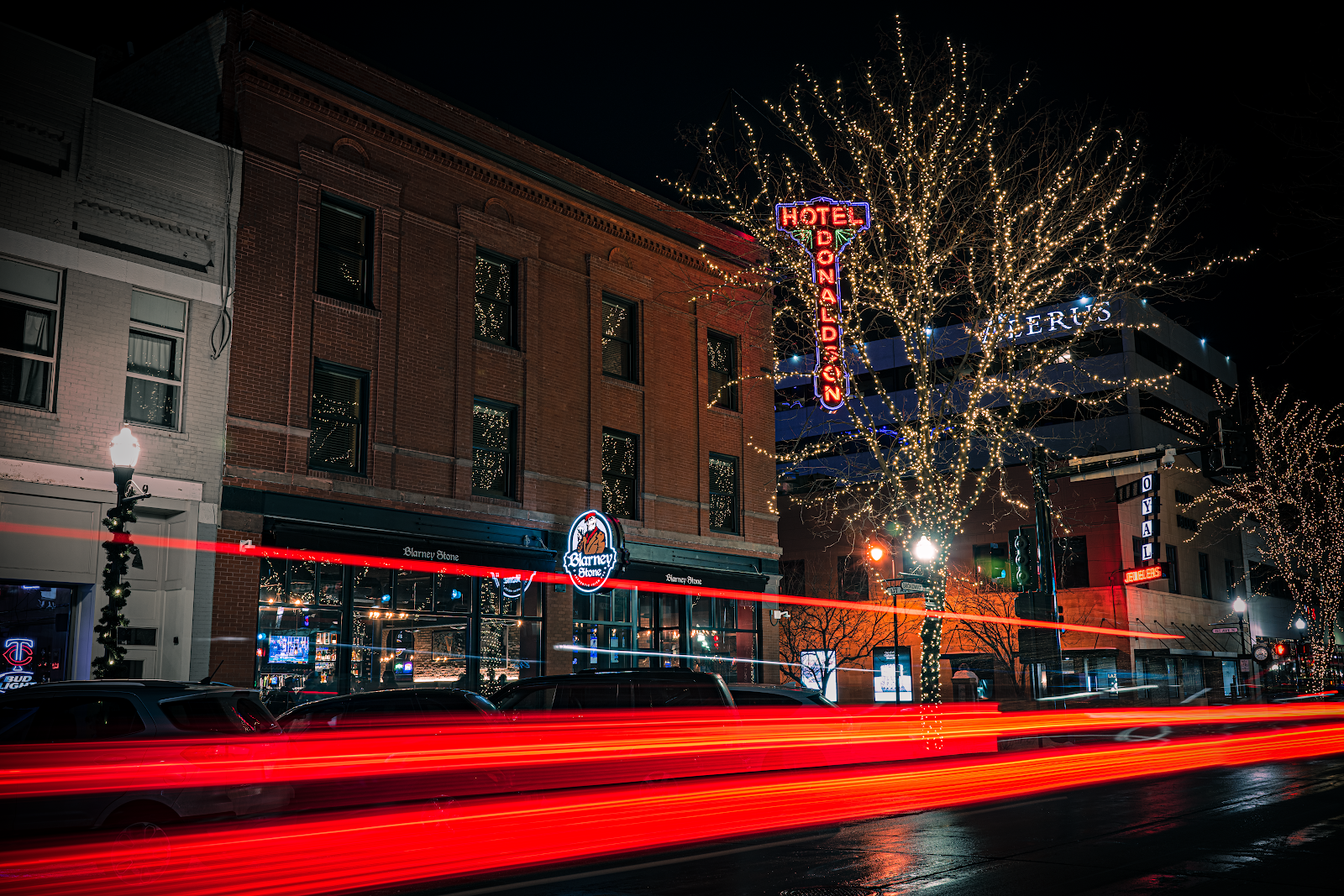
The Hotel Donaldson occupies an 1890s building in downtown Fargo, North Dakota, a small hotel with contemporary artworks installed through its rooms and public spaces, and a rooftop terrace above.
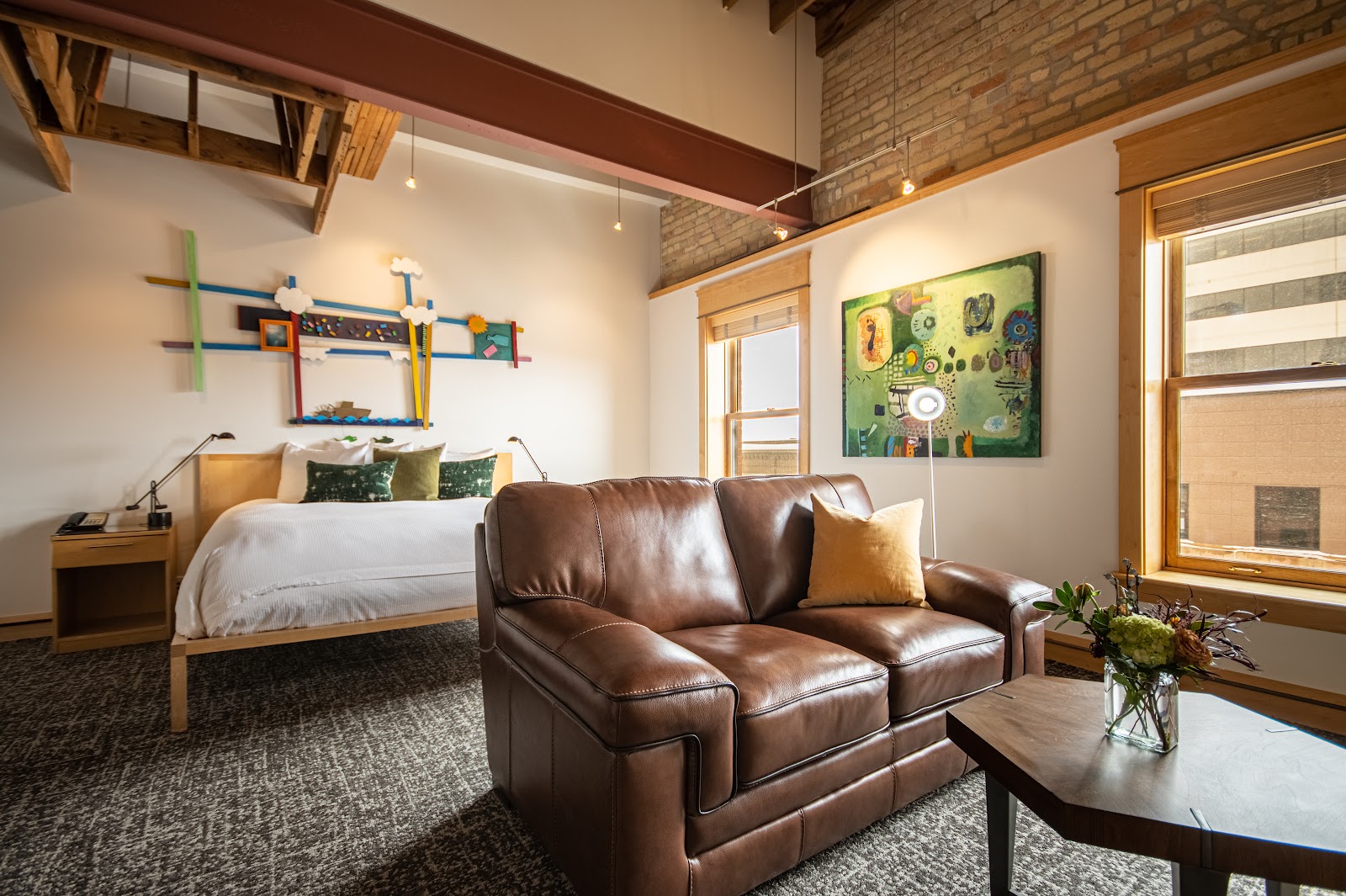
Most hotels present one problem or the other. A period hotel is warm and textured and supplies character; a modern one is restrained and supplies none. This building supplies two at once: nineteenth-century fabric and a substantial contemporary art collection occupying the same walls. Both are assertive, and a photographer has to manage both in the same frame rather than choosing between rooms.
That is unusual and it suits a specific kind of brief. This is an honest account of which. We have not photographed a wedding at the Donaldson; period buildings hung with contemporary art behave the same wherever the combination occurs. Which rooms are allocated, and whether specific works may appear in published photographs, are questions for their team — commissioned or loaned art carries its own permissions.
The Hotel Donaldson at a glance
| Where | Downtown Fargo, North Dakota |
| Character | A small 1890s hotel hung with contemporary art, plus a rooftop |
| The condition | Two assertive registers in the same rooms |
| The trap | Art competes with faces and carries publication permissions |
| Ask first | Which works may appear in published photographs |
Two assertive registers at once
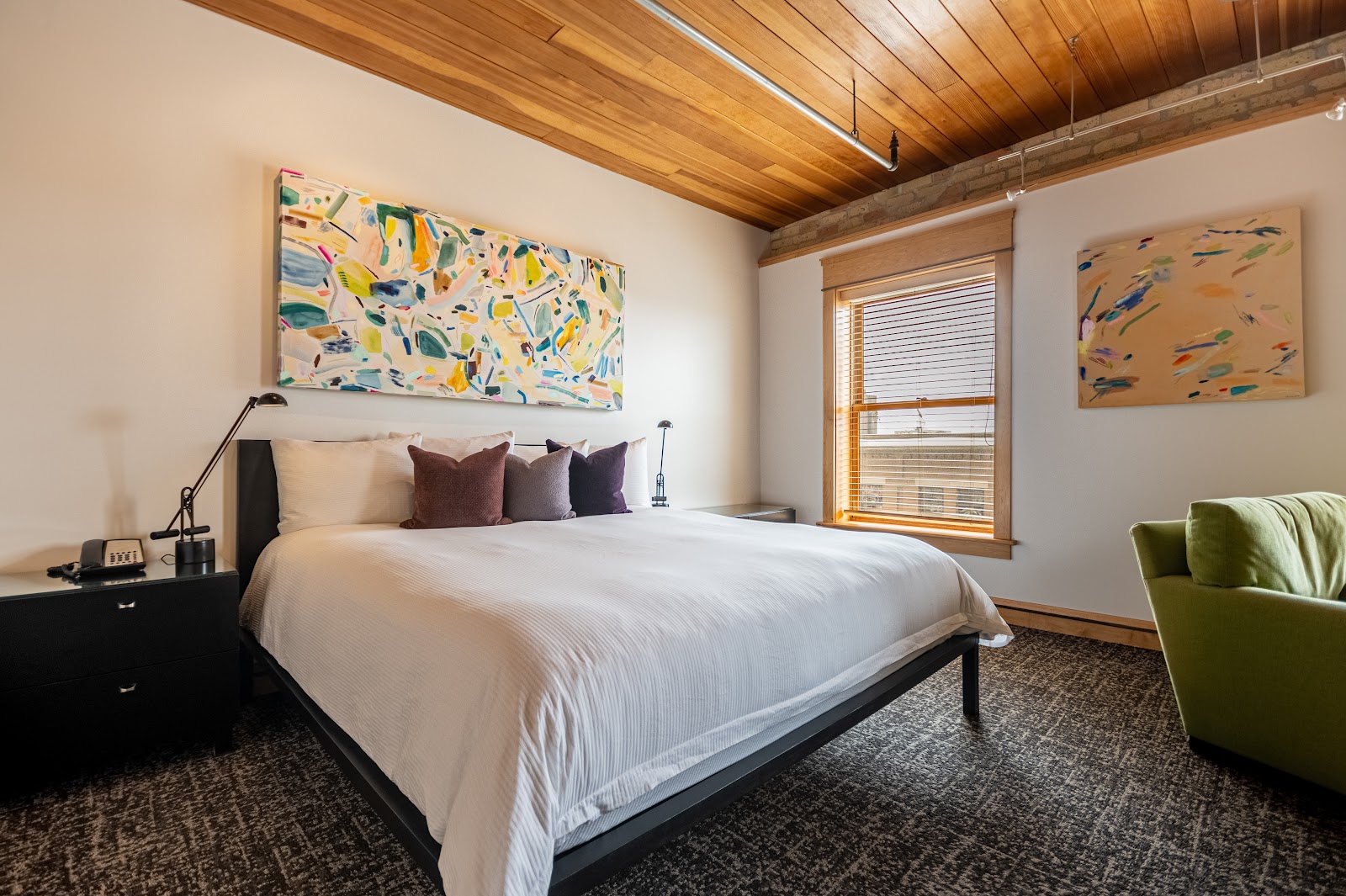
Period fabric — brick, timber, plaster, old joinery — is warm and textured, and it reads best in raking light. Contemporary art is usually strong in colour, graphic in form and deliberately attention-taking. Put them in the same frame and they do not cancel out; they compete, and a couple placed between them comes third.
So the decision has to be made per frame rather than per room, which is more work than at a single-register venue. Subordinate the art with a long lens at a wide aperture so it becomes a soft field of colour behind a sharp couple — the most reliable answer. Or commit to one work deliberately, placing the couple within the composition rather than centrally in front of it. Or exclude it by position, using the plain sections of period wall that every such building has.
Colour is the technical complication and it is the same as at any art-hung venue: a large saturated work throws its colour across a room, so a red canvas two metres away warms a face and a blue one cools it. Let your own light own the faces so skin has a dependable base, and let the work’s colour read as deliberate ambient rather than as a cast you failed to correct.
And there is a permissions layer that a plain hotel does not have. Commissioned or collected artworks have makers, and reproducing a work prominently in published photographs can engage the artist’s rights as well as the hotel’s preferences. One email beforehand asking which works may appear in a portfolio settles it, and it is far easier to ask before than after.
Who this venue suits
Matching a venue to a brief is more consequential here than at a neutral hotel, because the building has an opinion. A plain ballroom will accommodate almost any aesthetic a couple brings to it; a hotel hung with strong contemporary work will assert itself in every frame whether or not that was the plan. So the question is not whether the venue is good — it is — but whether what it insists on is what the couple actually wants.
The combination fits a particular set of intentions:
- Couples who want a design-led, contemporary, urban gallery with real period texture underneath it
- Anyone whose taste runs to bold colour and graphic composition rather than soft neutrals
- Smaller guest counts, since this is a small hotel rather than a grand one
- Weddings where the couple actively like the art and want it visible
- Photographers comfortable making a decision in every frame rather than once per room
Who should look elsewhere
The reverse list matters just as much, and it is worth being plain about rather than tactful. None of these are failings of the building; they are cases where the building and the brief want different things, and recognising that early saves a day of quiet compromise.
And several reasonable briefs fight the building:
- Couples wanting a soft, pale, neutral aesthetic, which the art disrupts
- Large formal groups, which need floor and ceiling a small hotel lacks
- Briefs where the couple must be the only thing of interest in every frame
- Anyone wanting a period look uninterrupted by contemporary work
- Weddings needing extensive indoor event space, which a small hotel does not have
The small-hotel advantages, the rooftop, and a Dakota winter
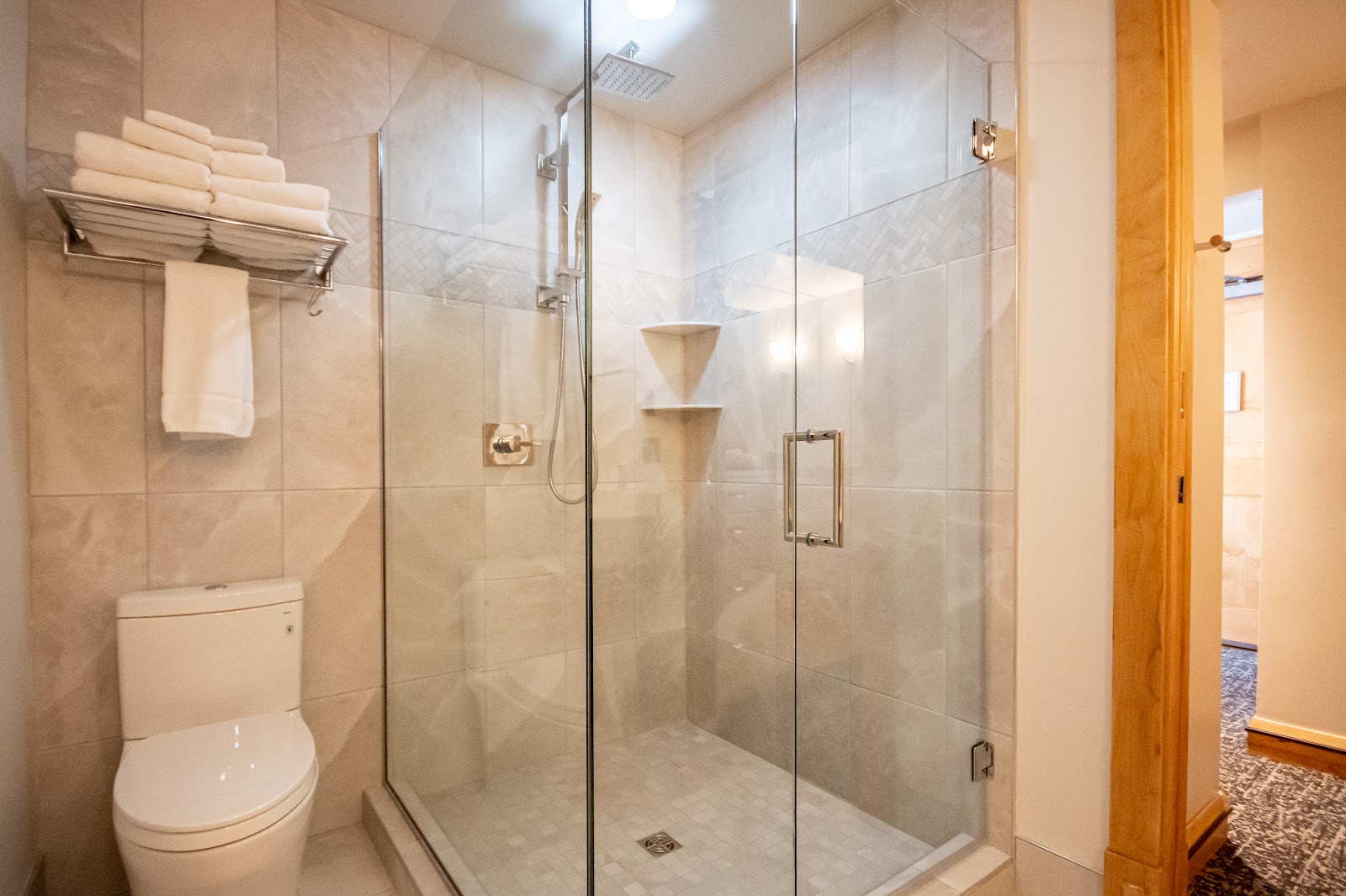
A small hotel has real advantages that a large one does not, and they are worth naming. Distances are short, so there are no lift journeys of consequence and nothing costs fifteen minutes to reach — the time a big property loses to movement is available for coverage instead. And small rooms with pale surfaces mean a bare flash bounced off a wall turns the whole space into a source larger than any modifier that would fit through the door, so the kit stays tiny.
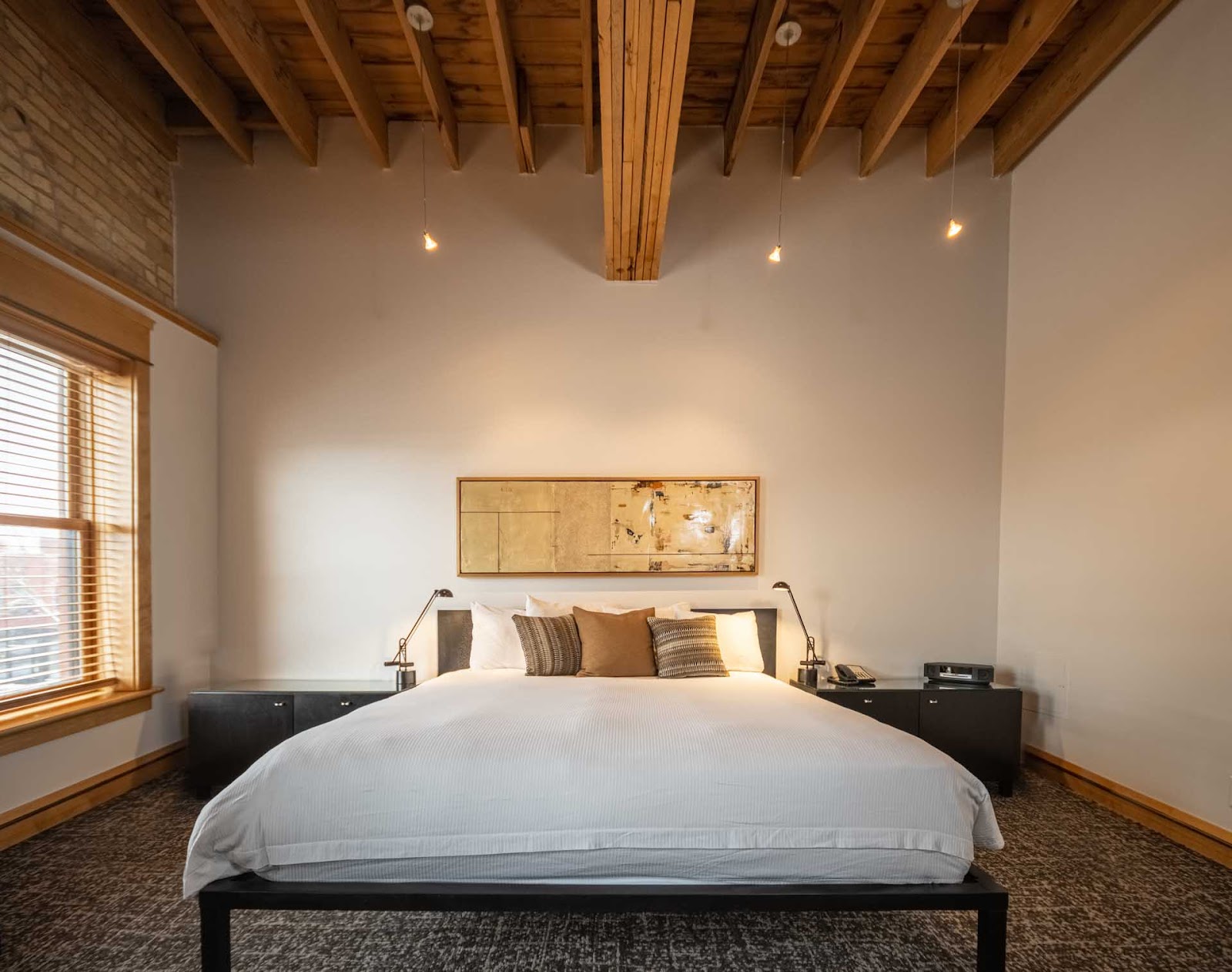
Guest floors are where the daylight is: ask for the largest window on the shaded side, switch off the overheads and move the lamps out. In an art-hung hotel there is an extra step — find the plain patch of wall in a decorated room for the dress and the details, because a strong work behind a hanging dress competes with it.
The rooftop is the outdoor asset and it follows the standard rules: no ceiling to bounce from, wind stronger and gustier than at street level, almost no ambient after dark, and a narrow window of good light — the last forty minutes of daylight and again twenty minutes after sunset. Long lens rather than wide, because compression makes the city read where a wide lens reduces it to a strip.
In Fargo the rooftop is also a seasonal proposition in a way it would not be further south. Plains wind is a constant, and on a roof it is worse; and for several months of the year the cold makes a rooftop block a matter of two or three minutes rather than twenty. That is worth saying plainly when a couple is choosing a date, because the roof is one of the venue’s better assets and it is genuinely unavailable in deep winter.
Winter also brings the compensations that apply across this region: low sun stays raking all day so period brick and stone are well lit throughout a short afternoon, and snow is the best natural fill there is while fooling a meter by about two stops. Plan the outdoor block early in the afternoon, keep it brief, and acclimatise a camera rather than cycling it between a heated hotel and deep cold.
One last scheduling note that applies to the whole northern tier. Because the usable outdoor window is short in winter and the rooftop is often simply unavailable, the indoor coverage has to carry more of the gallery here than it would at a venue further south — which is an argument for walking the guest floors and the public rooms early, finding the two or three positions that will do real work, and knowing them before the day rather than hunting for them during it.
More frames from The Hotel Donaldson
The Hotel Donaldson wedding photography: common questions
What is unusual about this hotel?
It supplies two assertive registers at once — nineteenth-century fabric and a substantial contemporary art collection on the same walls. Most hotels give you one problem or the other, and here a couple placed between them comes third.
How do you handle that?
Per frame rather than per room. Subordinate the art with a long lens wide open, commit to one work deliberately with the couple placed within the composition, or exclude it using the plain sections of period wall every such building has.
Does the art affect skin tone?
Yes. A large saturated work throws its colour across a room — red warms a face, blue cools it. Let your own light own the faces so skin has a dependable base, and let the work’s colour read as deliberate ambient.
Is there a permissions issue?
Potentially. Commissioned or collected works have makers, and reproducing one prominently in published photographs can engage the artist’s rights as well as the hotel’s preferences. One email beforehand settles it.
What are the small-hotel advantages?
Short distances, so no lift journeys of consequence and nothing costs fifteen minutes to reach. And small pale-walled rooms mean a bounced bare flash beats any modifier that would fit through the door.
Is the rooftop always available?
No, and that is worth saying. Plains wind is worse on a roof, and for several months of the year the cold makes a rooftop block two or three minutes rather than twenty. It is one of the better assets and genuinely unavailable in deep winter.
More Fargo, ND venue guides
We are writing a photographer’s guide to every venue we would happily shoot in Fargo, ND. Here are three more, plus the full index:
- The Red River Zoo: What a Northern Zoo Suits and When
- The Avalon Events Center: What a Purpose-Built Room Gets Right
- The Fargo Air Museum: One Decision About the Aircraft
All Fargo, ND Wedding Venues →
Planning a wedding at The Hotel Donaldson?
Two assertive registers need a decision in every frame. Tell us your date and which works may be published.