 Tulsa Country Club: Field Notes on a 1908 Club
Bricktown Ballpark: Photographing a Wedding in a Stadium
A stadium is a bowl of empty seats around a flat green field. That geometry is the whole thing.
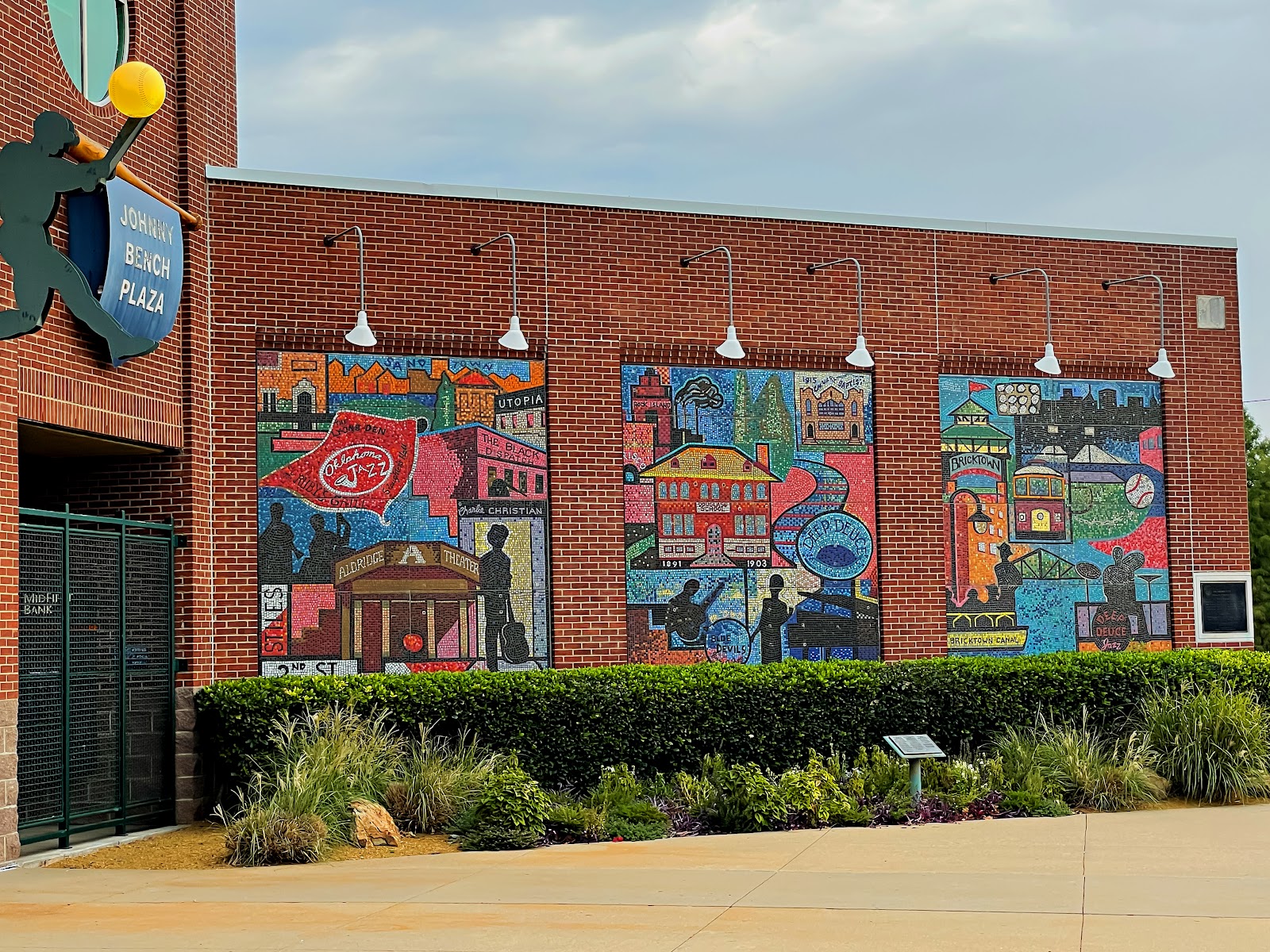
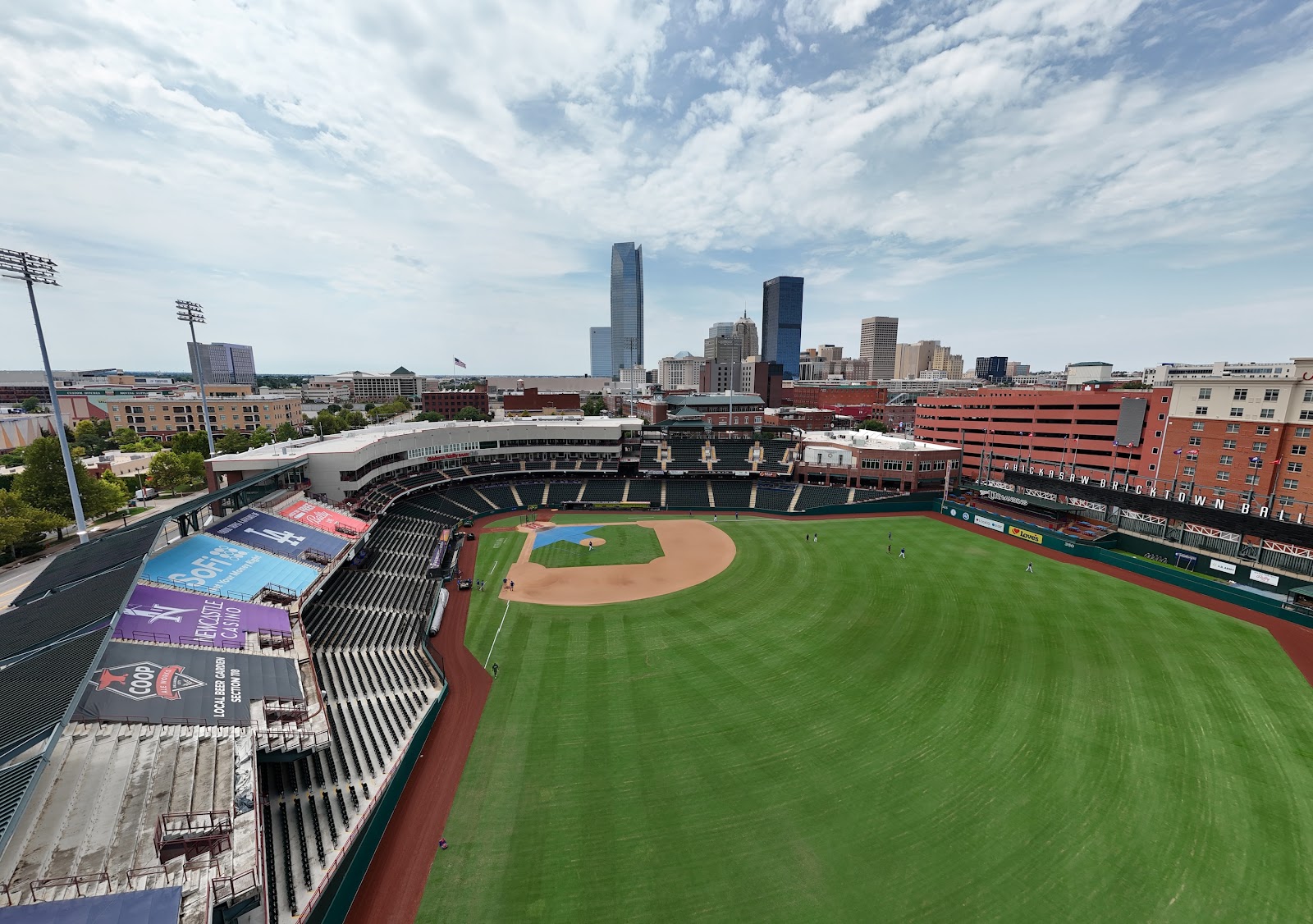
The ballpark in Oklahoma City’s Bricktown district is a brick-built stadium with a playing field, tiered seating around it, and the downtown skyline visible beyond the outfield.
A stadium is an unusual venue geometry and worth thinking through rather than treating as a large outdoor space. It is a bowl: a flat, uniformly surfaced field at the bottom, tiers of seating rising on all sides, and structure above that. That produces three photographic conditions that occur together nowhere else — an enormous unobstructed foreground of mown grass, a background of repeating seat patterns curving away, and the option of the city visible over the rim.
It also produces a specific problem: a bowl with nobody in it reads as empty rather than as grand. This follows the venue’s own logic. We have not photographed a wedding at the ballpark; stadium bowls behave the same wherever they are built. Whether the field may be walked on, whether the lights can be switched on and what the seating access allows are the three questions for their events team — and the second is the one that transforms the evening.
The Bricktown Ballpark at a glance
| Where | Bricktown, Oklahoma City, Oklahoma |
| Character | A brick ballpark with a field, tiered seating and the skyline beyond |
| The geometry | A bowl: flat field, curving seat tiers, structure above |
| The problem | An empty bowl reads as empty rather than as grand |
| Ask first | Field access, seating access, and whether the lights can be on |
The field: mown grass and why low light matters
A playing field is mown in patterns, and those patterns are visible for the same reason fairway stripes are: the grass is bent in alternating directions and reflects light differently. That effect depends entirely on the angle of the light — with the sun low and across the mowing direction the pattern reads strongly and the field becomes a graphic surface, while under a high sun it flattens into uniform green and the field looks like a lawn.
So the field is a last-ninety-minutes proposition, and on the southern plains that window is long because nothing intercepts the sun near the horizon. Low light also rakes across the infield dirt, which has real texture, and it lights faces from the side rather than from above.
The field is also an enormous unobstructed foreground, which is rare. That invites a low camera: dropping close to the grass makes the mown pattern run towards the viewer, pushes the horizon down, and lets the seating tiers and the sky occupy the upper frame. Standing at eye level on a field wastes the one thing a field gives you.
There is no shade anywhere on a field, which in an Oklahoma summer makes the middle of the day genuinely unworkable — the stands and any concourse are the shade, and the building’s own shadow across the lower seating is the reliable midday option.
The bowl: repetition, and the emptiness problem
Tiered seating is one of the strongest repeating patterns in any building — thousands of identical elements curving away in rows — and it photographs well precisely because it is relentless. A couple placed against a curving bank of empty seats is a striking graphic frame, and it exists nowhere except a stadium.
The way to use it is to let the repetition dominate rather than competing with it: go long, fill the frame with seating, and place the couple small and deliberately within the pattern. A wide frame that shows the whole bowl and two small figures somewhere in it reads as empty; a compressed frame filled with seat rows and a couple as the one interruption reads as intentional.
That is the answer to the emptiness problem. An empty stadium looks sad in a wide establishing shot and extraordinary in a compressed one, and the difference is entirely focal length. This is the venue where lens choice matters most and where the instinct — go wide, it is big — is most wrong.
The seating also gives elevation, which is the other underused asset. Climbing into the stands puts the camera above the field, which turns the mown pattern into a graphic plane seen from above and places a couple against green rather than against sky. That frame is unavailable from the field itself and it takes two minutes of walking.
And a bowl is enclosed, which matters on the plains: the stands cut the wind noticeably at field level, which makes a veil manageable and a light stand safe in a way an open plains lawn does not.
- The mown pattern only reads in low raking light — last ninety minutes
- Drop the camera low so the pattern runs towards the viewer
- Go long and fill the frame with seating; wide reads as empty
- Climb into the stands for the frame the field cannot give
- The bowl cuts the wind, which an open plains lawn does not
The lights, the brick and the city
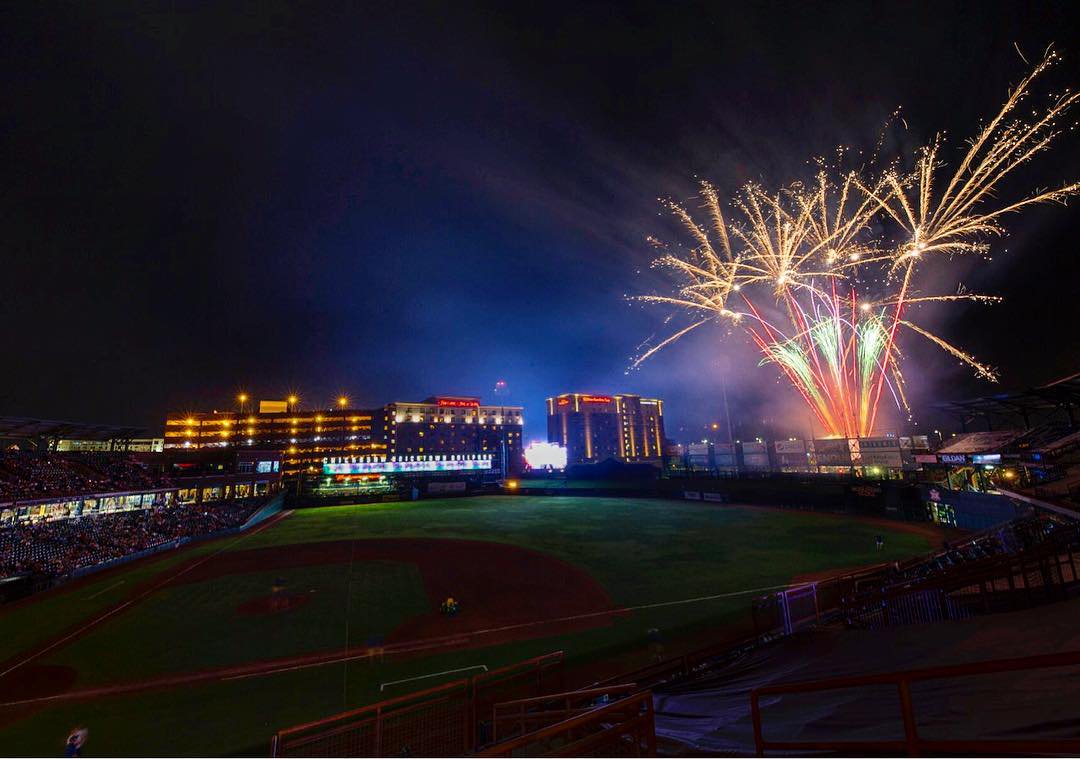
The single most transformative question is whether the stadium floodlights can be switched on. A lit field after dark is one of the most distinctive wedding frames available anywhere: an enormous expanse of brilliantly lit green under towers of light, with the seating falling away dark and the sky black above. Nothing else produces it, and it costs a request rather than equipment.
If they can be lit, the exposure is straightforward but the colour needs care: stadium floodlighting is typically metal halide or LED, both of which can be strongly green or blue and neither of which is a broad-spectrum source. Skin can render oddly even at technically correct white balance, so the reliable answer is a warm-gelled key on the faces with white balance set to it — the field then stays its own colour and skin is right.
Floodlights are also very high and very hard, which means they behave like a distant point source: crisp shadows straight down, and shadowed eye sockets. A source at face height is not optional under stadium lighting.
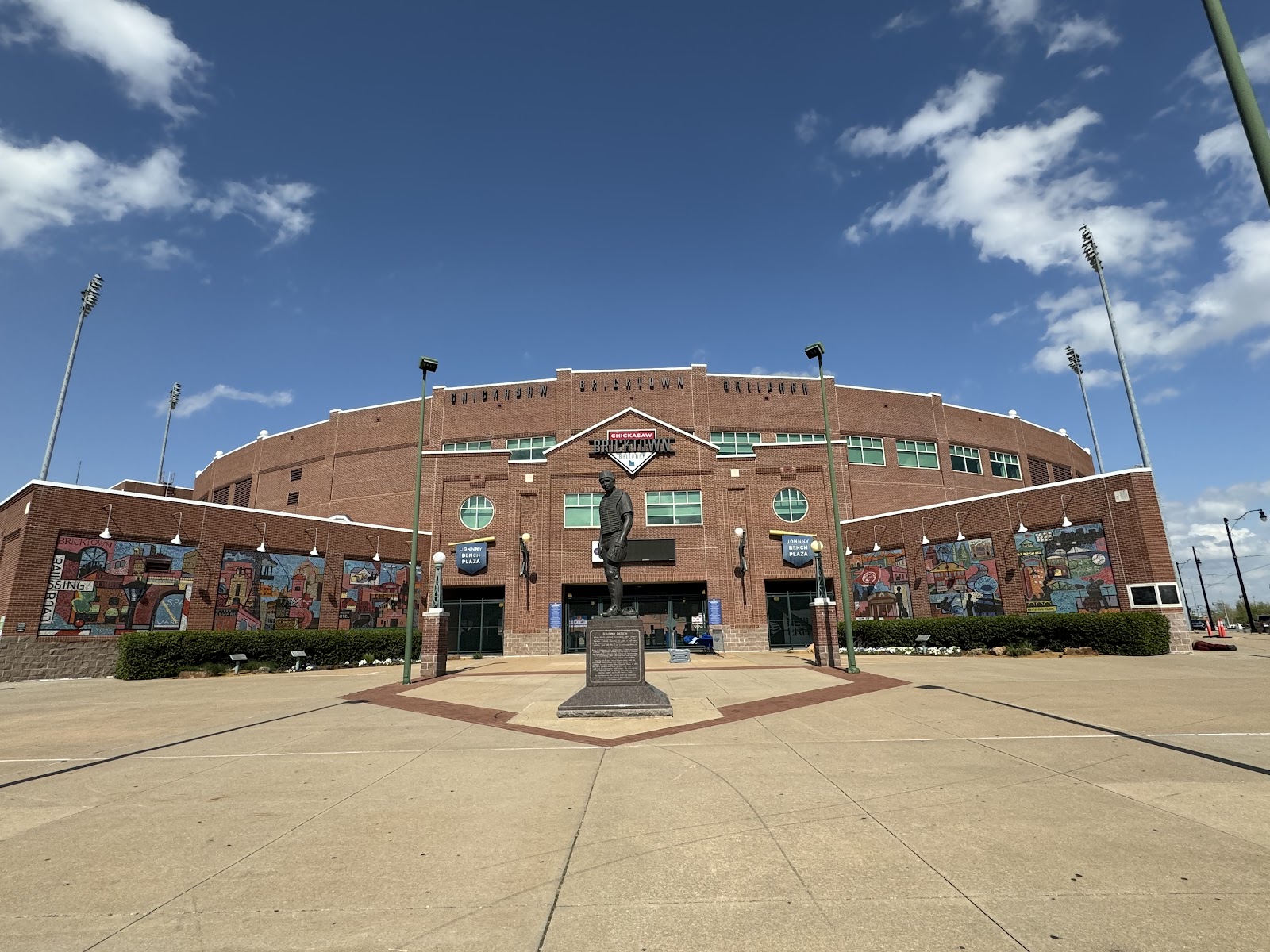
Bricktown around the stadium is the outdoor counterweight and it is coherent material: a district of brick warehouse buildings at low-rise scale with a canal running through it. Brick is a forgiving mid-tone with real texture that needs raking light, and because the district is low-rise, low sun reaches street level and runs the length of a street.
The skyline over the outfield is the locating frame and it wants a long lens — compression brings the towers close behind the field where a wide lens reduces them to a strip. Oklahoma conditions apply throughout: severe summer heat keeping outdoor blocks short, wind as a constant, and severe convective storms in spring and early summer that on an open field means a real decision point and a route to cover under the stands.
More frames from The Bricktown Ballpark
The Bricktown Ballpark wedding photography: common questions
When does the field photograph well?
The last ninety minutes. Mown patterns are visible only when light rakes across the bent grass, so under a high sun the field flattens into uniform green and looks like a lawn.
Wide or long lens in a stadium?
Long, and this is the venue where it matters most. A wide frame showing the whole bowl with two small figures reads as empty; a compressed frame filled with seat rows and the couple as the one interruption reads as intentional.
What camera height works?
Low on the field, so the mown pattern runs towards the viewer and the horizon drops. And high in the stands for a frame the field cannot give — the pattern as a graphic plane with the couple against green rather than sky.
What is the transformative request?
Whether the floodlights can be switched on. A lit field after dark under towers of light, with the seating falling away and the sky black, is one of the most distinctive frames available anywhere — and it costs a request rather than equipment.
What is the catch with floodlights?
Colour and direction. Metal halide and LED are narrow-spectrum, so skin renders oddly even at correct white balance — use a warm-gelled key on the faces. And they are very high and hard, so a source at face height is not optional.
Does the bowl help with wind?
Yes, noticeably. The stands cut the wind at field level, which makes a veil manageable and a light stand safe in a way an open plains lawn does not.
More Oklahoma venue guides
We are writing a photographer’s guide to every venue we would happily shoot in Oklahoma. Here are three more, plus the full index:
- The Chesapeake Boathouse: How the River Reflection Frame Is Made
- Civic Center Music Hall, Oklahoma City: How the Light Moves
- The National Museum of the American Indian, Oklahoma City: Four Ways Out of the Gallery Problem
Planning a wedding at The Bricktown Ballpark?
Ask whether the lights can come on — that one answer changes the evening. Tell us your date and we will ask.