 The Omaha Children’s Museum: A Photographer Answers Your Questions
The Lied Center: Field Notes on a Modern Performing Arts Venue
A glazed lobby, a dark hall and a stage: three spaces where only one has a clock attached.
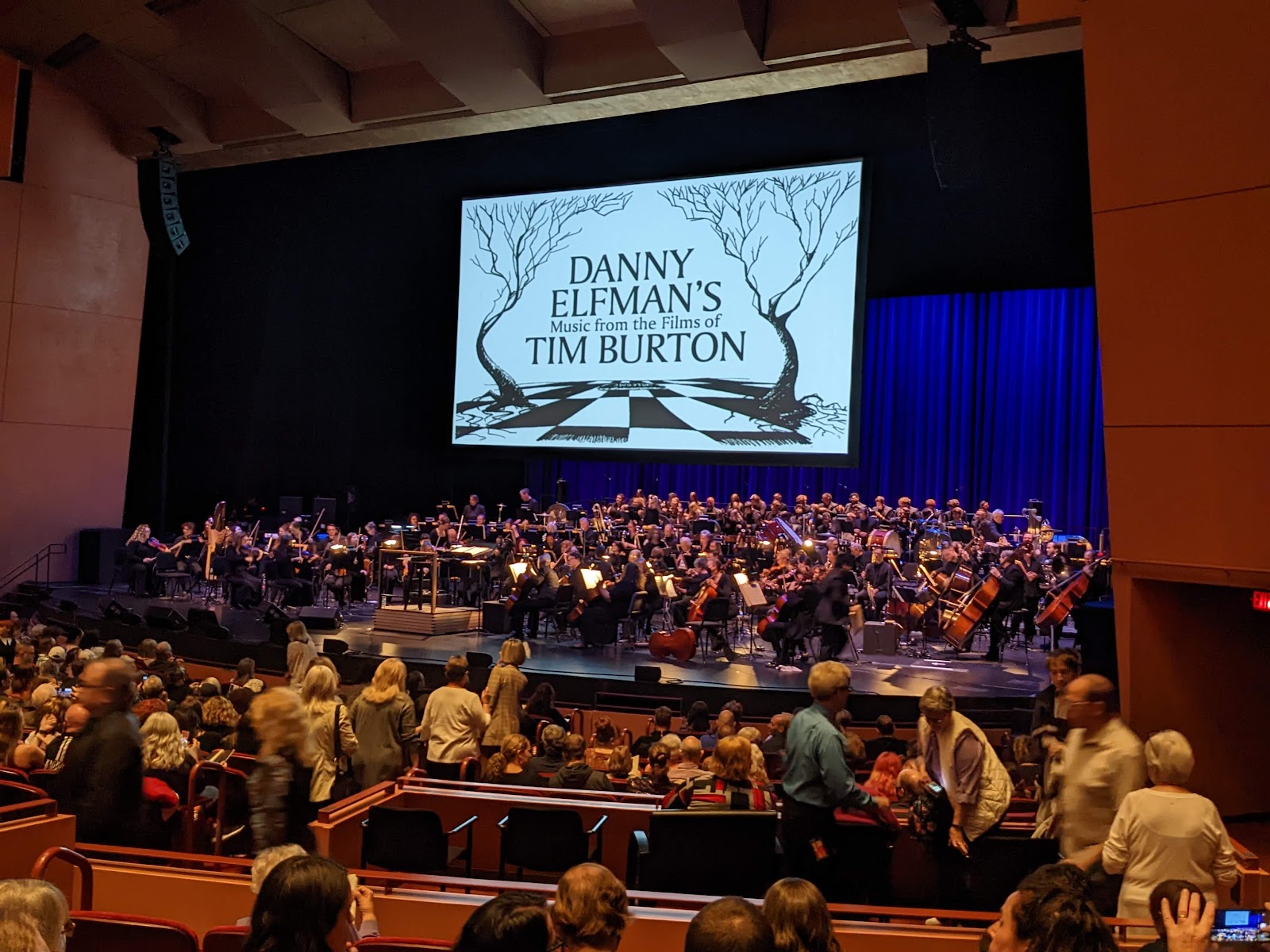
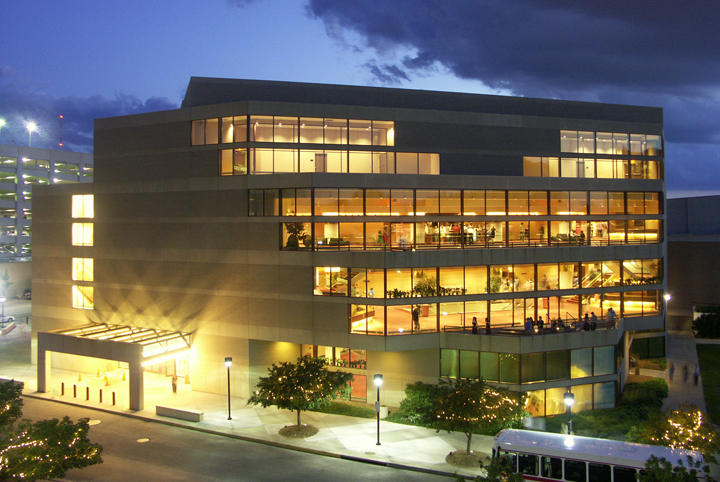
The Lied Center for Performing Arts stands on the university campus in Lincoln, Nebraska, a contemporary building with an extensively glazed lobby, a large auditorium and back-of-house spaces behind it.
Modern arts centres are built with generous glazed foyers on purpose — an audience arriving in the evening should be visible from the street and the city should be visible from inside — and that produces a building with three genuinely different photographic environments. The lobby is bright and changes across the day. The auditorium is dark and never changes at all. The stage is a lit platform facing that darkness, and whether it is available depends on a person rather than a plan.
These are field notes on each. We have not photographed a wedding at the Lied Center; glazed foyers and modern auditoria behave the same wherever they are built. Which spaces are available and whether the lighting rig can be operated are questions for their events team — and the second is the one that produces the best frame.
The Lied Center for Performing Arts at a glance
| Where | University campus, Lincoln, Nebraska |
| Character | A contemporary arts centre with a glazed lobby and a large auditorium |
| The lobby | Bright and changing; the only space with a clock attached |
| The auditorium | Dark and unchanging; it absorbs any delay |
| Ask first | Whether the rig can be operated, and by whom |
Problem one: the lobby passes through three states
A large glazed foyer behaves differently at three points in the day and only one of them gives a balanced frame. In daylight the outside is far brighter than the interior, so the glass reads as a bright wall: expose for the couple and the view blows out, expose for the view and the couple silhouette. Holding both would mean lighting a full-height lobby up to daylight levels, which is impractical across that area.
After dark the relationship inverts. The lit interior is brighter than the black sky, so every pane reflects the lobby, the guests and your lighting rather than showing anything outside. Wide frames that worked at dusk become cluttered an hour later.
Between them there is a crossing point and that is the frame: for roughly twenty minutes around and after sunset the sky outside falls to approximately the brightness of the interior lighting, and one exposure holds the lit lobby, the couple and whatever is beyond the glass. It is the only time all three exist together. Take the clock time from sunset and treat it as an appointment.
Two refinements. Shoot obliquely to the glass rather than square on, so your own reflection goes off to the side rather than back into the lens, and the glazing structure gives a receding line instead of a flat grid. And add light sparingly if at all — the lobby’s own lighting usually renders the couple at that hour, and a strong source makes the interior brighter than the sky again, which destroys the balance you came for.
Problem two: the auditorium never changes, which is useful
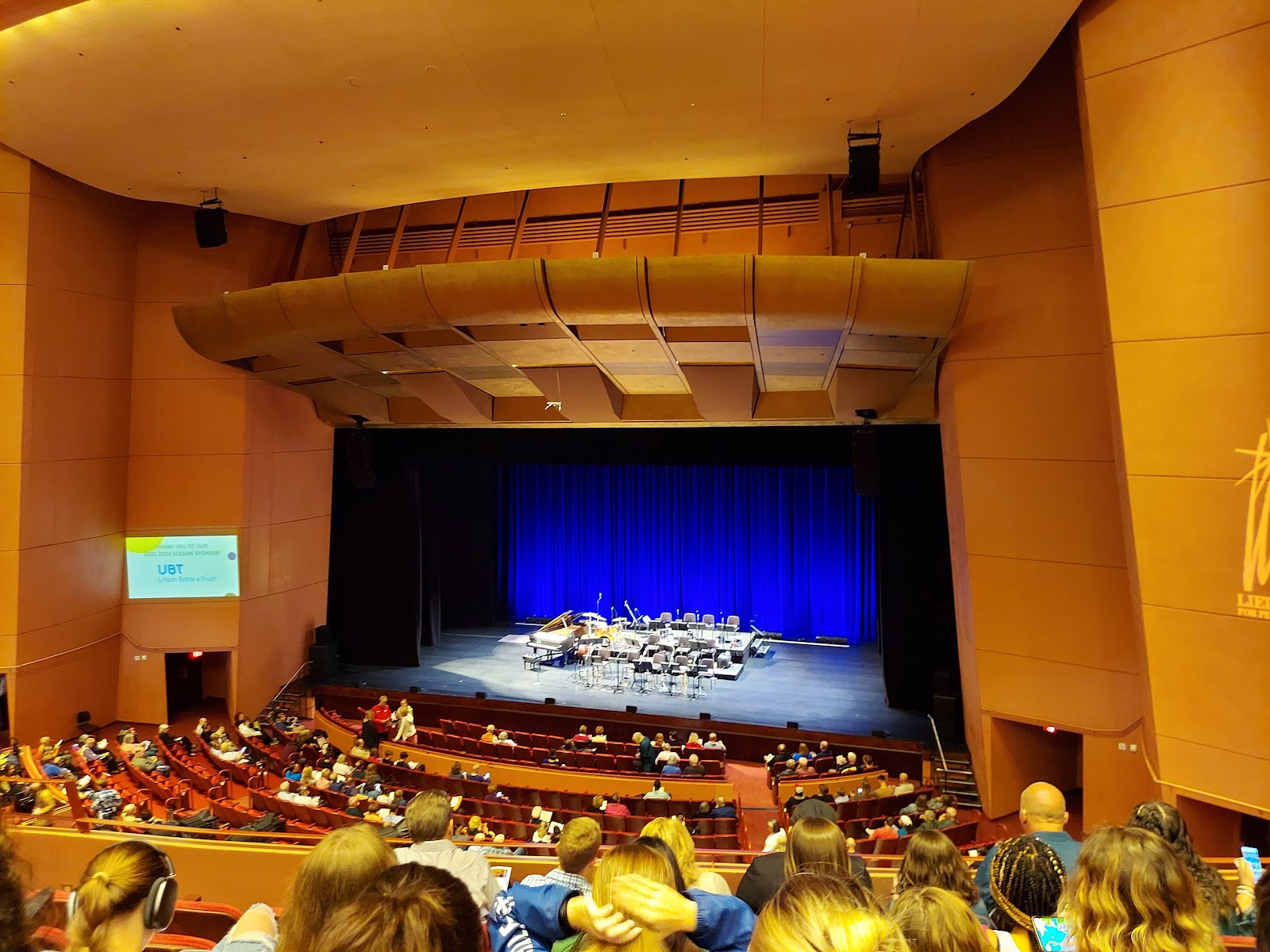
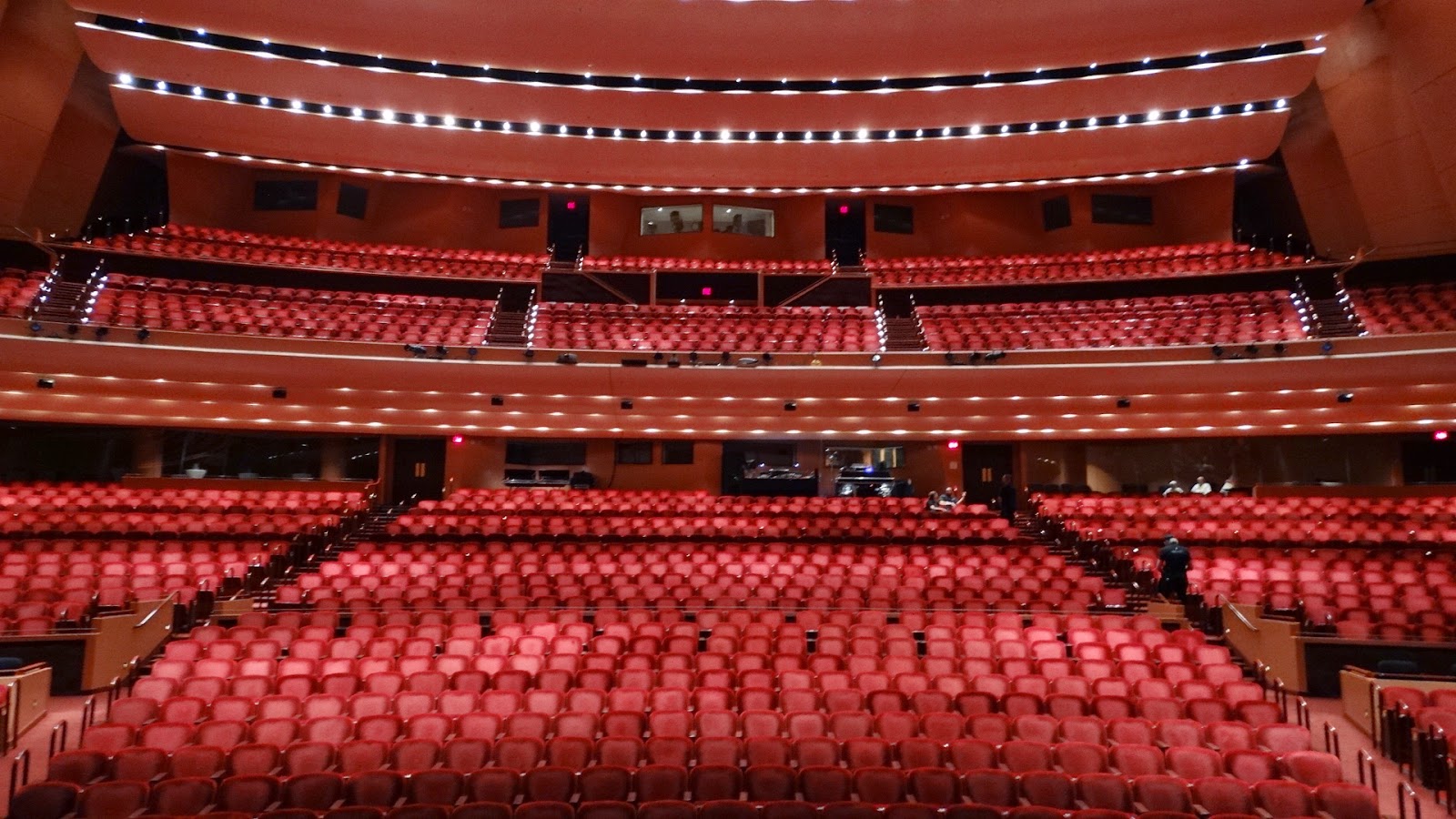
A modern auditorium is dark by design: house lights dim, surfaces deep-toned so they do not reflect the stage, and seating that absorbs light. It is one of the darkest interiors a wedding photographer works in, and the instinct to fix that with a large bounced flash is exactly wrong — filling it turns a dramatic cavern into a badly lit hall full of chairs.
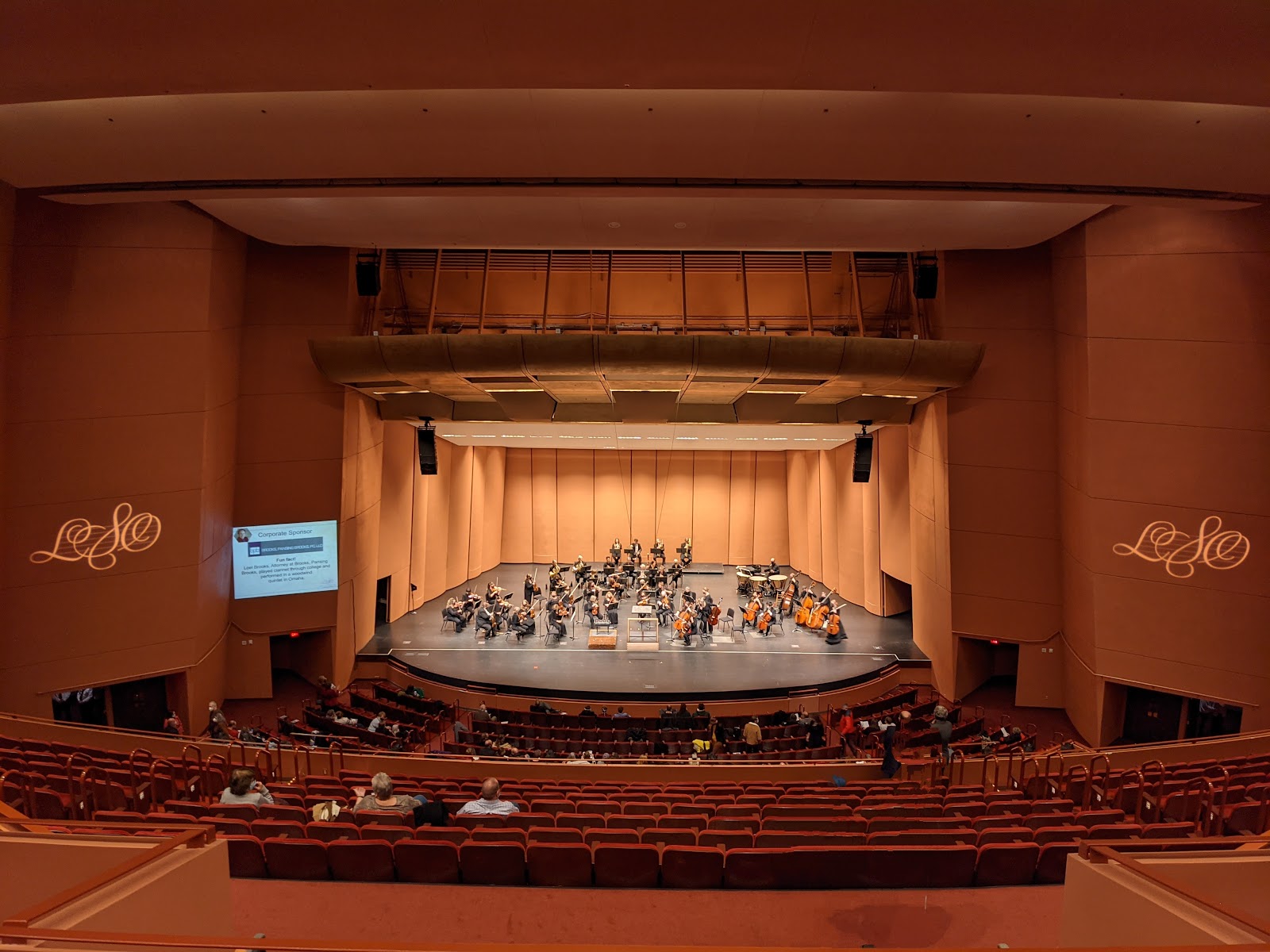
The productive approach uses the geometry. Rows of seats receding from the camera are one of the strongest repeating patterns in any building and they read best mostly dark with a shape emerging from them. A couple in an aisle, lit by one controlled source, with rows disappearing into blackness either side, is the frame the auditorium gives.
A balcony or upper tier is worth asking about, because looking down over rows towards a lit stage produces a geometric composition no ground-level position offers, and it is a much easier exposure — the background becomes a distant tone rather than a space to fill.
The useful consequence of a windowless hall is that it has no clock. One fixed lighting condition means you light it once and it holds, with no convergence moment to catch and no penalty for a delayed running order. That makes the auditorium the block to move when the day slips, since the lobby’s twenty minutes cannot move at all.
- Take the lobby crossing from sunset; it is the only timed frame here
- Shoot obliquely to glass and add light sparingly, or lose the balance
- Do not flood the auditorium; a dark house is the point of it
- Ask weeks ahead for a warm front wash, a backlight and low house lights
- Move the auditorium block when the day slips — it has no clock
Problem three: the stage depends on a person
The best frame in any performance venue is the couple in stage light seen from the dark house, and it depends on something outside a photographer’s control: someone rostered who can operate the lighting board. A request made on the day to whoever is on shift gets a polite no; the same request made to the events team three weeks earlier usually gets someone scheduled.
The request is small and specific: a warm front-of-house wash for the faces, a backlight from upstage if the rig allows, and house lights at a low level rather than off. That last part matters — completely dark, the hall disappears and the frame becomes two people in a void; slightly lit, the rows read faintly as context and the photograph says ‘theatre’ rather than merely ‘dark’.
Ask for warm or open white rather than a saturated colour, because strong stage colour on skin is difficult to correct and warm suits most rooms anyway. If the rig is fixed in a colour, gel your own key to match rather than fighting it — matched is always better than mixed.
If the desk is unavailable, light the stage yourself. A dark hall is the most forgiving environment for added light because there is nothing nearby to bounce off and therefore no spill to manage: one gridded source at forty-five degrees and one behind, both at low power, reproduces the effect closely.
Beyond the three main spaces, back-of-house is the underrated asset — service corridors, dressing rooms with mirror lights, bare structure and hard directional light, all in a completely different register from the glazed lobby. And outside, Lincoln is low-rise, so low evening sun reaches street level and runs the length of a street; the campus around the building gives open ground where plains wind is a constant and building shadows are the only dependable midday shade.
More frames from The Lied Center for Performing Arts
The Lied Center for Performing Arts wedding photography: common questions
When does the glazed lobby give a balanced frame?
Only at the dusk crossing — roughly twenty minutes when the sky outside falls to the brightness of the interior lighting. In daylight the view blows out or the couple silhouette; after dark the glass reflects the room instead.
Should you add flash in the lobby?
Sparingly if at all. The lobby’s own lighting usually renders the couple at that hour, and a strong source makes the interior brighter than the sky again — which destroys the balance. Shoot obliquely so your reflection misses the lens.
How should the auditorium be lit?
Sparingly. It is dark by design and flooding it turns a dramatic cavern into a badly lit hall full of chairs. One controlled source on a couple in an aisle, with the rows disappearing into blackness either side.
What is the best frame in the building?
The couple in stage light seen from the dark house. It needs someone rostered to operate the board, so ask the events team weeks ahead for a warm front wash, a backlight if the rig allows, and house lights low rather than off.
Why house lights low rather than off?
Because completely dark, the hall disappears and the frame becomes two people in a void. Slightly lit, the rows read faintly as context and the photograph says where it was taken.
Which block should move if the day runs late?
The auditorium. It is windowless, so the lighting condition never changes and there is no penalty for delay — whereas the lobby’s twenty minutes are fixed by sunset and cannot move at all.
More Lincoln, NE venue guides
We are writing a photographer’s guide to every venue we would happily shoot in Lincoln, NE. Here are three more, plus the full index:
- The Lincoln Marriott Cornhusker: Field Notes on a Large Hotel Ballroom
- The Nebraska Club: One Decision About a Club on a High Floor
- The Nebraska State Capitol: How the Rotunda Frame Is Actually Made
All Lincoln, NE Wedding Venues →
Planning a wedding at The Lied Center for Performing Arts?
Three spaces and only one clock. Tell us your date and we will make the lighting request three weeks early.