 Hotel Saint Louis: A Walk-Through of an 1893 Union Trust Building
Loews Kansas City: How the High Window Frame Is Made
A modern tower gives one frame that a low building cannot, and it is made with a long lens at a fixed time.
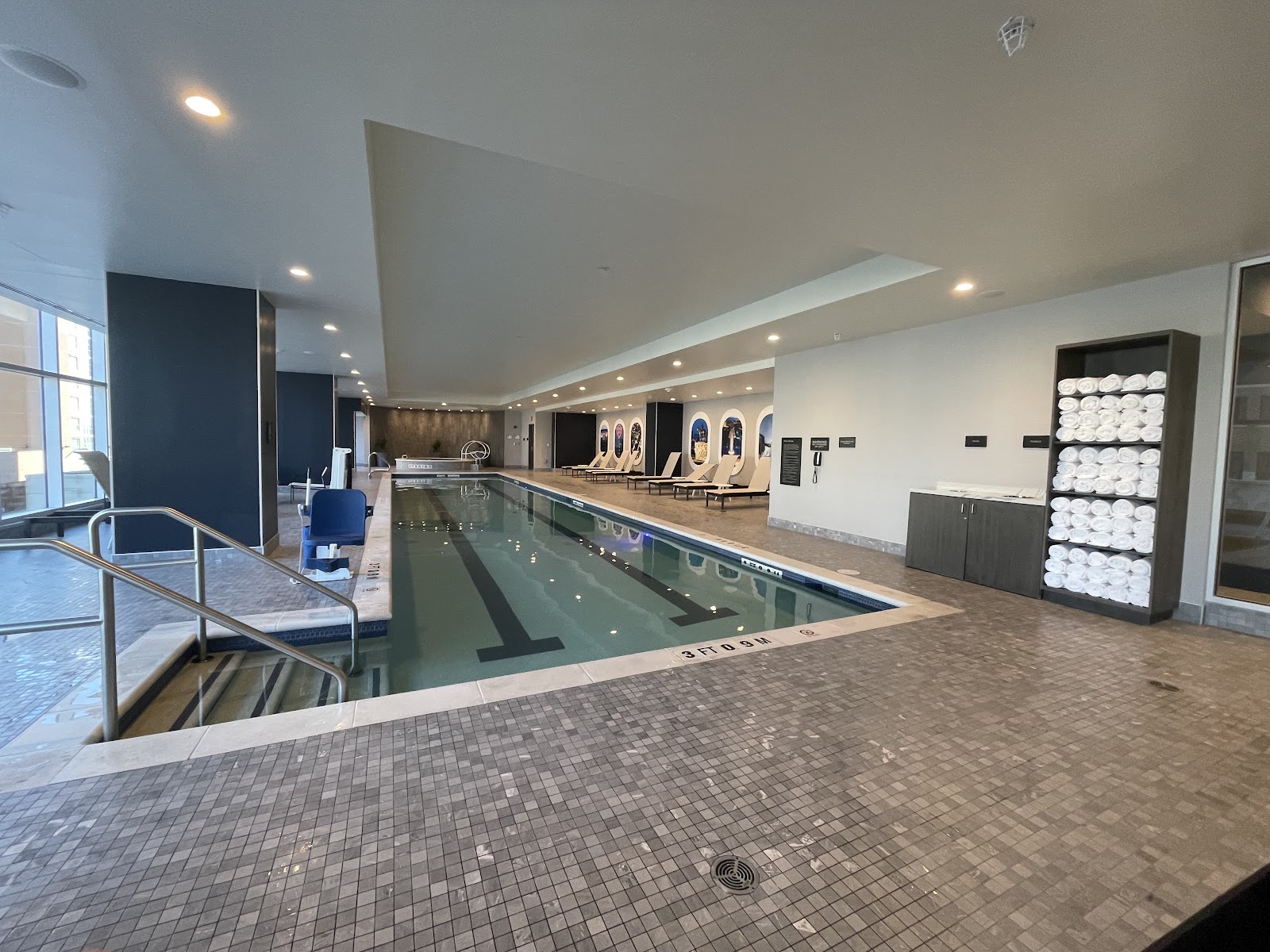
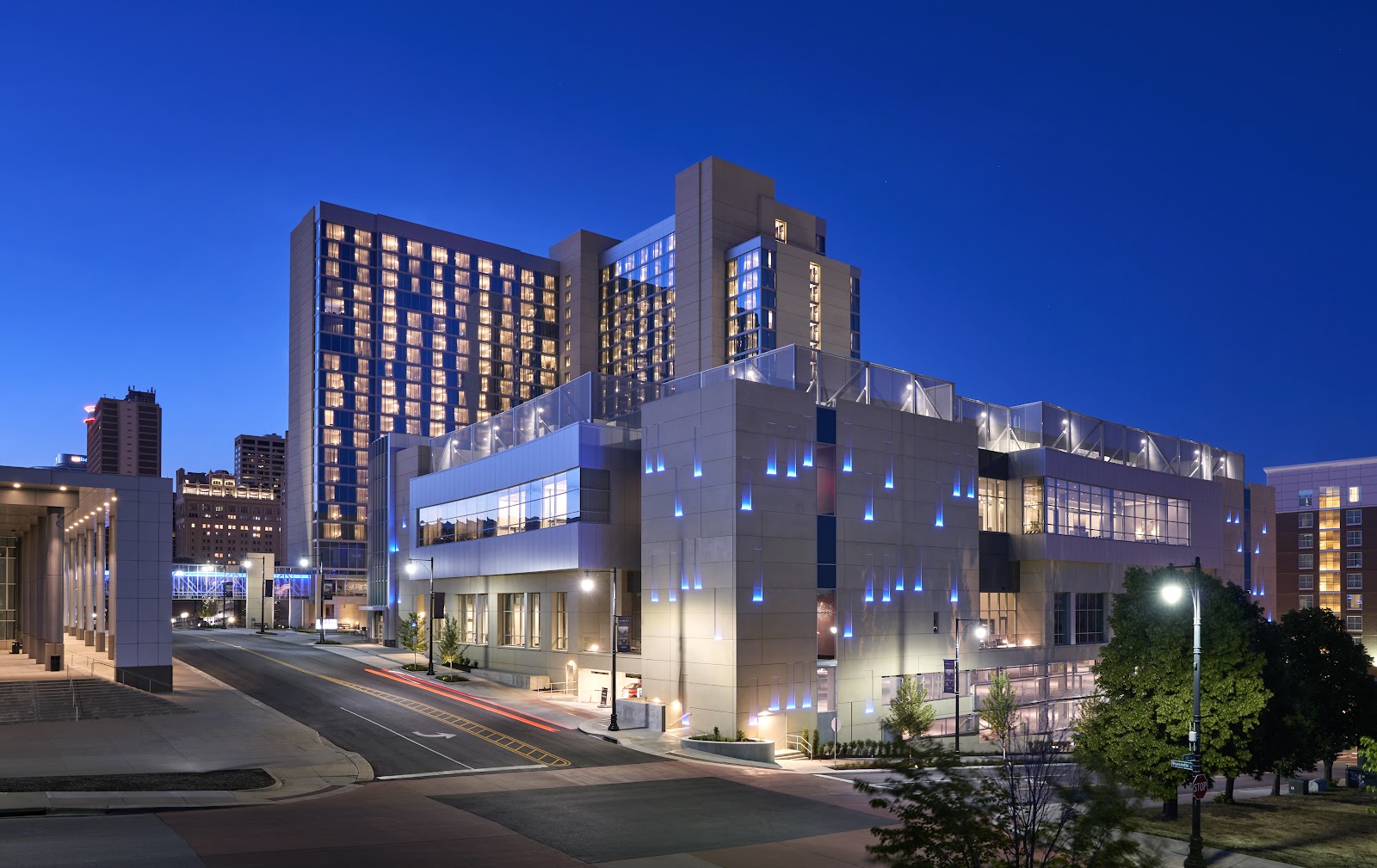
Loews Kansas City is a contemporary high-rise hotel in downtown Kansas City, Missouri, with ballroom and function space, guest floors and windows looking out across the city from height.
A modern hotel of this kind is not a distinctive interior — the ballrooms are neutral, the palette is restrained, the lighting is even and the rooms resemble those in every other city. What it has that a low building does not is height, and height produces one specific frame worth planning the whole day around: the couple at a high window with the city spread out below, at the moment when the interior and the exterior balance against each other.
That frame is easy to waste and it is made from three decisions. This is an account of them, followed by what the rest of the building asks. We have not photographed a wedding at Loews Kansas City; high-rise hotel windows and neutral ballrooms behave the same everywhere. Which rooms are allocated and which way they face are questions for their events team, and orientation is the useful one.
Loews Kansas City at a glance
| Where | Downtown Kansas City, Missouri |
| Character | A contemporary high-rise hotel with ballroom space and city views |
| The frame | The couple at a high window with the city below, at dusk |
| Three decisions | Which window, which lens, and which clock time |
| Ask first | Which allocated rooms face the city and which face the sun |
Decision one: which window, and why height improves the light
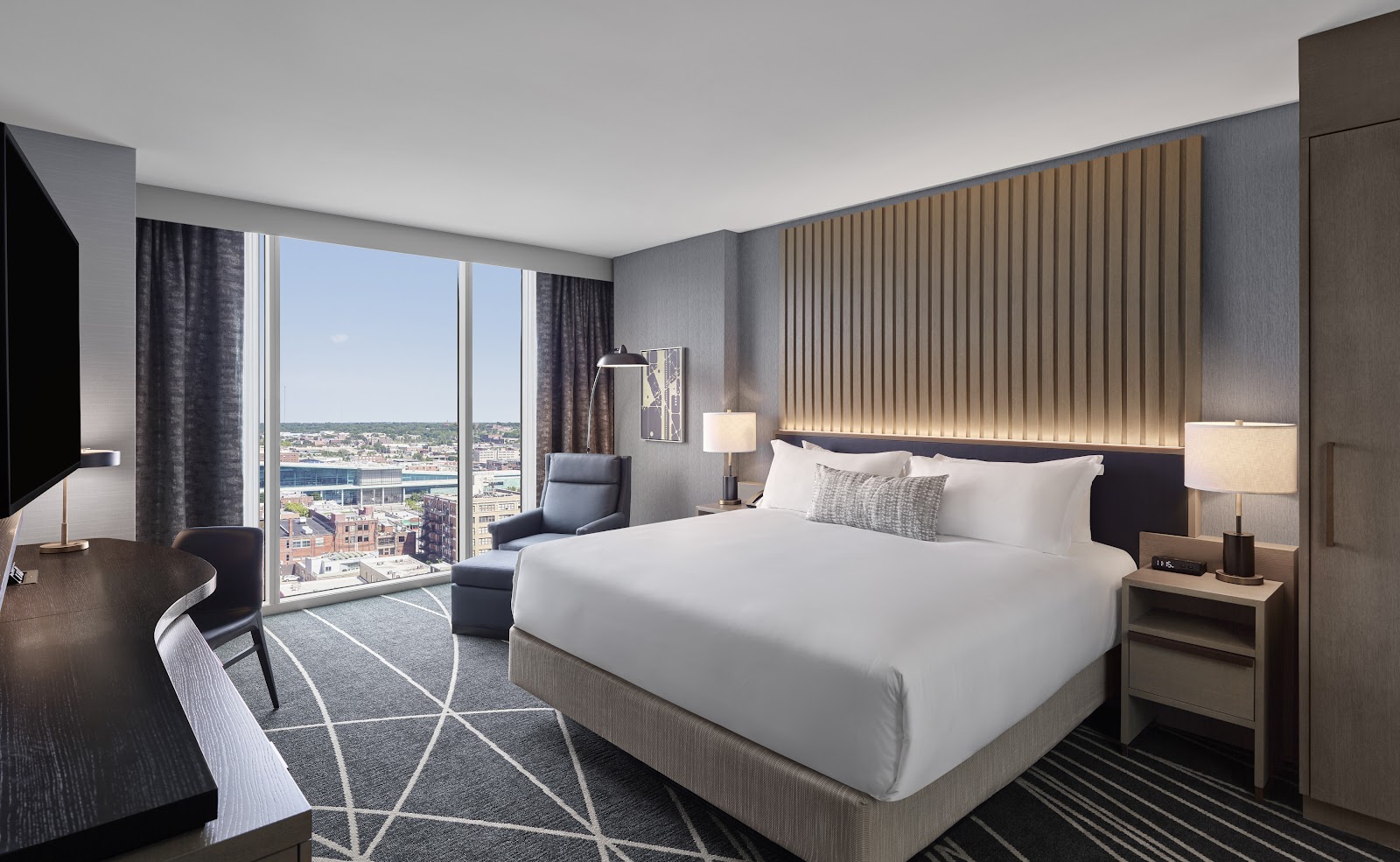
A window many floors up is a materially better light source than the same window at street level, and the reason is what is opposite it. At ground level a building across the street shadows the light, bounces its own colour into it and appears in any reflection. At height there is nothing opposite, so the window sees a very large area of open sky with no obstruction — and what arrives is cleaner, stronger and more directional as a result.
That makes a high guest room the best natural light in the building by a wide margin, better than anything in the public spaces and free. The request worth making at booking is for the largest window on the shaded side at the highest available floor. Then switch off every overhead and move the lamps out, because mixed tungsten and daylight in one room is the commonest cause of inconsistent skin tone across a preparation gallery.
Orientation decides how the room behaves through the day. A window facing away from the sun gives soft directional light all day. A window facing into it gives a hard bright patch, extreme contrast and, if the frame is gridded, hard shadow bars across faces that cannot be corrected — so if the allocated room faces the sun, a sheer curtain drawn across the glass is the fix, and it converts a small hard source into a large soft one instantly.
The view is the other half of the choice. A window facing the city gives the frame; a window facing away gives good light and a dull background. If only one room can be requested, request the one facing the city and manage the light, because light can be managed and a view cannot be manufactured.
Decision two: the lens, which decides whether the city reads
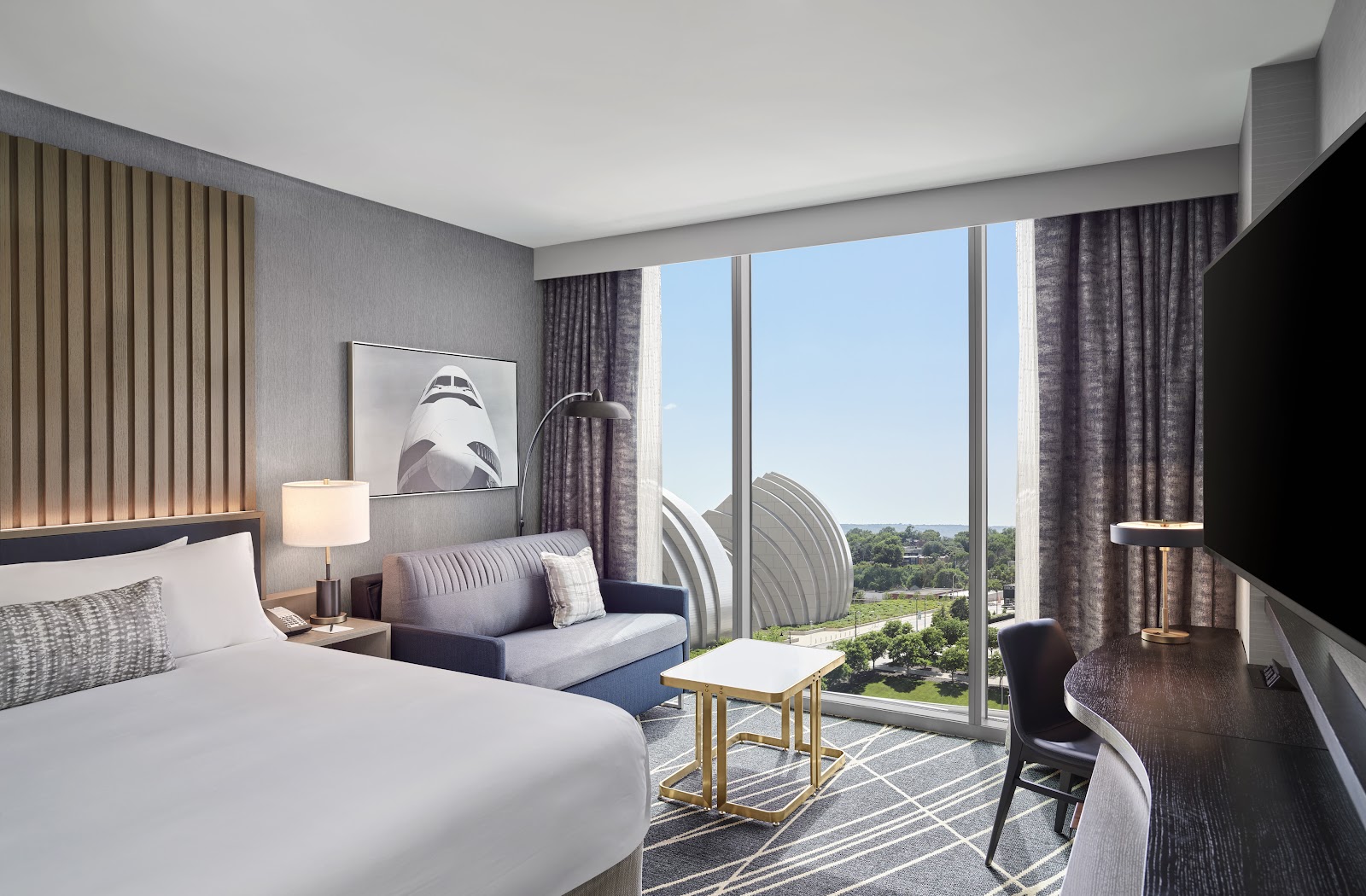
This is where the frame is most often lost. A wide lens at a high window renders the city at its true angular size, which from many floors up is a broad but low field of small shapes — technically the whole city, visually nothing in particular, with the window frame occupying more of the image than anything outside it.
A long lens compresses. At 85mm or beyond, a section of the city fills the frame behind the couple, individual buildings read as forms rather than as texture, and the depth of the view stacks into layers. That is the frame, and it means standing further back in the room and shooting past the couple rather than including the whole window.
It also means the window frame itself mostly disappears, which is usually an improvement. A mullion or a transom crossing a face is the commonest avoidable fault in a window frame, and a longer lens from further back naturally excludes the structure.
The couple’s placement follows from the lens. Close to the glass and off to one side, so the city occupies the rest of the frame rather than being blocked by them — and turned towards the light rather than towards the camera, because at a window the light is the reason they are standing there.
- Request the largest shaded-side window on the highest available floor
- If only one choice, take the city-facing room and manage the light
- 85mm or beyond; a wide lens turns the city into texture
- Stand back and shoot past the couple; the window frame disappears
- Take the clock time from sunset and treat it as an appointment
Decision three: the clock time, and the rest of the building
The frame has one window and it is dictated by sunset rather than by the running order. In daylight the city outside is far brighter than the room, so the view blows out or the couple silhouette. After dark the room is brighter than the sky and the glass becomes a mirror showing the interior. Between them, for roughly twenty minutes around and after sunset, the two balance and a single exposure holds the lit room, the couple and the city with colour still in the sky.
Take the clock time from sunset on the actual date and treat it as an appointment. A two-minute interruption buys the frame; being ten minutes late means it has gone. And add light sparingly if at all — the room’s own light usually renders the couple at that hour, and a strong source makes the interior brighter than the sky again, which destroys the balance you came for.
The ballroom is the rest of the day and it is the standard modern problem: neutral palette, patterned carpet, warm overhead lighting and no daylight. One warm-gelled source at face height at about forty-five degrees fixes the top-light look, a second behind as a rim finishes the dance floor, and because the ambient never changes the setup holds all evening. That also makes the ballroom the block to move when the day slips, since the window frame cannot move.
Neutral rooms need contrast brought in: a long lens wide open for sharpness separation, one directional source, framing against a darker element, and negative fill. And patterned carpet should be kept out of wide frames, because it draws the eye and dates the image.
Downtown Kansas City outside is the locating register, and parts of it are low-rise enough that low evening sun reaches street level and runs the length of a street — which a city of uniform towers cannot offer. Missouri summer humidity fogs a lens carried from a heavily air-conditioned hotel into outdoor air for ten to twenty minutes, so acclimatise before that block rather than during it.
More frames from Loews Kansas City
Loews Kansas City wedding photography: common questions
Why is a high window better than a low one?
Because of what is opposite it. At street level a building across the road shadows the light, bounces its colour in and appears in reflections; at height there is nothing opposite, so the window sees a large area of open sky and the light is cleaner and more directional.
Which room should be requested?
The largest window on the shaded side at the highest available floor. And if only one choice is possible, take the city-facing room and manage the light — light can be managed, a view cannot be manufactured.
Wide or long lens at the window?
Long — 85mm or beyond. A wide lens renders the city at true angular size, which from height is a low field of small shapes with the window frame occupying more of the image than the view. Compression makes a section of the city fill the frame.
When is the frame available?
About twenty minutes around and after sunset, when the interior lighting and the sky balance. In daylight the view blows out or the couple silhouette; after dark the glass becomes a mirror showing the room.
Should you add flash for it?
Sparingly if at all. The room’s own light usually renders the couple at that hour, and a strong source makes the interior brighter than the sky again — which destroys the balance you came for.
What does the ballroom need?
Contrast brought in, and one warm source at face height to kill the top-light look. Neutral palettes give no separation, so use a long lens wide open, a directional source and negative fill — and keep patterned carpet out of wide frames.
More Kansas City, MO venue guides
We are writing a photographer’s guide to every venue we would happily shoot in Kansas City, MO. Here are three more, plus the full index:
- The National WWI Museum: Making the Tower and Skyline Frame
- The Nelson-Atkins Museum: One Decision About Which Building You Use
- The Raphael Hotel: A Small Hotel and the District Around It
All Kansas City, MO Wedding Venues →
Planning a wedding at Loews Kansas City?
One window, one lens and one clock time. Tell us your date and which rooms face the city.