 Hotel Saint Louis: A Walk-Through of an 1893 Union Trust Building
The Kansas City Marriott Downtown: Four Ways Out of the Large-Hotel Problem
At a big hotel the problem is not the light. It is that everything is a long way from everything else.
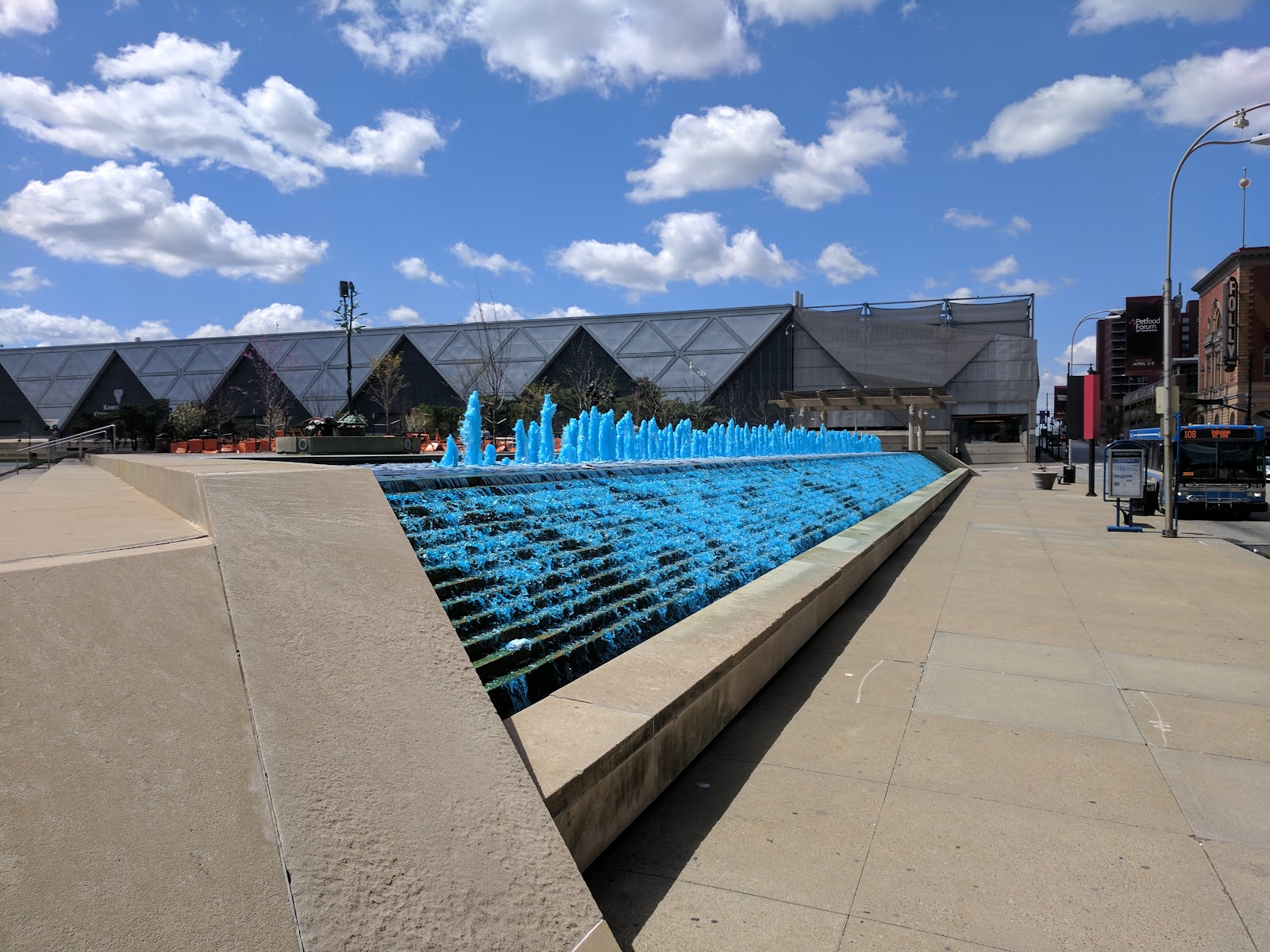
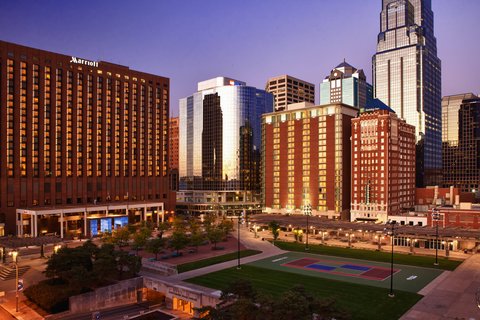
The Kansas City Marriott Downtown occupies a large site in downtown Kansas City, Missouri, spanning connected buildings with extensive ballroom and meeting space, guest floors across multiple towers, and a 1920s element among the later construction.
The defining photographic problem at a hotel of this size is not lighting. Ballroom lighting is a solved problem and the same one everywhere. The problem is distance: a getting-ready room in one tower, a ceremony room on a different floor, a ballroom in a second building, and a street entrance somewhere else again. Each of those transitions is a lift journey and a walk, and in a hotel with guests and other events running simultaneously, that is real time — routinely fifteen minutes for something a schedule shows as two.
Time lost to movement is coverage lost, so the four approaches below are mostly about distance rather than about light. We have not photographed a wedding at this hotel; large multi-tower hotels behave the same everywhere. Which rooms are in which building, and whether a service lift is available, are the two most useful questions for their events team.
The Kansas City Marriott Downtown at a glance
| Where | Downtown Kansas City, Missouri |
| Character | A large hotel spanning connected towers, with extensive function space |
| The real problem | Distance and lift journeys, not lighting |
| The cost | A two-minute transition on paper is routinely fifteen |
| Ask first | Which rooms are in which building, and about a service lift |
Why distance costs more than it looks
A lift journey in an occupied hotel is not the duration of the ride. It is the wait for a car, the ride with stops for other guests, and the reassembly of a group at the other end — and it scales badly, because a car holding eight needs three trips for a wedding party of twenty, with a wait between each.
It scales badly with equipment too. A lighting kit, stands and cases cannot share a passenger car politely at a busy hour, so carrying them in stages means the photographer is in a lift rather than photographing. Every additional lighting position in a building this size costs a round trip.
And it produces a failure that is worse than lost minutes: people get separated. Half a wedding party arriving before the other half means the moment you were there to photograph — an entrance, a first look, a reaction — happens to some of them while the rest are still waiting. Large hotels lose moments, not just time.
None of that is a reason to avoid a big hotel, and the compensations are real: power everywhere, staff who run weddings weekly, genuine weather independence and function space that can absorb any guest count. But a plan that assumes movement is free will lose an hour, and the hour comes out of the photographs.
Ways one and two: collapse the moves, and ask for a service lift
The first approach is structural. Design the day so there are as few transitions as possible and make each one count — all the preparation coverage, the dress, the details and any first look in one continuous pass on one floor, then a single move to the event space and no return. Write that as an explicit sequence with the coordinator rather than assuming it, because left unplanned a day generates return trips: someone forgot the rings, the veil is upstairs, a portrait idea occurs on a floor you have left. Each one costs the full fifteen minutes.
The corollary is to carry everything you need for a floor to that floor at the start. A second body, the lens you might want, spare batteries. Going back for something is the single most expensive mistake available in a building this size.
The second approach is administrative and disproportionately valuable: ask whether a service lift can be made available for the wedding party and equipment. Service lifts are larger, they are not competing with guests and luggage, and they usually serve the relevant floors directly. A yes converts a fifteen-minute transition into five, and it costs nothing but asking. It is the highest-return question at any large or vertical venue and almost nobody asks it.
A related question worth asking is whether the rooms allocated are in the same building. Two rooms on the same floor of one tower is a completely different day from two rooms in different towers, and where there is any flexibility, requesting proximity is worth more than requesting a view.
- Write an explicit floor-by-floor sequence; never plan a return trip
- Carry everything a floor needs at the start of it
- Ask for a service lift — the highest-return question at a big hotel
- Request rooms in the same building over rooms with a better view
- Plan one or two lighting positions, not a tour
Ways three and four: light once, and use the 1920s element
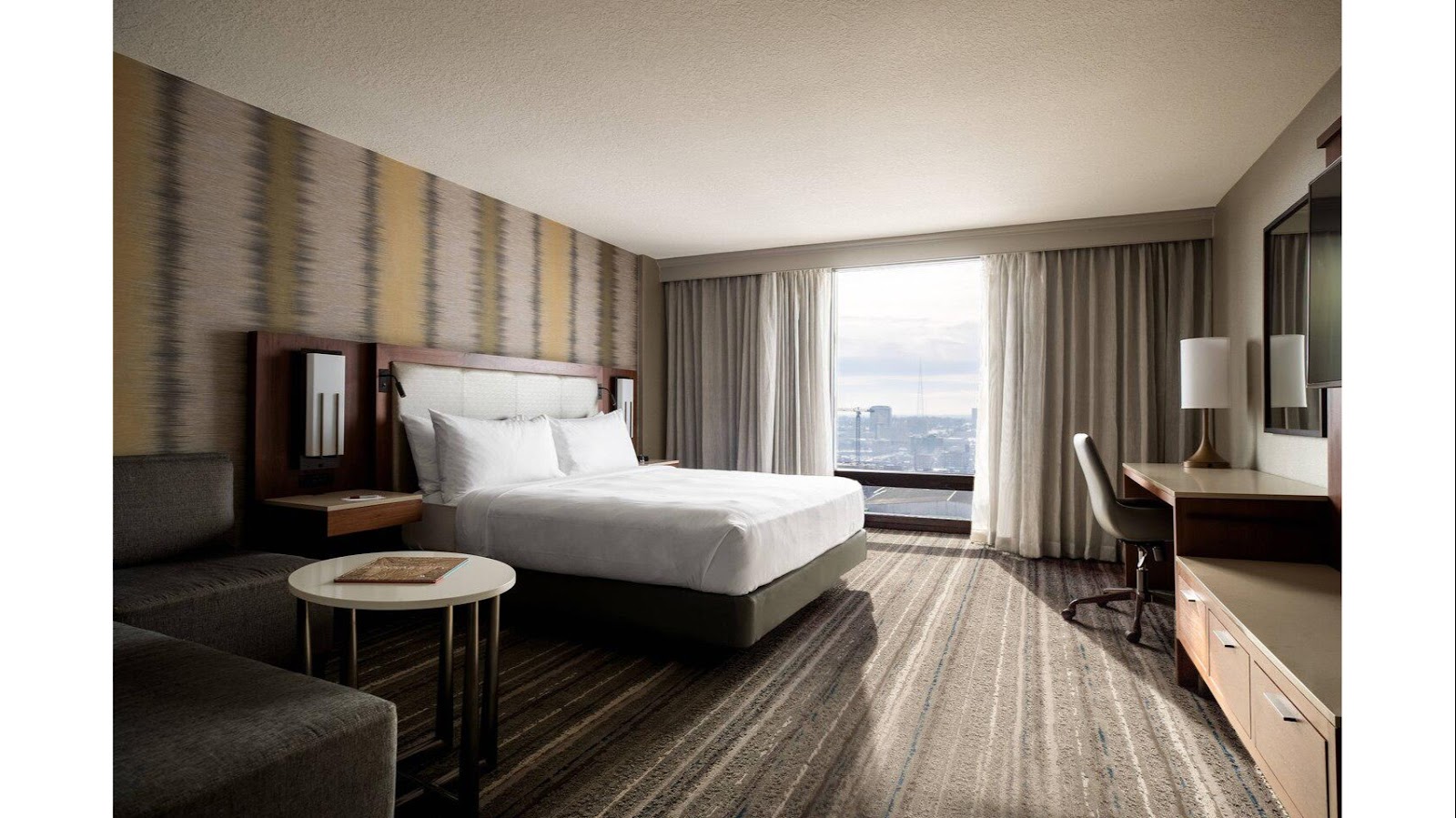
The third approach follows from the second. Because every lighting position costs a round trip, plan one or two rather than a tour — and a sealed ballroom makes that easy, since the lighting condition never changes. Light it once, confirm it, and it holds all evening: one warm-gelled source at face height at about forty-five degrees to kill the overhead top-light look, and a second behind as a rim for the dance floor. No convergence moment to catch, no weather dependency, no penalty for a delayed running order.
That also identifies which block to move when the day slips. Everything in the ballroom is time-independent; everything with a clock attached is at a window or outside. So the ballroom absorbs delay and the window frame does not.
Neutral modern function rooms need contrast brought in rather than light: a long lens at a wide aperture for sharpness separation, one directional source, framing against a darker element, and negative fill — something dark on the shadow side, which subtracts light where the room insists on adding it. And patterned carpet should be kept out of wide frames, because it draws the eye and dates the image.
The fourth approach is to find whatever is not modern. A hotel of this size assembled over decades usually contains something older — a 1920s wing, a retained facade, an original ballroom — and that element is worth disproportionate attention, because it is the only part of the building that says where it is. A contemporary function room in Kansas City looks like one anywhere; a 1920s interior does not.
Where such an element exists, it needs the period treatment: it will be warmer, more textured and dimmer, so light directly rather than bouncing, and raise the couple towards any ornate plaster rather than exposing down to them. And it should be the spine of the set rather than one frame among many, with the modern rooms used for the dress and details — shot at a different time rather than interleaved, so the contrast lands where the day changes.
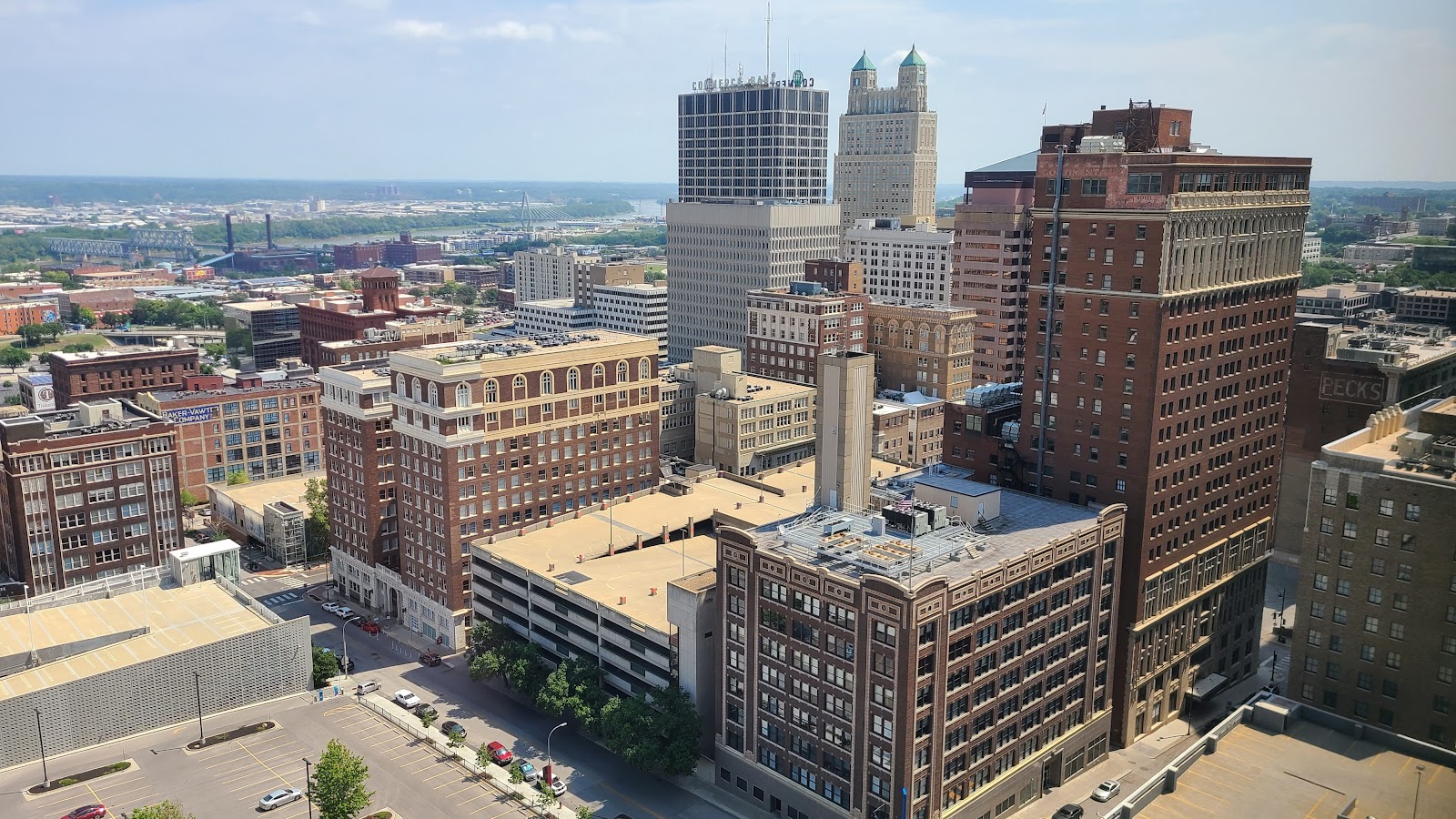
Outside, downtown Kansas City is low-rise in parts, so low evening sun reaches street level and runs the length of a street — the block that locates the gallery, and the only one with a clock attached. Missouri summer humidity fogs a lens carried from heavy air conditioning into outdoor air for ten to twenty minutes, so acclimatise before it.
More frames from The Kansas City Marriott Downtown
The Kansas City Marriott Downtown wedding photography: common questions
What is the real problem at a large hotel?
Distance. A getting-ready room in one tower, a ceremony on another floor and a ballroom in a second building means every transition is a lift journey and a walk — routinely fifteen minutes for something a schedule shows as two.
Why is that worse than lost time?
Because it separates people. Half a wedding party arriving before the other half means the moment you were there to photograph happens to some of them while the rest are still waiting. Large hotels lose moments, not just minutes.
What is the most useful request?
A service lift for the wedding party and equipment. They are larger, they are not competing with guests and luggage, and they usually serve the relevant floors directly. A yes turns fifteen minutes into five and costs nothing but asking.
What should be requested over a view?
Proximity. Two rooms on the same floor of one tower is a completely different day from two rooms in different towers, and where there is flexibility, rooms close together are worth more than rooms with a better outlook.
How many lighting positions should be planned?
One or two. Every position costs a round trip in a building this size, and a sealed ballroom makes one enough — light it once and it holds all evening, because the condition never changes.
What is worth disproportionate attention?
Anything not modern. A large hotel assembled over decades usually contains an older element, and that is the only part that says where it is — a contemporary function room in Kansas City looks like one anywhere.
More Kansas City, MO venue guides
We are writing a photographer’s guide to every venue we would happily shoot in Kansas City, MO. Here are three more, plus the full index:
- The Kauffman Center: Photographing a Glass Curtain and Curved Halls
- Loews Kansas City: How the High Window Frame Is Made
- The National WWI Museum: Making the Tower and Skyline Frame
All Kansas City, MO Wedding Venues →
Planning a wedding at The Kansas City Marriott Downtown?
At a big hotel, time is the constraint rather than light. Tell us which rooms are in which building and we will plan the moves.