 Hotel Saint Louis: A Walk-Through of an 1893 Union Trust Building
The Fontaine Hotel: One Decision About the Rooftop Pool
A rooftop pool is three things at once: a mirror, an uplight, and something nobody should be standing near in heels.
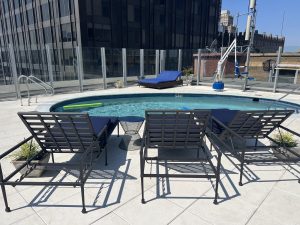
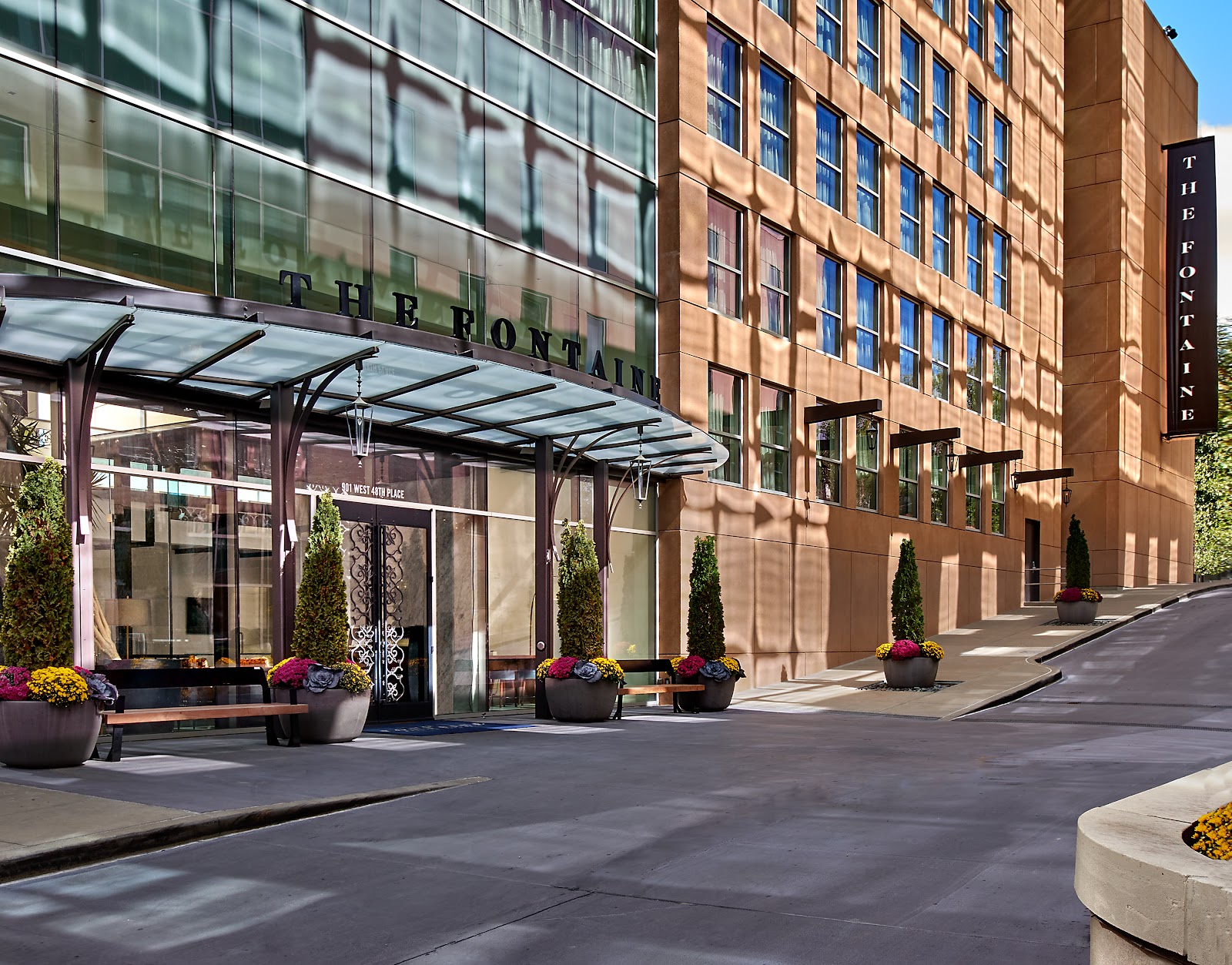
The Fontaine Hotel stands near the Country Club Plaza in Kansas City, Missouri, a contemporary hotel with ballroom space, guest floors and a rooftop terrace built around a pool with views over the city.
The decision here is what to do about that pool, and it is more consequential than it looks because a pool at height does three separate things. It is a mirror, so it doubles the sky, the building and anyone near it. It is an uplight, bouncing light upward into faces and filling exactly the shadows that any overhead source carves. And it is a hazard, because a wet deck, a hard edge and formal shoes are a poor combination and a photographer directing near water carries some responsibility for that.
Deciding in advance how the pool is used, rather than improvising on a roof at dusk, is what separates a good rooftop block from a nervous one. We have not photographed a wedding at the Fontaine; rooftop pools and city terraces behave the same wherever they occur. What the pool policy is during events, whether it is covered and how late roof access runs are questions for their events team — and the first is the one that decides everything.
The Fontaine Hotel at a glance
| Where | Near the Country Club Plaza, Kansas City, Missouri |
| Character | A contemporary hotel with a rooftop pool terrace and ballroom space |
| The pool is | A mirror, an uplight, and a hazard — all three at once |
| Best use | Reflections at dusk, and upward fill at any hour |
| Ask first | Whether the pool is covered or open during the event |
The pool as a mirror, and when it actually is one
Still water reflects, and a rooftop pool is unusually good at it because there is nothing between the surface and the sky. That means a pool at dusk doubles the whole colour field above it, and a couple placed at the edge can be reflected with the lit skyline behind them — a frame that exists only where there is water at height.
The conditions are the same as for any reflection and they are strict. It needs stillness, so any breeze or any swimmer ends it — and on a roof the wind is stronger and gustier than at street level, so calm is less common than it is at ground level. And it needs a low light source, because a high sun turns a water surface into a field of clipping specular highlights rather than an image of anything.
So the mirror frame is an early-morning or a dusk proposition, and of the two, dusk is the one a wedding can reach. Shoot low — dropping the camera close to the surface enlarges the reflection and pushes the horizon down the frame, which strengthens the symmetry. Standing at eye level compresses the reflection into a narrow strip and wastes it.
Decide whether the couple should be in the reflection. Right at the edge, the mirror holds both them and the sky, which is the fullest version. A few metres back, it holds only the sky and the building, which is cleaner and often the better composition, because a doubled couple can read as visual clutter.
The pool as an uplight, which is the underused half
This is the part photographers overlook. Every source in a normal day comes from above — sky, ceiling fixtures, a softbox on a stand — and all of them shadow the eye sockets and mark the line under the nose and chin. A water surface reflects light upward, which fills precisely those shadows. It is exactly what a reflector held low is for, and a pool supplies it continuously and free.
That makes standing beside the pool better lit than standing ten metres away on the same terrace, at any hour and in any weather. On a bright day it is a substantial improvement; under overcast it is subtler but still present. It costs nothing but position, and it is the reason to work near the water even when the mirror is not available.
Its strength varies with two things. A calm surface reflects more coherently than a disturbed one, so the same conditions that give a mirror give the strongest uplight. And the pool’s own lining colour tints it — a blue-lined pool throws slightly blue fill, which is worth noticing if skin tone matters, and a warm-gelled key on the faces resolves it.
At night, if the pool is lit from within, it becomes a genuinely unusual light source: a large, soft, coloured source at ground level, throwing light upward. That is a distinctive look — underlit faces with a lit skyline behind — and it is worth one deliberate frame, with the caveat that uplight alone is unflattering in large doses and wants a warm key from the side to balance it.
- Mirror frames are a dusk proposition; wind and swimmers both end them
- Shoot low at the water to enlarge the reflection and drop the horizon
- Work beside the pool for upward fill even when the mirror is gone
- A blue pool lining tints the fill; a warm key on faces resolves it
- Keep everyone a real margin from a wet edge, in writing if necessary
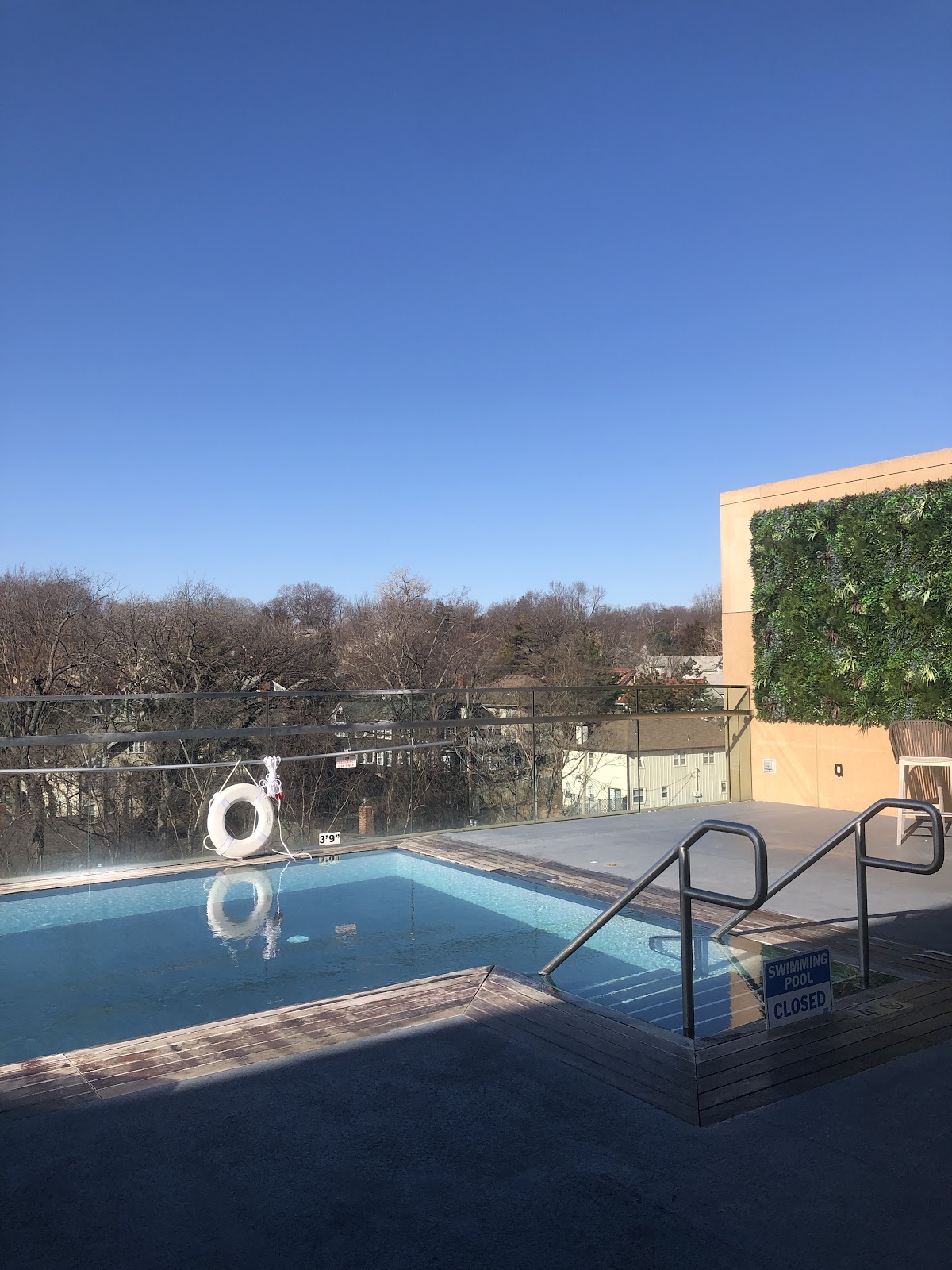
The hazard, the roof itself, and the Plaza below
The third thing a pool is, is a risk, and it is worth being plain about because a photographer directing people near water shares in the consequences. A wet deck is slippery, formal shoes have no grip, a hard pool edge is unforgiving, and guests at a reception have often been drinking. None of that is a reason to avoid the pool; it is a reason to keep a real margin, to direct movement rather than let it happen, and to decline any frame that requires someone to stand or sit on an edge.
Asking whether the pool is covered during events is also a legitimate practical question, because a covered pool is a flat deck with none of the hazard and none of the reflection — which changes the plan entirely and is worth knowing before rather than on arrival.
Beyond the pool, the roof follows the standard rules. There is no ceiling, so bounce returns nothing and everything must be lit directly, which means stands, which means weight — wind at height is stronger and gustier than at street level and an unweighted stand is a hazard from a roof. There is almost no ambient after dark, so every late frame is entirely a lit frame. And height removes the ground, which is the single most laborious part of street-level city photography: no cars, no bins, no passers-by.
The window that matters is the same as every rooftop: the last forty minutes of daylight for warm raking light, and about twenty minutes after sunset for the blue-hour balance when building lights come on and the sky still holds colour. Use a long lens — compression makes the city loom behind the couple, where a wide lens reduces the skyline to a thin strip and the image becomes a photograph of a terrace.
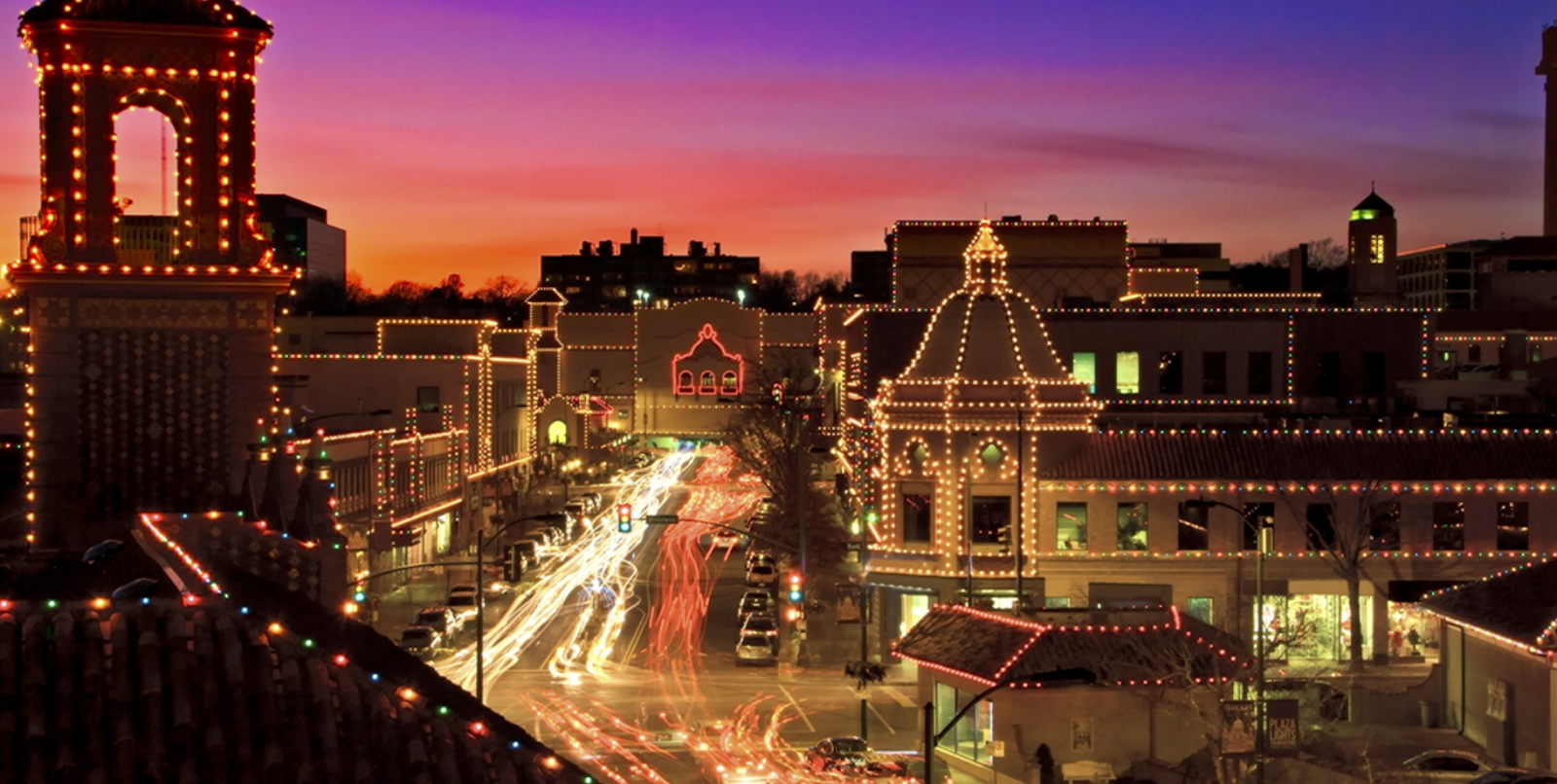
The Country Club Plaza nearby is the ground-level counterweight and it is unusually good material: a coherent district of Spanish-influenced architecture, towers, tilework and fountains, low-rise enough that evening sun reaches street level. That is the block worth scheduling, because the ballroom inside is time-independent and can absorb any delay.
More frames from The Fontaine Hotel
The Fontaine Hotel wedding photography: common questions
When does the pool actually reflect?
At dusk or early morning, and only in still air. Any breeze or any swimmer ends it, and on a roof the wind is stronger and gustier than at street level. A high sun turns the surface into clipping highlights rather than an image.
What is the underused half of a pool?
Upward fill. Every other source in a day comes from above and shadows the eye sockets; a water surface reflects light upward and fills exactly those shadows. Standing beside the pool is better lit than standing ten metres away, at any hour.
Does the pool colour matter?
Yes, subtly. A blue lining throws slightly blue fill upward, which shows on skin. A warm-gelled key on the faces resolves it, and at night an internally lit pool becomes a large soft coloured source — distinctive, but unflattering alone.
How should the hazard be handled?
With a real margin and directed movement. A wet deck, formal shoes, a hard edge and a drinks reception are a poor combination, and a photographer directing near water shares the consequences. Decline any frame needing someone on an edge.
Is it worth asking whether the pool is covered?
Definitely. A covered pool is a flat deck with no hazard and no reflection, which changes the plan completely — much better known in advance than discovered on arrival.
Wide or long lens on the roof?
Long, always. Compression makes the city loom behind the couple; a wide lens reduces the skyline to a thin strip and turns the frame into a photograph of a terrace. That is the commonest rooftop error.
More Kansas City, MO venue guides
We are writing a photographer’s guide to every venue we would happily shoot in Kansas City, MO. Here are three more, plus the full index:
- The Grand Ballroom: Photographing a Venue With Only One Space
- The Kansas City Art Institute: Field Notes on a Working Art Campus
- The Kansas City Marriott Downtown: Four Ways Out of the Large-Hotel Problem
All Kansas City, MO Wedding Venues →
Planning a wedding at The Fontaine Hotel?
A pool is a mirror, an uplight and a hazard. Tell us your date and whether it is covered, and we will plan all three.