 The Van Dusen Mansion, Minneapolis: A Walk Through House and Grounds
The Science Museum of Minnesota: Screen-Lit Halls and a River Terrace
Exhibit halls lit by screens and terraces over a river valley are opposite problems, and the building has both.
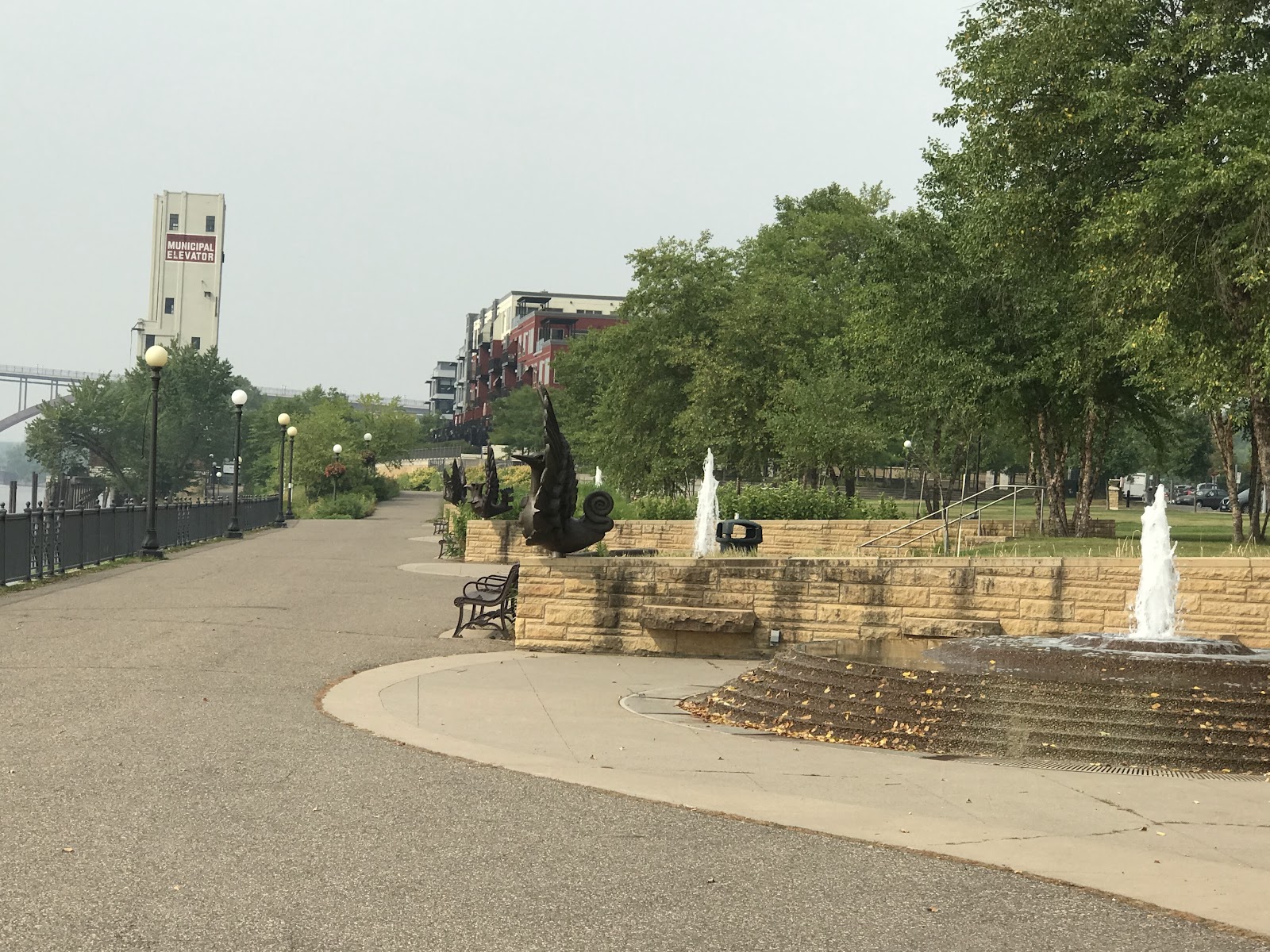
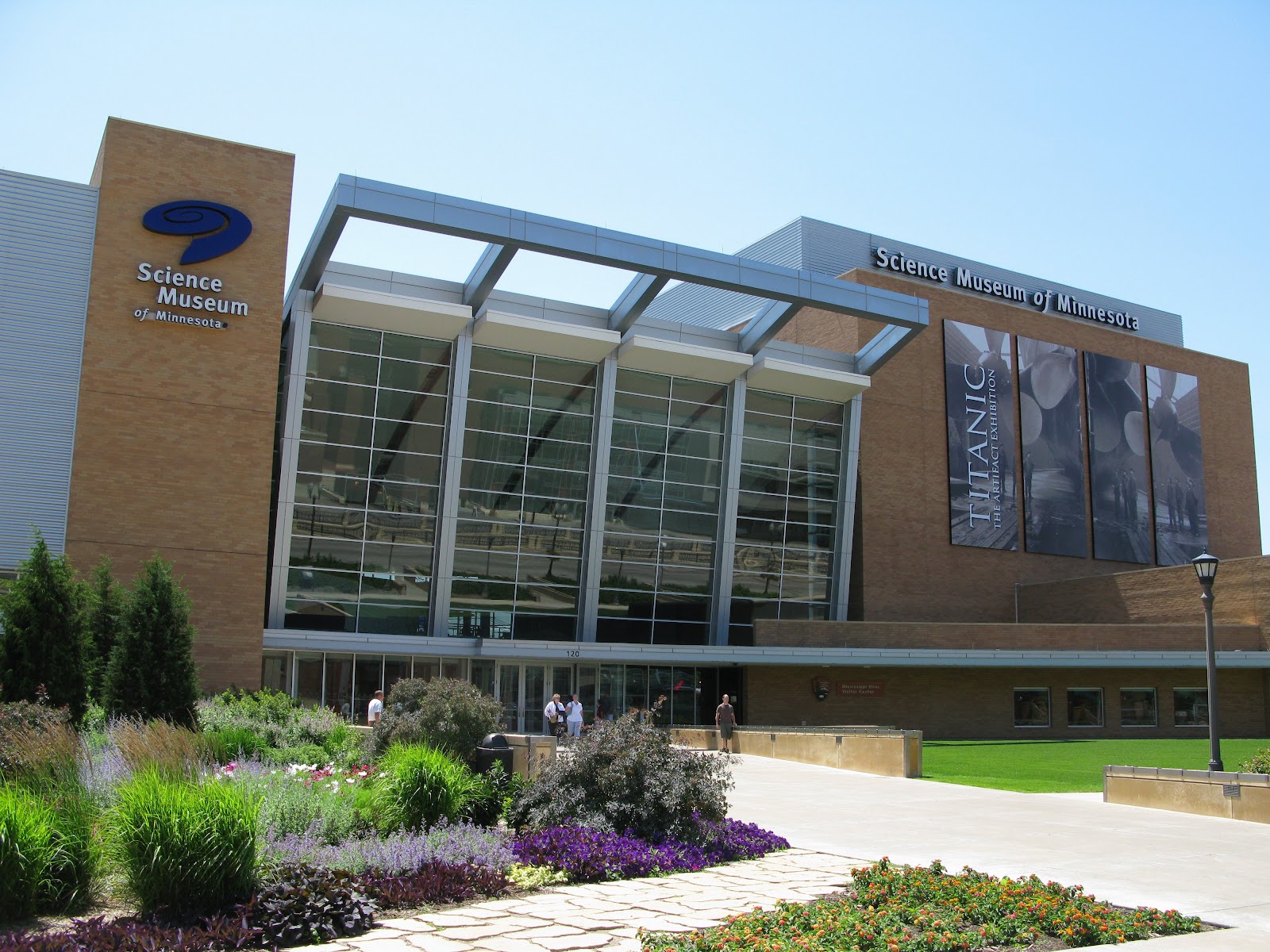
The Science Museum of Minnesota occupies a site built into the Mississippi bluff in downtown St Paul, with exhibit halls, event spaces, terraces and views out over the river valley below.
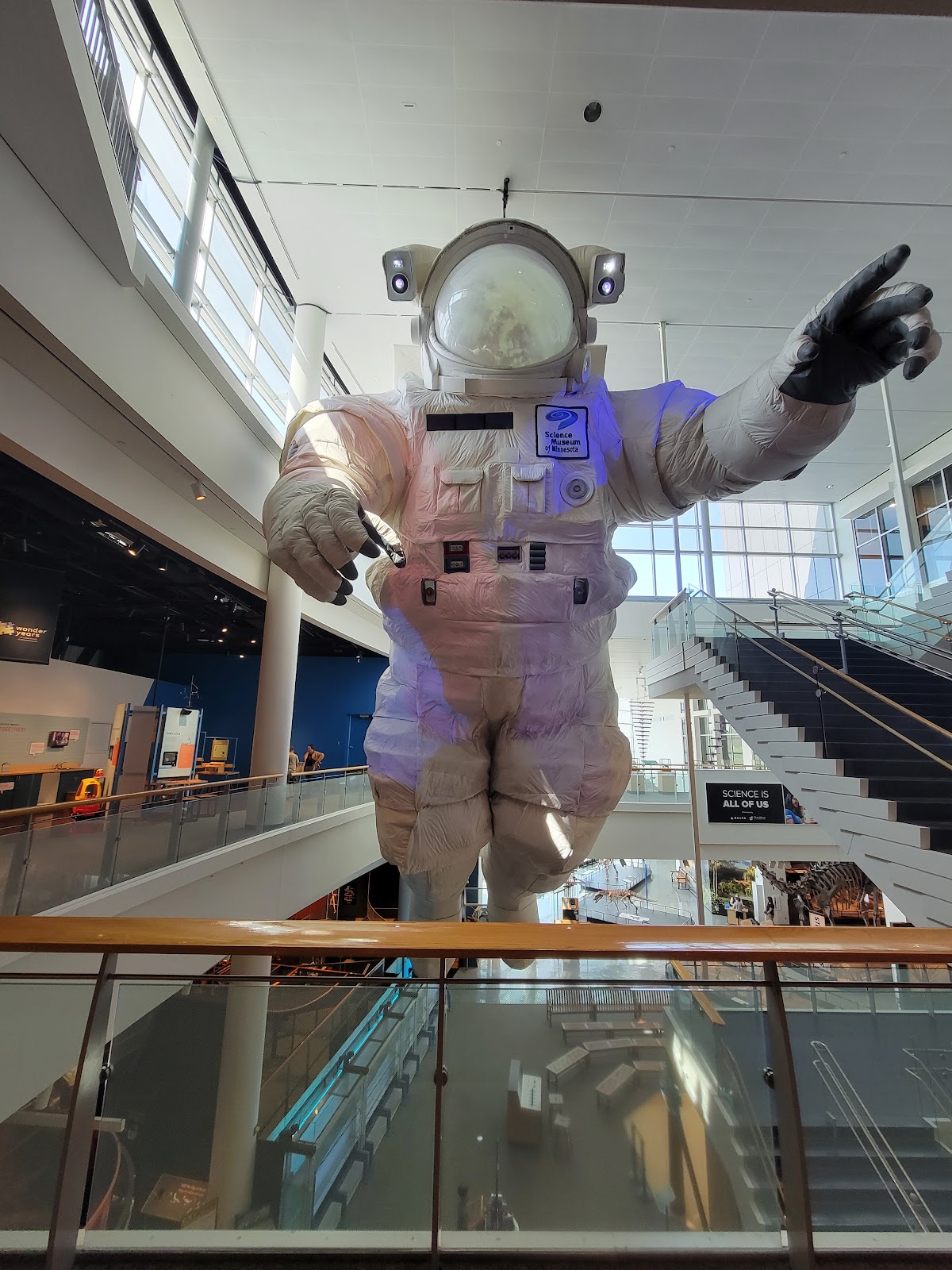
Two conditions coexist here and they could hardly be more different. The exhibit halls are lit substantially by screens and backlit panels — emissive, narrow-spectrum sources that render skin badly at any white balance and change as their content plays. The terraces are outdoors on a bluff with an open aspect over a river, which means light from a very large area of unobstructed sky and a view with real depth in it.
So the building is excellent for some briefs and demanding for others, and the difference is largely about which spaces a wedding actually uses. This is an honest account of that. We have not photographed a wedding at the Science Museum; screen-lit halls and bluff terraces behave the same wherever they occur. Which spaces host events, whether display content can be paused and what terrace access allows are questions for their events team.
The Science Museum of Minnesota at a glance
| Where | Built into the Mississippi bluff, downtown St Paul, Minnesota |
| Character | Science museum with exhibit halls, event spaces and river terraces |
| The hard half | Halls lit by screens, which render skin badly at any balance |
| The good half | Terraces on a bluff with an open aspect over the river valley |
| Ask first | Whether display content can be paused on a static image |
Why screens are the hardest light in a modern museum
A tungsten lamp or a window emits across the visible spectrum, so a camera can be balanced to it and skin renders naturally. A screen does not: it produces colour by mixing three narrow primaries, which means its spectrum has spikes and gaps, and skin lit by it renders oddly even when the white balance is technically correct — the wavelengths that make skin look like skin are partly missing from the light itself.
Screens are also bright relative to a dim hall, which is a dynamic range problem: expose for the room and the screens clip to white, losing the content that makes them interesting, or expose for the screens and everything else is black. And they move, because content plays — so two frames taken ten seconds apart can require different exposures and carry different colour casts, which is why a sequence shot in a screen-lit hall often refuses to match itself.
The reliable fix is to take control away from them. A gently warm-gelled source at face height, bright enough locally to dominate the nearest screen, with white balance set to that source: skin is then consistent frame to frame regardless of what the displays are doing, and the screens become coloured background rather than a light source.
The request worth making is whether display content can be paused on a static image for the photography. Many installations can, and a fixed screen is a completely different proposition — the colour stops changing, the exposure stops moving, and a sequence can match itself. It costs a conversation and removes the hardest part of the problem outright.
Who this venue suits
The building serves a clear set of briefs:
- Couples who actively want the exhibits in the photographs rather than merely nearby
- Anyone wanting a contemporary, graphic gallery rather than a period one
- Weddings that will use the terraces, which are the strongest thing on site
- Larger guest counts, since exhibit halls are large and absorb numbers
- Briefs needing complete weather independence in a downtown location
Who should look elsewhere
And several reasonable intentions run into the harder half:
- Couples drawn to period texture, patina or architectural warmth
- Anyone who needs flawless skin tone in the halls without added light
- Briefs relying on soft romantic light, since screens are hard and graphic
- Weddings where the venue must not be identifiable — here it always is
- Anyone unwilling to bring a light, because the halls will not render faces alone
The terraces, the bluff and a Minnesota winter
The terraces are the venue’s real asset and they work on entirely different rules from the halls. A terrace on a bluff receives light from a very large area of unobstructed sky, and because there is nothing near enough to the west to intercept a low sun, it holds direct light later than the valley floor below — so the usable window at the end of the day is longer than at river level.
The view is what a long lens is for. Looking out and down over a river valley gives a background with genuine depth, and depth wants compression: a long lens stacks the valley, the bridges and the far bank into layers behind a couple, where a wide lens flattens all of it into a distant strip and the frame becomes a photograph of a terrace.
Water below does something specific that photographers underuse. A large surface at lower elevation reflects light upward onto a bluff-top terrace, which fills the eye sockets and the shadow under the chin that any overhead source carves. It is exactly what a reflector held low is for, and the river supplies it free.
The dusk crossing is the frame to schedule, and here it works both indoors and out. For roughly twenty minutes the sky and valley fall to approximately the brightness of the interior lighting, so a single exposure holds a lit interior, the couple and the valley with colour in the sky. Take the clock time from sunset and treat it as an appointment; after that the glass becomes a mirror showing the lit room.
Minnesota winter cuts both ways. The sun stays low all day, so the valley and any stone are well lit throughout a short afternoon, and snow in the valley below reflects a great deal of light upward onto the terraces. But the days are short, so the terrace block belongs early in the afternoon rather than at the end; the cold limits how long anyone stands outside; snow will fool a meter by two stops so overexpose deliberately; and a camera carried from a heated museum onto a subzero terrace and back fogs badly coming in. Acclimatise, and keep one body outside rather than cycling it.
More frames from The Science Museum of Minnesota
The Science Museum of Minnesota wedding photography: common questions
Why does skin look wrong in screen-lit halls?
Because a screen makes colour from three narrow primaries, so its spectrum has spikes and gaps and the wavelengths that make skin look like skin are partly missing. No white balance corrects that — the information is not in the light.
What is the fix?
A gently warm-gelled source at face height, bright enough to dominate the nearest screen, with white balance set to it. Skin then stays consistent frame to frame and the screens become coloured background rather than a light source.
Is there a request worth making?
Yes, and almost nobody makes it: ask whether display content can be paused on a static image. A fixed screen stops the colour and exposure moving, so a sequence can match itself. It removes the hardest part of the problem for a conversation.
What makes the terraces special?
The bluff. Nothing near enough to the west intercepts a low sun, so a terrace holds direct light later than the valley floor below — and the river reflects light upward, filling the eye sockets that any overhead source carves.
How should the valley be framed?
With a long lens. Compression stacks the valley, bridges and far bank into layers behind the couple; a wide lens flattens it into a distant strip and the image becomes a photograph of a terrace rather than of a view.
Is a Minnesota winter workable?
Yes, with planning. The sun stays low all day so the valley is well lit through a short afternoon, and snow below reflects light up onto the terraces. Plan the outdoor block early, overexpose by two stops for snow, and acclimatise the camera.
More Minnesota venue guides
We are writing a photographer’s guide to every venue we would happily shoot in Minnesota. Here are three more, plus the full index:
- Summit Manor: Photographing a Summit Avenue Mansion and Its Grounds
- The University Club of St. Paul: A Panelled Club With a River View
- Como Park Conservatory: One Decision the Minnesota Calendar Makes for You
Planning a wedding at The Science Museum of Minnesota?
Screens are the hardest light in the building and the terraces are the best. Tell us which spaces you have.