 The Van Dusen Mansion, Minneapolis: A Walk Through House and Grounds
The Minnesota History Center: Photographing Stone, Glass and Conservation Light
Bright glazed public space, dim conservation galleries and heavy stone. Three conditions, and one of them is not negotiable.
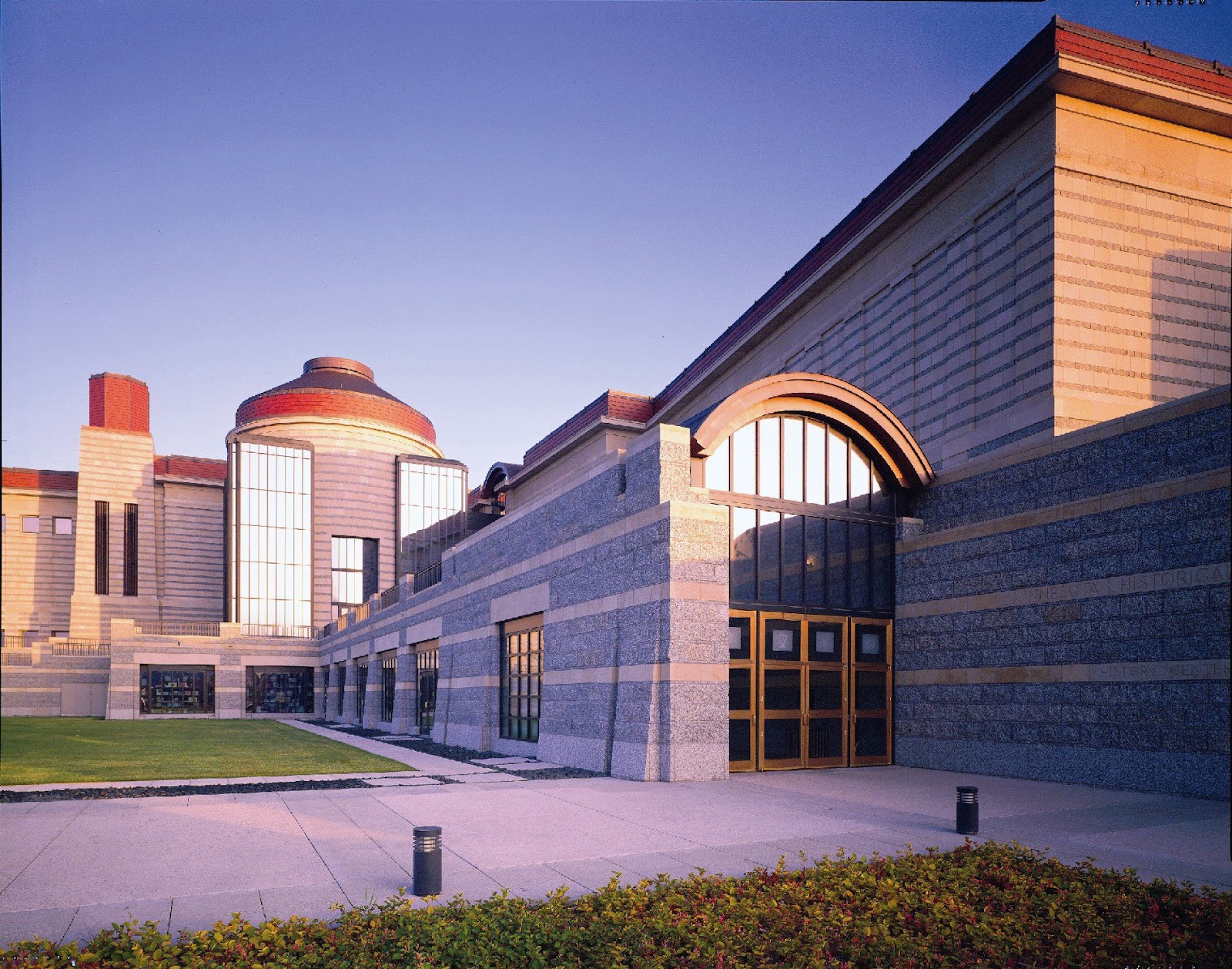
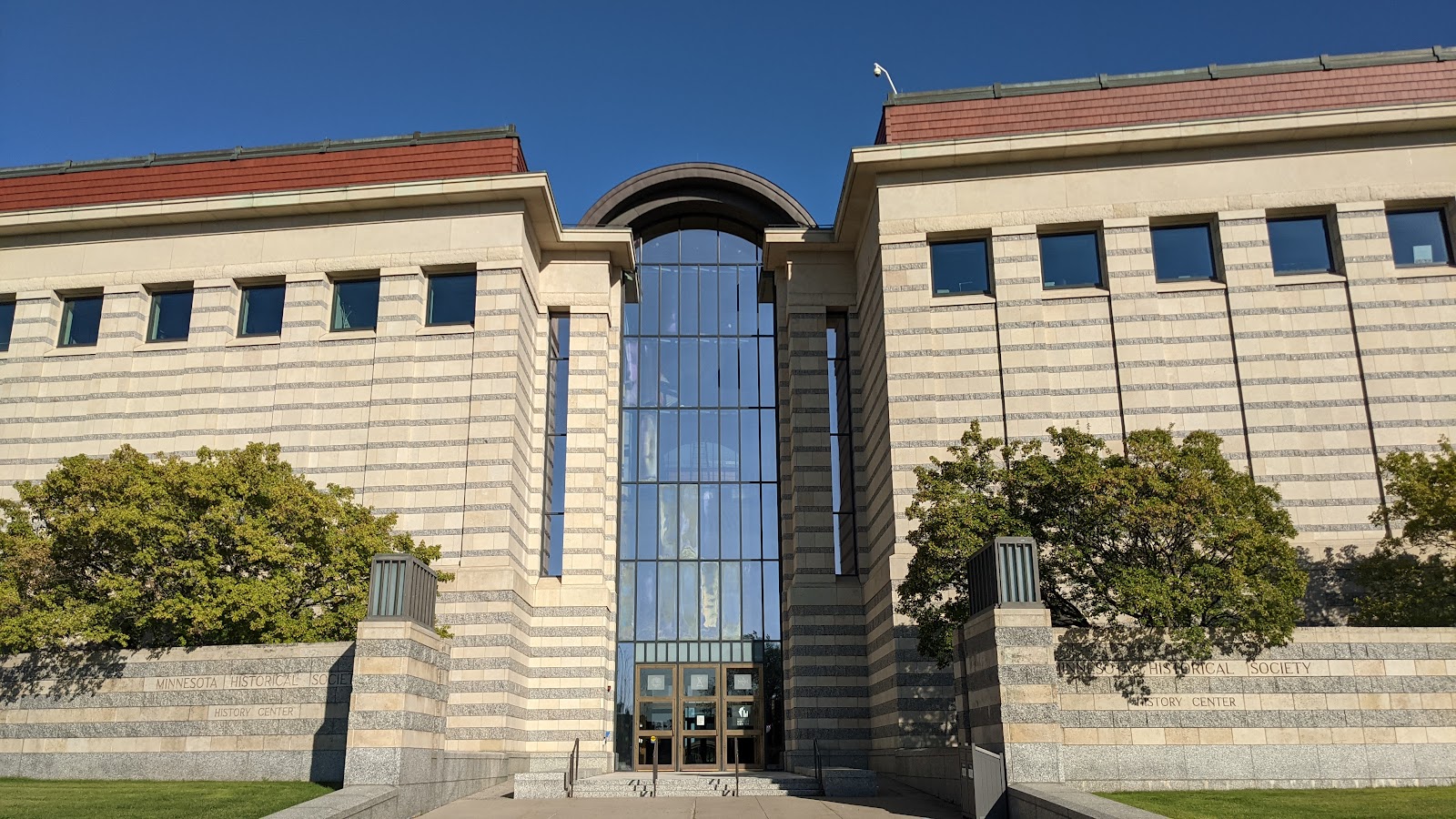
The Minnesota History Center stands near the State Capitol in St Paul, a substantial building combining heavy stone construction with extensively glazed public spaces, gallery floors and views back towards the Capitol and the city.
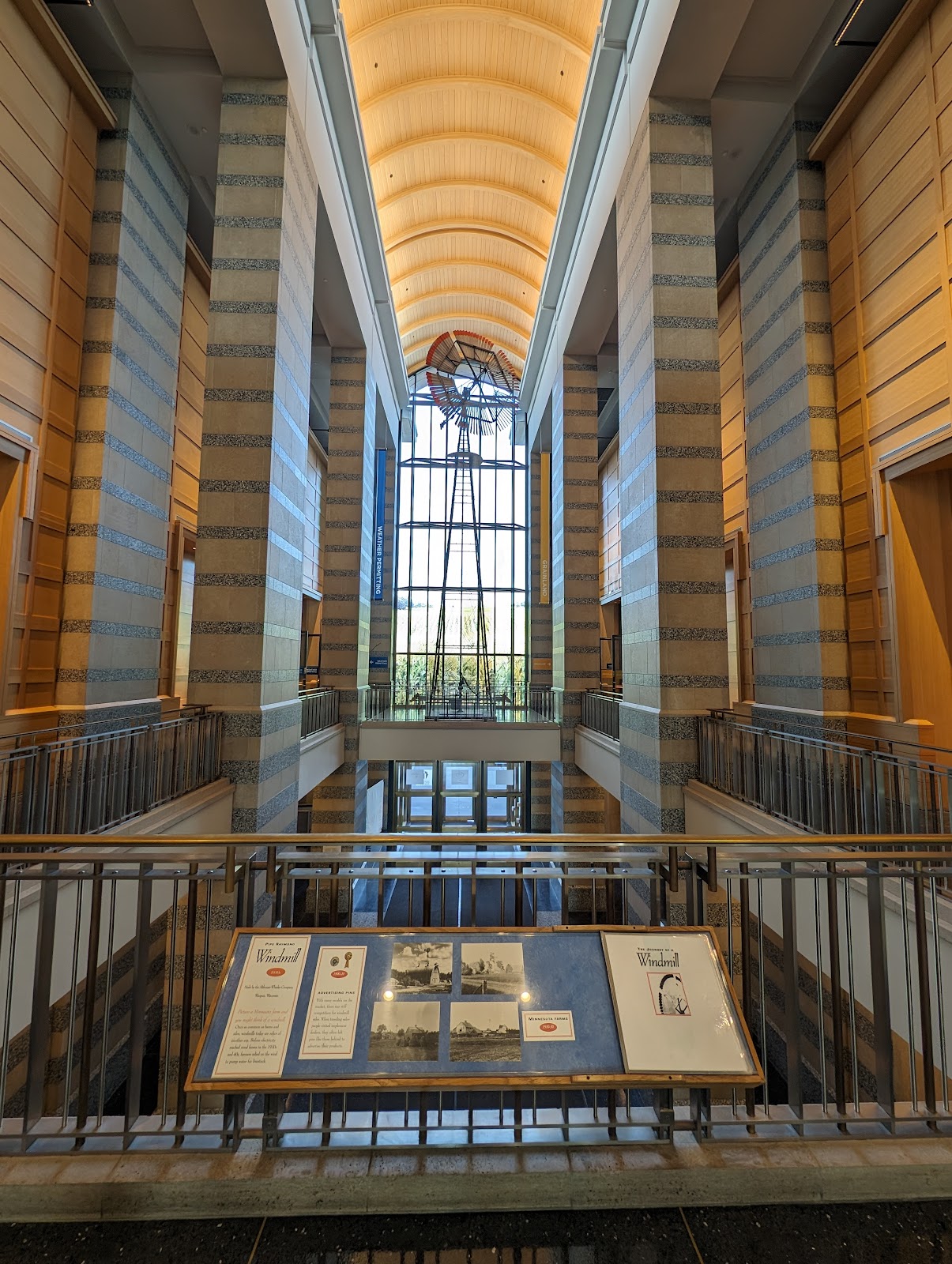
Three conditions sit inside one building and they are genuinely different. The glazed public spaces are bright, with large areas of glass facing open ground — the best light in the building and among the best in the city. The exhibition galleries are conservation-lit, which means deliberately dim, because light permanently fades the textiles, paper and photographs that a history collection holds. And the stone itself is a dark absorbing material that needs raking light to show anything at all.
The middle one is not negotiable, and understanding why changes how a photographer behaves. This is a walk through all three. We have not photographed a wedding here; glazed atria, conservation galleries and heavy stone behave the same wherever they meet. Which spaces host events, and what the flash and tripod rules are, are questions for their events team — and those two answers frequently differ from each other.
The Minnesota History Center at a glance
| Where | Near the State Capitol, St Paul, Minnesota |
| Character | Heavy stone with extensively glazed public spaces and galleries |
| Three conditions | Bright glazing, dim conservation galleries, dark absorbing stone |
| Not negotiable | Gallery light levels; they protect the collection |
| Ask first | Flash and tripod rules separately — the answers often differ |
The glazed public spaces: the best light in the building
Large glazing facing open ground, with nothing tall immediately opposite, collects a very large area of sky with no shadowing and no colour bouncing in from neighbouring buildings. What arrives is clean, strong and directional, with a natural fall-off into the space behind — better than almost anything a photographer could carry and better than most hotel windows in the city.
The working method is simply to use it. A couple a metre or two back from the glass, turned into it, gets a broad soft key with real separation from the background. Because the level is high, one façade will light a large group evenly, which is rarely true indoors and makes formal groups genuinely easy here.
Two cautions. On the sunlit side the same glazing gives a hard bright patch, extreme contrast and hard shadow bars from the structural members, which cannot be corrected — so move to the other side, wait for the sun to pass, or work in the shadow between frames. And a glazed space with pale stone is bright overall, so a meter will want to darken the frame: add a stop or more and check that the highlights still hold detail.
The Capitol view through the glass is worth using deliberately, because it locates the gallery. A museum interior could be anywhere; a frame with the Capitol dome visible beyond the glass could only be St Paul. That wants a long lens — compression brings the building close, where a wide lens reduces it to a distant shape.
The galleries: why the dimness is protection, not oversight
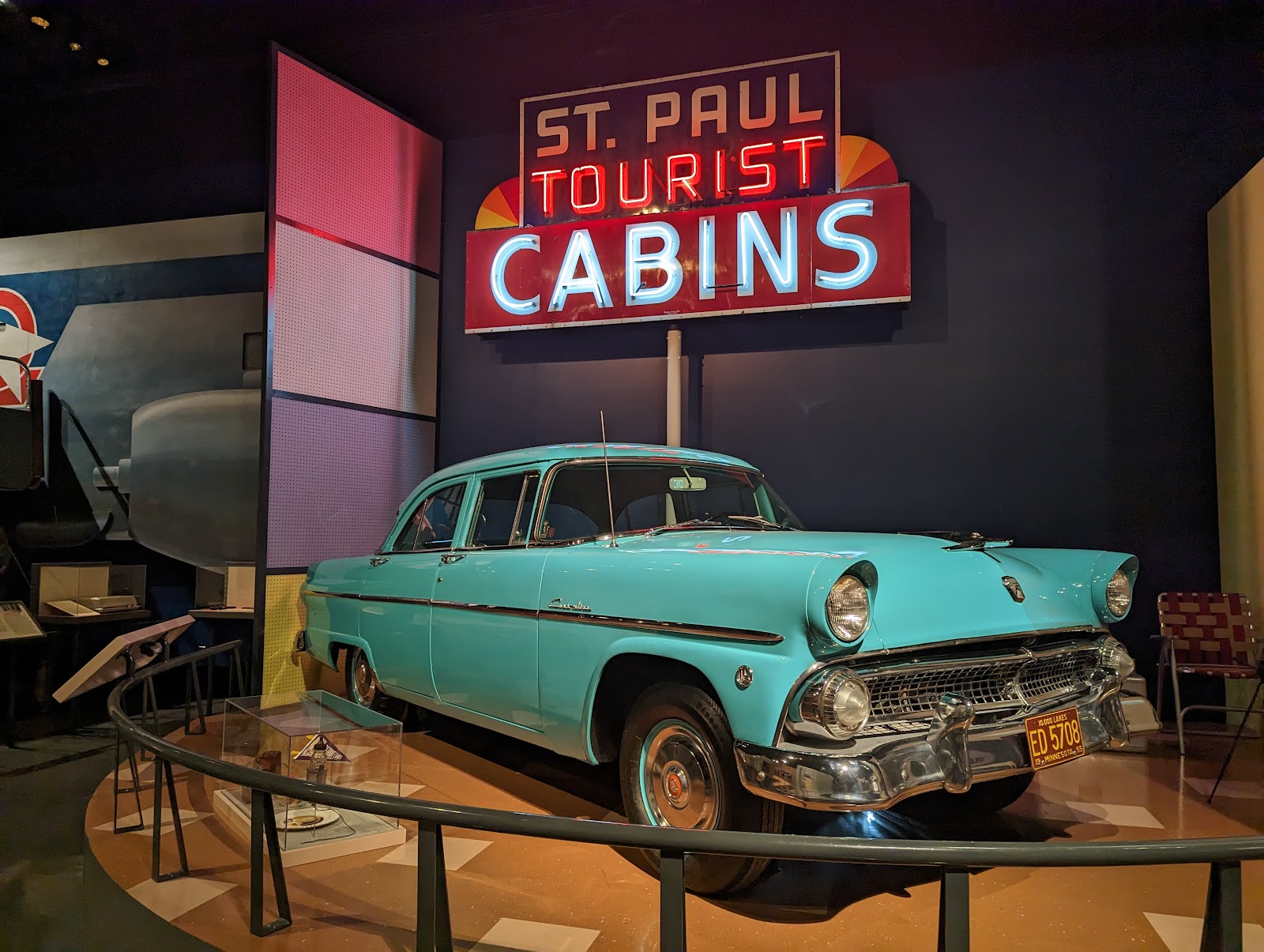
History collections hold textiles, paper, photographs and dyed materials, and light causes cumulative irreversible fading in all of them. Conservation standards therefore keep those galleries genuinely dim — often far dimmer than an art gallery — and flash is commonly restricted or prohibited outright. A museum that allowed a hundred flashes a day would be spending its collection.
Understanding that produces a better conversation with an events team than asking for an exception does. And it is worth asking about flash and tripods separately, because the answers frequently differ: a venue may prohibit flash entirely while permitting a tripod, which changes the technique completely.
Without flash the galleries are still workable. Conservation-lit does not mean black, and fast primes wide open at a high ISO produce usable frames with visible grain — which suits a dim historical space rather than fighting it. With a tripod permitted, a second of exposure and a couple asked to stay still turns a marginal frame into a clean one.
Where any light is allowed, keep it small and controlled: a gridded source at low power on the couple alone, with nothing spilling onto cases or walls. A dim gallery with a small pool of light reads as atmospheric, whereas a gallery flooded with flash reads as a lit room with cases in it. That is both the more respectful approach and the better-looking one.
Display cases are glass and they reflect predictably, being flat and vertical — shoot obliquely and the reflected cone misses the lens. And loaned items may carry publication restrictions, so it is worth asking which displayed material may appear in published photographs rather than assuming.
- Use the glazing for anything that must be flattering, including groups
- Long lens for the Capitol through the glass; a wide one loses it
- Ask about flash and tripods as separate questions
- Grid any permitted light and keep it off the cases and walls
- Shoot display glass obliquely; it is flat, so the reflection is predictable
The stone, the Capitol grounds and the Minnesota winter
The building’s stone is a dark absorbing material and it behaves like all such stone: it gives almost no fill, so a couple standing beside it in open sun gets hard light on one side and very little back on the other. And its texture reads only in raking light — low sun across a wall lifts the courses and tool marks, while flat midday sun erases them into a grey field.
So the exteriors want the ends of the day, which conveniently is also when faces work best outdoors. And a reflector, a fill source, or turning the couple towards open sky rather than towards the wall are the three ways to deal with the absence of bounce.
The Capitol grounds nearby give formal open ground, classical stone, a dome and long sight lines, all within a short walk. That is genuinely good material and it is where the frames that locate the gallery get made. It is public and open, so the usual method applies: long lenses to compress any crowd, tight framing, and the hours at either end of the day.
Minnesota winter is a real factor and it cuts favourably for the architecture. The sun stays low all day in December and January, so stonework is well lit throughout a short afternoon rather than for ninety minutes at each end. And snow is the best natural fill there is — a huge bright reflector filling exactly the shadows that dark stone refuses to fill.
The costs are practical. Snow will fool a meter by about two stops, so overexpose deliberately and check it holds texture rather than clipping to blank white. Short days mean the outdoor block belongs early in the afternoon, not at the end of it — a three o’clock December ceremony is close to the end of usable daylight. Cold limits how long anyone will stand outside in formal clothes, so plan short decisive blocks. And moving a camera from a heated museum into subzero air and back fogs it badly coming in, so acclimatise deliberately and keep one body outside rather than cycling it.
More frames from The Minnesota History Center
The Minnesota History Center wedding photography: common questions
Why are the galleries so dim?
Because history collections hold textiles, paper, photographs and dyed materials, and light causes cumulative irreversible fading. Conservation levels are protection rather than oversight, which is also why flash is commonly restricted or prohibited.
What if flash is not allowed?
The galleries are still workable — dim does not mean black. Fast primes wide open at high ISO give usable frames with grain that suits the space. Ask about tripods separately, because the answers often differ and a tripod changes the technique entirely.
Where is the best light?
The glazed public spaces. Large glazing facing open ground with nothing tall opposite collects a very large area of sky with no shadowing — clean, strong and directional, and bright enough that one façade lights a large group evenly.
What locates the gallery in St Paul?
The Capitol through the glass, and the Capitol grounds outside. That needs a long lens — compression brings the dome close behind the couple, where a wide lens reduces it to a distant shape and the frame becomes generic.
Does the stone help with fill?
No. Dark absorbing stone reflects very little, so a couple beside it in sun gets hard light on one side and almost nothing back. Use a reflector, add fill, or turn them towards open sky rather than towards the wall.
Is winter workable here?
Better than summer for the architecture. The sun stays low all day so the stone is well lit throughout a short afternoon, and snow supplies the fill the stone refuses. Overexpose by up to two stops, plan the outdoor block early, and keep it short.
More Minnesota venue guides
We are writing a photographer’s guide to every venue we would happily shoot in Minnesota. Here are three more, plus the full index:
- The Saint Paul Hotel: Reading a 1910 Grand Hotel Through the Day
- The Science Museum of Minnesota: Screen-Lit Halls and a River Terrace
- Summit Manor: Photographing a Summit Avenue Mansion and Its Grounds
Planning a wedding at The Minnesota History Center?
Three conditions, and gallery light is the one nobody can change. Tell us your date and we will ask the right questions first.