 The Van Dusen Mansion, Minneapolis: A Walk Through House and Grounds
The James J. Hill House: Field Notes on Red Sandstone and Dark Oak
Red sandstone outside, dark oak inside. Both absorb light, and both tint everything near them.
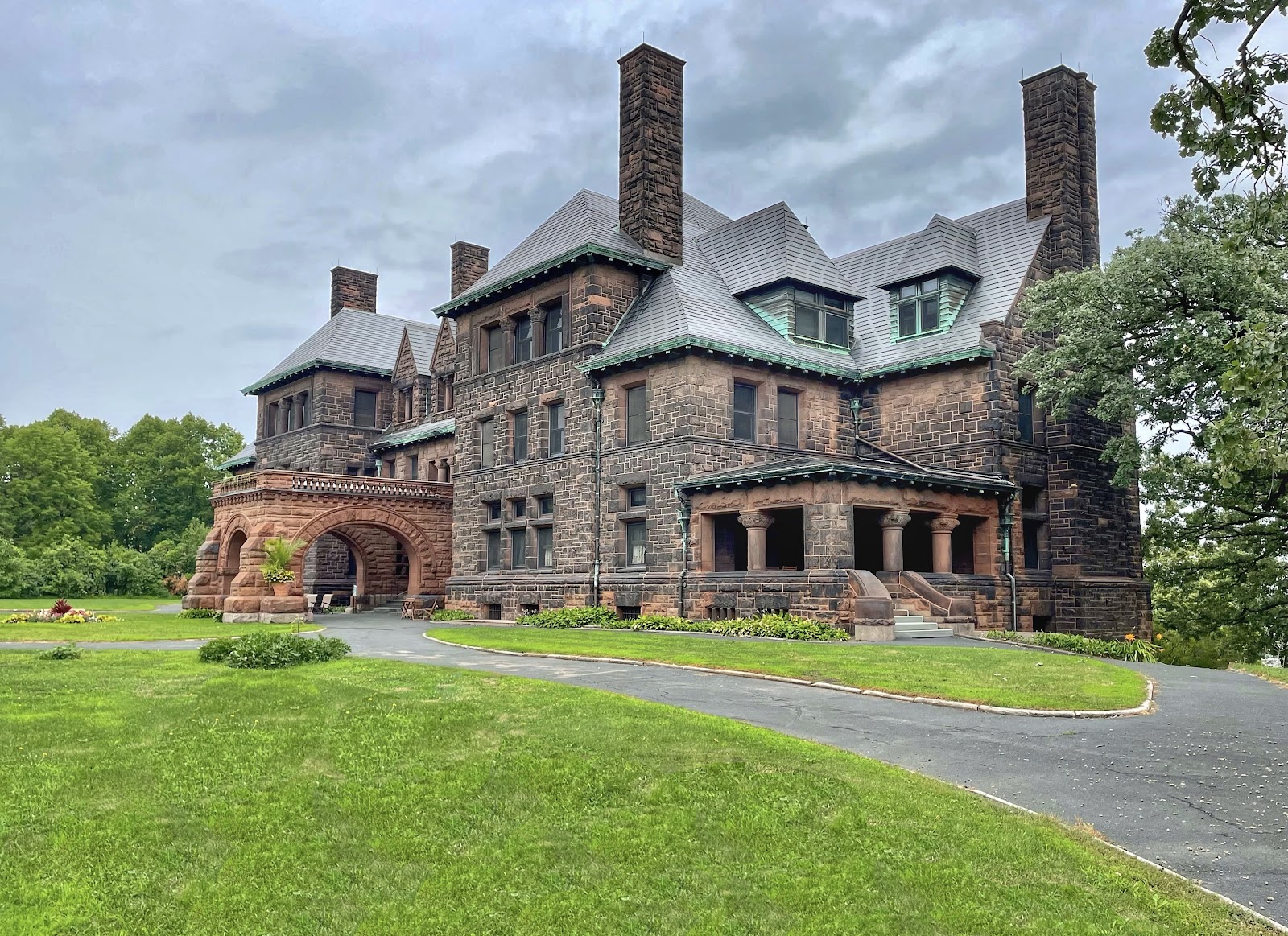
The James J. Hill House stands on Summit Avenue in St Paul, Minnesota, an 1891 mansion in the Richardsonian Romanesque manner — heavy red sandstone outside, dark oak and carved detail inside, with formal grounds and a view out over the river valley.
Two materials govern how this building photographs and they behave in the same two ways as each other. Red sandstone and dark stained oak both absorb a great deal of the light that lands on them rather than returning it, so the ambient is low and any fall-off is steep. And both are strongly coloured — sandstone is genuinely red rather than neutral grey, and oak is a deep warm brown — which means the small amount they do reflect arrives carrying that colour onto whatever is near them.
Absorption plus colour is a specific pair of problems, and the red sandstone in particular is unlike anything else in this series. These are field notes on three conditions. We have not photographed a wedding at the Hill House; Richardsonian sandstone and carved oak behave the same wherever they were built. Which rooms may be used, whether flash and tripods are permitted and what the collection restrictions are are questions for their events team — the house is a historic site, so those answers are specific.
The James J. Hill House at a glance
| Where | Summit Avenue, St Paul, Minnesota |
| Character | An 1891 Richardsonian Romanesque mansion in red sandstone |
| Both materials | Absorb light, and both throw strong colour onto faces |
| The unusual one | Red sandstone reflects genuinely red, not neutral |
| Ask first | Flash and tripod rules; it is a historic site with a collection |
Problem one: red sandstone reflects red
Most stone a photographer works against is broadly neutral — limestone, granite, grey sandstone — so the light it bounces is a slightly cooled or warmed version of the sky. Red sandstone is not neutral. It is a saturated warm red-brown, and light striking a sunlit elevation bounces back carrying that hue, which lands on anyone standing near the wall as a distinctly ruddy fill.
That is flattering in small doses, because warm on skin is the direction to err in, but it needs to be a decision. Set a custom white balance beside the wall rather than carrying one from elsewhere on the site, and set it for the faces rather than for the stone. Do not correct it out entirely — sandstone neutralised to grey looks wrong and loses the one thing that makes the building visually distinctive.
Richardsonian stonework is also rough-faced by design, with deeply rusticated blocks and heavy arched openings. That texture reads only in raking light: low sun across the elevation lifts every block, every tool mark and every voussoir into relief, while flat midday sun erases it into a red field. So the building photographs well at the ends of the day and poorly in the middle, which coincides with when faces work best outdoors.
One further sandstone note: it gives almost no fill. A dark saturated stone reflects far less than a pale rendered or painted wall, so a couple standing beside it in open sun gets hard light on one side and very little returned on the other. That is a case for a reflector, a fill source, or turning them so the open sky rather than the wall is doing the filling.
Problem two: oak absorbs, and carving needs side light
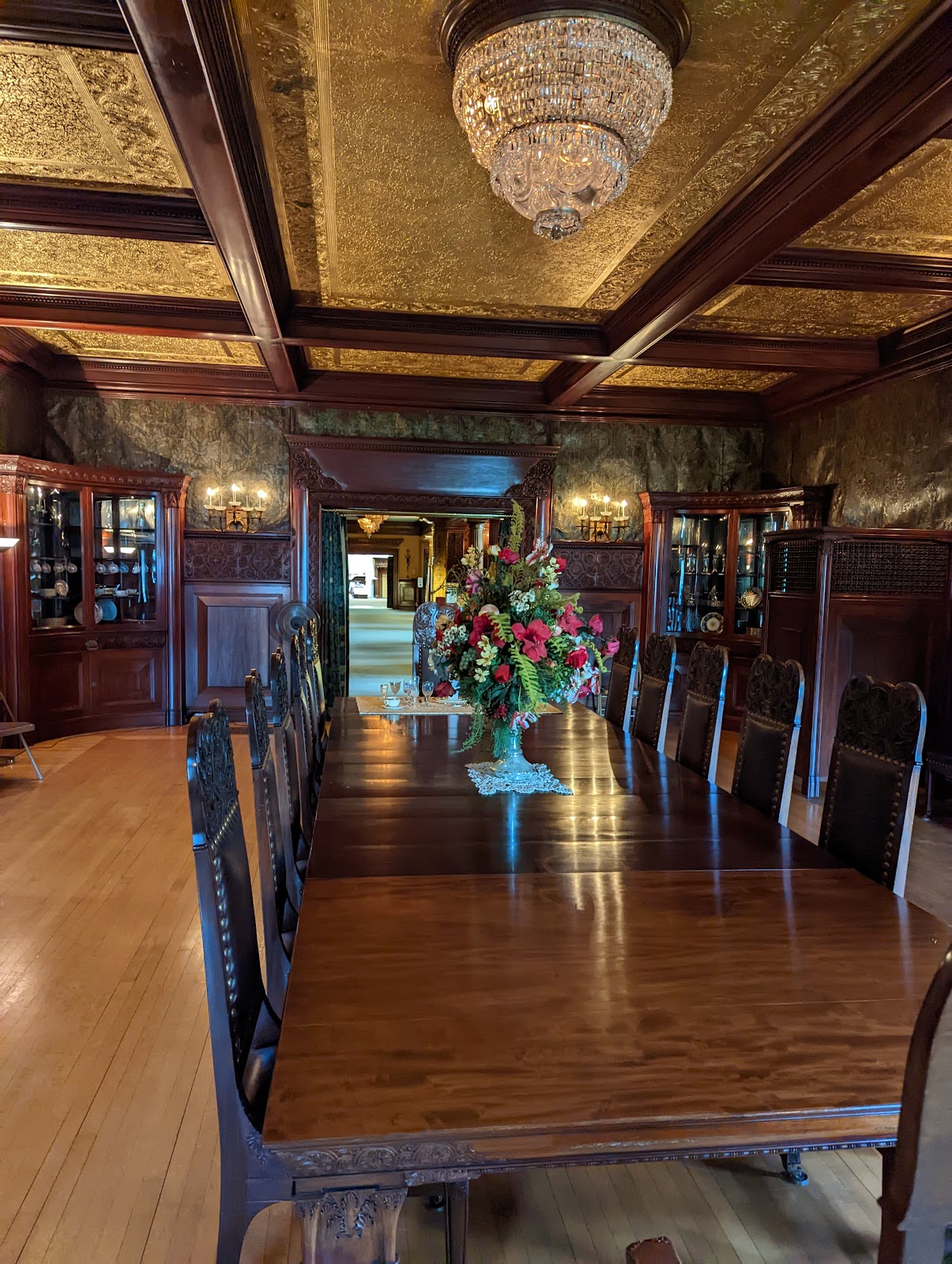
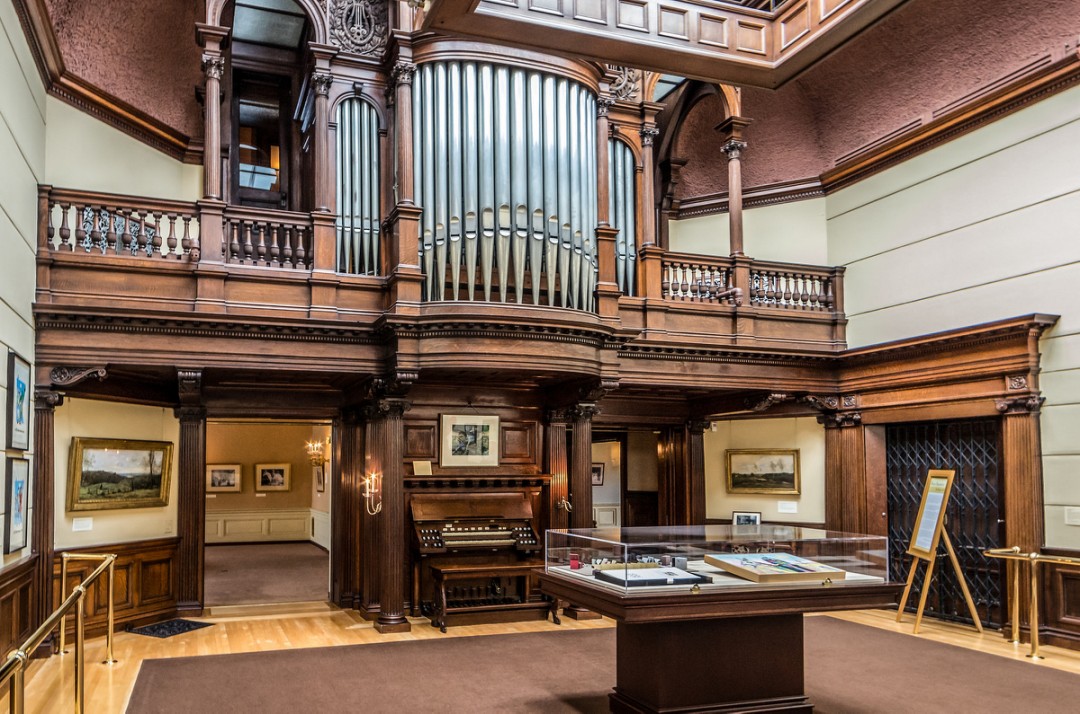
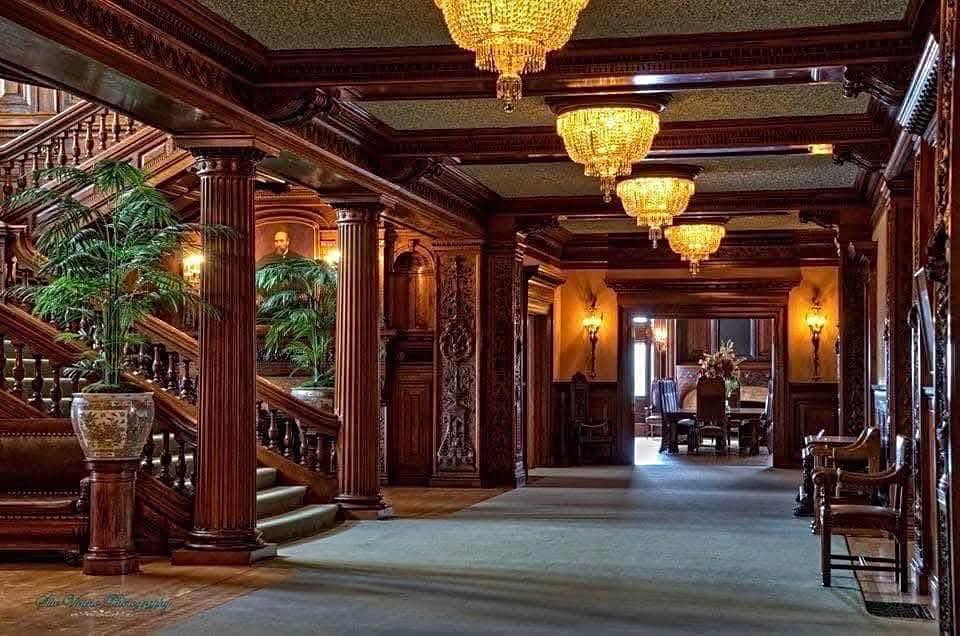
Inside, dark stained oak returns very little of the light that reaches it. A flash aimed at an oak ceiling sends almost nothing back, which means bounce — the reflex move indoors — is close to useless. Light directly, with your own modifier pointed where you want light, and place people near windows, because with fall-off this steep a metre of position is worth more than a stop of ISO.
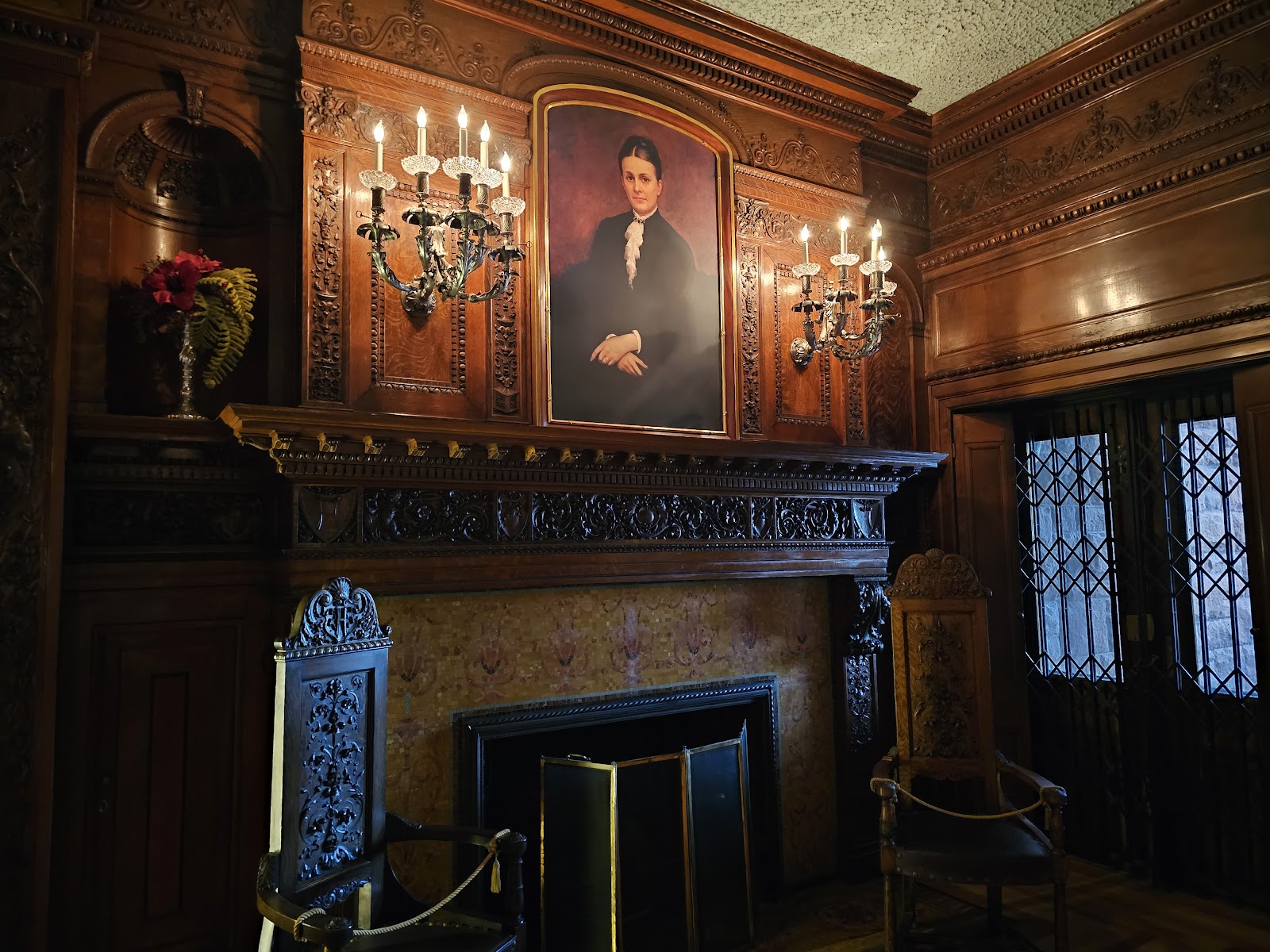
The relief problem matters as much as the exposure. Carved oak is worth photographing because it is carved, and carving reads by casting small shadows. Light it from the camera position and every cut fills in, leaving a flat brown panel. So when panelling, a carved newel or a linenfold door is the subject of a frame, the source belongs well off to one side, raking across the surface.
That gives a two-setting working rule. For faces, a source at roughly forty-five degrees at face height. For the woodwork, the same source moved towards ninety degrees, which rakes the carving. A frame wanting both needs a compromise around sixty degrees or two sources — and knowing that before walking in saves working it out in the room.
Colour again: oak reflects strongly warm, and mixed with tungsten fittings and a cool window it is three sources no single white balance serves. Decide which owns the faces, normally your own light or the window, set for that, and let oak read as warm oak.
- Set white balance beside the sandstone; keep it red, not grey
- Shoot the elevation in raking light or the rustication disappears
- Sandstone gives almost no fill — bring a reflector or turn to open sky
- Light directly indoors; oak bounce returns almost nothing
- Faces at forty-five degrees, carving nearer ninety
Problem three: a Minnesota winter, and what it gives
St Paul winters are long, cold and bright, and for a building like this that is an advantage rather than a hardship. The sun stays low all day in December and January, which means the raking light that reveals rusticated sandstone and carved oak is available for the entire short day rather than for ninety minutes at each end. A winter wedding here photographs the architecture better than a summer one does.
Snow is the other winter factor and it is the most useful natural modifier there is: a large bright even reflector that fills shadows from below and turns the outdoors into a soft box. On a dark red stone building that matters doubly, because snow supplies exactly the fill that sandstone refuses to provide. Faces lit against snow have no dark eye sockets and no heavy under-chin shadow.
It will also fool a meter by about two stops. A frame that is mostly snow reads as overexposed, so the camera darkens it and you get grey snow and an underexposed face. Overexpose deliberately by one and a half to two stops and check that the snow retains texture rather than clipping to blank white — that single adjustment is most of winter technique.
The practical costs are real and worth planning for. Short days mean the daylight block has to be early in the afternoon rather than assumed at the end of it; a three o’clock December ceremony is close to the end of usable light. Cold limits how long anyone stands outside in formal clothes, so outdoor blocks should be short and decisive. And moving a camera from a heated interior into subzero air and back fogs it badly on the way in — acclimatise deliberately, and keep one body outside rather than cycling it.
The grounds and Summit Avenue itself are the outdoor register. Summit Avenue is a long street of substantial period houses, and because it is residential and low-rise, low sun reaches street level and runs its length — a frame a city of towers cannot produce. Mature planting means dapple at midday, correctable only by moving people, so the building’s own shadow is the reliable midday shade.
More frames from The James J. Hill House
The James J. Hill House wedding photography: common questions
Why do faces look ruddy beside this building?
Because red sandstone is genuinely saturated rather than neutral, so light bouncing off a sunlit elevation carries that hue onto anyone nearby. Set a custom white balance beside the wall for the faces, but do not neutralise it — grey sandstone looks wrong.
When does the stonework photograph best?
In raking light, at the ends of the day. Richardsonian stonework is deeply rusticated, and that texture reads only when low sun crosses it — flat midday sun erases it into a plain red field.
Does the sandstone help with fill?
No, the opposite. A dark saturated stone reflects far less than a pale wall, so a couple beside it in sun gets hard light on one side and almost nothing back on the other. Use a reflector or turn them towards open sky.
Why does bounce flash fail indoors?
Because dark stained oak absorbs the light that reaches it rather than returning it, so a flash aimed at an oak ceiling sends almost nothing back. Light directly, and place people near windows since the fall-off is steep.
Why does the carving look flat?
Because the light is coming from the camera position and filling every cut. Carving reads by casting small shadows, so when panelling or a carved door is the subject, the source belongs nearer ninety degrees than forty-five.
Is a Minnesota winter bad for this venue?
Better, actually. The sun stays low all day, so the raking light that reveals rusticated stone and carved oak lasts the whole short day. And snow supplies exactly the fill that dark sandstone refuses — just overexpose by up to two stops so it holds texture.
More Minnesota venue guides
We are writing a photographer’s guide to every venue we would happily shoot in Minnesota. Here are three more, plus the full index:
- The Landmark Center: How the Indoor Courtyard Frame Is Made
- The Minnesota Club: Four Ways Out of the Dark-Interior Problem
- The Minnesota History Center: Photographing Stone, Glass and Conservation Light
Planning a wedding at The James J. Hill House?
Red stone and dark oak both need light from the side and a deliberate white balance. Tell us your date and we will plan both.