 The Venue, Asheville: A Season-by-Season Guide
The Stockroom at 230: Photographing a Downtown Loft and Its Roof
A loft and a roof in one building is two venues stacked, and only one of them has a clock attached.
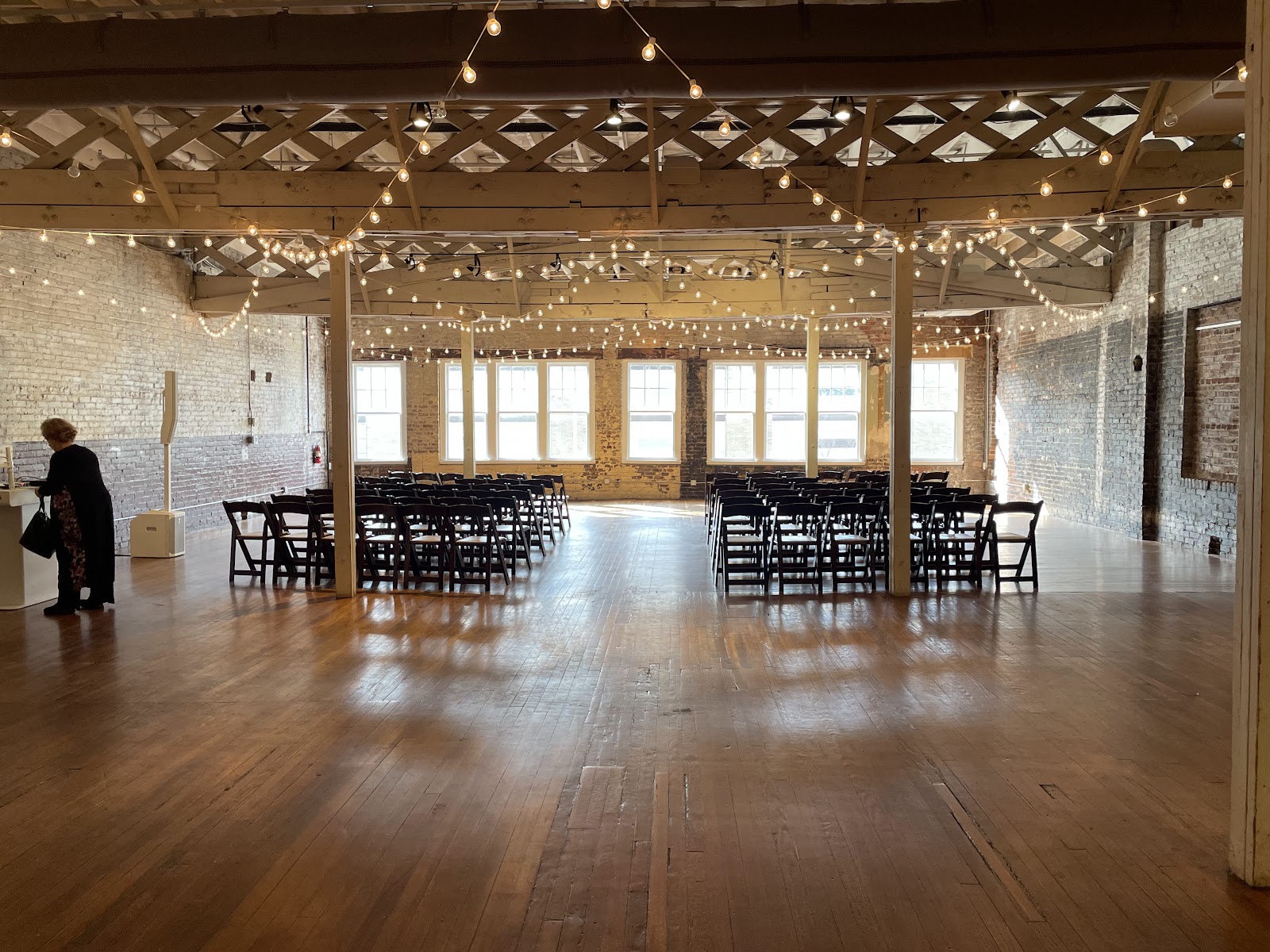
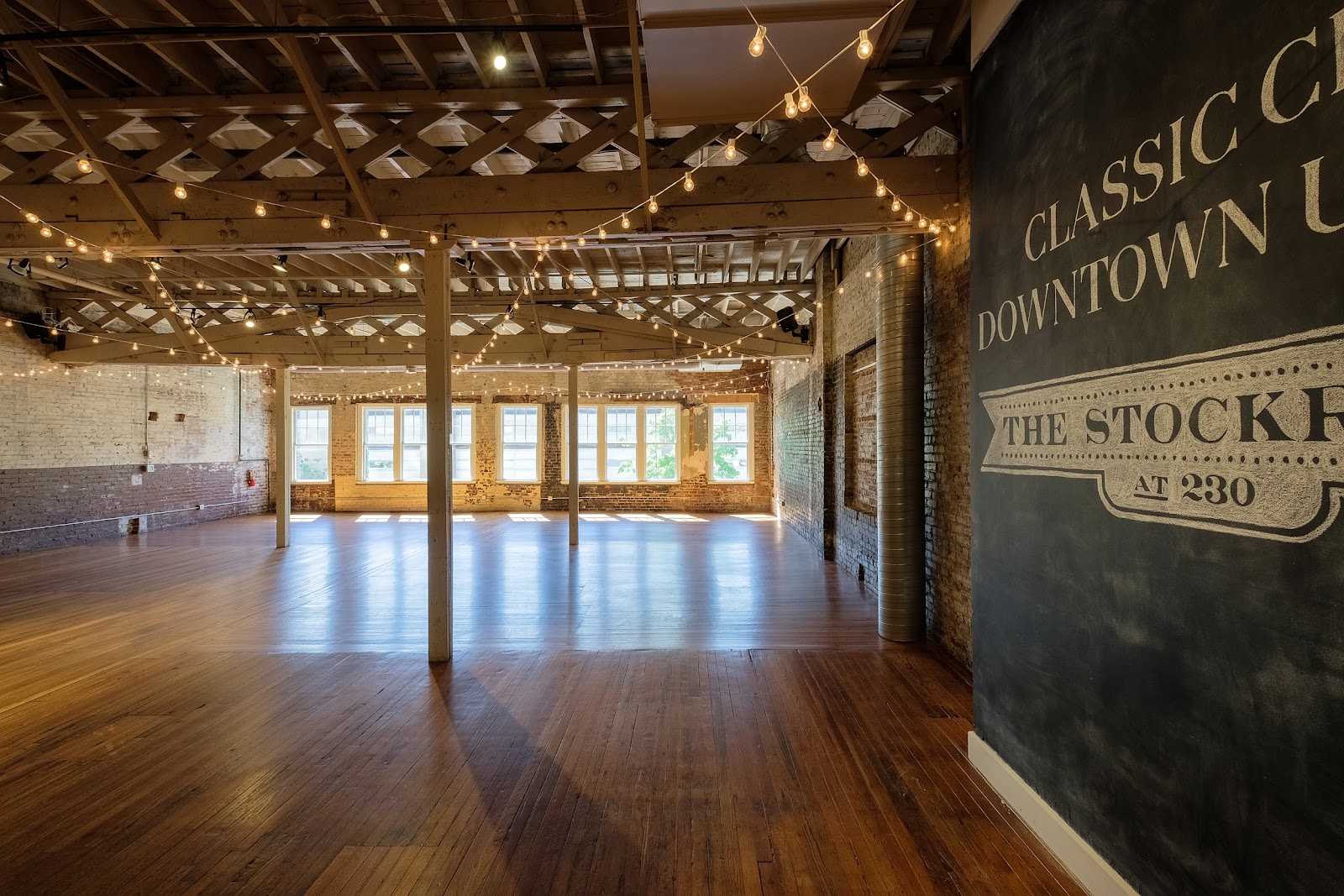
The Stockroom at 230 occupies an upper floor of a building in downtown Raleigh, North Carolina — a brick-walled loft space with the tall windows and exposed structure of a converted commercial building, and a rooftop terrace above it.
That combination is common in city venues and it is worth treating as two distinct locations rather than one address. The loft is an interior: brick, beams, windows on one or two sides, warm ambient, and it looks essentially the same at four in the afternoon and eleven at night. The roof is an exterior: sky, city, wind, no ceiling to bounce from, and a narrow window of good light that is dictated entirely by the sun.
So this is a walk through both, in the order the day should use them. We have not photographed a wedding at the Stockroom; brick lofts and city rooftops behave the same wherever they occur. Which spaces are available, how late roof access runs and what the wind policy is are questions for their events team — and roof access hours matter most.
The Stockroom at 230 at a glance
| Where | Downtown Raleigh, North Carolina |
| Character | Brick loft on an upper floor, with a rooftop terrace above |
| The loft | Time-independent: identical at four in the afternoon and eleven at night |
| The roof | Sun-dependent: one narrow window, and it cannot be moved |
| Ask first | How late roof access runs |
The loft in daylight: windows and brick
Converted commercial buildings have generous windows, because they were built to be daylit before electric light was dependable. On an upper floor that is better than it would be at street level: nothing opposite is shadowing the light or bouncing colour into it, so a window on the shaded side gives a large, clean, directional source.
Place a subject a metre back from the glass and turn them into it, and the fall-off does the rest — the brick behind drops away into shadow, separating them from the background without any equipment. That is the simplest good light in the building and it is available for as long as the daylight lasts.
Brick is the other material and it behaves usefully. It is a mid-tone with real texture, so unlike a white wall that clips or a dark panel that blocks it holds detail at almost any sensible exposure, and the texture means a frame never feels empty. It reflects strongly warm though, so a face lit partly by brick bounce reads ruddy — set a custom white balance in the room for the faces rather than for the wall, and keep it for the whole block.
Brick also needs raking light to read as masonry. A source running along the wall lifts every mortar line; a source pointed at it flattens it into a brown field. So where the window light runs along a brick wall rather than at it, that is the position worth using.
The exposed structure — beams, columns, ductwork — is a compositional asset in the same way a colonnade is: repetition and line. It rewards precise framing, because in a spare industrial room a crooked horizontal is obvious with nothing else in the frame to distract from it.
The roof: a narrow window and no ceiling
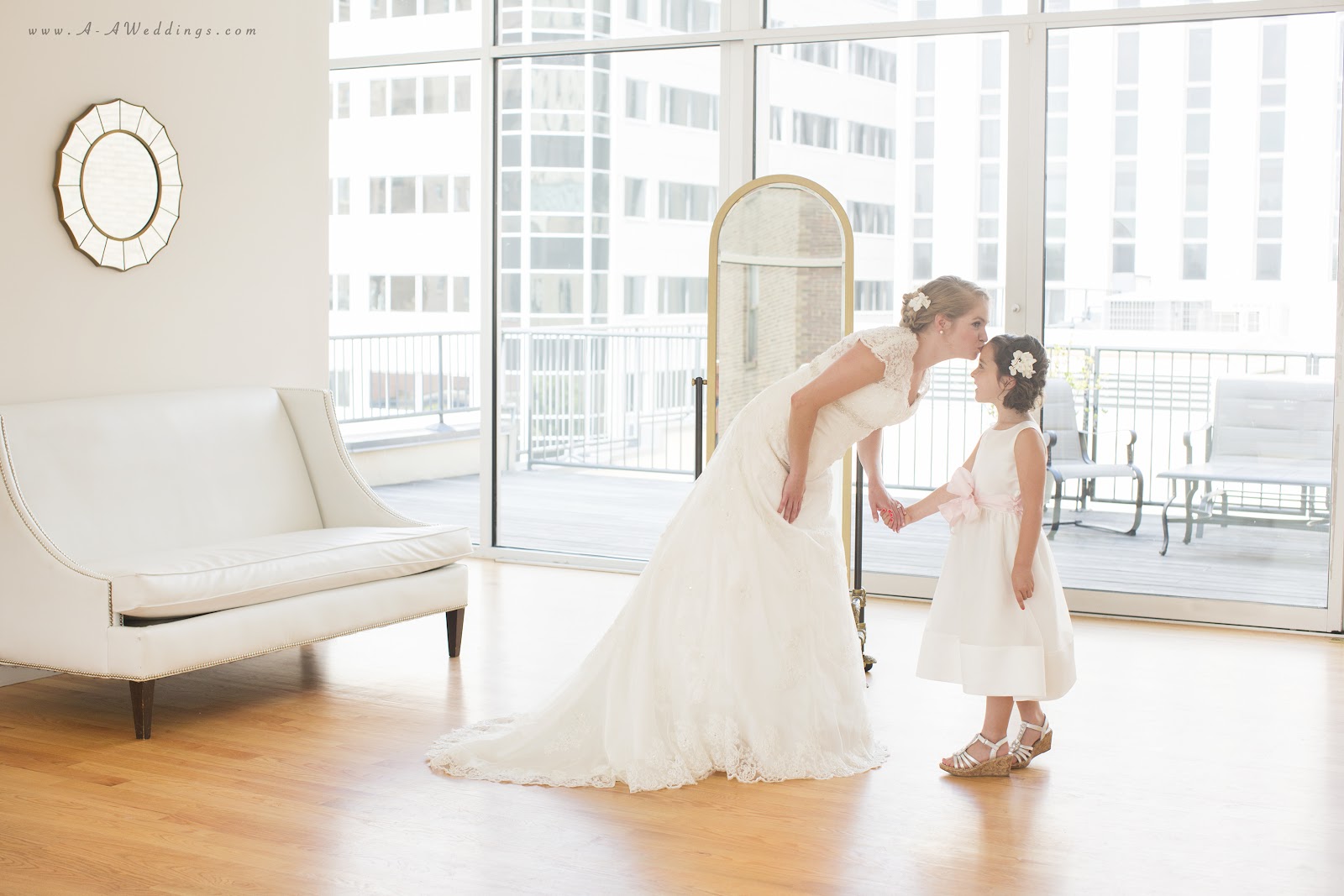
A rooftop is an exterior with three consequences. There is no ceiling, so bounce flash returns nothing and everything has to be lit directly — which means stands, which means wind. Wind at roof level is stronger and gustier than at street level, accelerated around building corners, so an unweighted stand is a genuine hazard and a veil is a held-or-removed decision rather than a hope. And there is almost no ambient after dark, because there are no walls or windows spilling light, so every frame after sunset is entirely a lit frame.
What it gives in exchange is sky, and sky is where the colour is. Height also removes the ground, which is the single most laborious part of street-level city photography — no cars, no bins, no signs, no passers-by. And it lets you look along streets rather than across them, which is what produces depth in an urban frame.
The narrow window is the point. Twice, briefly: in the last forty minutes of daylight, for warm raking light with the skyline behind, and again about twenty minutes after sunset for the blue-hour balance when the building lights come on and the sky still holds colour. Those two visits produce almost everything anyone books a rooftop for and together they take under half an hour.
The blue-hour visit needs a light, because a skyline is dim and a couple lit only by it is a silhouette. One warm off-camera source balanced to the city rather than overpowering it is the whole technique, and on a roof it must be weighted or hand-held. And use a long lens rather than a wide one — compression makes the city loom behind the couple, where a wide lens reduces the skyline to a thin distant strip and the photograph becomes a picture of a terrace. That is the commonest rooftop error and it is worth stating every time.
- Window on the shaded side, a metre back, turned into it — simplest good light
- Set white balance for faces, not brick; brick bounces strongly warm
- Light along a brick wall, not at it, so the mortar lines read
- Roof twice: last forty minutes of daylight, then twenty minutes after sunset
- Long lens on the roof, always — a wide one wastes the skyline
After dark in the loft, and the streets below
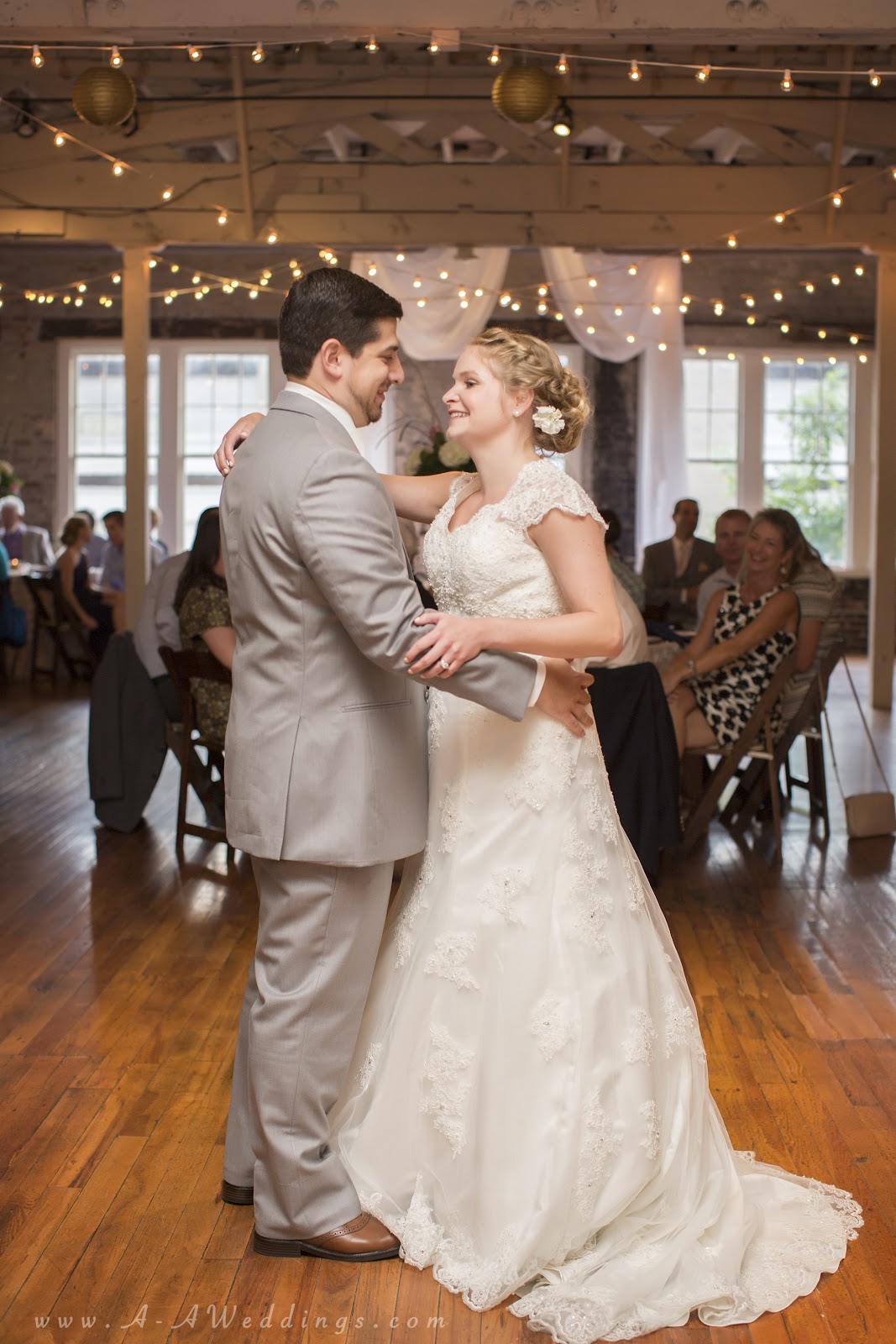
Once the daylight goes, the loft becomes a warm low-light room and the approach is the one every venue of the type wants. The ambient is dim and tungsten-toned, and it flatters brick and timber, so fast lenses wide open at a raised ISO give frames that look like the room actually looks — and the grain suits the venue, where a clean flash-lit frame would look imported.
Split deliberately: ambient for candid and atmospheric coverage, where warmth and grain are the point, and added light only where legibility is non-negotiable — speeches, the cake, posed pairs. Switching consciously rather than drifting is what keeps a set coherent.
Where light is added, bounce it if the ceiling allows. A converted loft often has a high or dark ceiling, which removes the advantage, so check before relying on it — a pale wall is usually the better surface, and an assistant with a reflector is better than either.
Because the loft is time-independent, it is the block that absorbs any delay. Everything with a clock attached is on the roof or in the street, which is a useful thing to know when a running order slips: move the interior coverage, protect the roof window.
Downtown Raleigh at street level adds brick frontages, period buildings and a compact walkable centre. It is low-rise enough in parts that low evening sun reaches street level and runs along a street, which is the frame a city of taller towers cannot produce. The streets are public and busiest on weekdays, so a weekend morning is one of the quieter windows — and a long lens compresses whatever crowd there is into unreadable background.
Two North Carolina notes. Summer humidity fogs a lens carried from an air-conditioned interior onto a warm roof for ten to twenty minutes, so acclimatise before the roof block rather than during it. And summer afternoon thunderstorms build and clear fast, which means the roof needs a decision point rather than a hope — and the loft below is the fallback that keeps the wedding, if not the view.
More frames from The Stockroom at 230
The Stockroom at 230 wedding photography: common questions
Why treat the loft and roof as two venues?
Because one is time-independent and one is not. The loft looks the same at four in the afternoon and eleven at night, while the roof has a narrow sun-dictated window. Knowing which is which tells you what to move when the day slips.
When should the roof be used?
Twice, briefly. The last forty minutes of daylight for warm raking light with the skyline behind, and about twenty minutes after sunset for the blue-hour balance when the city lights are on and the sky still holds colour. Under half an hour in total.
Wide or long lens on a rooftop?
Long, always. Compression makes the city loom behind the couple; a wide lens reduces the skyline to a thin distant strip and turns the image into a photograph of a terrace. It is the commonest rooftop error.
Do you need flash up there?
For the blue-hour frames, yes — a skyline is dim and a couple lit only by it is a silhouette. One warm source balanced to the city, not overpowering it, and weighted or hand-held because there is no ceiling to bounce from and the wind is real.
Why do faces look ruddy in the loft?
Brick reflects strongly warm, so any face lit partly by brick bounce reads red. Set a custom white balance in the room for the faces rather than for the wall, and keep it for the whole block rather than letting auto drift.
What if a storm comes through?
The loft is the fallback that keeps the wedding, though not the view — which is the one thing a rooftop’s rain plan can never do. Summer storms here build and clear fast, so agree a decision point rather than hoping.
More North Carolina venue guides
We are writing a photographer’s guide to every venue we would happily shoot in North Carolina. Here are three more, plus the full index:
- The Bradford: What a Purpose-Built Venue Gets Right and Wrong
- The Barn at Old Fort, Old Fort: The Venue’s Own Logic
- The Farm at Swan’s Crossing, Waynesville: One Frame, and How It Is Made
Planning a wedding at The Stockroom at 230?
Two venues stacked, and only the roof has a clock. Tell us your date and how late roof access runs.