 The Venue, Asheville: A Season-by-Season Guide
The Merrimon-Wynne House: Reading an 1876 House Through the Day
A Victorian house gives you a porch, tall windows and a garden, and each is good at a different hour.
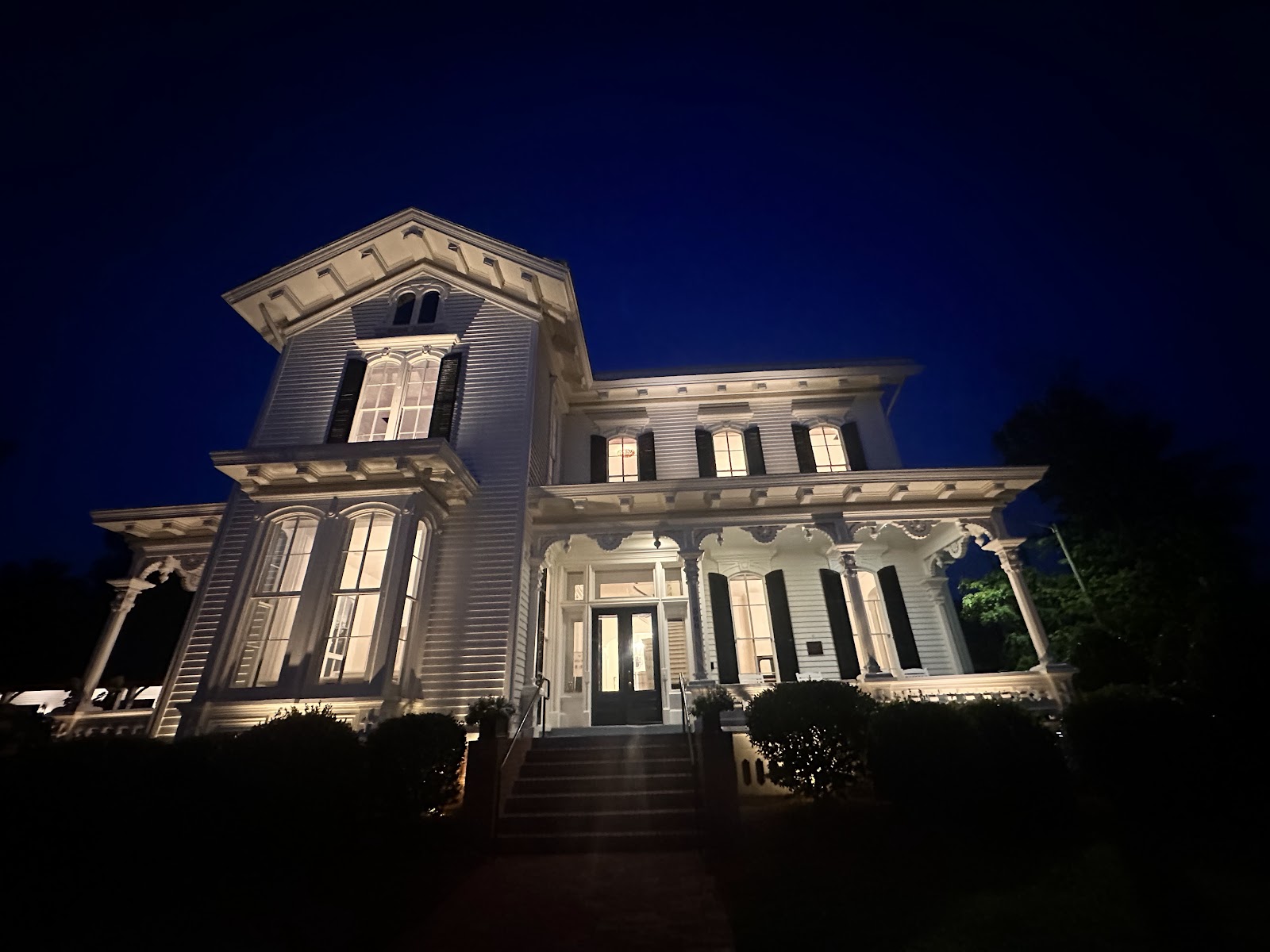
The Merrimon-Wynne House stands in downtown Raleigh, North Carolina, an 1876 house restored for events, with deep porches, the tall windows of its period, interiors detailed to match, and grounds around it.
Houses of this generation share a set of features that behave predictably, and knowing the order in which they become useful is most of the planning. The porch is a covered outdoor room that works all day. The tall windows are large soft sources with steep fall-off, best when the sun is not on them directly. The grounds are good early and late and difficult in the middle. And the interiors are small, warm and dim, which makes them the block that absorbs any delay because nothing in them depends on the sun.
So this walks the day through in that order. We have not photographed a wedding at the Merrimon-Wynne House; Victorian porches, tall windows and Southern grounds behave the same wherever they occur. Which rooms and outdoor areas a wedding may use are questions for their events team.
The Merrimon-Wynne House at a glance
| Where | Downtown Raleigh, North Carolina |
| Character | An 1876 house restored for events, with deep porches and tall windows |
| All day | The porch — hard-edged shade with a bright garden in front of it |
| Middle of the day | Interiors, because the grounds are at their worst |
| Last ninety minutes | The grounds, when low sun finally reaches them |
Morning: tall windows, and three setups from one of them
Houses of the 1870s were built before reliable artificial light, so the windows are tall relative to the rooms and positioned to throw daylight deep into the plan. In lighting terms that is a very large source at a short distance, which makes it soft, bright and steeply falling — and the fall-off is the useful part, because a subject a metre from the glass is well lit while the room three metres behind them is markedly darker, separating them from the background at no cost.
One window gives three different setups for the price of a change of stance. Facing it: a broad soft key with catchlights. Side-on: strong modelling with a genuine shadow side. Back to it: a rim and a silhouette. That is more variety than most lighting kits provide and it needs nothing carried, which makes the morning the simplest part of the day here.
The morning is also when the windows are most likely to be in shade rather than direct sun, depending on orientation, and shade is what you want. Direct sun through a window is a small hard source, not a soft one — a sheer curtain drawn across converts it instantly and is the most useful object in any period room. Shutters and blinds are the other hazard: in direct sun they print hard slatted stripes across a face, which cannot be corrected, so open them fully or close them enough to diffuse.
Set a custom white balance in each room rather than carrying one between them. Warm timber, patterned wallpaper and deep-coloured carpet all bounce their own colour onto skin, and a set shot across three rooms on one balance will not match itself.
Midday: the porch, and why it is the best light on the site
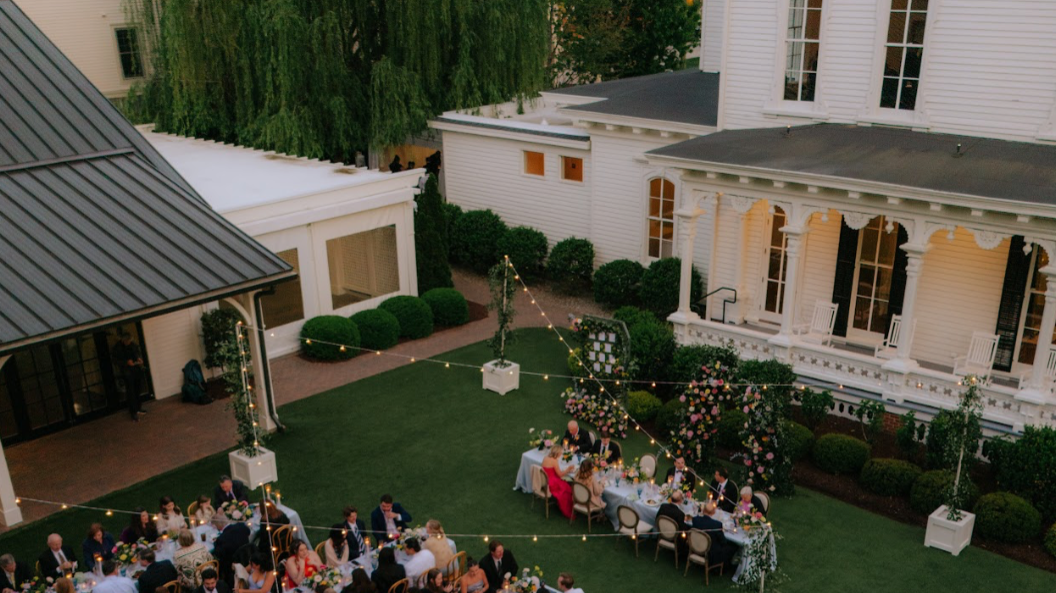
A deep covered porch is the single most useful feature a Southern house of this period has, and it is worth understanding why rather than simply using it. It gives hard-edged full shade, so a face is evenly lit with no dapple and no squinting. It has a bright open garden directly in front of it, which acts as a very large soft source. And it is architecture, so a run of columns or balusters provides a receding line and a frame.
Placing a couple two metres inside the porch, facing out, gives a large soft directional key with a dark surround behind them — close to studio light, available all day regardless of where the sun is, and needing nothing carried. In a Raleigh summer it is also the only place outdoors anybody will be comfortable at one in the afternoon.
The porch is the weather plan as well. A covered open-sided space means rain becomes something visible beyond a dry frame rather than an event that stops the day, and in a climate with frequent summer afternoon thunderstorms that is worth a great deal.
Interiors are the other midday answer, and in a house like this they are small, warm and dim: restricted camera positions, one directional window source, dark timber and patterned surfaces. Switch off the lamps, work the windows, and bounce a bare flash off a pale ceiling where more is needed — in a small furnished room bounce is a larger source than any modifier that would fit through the door, which keeps the kit small.
- Two metres inside the porch, facing out — the best light all day
- One window, three setups, just by changing which way they face
- Draw a sheer curtain to turn hard sun into a large soft source
- Open shutters fully or close them to diffuse; stripes cannot be fixed
- Custom white balance per room; wallpaper and carpet tint the light
Afternoon and evening: the grounds, and the Raleigh conditions
Through the middle of the afternoon the grounds are the hardest place on the property: high sun, little continuous shade, and mature trees that give dapple rather than cover. Dappled light cannot be corrected — it is random rather than soft or directional, several stops across a face, and it shifts with any breeze. The only remedy is position, and the porch is a better answer than any tree.
The last ninety minutes change that completely. Low sun comes in under the tree canopy horizontally rather than down through it, which turns leaves translucent and puts a rim on hair and shoulders, and it rakes across grass so the whole lawn glows. Backlit planting is the most reliable beautiful frame on any garden site and it needs only that the sun be behind the subject. That is the block worth protecting in the running order.
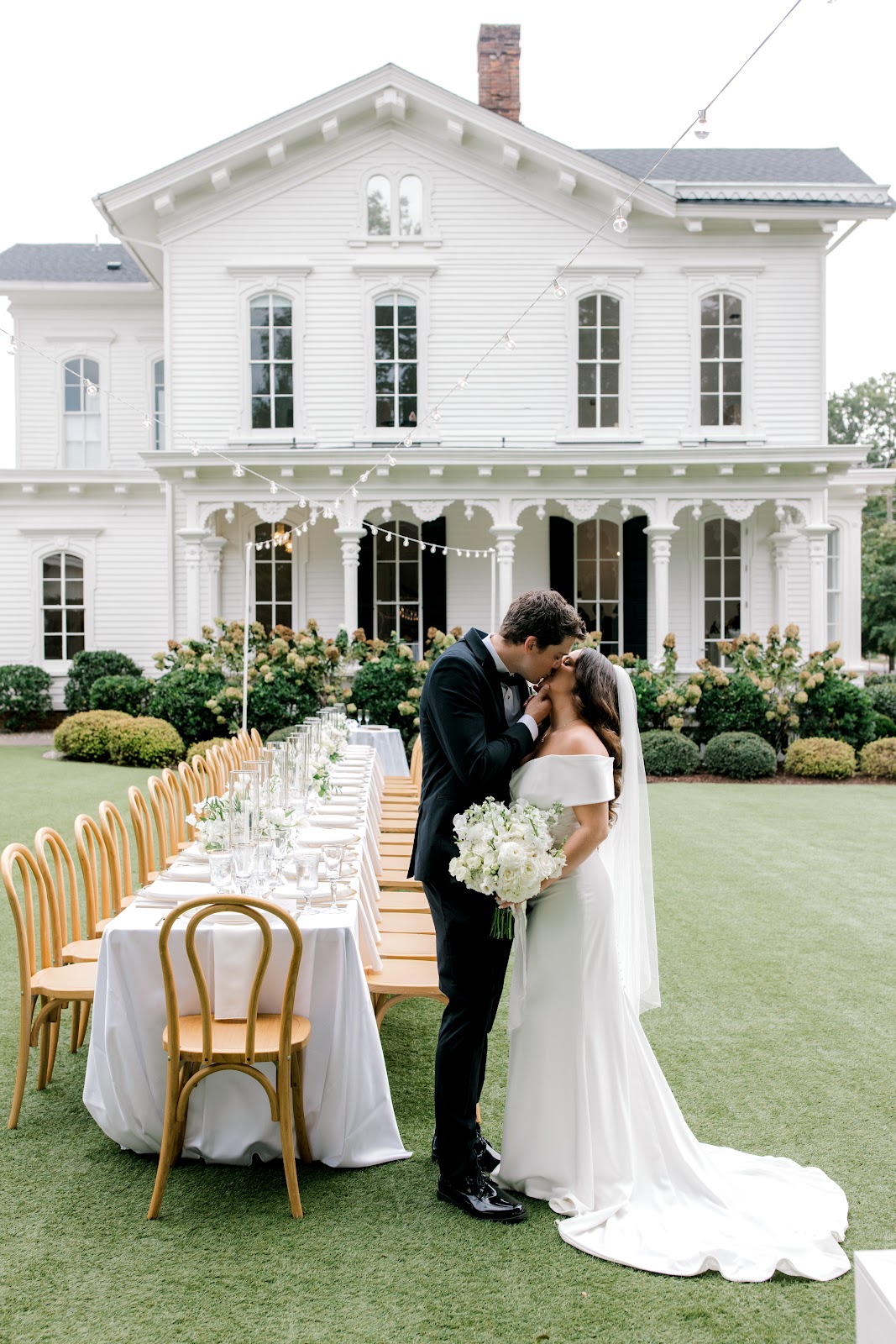
Formal groups want thinking about in advance. A period house has rooms too small for groups past about a dozen, so groups happen outside — and the porch steps are the best option available, because steps arrange people at different heights automatically, which solves the back-row problem, and the porch frames them. Establishing that before the day turns a twenty-minute exercise into five minutes.
Two North Carolina practicalities. Summer humidity is high enough that a lens carried from an air-conditioned interior into outdoor air fogs for ten to twenty minutes, and wiping the front does nothing — acclimatise the body you intend to use outside before you need it, or keep one outside from the start. And afternoon thunderstorms are common in summer: they build fast, rain hard and clear, which means a real fallback is needed and also that the twenty minutes after a storm passes often give the best light of the day, with wet foliage and a dramatic sky.
Downtown Raleigh is close by, which adds brick streets and period frontages if a change of register is wanted, and it is worth a short deliberate block rather than a wander. But the house and its porch are the venue, and a gallery that stays on the property with a well-timed evening block will not be short of anything.
More frames from The Merrimon-Wynne House
The Merrimon-Wynne House wedding photography: common questions
What is the best light on the property?
The porch. Two metres inside a deep covered porch facing out gives a large soft key from the bright garden with a dark surround behind — close to studio light, available all day whatever the sun is doing, and it needs nothing carried.
How many setups can one tall window give?
Three, just by changing stance. Facing it gives a broad soft key with catchlights; side-on gives strong modelling with a shadow side; back to it gives a rim and a silhouette. More variety than most lighting kits, with nothing carried.
What do you do about direct sun through a window?
Draw a sheer curtain across it. Direct sun is a small hard source, and a thin curtain converts it into a large soft one instantly. With shutters, open them fully or close them enough to diffuse — hard slatted stripes cannot be corrected.
Why is the middle of the afternoon difficult outdoors?
High sun, little continuous shade, and mature trees that give dapple rather than cover. Dappled light is random rather than soft or directional, several stops across a face, and shifting with the breeze. The porch is a better answer than any tree.
Where do group photographs go?
Outside, past about a dozen people, and the porch steps are the best option — steps arrange people at different heights automatically and the porch frames them. Decide exactly where before the day rather than during it.
Does the weather need planning for?
Yes, twice. Summer humidity fogs a lens carried from air conditioning for up to twenty minutes, so acclimatise first. And afternoon thunderstorms build and clear fast — you need a fallback, but the twenty minutes after one passes often give the best light of the day.
More North Carolina venue guides
We are writing a photographer’s guide to every venue we would happily shoot in North Carolina. Here are three more, plus the full index:
- The North Carolina Museum of Art: One Decision About Inside or Out
- The North Carolina Museum of History: Field Notes on Exhibit Lighting
- The Raleigh Convention Center: Photographing a Very Large Neutral Room
Planning a wedding at The Merrimon-Wynne House?
A porch, three window setups and one protected evening block. Tell us your date and we will order the day.