 Indianapolis Zoo: Reading a Day From Open Grounds to Underwater Glass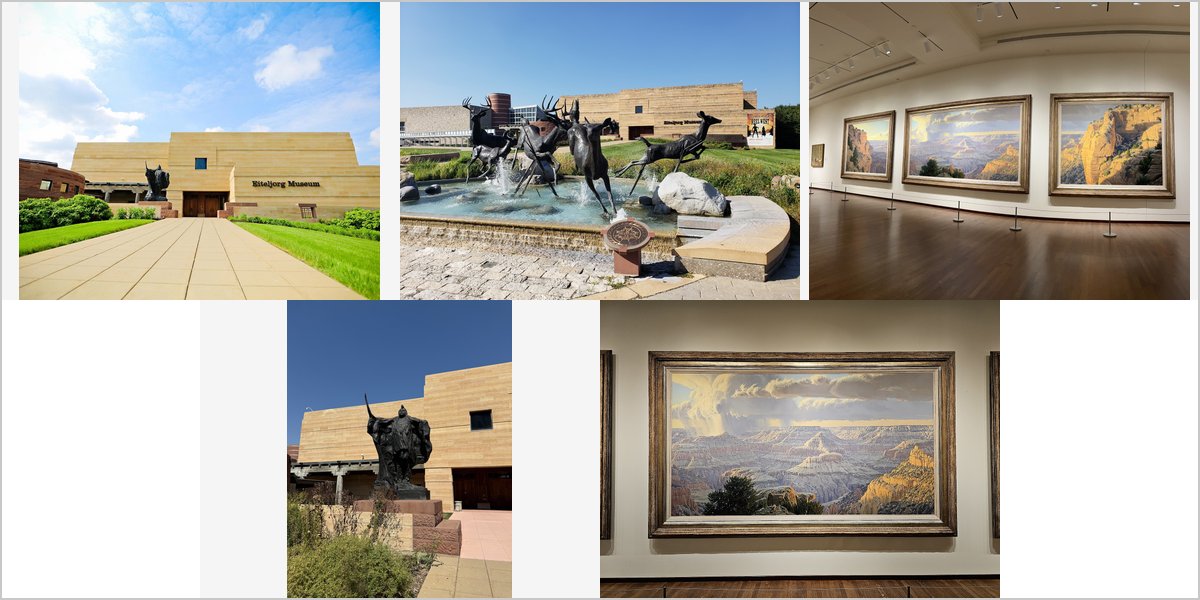
The Eiteljorg Museum: One Decision About Which Way You Face
Turn one way and the gallery is urban. Turn the other and it is parkland. That choice is worth making deliberately.
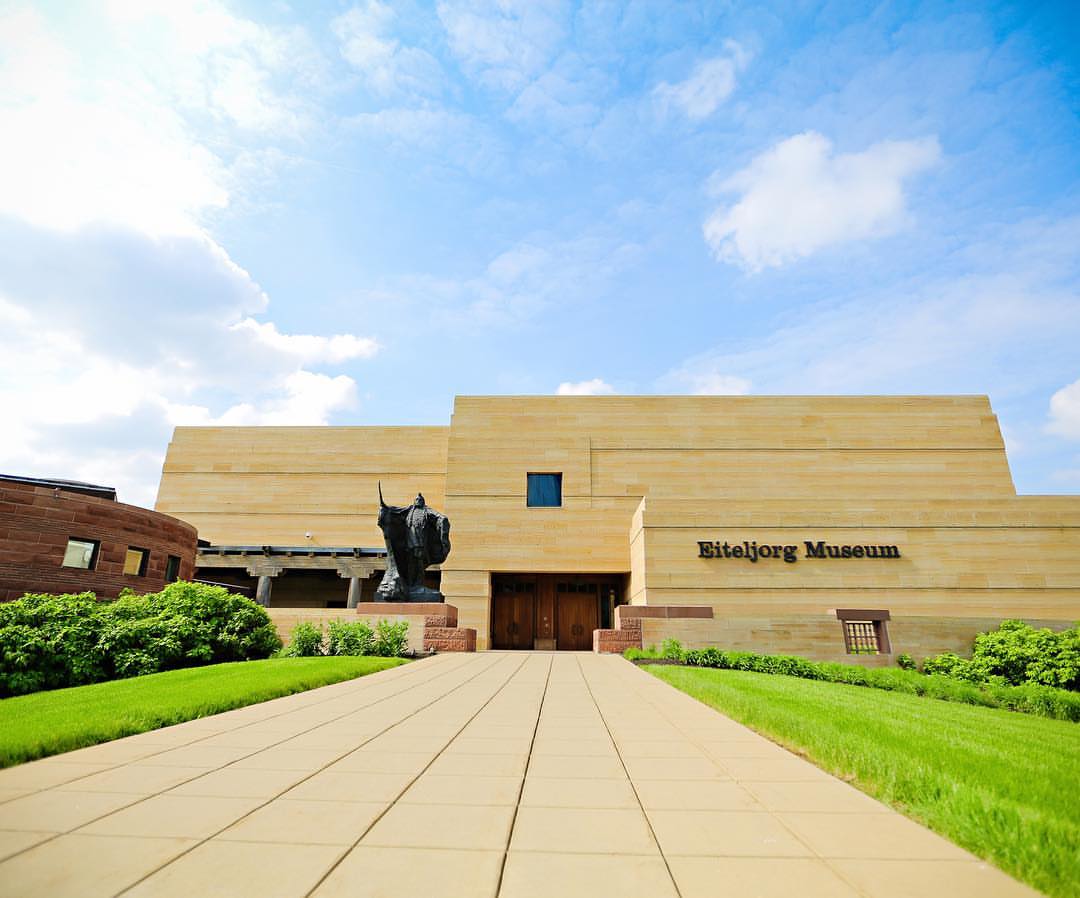
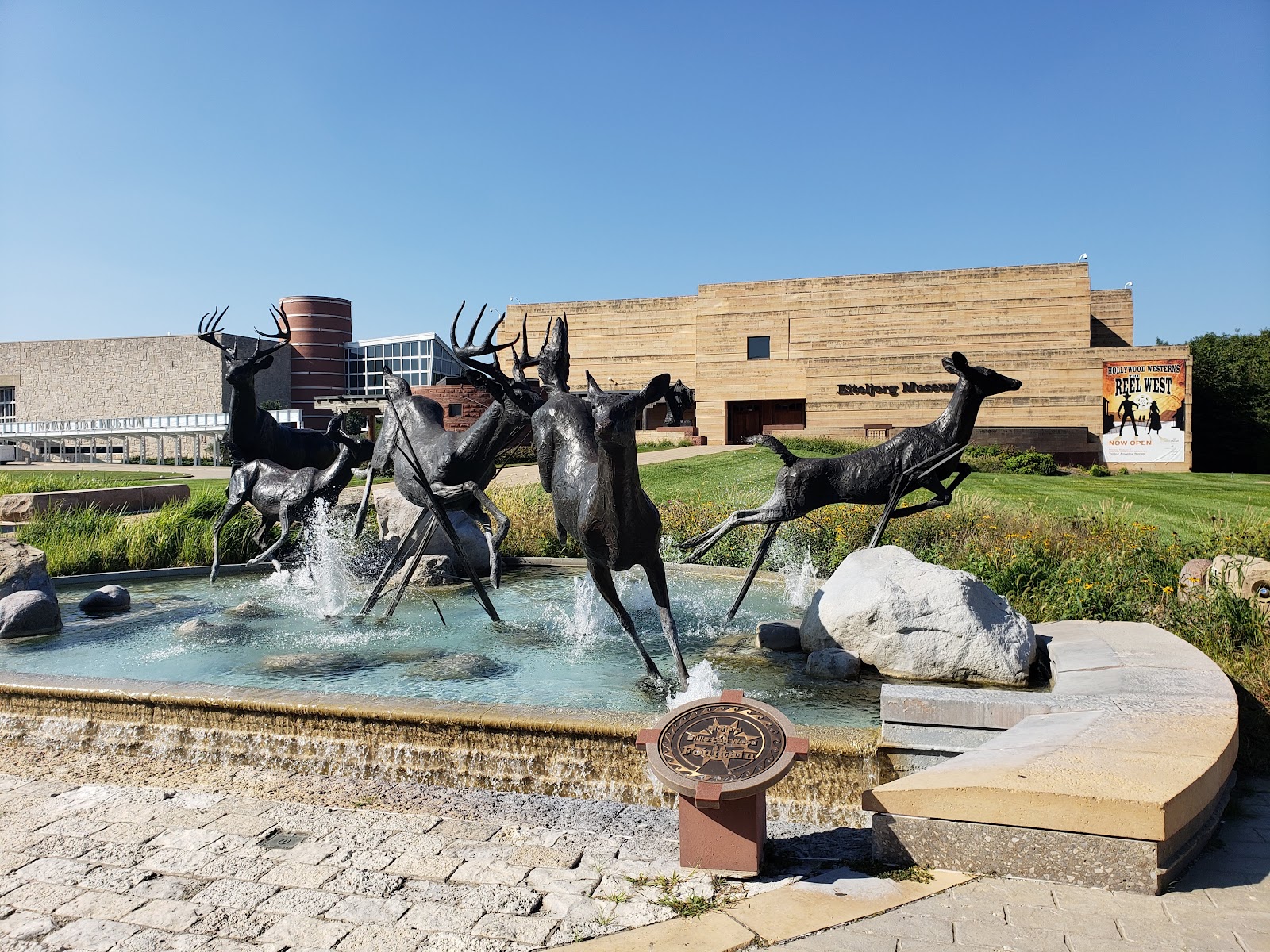
The Eiteljorg Museum stands in White River State Park in downtown Indianapolis, a museum of Western and Native art in a building of warm sandstone, with the park and river on one side and the towers of downtown on the other.
That position creates the venue’s single governing decision, and it is a stranger one than it sounds: the two directions available from the same spot produce galleries with nothing in common. Face the park and you get mature trees, lawns, water and open sky — a green, soft, natural set that could be a country estate. Face the city and you get glass towers, hard lines and a recognisable skyline — an urban set that could only be downtown Indianapolis. Both are good. Mixed carelessly, they read as two weddings.
So the decision is which one leads and how the other is used. We have not photographed a wedding at the Eiteljorg; sandstone buildings, parkland and downtown sight lines behave the same wherever they meet. Which galleries and outdoor spaces host events, and what the photography rules are in the collection areas, are questions for their events team.
The Eiteljorg Museum at a glance
| Where | White River State Park, downtown Indianapolis, Indiana |
| Character | Warm sandstone museum between parkland and the downtown skyline |
| The fork | Park-facing or city-facing — two galleries with nothing in common |
| The building | Warm stone that bounces warm light and needs raking sun for texture |
| Ask first | Photography rules inside the collection galleries |
Facing the park: soft, green and timeless
The park side gives a conventional and reliable set of conditions. Mature trees mean shade, which matters in the middle of the day; lawns give open ground for groups; water gives reflections and a soft upward bounce into faces; and open sky gives post-sunset colour without buildings in the way.
The light pattern is the standard wooded-park one. Early and late are excellent, because low sun comes in under the canopy horizontally and turns leaves translucent while putting a rim on hair. The middle of the day is the problem, because sun through a broken canopy gives dappled light — patches several stops apart, shifting with the breeze, correctable only by moving people into full open shade or full sun.
Water is worth timing deliberately. Still water in the first or last hour mirrors trees and sky and doubles everything, and it bounces a soft fill upward that fills the shadows a low sun would otherwise carve. Any breeze destroys the reflection and high sun turns the surface to clipping highlights, so it is an edges-of-the-day asset only.
The advantage of leading with the park is that it is forgiving and flattering, and the frames are easy to get right. The disadvantage is that it says nothing about where it was taken. A park gallery from Indianapolis looks like a park gallery from anywhere, which is fine unless the couple wanted their city in the pictures.
Facing the city: hard, specific and harder to get right
The city side is the opposite in every respect. There is no canopy, so no dapple and no shade — which means midday is harsh and unusable for faces without help. The background is glass and stone rather than foliage, so it is reflective, bright and full of straight lines that punish a tilted camera. And the sky is partially occupied by buildings, which cuts the post-sunset colour but adds lit windows in exchange.
The skyline frame needs a long lens, and this is the error that ruins most attempts. Compression brings the towers close behind the couple and makes the city loom; a wide lens renders the skyline at its true angular size, which is a thin band along the horizon with a great deal of empty ground and sky. The instinct to go wide because the view feels expansive is exactly wrong.
It also needs light on the couple after dark, because a skyline puts out very little usable illumination on a face. One warm off-camera source balanced to the city — enough to render skin, not enough to overwhelm a background that is itself quite dim — is the whole technique, and erring towards too much flash is the common mistake.
The advantage of leading with the city is specificity: those frames could not have been taken anywhere else, and a gallery that locates itself is more valuable than one that could be anywhere. The disadvantage is that it is technically harder and less forgiving at every hour.
What works in your favour
- Two completely different registers available from the same building
- Park side gives shade, water, lawns and open sky for post-sunset colour
- City side gives a skyline that locates the gallery unmistakably
- Warm sandstone bounces flattering warm fill onto anyone near it
- Interior galleries as a genuine weather and midday fallback
What to plan around
- The two directions do not mix; a careless set reads as two weddings
- Broken park canopy gives dappled light through the middle of the day
- No shade at all on the city side; midday needs real fill
- Skyline frames need a long lens and flash, and fail with a wide one
- Collection galleries commonly restrict flash and tripods
Resolving it, plus the building and the interiors
The practical resolution is the one that applies to any two-register venue: pick a spine and use the other deliberately, in a block, at a different time of day. Here the natural division is easy because the hours suit it. The park works in the first and last ninety minutes, when low sun is under the canopy. The city works after sunset, when the towers light up and the sky still holds colour. So park at golden hour, city at blue hour — two blocks, twenty minutes each, and the gallery has range without confusion.
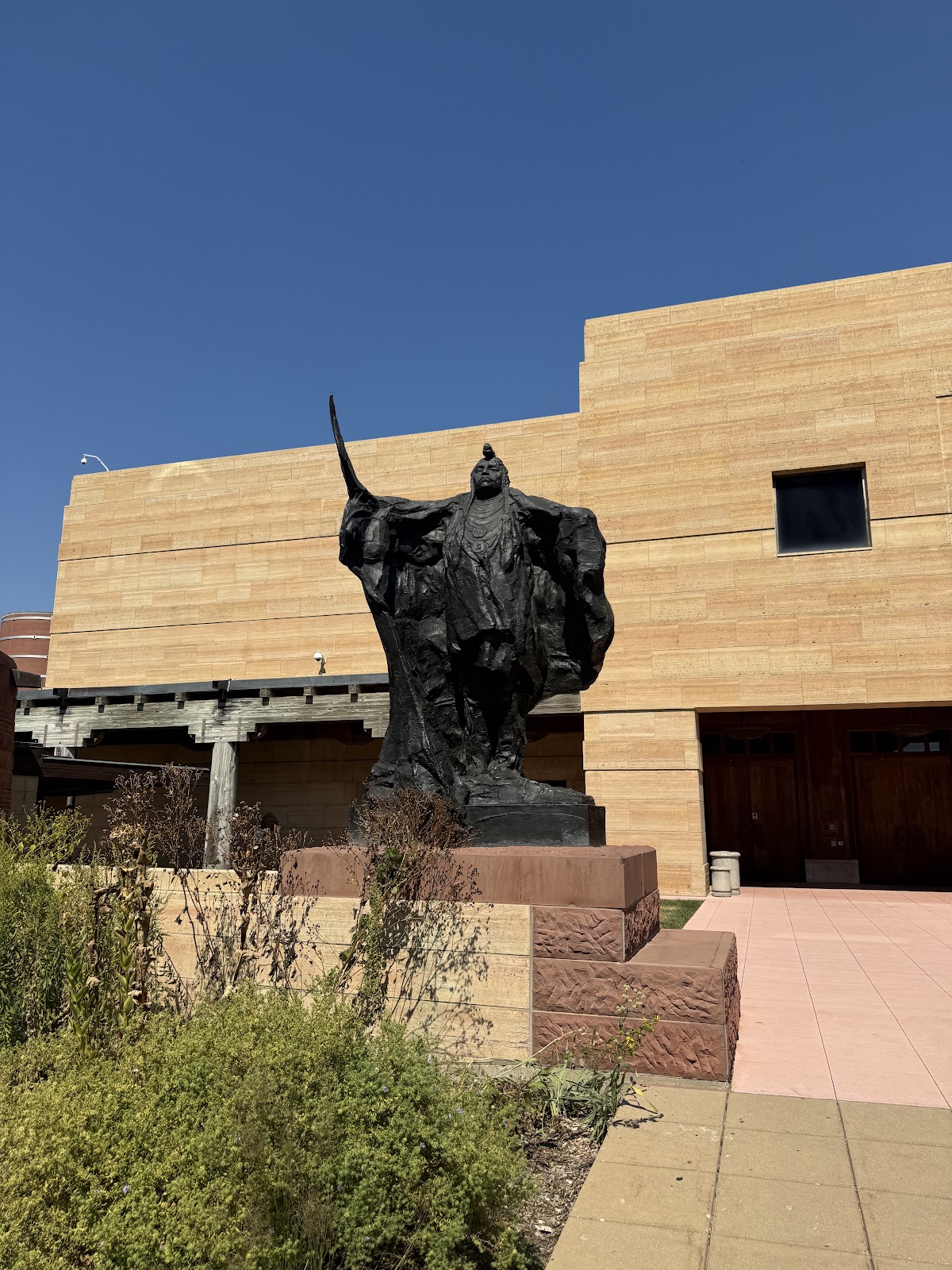
The building itself is the third element and it bridges the two. Warm sandstone is a strongly coloured material that bounces warm light onto anyone standing near it, which is flattering and free, and it needs a custom white balance so the stone reads as warm stone rather than being corrected to grey. Like all textured stone it wants raking light — low sun lifts the surface into relief where flat midday light erases it into a plain tan field.
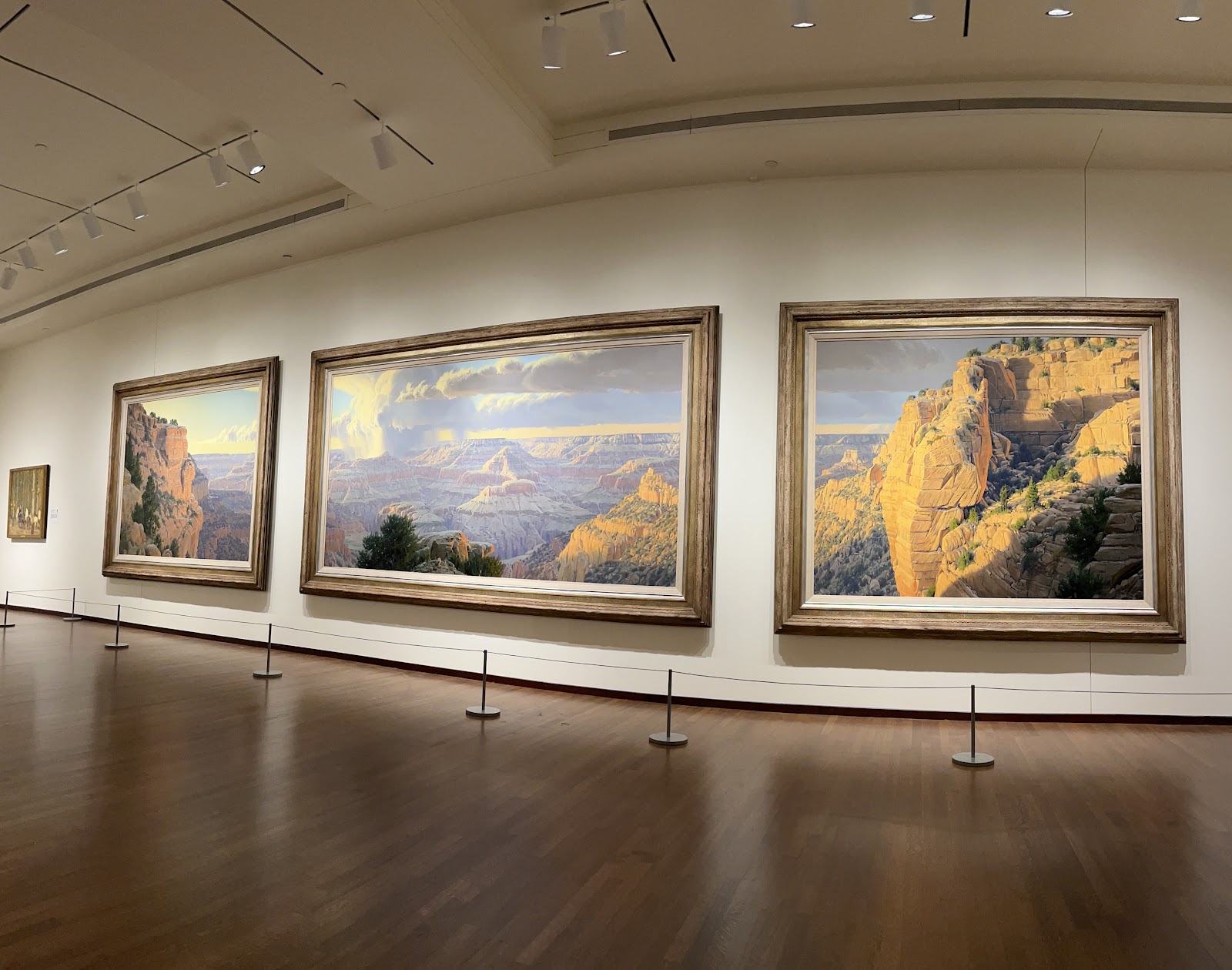
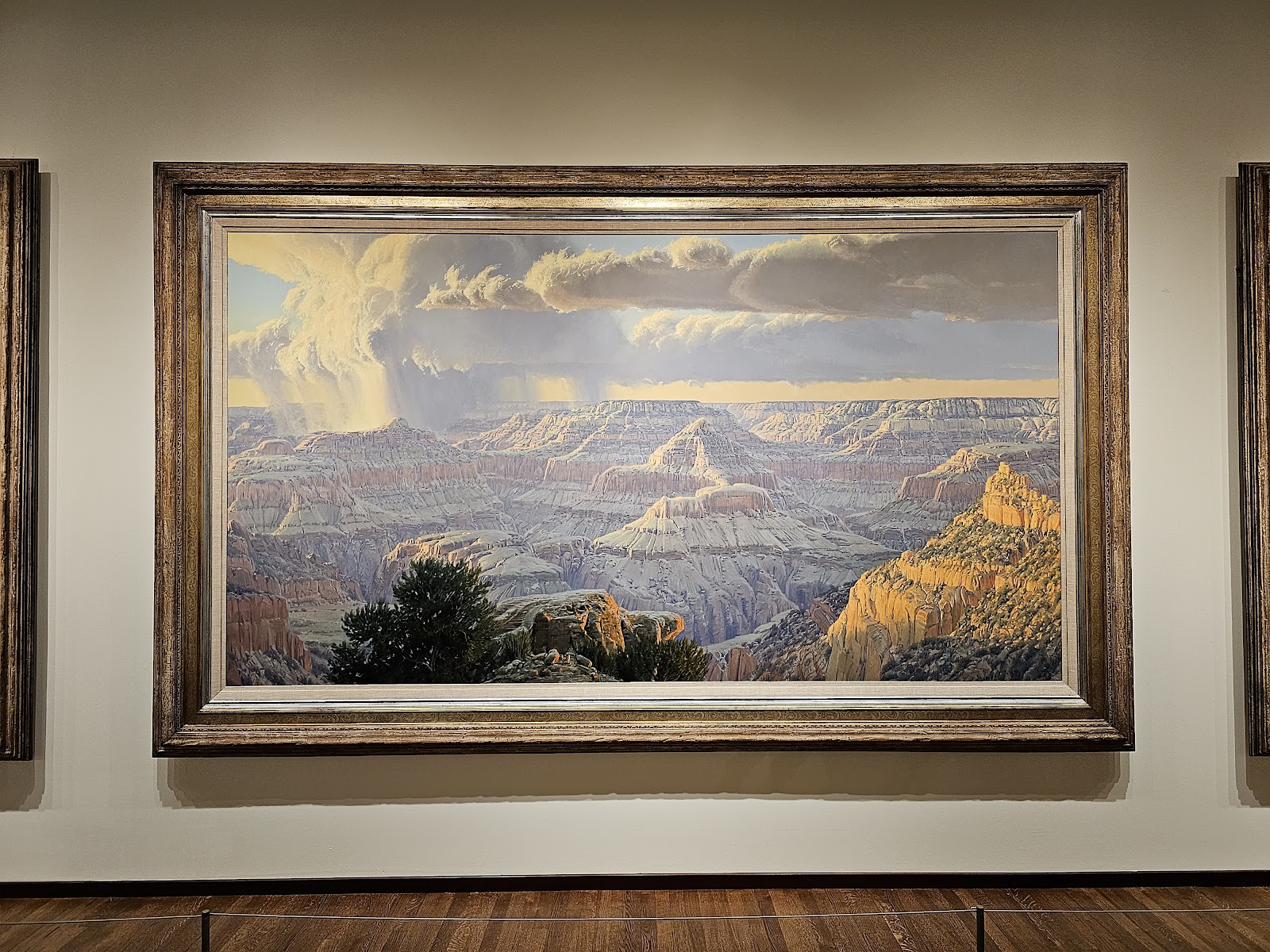
Interior galleries give the weather and midday answer, with the usual museum caveats: exhibit lighting is directional, spotty and mixed in colour, aimed at objects rather than people, so bring a source and let it own the faces. And photography rules in collection spaces vary and change with loans, so establish in writing what is permitted before the day rather than discovering it on the day.
The practical notes for the site are the park ones. It is a public park and a public museum, so unless an area is closed there will be visitors in exterior frames — long lenses, tight framing, and the hours immediately after opening or before closing. The canal walk and river nearby add water and a linear route with bridges, which is useful and quiet at the ends of the day.
One last frame worth naming because it resolves the whole dilemma in a single image: a position where the warm sandstone building, some park planting and the downtown towers all appear together. That frame contains both registers by design rather than by accident, and it is the establishing image the gallery wants. Finding it is a ten-minute walk on a site visit and it is the most useful ten minutes available here.
More frames from The Eiteljorg Museum
The Eiteljorg Museum wedding photography: common questions
What is the main decision at this venue?
Which way you face. The park side gives a green, soft, timeless set; the city side gives a hard, specific, urban one. Both are good and they do not mix — a set that alternates carelessly reads as coverage of two different weddings.
How do you use both without the gallery looking confused?
Split them by time of day, which the light already does for you. Park in the first and last ninety minutes, when low sun is under the canopy; city after sunset, when the towers light up and the sky still holds colour. Two twenty-minute blocks.
Why do my skyline photos look unimpressive?
Almost certainly a wide lens. It renders the skyline at its true angular size — a thin band with empty ground and sky around it. A long lens compresses the towers close behind the couple and makes the city loom. The instinct to go wide is wrong.
Do you need flash for the city frames?
Yes, after dark. A skyline puts out very little usable light on a face, so a couple lit only by it is a silhouette. One warm off-camera source balanced to the city — enough for skin, not enough to overwhelm a dim background.
How should the sandstone be handled?
Set a custom white balance so it reads as warm stone rather than being corrected to grey, and use it as a reflector — it bounces flattering warm fill onto anyone near it. Like all textured stone it needs raking light; flat midday erases the surface.
Is there one frame that solves the problem?
Yes — a position where the warm stone building, some park planting and the downtown towers all appear together. That contains both registers by design rather than accident, and finding it is the most useful ten minutes of a site visit.
More Indianapolis, IN venue guides
We are writing a photographer’s guide to every venue we would happily shoot in Indianapolis, IN. Here are three more, plus the full index:
- The Hilbert Circle Theatre: Photographing a 1916 Movie Palace
- The Indiana Roof Ballroom: How to Photograph an Atmospheric Ceiling
- Indianapolis Zoo: Reading a Day From Open Grounds to Underwater Glass
All Indianapolis, IN Wedding Venues →
Planning a wedding at The Eiteljorg Museum?
Park or city is the decision, and the light already splits them. Tell us your date and we will plan both blocks.