 The Rio Grande Zoo: Cottonwood Shade and the Enclosure Problem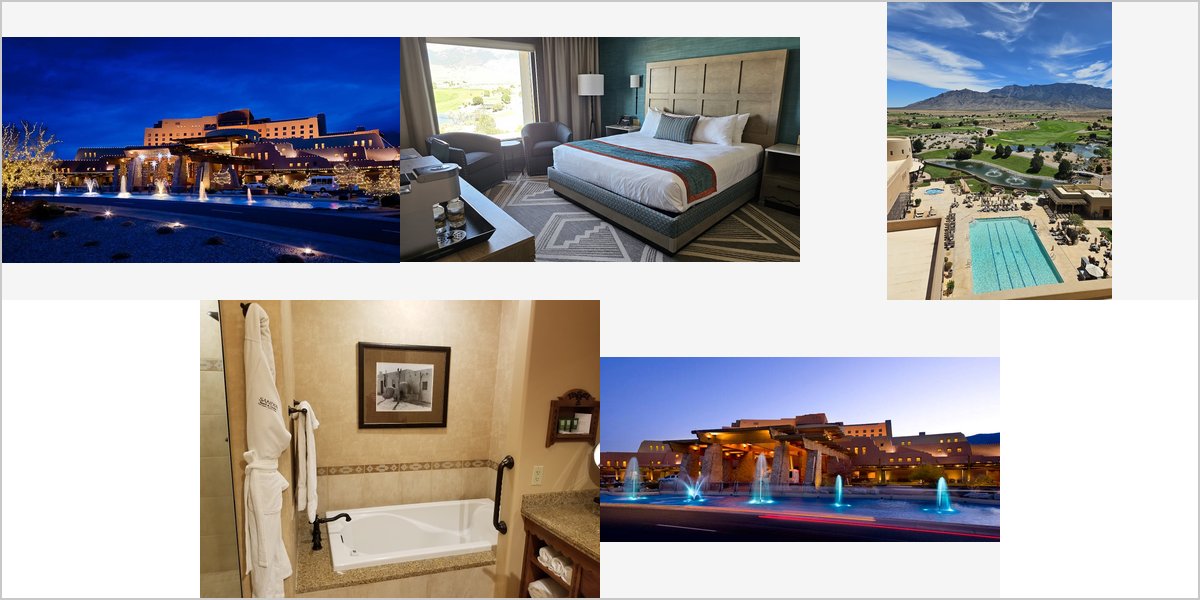
Sandia Resort: Reading High Desert Light Hour by Hour
The mountains east of this resort are named for the colour they turn at sunset. That is fifteen minutes and it governs the timeline.
Sandia Resort sits on the northern edge of Albuquerque, New Mexico, with the Sandia Mountains rising immediately to the east — a range whose Spanish name means watermelon, given for the deep pink-red colour the rock takes at sunset.
That is not a marketing phrase, it is a description of a photographic event with a schedule. Because the range lies east of the city, it catches the last direct sunlight of the day on its west face after the valley floor has already dropped into shade, and the granite turns pink then red then grey over roughly fifteen minutes. For a photographer this is the single most valuable frame the location offers and it is unavailable ten minutes late.
Around that, the city sits at about five thousand three hundred feet in very dry air, which changes how light behaves through the whole day. So this walks the day through hour by hour. We have not photographed a wedding at Sandia Resort; high desert light and east-facing ranges behave the same wherever they occur. Which rooms and outdoor spaces are available, and what the mountain sight lines are from each, are questions for their events team.
Sandia Resort & Casino at a glance
| Where | Northern edge of Albuquerque, New Mexico, below the Sandia Mountains |
| Elevation | About 5,300 feet — thin, dry air and very hard midday sun |
| The event | The Sandias turn pink then red for roughly fifteen minutes at sunset |
| Why | The range is east of the city, so it holds light after the valley is shaded |
| Plan for | Monsoon thunderstorms from July, and skin that dries out fast |
Morning: clean light, and a mountain in the wrong direction
High desert mornings are the cleanest light available anywhere. Dry air holds very little moisture to scatter light, so the atmosphere is unusually transparent, colours are saturated, and distant objects stay sharp instead of dissolving into haze. A morning here is crisper than a morning at sea level in a way that shows immediately in a photograph.
The complication is direction. The Sandias are east, which means in the morning the sun is behind them from the resort’s point of view. The range is backlit and reads as a dark silhouette, its detail lost, while the light coming towards you is direct and low. That is excellent for people — warm, raking, side-lit faces — and poor for the mountains, which are the reason most couples chose the view.
So a morning block is worth having, but framed away from the range rather than towards it. Turn the couple so the low sun is to one side, use the open western sky as the background, and treat the mountain as a subject for later in the day. Attempting the mountain frame in the morning produces a dark lumpy horizon behind a well-lit couple, and no amount of processing recovers detail that was never lit.
One practical note about dry air that catches photographers out: at this humidity, lenses do not fog moving between air conditioning and outdoors, which is a relief after the Deep South. What happens instead is static and dust. Fine dust is constantly present, it clings to sensors and front elements, and changing lenses outdoors in any breeze is how it gets inside. Change lenses indoors here, deliberately, and clean more often than instinct suggests.
Midday: thin air, and why shade is not optional
At five thousand three hundred feet in dry air, there is materially less atmosphere between the sun and your subject, so less light is scattered and the sun behaves more like a bare point source. Shadow edges are crisp rather than soft, the ratio between the lit and shaded side of a face can run to five stops, and the sky is a deep saturated blue that goes almost black if you expose for skin in that light.
That is a genuinely different order of problem from an unflattering hour at sea level, and it means open sun at midday will not hold a face and a mountain sky in one frame without help. The three working answers are the same everywhere but they matter more here: full open shade with the background allowed to go bright, real fill flash with enough power to compete with desert sun, or scheduling around it entirely and keeping midday for interiors.
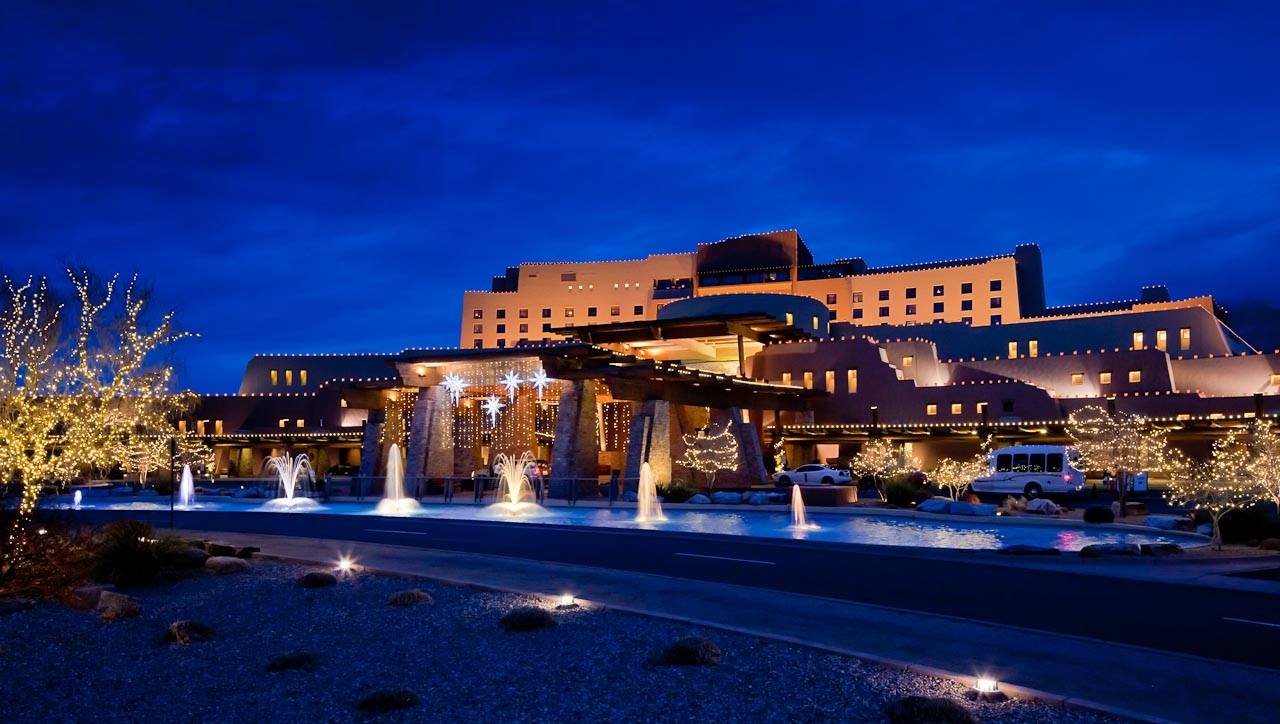
The resort’s interiors are the practical answer and they behave like any hotel: consistent artificial light, controllable, weatherproof. The useful trick in a building on a site like this is to work near a window that faces away from the sun, where the enormous bright outdoors becomes a very large soft source without any direct sun in it — which at this altitude is a stronger and cleaner window light than the same window would give at sea level.
Monsoon season deserves stating plainly because it is a real feature of the calendar rather than bad luck. From July into September the region gets afternoon convective storms: skies build through the day, a storm arrives fast, rains hard and briefly, and clears. That means afternoon outdoor plans need a genuine fallback, and it also means the most dramatic skies of the year are available in exactly those months. A monsoon sky with towering cloud behind a couple at sunset is far better than the clear blue of a settled day.
What works in your favour
- The Sandias turn pink and red at sunset — a frame with no equivalent
- Very dry, transparent air gives exceptionally clean, saturated light
- Monsoon season builds dramatic cloud that clear days never provide
- No lens fogging between air conditioning and outdoors
- A resort’s interiors as a dependable midday and weather fallback
What to plan around
- Thin-air midday sun runs to five stops across a face
- The range is backlit in the morning and reads as a dark silhouette
- The sunset colour lasts about fifteen minutes and cannot be moved
- Constant fine dust on sensors and front elements
- Afternoon monsoon storms from July require a real fallback plan
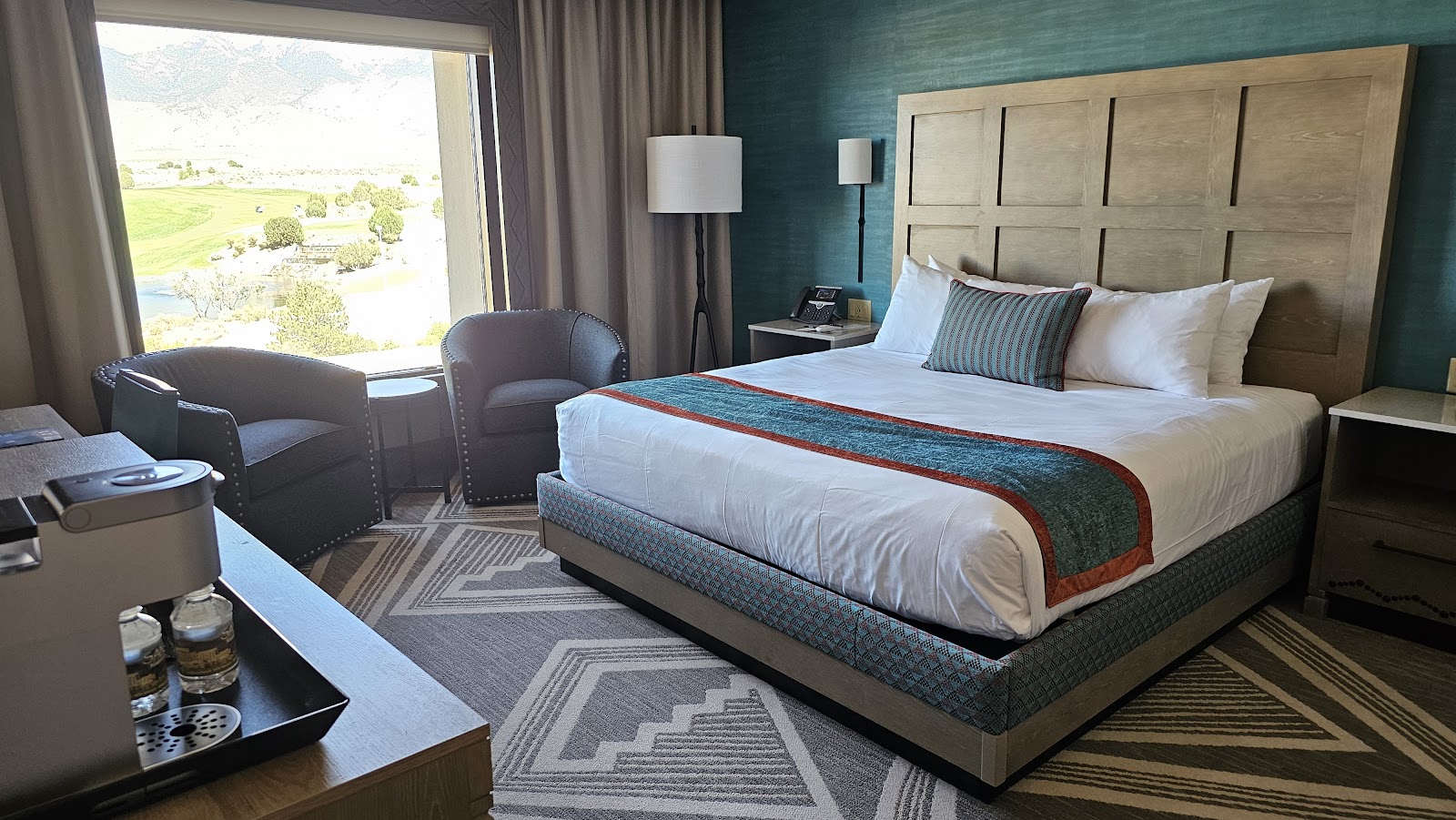
Evening: the fifteen minutes the whole day should be built around
As the sun drops towards the western horizon, the resort and the valley floor go into shade while the west face of the Sandias is still in direct light. For a period of roughly fifteen minutes that rock face runs through pink to deep red while everything in front of it is in cool blue shadow. The colour contrast — warm lit mountain, cool shaded foreground — is what makes the frame extraordinary, and it is a physical consequence of the geography rather than anything a photographer arranges.
Two frames come out of it. A long lens on the range alone, or the range with the couple small against it, compresses the rock into a wall of colour filling the frame — this is the photograph the location is famous for and it needs focal length, because a wide lens reduces a mountain range to a low band along the horizon. And a wider frame with the couple lit and the range behind, which requires flash: the couple are in shade while the mountain is in sun, so without added light they are several stops down.
The timing has to be taken from sunset on the actual date and treated as an appointment rather than a slot. The colour begins before the sun is fully down and finishes shortly after, so the couple need to be in position, framed and exposed before it starts. A first attempt made once the colour has begun is usually a wasted four minutes out of fifteen.
Before that window, the last hour of direct sun is its own asset and works in the opposite direction. With the sun low in the west, the resort’s buildings and any adobe or warm-toned surfaces take raking light and glow, and the light on faces is warm and sidelong. So the practical sequence is: warm raking portraits in the last hour of sun, then reposition for the Sandia window, then a short blue-hour block once the mountain has gone grey and the sky is still holding colour.
That is three distinct conditions inside ninety minutes, which is why the evening here is worth protecting in the running order above everything else. If a summer reception is underway during it — and at these latitudes sunset is late enough that it often is — the fix is the same as anywhere: a planned ten-minute departure, agreed in advance, timed from sunset. Ten minutes in that window is worth more than the rest of the afternoon combined.
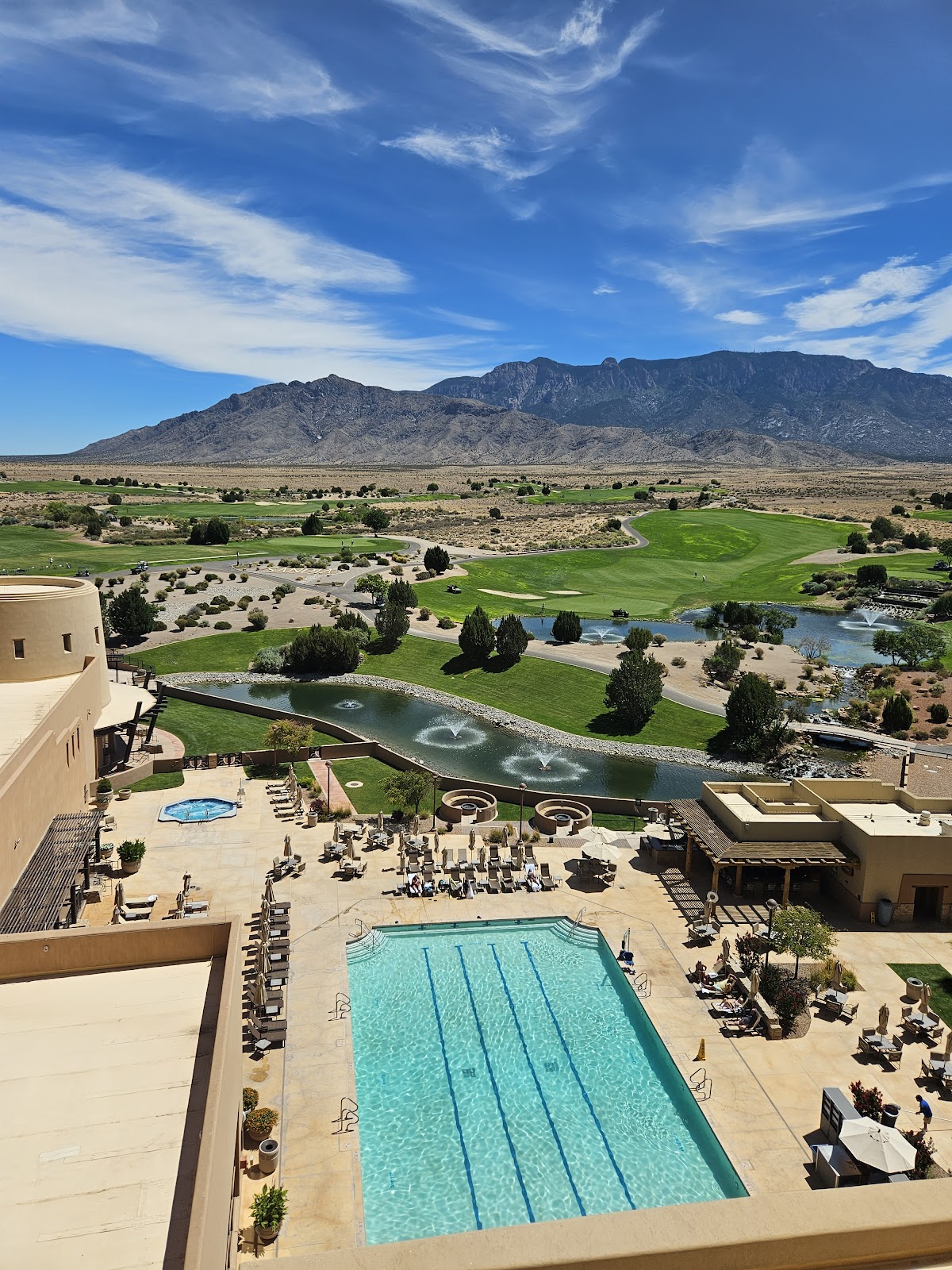
More frames from Sandia Resort & Casino
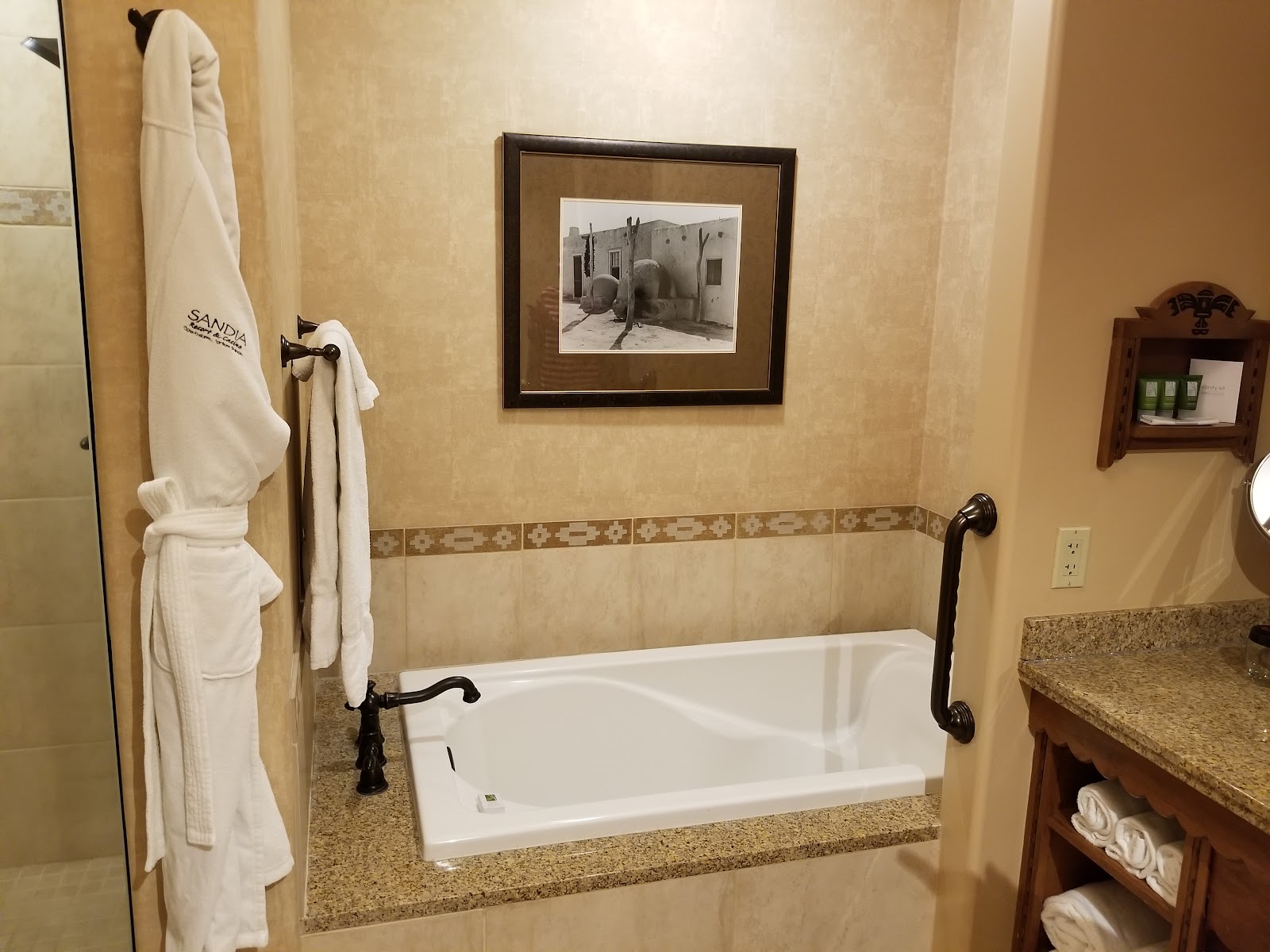
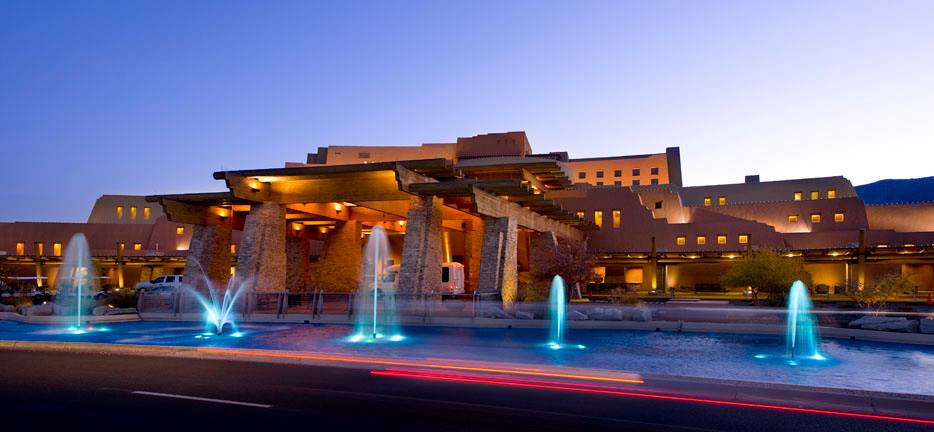
Sandia Resort & Casino wedding photography: common questions
What is the Sandia sunset effect?
The range lies east of the city, so its west face is still in direct sunlight after the valley floor has dropped into shade. The granite runs pink to deep red for roughly fifteen minutes — the Spanish name means watermelon for exactly that reason.
How long does it last and can it be moved?
About fifteen minutes, and no. Take the clock time from sunset on the actual date and be in position, framed and exposed before it starts. A first attempt made after the colour has begun wastes four of the fifteen minutes.
Long lens or wide for the mountains?
Long, decisively. Compression turns the rock face into a wall of colour filling the frame, which is the photograph the location is known for. A wide lens reduces an entire range to a low band along the horizon and loses the point.
Why is midday so hard at this altitude?
At 5,300 feet in dry air there is materially less atmosphere to scatter light, so the sun behaves more like a bare point source. Shadow edges are crisp and the lit-to-shaded ratio across a face can reach five stops — a different order of problem from an unflattering hour at sea level.
Is the morning good for mountain photographs?
No. The range is east, so in the morning the sun is behind it and it reads as a dark silhouette with no detail. Mornings here are excellent for people — clean, crisp, side-lit — but framed away from the mountains, not towards them.
What about the monsoon season?
From July into September afternoon storms build fast, rain hard and clear. Afternoon outdoor plans need a genuine fallback. But those months also give the most dramatic skies of the year — towering cloud behind a couple at sunset beats settled blue every time.
More Albuquerque, NM venue guides
We are writing a photographer’s guide to every venue we would happily shoot in Albuquerque, NM. Here are three more, plus the full index:
- The ABQ BioPark Botanic Garden: Glasshouses in a Dry Climate
- The Albuquerque Museum: From Modern Glass to Old Town Adobe
- The Balloon Museum: Four Ways Out of the Hangar Problem
All Albuquerque, NM Wedding Venues →
Planning a wedding at Sandia Resort & Casino?
Fifteen minutes decides this location. Tell us your date and we will give you the clock time to build the evening around.