 The Rio Grande Zoo: Cottonwood Shade and the Enclosure Problem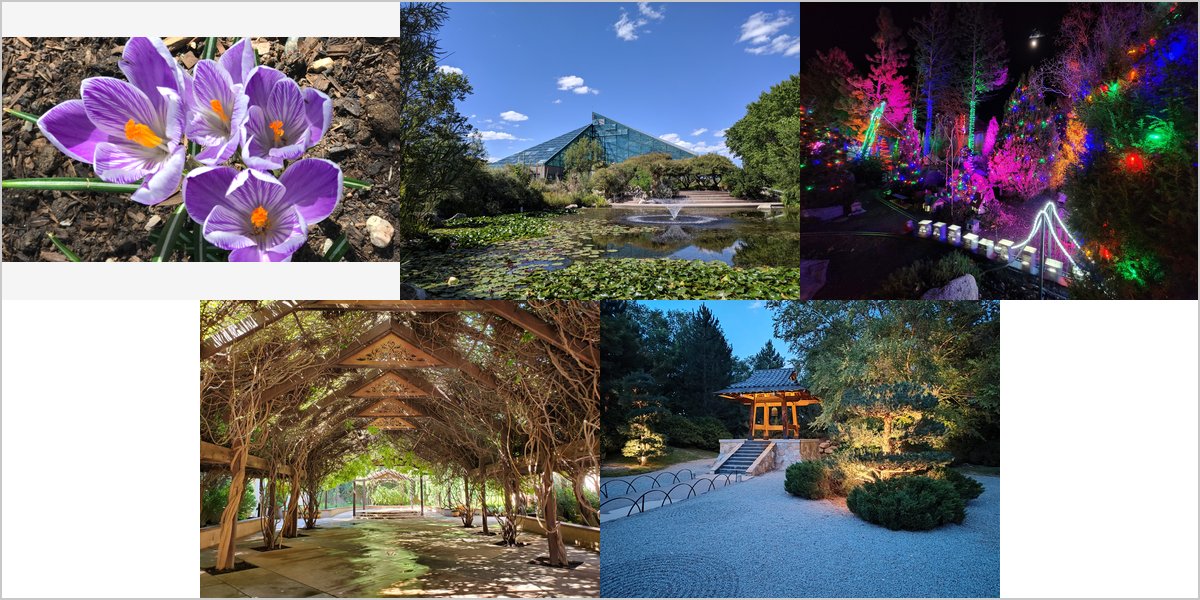
The ABQ BioPark Botanic Garden: Glasshouses in a Dry Climate
A conservatory at altitude in dry air is a much stronger light source than the same glasshouse in a humid city.
The Botanic Garden at Albuquerque’s BioPark occupies ground beside the Rio Grande, with glass conservatories, formal planted gardens, water features and areas given to the desert species that grow in this climate without help.
Two things make it worth understanding rather than treating as a generic garden venue. The glasshouses behave differently here from glasshouses elsewhere: at five thousand feet in very dry air the light arriving at the roof is stronger and far less diffused than at sea level, so what comes through is brighter and more directional — a bigger, harder-working source than the same structure would be in a humid climate. And the outdoor planting is largely desert planting, which is a completely different photographic material from a temperate border: architectural, spiky, grey-green and sparse rather than soft, dense and green.
These are field notes on both. We have not photographed a wedding at the BioPark; glasshouses and desert planting behave the same wherever they are. Which gardens and conservatories host events, and whether the garden is closed to the public during them, are questions for their events team.
The ABQ BioPark Botanic Garden at a glance
| Where | Beside the Rio Grande, Albuquerque, New Mexico |
| Character | Glass conservatories, formal gardens and desert planting |
| The glasshouse | Stronger and harder light than a glasshouse at sea level |
| The planting | Desert species: architectural, spiky, grey-green, sparse |
| Ask first | Whether the garden is closed to the public during the event |
Problem one: a desert glasshouse is brighter than you expect
The usual description of a conservatory is that glass diffuses hard sun into a soft, even, building-sized source. That is true, and here it is true with more intensity behind it: less atmospheric scattering means more light reaches the roof, so more comes through. The interior is brighter than a temperate glasshouse and the contrast between a lit patch and a shaded one is higher.
In practice that means the good news arrives with a caveat. The good news is that midday — the worst hour outdoors at this altitude — becomes one of the best hours inside, because the roof converts a punishing sun into a large soft source. The caveat is that with a high sun and strong light, the roof’s glazing bars throw hard linear shadows across whatever is beneath them, and striping across faces and a dress cannot be corrected afterwards.
The remedy is positional and specific: work in continuous shade cast by a structural element, or under a denser area of glazing, rather than in the brightest spots. On a bright day the brightest position in a conservatory is usually the worst one. Learning to look for the even patches rather than the bright ones is the whole skill.
The second caveat is the same green cast every glasshouse produces. Light bouncing off dense foliage picks up green and lands on skin, and green on skin reads as illness in a way warm or cool casts do not. Position people where the light reaches them without passing through leaves, set a custom white balance in each house rather than carrying one between them, and remember that different houses hold different plantings and therefore different casts.
Problem two: desert planting is a different material
A temperate garden gives soft mounded forms in many shades of green, which recede politely behind a subject and can be reduced to a pleasant blur with a wide aperture. Desert planting does none of that. Agave, yucca, cholla and prickly pear are architectural: hard-edged, radially symmetrical, strongly directional, and frequently grey or blue-green rather than green.
That makes them a stronger graphic element and a more assertive background. A large agave behind a couple does not blur into a soft field; it stays legible as a set of blades, and it competes. The workable answers are the ones that apply to any assertive background: subordinate it with a long lens at a wide aperture from further back, or commit to it as a compositional element and place the couple deliberately in relation to it rather than simply in front of it.
Used deliberately, it is one of the best things on the site. The radial geometry of an agave is a genuine compositional device, the grey-green colour is unusual in a wedding gallery and sits beautifully against warm skin and adobe tones, and a rosette photographed against a deep high-desert sky is a frame that says where you are more clearly than any signpost.
There is also a safety consideration that a temperate garden does not carry, and it is not trivial in formal clothes. Agave tips and cholla spines are genuinely hazardous, and a dress or a veil brushing past one will catch. Place people with a margin, direct movement carefully, and do not ask anyone to step between plantings for a frame. It is the kind of detail that costs nothing to respect and a lot to ignore.
- In a bright conservatory, look for even patches, not the brightest ones
- Set a custom white balance in each glasshouse; plantings differ
- Subordinate desert planting with a long lens, or commit to its geometry
- Grey-green agave against a deep sky places the gallery immediately
- Keep a real margin from agave tips and cholla spines in formal clothes
Problem three: water, the river and the timing
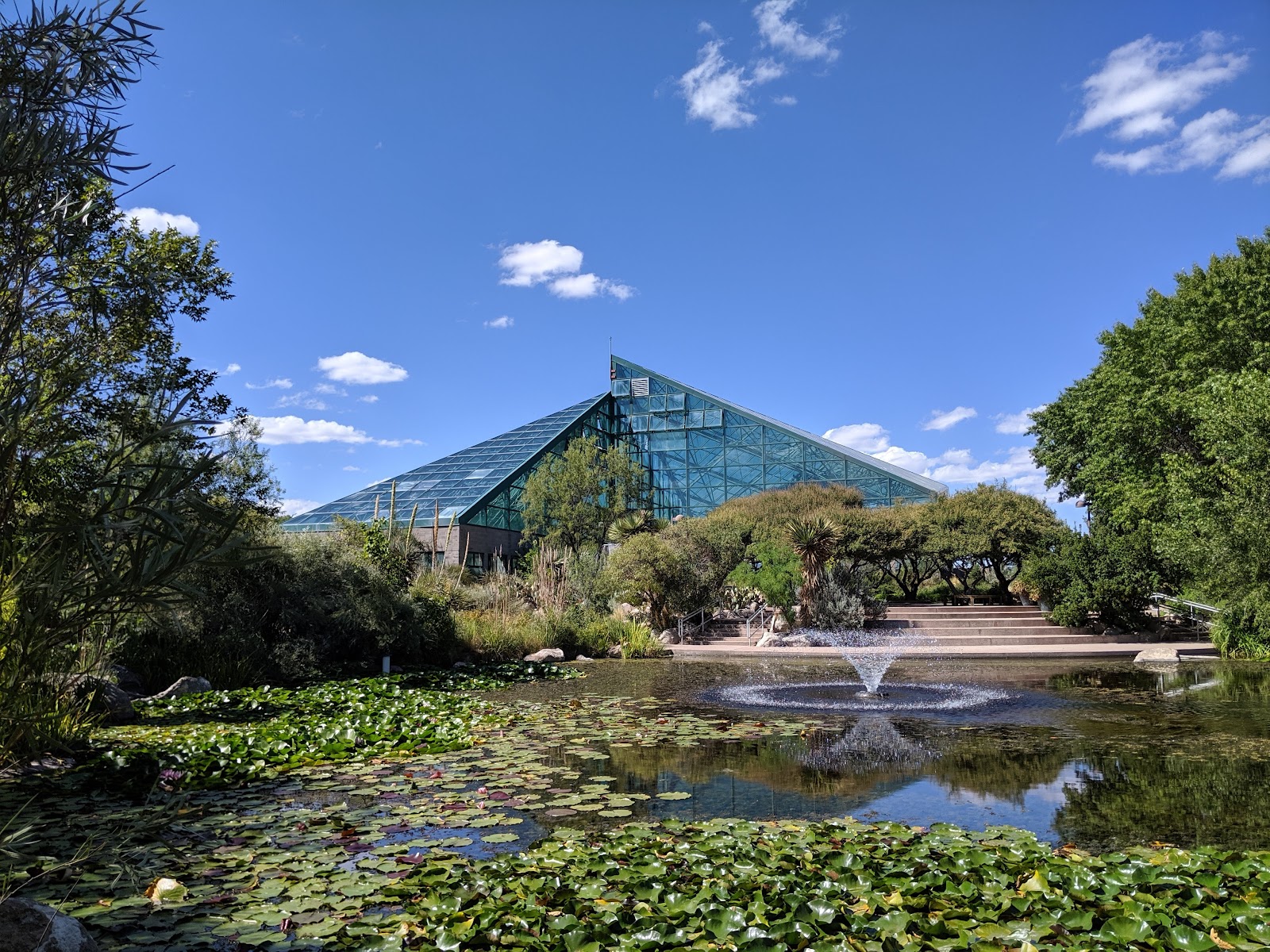
Water features in a dry climate are disproportionately valuable photographically, for the same reasons they are anywhere: a still surface mirrors the sky and the planting, doubling everything, and it bounces soft fill upward into faces to fill the shadows that a high sun carves. In a desert garden the contrast between water and dry planting also makes the water read as an event rather than as scenery.
The usual caveats apply and they bite harder here. Reflections need stillness, and any breeze destroys them; high sun turns a mirror into a field of clipping specular highlights. So water is an early-morning and late-evening asset, and in the middle of the day it is a bright distraction rather than a help.
The Rio Grande bosque nearby is the seasonal asset worth planning around. The cottonwoods along the river turn strong yellow-gold in late autumn, and gold against the deep saturated blue of a high desert sky is the best colour pairing the region offers — better, for a photographer choosing a date, than anything the summer provides. It also sits perfectly with the adobe and earth tones that recur everywhere in this city.
The scheduling summary for this venue is unusually clean, because the indoor and outdoor conditions are opposites. Outdoor planting and water are at their best in the first and last ninety minutes, when low sun rakes across architectural forms and turns translucent leaves into light. The conservatories are at their best in the middle of the day, when the sun is high enough to flood the roof and the outdoors is unworkable. So the day divides itself: gardens early and late, glass in between.
Two practical notes. The garden is a public attraction, so unless it is closed for the event there will be visitors in exterior frames — long lenses, tight framing, and the hours at either end. And fine dust is constant in this climate: change lenses indoors, not beside a gravel path, and clean the front element more often than feels necessary.
What works in your favour
- Conservatories that work best at exactly the hour outdoors is worst
- Stronger, more directional glasshouse light than at lower altitude
- Desert planting gives strong graphic geometry and unusual colour
- Still water early mirrors the garden and bounces fill upward
- Cottonwood gold against deep blue sky along the river in late autumn
What to plan around
- Glazing bars stripe faces and fabric under a high sun
- Foliage casts green onto skin, and each house casts differently
- Desert planting stays legible behind a subject and competes
- Agave tips and cholla spines are a real hazard in formal clothes
- A public attraction, with visitors in frame unless closed for the event
More frames from The ABQ BioPark Botanic Garden
The ABQ BioPark Botanic Garden wedding photography: common questions
Why is a desert conservatory different?
Less atmospheric scattering at altitude means more light reaches the roof and more comes through, so the interior is brighter and higher in contrast than a temperate glasshouse. Midday, the worst hour outdoors here, becomes one of the best hours inside.
What is the catch inside the glasshouse?
Glazing bars throw hard linear shadows across faces and fabric under a high sun, and striping cannot be corrected afterwards. Work in continuous shade from a structural element or under denser glazing — the brightest position in a conservatory is usually the worst one.
How do you photograph against desert planting?
Subordinate it with a long lens at a wide aperture, or commit to its geometry and place the couple deliberately in relation to it. Agave and yucca do not blur into a soft field the way a temperate border does; they stay legible and they compete.
Is there a safety issue with the planting?
Yes, and it matters in formal clothes. Agave tips and cholla spines are genuinely hazardous and a dress or veil brushing one will catch. Keep a real margin, direct movement carefully, and never ask anyone to step between plantings for a frame.
When is the water worth using?
Early morning and late evening. Reflections need stillness and any breeze destroys them, while high sun turns a mirror into clipping specular highlights. In the middle of the day water is a bright distraction rather than a help.
How should the day be ordered?
Gardens early and late, glasshouses in between. The two conditions are opposites: outdoor planting and water peak in the first and last ninety minutes, and the conservatories peak at midday when outdoors is unworkable.
More Albuquerque, NM venue guides
We are writing a photographer’s guide to every venue we would happily shoot in Albuquerque, NM. Here are three more, plus the full index:
- The Albuquerque Museum: From Modern Glass to Old Town Adobe
- The Balloon Museum: Four Ways Out of the Hangar Problem
- The Indian Pueblo Cultural Center: Working a Curved Plaza
All Albuquerque, NM Wedding Venues →
Planning a wedding at The ABQ BioPark Botanic Garden?
Glass at midday, gardens at the edges of the day. Tell us your date and we will order it around the sun.