 The Cotton Sail Hotel: Building the Shot List on River Street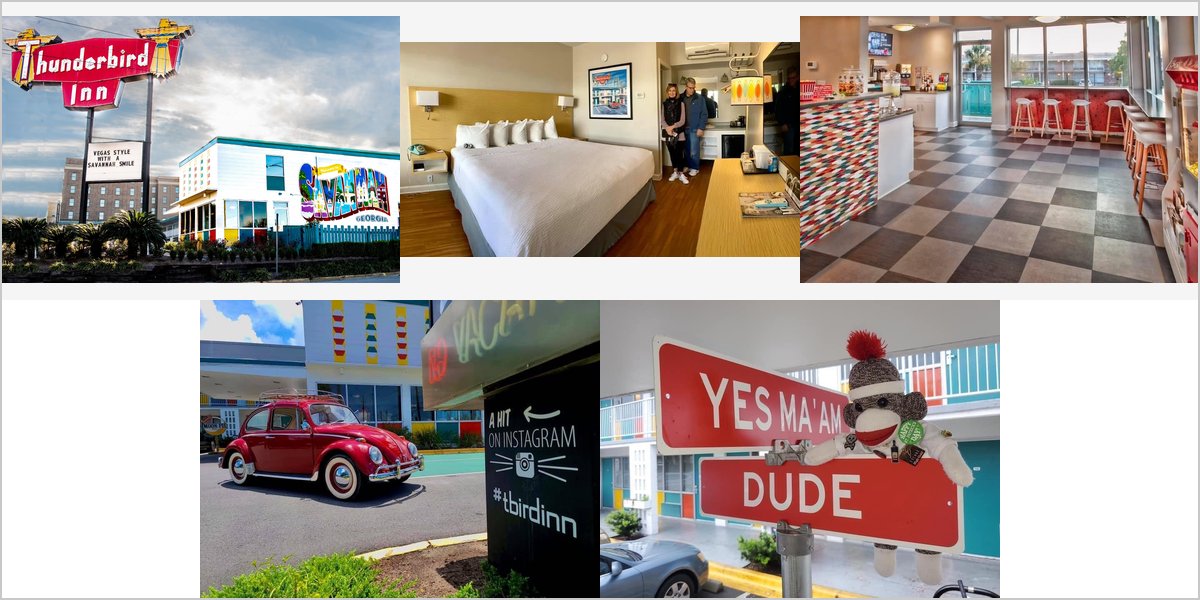
July 4, 2026
The Thunderbird Inn: Field Notes on a 1964 Motor Inn
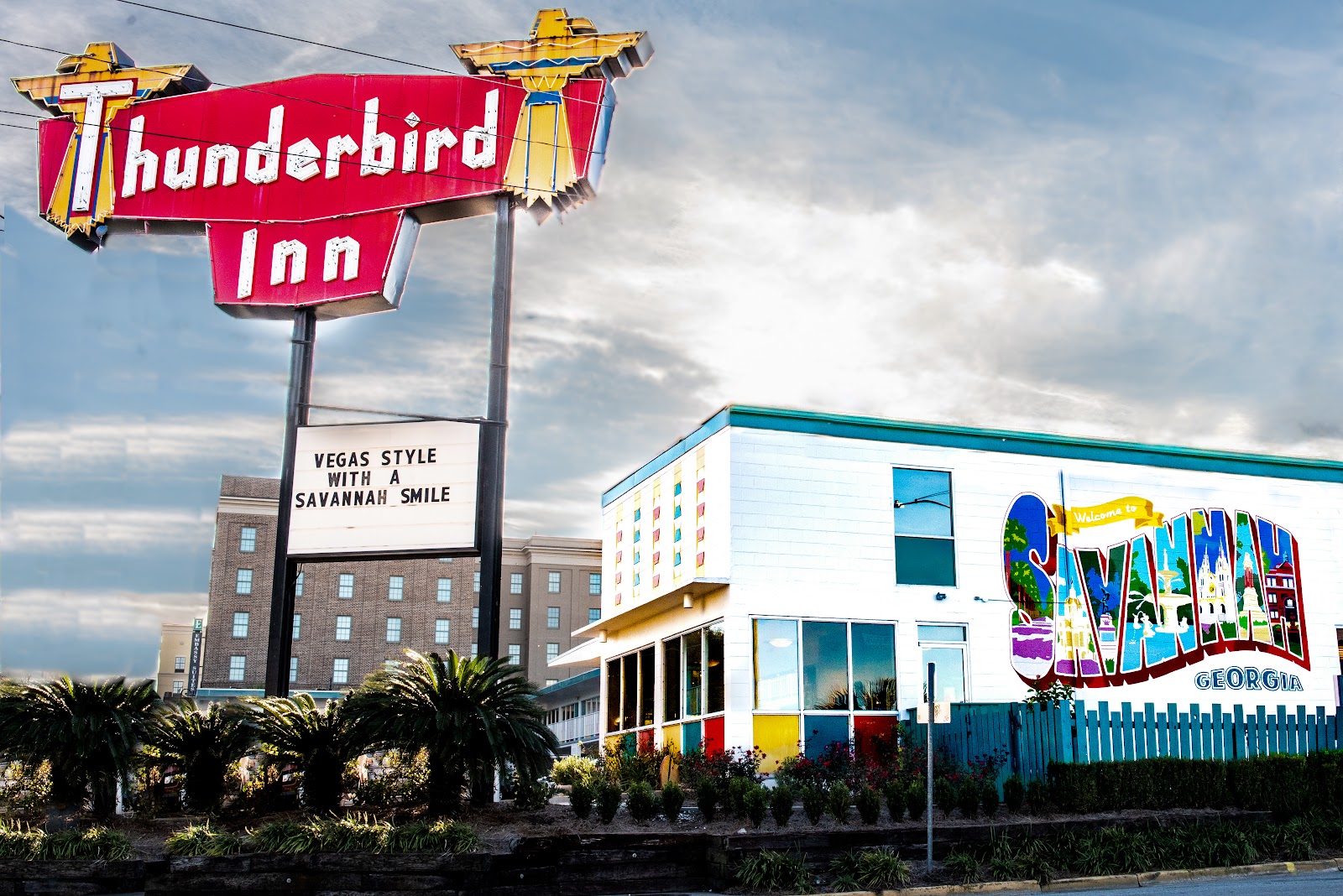
Neon, a motor court and mid-century colour. This is the one Savannah venue with no live oaks and no Spanish moss — and that is precisely the point.
The Thunderbird Inn is a 1964 motor inn on West Oglethorpe Avenue in Savannah, restored with its mid-century character deliberately preserved — the motor-court layout, the period signage, the neon, the colour palette. It sits a short distance from the historic district and is emphatically not part of it visually.
That contrast is the entire reason to consider it. Savannah venues are overwhelmingly antebellum and Victorian: live oaks, Spanish moss, brick, ironwork, squares. A couple who does not want that, or who wants something with a completely different visual language, has very few options in this city and this is the strongest of them.
These are field notes on three problems. We have not photographed a wedding at the Thunderbird Inn. Neon, motor courts and mid-century colour behave predictably; capacity, what the inn permits and whether it is exclusively yours are for their team, and at a working motel exclusivity matters.
The Thunderbird Inn at a glance
| Where | West Oglethorpe Avenue, Savannah, Georgia |
| Built | 1964, a motor inn; restored with its mid-century character intact |
| Character | Motor-court layout, period signage, neon, saturated mid-century colour |
| Light | Open motor court by day; neon and signage after dark |
| Why it matters | The one Savannah venue with a completely different visual language |
Problem one: neon is a light source, not a background
The instinct with neon is to treat it as a pretty thing behind the couple and light them separately with flash. That is exactly wrong, and it is why most neon photographs look like a flash portrait with a coloured smear behind it. Neon’s value is that it casts coloured light onto people, and if you overpower it you throw that away.
The approach is to let the neon do the lighting and add as little as possible. Place the couple close enough to the sign that its light actually reaches their faces — which is closer than you think, because neon output is low. Expose for their faces at the neon level, which will mean high ISO and a wide aperture, and accept that the tubes themselves will be bright.
If you need fill, use very little and gel it to roughly match the dominant neon colour, so it reads as more of the same light rather than as a second source. The test of a good neon photograph is that it looks like it was taken by neon light. That means the colour lands on skin, and skin lit by red or blue neon is not naturalistic — which is the point.
Problem two: mid-century colour is saturated and it bounces
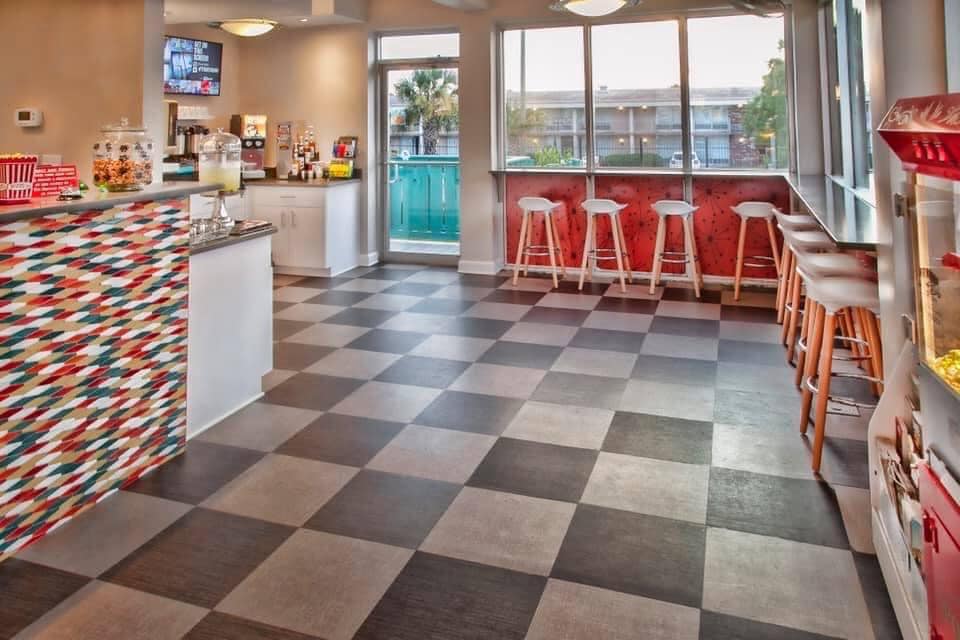
The palette here is deliberate: turquoise, coral, mustard, the colours of 1964. Painted walls and doors in saturated hues act as reflectors, and what they reflect is their own colour. Stand someone beside a turquoise door in sunlight and their skin picks up a green-blue cast; beside coral, they go pink.
That is manageable and it is also usable. Set white balance in the actual position rather than trusting auto, keep a metre of separation where the cast is unwanted, and where it is wanted, lean in deliberately — a portrait with a controlled colour cast from a painted wall is a strong stylistic choice at a venue like this.
What does not work is treating the colour as neutral. Auto white balance will try to correct a coral wall and turn everything else cyan, and a series of frames each corrected differently will not hold together as a set. Pick an approach per location and be consistent.
Problem three: a motor court is exposed, flat and unshaded
The layout is a courtyard of rooms around a parking area, which means it is open to the sky with no canopy anywhere. In a Savannah summer, between roughly eleven and four, that is the hardest light available — near-vertical sun, hard shadows, squinting, blown highlights on a white dress.
There are three workable answers. First, schedule around it: the first two hours after sunrise and the last hour before sunset are transformative, and the low sun raking across a motor court with long shadows and warm colour is genuinely beautiful. Second, use the room doorways and any covered walkway as architectural shade — a deep overhang is a large soft source from the open side. Third, if midday is unavoidable, backlight and fill with flash.
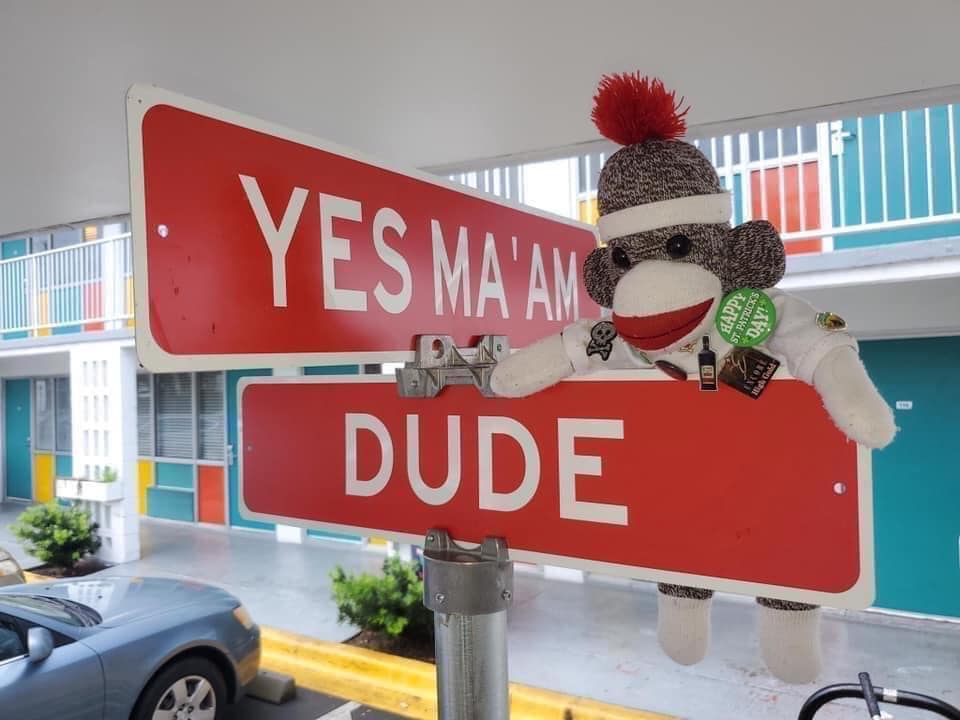
There is also one advantage to a flat open court: it is the best place on any of these venues for a group photograph. Plenty of room, an even surface, and a graphic background of repeating doors and windows that arranges itself naturally behind a line of people.
What to plan, and what this venue is genuinely for
The sequence: preparation in a room, using the doorway light rather than the interior; groups in the court while the sun is still high enough to be even but not vertical; couple’s portraits in the last hour when the court goes warm and the shadows lengthen; then the neon after dark, which is the reason to be here and which only exists once it is properly dark.
That last point matters for the timeline. Neon needs darkness to register — at dusk, with sky light still competing, the tubes look weak and washed. The good neon frames happen thirty to sixty minutes after sunset, later than the classic blue-hour window, which means they sit inside the reception rather than before it. Plan to step out for ten minutes mid-evening.
Being honest about what this venue is: it is a small, quirky, visually distinctive place, not an elegant one. It suits couples who want mid-century, retro or unconventional imagery, who have a modest guest list, and who would find the twentieth Spanish-moss photograph tedious. For a couple who wants classic Savannah, it is completely wrong — and the Kehoe House or the Gastonian is the right answer instead.
What works in your favour
- Neon casts genuine coloured light on faces — a photographic quality nothing else provides
- A completely different visual language from every other Savannah venue
- Saturated mid-century colour gives strong stylistic frames when used deliberately
- The open motor court is the best group-photograph space of any small Savannah venue
- Low sun raking across the court with long shadows is genuinely beautiful
What to plan around
- No shade anywhere; a Savannah midday in the court is the harshest light available
- Saturated painted walls cast strong colour onto skin at close range
- Neon needs full darkness, so the best frames sit mid-evening rather than at dusk
- Small and quirky rather than elegant — wrong for a classic Savannah aesthetic
- A working motel; confirm exclusivity or expect other guests in the court
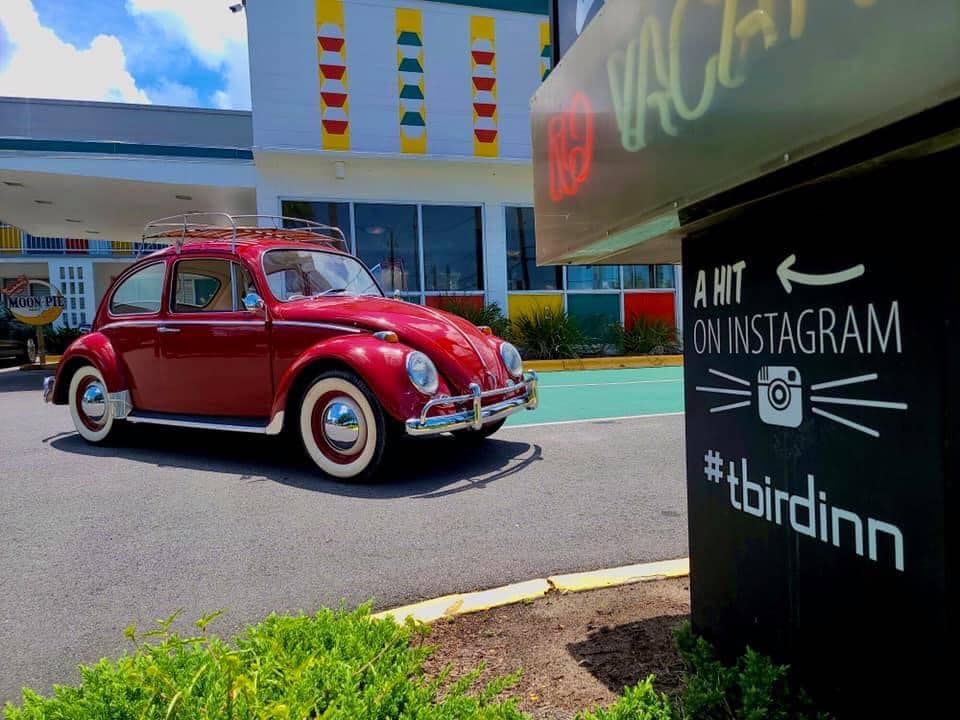
More frames from The Thunderbird Inn
The Thunderbird Inn wedding photography: common questions
How should neon be photographed?
Let it do the lighting rather than treating it as a background. Place the couple close enough that the neon actually reaches their faces, expose for their faces at that level with high ISO and a wide aperture, and add almost no fill — and gel what you do add to match the dominant colour. A good neon photograph looks like it was taken by neon light.
When do the neon photographs happen?
Thirty to sixty minutes after sunset, later than the classic blue-hour window. Neon needs genuine darkness to register; at dusk with sky light still competing the tubes look weak and washed. That means the best frames sit inside the reception, so plan to step out for ten minutes mid-evening.
Do the painted walls affect skin tones?
Yes, strongly. Turquoise, coral and mustard walls act as reflectors and throw their own colour onto anyone close to them. Set white balance in the actual position, keep a metre of separation where you do not want the cast, and lean in deliberately where you do — just be consistent across the set.
What about the midday light?
It is the hardest of any Savannah venue, because a motor court is open to the sky with no canopy at all. Schedule around it: the first two hours after sunrise and the last hour before sunset are transformative. Failing that, use the room doorways and any covered walkway as architectural shade.
Who is this venue wrong for?
Anyone who wants classic Savannah. There are no live oaks, no Spanish moss, no squares and no antebellum architecture — that is the entire point of it. If your reference images are moss and ironwork, the Kehoe House or the Gastonian will serve you far better.
More Savannah venue guides
We are writing a photographer’s guide to every venue we would happily shoot in Savannah. Here are three more, plus the full index:
- Wormsloe Historic Site: The Oak Avenue and How to Time It
- The Cotton Sail Hotel: Building the Shot List on River Street
- The Forsyth Park Fountain: A Photographer Answers Your Questions
Planning a wedding at The Thunderbird Inn?
If you want Savannah without the Spanish moss, this is the one. Tell us your date and we will plan the golden-hour court, the group frame and the ten minutes of neon that make it worth booking.