 The Venue, Asheville: A Season-by-Season Guide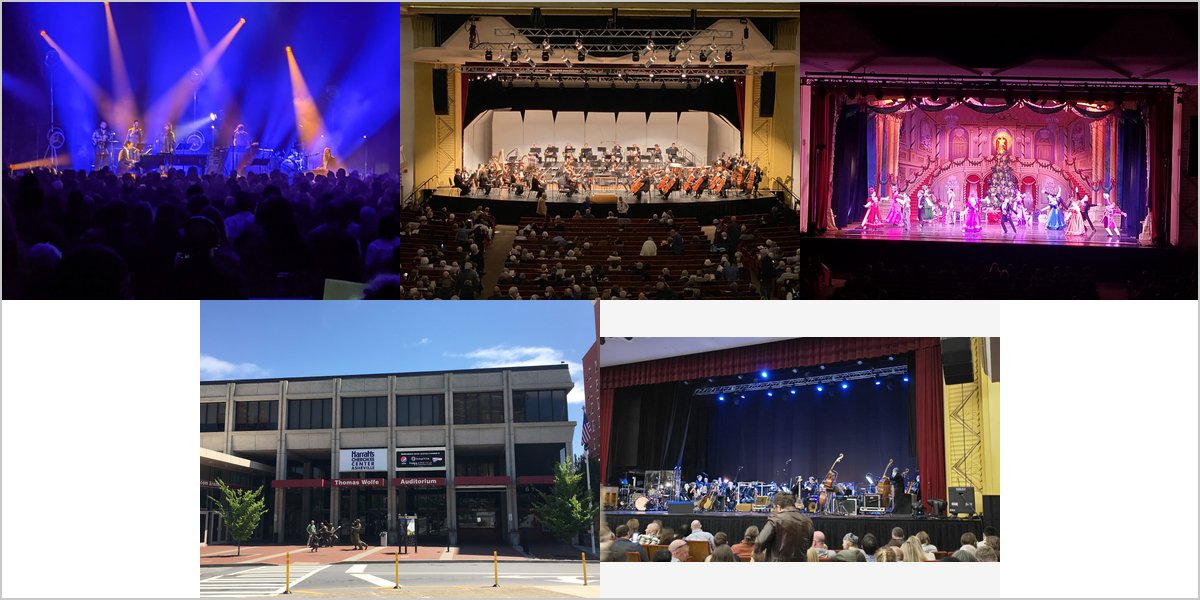
June 1, 2026
Thomas Wolfe Auditorium: The Technical Side of a Civic Theatre
Fixed seating decides where you can stand. Stage lighting decides how everything is exposed. Neither is negotiable, so both have to be planned.
The Thomas Wolfe Auditorium opened in 1940 as part of Asheville’s civic complex, a large civic theatre with a proscenium stage, fixed raked seating and a balcony. Buildings of this type were designed for touring productions and civic events, which means the priorities were sightlines, seat count and stage capability rather than daylight or flexibility.
Photographically that produces a consistent set of conditions. Very low ambient light, because an auditorium is meant to be dark when the stage is lit. Theatrical fixtures rather than architectural ones, which are directional, coloured and controllable. Fixed seating, which means a photographer can only stand in aisles, at the front, or on the balcony. And no daylight anywhere.
This is the technical guide. We have not photographed a wedding at the Thomas Wolfe Auditorium; the physics of stage lighting and the constraints of raked seating are consistent everywhere. Stage access, balcony access, what lighting can be operated for you and what the venue permits are for their team — and those answers determine most of what is possible.
Thomas Wolfe Auditorium at a glance
| Where | Downtown Asheville, North Carolina — part of the 1940 civic complex |
| Opened | 1940; proscenium stage, fixed raked seating, balcony |
| Light | Very low ambient by design; theatrical stage fixtures are the main source |
| Constraints | Fixed seating limits shooting positions to aisles, front and balcony |
| Ask first | Stage access, balcony access, and whether house lighting can be operated for you |
Stage lighting is controllable, which changes everything
This is the crucial difference between a theatre and every other dark venue. In a ballroom or a brewery, the lighting is what it is and you add your own. In a working theatre there is a lighting rig with an operator, and if the venue will run it for you, you have access to far more capable lighting than you could ever bring.
So the first question is not about cameras, it is about whether someone will operate the board. A simple front wash at a sensible colour temperature on the ceremony position is worth more than any amount of flash, and it lights the couple continuously rather than in bursts — which means natural moments are lit rather than only posed ones.
If the rig is available, ask for two things specifically: a reasonably neutral front wash on the ceremony position, and the house lights kept low so the auditorium behind stays dark. That combination gives you a lit couple against a dark theatre, which is exactly the image a theatre venue should produce.
Exposing for a lit stage in a dark room
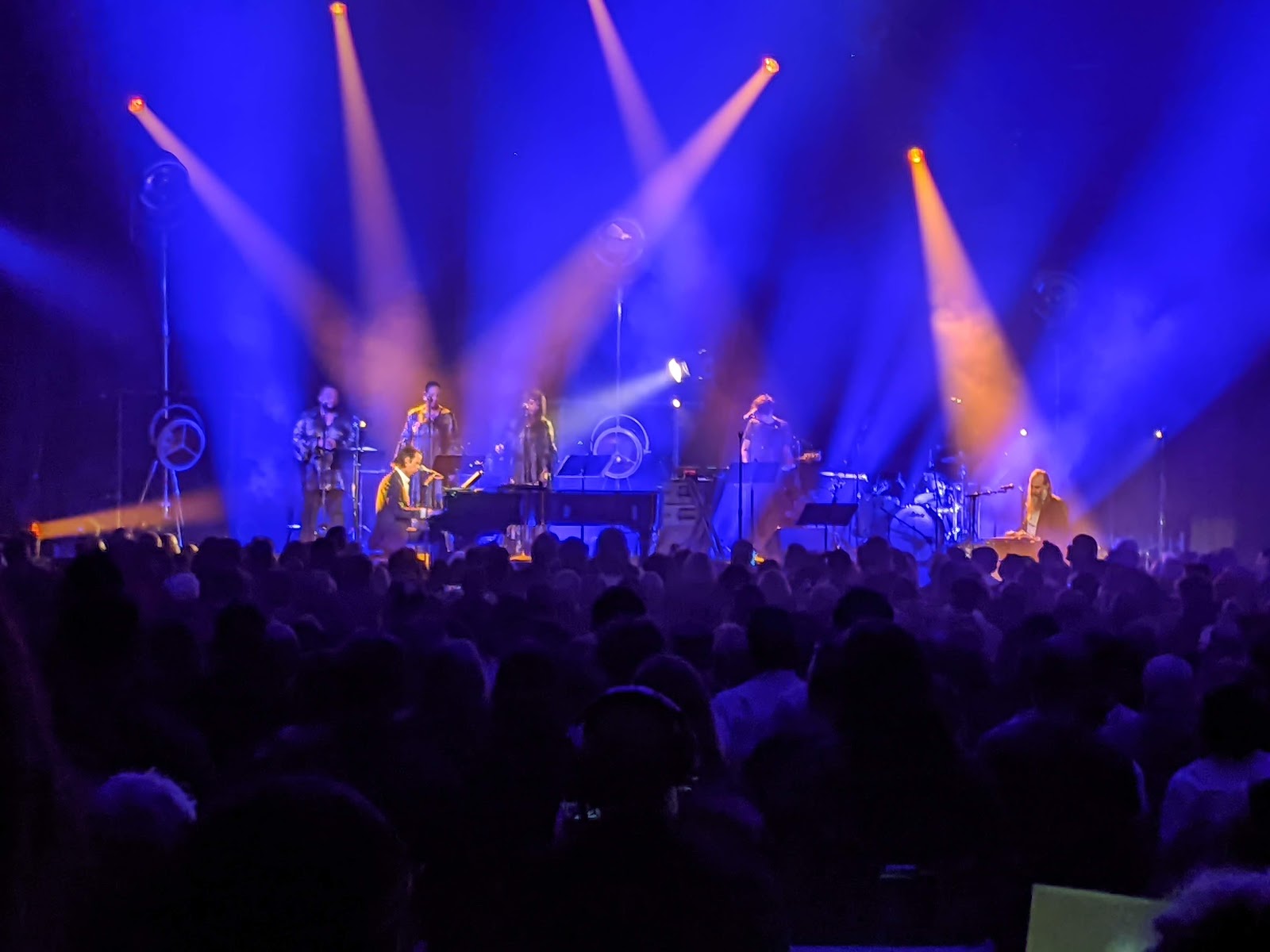
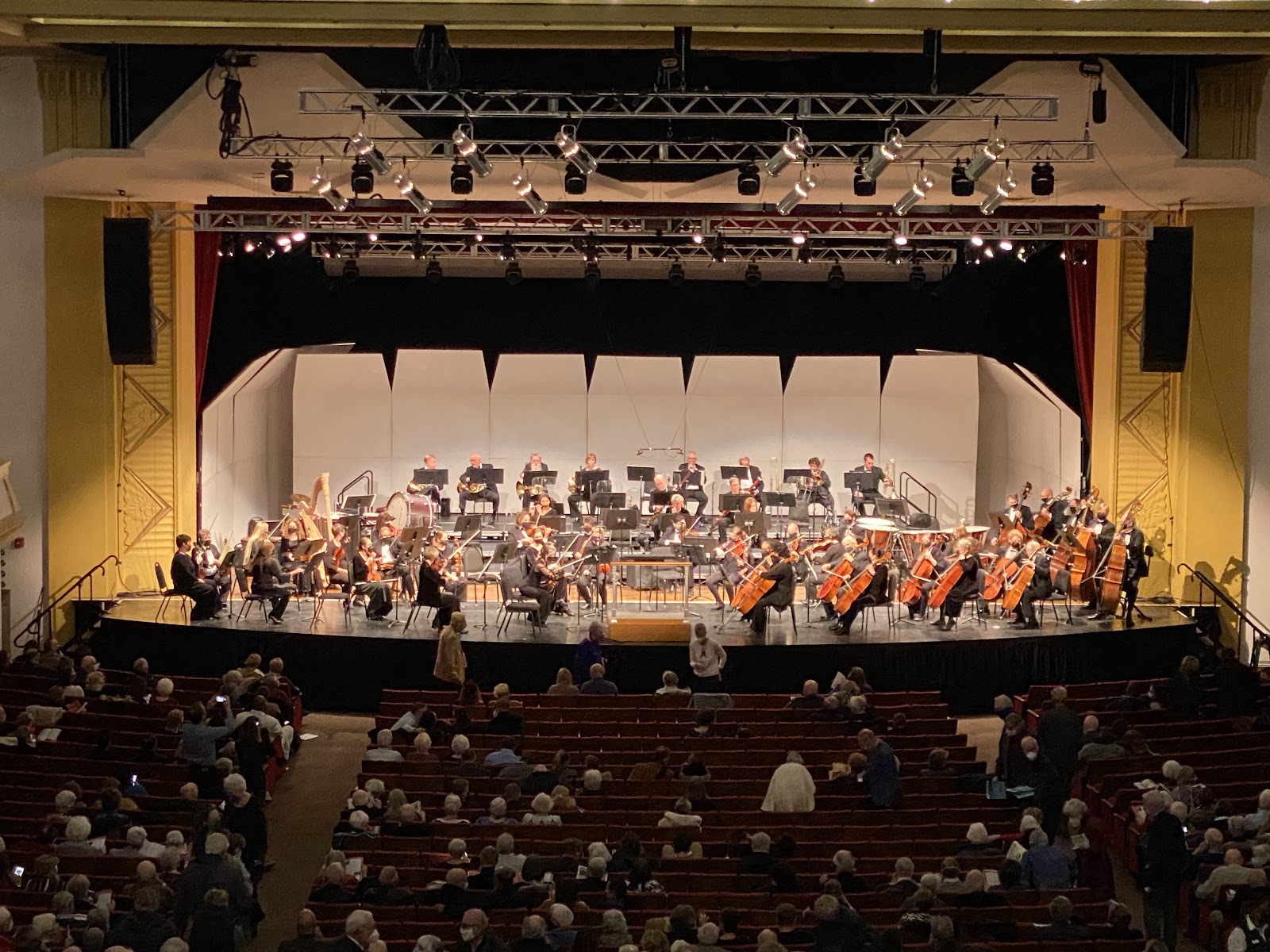
The dynamic range between a lit stage and an unlit auditorium is enormous — frequently six or seven stops. There is no exposure that holds both, and trying to find one produces a grey compromise that flatters nothing.
The correct approach is to expose for the stage and let the house go black. A dark auditorium with a brightly lit stage is how a theatre is supposed to look, and black shadow is not a fault here — it is the subject. Meter off the faces on stage, ignore what the overall meter says about the room, and accept that the seating will disappear.
For wide frames that need to show the scale of the auditorium, the opposite applies: shoot them when the house lights are up, before guests arrive or during a break. Those two conditions cannot coexist in one frame, so take two frames rather than compromising one.
Colour: stage fixtures are not daylight
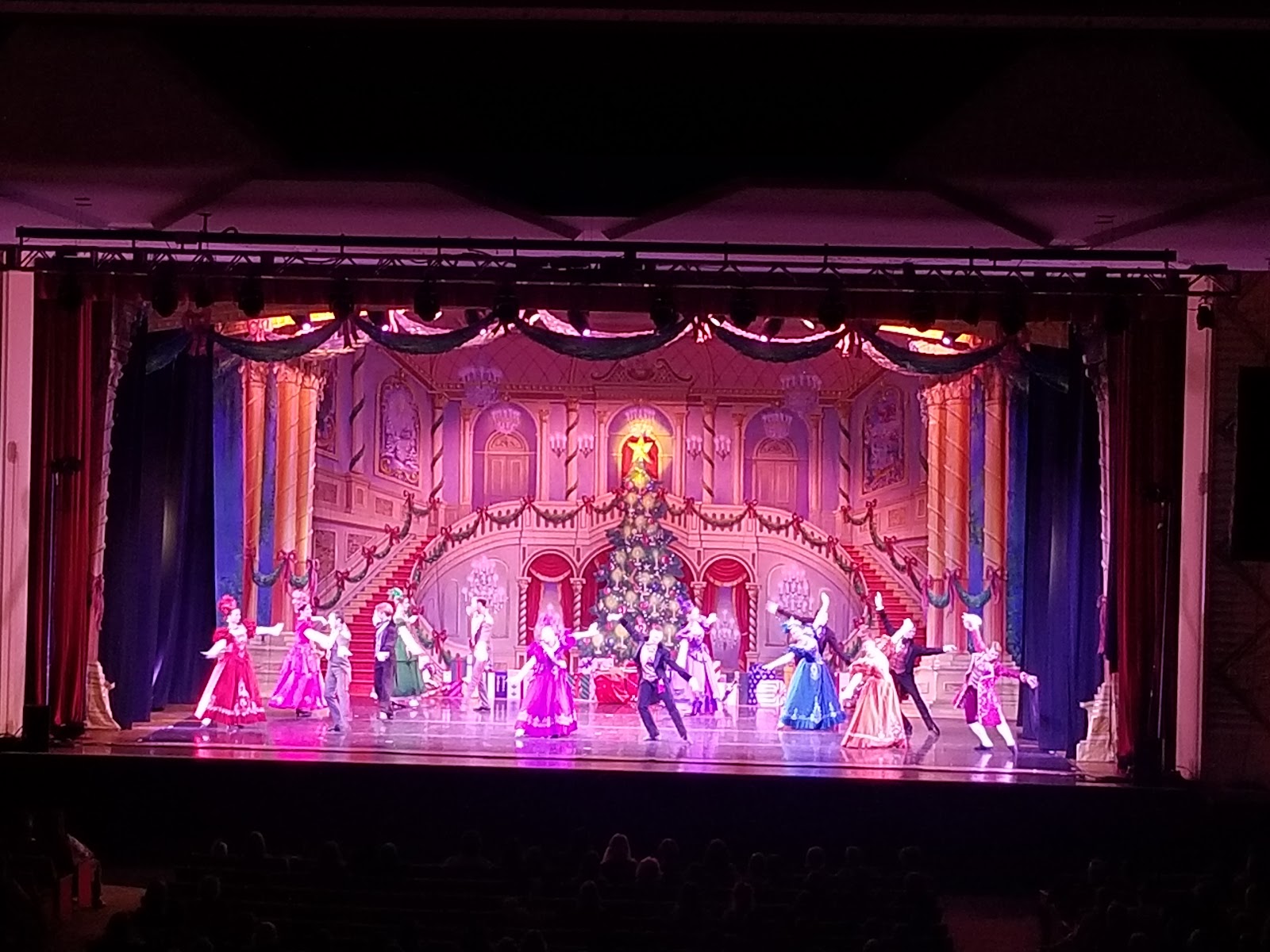
Theatrical lighting is typically warm tungsten or LED set to a warm tone, and it is often gelled. That means the colour on stage may be anything from warm white to a saturated wash, and it can change during the event if anyone touches the board.
Set white balance manually and re-check it whenever the lighting state changes. Auto will chase every alteration and produce a set of frames that do not match each other, which is worse than being slightly wrong consistently.
If the rig is being run for you, ask for a neutral or lightly warm wash rather than anything coloured for the ceremony itself. Coloured light on a wedding dress is unrecoverable — a dress lit in magenta is magenta, and no editing returns it to white. Save the coloured states for the party, where they belong and where they look deliberate.
Positions, the balcony, and what to do outside
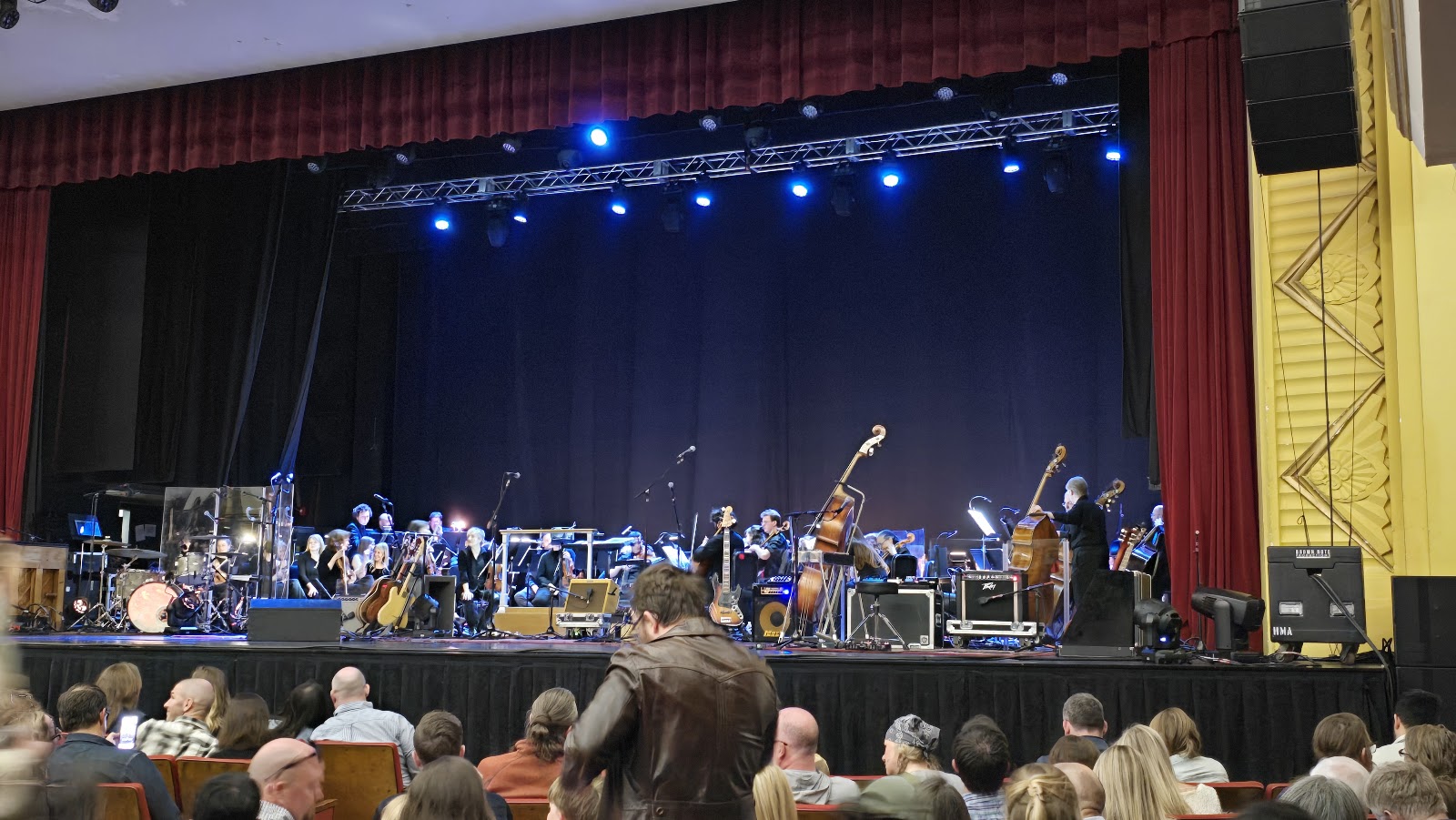
Fixed raked seating means you cannot roam. Your positions are the aisles, the area in front of the stage, the wings if permitted, and the balcony. That is a short list and it should be walked in advance rather than discovered during a ceremony.
The balcony is the most valuable of them. An elevated frame looking down at a lit stage with the dark auditorium between is the image that explains a theatre venue better than any other, and most photographers never get it because they did not ask. Confirm balcony access specifically.
The stage itself, viewed from the house, is the second key frame: a couple on a large stage reads as small and ceremonial in a way no ballroom achieves. Use a longer lens from the back of the stalls to compress it.
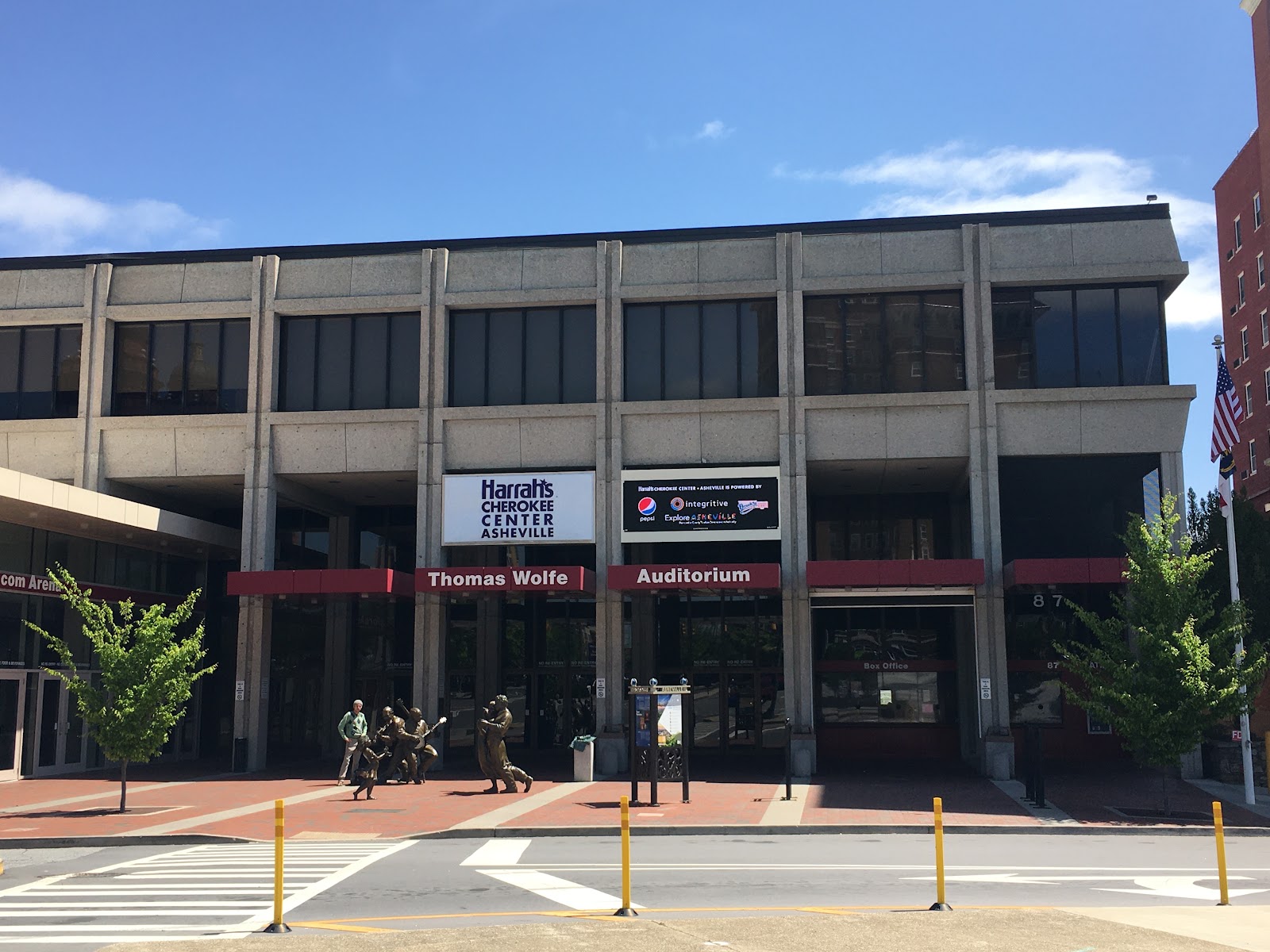
Outside, downtown Asheville has good early twentieth-century architecture including the Art Deco civic buildings, and the twenty minutes after sunset is when it photographs best. In a venue with no daylight at all, that excursion is the only unartificially lit frame you will have, so it belongs in the schedule as a fixed item rather than an aspiration.
What works in your favour
- A working lighting rig, if operated for you, is more capable than anything you could bring
- Continuous stage light means natural moments are lit, not just posed ones
- A couple on a large stage reads as small and ceremonial — unique to theatre venues
- The balcony gives an elevated frame that explains the venue in one image
- Entirely weather-independent and identical at any hour
What to plan around
- Six or seven stops between lit stage and dark house — no single exposure holds both
- Fixed raked seating limits positions to aisles, front, wings and balcony
- Coloured stage gels on a wedding dress are unrecoverable in editing
- No daylight anywhere in the building
- Everything depends on stage and balcony access and on someone running the board
More frames from Thomas Wolfe Auditorium
Thomas Wolfe Auditorium wedding photography: common questions
What is the first thing to ask a theatre venue?
Whether someone will operate the lighting board for you. A working rig is far more capable than anything a photographer can bring, and it lights the couple continuously rather than in flash bursts — so natural moments get lit too. Ask for a neutral front wash on the ceremony position and the house lights kept low.
How do you expose a lit stage in a dark auditorium?
Expose for the stage and let the house go black. The range between them is six or seven stops, so no single exposure holds both, and a compromise flatters nothing. A dark theatre with a brightly lit stage is how the building is supposed to look — the black is the subject, not a fault.
Can you get a wide shot showing the whole auditorium?
Yes, but as a separate frame taken when the house lights are up — before guests arrive or during a break. A lit stage and a lit auditorium cannot coexist in one exposure, so take two frames rather than compromising one.
Should we use coloured stage lighting for the ceremony?
No. Coloured light on a wedding dress is unrecoverable — a dress lit in magenta stays magenta, and no editing returns it to white. Ask for a neutral or lightly warm wash for the ceremony and save the coloured states for the party, where they look deliberate.
Where can the photographer actually stand?
The aisles, the area in front of the stage, the wings if permitted, and the balcony. Fixed raked seating rules out roaming. The balcony is the most valuable position and the one most photographers never get because they did not ask — an elevated frame down onto a lit stage explains the venue in one image.
More Asheville venue guides
We are writing a photographer’s guide to every venue we would happily shoot in Asheville. Here are three more, plus the full index:
- The Asheville Masonic Temple: A Photographer’s Walk-Through
- Biltmore Estate: Reading the Light on 8,000 Acres
- The Botanical Gardens at Asheville: A Photographer Answers Your Questions
All Asheville Wedding Venues →
Planning a wedding at Thomas Wolfe Auditorium?
Theatres are the one venue type where the house lighting can beat anything we bring. Tell us your date and whether the board will be run for you, and we will plan the ceremony light around it.